the second indochina war called the vietnam war in america and the resistance war against america in vietnam lasted for 20 years from 1955 to 1975. in america we're mostly taught about the war's divisive role in american society the bad assumptions the government made when entering it and sometimes occasionally its terrible effects on its combatants the chemical warfare the napalm such and such sometimes in class they'll show a 1970s movie or something american schools don't really talk about you know the other side how the vietnamese fought their strategic goals anything really and they certainly don't teach how communist china helped the vietnamese win that war against the americans and just how vital that help was the history of sign of vietnamese relations is a long and varied one but the vietnam war marked a high point in sino-vietnamese communist friendship a time when asian communist states work together to defeat the evil imperialist united states and this is what this video is about uh drawing from majority chinese american and some vietnamese sources so take that as you will and be civil to say the least historical states of vietnam and china have had beef for hundreds of years for extended periods of time china outright ruled vietnam with what is now northern vietnam incorporated in the han dynasty from 112 bc to 939 a. d vietnam's rulers would split themselves off from the han dynasty and they would fend off multiple chinese attempts to re-establish dominion over their territory throughout the following 2000 years much like the koreans the vietnamese managed to create the beginnings of a strong national identity absorbing the parts that liked of chinese culture while holding themselves as just separate enough from the chinese european colonialism communist brotherhood and of course the great evil america would bring the two countries as close as they ever would be in decades in 1887 the french arrived they would topple the vietnam's royal wind dynasty and take power they then matched the nation state of vietnam together with several neighboring territories including those belonging to modern day cambodia and laos so to create the colonial state of indochina this ignorant of historical national relations and ties would come to bite everyone in the butt many years later the french took a heavy-handed approach to running their new colonial state british colonists ran india with some participation from the indians themselves the british also tolerated national constitutional movements which allowed for the creation of the indian congress party and paved the way for eventual independence but the rules of french indochina treated its people harshly and took a hardline approach to any hint of reform and independence this hardline approach would eventually popularize the communist party of indochina and vietnamese marxist leninism the vietnamese communist party was founded in 1930 in hong kong by ho chi minh has the indochina communist party it's nine years younger than the chinese communist party from the very beginning the two parties early members worked closely together in pursuit of anti-colonialism and spreading communism thanks to a close relationship between ho chi minh and ccp heavy hindered zoualai vietnamese revolutionaries studied at chinese military academies and absorbed marxist leninist thought from chinese ccp officials one communist named win son would even make the long march with mao to don himself and rise to be a people's liberation army general but if there is one big difference between the two leaders and the two parties they led it was that ho chi minh held strong nationalist feelings his party sought to ride a wave of anti-colonialist nationalism to power as his country's vanguard party ho chi minh crafted the policies and charters of his communist party to take advantage of the vietnamese people's desire to be independent and unified at the end of world war ii the indochina communist party seized power in the north of vietnam and created the democratic republic of vietnam the drv newly born people's republic of china would be one of the first countries to recognize the drv mao and the rest of the party offered voluminous support for the vietnamese comrades chairman mao had several reasons for helping his fellow communists first he wanted a fellow communist buffer state covering his southern flank the chinese communist party feared the potential threat of encirclement by imperialist powers second he believed that the drv could help him clear out the substantial numbers of remaining goldman don troops hiding in indochina and third mao was an ideologist through and through he loved the idea of fellow revolutionary communists fighting for freedom and gave them his full support mao believed that his chinese model of communism could be emulated by asian countries all over mao saw the vietnamese has china's revolutionary little brother following in the big brother's footsteps the drv would need all the aid that it could get as the french soon deployed additional troops to vietnam with u.
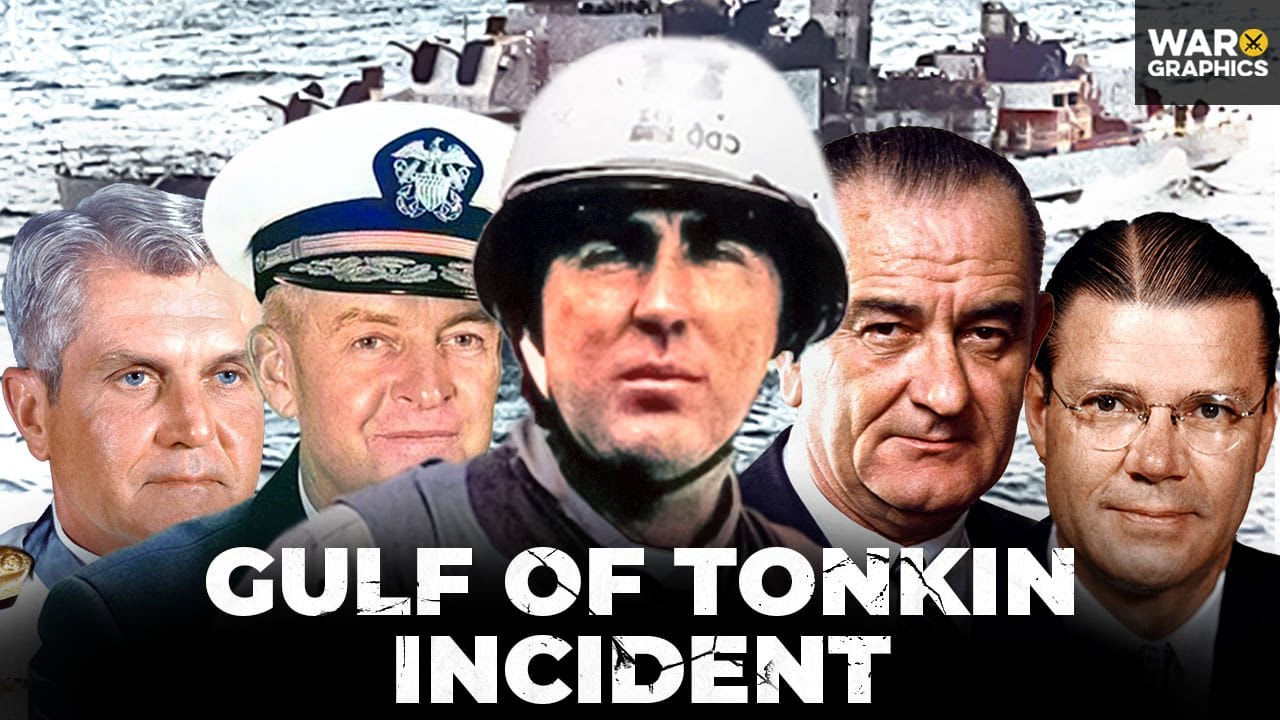
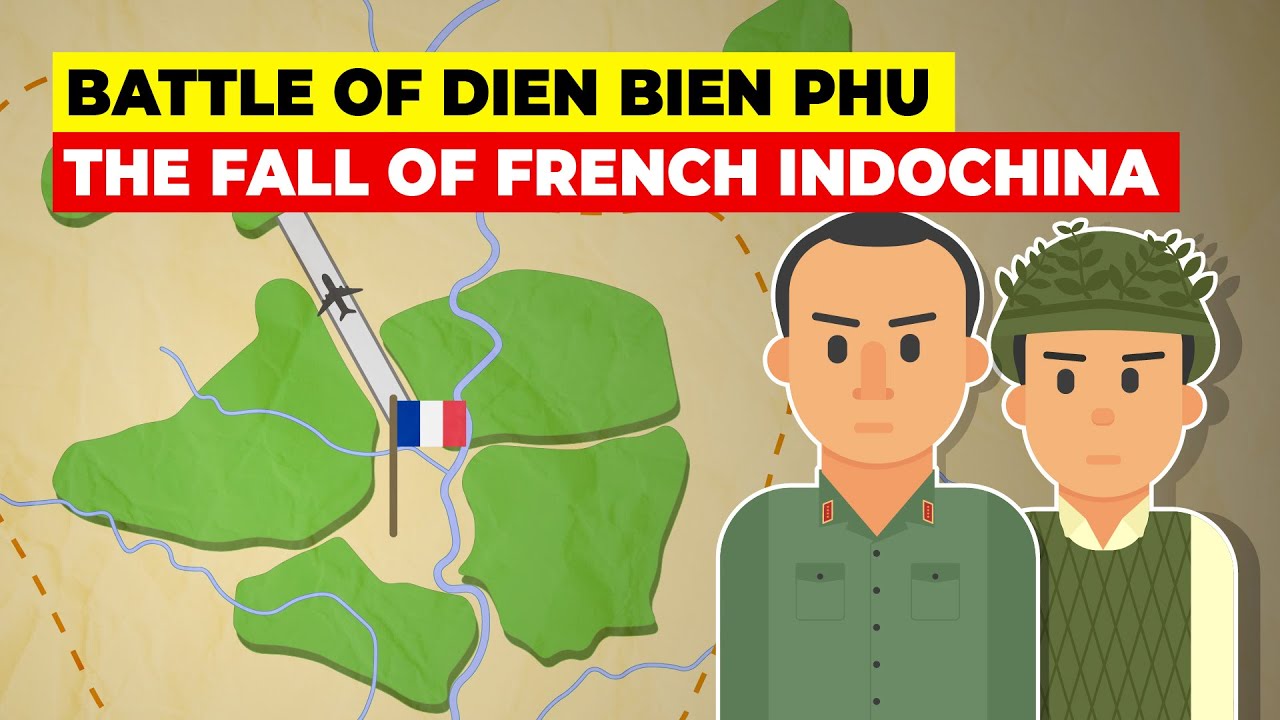
s support in the background in an attempt to reclaim their former colony starting what is called the first indochina war for nine long leaders the two battled until the battle of dien fool resulted in the decisive vietnamese victory after the french lost the first indochina war the 1954 geneva agreement set a demarcation line between north and south vietnam this line was supposed to be temporary but like with korea and germany things soon aligned on communist and anti-communist lines following the traditional anti-communist values the americans quickly gave explicit support to the southern vietnamese washington's involvement would indefinitely block prospects for peaceful quote-unquote reunification the vietnamese communists decided that american involvement necessitated resumption of quote-unquote armed resistance in the south but doing so would inevitably ramp up american involvement in indo-chinese affairs pursuing this pathway would require substantial resources the soviet union at the time was called to the north vietnamese's pleas for help during this period of time their foreign aid would total just 3 000 world war ii era german guns which did not impress hanoi the indo-chinese communists could only turn to the chinese communist party and the chinese delivered throughout the 1950s the chinese communist party helped the north vietnamese build up their strength in preparation for the coming battle financially beijing would send hanoi over 600 million dollars to reconstruct their country which had been substantially damaged from the french wars of independence on the military side china not only trained vietnamese soldiers they equipped them too from 1955 to 1963 china gave the drv 247 million rmb worth of military aid which includes 240 000 guns 2 730 pieces of artillery and 175 million rounds of ammunition so mind you this is substantially before any sort of american actual american involvement and ramp up in the vietnam war at the same time though the chinese repeatedly cautioned vietnam against unilaterally starting a war in 1956 dylan lai told ho chi minh that quote unification should be regarded as a long-term struggle end quote not one to be started immediately in 1958 the vietnamese politburo formally asked beijing about the quote-unquote southern revolution and beijing replied the most fundamental most important and most urgent tax was to first promote socialist revolution and reconstruction in the north beijing had their own reasons for giving this sort of advice tolerating a divided vietnam even indefinitely so they were dealing with great domestic issues like the great leap forward and it made sense for them to postpone great battles with the imperialists until when the chinese nation was more rejuvenated but if north vietnam decided to go to war then china would not try to stop them communist kinship and the ideology of revolutionary liberation made it inevitable that china would support the drv 1963 saw rising tensions in south vietnam a buddhist monk self-immolated to protest against the administration of the south vietnamese president no din diem north vietnam saw a chance for inciting revolution that same year china's chief of staff lauren ching visited hanoi and told the vietnamese leaders there that if the us were ever to attack northern vietnam then china will come to its defense south vietnamese president no soon lost favor with the world community including the united states for his campaigns against the buddhist majority he was removed from power by members of his country's generals and then was subsequently assassinated by the succeeding president around that time chinese military officials granted north vietnam's request to help strengthen their military defenses in the gulf of tonkin area a year later in 1964 the u. s opened fire in the gulf of tonkin what is called now the gulf of tonkin incident the north vietnamese chief of staff van tientong went to beijing to meet with mao zedong himself and mao would tell him that quote-unquote vietnam's causes were china's and that china would offer quote unconditional support mao was worried that american troops would march through and invade north vietnam which would put them right at chinese borders at a time when chiang kai-shek planned invasion from taiwan the deepening sino-soviet rift and then having sino-indian skirmishes on the border mao tadong thought war was imminent the imperialist would soon make their move he instructed the country to escalate and prepare for war maybe even a nuclear one one of these efforts will be the fascinating third front a titanic effort to industrialize and militarize china's inner regions the united states would ramp up their military involvement in vietnam from 1964 to 1968. north vietnam would bear the brunt of this war in terms of blood environmental damage and economic devastation it also marked a critical period in sino-soviet rift khrushchev was removed from power in 1964 and he would be replaced by soviet general secretary leonardo brezhnev though nobreshnev sought to thaw relations with china and grow stronger ties to vietnam doing so would only deepen the sino-soviet rift soviet approaches to north viennese and the vietnam war in general would motivate the chinese to increase the amount of help to the north but at the same time it would stimulate chinese antipathy and laid the foundations of a future sino-vietnamese split in the 1970s the united states began extensively bombing north vietnam u.
s troops settled in south vietnam beijing watched with alarm they deployed units to intercept and fight any perceived and actual us aggression and they sought to disrupt flights that skirted into chinese airspace chinese records say that between august 1964 and november 1968 u. s warplanes flew 383 sorties into chinese airspace the chinese air force flew over 2 000 sorties in response claiming to have shot down 12 american warplanes as early as 1965 washington told beijing that the u. s had no intention of starting a war with china but american airplanes kept flying into hainanese airspace alarming the chinese april 2 1965 don lai sent a message to lyndon johnson through pakistan that if america sent its ground troops into hanoi then china would send its own troops in return and if china entered into a war it would trigger fights across southeast asia drawing america into all of them that same month la duan then first secretary of the lao dong party and soon to be general secretary of the communist party of vietnam and vote win gap vice premier and minister of defense made a trip to beijing to request additional aid they asked for a deployment of chinese troops into north vietnam volunteer pilots volunteer fighters like having these chinese troops there would shore up the north vietnamese defense of hanoi and allowed the north vietnamese to send their own troops south beijing granted this request chinese president leo xiaoxi said that china's aid to vietnam against the united states was quote an unshakable duty of the chinese people and the communist party end quote three special divisions and 45 high-ranking pla officers were later sent into vietnam the vietnamese also asked for engineering help to guard against the potential of an amphibious assault from the sea beijing granted this request as well they sent a pla military unit to defend the northeast islands they also sent engineering units to build a new airfield at yempai and build supply railways from china into vietnam china took care to disguise the magnitude of its support chinese soldiers wore north vietnamese uniforms and were referred to as chinese rear services chinese engineers wore civilian blue work clothes and not their military stuff more on why that later on the next month ho chi minh himself traveled to hunan to see mao he asked mao for help building infiltration roads from north vietnam into south vietnam he then handed mao a map of 12 such roads for the chinese to repair mao called zylen lai to make it happen by june 1965 north vietnam believed that they could fight this war against the americans by themselves now but they asked for reiteration that the chinese would back them with air and ground forces if the americans ever decided to send ground troops into hanoi itself chinese and vietnamese documents differ on how china responded chinese documents say that the chinese told their vietnamese comrades that this support will be granted in total chinese troops would enter the war however and whenever hanoi wanted and be under hanoi's command vietnamese scholars in 1988 though retort that china told north vietnam that they could not supply sufficient air cover for them as quote the time was not appropriate end quote this breaks the 1964 promise of support and foreshadows future sign of vietnamese breaks regardless chinese engineers continued working on helping hanoi built out its defenses and prepared for a potential war against the united states in 1966 they would complete a war defense line that stretched for hundreds of miles in the red river delta it would serve as a staging point for a titanic forceful military response by china to any us attack on north vietnam north vietnamese strategic goals were not to defeat the enemy instead they wanted to make the american involvement in the war painful enough that americans would be willing to accept a negotiated settlement the army sought to achieve this by maintaining a credible fighting force through crippling situations but as one of the poorest countries in the world north vietnam could not execute on this strategy without large infusions of chinese military aid and supplies they got it american bombing of north vietnam stepped up from 1965 to 1967 with up to 9.
6 tons of bombs hitting every kilometer of north vietnamese supply rail lines their goal was to cut the lines between hanoi and the communist guerrilla fighters in the south but chinese engineering determination and ingenuity kept the trains running the 80 000 chinese engineers assigned to north vietnam were just determined to keep the supplies coming bridges railways and roads were swiftly replaced often in weeks by 1969 chinese units had repaired 157 kilometers of railroad and 1 400 kilometers of telephone lines north vietnamese records show that bombing destroyed virtually every piece of transport infrastructure built after 1954 yet one could argue that its rail road and tunnel systems improved after the war as the american bombing campaigns escalated chinese anti-aircraft batteries were sent to defend relevant infrastructure and foil the american war strategy chinese anti-aircraft units would repeatedly engage u. s aircraft throughout the war chinese statistics should claim 1707 american plane shot down with another 1 600 damage but this is not backed and not corroborated by american records from 1965 to 1969 a total of 320 000 chinese troops were said to be served in vietnam over a thousand of those troops died u. s intelligence services estimated just 50 000 in total sent to north vietnam hanoi claimed just 20 000.