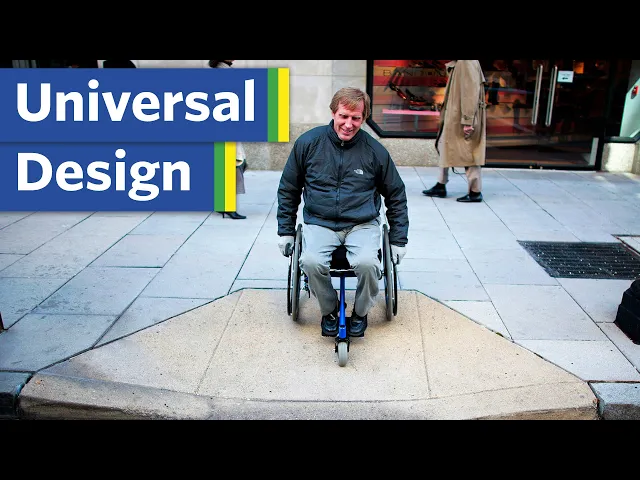
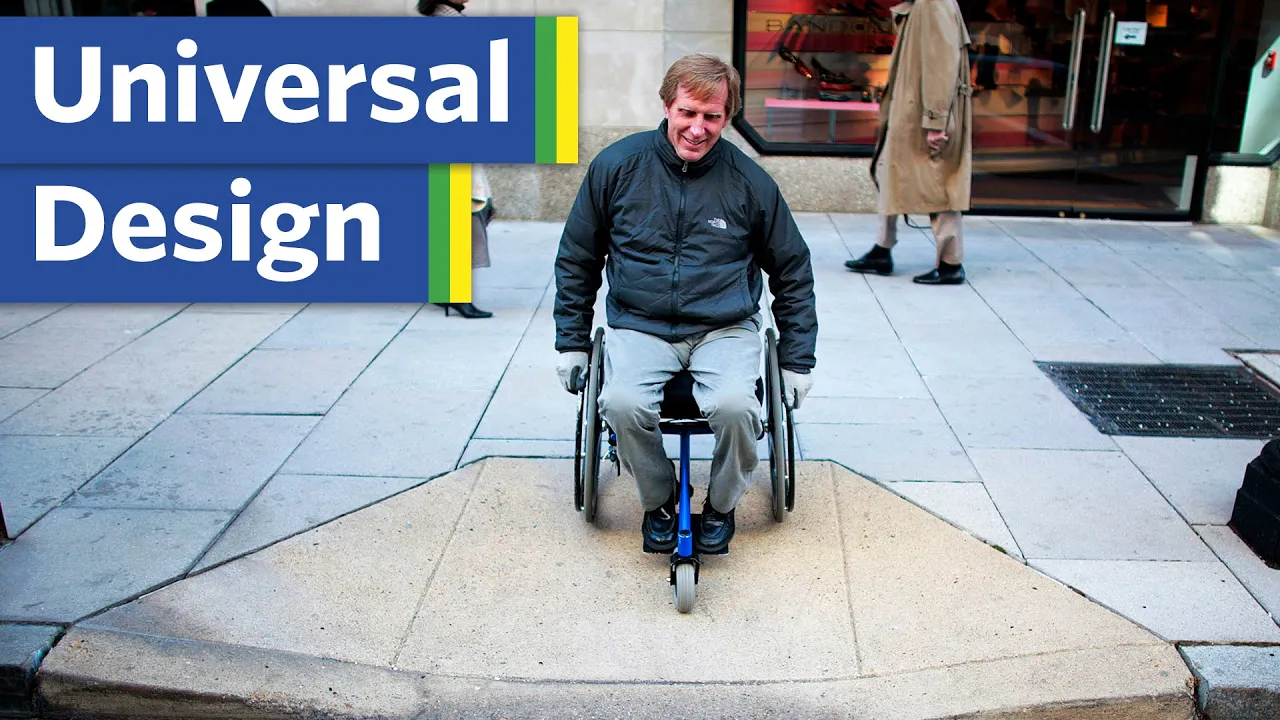
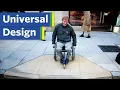
This video is sponsored by Brilliant. As someone not living with a disability, it's pretty easy for me to get around city streets, even with ones with less than stellar pedestrian infrastructure. But put a stroller in my hands and an otherwise uneventful walk becomes an exercise in frustration, as i have to navigate these tall curves.
All of a sudden I have to use driveways as curb ramps to avoid getting the kid up and down the curb every time. The truth is not all pedestrian infrastructure is created equal. And in fact some of it's so annoying it's like a toddler who just learned how to say "no.
" Do you want to ride in the stroller? "No. " Can you please ride in the stroller?
"No. " Now the obvious solution in my case would be to install curb ramps so people pushing strollers people in wheelchairs, or motorized scooters, or people who can't make that step can cross the street safely. But curb ramps won't solve every problem out there.
Is it possible to design the perfect street? One where all users can feel comfortable and navigate them without safety concerns? This is the goal of universal design and we'll learn about it more after the bike bell.
Now i started this video talking about my experiences pushing a stroller because one of the key tenets of universal design is that when you make these changes it's great for everyone. Not just for people who you think of as having traditional disabilities. This isn't just a discussion aimed at improving the lives of the 1.
3 billion blind or low vision people in the world, or the 75 million who need a wheelchair, or the nearly 500 million people with a hearing disability It's for everyone because we will all likely have experiences that will make us need a better designed pedestrian network. Maybe you'll push a stroller like me one day, or break a leg, or get old. In the bad old days Universal Design was not a consideration in many cities.
In 1990 the Americans with Disabilities Act (ADA) passed Congress and was signed by President Bush. It aimed to change that—broadly speaking. It prohibits discrimination based on disability, particularly in the workplace.
But Title II of the Act focuses on public entities. It requires public transportation and public spaces to accommodate people with disabilities. Since 1992, the Federal Government has published the ADA Standards for Accessible Design to help communities know how to design streets for people with disabilities.
Other organizations have also published best practices for Universal Design, and these techniques and pieces of infrastructure continue to evolve and improve. So—what are some of the best practices in Universal Design? Let's start with a simple city street.
Sidewalks are the obvious piece of infrastructure here. How wide should they be? At minimum, suburban residential sidewalks should be 5 feet (or 1.
5 meters) wide and downtown sidewalks should be at least 14 feet (or 4. 2 meters) wide. The wider the better is the rule of thumb to better accommodate users of all abilities and needs.
For example, seven or eight feet of width is needed to accommodate two people signing a conversation while walking. Wider sidewalks also allow for people to move more slowly while faster walkers can pass by comfortably. Good streets also have places to sit.
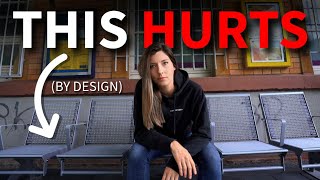
Everyone has experienced a moment on a walk where a bench would be really nice. Maybe you need to tie your shoe, take a rest, or do some people watching. Ideally these places to sit would have arms to help people sit and stand more easily, and have shade to protect them from the elements.
Streets can be loud and busy and full of stimulus. It's important that the occasional small quiet and closed area for stimulus sensitive folks, such as neurodivergent people. It helps them take a break.
Street trees and groups of benches can give people that respite. Lighting is critically important for most people especially for those scared of the dark. More seriously, lighting can help people with low vision see where they're going and help deaf people sign clearly.
This is a classic Universal Design example because while those with disabilities benefit, so too does basically everyone else. If you want a further discussion of street design, go check out a new video at PBS Terra. They've profiled Atlanta, a place where there are not as many Universal Design streets as there needs to be.
As a bonus, I make a cameo talking about how to design a car centric street. I'll leave a link in the description. Okay, with streets covered, let's cross over to intersections.
Intersections are one of the most dangerous areas in a city for people of all abilities because they're the primary conflict point between pedestrians and cars. People with disabilities are at an even greater risk. I've left links in the description of videos of blind people navigating intersections.
It makes me so nervous just to watch them. How can intersections be made safer for everyone? Especially those who cannot always see what they're stepping out into?
Let's start simply and get more intensive as we go. First you could add curb cuts (also called curb ramps. ) They help people make the transition from sidewalk height to road height and back again.
But not all curb ramps are created equal. Diagonal curb ramps are better than nothing but ejecting pedestrians directly into the center of the intersection isn't super safe. Perpendicular curb ramps are far superior as they point pedestrians in the correct direction.
Detectable warning surfaces are not required in most cases but can offer another piece of tactile feedback. Now that we have pedestrians easing out into the intersection using a ramp, the next thing we can do for them is to reduce crossing distances. This can happen using curb extensions, sometimes called bulb outs.
They really only work where there are parking lanes because they take that space and reduce the crossing distance to just the car travel lanes. Everyone benefits from this, but in particular it helps people who need longer to cross an intersection. Curb extensions are also great because they prevent cars from parking too close to the crosswalk, improving visibility.
And narrowing the intersection can naturally slow down cars, improving safety for everyone. What about the space in between the curb extensions? Crosswalks!
Regular old crosswalks help drivers see the shared space and intersections, but they don't do much else. Raised crosswalks take crosswalks to the next level. They eliminate the need for curb ramps entirely, slow traffic, and make it crystal clear to everyone (particularly blind pedestrians) where the crosswalk is.
Cities can take this concept even further and raise the entire intersection. This signals to drivers that they are intruding on a pedestrian realm. It sort of reverses the balance of power in an intersection.
Typically pedestrians have to sink to the level of cars to pass through. But a raised intersection forces cars to slow down to pedestrian-friendly speeds. Finally we can't forget about the traffic signals.
Pedestrian countdowns are recommended to help people judge the time they have to cross. For blind pedestrians, audible walk indicators help them know when it's time to get moving across the intersection. There are a variety of sounds used in the U.
S. , but the recommendation is a rapid tick sound. Speech walk indicators can be used where it's otherwise unclear about which street's walk sign is on.
The push button to activate the walk sign must have a raised directional arrow so blind pedestrians can feel the direction of the crosswalk. The tactile arrow should vibrate to help blind and deaf pedestrians know when it is time to cross. One common thread that connects these changes both on streets and intersections is that they are in response to cars.
It's no secret that they're noisy, fast, and take up a lot of space. They make it harder for everyone to be a pedestrian. Cars are sort of the universal foil to Universal Design.
And some streets go beyond what we've talked about so far to eliminate the car. Of course, they can be removed entirely and i've made a video or two about that scenario. But shared street concepts like the Dutch woonerf prioritize people over cars and can be safer for people of all abilities.
Cars aren't eliminated but are made to feel like guests in a space designed at a human scale. Now, it's probably impossible to design the perfect street, even if you follow all the advice in this video. But all streets can be made better.
Better for people in wheelchairs, better for people on the autism spectrum, better for people with hearing disabilities, and certainly better for people like me who push a stroller on a daily basis. When we design streets for everyone everyone wins. A lot of what we talked about in this video is in the realm of civil and traffic engineering.
If you're someone who loves engineering and problem solving then you're gonna love the challenges over at Brilliant. They have these weirdly addicting courses on topics like engineering, logic, math, and scientific principles. They can help you level up your critical thinking and observation skills and make you better observers of the urban environment.
And they have this great daily challenge feature so you can learn wherever you are. Each daily challenge provides you with the context and framework that you need to tackle it so that you learn the concepts by applying them. And if you choose the wrong answer to the challenge, like I did right here, there's a really handy explanation that tells you how to get to the correct answer.
This is the kind of thing you can do during your commute on transit or even during a walk on a Universal Design sidewalk. To take your problem solving and observation skills to the next level and learn more about Brilliant, go to Brilliant. org/citybeautiful and sign up for free.
And also—the first 200 people that go to the link will get 20 percent off the annual premium subscription. So go check it out! Thanks for watching!