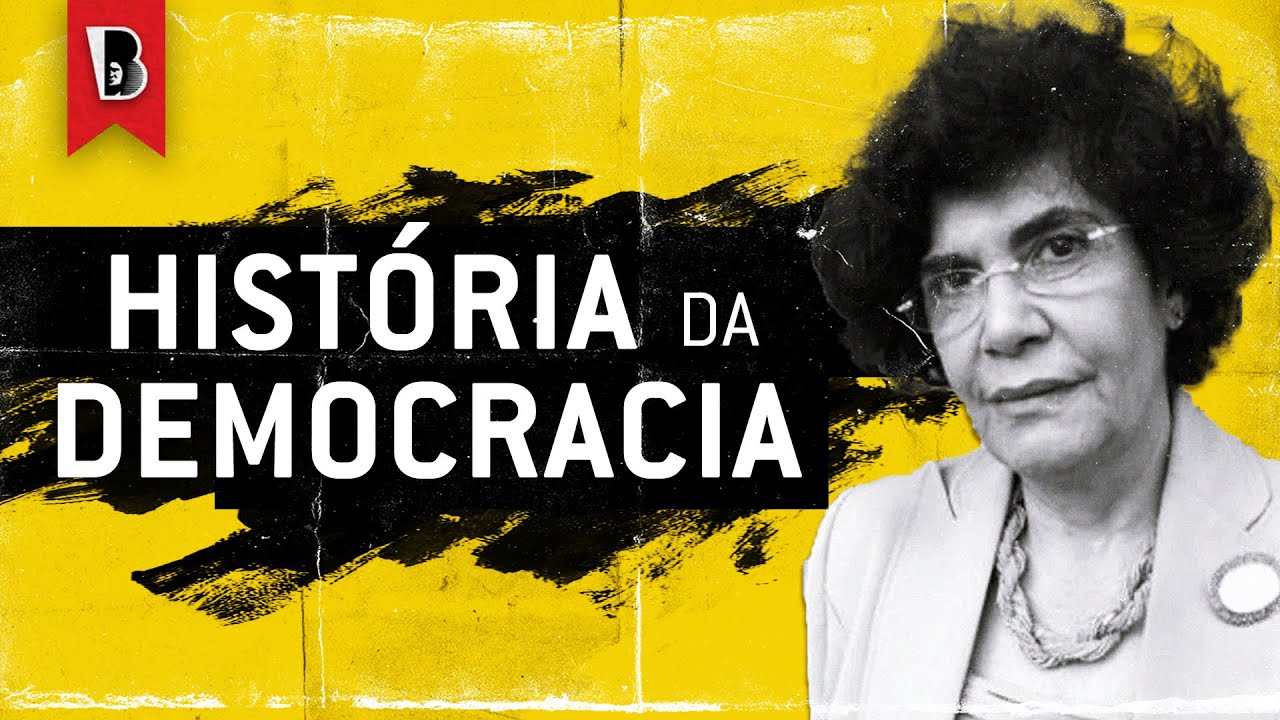
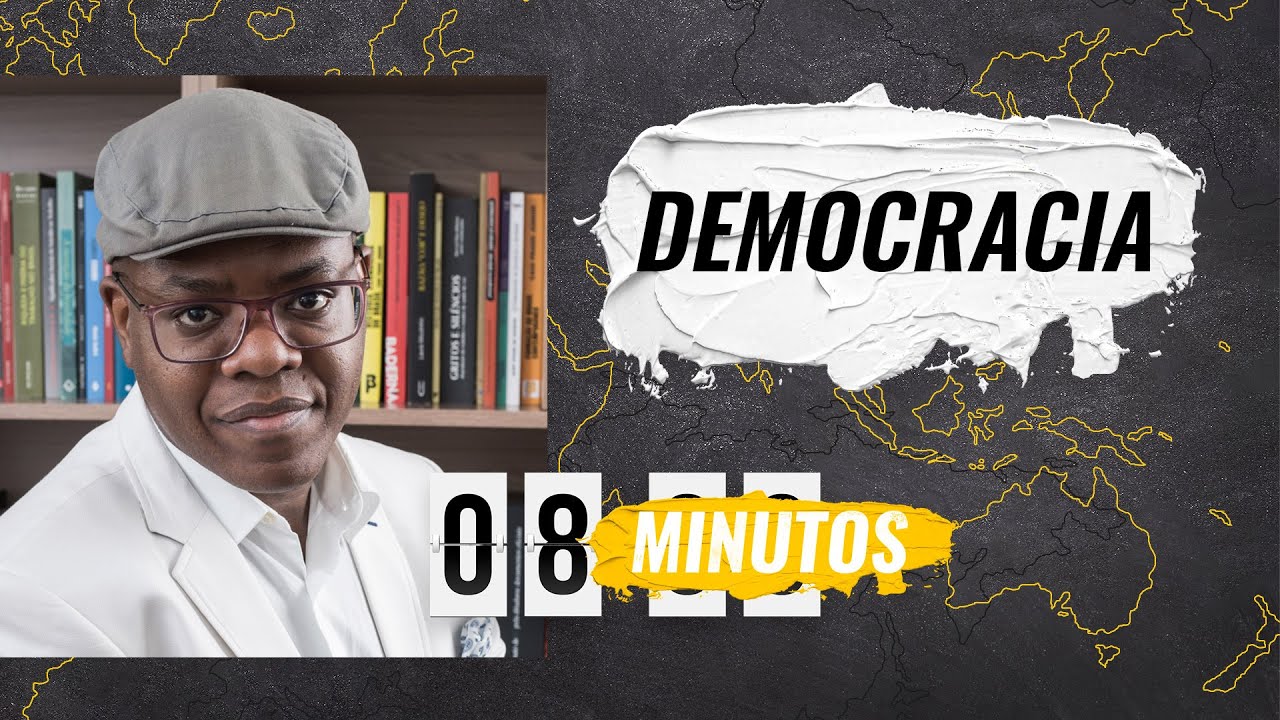
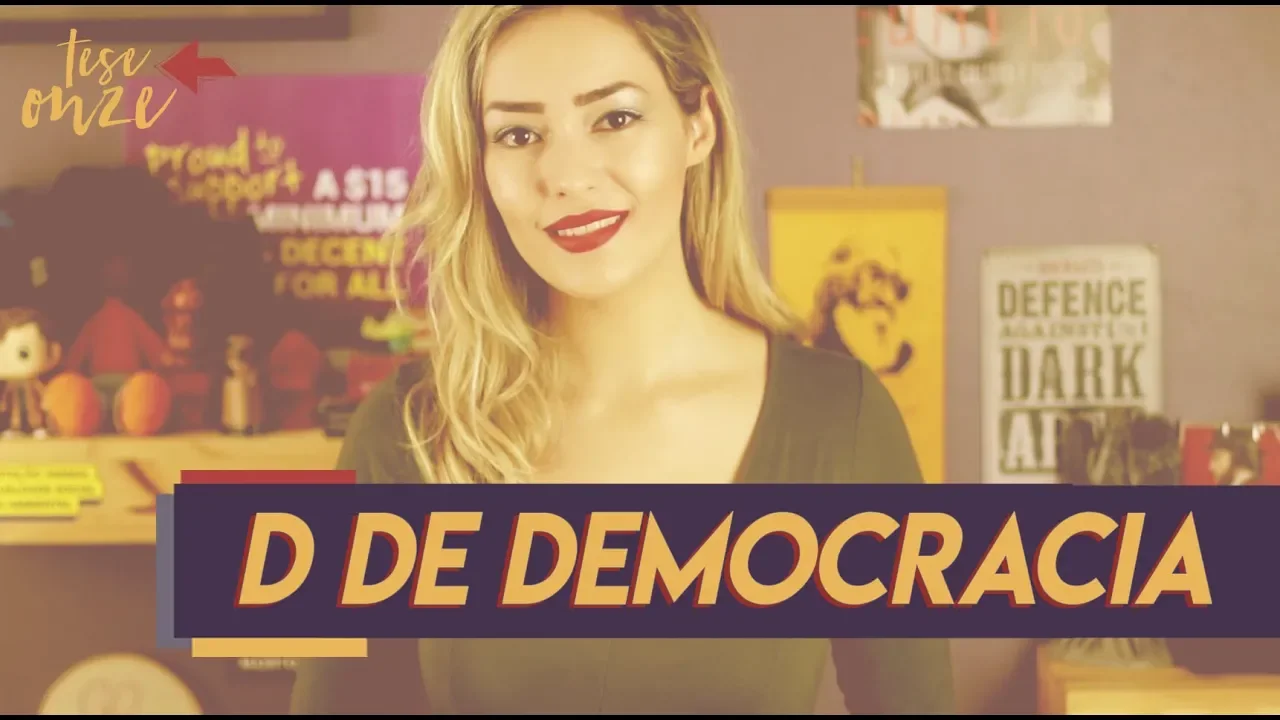
Welcome to the Tese Onze Glossary! We gonna start with "D" for Democracy. Democracy is the political regime that establishes the form of State Government.
The regime involves a number of specific institutions and guarantees, generally through a constitution, which is the fundamental letter of that place, rights and duties. The opposite of a democratic regime is not fascism, nor authoritarianism, nor communism, neither whatever it was that they told you in that perspective. In a republic, the opposite of democracy is dictatorship.
So there is neither a dictatorial democracy, nor a democratic dictatorship. If a democracy loses its ability to listen to its people and treat all citizens equally, that does not mean it's a dictatorship. It means, firstly, that there is an authoritarianism.
So, democracy is the political regime and this regime may have administration marks according to who is occupying these democratic institutions. That, in our case, are the 3 powers: Executive, Legislative and Judiciary. If those powers rule together with its people or civil society, the democracy is plural.
Plural! Think like this: many voices. If the Judiciary, for example, starts to abuse its power to maintain its own interests or even to manipulate the people interests, we may be heading for an authoritarian democracy.
That's it! And then, depending on how things go a "de-democratization" can emerge through the dismantling of the pillars of that democracy. In Brazil, democracy is guaranteed in the 1988 Constitution which was a plural process from a constituent that determined whether or not the process would stop there.
It is a liberal democracy based on the separation of powers, on the rule of law, on the right to vote and private property. It is a representative but also participatory liberal democracy although this last part is often forgotten by many. Liberal here has to do with liberal politics.
This is related to economic liberalism, but comes from classical liberalism and anyone who studies Political Science should remember that from the classes on liberalism and realism. It is a liberal democracy because its pillars are based on values similar to those of the French Revolution, remember them? Equality, Freedom and Fraternity.
Alexis de Tocqueville, one of the theorists of classical political liberalism, will consider liberal democracy as a regime that tries to balance equality and freedom, individuality and community. If authoritarianism takes power, this liberal democracy is at risk. Liberal democracy is a way of seeing democracy, but it is the one that the Brazilian constitution establishes.
The sociologist Florestan Fernandes will say that democracy is limited then, because it was unable to establish, in practice, a way of preventing individuality from overcoming the community and that the economic freedom of some did not prevail over the equality of all. Many will then call this of bourgeois or capitalist liberal democracy because the political principles are subjected to those of the economic system. After all, guys, politics and economics do not happen in separate vacuums.
Florestan will then propose an expanded democracy with more participation upwards. And after that he will say that capitalism will always cause this imbalance and he will propose that that has to be overcome by democracy so this can really flow. So, summing all that up, democracy is a political regime, dictatorship is another regime, monarchy is another, especially that other called absolutist monarchy liberal democracy is the regime that we have, in theory, in Brazil because of the values that govern this democracy.
If many many political voices are heard, it's a plural democracy. If people become persecuted, silenced, even the opposition, it can become an authoritarian democracy And then, if authoritarianism starts to persevering, perhaps, there is a "de-democratization". What takes us to another question: How to fight authoritarianism to preserve democracy and even prevent the introduction of another regime such as a dictatorship?
That's it! Follow here and soon there will be more Glossary here in Tese Onze!