If you struggle with discipline even when you know what you need to do, then this video is for you because I'm going to show you four-step framework to get addicted to discipline, not force it through willpower, not fake it through motivation, actually get addicted to it the same way you're addicted to checking your phone or scrolling before bed. But first, here's the real reason discipline fails. Chapter one, the identity problem.
The reason discipline feels impossible isn't because you're lazy or weak. It's because you're trying to act like a disciplined person while still being an undisiplined person. And your brain will not allow that.
Your brain's job is to keep your behavior consistent with who you think you are. That's called identity protection. Whenever you try to force behaviors that conflict with your identity, your brain creates resistance.
So every feeling of I don't feel like it or I'll start tomorrow, that's not you being weak. That's your brain protecting your identity. But here's what changes that completely.
When you become disciplined first, when you shift the identity before you change the behavior, your brain stops fighting you. It starts fighting for you. And that's when discipline becomes addictive.
In the next 8 minutes, I'm going to show you exactly how to trigger that addiction. Let's start. Chapter 2, the framework.
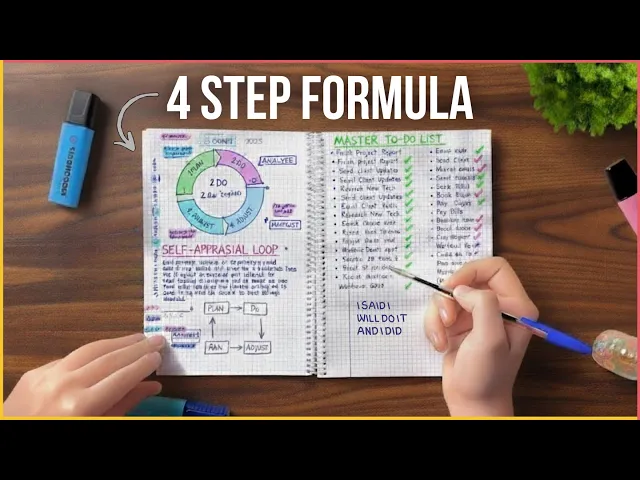
All right, let's move to the juicy part of the video, the framework. It has four steps that shift your identity and make discipline addictive. These four steps work together to rewire your brain to shift you from someone who struggles with discipline to someone who craves it.
Let's break down each one. Step one, identity declaration. This is where you define who you're becoming, not what you want to do, who you want to be.
Here's the difference. A goal says, "I want to work out more. " An identity says, "I'm becoming someone who trains.
" A goal says, "I need to focus better. " An identity says, "I'm someone who protects their attention. " See the shift?
Goals are about doing. Identity is about being. And your brain cares way more about being than doing because being is who you are.
And your brain will always protect who you are. So step one is simple. Pick one identity you want to build.
Write it down. For example, I'm becoming someone who does hard things. Make it specific.
Make it present tense or near future tense. Not I want to be or I wish I was, but I'm becoming or I am. This signals to your brain that this is who you are now.
Not someday, but now. That's step one, identity declaration. Now, let's move to step two.
This is where most people mess up. Step two, immediate action protocol. This is where you prove the identity to your brain.
And here's the critical part that most people get wrong. You can't prove it through plans. You can't prove it through intentions.
You can only prove it through immediate actions. actions you do right now, not tomorrow. Now, here's why this matters.
Most people try to build discipline by planning for the future. They plan stuff like setting alarm for 5:00 a. m.
tomorrow to work out before office or planning to start writing after work from tomorrow onwards. But future you is the undisiplined person. That's the whole problem.
You can't trust future you to follow through. So, you can't build evidence through actions that require future you to be disciplined. You build evidence through actions that present you completes immediately before your brain has time to negotiate.
Here's how it works. Take your identity from step one. Now ask, what's the smallest action I can do right now that proves this identity?
For example, if you had put your identity as I'm someone who trains, then the immediate action would be to do two push-ups right now. Not I'll two push-ups right now in the next 60 seconds. The key is that each action must be first immediate.
You do it within the next few minutes. Second, completable in under 5 minutes. And third, so small you can do it even when you feel like garbage.
But it must be real. An actual movement toward the identity, not just planning to move toward it. Here's what happens in your brain.
Every immediate action is a vote for your new identity. You do two push-ups right now. Your brain registers, we're someone who moves their body, not we're someone who plans to move.
We actually did it. You write one sentence right now. Your brain registers, we're someone who writes.
Each immediate action is undeniable proof. Your brain can't argue with it. You can't hit snooze on an action you already completed.
And because the action is so small, discipline isn't required, but it still counts as evidence. That's the genius of immediate action protocol. You're building proof without needing the discipline.
you don't have yet. Do this once today, then once tomorrow, then the day after. Stack enough immediate actions and your brain has to update who you think you are.
But there's a critical third step that makes this stick. Most people skip it and that's why they fail. If you like the video so far, consider subscribing.
Also, I have linked all the research material in the show notes below. Now, on we go to the next one. Step three, self- acknowledgement loop.
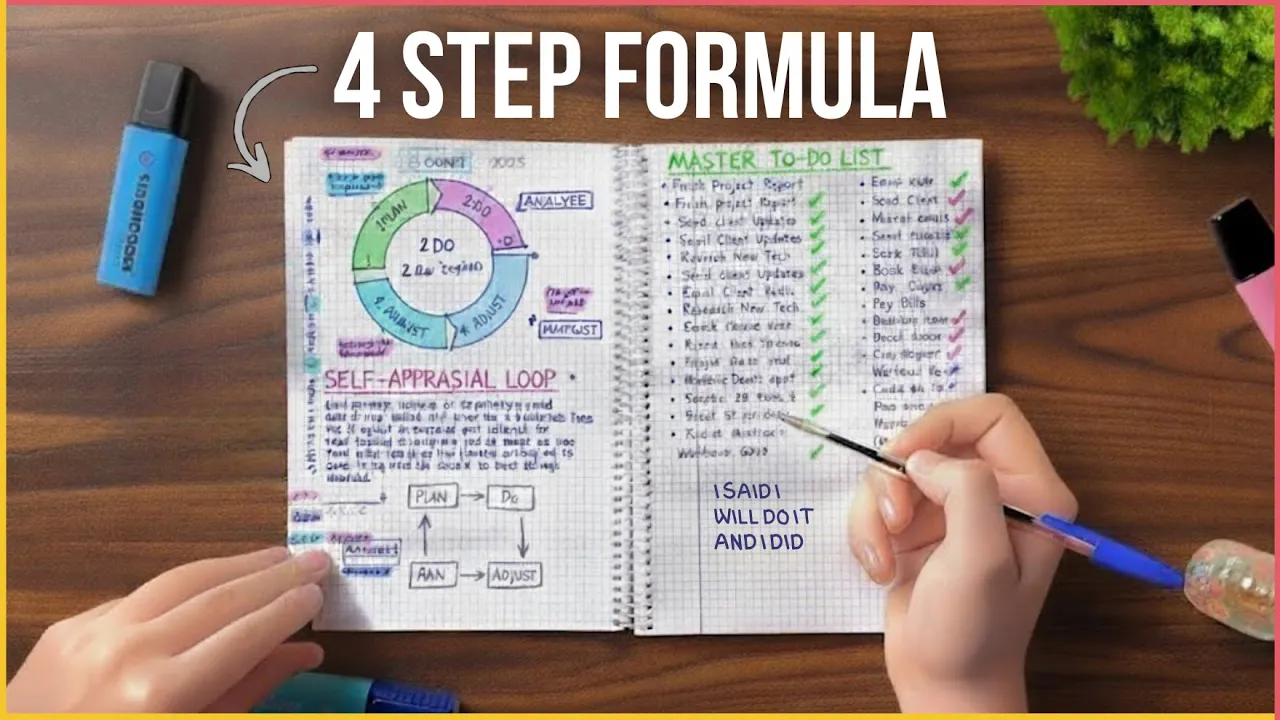
This is the piece that makes discipline addictive because this is where you earn self-respect. Here's how it works. After you complete your immediate action, you pause for 5 seconds and you acknowledge what just happened out loud if possible.
Say, "I said I'd do it and I did it. " That's it. Sounds simple, right?
But this is critical to forming addiction because this is the moment you earn your own respect. Most people rush past this. They do the two push-ups and immediately move on.
They miss the most important part. They miss the acknowledgement because acknowledgement is what tells your brain, "We kept our word. " That builds trust with yourself and trust is everything.
Right now, you probably don't trust yourself. You've broken too many promises. Like, I'll start Monday, but you didn't.
I'll work out tomorrow, but you skipped. Unfortunately, your brain has learned that your promises mean nothing. But when you make a small immediate promise and keep it and then acknowledge it, something shifts.
Your brain registers, oh, we actually did what we said we'd do. That's one data point. Do it again tomorrow.
Another data point. By day seven, your brain notices a pattern. We're becoming someone who keeps promises.
By day 30, it's undeniable. We are someone who keeps promises. And here's the beautiful part.
Every time you acknowledge keeping a promise, you feel self-respect. That feeling when you do what you said you do is that feeling is addictive. better than any external reward because it's yours.
You earned it from yourself. And once you feel it, you'll chase it. That's the self- acknowledgement loop where action leads to acknowledgement, which leads to self-respect, which leads to craving more.
And before you know it, you're addicted to being someone you respect. That's step three. Now, let's talk about step four.
This is where your brain flips sides completely. Step four, identity protection activation. This is when your brain stops fighting you and starts fighting for you.
All the earlier three steps are designed to lead you here. Here's what happens. After enough immediate actions and acknowledgements, your brain updates its model of who you are.
It shifts from we're someone who struggles with discipline to we're someone who does hard things. And once that shift locks in, your brain activates identity protection mode. Remember, your brain's primary job is to keep your behavior consistent with your identity.
Right now, it's protecting the old identity. The one that says we're not disciplined. So, it creates resistance when you try to be disciplined.
But once the identity shifts, the resistance flips. Now, your brain protects the new identity. The one that says we're someone who keeps promises.
So, when you try to skip or quit, your brain says, "Wait, that's not who we are anymore. " Suddenly, it feels wrong to take the easy path. It will feel uncomfortable to break a promise to yourself.
Not because you're more motivated, because your brain is defending your identity. Think about brushing your teeth. If you skip it, you feel weird, right?
That's identity protection. You're a person with clean teeth, and skipping violated that identity. Your brain made you uncomfortable until you fixed it.
That same mechanism protects your discipline once the identity shifts. Your brain defends the new identity automatically. And that's when discipline becomes truly addictive because you're not forcing anything anymore.
You're craving the feeling of being the person who follows through. I know it works because I have successfully tried it myself. Although I love working out, I used to dislike cardio.
I'd avoid it completely because I wasn't a cardio person. Then I started playing tennis just for fun at first, but I wanted to get better. So I started identifying as a tennis player and tennis players need to move.
So suddenly I'm doing more cardio than I ever did in a gym. Running, sprinting, drills. Not because I suddenly loved cardio, because I'm a tennis player and tennis players do this.
My identity shifted and my brain stopped resisting cardio. It started defending it. We're tennis players.
This is what we do. Now I crave the movement, not because cardio became fun. Because being a tennis player became who I am, and my brain protects that identity at all costs.
That's identity protection activation. And once it kicks in, discipline doesn't feel like discipline anymore. It feels like being yourself and being yourself requires no willpower at all.