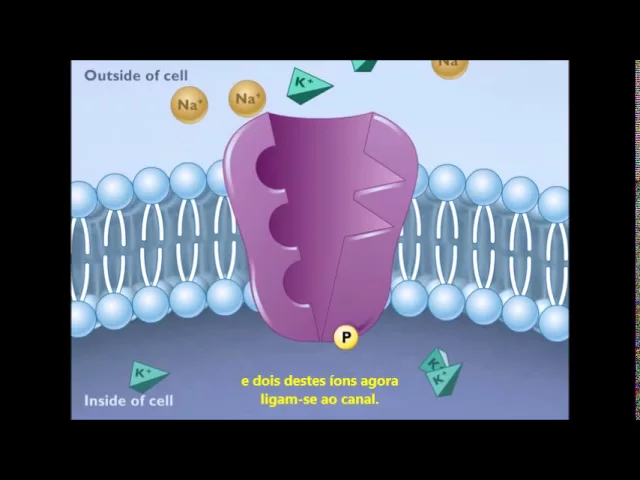
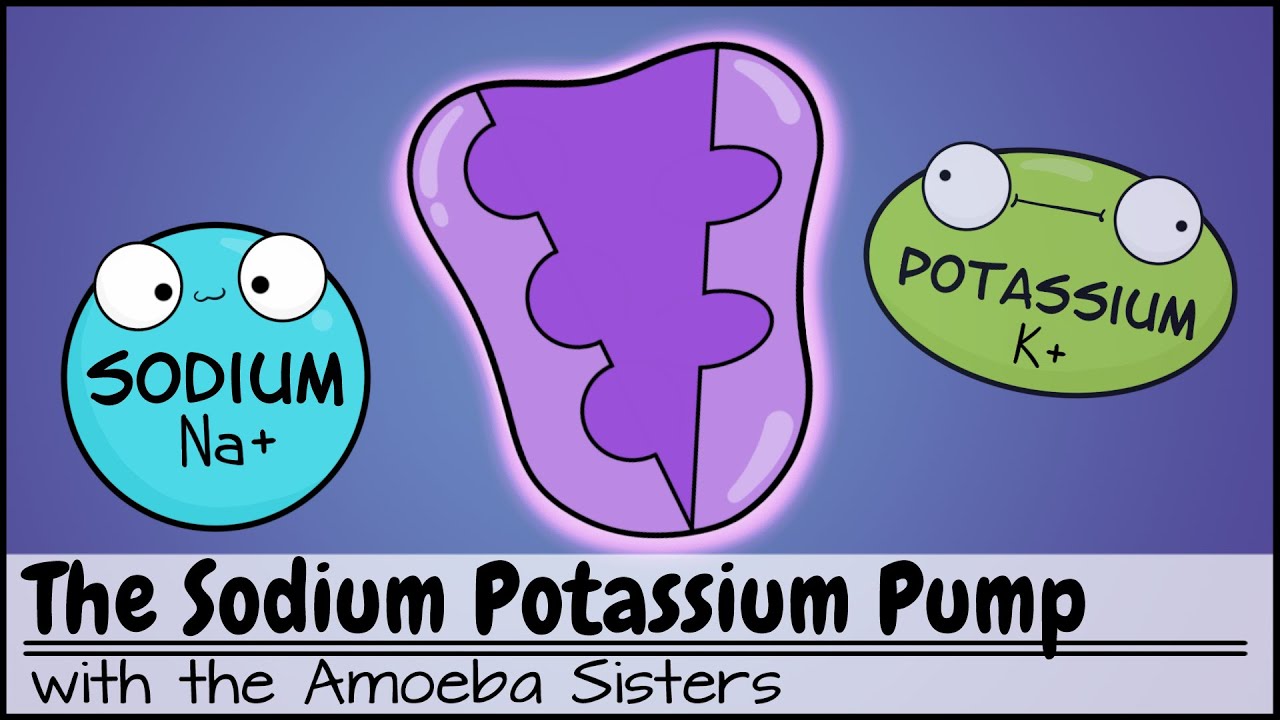
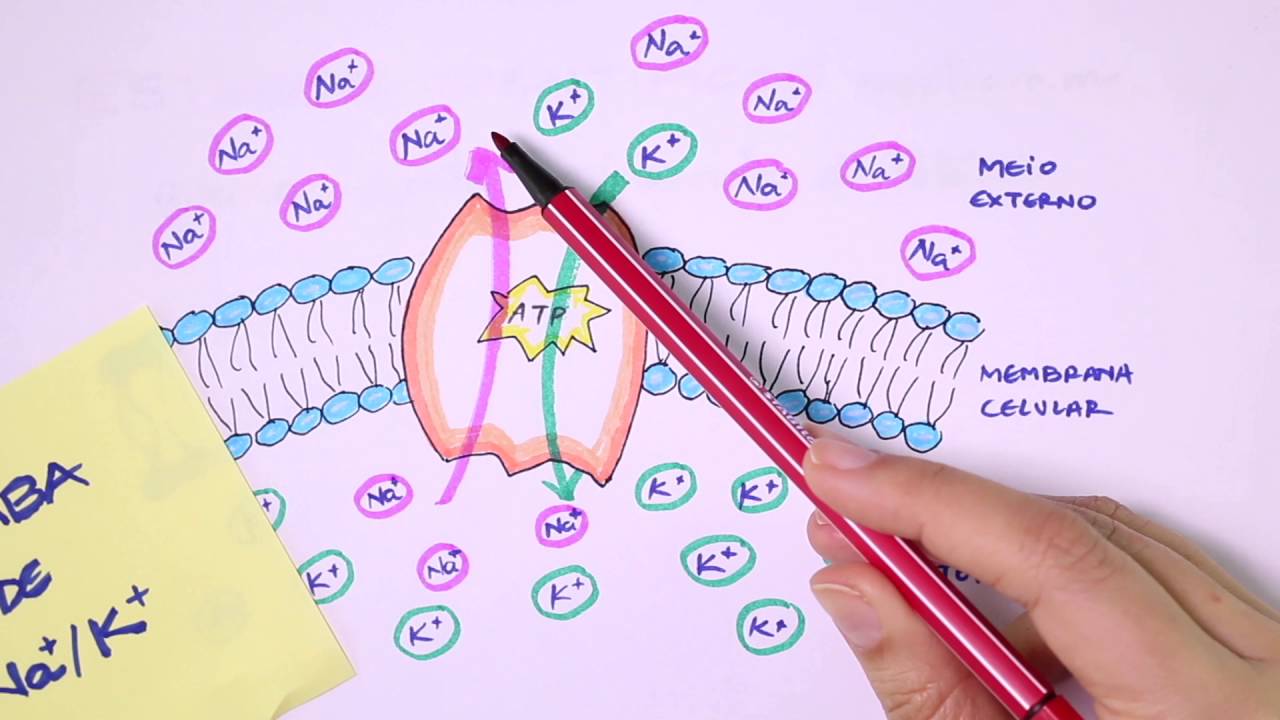
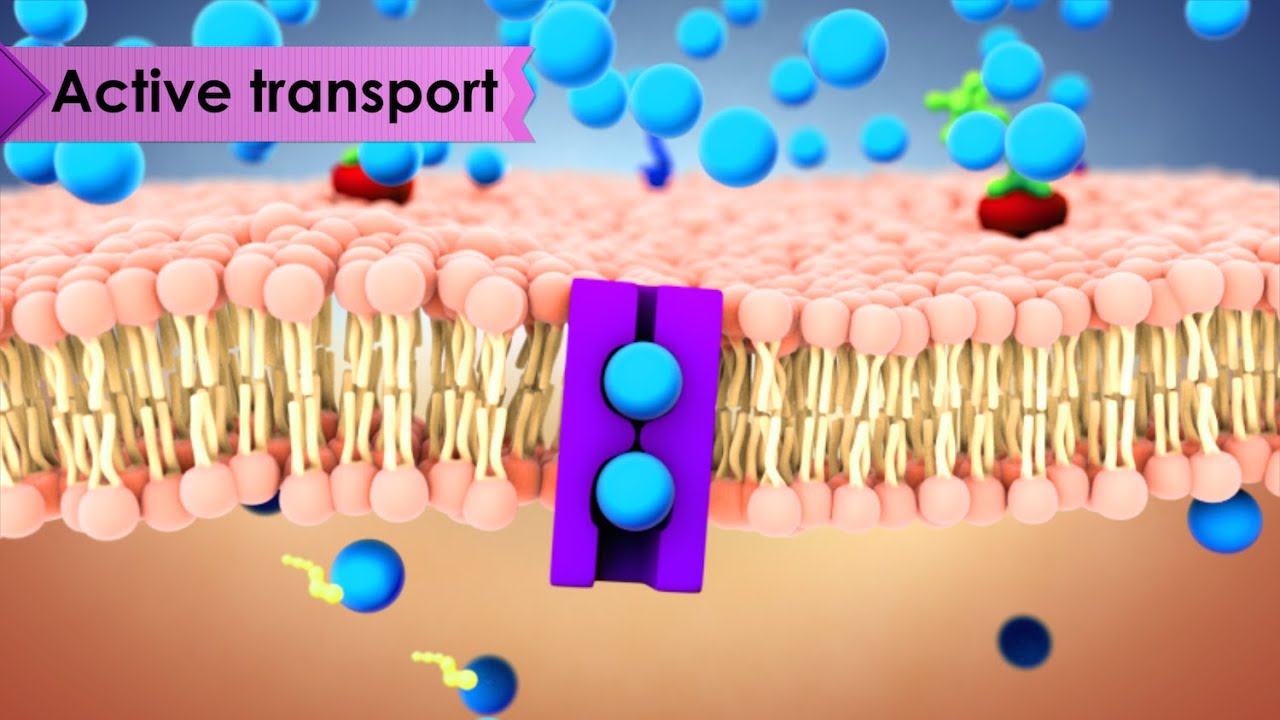
the sodium potassium pump is an active transport mechanism three sodium ions bind to the protein Channel and an ATP provides the energy to change the shape of the channel that in turn drives the ions through the channel one phosphate group from the ATP remains bound with the channel the sodium ions are released on the other side of the membrane outside of the cell and the new shape of the channel has a high affinity for pottassium ions and two of these ions now bind to the channel this binding again causes a change in the shape of
the protein Channel and this confirmational change releases the phosphate group on the cytoplasm side this release allows the channel to revert to its original shape and as a result the potassium ions are released inside the cell in its original shape the channel has a high affinity for sodium ions and when these ions bind again they initiate another cycle the important characteristic of this pump is that both sodium and potassium ions are moving from areas of low concentration to areas of high concentration that is to say each ion is moving against its concentration gradient this type
of movement can only be achieved by the constant expenditure of ATP energy