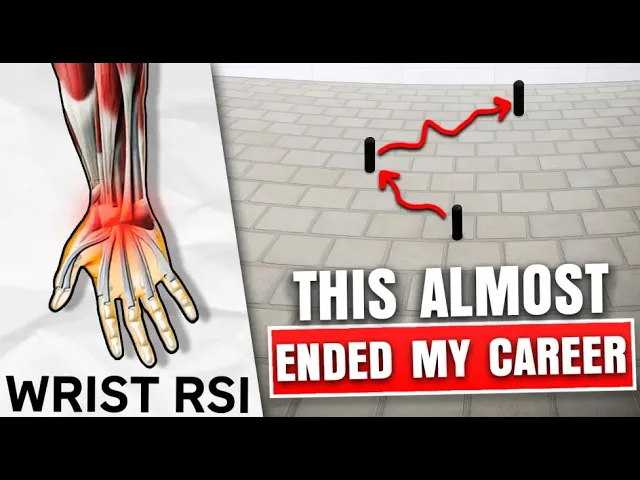
After I won the Rebel Ready Check and was crowned the number one aimer in America, my career almost ended. Not because I had reached number one, but because I had a lot of wrist pain. Today, I want to share more about the sharp pain and stiffness that I had in my wrist, which prevented me from playing longer sessions and started to affect my aim.
I also want to show you what I did to fix this issue and give you some simple steps you can follow to prevent this from happening. Before the Red Bull Ready Check, I was already dealing with some pain that caused my hand to feel extremely weak for about 1 week when I pushed too hard. Spending about four hours straight on a scenario with heavy wrist sweeping movements.
I continued to play through some of the discomfort during my prep for the ready check. Playing around 8 to nine hours per day on singular scenario types. I knew if I wanted to continue competing at a high level, I had to fix this.
Through Voltaic, I was connected with Matt over at 1HP, who I knew was a physical therapist that worked with a lot of pros in esports. He's worked with players like Elise, Benji, Fishy, Hollow, Leaf, Scream, Heaton, and hundreds more across all of the major esports titles. Here is what I was dealing with at the time and what Matt ended up finding during the initial assessment.
When Matty first came to me, he had pain on the palm side of his wrist and at his index and middle finger in the region shown. This pain was a four out of 10 at rest and would get worse after 2 to 3 hours of aim training at a medium intensity. And if he pushed past 3 hours, he felt sharpness and wouldn't be able to continue.
Manny also had stiffness around a four out of 10 at his index and middle fingers that would continue to get worse into his sessions. And this would impact his performance along with developing some misclicking. And he reported that it would happen two times every 3 to four runs.
So I went through a complete evaluation looking into his schedule, his physical conditioning, his lifestyle, and of course his mouse settings and grip. And the two main things that we found were number one was poor overall endurance of the forearm muscles responsible for clicking and it was only 33% of what is considered normal with an endurance test for this population. Secondly, the way he was approaching his training schedule needed some improvement.
He was not really considering how the amount of gameplay and the type of maps which vary in intensity that he would play on each day would impact the stress on his wrist and hand. And the best way you can understand this is by thinking about the muscles and tendons of your wrist and hand as having an HP bar. Every single time you're clicking and moving the mouse to hit targets, you're gradually losing HP.
And there's things like ergonomics and posture, which can impact how quickly you lose HP. If you have a death grip or awkward grip, you're going to lose 4 HP per click or movement compared to 1 HP with a normal grip. And when you get to zero, that's when your tissues become irritated and you feel pain or discomfort.
You can restore your HP with things like rest, massage, chinesis tape, ice, heating. But the most important thing is the size of your health bar. This represents a muscular endurance and tissue capacity.
Matty only had around 30 HP, which only allowed him to play for 2 hours. But not only that, he spent a lot of time pushing past his HP limit over the course of the year. and that repeatedly drained his HP, playing the 5 to 6 hours daily representing maybe 200 HP when he only had around maybe 80 at the time that led to his HP bar getting smaller and smaller and smaller over time.
So, the goal was to help him not only improve the size of his HP bar, but to help him better manage how quickly he would be losing his HP over days and weeks, and basically that just means managing his schedule. The work that I had done to prepare myself for the Rebel Ready Check had definitely taken a toll on my wrist. The intensity of the practice had left me basically with a third of my maximum HP bar.
Each day that I woke up after that tournament, my hand felt constantly weak, as if I had very little grip strength. The tendons in my wrist felt perpetually tired out and fatigued. Weakness and pain around the wrist and fingertips practically disabled me from training at my usual pace.
And this was made even worse by misclicks caused by the muscles in my fingers basically misfiring and twitching, disrupting my control. The work that I did with Matt at 1 HP improved my tenant endurance and helped me to restore my grip strength to what it had originally been. Within just 3 to 4 weeks of starting my program with him, the weakness around my wrist and fingers began to fade entirely well at rest, and I was able to reach my usual aim training grind sessions of up to four to 5 hours in play time.
The high scores came back as well. Stiffness was still present around the 3-hour mark, but it had significantly improved from what it had had been shortly after the Rebu Ready Check. With better strength and control of my hand returned to me, the misclicks also went away.
We were able to work together to be really intentional with how I structure my training, and we developed a working schedule that I used to maximize performance and scores in specific aim categories or competitions like the Kovac League. before I go into the exact steps that you can take to fix any pain that you might be having, check out the free 1HP guides via the link in the description and apply to one of their programs today to address your wrist pain earlier rather than later so it doesn't hold you back the same way it did for me. If you want to address any of the discomfort that you're dealing with, here are three steps that you can take.
So, the first thing we focused on was building up the endurance of his muscles. The ability of our muscles and tendons to handle repeated stress for long periods of time is key to preventing injuries. Mattie only had about 33% of what was considered normal.
And it took us four weeks to get him to around 70% which allowed him to significantly reduce his pain and allow him to start playing longer sessions. And it took us a total of 4 months or 16 weeks to get him back to 100% and back to winning without pain. The second thing we did was help him become a bit more intentional about his training schedule.
Again, our tissues can only handle so much. So, I needed to help Mattie understand that he needed to plan out his breaks and gradually build up his training time so he can maintain his peak performance. And we worked really closely together to plan out his week and the amount of hours he would play each day to ensure it wouldn't exceed what he could handle.
And this gradually increased over time with even more specific planning around these scenario types and whether he was playing to score or to learn the scenario. This helped him not only better manage his risk, but reach peak scores more quickly with certain scenarios. The third thing we did was helped him maintain a regular routine to prevent the problem from returning.
After reaching the HP that he felt happy with to handle a majority of his competitive schedule, it was important to teach him how to maintain his endurance. Periods of increased play time always occurred during the year, especially around any new game releases, school, work, or competition. So, keeping up with his program was important to maintain his condition, but also build or increase his HP during periods of lower demand.
If you feel like your hands are holding you back, check out the free guides in the link below.