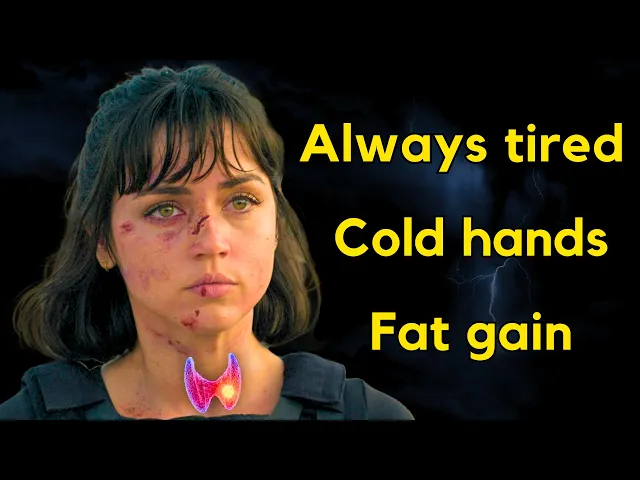
If you are: ALWAYS tired, frequently COLD, especially your hands, fingers, ears, toes and nose, Dealing with stubborn fat gain, Have poor mood or anxiety, Puffy features like cheeks and love handles, Have Gynecomastia or man boobs, Feel physically weak, Have dry skin or hair, Are anxious, Having hair loss, or Seem to always get sick… You might be hypothyroid and thus benefit from supplementing desiccated thyroid. Just because your doctor told you your thyroid is fine, doesn’t mean it’s true. Unfortunately, traditional bloodwork for thyroid function can be misleading to say the least.
Thyroid stimulating hormone, or TSH, is the primary, (and often only,) metric a doctor will test for hypothyroidism. A lower TSH should be indicative of higher thyroid hormones, since its secretion is in a negative feedback loop with the active thyroid hormones. However, TSH doesn't tell the full story.
For starters, TSH can be lowered by: Infection, Trauma, Cortisol, Adrenaline, Caffeine, and Fever So a low TSH alone cannot rule out hypothyroidism. The standard TSH reference range is also WAY too lenient, which is normally up to about 5. TSH >2 has been associated with:, Heart disease, and High cortisol While TSH even above 1.
5 is associated with:, Obesity, Insulin resistance, High blood pressure, High blood sugar, High lipids, High uric acid, Inflammation, Hypercoagulability, Metabolic syndrome The thyroid hormones: T4, which is inactive, T3, which is the active, pro-metabolism hormone, and Reverse T3, which is anti-metabolic, can also be measured in the blood, but this doesn't tell the full story either. These hormones must be transported through the blood, enter their target cells, and attach to the specific proteins in the cells that facilitate their actions. These factors can be disrupted by things like excess estrogen and stress, meaning you won’t be able to use your circulating thyroid hormone as well.
Unfortunately, it’s not as simple as thyroid in blood = thyroid activity. Values of the “free” T3 and T4 can be misleading as well. Thyroid hormones do not need to be "free" to exert their effects on various tissues, contrary the current medical dogma.
I still think testing can often be helpful, but you can certainly be hypothyroid while your labs look good on paper. So, how can you tell if you are hypothyroid? Here are some good tests: An underarm temperature measured first thing in the morning, leaving the thermometer under the arm for 10 minutes to equilibrate, should be >97.
8°F. Lower temperatures are highly indicative of hypothyroidism. This was the gold standard thyroid test (along with aforementioned symptoms) that was successfully used to treat thousands of hypothyroid people before blood tests.
Dr Broda Barnes used this one simple metric on thousands of patients to know if someone would benefit from desiccated thyroid supplementation. You can have “ideal” thyroid lab values yet still be at the temperature of a hibernating bear. Another test is the pulse rate.
Dr Ray Peat has suggested that a healthy resting pulse averaged 85 beats per minute, though Dr Ward Dean has suggested between 65-75 is a good range. Obviously, if you are a high level athlete, this metric is a bit less telling, but for the majority of us, a higher heart rate should indicate better thyroid function. That is, unless that high pulse is driven by stress hormones.
If your heart rate is high, but you feel restless, jittery, anxious, or like your heart is pounding, then that is NOT indicative of good thyroid function. Quite the opposite, it is a result of high stress hormones, which actually increase when thyroid function is low. The response of the Achilles tendon when tapped was another assessment tool.
In a well-functioning thyroid, the foot swings back quickly due to faster muscle relaxation,but a slow, controlled return motion indicates potentially sluggish energy status, often a sign of hypothyroidism. High cholesterol is another classical sign of hypothyroidism, while thyroid supplementation normalizes it. This is because we need thyroid hormone in order to convert cholesterol into things like steroid hormones.
Ultimately, your symptoms are the most telling. But, isn’t supplementing thyroid hormone unnatural? Well, consuming thyroid gland is actually about as natural and "ancestral" as it gets.
Paleo researchers have stated that we probably consumed lots of thyroid gland throughout human history. One paper states: "the shift from scavenging towards hunting. .
. would have increased thyroid gland consumption by hominins and thereby exogenous thyroid exposure. " "Nevertheless, tissues and organs (including thyroid glands) are commonly consumed by the primary hunters.
" In fact, thyroid gland actually used to be in common foods like hamburger meat up until the mid 1980s. It is only recently when people stopped eating organs and connective tissue in favor of strictly muscle meat, and consequently none of us consume thyroid gland anymore. I think of taking natural desiccated thyroid more like eating liver or bone broth than taking a supplement.
Now, how exactly do you use natural desiccated thyroid? First, I should mention first that desiccated thyroid is not a cure-all, and truly optimizing your metabolism will require an all hands on deck approach. However if you want some support in getting to the bottom of things, our team is here to help.
Click the top right of your screen or in the description below, and where it says “Schedule a free call” so we can help you with any of your health goals. Desiccated thyroid comes from the thyroid glands of pigs or cows, and is the traditional way of supplanting thyroid hormones. The brand matters a lot.
Many products seem to be unreliable, or outright useless. I’ve tried numerous products over the last few years. The product we use personally and with clients is from LifeGivingStore, which you can purchase using the link at the top right of the screen here or in the description below.
In this product, one grain of thyroid is 60 mg or 2 scoops, which contains about 40 mcg T4 and about 10 mcg T3. A starting dose of a half grain or one scoop is reasonable, and should be continued for 2-4 weeks before adjusting. The hormones take around this long to stabilize.
As you use it, you should consistently track: 1. Morning temperature & Symptoms Once you get to >97. 8°F and symptoms resolve, the correct dose has been found.
I take it with food to slow the absorption, or even split into multiple doses with meals. While some may require full replacement (4 to 5 grains), others find relief with as little as 15 mg, which is a quarter grain. Dr Barnes observed that his patients often required about two grains of thyroid to alleviate hypothyroid symptoms, occasionally needing more.
If you experience: Too fast of a heart rate, Palpitations, Anxiety, Overheating, Fatigue, or Shaky feelings, then you might have taken too much thyroid. The amount taken should be reduced or discontinued entirely. Effects of over stimulation should resolve in a few hours.
This type of response can also indicate low cholesterol or an issue with liver function, two systems that the thyroid depends on to do its good. Many people who should be candidates for supplementation find that thyroid does nothing for them, no matter how much they take. You may also need more nutrients, as the increased metabolic rate demands more resources.
Eat your liver, egg yolks, and oysters. There are also tons of other factors that could get you to your healthiest self, so be sure to check out our other content here, on Twitter and on Instagram to learn how to fully optimize your health. Don’t let them fool you, subscribe to our channel.