From questioning pigs at the witness stand to exorcising demons from their gardens, today we look at Bizarre Things People Did In The Middle Ages. #20 Animal Court Imagine a medieval farmhand wrangling a herd of sheep. They just so happened to get away from their shepherd, trample a neighbor’s garden, and eat some of their crops.
What do you think would happen next? If you guessed something other than those sheep being put on trial in the court of law, you are wrong! An oddly common practice in the middle ages, there are many incidents of animals being tried and punished throughout Europe, from domestic farm pets to insect and vermin pests.
In France in 1457, a sow and her piglets were reportedly put on trial after attacking a 5 year old boy. The piglets were acquitted while the mother sow faced hanging. #19 First Aid For hundreds of years, many among Europe’s upper echelon would consume parts of human remains as a means of medicinal treatment.
Royalty, religious leaders and scientists regularly ingested concoctions made from bones, blood, organs, fat and more. And it was rarely, if ever, questioned, despite gravediggers and tomb raiders often looting these ingredients from sacred Irish and Egyptian burial grounds. #18 Superstitious 13 Fear of the number thirteen precedes the middle ages, however it remained a prominent superstition throughout the era taking anxieties to a new extreme.
The Last Supper’s thirteen guests and subsequent betrayal by Judas lead many to become suspicious of any table of thirteen. It even became common evidence by supposed witch-hunters to take one’s attendance at a table of thirteen as proof of corroborating with the devil! #17 Sneezing Souls Have you ever sneezed so hard your soul flew out of your nose?
It happened all the time in the middle ages, or so they thought. To keep ol’ Beelzebub from taking your soul during this window of spiritual vulnerability, a tradition asking God to protect you from Satan’s menacing clutches began: the customary act of saying “Bless you. ” #16 Good Luck Child Labor Clothes A time of knights and adventure, but also famine and war, the middle ages were just as full of dread as they were of wonder.
Case in point, the Germans believed at the time that shirts woven by girls between the ages of 5 and 7 carried magical properties, such as guaranteed justice in court proceedings, protection against magic, and all-around good luck. After all, everyone knows the secret to harnessing magic is breaking child labor laws. .
. #15 The Good Bells Believed to deter demons, disperse lightning, and destroy witches, citizens throughout medieval Europe were always ringing church bells. It could be in the middle of a storm or in the dead of night, time wasn’t an issue once evil was afoot.
This of course led to a varying degree of problems, from the inconvenience of being awoken every night at midnight to the tragedy of multiple casualties by lightning strike. #14 The Bad Bells In the midst of winter around the 12th century, during what many believed were the days when the worlds of the living and dead were closest, people believed a sort of spectral hunt would sweep through towns. The sounds of phantom hounds and warriors would be heard sweeping through villages, terrorizing and stealing from townsfolk.
The incoming onslaught was accompanied more often than not by the sound of chains, howling winds, and clanging bells, according to historical accounts. This sound would evoke a collapse of villagers who heard it as they would fling themselves to the floor in hopes of avoiding the hunters’ gaze. #13 Demon of Typos Long before Auto-Correct, Spell Check or Clippy there was Titivillus.
Not so much an editing tool as an excuse, Titivillus was a demon said to work toward the disruption of scribes and church goers. He is said to almost pedantically record each verbal or written misstep and take them with him to Hell as evidence against the offenders. More often than not, though, his purpose seemed to be to serve as a scapegoat for various typos and misspellings found within transcribed documents.
#12 Virgin Horticulture In the middle ages, olive oil became a rare commodity and grew to be much more precious after the fall of the Roman Empire. Efforts to preserve and again replenish olive trees were concentrated through monasteries and convents that employed a number of traditional and religious superstitions in their gardening habits. One such convention employed the use of actual virgins to plant the seeds, as the belief was that a “more pure” individual doing the gardening would yield a more fruitful harvest.
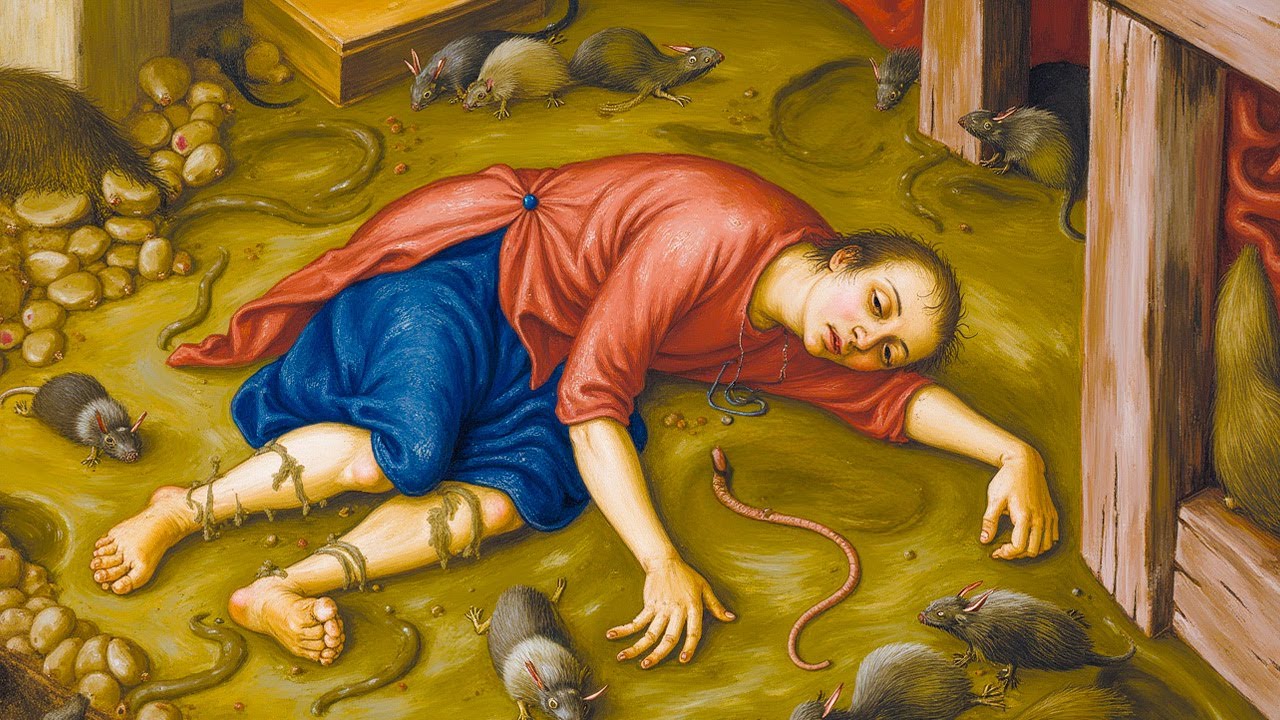
#11 Dirt Floors in England In many parts of Medieval England, floors were a luxury. The majority of living establishments were built on compact dirt, sometimes with patches of vegetation to help insulate and warm their homes during the winter. These dirt floors were especially filthy, as they were not only difficult to clean but also the target of anything from expectorate and mucus to vomit and worse.
Rather than attempt to clean the dirt, often times a new layer would simply be introduced atop the dirt, creating layers of filth that would continue to stack up for decades. What’s worse is that beds were a luxury, meaning residents often slept alongside these disgusting dirt floors as well. #10 Storytime Healing Medieval medicine is often viewed as a blend between alternative devices and fantastical recipes.
But one practice comes straight out of the stuff of dreams as some physicians during the middle ages decided to treat their patients. . .
with a story. Believing the process of hearing the story to assist in an injury’s ability to heal, these specialists would dress wounds and recount tales to inspire a quick recovery. #9 Cursed Brussel Sprouts A superstition dating back hundreds of years, many once believed that evil demons disguised themselves within leaves of lettuce, cabbage, and sprouts.
To prevent these spirits from affecting those who would eat their vegetarian Trojan Horse, the tradition of cutting a cross into each sprout was born. The tradition continues today with many even unaware of its intended purpose. #8 Spontaneous Generation Small, squirmy, and disgusting, insects like worms and maggots seem to appear out of thin air when camouflaged in their natural environment.
In the middle ages, people assumed these bugs did just that as the theory of these creatures simply spawning out of the dirt, or from remnants of rotting meat, became commonplace. Today, scientists know better as these locations simply serve as the perfect medium to lay eggs, hatch larva, or engage in whatever other reproduction function they have available. #7 Black Plague Ruined Bathing The middle ages has a particularly bad reputation when it comes to hygiene.
Often believed a time of dirtiness with modern depictions of medieval peasants as being dusty and grime-ridden, for a long time that wasn’t the case. Europeans bathed often before the 14th century, but then one of the most destructive pandemics of all time hit the world: The Black Plague. Desperate to counteract the plague’s high fatality toll, doctors of the time ordered patients to cease all bathing as over-abundance of bathing caused pores to open wide and in-turn let the plague into the body.
Or so they claimed. #6 Court and Cod Pieces If your parents think trends like halter and tube tops, Daisy Dukes, or saggy jeans are inappropriate looks for the public, wait until they get a load of 15th century fashion! A pillar of the male outfit of the time, the court piece was a small leather flap adorning a gentleman’s groin region and only hung about two inches from the waist.
Underneath, a pair of thin tights would proudly outline and display the man’s nether-regions for all to see. This accessory would then evolve into the codpiece, a hardened protrusion, sometimes leather or metal, that would sit atop the groin and mimic ones manhood in an almost cartoonish presentation. #5 Nasty City Streets The modern toilet is one of the most useful items ever invented and one that we take for granted multiple times a day.
In the middle ages, the majority of sanitation systems were extremely rudimentary to say the least. Each morning, residents would empty trash and sometimes excrement into the open streets, waiting for the filth to make its way down the roads and into their simple sewers. This would only make matters worse, though, once it rained.
These simple sewers would then overflow, creating an exponentially worse smell than the typical level of rancid people were used to at the time. #4 Mob Football Not nearly as entertainment-focused, world-renowned, or institutional a game as our modern variations, Medieval Football was a popular game across Europe throughout most all of the middle ages. Primarily a game of varying goal points with a leather bladder for a ball, the only major rules of this original game were simple: No murdering or manslaughter.
Otherwise, get the ball to the goal. That’s it! Though simple and enjoyed by many, royal families over the ages attempted to dissuade and even ban the game at times.
The belief, by these members of royalty, is that the game is not as productive as other extra curricular activities or schooling and that free time could be spent on something more useful like archery. The ban on football became so intense that at some points archery training was made to be compulsory for all men. #3 Occult Magnets Though most know them as everyday items on refrigerators around the world, they weren’t seen so casually by most in the medieval times as magnets and their use were often attributed to the workings of the occult.
Some early scientists and philosophers would continue to examine magnetism outside of considering an occult influence as a possibility, however the common person would settle for attributing it to black magic instead. #2 The Children’s Crusade Nations will use any and all sorts of motives to recruit soldiers to their cause, a truth still demonstrated in the modern world. Religion, in particular, can be an incredibly powerful recruitment tool, attracting and encouraging devout followers to make sacrifices they may not normally be so eager to make.
So, then, it may come as little surprise when, in the midst of the Crusades, a group of 15 to 30 thousand children were quick to follow another child who claimed to have been chosen to lead an army to Jerusalem. The army never made it to the Holy Land, struggling to get funding from the church or even scrounge up rations for the ranks, many ended up swindled by merchants aboard slave ships or worse. #1 Golden Healing In another ingenious revelation on this list, there once was the belief by physicians, scholars, and more that the proper way to treat a wound is to disinfect with urine.
This belief became a popular view among many, as urine was used to treat sores, bites, burns, and pretty much anything but death. And the craziest part of the whole thing? Often times, thanks to the ammonia acting as a disinfectant, it actually worked!