And now we revisit a moment that shocked a nation. The 1992 Ruby Ridge siege. It was an 11-day armed standoff in the mountains of Idaho between federal agents and the Weaver family.
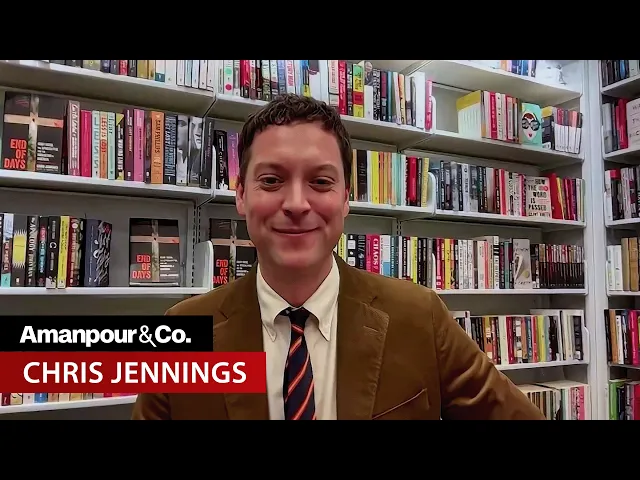
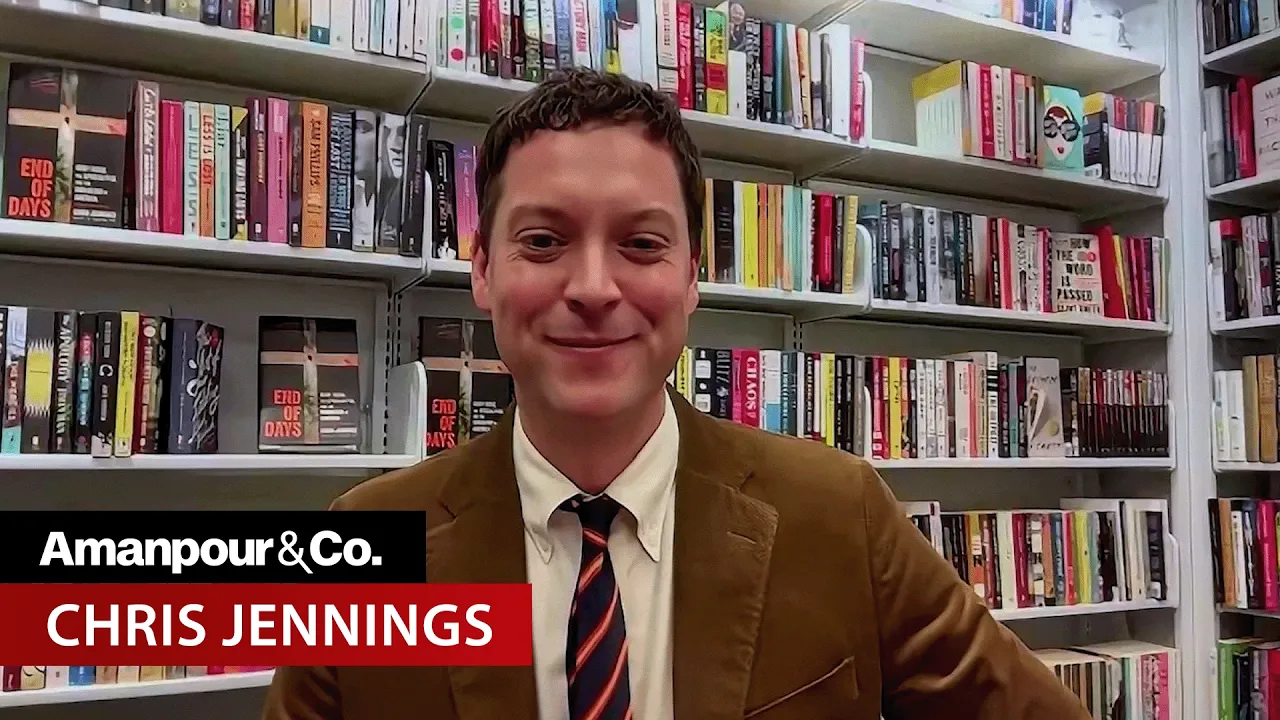
It left three people dead. In his new book, End of Days, Chris Jennings argues that the episode rooted in apocalyptic, racist, and anti-government ideology helped pave the way for today's conspiracydriven politics. Walter Isacson spoke with him on the legacy of that widely televised event and what it reveals about America today.
>> Thank you, Chris John and Christopher Jennings. Welcome to the show. >> Thank you, Walter.
It's a pleasure to be here. >> It's been 34 years since the tragic events at Ruby Ridge. Remind everybody what that story was and why you want to revisit it now.
>> Sure. The story in its uh most basic form was a a tale of a family who had moved to northern Idaho from Iowa to separate themselves from a civilization that they thought was doomed. They they thought the end of the world was coming and the man eventually became ins snared in a minor crime uh selling two illegally modified guns and the situation sort of spiraled from there.
They had a very conspiratorial view about the United States government that came out of a a fundamentalist background that they they had been um praying and worshiping in these various fundamentalist churches. And so he refused to go to court. And in the effort, a very protracted, expensive effort to to get him to come down the mountain uh and and face the rather minor charge for the guns, the situation devolved and there was uh his son was killed and a US marshal was killed and their dog was killed.
And the following day, his wife Victoria Weaver was shot and Randy was shot. Victoria died. their friend Kevin Harris who was living with them was shot and a protracted siege began with none of them uh in the family wanting to come out of the cabin.
And it was a it was really a tragic situation, but I I wanted to revisit it because I thought a lot of the uh elements that are active in our contemporary political life are are sort of there in seed form. the conspiracism, deep distrust of the government, issues o over whether when and when when federal agents can use deadly force against citizens, all the things that we're talking about today. >> Well, Ruby Ridge became a big symbol for the clash between, you know, government and the sort of uh well, end times prophecy uh philosophy, right?
>> Yeah, that's right. I mean, I think the story has usually been told as a matter about free speech and and gun rights and freedom of religion and and government excess, but really the way I tell the story and what I think is the the most relevant thing at play is is the religion, the theology that has been present in our national life for a long time, but this particular strain of fundamentalism that that breeds this conspiracism and this deep distrust in the government. And you know what happened at Ruby Ridge was a lot of those theories were sort of vindicated in the minds of the people who already held them.
These these were people who said the government's going to come and kill you and then in their case as it happened the government did come. >> Well wait remind us what end times prophecy what that movement is. It's uh you know in the book I I I narrate how American history as Protestant theology has evolved in a pretty significant way from say the founding until the present especially starting at the end of the 19th century and really accelerating through the 20th century where the prevailing belief among a lot of American evangelicals and fundamentalists flipped from a belief that the sort of kingdom of God was coming to earth and the world was gradually going to be perfected through the the spread of the gospel and material progress to an apocalyptic faith.
The idea that the the end of the world is nigh and that you can read biblical prophecy through current events and sort of map uh you know the book the book of revelation onto the daily newspaper and say uh which which country represents what biblical uh nation and and that that those beliefs really spread over the course of the 20th century especially in the 60s7s and 80s when the weavers were were getting deeply involved with their faith. How is end times prophecy at all relevant today? >> Some of the the sort of like moods and attitudes that it brought into American Christendom and and then sort of sub subsequently into American life in general uh derive from end times prophecy.
This this belief in creeping globalism that that conspiracy is the true engine of history that there's a secret battle between light and dark playing out just beneath the surface of events. I mean, if you look at anything from QAnon to some of what's being written about the Jeffrey Epstein case, all of these things, uh, if you've read enough prophecy, you can hear echoes of this long history of popular prophecy in the United States. >> And why did Northern Idaho become such a haven?
>> Well, northern Idaho became a haven, not just for fundamentalists, but but for anyone looking to sort of escape from from what they regarded as an America in decline. It was an inexpensive place to live. It was lightly people and it was overwhelmingly white.
The Aryan nations which plays a key role in this story because it was through their involvement with the area nations that the weavers ended up in legal hot water u established itself in the Idaho panhandle and a lot of other groups that would go on to sort of form the nucleus of the militia movement. And um there was a couple of sort of hard-right terror organizations in the 80s, most famously the group called the order who committed all kinds of acts of terrorism, bombings, robberies, murders. Uh they were all centered up there.
It was an area that that while people tend to think of the old south as as the sort of homeland of organized white supremacy in the US by the 80s and mid70s to early 90s, it was really the inland Pacific Northwest where the action was happening. How important is racism to this whole phenomenon and was it really white supremacists or was it that just sort of tangential to the end times prophecy? >> Well, in the case of the Weavers, I mean, it part of how the story was sort of uh processed and became a bit of a morality play about the excesses of big government.
The the the racial part and the sort of neo-Nazism part got scrubbed out of it a little bit. But the Weavers were were true believing hardcore white supremacists and pretty much all the people in their community were um not all the people in the community where they lived but the the community of activists which with which they took part. And I think that um the theology and the white power stuff were were inextricable for them.
They interpreted the Bible. There was a movement called Christian identity which which taught a way of interpreting the Bible through the lens of race very explicitly in which the Jews were the agents of Antichrist and they were going to be the ones to usher in this end times government that would oppress Christians and similarly dark views of people of color. >> But what about economics?
I mean to some extent the whole theology involves people there's some conspiracy to leave you out. Was there some economic populism involved? >> Absolutely.
Yeah. I mean, the weavers left Iowa in 1983, which was sort of just at the peak of what became known as the farm crisis. Ry's uh job was a deer and company.
He worked on the factory making uh tractors and combines. And that whole region of the country with Iowa at the epicenter was brutally depressed by after a rather booming 1970s by by the farm crisis. It just commodities market dropped and there was a spate of foreclosures which brought a lot of conspiracism.
Even old school stuff the John Burch Society the Klux Clan flooded into the Midwest where it formerly had not found much purchase. Uh so the weavers themselves were not direct victims of the farm crisis. Randy kept his job when they went west.
It was not because of economic procarity. It was because of their faith. But they were certainly on the ground when an economic crisis brought hardight conspiratorial ideas into their community.
>> Well, he uh Randy Weaver seems paranoid and conspiratorial, but when he gets arrested, uh I'm going to quote your words. It really did come to resemble a version of every paranoia act's most outlandish nightmares. Was there some truth to that conspiracy and paranoid feeling?
>> The Weavers for more than 10 years before they fell under siege from the, you know, elite FBI hostage rescue team had been saying someday our home will become under siege by federal agents. And we, they had literally filed an affidavit 5 years before any of this even started saying we're going to kill a federal agent. and then in self-defense and then they're going to come and kill us all.
They they prophesied with shocking precision what actually ended up happening to them. So you can either say it's because Vicky Weaver herself was a real prophet or you can say that there is a way in which these deep paranoia can fulfill themselves. >> You said that one of the most fateful decisions comes aboard I think it's an FBI jet flying uh from Washington DC out there.
Tell me what that was. Sure. I mean, the government made a lot of mistakes in just their failure to understand what they were dealing with uh with with people like the Weavers, but but the one that was sort of most unambiguous was this decision to revise their own rules of engagement, which is basically the written document that says when a FBI agent can shoot at a citizen.
Um, and on board that jet, laboring under the misbelief that they were sending their their tactical team into an ongoing firefight with a band of zealous white supremacists intent on killing as many federal agents as possible when in fact what they were going to confront was a family cowering inside of their cabin waiting for themselves to be killed. uh they revised their their uh rules of engagement to say that any adult with a gun once a surrender announcement has been issued and bearing in mind this is after a US marshal has already been shot and killed by um Kevin Harris the weaver's friend they said uh any adult with a gun can and should be shot um on site after after a s surrender announcement and the whole thing unraveled from there in in in really tragic ways but Subsequently, when the government did a long uh post-mortem on everything that had gone wrong, that was the most obvious and most obviously unconstitutional act was that that revision of the the rules of engagement. >> One of the factors you point to is the postVietnam militarization of American life.
In other words, coming out of the Vietnam War, this sense of uh militias and militarization. Explain that to me. >> Yeah.
Yeah. Well, it was it was present on both sides of the conflict. It was present in the tactics used by the the government and it was very much present in the Weavers and the community the wider community of sort of white white power activists that they were adjacent to.
A lot of people were themselves Vietnam veterans. A lot of people on both sides of the the conflict. Randy himself were never deployed to to Vietnam, but he was in the army and qualified to be a Green Beret, which in the mind of the government made him more scary.
there was this notion of this man with this all this special training who could who could kill them. So, uh the the weapons, the the the tactics, the the way people talked about insurgency, the way the government and its citizens were both regarding each other owed a lot to Vietnam. I mean, if you look at photographs of the Ruby Ridge siege, it looks like you're looking at quesan and there's Hueies, there's olive drab mess tents, there's hundreds of federal agents in camo with, you know, balaclavas and face paint.
There was the the event took on a militaristic uh quality almost immediately. How did the the change in federal policies that came after Ruby Ridge, how might that affect the investigations happening into the shootings in Minneapolis? Now, >> yeah, I mean, the analogy between the killings of Renee Good and Alex Prey and the the killings that happened at at Ruby Ridge are there's something to them because there was this matter of qualified immunity.
There was an effort to to prosecute the sniper who had shot and killed Vicky Weaver. Um, and I think the analogy kind of breaks down after that because that that that was unsuccessful. His qualified immunity was was used as the federal defense and that that sniper never saw trial.
Um, and in the case of Ruby Ridge, I think the the scale of the government's response, if you actually look at it thoughtfully, is mostly a testament to their effort to avoid any kind of conflict or or gunplay. what we saw recently in Minneapolis to my mind looks more like, you know, direct carelessness. Not necessarily.
I mean, certainly among the agents on the ground, but the policy itself seems designed to stir up uh chaos. I think the the question of qualified immunity, what legal liability is there for federal agents who who shoot citizens um needs to be taken very seriously, I think, because um as we saw in Minneapolis, there there the sense that there is total immunity for for these CBP and ICE officers has has led to a lot of public mistrust and obviously a lot of tragedy in the last couple of weeks. You describe that time period as I think the quote is an era not unlike our own.
Why so? >> Well, you know, Ruby Ridge came immediately after the end of the Cold War and before 9/11. It was this sort of moment in which the American right especially turned what had been a longstanding uh sort of well of conspiratorial energy that had been directed outward largely at global communism turned inward and and became fixated on the notion that the the evil was coming from within our own federal government.
And uh so it was a time sort of without an obvious foreign antagonist for people to attach their their anger and their attention on. And it was a time of uh sort of it was it was happening more on the fringes then it is now but there was sort of populist energy and and widespread conspiracism. I think all of those things are very present in our in our current moment.
>> You referred to it as a hard right phenomenon, farright phenomenon, but to what extent was it just a French phenomenon that had very little to do with pure ideology and could be hard friends left too? Yeah, I mean I I think that's fair. I think in this case um the term hard right really fits the these were people who who held beliefs that are commonly associated with with the hard right.
They were they were generally deeply anti-ismmetic and racist. They they hated the government. Um they were generally Christian fundamentalists.
So all of those things I think are fair to classify in this case as as as qualities of what we might call the hard right. But but sure of course there are conspiracy theories across the political spectrum. Um in general I think if you look throughout American history they tend to have a rightward veilance only because I think conspiracy theories are sort of an allergic reaction to social change.
They're they're a fundamentally reactionary way of engaging with the world. So um you know their response to anything new you know with social security was met with a torrent of end times related conspiracies. uh the Obamacare, as you might recall, was was met with this.
It's usually it's like large federal programs become the object of these things. Same with large waves of immigration. You know, there were a lot of conspiracies about Catholics when Catholics were immigrating in great waves.
Recently, we've seen a lot of conspiracies about people coming from other parts of the world. So I I I would argue that while of course conspiracy theories exist across the political spectrum, they have historically had a rightward veilance just just for that reason that they're a response to change. >> You write that three decades on Ruby Ridge seems less like a finale than the start of something.
Tell me what you mean by that. Well, you know, when Ruby Reach happened and an important fact is it was very swiftly um followed by the the disaster in Waco at the the Mount Carmel compound of the branch divides where the same federal agencies were responsible for the death of a bunch of citizens um in very similar circumstances. And those two events really coming as they did at the end of the century and the end of the millennium looked like features of the 20th century.
There were all, you know, there was this fundamentalist ideology, there was all this trappings of neo-Naziism, there was all this um aftershocks of Vietnam. Those things all seemed like what we were leaving behind in the 20th century. But now, I think if you if you read about the weavers, you get this uncanny feeling that these are people of our current time.
Um and and certainly the extent to which some of the fringier ideas of that era have now moved into the mainstream suggests that Ruby Ridge was the dawn of our of our current age, not the close of of the previous one. >> Christopher Jennings, thank you so much for joining us. >> Thank you so much, Walter.
I appreciate it.