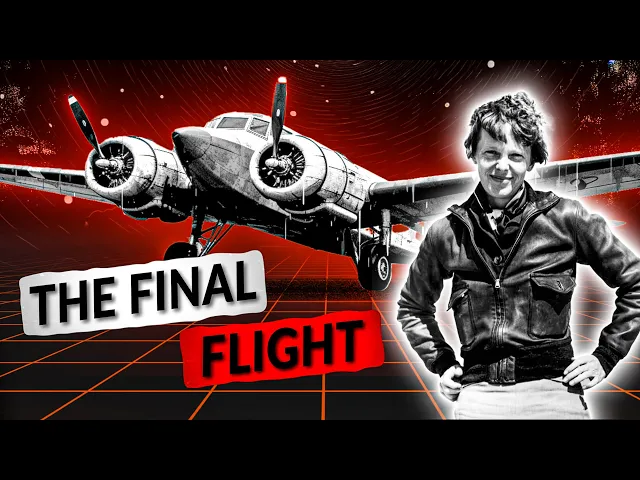
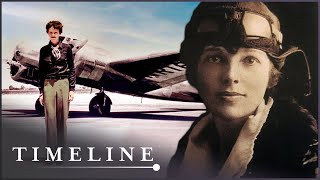
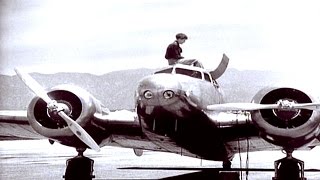
a tiny red airplane bounced among the clouds twelve thousand feet above the water of the North Atlantic giant black storm clouds lay between the plain and the shores of Ireland and Far Below Iceberg strutted out of the cold waves the year was 1932 and the plane carried Amelia Earhart one of the most famous pilots in the United States if she made it she would be the first woman to fly an airplane over the Atlantic herself but first she had to succeed and there was a reason why so few people had made it the trip was perilous because airplanes in 1930 were small most were not pressurized and they didn't have many of the instruments that today's Pilots rely on a pilot had to go by her sense of sight and how the plane felt by keeping tight control of the airplane for hours at a time the black clouds ahead were too large to fly around so Earhart pointed her plane right into them when the rain turned to ice the planes controls froze sending it into a tailspin as the plane plummeted toward the rigid water Amelia struggled to get control finally the warmer air below the clouds melted the ice and Amelia was able to pull the plane out of its spin many hours later Earhart landed the plane down in a pasture in Londonderry Northern Ireland she had finally done it she had crossed the Atlantic Ocean and an airplane she flew herself on this journey she had to fight many other problems including fatigue a leaky fuel tank and a cracked manifold that occasionally spewed Flames Earhart had already been famous as an aviator and an adventurer and now she would become a legend but she would be most remembered for what many people think of as her biggest failure while trying to fly her plane around the world she disappeared her mysterious disappearance added to all of this has given Earhart lasting recognition and popular culture as one of the world's most famous pilots to this day despite many theories though no proof of Earhart's fate exist Earhart's love for Aviation was born when her father took her to an aerial show where she got to ride in an open cockpit flight over Los Angeles later she said that by the time I had got two or three hundred feet off the ground I knew I had to fly in 1922 just a few years after taking a flight Erhardt began attempting to break records in 1928 a publicist in New York named George Putnam was searching for a woman to be the first to ride in an airplane over the Atlantic it was a dangerous undertaking three women had died trying to fly across the Atlantic the previous year once Putnam contacted Earhart she agreed to be part of this flight as a mere passenger on that flight Earhart referred to herself as a sack of potatoes because she felt like she had no purpose the first woman to cross the Atlantic made headlines around the world and received a ticket tape parade Earhart did not think she deserved the attention she received but was more determined to make the trip herself four years later in 1932 Amelia began her journey to cross the Atlantic Ocean despite eventually veering off course she broke several records on the historic flight not only did she become the first woman to fly the Atlantic solo and the only person to do it twice she also broke the record for the longest flight by a woman and broke the record for crossing the Atlantic Ocean in the shortest time Earhart took off in the morning from Harbor Grace Newfoundland with that day's copy of the local newspaper to confirm the date of the flights almost immediately the flight ran into difficulty as she encountered thick clouds and ice on the wings after about 12 hours the conditions got worse and the plane began to experience mechanical difficulties she knew she wasn't going to make it to Paris so she started looking for a new place to land she found a pastor just outside a small village in Londonderry Northern Ireland and successfully landed this flight established Earhart as an international hero in 1937 as Earhart neared her 40th birthday she was ready for a Monumental and final challenge she wanted to be the first woman to fly around the world while preparing for this flight she said I have a feeling that there is just about one more good flight left in my system and I hope this trip is it Earhart pulled together a top-rated crew of three men which included Captain Harry Manning Fred Noonan and Paul matz Manning who had been the captain of the President Roosevelt would become Earhart's first navigator Noonan who had vast experience in both marine and flight navigation was to be the second Navigator manst a Hollywood stunt pilot was chosen to be Earhart's technical advisor for her around the world flight the airplane that Amelia Earhart chose was a Lockheed Elektra 10e manufactured by the Lockheed Aircraft Company the Electra model 10 was an all-metal twin engine low Wing monoplane with retractable landing gear designed as a small medium range airliner in the standard configuration it carried a crew of two and up to 10 passengers Earhart wanted special modifications in her plane and these included four auxiliary fuel tanks in the passenger compartment a navigator stationed to the rear event elimination of Passenger Windows installation of various radio navigation equipment and additional batteries the original plan was to take off from Oakland California and fly West to Hawaii from there the group would fly across the Pacific Ocean to Australia then they would cross the subcontinent of India onto Africa then to Florida and back to California on March 17 1937 they took off from Oakland on the first leg they experienced some periodic problems flying across the Pacific and landed in Hawaii for some repairs after three days the electro began its takeoff but something went wrong Earhart lost control and looped a plane on the runway how this happened is still the subject of some controversy several witnesses including an Associated Press journalist said they saw a tire blow other sources including Paul manst indicated it was a pilot error although no one was seriously hurt the plane was severely damaged and had to be shipped back to California for extensive repairs meanwhile Earhart and Putnam secured additional funding for a new flight the stress of the delay and the grueling fundraising appearances left Earhart exhausted by the time the plane was repaired weather patterns and global wind changes required alterations to the flight plan this time Earhart and her crew would fly East Captain Harry Manning would not join the team due to previous commitments Paul mensk was also absent reportedly due to a contract dispute after flying from Oakland to Miami Florida Earhart and Newton took off on June 1st from Miami with much fanfare and publicity they first flew to Puerto Rico and then Eastward toward Africa from here they flew to the Red Sea to Karachi Pakistan and to Calcutta India later from India they continued to Rangoon Bangkok and Singapore at Port Darwin Australia they were able to make crucial repairs to their plane Amelia reached lay New Guinea on June 29. by this time about 22 000 miles of the journey had been completed the remaining 7 000 miles would take place over the Pacific in Lay several necessary adjustments were made to the plane extra amounts of fuel were stowed on board the parachutes were packed away for there would be no need for them while flying along the vast and desolate Pacific Ocean her plan was to head to Howland Island 2 556 miles away situated between Hawaii and Australia a flat sliver of land 6500 feet long one thousand six hundred feet wide and no more than 20 feet above the ocean waves the island would be hard to distinguish from similar looking Cloud shapes Howland is such a small spot in the Pacific that every AIDS are locating it must be available Earhart emphasized the U. S Coast Guard Cutter Itasca the radio contact was stationed just offshore of Howland Island two other U.
S ships ordered to burn every light on board were positioned along the flight route as markers to meet this challenge Earhart and Noonan had an elaborate plan with several contingencies Celestial navigation would be used to track the routes and keep them on course in the case of overcast Skies they had radio communication with the U. S Coast Guard vessel Itasca stationed off Howland Island after aligning themselves with howland's correct latitude they would run north and south looking for the island and the smoke plume to be sent up by the Itasca they even had emergency plans to ditch the plane if need be believing the empty fuel tanks would give the planes of buoyancy as well as time to get into the small inflatable raft to wait for Rescue Earhart and Noonan set out from lay on July 2nd 1937 at 12 30 a. m heading East toward Howland Island though the Flyers seemed to have a well thought out plan several early decisions led to grave consequences later on radio equipment with shorter wavelength frequencies were left behind presumably to allow more room for fuel canisters this equipment could broadcast radio signals farther distances on top of this due to inadequate quantities of high octane fuel the electric carried about 1 000 gallons 50 gallons short at full capacity the crew ran into difficulty almost from the start witnesses to the July 2 takeoff reported that a radio antenna may have been damaged it is also believed that due to the extensive overcast conditions Noonan might have had extreme difficulty with Celestial navigation if that weren't enough it was later discovered that the Flyers were using maps that may have been inaccurate according to experts evidence shows that the charts used by Noonan and Erhard placed Howland Island nearly six miles off its actual position these circumstances led to a series of problems that couldn't be solved as arar and Noonan reached this supposed position of Howland Island they maneuvered into the North and South tracking route to find the island they look for visual and auditory signals from the Itasca but for various reasons radio communication was very poor that day there is also confusion between Earhart and the Itasca over which frequencies to use and a misunderstanding as to the agreed upon check-in time the Flyers were operating on Greenwich civil time the Itasca was operating on the naval time zone which set their schedules 30 minutes apart as Don neared Earhart called the Itasca reporting cloudy weather cloudy and later Transmissions Earhart asked the Itasca to take bearings on her the Itasca sent her a steady stream of Transmissions but she could not hear them on the morning of July 2 1937 at 7 20 am Earhart reported her position placing the Electra on a course at 20 miles Southwest of nukumanu islands at 7 42 a.
m the Itasca picked up this message from the Earhart we must be on you but we cannot see you fuel is running low been unable to reach you by radio we are flying at one thousand feet the ship replied but there was no indication that Earhart heard this the Flyer's last communication was at 8 43 am though the transmission was marked as questionable it is believed Earhart and Noonan thought they were running along the north south line however Noonan's chart of howland's position was off by five nautical miles when the Itasca realized that they had lost contact they began an immediate search despite the efforts of 66 aircrafts and nine ships an estimated 4 million dollar rescue authorized by President Franklin D Roosevelt the fate of the two Flyers remained a mystery the official search ended on July 18 1937 but Poonam financed additional search efforts working off tips of Naval experts and even psychics in an attempt to find his wife in October 1937 he acknowledged that any chance of Earhart and Noonan surviving was gone on January 5th 1939 Earhart was declared legally dead by the superior court of Los Angeles now let's take a look at some of the theories surrounding Earhart's disappearance Amelia Earhart the Lost evidence was an investigative special on History Channel that aired in 2017. exploring the significance of a photograph discovered by a retired federal agent in the National Archives the photograph was supposedly taken by a spy on jolawit island and has been found to be unaltered in addition a ship is seen Towing an object that aligns with the measurements of Earhart's plane the claim is if Earhart and Noonan landed there the Japanese ship koshumaru was in the area and could have taken them and the plane to jallow it before bringing them as prisoners to Saipan Earhart expert Richard Gillespie who leads the International Group for historic aircraft recovery tycar so the guardian that the photo was silly also this theory was debunked quickly as in July 2017 a Japanese military blogger found the same photo and a Japanese language travelogue archived in Japan's national library and the picture was published in 1935. two years before Earhart's disappearance sensor disappearance several theories have formed regarding Earhart's last days many of which have been connected to various artifacts that have been found on Pacific Islands one theory is that the plane that Earhart and Noonan were flying was ditched or crashed and the two perished at Sea another theory which is championed by tycar is that Earhart and Noonan might have flown without radio transmission for some time after the last radio signal landing at uninhabited Nico marorro Reef a tiny island in the Pacific Ocean 350 miles Southeast of Howland Island this island is where they would ultimately die in 2017 a team of four forensic bone sniffing dogs with taikar and the National Geographic Society claimed to have found the spot where Earhart may have died in 1940 a British official reported finding human bones beneath a tree and sent samples of the soil to a lab in Germany for DNA analysis in 2018 Anthropologist Richard Jantz announced the results of a study in which he re-examined the original forensic analysis of the bones discovered in 1940.
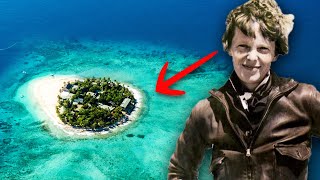
the original analysis determined the bones to possibly be from a short stocky European male after comparing the bone measurements to data from 2776 other people from the time period and studying photos of Earhart and her clothing measurements Jans concluded that there was a likely match complementing the results of the bone analysis in 2018 taikar released a report built around years of analysis of radio distress signals sent by Earhart in the days after her disappearance they study tide patterns and determined that the distress signals corresponded with the Reef's low ties the only time Earhart could run the plane's engine without fear of flooding furthermore very citizens documented the reception of messages from Earhart via radio two days after the crash a San Francisco resident Heard a Voice from the radio saying still alive better hurry tell husband All Rights three days later someone in Eastern Canada picked up the message can you read me can you read me this is Amelia Earhart please come in based on the above evidence tycar put forward a hypothesis key points of their hypothesis are that having failed to find Howland Island Amelia and Noonan continued on the navigational line Amelia said they were following that line LED them to uninhabited Gardner Island where Amelia landed the Elektra safely on the Island's Reef for the next several nights they used the aircraft's radio to send distress signals radio bearings take in on the signals crossed in the vicinity of Gardner Island one week after the flight disappeared three U.