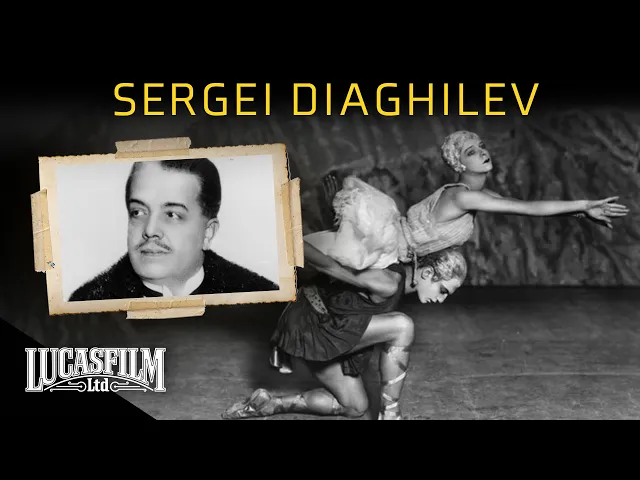
In 1909, the who’s who of Parisian society turned out to attend performances that would be like nothing anyone had seen before. A group of Russian dancers, choreographers, artists, and musicians put on a show that would take ballet to a new level of artistic expression. The catalyst for the company was an impresario who wanted to revitalize dance through his daring innovations.
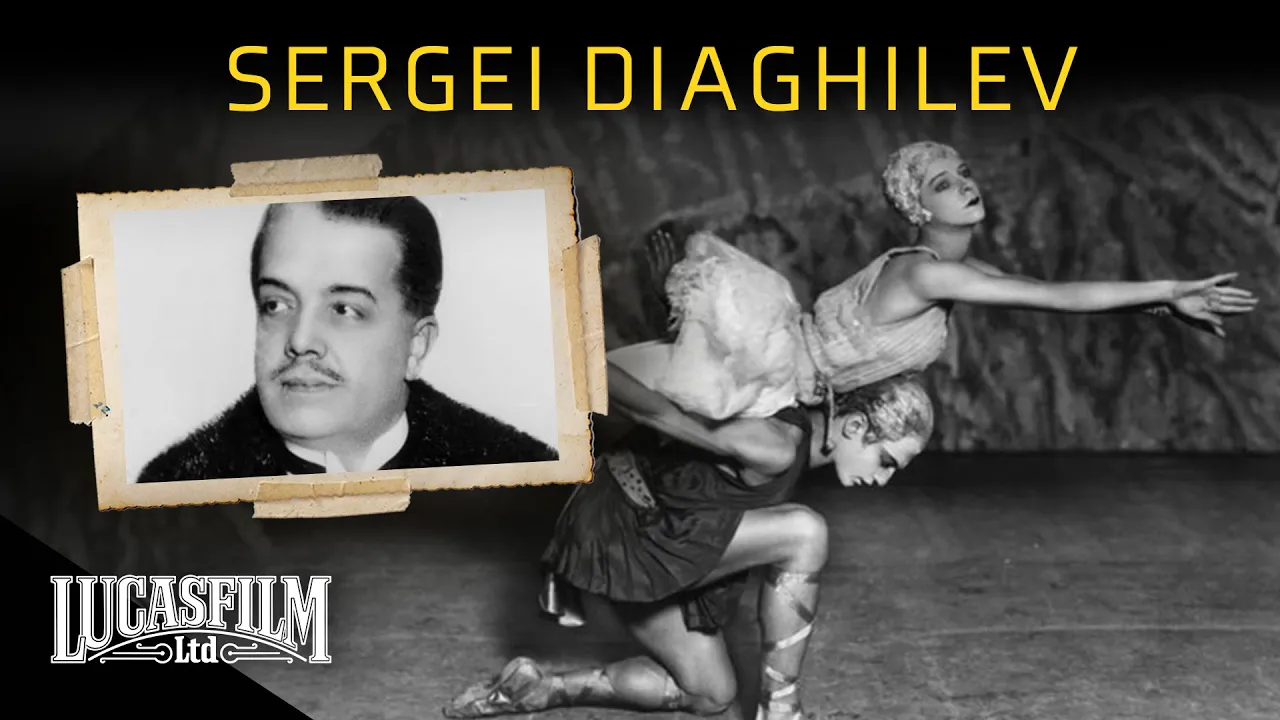
His name was Sergei Diaghilev. Diaghilev was a very remarkable man. He was a mixture of a Napoleon of the arts and a Renaissance man.
He brought these fantastic painters, these wonderful backdrops, these screaming colors. He brought very virile male dancers. He brought beautiful ballerinas.
He brought extraordinary music. So it burst on the scene. He was able to produce something really colorful and wonderful and sort of new and experimental, radical, and it was a wild success.
These are the ballets that most people still remember today as being the real blockbusters of the early 20th century. In many ways really changed the course, not only of ballet, but of modern music. Diaghilev wasn’t a dancer, choreographer, or composer, but he was the impresario, and the show couldn’t go on without him.
He was the man who held everything together. He was the one who found the collaborators, who commissioned people. He sat in on rehearsals.
He looked after the lights. He raised the money for everything. So he was someone who really did it all.
Sergei Diaghilev’s Ballet Russes left a lasting imprint on the dance world, and forever changed the face of ballet. By 1911, dance performances by the Ballets Russes had become the hottest ticket in Paris. To the Parisians, the Russians were astonishing, and brought with them a thrilling new energy.
When we look at those first ballets that Diaghilev put on, we see that he chose them because they were so wild and exotic and barbaric and primitive, and Paris audiences loved this because that's what they expected. Paris was the right place to launch Diaghilev’s new company. At the turn of the century, it was the center of the art world, open to new ideas.
And, it was a long way from the constraints of St. Petersburg, where Diaghilev went to school and had been active in the city's art scene. In Russia, ballet was respected as an art form, but it had become encrusted with tradition.
They had a formula, basically a four act ballet, and it was just kind of by rote. They used stock steps often, stock costumes, the ballerina had to wear a tutu, even if, you know, she was supposedly dancing in ancient Egypt. A government bureaucracy ran the Russian Imperial Ballet, and productions were constructed in assembly-line fashion.
One would think of this as a gig. You do it without a great deal of thought or investment of your own artistic temperament. And it really was pretty straightforward.
I need ten measures of music to get dancer from point A to B. People did their job. Somebody was hired to do the costumes, somebody was hired to do the music, somebody was hired to do the choreography.
In the 19th century, multiple scene painters would contribute to a production. So, you need a garden scene, I specialize in garden scenes. Someone else specializes in Baroque interiors.
Diaghilev wanted to take ballet out of the assembly line, and put its creative elements back into the hands of artists. He understood the importance of artistic unity, insisting that his choreographers, composers, and designers work closely with each other, integrating their creative vision into one artistic whole. This kind of unity, the idea that there was a synthesis between the dramatic aspect of a production, the visual look, and the sound of it, this became the trademark of Diaghilev’s productions.
In June of 1911, the excited Parisian audiences were about to witness one of Diaghilev’s creative leaps forward. His newest ballet was called “Petrouchka," the drama of a hapless puppet and his unrequited love for a puppet ballerina. The opening scene was a crowd of townspeople celebrating at a Russian Street Fair.
The crowds were enormously exotic, the color, the swirl of color, the swirl of costumes, the movement combined with the color was enormously powerful and compelling. The corps de ballet, the dancers who make up the ballet chorus, was completely different from the classical Russian Ballet. In the past, members of the corps de ballet were typically women, they all wore the same costume, and they all danced together in a formal, set way.
Now the corps de ballet was doing something unique. They were not only dancing differently from each other, they were acting out the roles of their individual characters. Each character has its own little bit of business.
They buy groceries, they talk with other people on the street, there are circus acrobats that come, but everybody has a different character. In addition to breaking new ground with backdrops, costumes, and choreography, Diaghilev revolutionized another element of ballet – music. For his composer, he took a huge risk, and hired a lawyer and little known musician.
His name was Igor Stravinsky. Stravinsky was beholden to Diaghilev from the very beginning. Diaghilev was literally the person who discovered Stravinsky.
As he did with all of the talented artists that he assembled, Diaghilev gave Stravinsky the creative freedom to try something new. For Petrouchka, Stravinsky used Russian folk songs as his musical starting point. But he treats them in a much different way.
He breaks them up. He disguises them in some ways. He combines them in new and innovative ways.
The idea was that as a person would walk through a fair, one comes across different sounds, and Stravinsky took two or three different folk songs and layered them one atop each other. And you would get this wonderful potpourri of sounds, just as if you were walking through a fair. The story behind the ballet is a simple one.
Petrouchka, as one might predict, falls in love with the ballerina, but in fact he is never able to possess her because the magician in fact wants her for himself. This is all taking place in this kind of fantasy world that has now sprung to life. In Diaghilev’s production, the greatest ballet dancer on any stage performed the lead role of Petrouchka.
His name was Vaslav Nijinsky. Nijinsky had been trained in the Russian Ballet since his youth. His incredible athleticism, combined with an uncanny ability to assume the dramatic roles of his characters, wowed audiences.
Nijinsky was the wunderkind of the Imperial Ballet and of course he would have to be taken to Paris. So he was a key member of the Ballet Russes right from day one. For his choreographer, Diaghilev chose a forward-thinking colleague from the Russian Imperial Ballet, Mikhail Fokine.
Diaghilev was an advocate for those who had ideas and who wanted to push the envelope a bit. So at that point he was able to say to a young choreographer such as Fokine, "Go with it. Try the idea and let’s see where it goes.
” With Diaghilev’s encouragement, Fokine created Petrouchka, a leading character that was the complete opposite of the traditional male role in dance. The typical male lead in a 19th century ballet would be a prince, would be a cavalier. And the Petrouchka character was completely different.
Petrouchka was a shy everyman – fearful and turned-in on himself. He does no classical steps at all. He’s rather turned in.
The turn out in classical ballet is kind of where we all start, so to turn in is deliberately anticlassical. On the other hand, Fokine choreographed Petrouchka’s love, the ballerina, to dance in a perfectly classical style. He made her almost a caricature of correct academic ballet style.
If her arms are over her head, they're in an absolutely perfect circle, emphasizing the almost mechanical aspect of the technique. A rival puppet kills Petrouchka, but in the end he comes back to life, and returns to haunt the magician. Petrouchka is kind of an antihero.
He’s been called the soul of the Russian people. The Russian people have been under somebody’s thumb forever. He’s trampled on, he gets defeated, but he rises again.
You cannot wipe him out. Petrouchka, an innovative blend of sets, costumes, choreography, and music, was a critical success, and opened people’s minds to the idea of modern ballet. But breaking new boundaries in art came with a price, and the company had to go on tour to make ends meet.
Traveling with dancers, musicians, and stagehands was expensive, and Diaghilev had to raise every penny. He managed to conjure francs and pounds and even dollars out of all kinds of people. He had grand dukes.
He had galoshes manufacturers. He had bankers. He could be extremely persuasive.
He was also extremely charming. And if he wanted something, he got it. Diaghilev could also be ruthless, especially when it came to the members of his own company.
There were moments of course when he fired dancers, and there were the dreaded two fingers that he would raise after a performance, which meant that X ballerina would not be appearing tomorrow because she danced badly. Diaghilev could be capricious and could show a vendetta and could be very nasty, but then again, I guess if you have to be a successful impresario you have to be bad. .
. unfortunately. In 1912, Diaghilev took another creative risk by encouraging Nijinsky, his star dancer, to become a choreographer.
It’s very unlikely that without Diaghilev, Nijinsky would have become a choreographer. Highly unlikely. But Diaghilev made the conditions possible.
He seemed to discern in Nijinsky a dance-making artistry that was not apparent to people who knew him as a performer. Over the years, Diaghilev’s relationship with Nijinsky had grown, and he had fallen in love with him. Diaghilev was a gay man, and when he hired Nijinsky in early 1909 to be a part of the Ballets Russes, his relationship at that point was a professional one.
However, by the end of that season, that very first exciting season, Diaghilev’s interest in Nijinsky deepened, and they became lovers and basically the two lived together until 1913. In between performance seasons, Diaghilev and Nijinsky started looking for new ideas for their next ballet. The Russian theme of Petrouchka had been a great success, and now they became entranced by the art of ancient Greece.
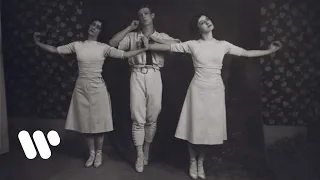
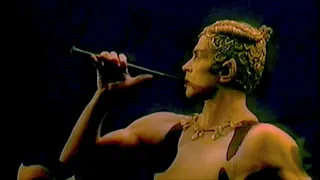
Greek vases, two dimensional, stark, and expressive, inspired their next production, Afternoon of a Faun. And they worked with artist Leon Bakst, known mostly for his portrait painting. Bakst was enamored of Greece, of ancient Greece.
And in his sets and his costumes, he tried to reconstruct Greek vases where you see processions, hunting people, for example, or people dancing. And Bakst tried to repeat this lateral moving, which you see on a Greek vase. Unlike previous ballets that were danced in three dimensions, Nijinsky choreographed for his dancers to dance in two dimensions.
Not only were they two dimensional, they were also moving very, very slowly. This was not a ballet with lots of jumps and turns. This was a ballet, as some critics averred, with no technique.
From a technical perspective it’s almost a complete rejection of the dance that ballet dancers study in the classroom. There isn’t much dancing or much movement. What goes for dancing is very controlled and very contrived and very calculated.
Even though Afternoon of a Faun was stretching the rules of traditional ballet, the plot was very straightforward. It’s basically a faun in some kind of pastoral ancient Greece who on a lazy afternoon sees these young maidens pass by and is amorously aroused. And that’s the story.
Nijinsky used the sparse movements of the characters to evoke a kind of simmering eroticism. Nijinsky was the one who decided to turn this basic plot into a kind of young man’s sexual awakening, because that’s in fact what this 12-minute piece became, and that’s where a kind of naked eroticism, a sexuality that had not been present in 19th century ballets came to the fore. There was this aspect of fantasy and imagination which was part of the Ballets Russes that was incredibly compelling.
It was a very sensuous experience sitting in Diaghilev’s theatre. While audiences could accept the controversial technique of the new ballet, the Faun’s final gesture pushed many beyond their limit. The chief nymph begins a kind of idle flirtation with him, and then eventually drops her various scarves.
The last one he takes back with him, lies down on it on the rock, and there is a kind of convulsion which suggested a masturbation. Well, the French went nuts when they saw that. Certainly Diaghilev had to have known how shocking that gesture might have been but there was a part of Diaghilev that loved publicity and this was certainly free publicity.
So all of this was taking place on the front pages of newspapers while the ballet was being performed. Diaghilev was something of a showman. While international audiences were being scandalized by Diaghilev’s troupe, rumblings of war were being felt across Europe, and the anxiety that it caused influenced the Ballets Russes.
Another work would foreshadow the coming chaos. In May of 1913, and a year to the day since the premiere of Afternoon of a Faun, Diaghilev unleashed his most daring experiment, “The Rite of Spring. ” For it, Stravinsky and Nijinsky looked to the peoples of Russia for their inspiration, and created an interpretation of an ancient rite.
In the Rite of Spring, we are not talking about love relationships or romantic relationships. We are quite frankly talking about a ritual which provides for the new crops by sacrificing a virgin every spring. So this is a kind of scenario which had not certainly been part of the ballet world up to that point.
The costumes were as far removed from traditional tutus as one could get, and were designed to look like tribal dress and animal skins. The chosen virgin is standing in the middle of the stage, terrified, surrounded by all of these men, and you can just see them about to converge on her, you expect them about to converge, and you feel the tension building and building and building until she’s going to be annihilated. This was a score with no melody.
It was all rhythmic and pounding and the movement was very much into the earth. No one was jumping into the air. If they did jump, it wasn’t to go up, it was to come down.
It was so experimental that people shouted, “How can you play such nonsense? " The audience really did erupt and in very loud voices screaming, “This is not a ballet,” booing. Diaghilev got up and said, “Silence, let the ballet go!
" In fact, there were obscenities being yelled. There were things being thrown. Stravinsky had to run back into the wings of the theatre to literally and forcibly tap a cane down on the, on the stage just to make sure that people could hear the count so that the dancers could go on.
It was definitely one of the great artistic scandals, great artistic riots, of the century. This was precisely what Diaghilev wanted. He wanted this kind of stir.
He wanted this new aesthetic to become part and parcel of the 20th Century and, of course, he succeeded. So, it really was a revolution and one which opened up modernism for the entire 20th Century. But Diaghilev had pushed the creative envelope too far, and the Rite of Spring closed after only nine performances.
It’s hard to know what was more shocking, Stravinsky’s music or Nijinsky’s choreography. And it’s curious, after World War I when people began listening to the music again, it seemed to them not shocking, but to have been an omen of the kind of brutality that was lived out not on the stage but in real life and on the battlefields of World War I. Although audiences would later come to appreciate the Rite of Spring for its major contribution to modernism, Nijinsky’s original choreography was lost to history.
The loss may have occurred because the longtime collaboration between Diaghilev and Nijinsky came to a sudden and unpleasant end. It started with the prediction of a mystic. Diaghilev believed in fortune-tellers, and one once told him that he would die on the water.
Diaghilev had a great fear of water, hated to sail, and even when he took the ferry across the English Channel, was always wearing life vests because he was terrified of drowning. On the company’s first tour of Brazil in 1913, Diaghilev decided not to join the others on their cruise across the Atlantic, but to stay at home. Nijinsky had been feeling restless under Diaghilev’s control, and was looking for a change.
Onboard ship, he found his opportunity when he eyed a dancer from the corps de ballet, Romola de Pulszky. Within weeks, and even though they spoke different languages, Nijinsky and de Pulszky were married. The company wondered what Diaghilev would say to this.
No one really wanted to speculate what would happen. Diaghilev could be immensely diplomatic, he could be immensely charming. He could also go into immense rages.
He didn’t do that that often but he did on this occasion. This was not a one night stand, this was a very deep relationship. Diaghilev was deeply, deeply wounded.
And so Nijinsky was fired. Diaghilev was willing to let go of probably his greatest asset. Nijinsky was cast out of the Ballets Russes, and within a few years he began a downward spiral that would end in tragedy.
This wrecked his mind, his divorce from the ballet, and the undoing of his friendship with Diaghilev, clearly it influenced his mind. One of the greatest dancers and choreographers of all time, Nijinsky would struggle with schizophrenia for the next 30 years, until his death. Although he was devastated, the loss didn’t stop Diaghilev from throwing himself back into his work.
The Ballets Russes continued to tour the world, and over the next 16 years, new premieres showcased Diaghilev’s strength as an impresario. It was during the 1924 season that Diaghilev again recognized genius. This time, a young Russian dancer from St Petersburg, Georgi Balanchivadze.
Diaghilev hired him, hired him as a dancer because he was only 20, and kind of said, “Well,,,can you do choreography? At Diaghilev’s suggestion, Balanchivadze changed his name to George Balanchine, and started choreographing new ballets. Balanchine’s powerful new works for the Ballets Russes would place the company at the forefront of modernism.
His piece, The Prodigal Son, advanced the art of choreography by using an ancient biblical tale and interpreting it in a radical new way. Balanchine choreographed complex moves that formed a groundbreaking pas de deux, a duet between a male and a female dancer. People were not people so much as symbols.
The great pas de deux between the siren and the prodigal are very geometrically inspired. The ballerina was enormously tall. She seems to crawl all over him.
So she came across as this dominatrix, and indeed the way she uses her pointes almost looks as though she’s trying to emasculate him. It’s enormously inventive in terms of the partnering, and this is where you see a hint of Balanchine the mature artist, who by the 1950s would be doing things with partnering techniques that no one ever, ever imagined, but you see that already happening in the 1920s. The Prodigal Son achieved worldwide success, and was the last piece to be premiered by Diaghilev.
In 1929, when Diaghilev was 57 years old, he suddenly fell ill while summering in Venice. Only days later, he died. Diaghilev’s casket was transported across the water to the nearby island of San Michele, where he was buried.
Well, news buzzed around the world. It was front-page headlines. The dancers read about it.
They were shocked. They couldn’t imagine the Ballets Russes without Diaghilev. After Diaghilev's death, two different touring companies traveled the world under the name Ballets Russes, each performing the ballets that Diaghilev had made famous.
But it was Diaghilev’s Ballets Russes that stood at the forefront of the avant-garde for 20 years, elevating ballet to a position of prominence within the worlds of art and music. I believe it was because of the Ballets Russes as a dance troupe, as a large artistic troupe, that modern music in fact developed. The entire course of 20th Century music really changed.
Had that platform not been there by Diaghilev, I'm not sure that music would have developed in quite the way that it did. What to me is amazing is that Diaghilev, unlike most people who were born in 1872, unlike virtually all his original collaborators, Diaghilev was able to accept the revolution of modernism fully and completely. Fearless, strong-willed, and always a champion of the modern, Sergei Diaghilev discovered a talented group of artists and inspired them to reach new creative heights.
Together, they shaped ballet into a new art form, leaving an indelible mark on art for the 20th Century.