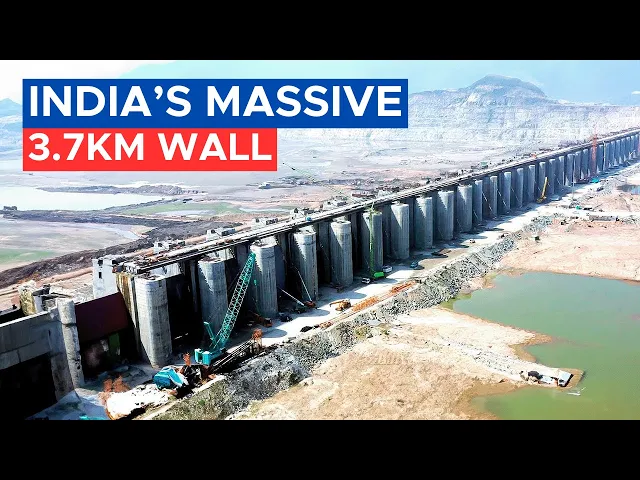
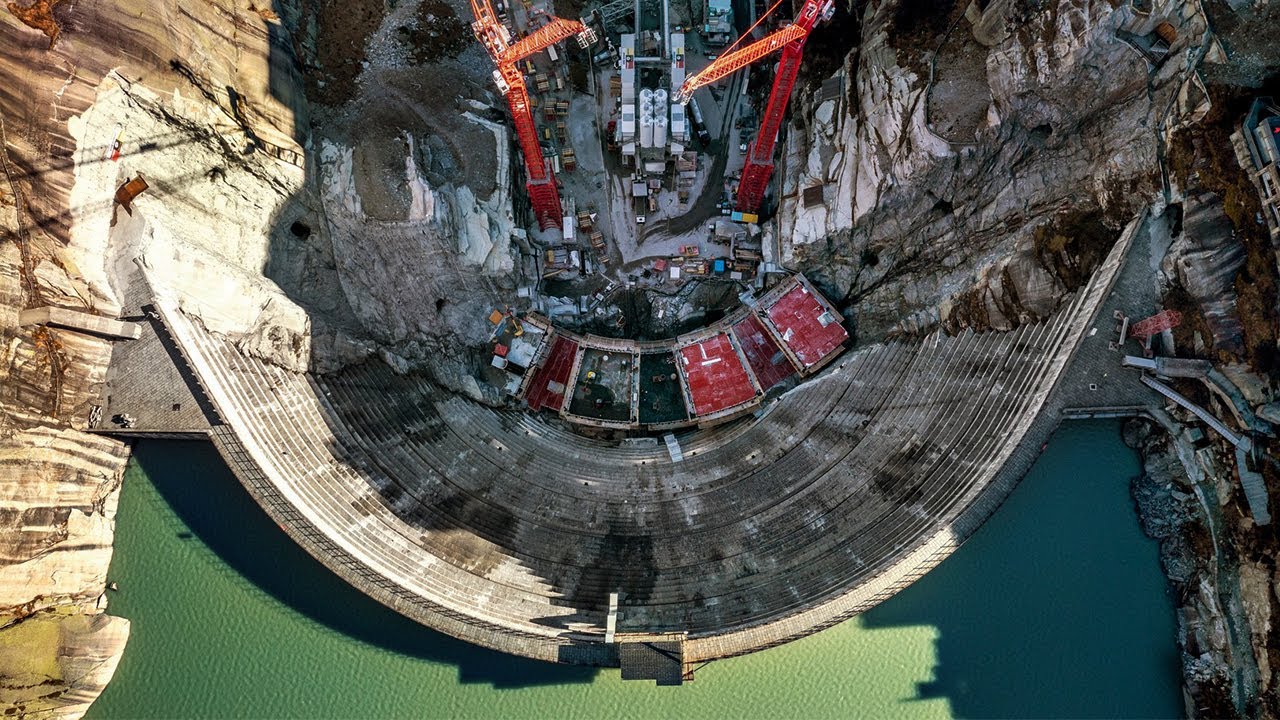
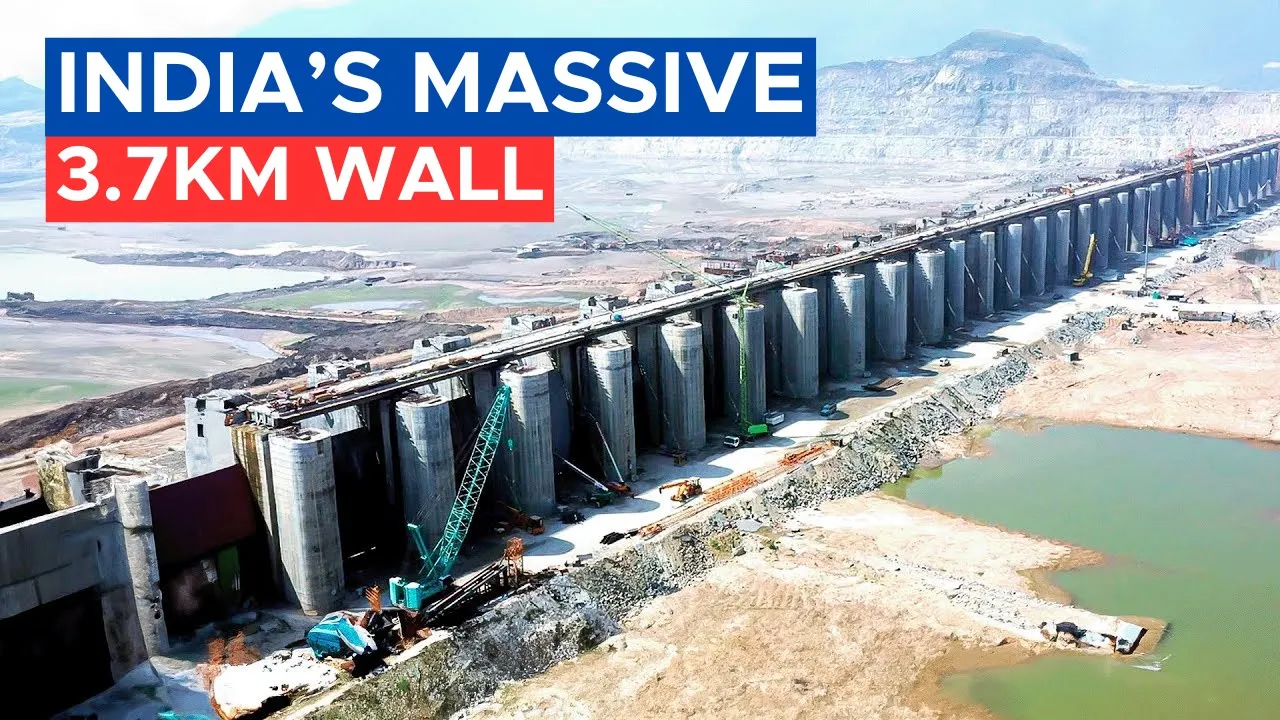
why is India spending billions to build a massive barrier on a river known as the polar varum project this giant barrier is more than just an impressive piece of engineering it's a solution to critical problems in water management irrigation and energy Supply spanning an impressive 3,722 M about 12,211 ft making it third in the world in length the palaram dam is vastly longer than the h dam in the United States which measures 379 M 1,244 ft how is this massive barrier being built and how is it set to change the lives of millions of people time to find out the palaram dam is nothing short of an engineering Marvel located in the state of Andre Pradesh in Southern India the dam is being built on the godavari river the second long long EST River in the country standing at 136 ft about 41. 5 m above sea level the reservoir has a live storage capacity of 7416 billion cubic feet about 2. 1 billion cubic M the main structure a 2310 M long Dam of Earth and rock supports a massive Spillway capable of discharging 4.
94 million cubic feet 140,000 cbic m per second one of its key components is the diaphragm wall which is the first of its kind in India this wall is 1. 5 M thick about 5 ft and extends to depth ranging from 40 to 120 M 131 to 394 ft below the riverbed ensuring stability and controlling seepage this impressive engineering serves several vital purposes addressing critical challenges in irrigation flood control and energy production one of its primary roles is to provide water to 719,000 acres 2. 91 lak hectares of Farmland ensuring a stable water supply for agriculture two main canals distribute this water across the region the left main Canal stretches 181.
50 km about 113 Mi while the right main Canal extends 74 km around 108 Mi each Canal can carry approximately 500 cubic M of water per second 17,500 cbic feet per second equal to 500,000 L 132,000 Gall of water every second another key purpose is Hydro power generation the Derm is equipped with 12 Kaplan turbines each with a capacity of 80 megaw delivering a a total of 960 megaw of clean energy to support homes Industries and infrastructure in the region Beyond these essential functions the reservoir also opens up opportunities for tourism and navigation with its Scenic surroundings and improved water infrastructure areas like papy condo National Park are expected to attract more visitors supporting local economies and creating jobs but the polyam Dam also stands out for other reasons its construction time and its price tag the project was first conceptualized in 1941 with a plan to irrigate 350,000 Acres across two crop seasons and generate 40 megaw of hydr Power by harnessing the godavari river however in the decades that followed the project faced significant delays India's independence in 1947 and the subse reorganization of States shifted priorities to immediate infrastructure needs and nation building efforts political disagreements environmental concerns and Interstate Waters sharing conflicts further stalled progress in 1980 the foundation stone was finally laid marking a significant Milestone even so the project encountered additional delays for decades it wasn't until 2004 that construction gained real momentum with an estimated cost of $1. 2 billion at the time as work progressed however the Project's complexity and prolonged timeline caused costs to rise substantially so far $2. 49 billion has been spent on the project at the 201718 price level the revised cost was estimated at $ 5.
66 billion the poar project was granted National status in 2014 ensuring Central funding and bringing renewed Focus to its completion as of late 2024 the poar project has entered a critical phase with the construction of a new diaphragm wall which began in January 2024 and is expected to be completed by November 2025 this wall spanning 1,396 M 4580 ft in length and varying in depth from 10 m 33 ft to over 90 M 200 95 ft is a key Focus for the Project's progress dewatering efforts in the ecrf dam Gap 2 are nearing completion for those unfamiliar ecrf stands for Earth cord rockfill a method where the Dam's core is built with compacted Earth for water resistance while the surrounding Rock layers add strength and stability this technique balances durability with functionality making it ideal for for large scale projects like Po arum preparations for cutter panel construction are on track to be ready by early December three trench Cutters are being brought in with the first expected to arrive by December 1st technical planning continues with recent designs submitted for approval and a workshop involving foreign experts the central Water Commission CWC and the dam design review panel scheduled for November the Project's timeline offers two possible completion scenarios July 2027 with parallel construction or March 2028 with sequential construction however challenges remain including pending cwrc approvals technical concerns about concurrent construction activities and balancing quality with speed despite these hurdles the project is making steady progress toward its long awaited completion with over 20 years of ongoing construction the poar project remains one of India's most ambitious infrastructure undertakings it continues to require careful coordination to overcome its Technical and financial challenges as it moves closer to transforming the Region's Water Management Agriculture and energy sectors poar isn't alone in its ambition by looking at other iconic water projects we can find both inspiration and caution lessons examples that show what's possible but also highlight the risks and complexities of taking on such Monumental tasks take the Hoover Dam for example conceptualized in the early 20th century construction of this Landmark began in 1931 and was completed in just 5 years by 1936 at the time it cost $49 million which adjusted for inflation would be about $860 million today the Hoover DM didn't just reshape the American southwest it provided water and power to Millions created Lake me the largest Reservoir in the United States and brought effective flood control and irrigation solutions to the region it stands as a powerful example of what can be achieved even under immense skepticism then there's China's Three Gorges Dam the world's largest hydroelectric power station in terms of installed capacity first proposed in 1919 the Dam's construction started in 1994 and finished in 2012 nearly 90 years after it was initially conceptualized the dam cost around 2003 billion yen which is approximately $ 31. 8 billion today it boasts an installed capacity of 22,500 megaw making it a Cornerstone of China's renewable energy Str strategy the dam generates an average of 95 tatt hours of electricity annually with a record-breaking output of nearly 112 tatt hours achieved in 2020 due to heavy Monsoon rains Beyond its energy contribution the Three Gorges Dam also provides essential flood control significantly reducing the frequency and severity of flooding along the Yi River additionally its Reservoir supports irrigation for agricultural lands Downstream however the project has faced criticism for its environmental and social impacts including the displacement of over a million people and concerns over sedimentation and ecosystem changes despite these challenges the Three Gorges Dam serves as a benchmark for large-scale multi-purpose Water Management projects if you're intrigued by the scale and impact of the three gorgees Dam we've got you covered check out our dedicated video where we dive deep into how this Monumental project Works we've also explored the fascinating engineering behind navigation through such colossal structures from Innovative ship lifts that allow ships to navigate above mountains lastly the ATU Dam shared by Brazil and Paraguay demonstrates the complexities of international cooperation conceptualized in the 1970s and complet completed in 1991 it took 16 years to build originally costing $19.