hello and welcome to today's webinar adapting to the Future how bimo epiv is revolutionizing data center cooling our presenter today is David kandell data center Solutions architect for blo we appreciate you joining us my name is Morin or Mo Williams training Solutions specialist atmo and I will be your moderator as a friendly reminder these webinars are recorded and will be posted to bmo's YouTube page and buo University our free online training platform located at buo university. myabsorb. com if you're experiencing any technical issues please open the chat box in the bottom right corner and let me know so I can assist you without further Ado I would like to introduce you to David kandall thank you Moren I appreciate that and thanks to everybody for joining us today we're excited to present to you adapting to the Future how the buo Biv is revolutionizing data center cooling on the screen in front of you there's a big old QR code we wrote a blog post about this topic if you are more of a written word type person and you want to read what we had to say please go ahead and scan that it'll take you right to our uh blog post and then if there are any questions during the training unfortunately we'll not be answering them during the webinar but the email on the bottom right hand corner will get you to our training group training us.
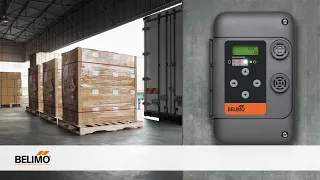
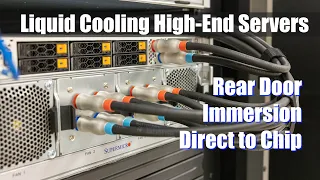
lio. com please submit all your questions there we will get back to you within the next couple of days all right let's get started uh my job for bimo is to run around and talk to Data Center people I talk to Engineers I talk to contractors I talk to lots of people who and operate data centers and those are the folks that I get really interesting answers from so let's ask the questions of the data center owners oftentimes I hear from people that data centers are are really simple to cool their they're fixed load type places we just put computers in a dark room with no windows and the Heat's always the same so cooling it must be the same but we need to shift our Paradigm because the world we live in is shifting the data center universe is Shifting and when I talk to the data center owners they ask me questions like how do I stay balanced hydronic when I build out a data center so what are they talking about let's move over to a Data Center and take a look let's say we're building a data center it's a big old building maybe we block it into different data halls or what have you but the day the construction's completed that's building is empty we have a bunch of cooling systems in place but there probably aren't computers in place we're not generating a bunch of load yet so there's hardly anything going on inside that building on the first day maybe we have a bunch of people who are excited to get into the building we got their equipment in place we're going to need to figure out how to cool that down but is the building balance for these few computers a whole full load part of the building who knows six months in we get a little bit more Phil within a year we're mostly full maybe out year two or three that data Center's full and chugging along the point of the matter is is that if we think about a standard type commercial HVAC project our load shifts from minute to minute we open doors we close doors we got people coming and going we're turning equipment on and off but when we think about it the data center minute to minute the loads aren't changing very frequently but over time they definitely are whether it's moving computers in and out of our space or what happens when the heat densities change so if we go back to our dat Center and we take a look at what we're doing here we have our data center and this has a particular heat load on the computers that are in place here and then maybe a different cut client moves into that space and they have a particularly heat dense uh type application and then maybe somebody else moves in and they have more and then a few years go by and the technology updates so we have even more heat here and then eventually we have more heat there and more heat well all over the place if you're in the data center space you know exactly what I'm talking about heat densities are out of control right now they're shifting massively and if you run a collocation type facility you have customers coming to you and saying hey I have super heatd computers I need to put in your space are you able to cool it are we ready to go is your building prepared for what we're going to do these are real challenges and this puts us in a space where the idea of using pressure independent control valves give us a lot of flexibility the reason that pressure independent control valves are so valuable in the commercial HVAC space is they take all that nonsense out of cooling a building yeah loads shift up and down and people come in and out of spaces we turn equipment on and turn equipment off or the Sun's shining on the building or it's not shining on the building all of these things change the loads in all of our spaces if I close down two floors of a building the other raining floors are affected by the change in the hydronic system so all kinds of things go on and pressure independent valves make all of this go away they hydronic isolate whatever they're controlling the water flow to so if we exchange that to our heat exchange equipment inside of a data center well now we have some real Advantage let's move forward to where we all are thinking about these days what about liquid cooling what if our data center space is all completely balanced out and then one guy comes in and says oh by the way I'm going to use rear door heat exchangers on mine and I'm going to need a lot more water or I'm going to need a lot more heating capacity so let's talk about some of the equipment that we're going to wind up in space when we adopt liquid cooling solutions let's start with a cooling distribution unit or a CDU a CDU is a cabinetizer that we're going to put in the space or near the space it allows us to take the chilled or cooled water from a central Loop of some kind and exchange that heat uh onto the technology side and whatever fluid or liquid and whatever temperature we want that fluid coming out well we're always going to need to control the flow on the central uh loop side on the the building side of this Loop if you will and a pressure independent valve and an epiv is always a good option here allows us to have constant and measurable flow uh input into that device if you want 43 gallons a minute going in there this type of product will make sure you have 43 gallons a minute going all day every day until you do ask it to do something else so where does the all the fluid from these cdus go well they're going to go out into the technology space obviously and they're going to address some other types of equipment so let's start with the rear door heat exchanger the rear door heat exchanger just has a coil that runs through uh a set in the back of the rack some of them are active meaning they have fans that blow that air or or Drw that air through the servers uh some of them are passive so that they're just in place in the natural air flow of the building p through but we're going to need fluid control to each of these we're going to run cool water through each of these heat exchangers here you can see a whole array of bimo epvs controlling rear door heat exchangers why would they have selected the epiv for this application again constant flow you want to know exactly how much flow is going through there oh by the way there's a flow meter in each epiv which means I can also measure the flow so not only am I controlling to 16 Gall a minute or 10 gallons a minute or whatever my GPM is but I'm reporting that back to wherever that control is coming from so not only am I asking for that flow value but I can verify uh that that's exactly how much water's going through there so rear door cooling is an option what about direct to chip cooling sometimes known as cold plate well cold plate are a series of little heat exchangers that sit on top of the uh the actual server chips inside of these server Banks and we're going to run cool fluid through them to pull the heat right off of those processor chips and we're going to control the flow to those guys well each one of these uh servers that's in this rack's going to need a very specific amount of flow rate and we can utilize this type of valve to make sure that we maintain the exact flows we're looking for and have the perfect heat exchange through there now you might be thinking to yourself well if we have a fixed flow we can just put some kind of flow limiting device in there we can put a standard pressure independent kind of control valve in there there's lots of options and there are but I'll tell you something about the epiv that gives us a lot of flexibility this valve is programmable and it's networkable so we'll leave it at that for a minute but we're going to revisit that as to why this offers such a Superior Solution to some of the more simple Technologies what's another type of uh heat exchange here how about singlephase or even two-phase immersion cooling well in these we're also going to need control valves we're also going to need uh some opportunity to control the flow into those guys to address the heat exchange so whether we're using cold plates or or immersion cooling or rear door or any other type of liquid cooling if it's liquid cooling by nature we're going to need to control the flow we're going to need to do it precisely accurately we're going to need control abilities over that and we're going to need to be able to be versatile over time we know that whatever the heat loads are in our space today you could build a data center tomorrow that's fully geared up for liquid cooling and two years from now the heat demand in that space the the demand for removing Heat's going to be more it's going to be higher than it is today we need the ability to be flexible and this is where the bimo epiv shines the epiv stands for electronic pressure independent control valve and it's a really clever device if we take a look at it here this is a cutaway of obviously a larger sized epiv and what we're going to do is we're going to pass water through the valve it's going to go through the flow meter which is on the right side there and then through the control valve what this allows us to do is run a control logic not dissimilar to how a VAV box works in a standard HVAC application we're going to measure the fluid flow rate in this case the liquid flow rate so we're going to measure the flow with an ultrasonic flow sensor then we're going to use the actuator to receive a control signal from the automation system and compare that to the flow value that's currently being measured then the actuator can decide whether to modulate the valve or not based on whether we're at the correct flow below or above the correct flow so we're going to be able to modulate the valve to get to the flow we want so if we use a specific example let's say the automation system sending a 50% command to the control valve 50% for the way that this control valve is programmed is 45 gallons it will look at the flow meters flow rate if it's above 45 gallons a minute it will simply modulate the valve more closed until it gets to 45 gallons a minute and then it will stay there it will check over time to make sure it's still at 45 gallons a minute and we'll make changes if necessary to stay there there's a lot of advantages to utilizing the epiv obious viously we're going to control directly to a flow rate we've talked about that a few times if my rack of cold plates needs N9 gallons a minute I want nine gallons a minute I want nine gallons a minute whether all the other cold plates are running whether none of them are running whether there's high pressure in the pump whether there's low pressure in the pump whatever the heck is going on in that circuit I want nine gallons a minute to my cold plates I want nine gallons a minute to my rear door heat exchanger or I want nine gallons a minute going into my immersion cooling it doesn't matter the point is we want specific flows and that's what we can do here the other thing that's interesting about this valve is that it has a programmable characteristic so if you're familiar with control valves you know that typically they have what's known as an equal percentage flow characteristic this is a uh an exponential curve that allows the valve to open quite slowly and then uh have a much higher curve flow rate as we get the valve more open this is the opposite behavior of how coils work and so it makes a good match for a coil however if we're trying to uh control specific flow rates or specific fixed flow rates we can reprogram this valve to be linear so that if you make a 10% change in the control signal you just get a 10% change in the flow rate and so predicting exactly how much water correlates with your control signals becomes very simple another great advantage that we've talked about is our ability to measure flow we're measuring it in the system this is reportable information even if you don't Network this valve the analog feedback signal from this valve can measure and Report the flow value so if we've plugged all these valves in and we've run all the feedbacks we can sit at a single uh computer terminal and take a look at the flow rates of all of our uh equipment on all of our racks we can set alarms if there's disparity between the measured flow rate and the required flow rate and give us so much more information that we than we can get from simple Mechanical Devices the other option which really makes a big difference is the fact that these valves are available with backnet and mod bus capability which means I can Network them completely this allows me to reprogram the maximum flow rate of my valve so today I need 10 gallons a minute to run my liquid cold plate racks but two years from now I might need 12 or 14 gallons a minute as long as we've selected a valve that has more capacity than we need today it can simply be reprogrammed so if we compare the epiv which we claimed at the beginning was revolutionizing what we're doing here if we compare this type of technology to a mechanical pressure independent valve which you can also change the flow rates on but it's a manual operation which means I have to go touch the valve to reprogram that I could use a flow Setter valve which is not pressure IND it it just limits the top end flow so you would put it next to a pressure dependent valve for the onoff portion and it would have a maximum flow and many of those types of devices you can change the flow rate as well but none of those devices will report the flow rate and none of those Dei devices are remote reprogrammable this gives us a huge Advantage so whether I have a single rack of cold plates and I want to control the flow and maybe change it over time I can do this remotely if I need to and even if I go to my rear door heat exchanger and I have a dozen or so and I don't want to touch 12 of these guys I can sit it a terminal and reprogram them and what if my entire facility sorry what if my entire facility requires liquid cooling operations I have this available to me even when all of my heat loads get hot and even if my data center is not just a little data center but a massive data center imagine you have this type of number of rows of racks and you have this many control valves that you want to be able to control see just how much flows going through each of them and reprogram when necessary remember the scope of what we're talking about here so you might be sitting there and saying I don't know that I need this much valve in order to control a single whatever but you're never doing one the scope of what we're doing makes it invaluable that none of the rest of these racks is going to control the flow to the one you're interested in because they're hydraulically independent of one another we can read the flow rates of every single valve in this building and write alarms if they're off from what they're supposed to be and we can sit it a terminal and reprogram every single one of these to whatever flow we want should that me arise the reality is is that the epiv is revolutionizing Data Center Cooling and we're really excited about this product and how it can help you so thank you for joining us today on adapting to the Future how the bumo epiv is revolutionizing data center coolly as a reminder if you have questions please forward them to training us. lio.
com and go ahead and scan that QR code if you want to read our blog article about the epiv thanks for joining us I'm going to turn it back over to Moren thank you so much David and thank you all for joining us today as David mentioned uh we will not have time to answer questions during the webinar but we will be happy to respond by email so I do see a question has come in rest assured we will respond to you and if you should think of additional questions feel free to email the training team at trining us. bmo. com I also invite you all to follow blo on social media to keep informed about what's happening and if you're interested in additional trainings you can sign up for our mailing list on the training page of bmo.