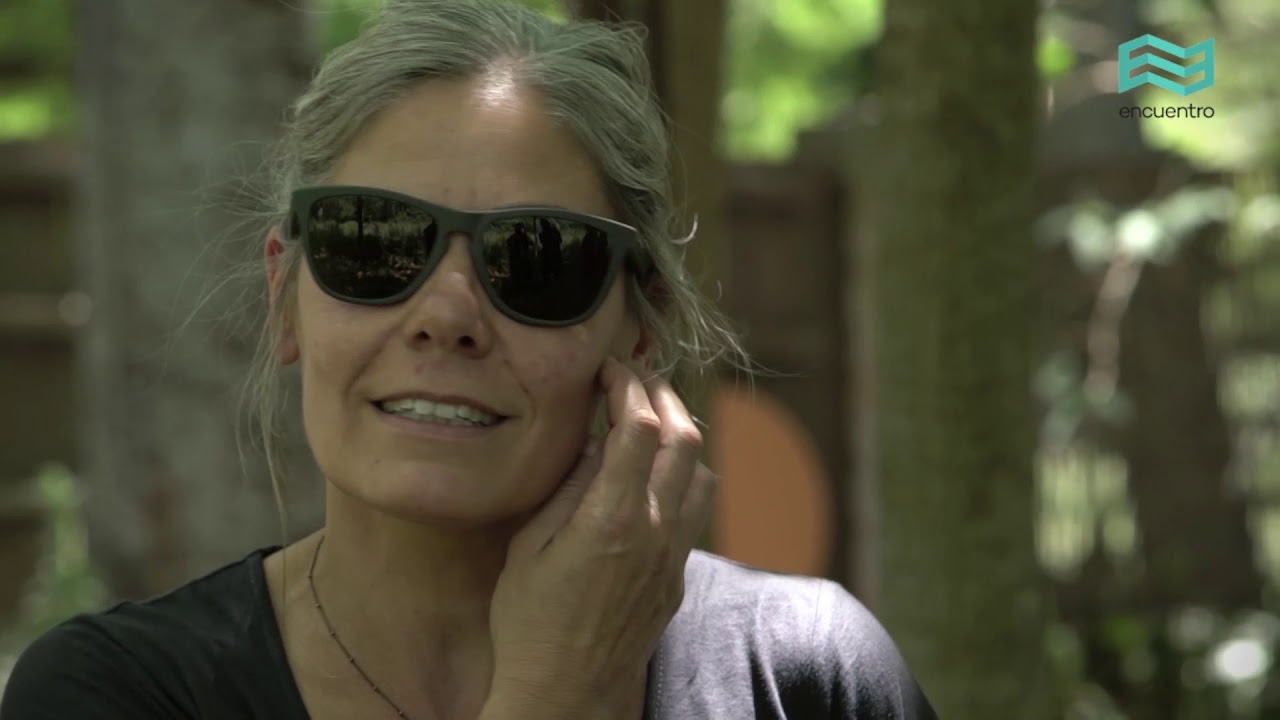
I grew up here in the Chillos Valley. So, I have always had that contact with nature. This has been an important pillar in my life, so I knew I wanted to live in the countryside.
Building with Living Trees I studied Ecology and Conservation, and I organize events, concerts, and stuff related with live music. I have been quite a nomad in some way or another. But as time goes by I realized that, I was getting older, and I said, ok, I needed to have a place of my own that I can inhabit.
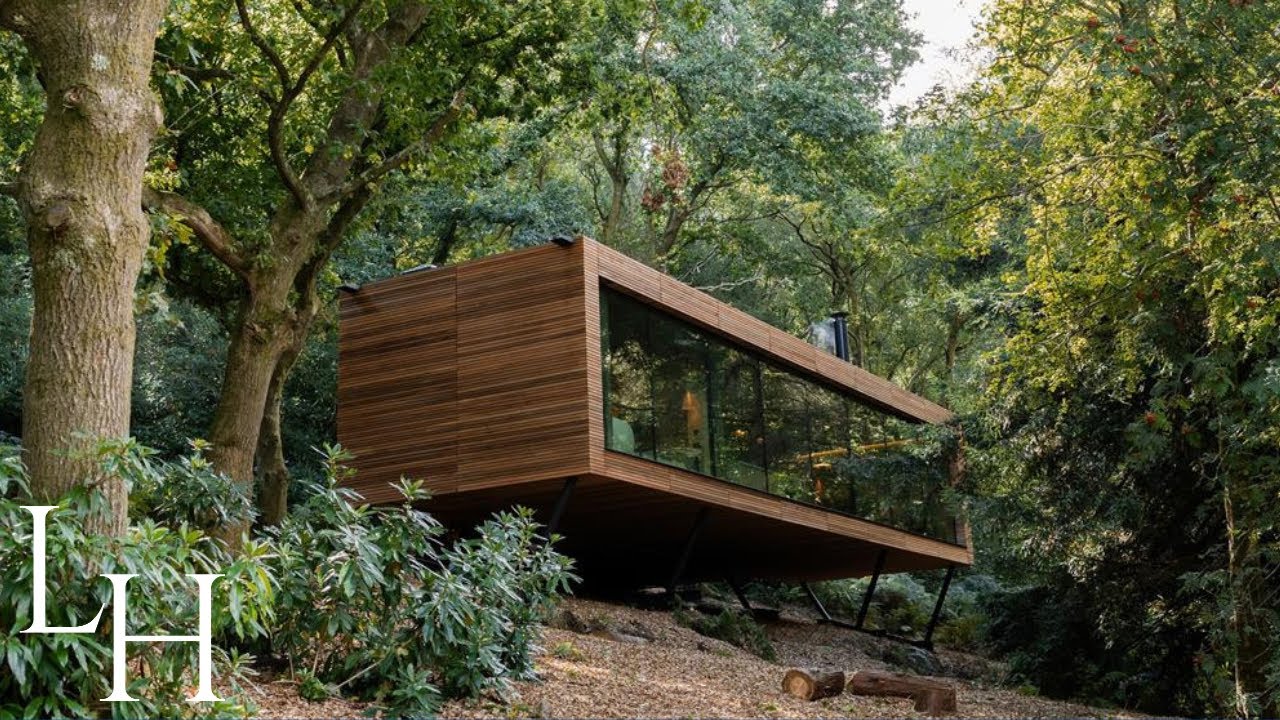
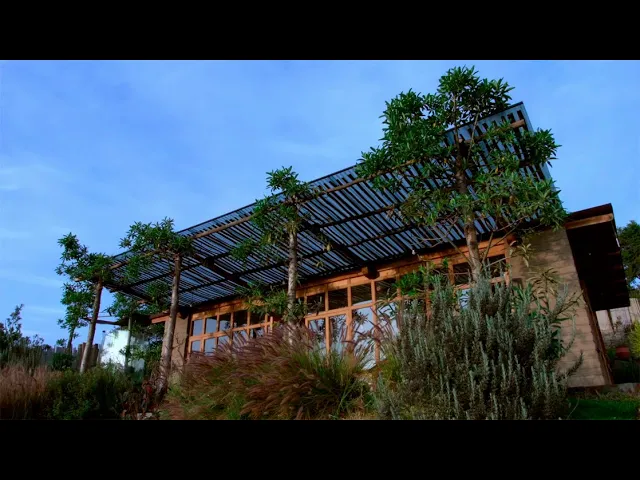
From the beginning, I saw it not as a countryside house but as the place where I wanted to die. So, this plan was born there Having a place fitted to my way of life, a house very well adapted to nature, that is inside nature. What I always try to do in my life is to be the most consistent with what I think is my way of life, so that's why I tried to reduce the biggest amount of impact as possible during my time on this earth.
For us, this first phase of the design process, has nothing to do with architecture but to understand who the client is, and try to see if there is an affinity between us. It's very important for us that there is this connection, that there is mutual admiration. This happens between the four of us at Al Borde, but we also need this to happen with the client, that he likes our work and that we admire the client’s way of life because this will be a long process, the design will take six months at least, and then until we start the construction, another six months.
Plus, a year of construction, that means, two years of work on average. It’s important having this solid relationship. We could not respond the way we address if we had clients who are not looking for the things that we are looking for, then this turns into this pretty idea where they stop being just people who buy something, they step aside the capitalist logic of just buying a product and they turn into our collaborators, turn into people who are thinking together with you, who are proposing solutions together with you.
One of the things that I’ve been working on these last 20 years of my life in one way or another, has been to not fully adapt to the system, but to try to find an alternative different, not only rely on capital and what this system imposes one way or the other. So, what they proposed to me caught my attention, their way of working. Around that time I was working on saving a little money, and my budget was very limited, so that was one of the first things that matched.
A person comes with the savings of his life to build his house and tells you: “please make everything perfect” and the errors that may exist cost him not only money but also time, it’s a very important issue. It has happened to us that during the process something breaks something goes wrong, there’s a leak and the clients get very nervous, and somehow our architecture has a strong component of experimentation, there is a high chance that many things go wrong, but when the client is involved in the process, the risks are shared and how much we push the limit up is a collective decision. I think, I like a lot that the things that I do feel unique, in general, all the projects and things I've done in my life has been like, I don’t know about design, but I am going to make the logo of my festival and I'm going to do this, I'm going to take the photos, and so on.
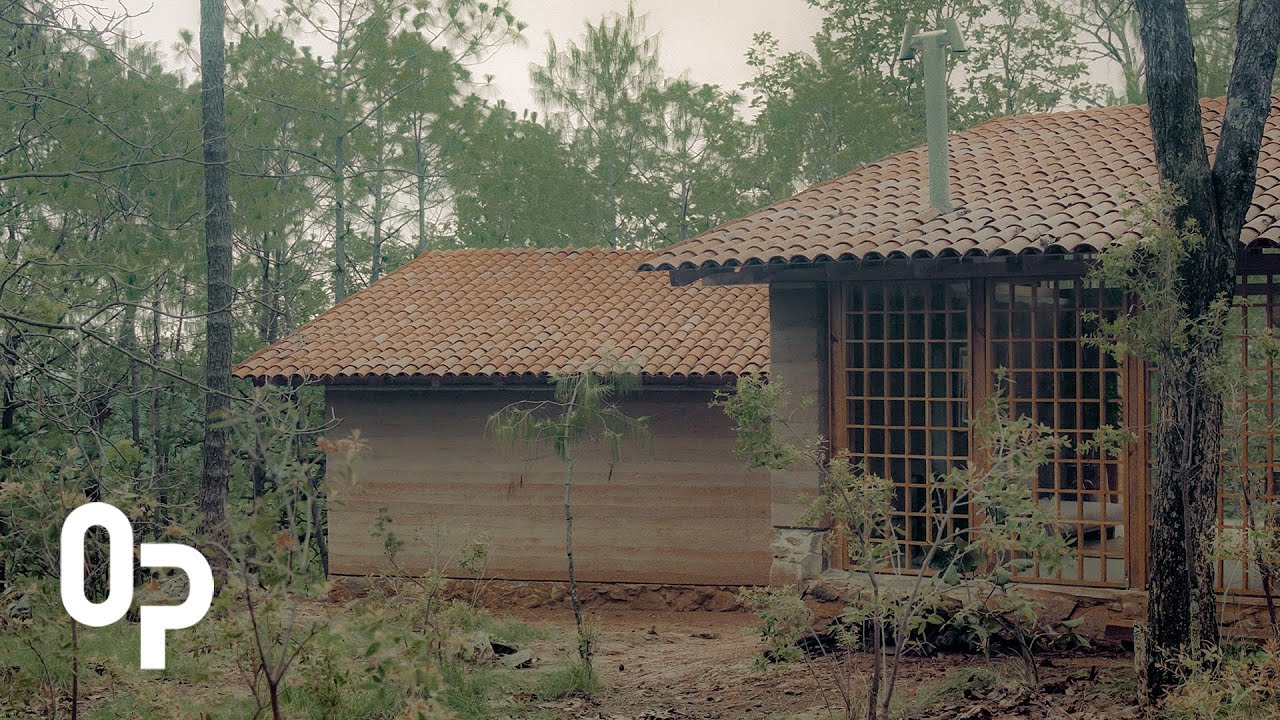
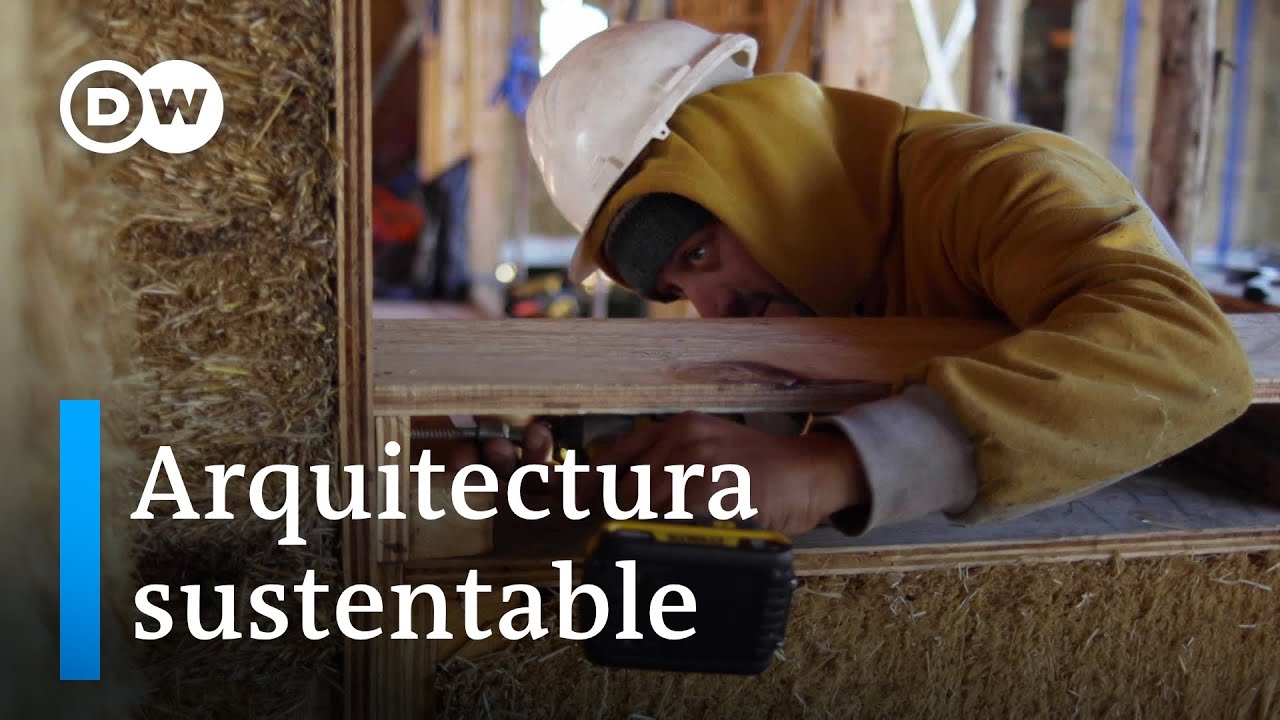
I always liked to do as much as possible, doing things with my hands or with my head that it feels my own. I like to put the energy and put the desire to be there in the process, so I was very involved in the designing process, working with Al Borde but also on the construction, without knowing anything about construction, it was crazy how Miguel, the constructor, I’d say he was like some kind of angel to me because he also had patience and he explained things to me, sometimes I was wrong and had to go back to the hardware store to change what I bought. Usually, the bricks or the blocks or even adobes are bought outside but here it was a nice process of testing the earth.
I remembered with Al Borde, and with the engineer and Miguel, when We were mixing materials to find out how we can make them strong enough. It was a beautiful process of Seeing how this mountain of soil turning into these blocks, some bigger than others, working with these molds, me being very involved, there were some volunteers who were there barefoot, stepping on the the soil because it had to be mixed well with the water, putting the sand and I was loading the wheelbarrow, the construction workers laughed at me because I asked how many wheelbarrows I should load, and they told me “About 12”, and one of them sees me carrying one and he laughs at me, carrying my wheelbarrow, very proud, he says “No! It has to be very full!
That’s just half”. How beautiful was that, to connect with the land, all of that energy I always felt like it was a journey, remembering my grandparents who recently passed away and my grandfather in particular, who was the one who bought this land and who dedicated a lot of of energy into it. When he saw how I was building the house, to see him so happy, so pleased so proud, seeing all the effort and that energy that he had invested here, and this case his favorite grandson was building his house with the soil of the place.
Seeing the sparkling on his eyes and the joy he had, was spectacular for me. One of the things that excites us is when we are discovering which technologies we can build with or which vernacular knowledge we can use to work on the construction, and one of the knowledges that has interested us a lot since we knew about it was the “living fences”. We thought living fences is a very logic knowledge, and it is so logical that sometimes it even goes unnoticed.
When the solutions are so logical that no one sees them, we are even more excited about them. Who knows how long these fences have been made because this is basic knowledge of nature nature, this was the way our ancestors used to live, with a very clear knowledge about what resources they had and how to use them sustainably, because you are actually cutting that tree but you're not killing it, the tree is still growing up. With this knowledge for a long time, the living fences Have been built nearby in Quito, and in the Andes.
I mean, it's not a new technology at all. Many people are aware of this For that reason, when someone tells you about “living fences” in the rural area of the Andes, you immediately connect with the “lechero” tree. [Música] Near Pasochoa, on the Pita River I was looking for “lecheros”, hoping to get some for the house, and I found a man who looked like a gnome that came out from a little forest.
I ask him where could I get “lecheros” trees, and he says “I just cut some, do you wanna see them? ” and I go inside his land He had a bunch of “lechero” trees, cut off just a moment ago. This was incredible, in this forest not so far from Pita River.
Then a relationship started, he had a few lecheros we used for Some test, then we asked him to cut a few more, he was happy about this deal someone paying for those “lecheros”, nobody valued them anymore. There is a lot of local knowledge, lots of vernacular knowledge that it is usually lost, that it is usually forgotten. We learned to deny ourselves, we learned the technologies that exist in our territories are not appropriate, because what comes from somewhere else is better, it’s symbol of development.
That's why it's so difficult to put this local knowledge in some projects, especially in some socially vulnerable areas, projects made of wood, projects made of wood bamboo, are always seen with despise, because the development says projects have to be different, with other materials and they always have to come from outside, because what is foreign is good. This is what the society have in its mindset, but we realize what makes us unique is what we have here. In recent years there is a rapprochement to the origins and there is a new wave in Latin America that values what is our own, what is local within the scope of heritage and also contemporary architecture in Latin America.
We are used to think that time sets through monumentality, that means, we can only access to Greece, to Rome, to the world of the Incas through these great cultural artifacts, through their ruins, and the whole inhabited world, the past, the everyday world, the world that is not ceremonial, extraordinary, that doesn’t raise questions about how it was achieved, with resources that we think were scarce technological achievements, those big infrastructures. So, big part of western thinking has focused on monumentality and on these grandiose ruins that tell us about past civilizations, but very little about the past, and the everyday life has an important role. We are talking about a heritage less monumental with more connection with affective values, practical, yet functional that people attribute to these things.
The recognition of this tradition, the use of living trees as structure in new constructions has been passed down from generation to generation, is a tradition, and is singular, and it is something that only exists with that type of tree in this region That's enough reason to study it, and these research recognize this knowledge as heritage, as a traditional way of construction, a traditional construction process and also it could be used as a reference for contemporary architectural production We need to rethink heritage, not only as products that were made in the past but also as processes. Heritage is products and processes, heritage is both. Since when I was a child, I saw my dad working, and every time I came home from school our parents always sent us first to do our homework and then we would help with chores around the house, We used to build these fences to keep chickens away to keep cows away, my father was who taught me how to tie, he taught me how to place them how to make them strong enough.
he taught me everything until I finished school. When I finished the school, I didn’t go to high school, I went straight forward to work in construction, once there, I didn't come across that type of technique, we only used block, concrete. When I started working with Al Borde, when I met the architect Pascual, with him we began to work almost the way I used to built with my father.
Although museums do a great job documenting and bringing that documentation to our date, if that heritage is not alive, sooner or later is going to die we will lose it and when that happens, a part of our identity will be lost as well. There is a comeback to these vernacular architectures and yet architects and universities in Latin America don’t pay attention to it, I mean, the education in architecture, the curriculum in our universities do not study architectures from pre-Columbian era. That part of our history is not taught, and the projects that use that knowledge, that vernacular architectures are always considered “special”, “experimental”, marginalized in a way, but these are our architectures, these are the ways in which for millennia this territory was inhabited, then there is something extraordinary in this coming back to see what was made during that period of time, its adaptations and new technological development and so on, and I think there is a brilliant effort, especially from young local architects who think that this techniques should be considered the opposite of “special” and “extraordinary”, they should be considered habitual.
I feel that here in Ecuador, since always we are aiming to copy models from abroad and we see our own culture contemptuously, we see ourselves and where we come from in a derogative manner. When we were discussing priorities we always had in mind that Jose was not only going to live there, but also he was going to do all the maintenance of, for example, the residual waters, the construction itself, he was going to have a strong bond to the house. The fact that this house is “alive” is also a reflection towards take charge of these many cares because what most architectures look for is to minimize this care, not a lot of maintenance, not to worry so much for those things that are already solved In this house, it seems that it is the opposite, is to take charge of life.
I remember when Miguel gave me the keys to my house, It was the most amazing moment, the happiest moment, because all our plans, everything we did, everything we invested in, finally materialized, it was a pretty moment and again, making it in such a unique way, not to make it look cool, but because it is a projection of yourself this house is who I am. Hi. Cut?



![ARQ.DOC - Ep. 4 | Refuges: Architecture, Design and sustainable living [HD] YouTube](https://img.youtube.com/vi/dna39G-C2MI/maxresdefault.jpg)