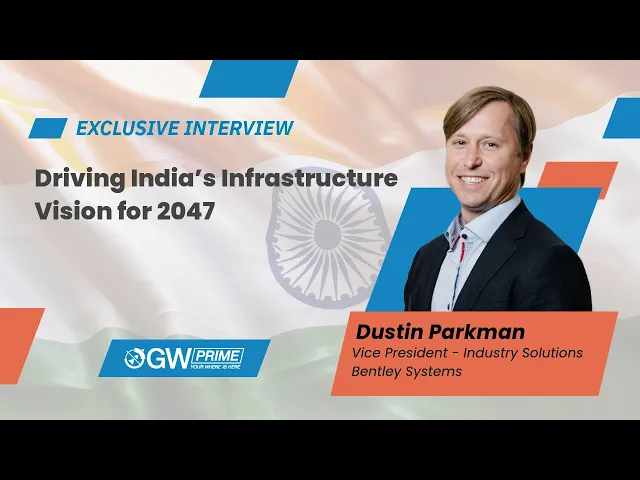
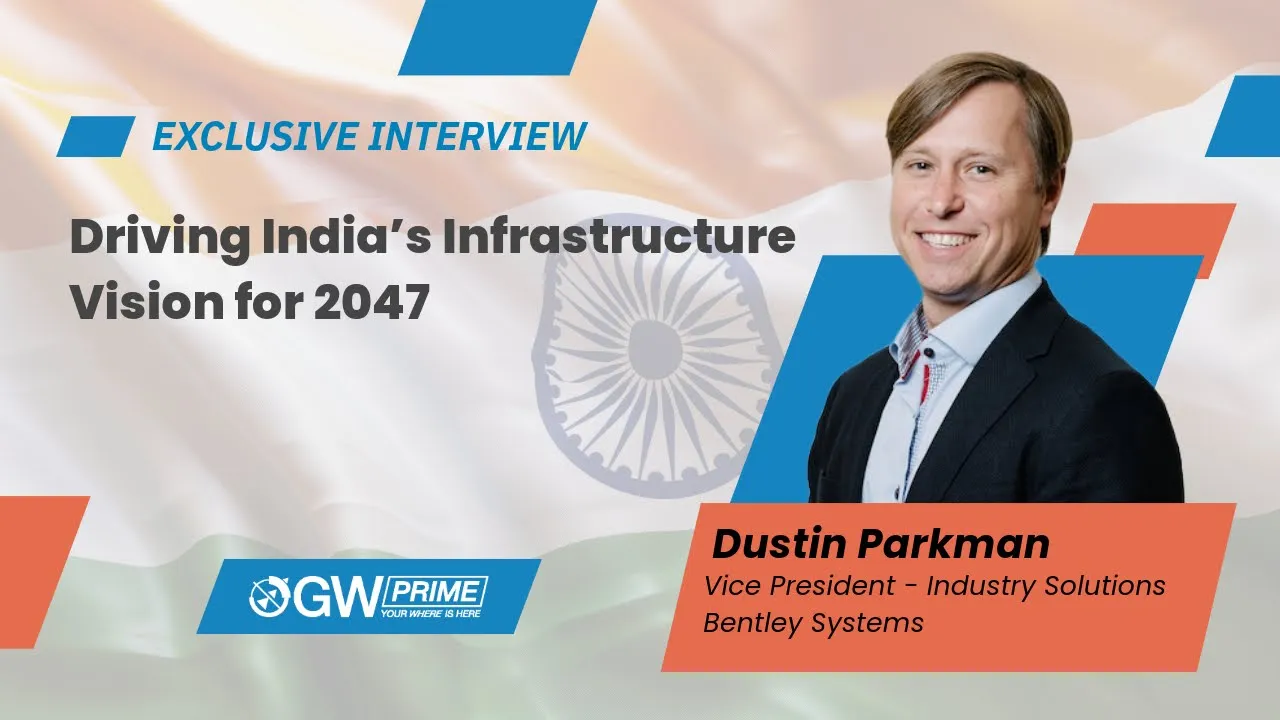
hello everyone I'm Anan from geospacial world and I'm happy to be here and host Dustin Parkman vice president industry solutions group uh for an interview on the bent's infrastructure solutions that we have Dustin welcome to this conversation uh thank you for having me um can you let us know give a brief introduction about yourself yeah so I'm I'm a Dustin Parkman I'm based in the the US and I look after Bentley's industry Solutions uh team which is essentially we set the the overall kind of product strategies for our different port our portfolio of products and
and how we position those and and focus on integration of those products in particular market segments and and industries Industries being Transportation or water or energy or uh digital City airports etc etc and what are the regional markets that you look at we look at all of them look look at it uh um look at all markets uh globally so given the fact that we are in India right now how do you look at India as a market I look at India as a market uh with just a tremendous amount of of potential you've got
uh you got all the demand you have all of the skilled Workforce you have some of the you know largest um group of Engineers of any of any country in the world so not only do you have kind of the the criteria and the demand to meet what the population needs you also have um government and private funding so there's Capital behind some of the need of the projects and then you have you have a skilled Workforce labor that's uh more than capable to execute so I think it's a very exciting time for not only
the country but specifically for for individuals that are in this field whether you're a technology provider an engineer a construction contractor or someone who's in the operations and maintenance phase of of infrastructure it's uh it's in a very exciting time to for your career uh for the challenges and opportunities so uh not only is it you know a good career opportunity but it's going to be a lot should be a lot of fun you must be aware that India has an infrastructure vision for 2047 and we have also announced that we would be having 4.5
trillion wors worth of investment by 2040 so that's a huge amount of investment so how do you foresee bentle looking at a long-term approach in helping us achieve the infrastructure goals that you have set yeah great question I mean I think that there's multi multi facets to that I mean I think uh first it's about having kind of the Investments that we make in the country with our our teams on the ground whether that be from a from a kind of customer facing perspective and kind of uh handling the you know the the projects and
being involved in that type of stuff to to actually our R&D centers that we have around the country that are innovating the technology that uh that we would then provide not only locally here but but also globally so I think there's also U because of that the nature of that I think there's also a lot of opportunity for uh for the for the local teams to be able to take best practices from what other countries are doing um and leverage some of those skills that you have in house but but maybe working on global projects
rather than local projects yeah India as a country also has some very unique challenges like when we do from population to urbanization uh these challenges are something which are very difficult to uh cope up with so how do you think Ben Solutions can help India's infrastructure story yeah so I mean on a traditional sense um you know the engineering applications of which are kind of our kind of our background I think those will continue to play a large part in in how we design and build infrastructure and and rehabilitate it but I think um as
we go forward I think you know one of the things that we've been working on from a strategic point of view is how do you leverage that information that is created so so today um this is not unique to India but I would say it's probably probably more extreme here whereas each engineering discipline kind of works in a silo uh where that the data is created for you know one one purpose really it's it's for the design or it's or it's for a particular you know Brownfield project and so I I think from a maturity
level from a data management data governance standpoint I think we'll we'll start to see that to to improve so it won't be so uh you know kind of unmanaged I think with with the manage of that information there's an opportunity for organizations to to really kind of uplevel that Equity they have in that information not only just you know pass data but you know how to predict future uh scenarios and so with regards to that I think we we will be one of the key providers um to infrastructure professionals on how you're going to use
that information to benefit Downstream so and there's literally dozens of of value cases how that information can be used so everything from constructibility uh that that's you know a little bit more traditional but as we're trying to more and more simulate circumstances um not not just for new projects but for things that are already as built and how they're going to stand up to to environmental conditions and economic conditions and you know extreme urbanization just just increase pressure that's going to be put on your infrastructure being able to simulate that virtually and kind of get
out in front of it to say okay well in in in this criteria this is what's going to happen right this is where your fail modes are going to be this is where you're going to have catastrophe and you know now you got to act upon that information right and then uh I think as a as a u as a technology provider we're really excited about kind of the the insights and the analytics of leveraging all this data that that we have a tremendous amount of domain expertise in but but for other purposes Beyond just
traditional design engineering um one of the very interesting things that you mentioned is that generally particularly in India also uh engineering disciplines they tend to function in side and that is one of the major challenges when we talk about digital transformation right um so how do you look at the digital transformation maturity cycle of in infrastructure how do you see that growing in the next coming years there there's there's some good intentions in the market already you're starting to see Bim requirements and some of these kind of predecessors right so those are those are essentially
kind of building blocks towards more of a a fully you know data governance so I think each organization whether you're whether you're sitting in the the private sector for an engineering company or you're an owner operator or you're in a public sector you are going to have to look at your own kind of internal strategies as to how do you want to manage data and what are the outcomes in the kpi you want to get from um I think the outcomes and the kpis for these organizations are no different than the ones that they already
have today right yeah you know you get you already have problems yes right so so being able to work backwards from the problems that you have today and and and really kind of taking an inward look as okay how can data help us solve this problem and then developing a governance strategy around that then you have to choose a technology provider um that's going to provide you the tools that can actually you know facilitate those needs a very interesting thing that generally happens in uh particularly again talking from an Indian context is that we see
technology being adopted in the initial phases like you mentioned bib we do have a Bim mandate in airports sector but we still looking for a mandate somewhere down in transportation roads and highways and but when we look at the life cycle of it right to operations and maintenance we don't have anything and I think the usage of technology is much less what can we do as an industrial ecosystem to ensure that people understand the value and benefit of Technology till for the entire life cycle I think more than anything it's proof proof of value um
and so the way that it typically happens in other markets is you have one industry that is typically a leader and um for years it was always kind of the process Industries process Industries because they were private uh they were you know financially driv driven you know uh to to actually get performance as opposed to the public sector has a different set of of kpis and so that market was always further ahead than say Transportation or or some of these you know other other markets we we' we've seen that Gap close in you know outside
of India we have seen seen that happen right you are seeing North America and the UK and other places where they they've created their bin mandates and you know with with with kind of governance and metrics in order to get funding right so at the end of the day there's usually a carrot or a stick uh to to get a market over the hump uh with the intent of if you get them over that Chasm that there's real measurable value and if you have that then it becomes very easy to convince other people or other
Industries um you know to to uh fast follow uh fast is relative it's infrastructure so nothing really moves extremely fast but that that's kind of the model that we've seen other other markets do so take for example the UK used the 2007 Olympics as their catalysts to to drive something and um and that was when they did their kind of Bin mandates if you will now that that was pretty successful but was it complete no I mean but but it did provide them kind of a basis to kind of get their houses in order yes
um and so you have some of that mechanism with uh the vision 2047 project right there's going to be private funding there's going to be Government funding it will likely come with some strings attached that you know where those projects will have to meet certain requirements um we are I'm I'm fairly optimistic that those will have some of those more digital transformation requirements built into them haven't seen it yet but uh I I think uh that's how I think it will it will happen that so let's shift our gears a little bit and they into
the technology aspect of it one of the things that was really exciting that have been seeing today at Ben bentle illuminate is uh the talk of geospatial Technologies which is often missing from the conversation when we look at the infrastructure industry as a whole so it was very nice to see geospatial Technologies form a very important part of the puzzle that we look at when we look at the infastructure component what are your thoughts on it how important is geospatial I mean geospatial is kind of a a a critical part of what we've been trying
to do with regards to pulling all the different data together in now we've been able to pull information together for a number of years but it hasn't been really been easy and when I say the different types of data I'm talking about The Usual Suspects we see in infrastructure we sure there's engineering data there's survey information there might be some type of field data that that's uh being collected and then obviously infrastructure sits on the earth I mean often times it takes up a lot of space so so so having a geospatial component of it
is is kind of a necessary thing and and it's been there for for a number of years I mean we we've been working with geospatial data for for for decades um what I'm really excited about what we're doing now is with the the acquisition of of cesium we're able to really kind of marry that up with some of what I would call our core competencies which are you know high density vector graphics and 3D and 4D and and 5D geometry so having um having a a a 3D GIS environment that matches up with complement that
the engineering data that that we're really really good with is is really a powerful thing and it it really fits in perfectly with our digit twin strategy so we've had a geospatial component to that strategy for a number of years but it always felt like it wasn't perfect because we were always having to mirry Up 3D graphics and all this stuff with 2D GIS uh which is still sufficient but uh as we're looking forward to what you know what's possible with the future uh 3D tiles and and and 3D GIS is a better fit for
what we're trying to do as an organ first of all congratulations on the acquisition I think uh it is a fabulous acquisition that would help enable the industry to grow in many ways and it'll also help enable the adoption of technology to happen in multiple ways which we which I don't think I can imagine right from gaming industry to infrastructure industry uh what brings to the table and what bring bentle brings to the table the marriage of both is I'm really looking forward to it and it's it's quite exciting um you also mentioned that uh
this acquisition is also going to enhance and augment the digital twin capabilities of bentle right so what do we see in the next two to three years what do you think will change I think our our first step is is looking at these two things as as two platforms we have our iWin platform we have a cesan platform bringing those together um is a is a natural fit and then making both of them uh prevalent throughout our portfolio applications is essentially how we would see the the the integration if you will of of the acquisition
taking place so we're super excited about that super excited about making your geospatial workflows be prevalent throughout all of our applications and and cesm is kind of a critical part of of making that all all happen as a part of our iWin platform if we uh leave this acquisition aside and if we start talking about digital twin as a technology how do you you see that technology adoption evolving so we're seeing the adoption uh at the moment we're seeing a lot of it in in a couple different workflows one we're seeing it still in Project
delivery okay um uh for multi-discipline workflow so where you have you want to do complex Space Management or you want to do uh complex simulation across multiple engineering disciplines of water and transportation you want to do drainage and water you got a model Road or a railway Network and you understand how that's going to tie into a drainage system that's going to fit into your Wastewater management you know etc etc etc um yeah those are examples where we probably see the most of it okay um on the flip side of it we're also seeing it
in the operations and maintenance side and so on the operations and maintenance side of it we we've been seeing it as as kind of a let's call it a 360 view of infrastructure from design build operate and maintain where engineering data is still pretty prevalent I mean it's still kind of the core basis of what we would call a digital twin it's a Cornerstone of it and you but they're leveraging that information for either Upstream planning they're using it for uh to to Aid their maintenance team so if you have teams in the field and
they're going to go maintain a uh you know a water pipe or or a meter or whatever it may be uh having access to information having that information geospatially coordinated being able to use it as a way to index other information you might need to do your job more effectively we're seeing that uh but we've seen that across water we've seen it uh in uh in some of the the bridge you know we're using kind of the survey acquisition of as built infrastructure and then being able to analyze what we capture so we'll you know
take some photogrammetry take a lar scan or Ral survey whatever it might be and and then be able to basically reconstruct the physical uh geometry of it and then Analyze That geometry for degradations for you know maintenance activities etc etc uh so th those are some of the common areas where where we're seeing it it's it's almost more like supplemental information to traditional operate maintain workflows okay um so those are kind of the the two predominant ones we're seeing um other ones we are seeing in some cases which is more kind of the planner uh
workflow so uh airports and and some and digital cities we've seen I think that was one of the examples I showed this morning with sead um there's a number of those types of examples too where you have kind of city planners using that digital twin as a way to coordinate with their different kind of subp departments you know whether it's a sewer and water board or it's a you know transportation Department Etc each one of those departments typically kind of operates independently of the the city they have their own kind of governance but but it
still offers a way to kind of coordinate have a 360 view of of what's what needs to happen um even in India I think bleay has a partnership with Genesis International and uh there are some sort of 3D uh digital cities projects that are going on in uh uh Mumbai Maharashtra and some of those other cities where we are trying to develop a 3D digital coin of the city so uh is is that the example where we can talk about developing a Citywide digital thing yeah that would be the you know that would be the
primary example where we would use that and it becomes more of a of a planning tool rather than uh you know a core operating Tool uh so if you want to understand kind of like you what what's going to happen with a 100-year flood in a particular area you want to understand you know the impact that's going to have on the existing drainage Network those are simulations that you can run to actually plan for where you're going to deploy your capital and you know which projects need to get uh prioritize etc etc at geospatial world
one of the things that we have taken up is uh we have established a non-executive digital twin strategy for in infrastructure and bentle is one of our principal Partners to drive that initiative where we're trying to push for a digital twin mandated in in infrastructure projects how far do you think can a digital twin strategy or a mandate from the government of India can help uh Drive technology implementation well it it depends on what's behind the Mandate um uh you know I Behavior typically follows incentive you know whatever that incentive may be whether it's Financial
or otherwise um I think you know having the government stand behind it will will certainly draw attention to all the different suppliers in in the in the value chain uh because they'll want to be kind of first of the pack right it's going to give someone either a competitive advantage or if there are you know incentive structures to to encourage that behavior or or penalties um you know that that typically does get more people involved um I I think government can play a key role go and you know the initial drivers I think beyond the
initial drivers it it actually has to deliver real value to to everyone in in the uh in the value chain otherwise I think if it's just it's just value to one person one organization versus the other you know you get a lot of blowback and you know it becomes a slow drag right um so I think looking at it holistically through a lot of different lenses like you know what's the benefit to so take the public sector for example the it's Government funding you know we got to look at what the value is to the
to the public sector private sectors got to got to determine whether that uh if there's they can meet that value without any additional pain on on their end or or maybe if there is additional pain is there additional price for them to gain to and still value to be had from the operator all those things are you know complex uh you things that you have to work through that's true um your last parting message on three top things that you would want to take forward from the conference as well as from this conversation you know
first I'm I'm excited about what's What's Happening Here in India uh you know I I I want us to be a key key part of it I think I think we we're well positioned to to work with the country and all the different suppliers to to help them meet the the the goals of the division for 2047 um you know I think it's exciting time for Professionals in this industry if I you know it's a good time to be an Engineers it's a good good time to be an infrastructure professional and um yeah I and
my third takeaway would just be that uh you know that I I I hope the industry is is open-minded and kind of Embraces this idea of digital transformation not that it's a it's going to solve all the problems right but I think it can be a force multiplier and and really enable uh these organizations these individuals to to to to to meet the needs of of India but also grow as individuals and you know upskill their own uh their own value as individuals and uh you know I think on the other end of it right
I think if if if India does capture the opportunity in front of them it's not just the local impact they can have um on the other side of this there's there's really a global impact that they can have um so thank you so much for giving us time today thank you thank you