hi everyone this video will outline how to use in-text citations and quotations according to the 7th edition of APA style citing your work properly will also ensure that you do not commit plagiarism which of course is important if you are looking for information on how to create a reference list at the end of your paper I have a separate video for that which is linked to in the video description below the video description also contains timestamps that will jump you to various parts of the video so if you are just looking for one thing in
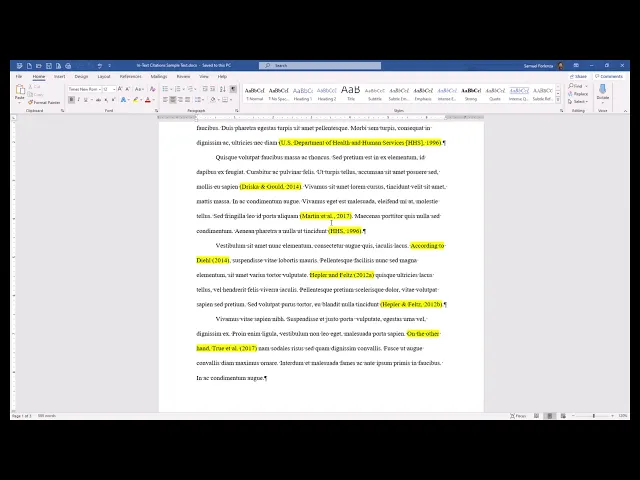
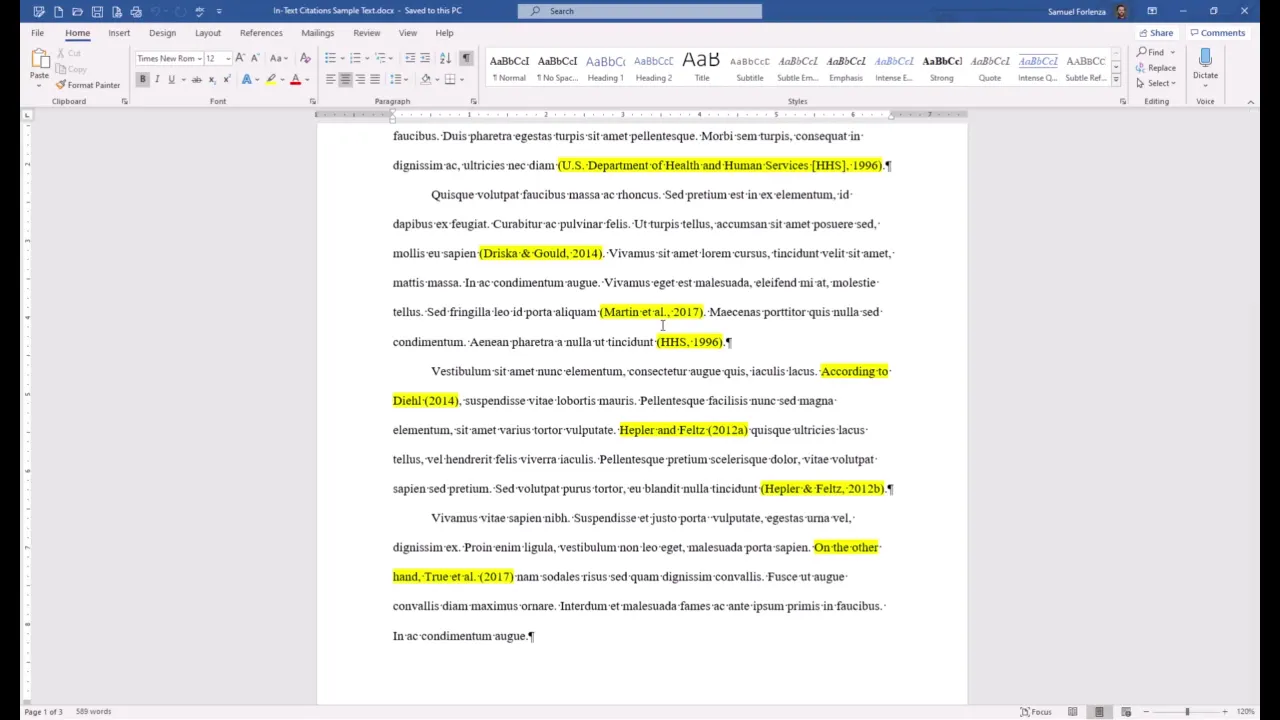
particular use the timestamps to get there I am demonstrating everything in this video using Microsoft Word on a Windows computer if you are using a different word processing program or using word for Mac the citations will still look the same in order to get the most use out of this video though I recommend pausing and rewinding as needed is a couple of other quick notes I am using lorem ipsum text or placeholder text for illustrative purposes the in-text citations are highlighted to make them easier for you to see I also have formatting symbols displayed because
I find them useful for formatting papers you can turn them on or off by clicking on the show/hide formatting marks button which is the button with a paragraph symbol on it at the top now when you are writing papers you will often use information from other works such as research articles books chapters websites reports and so on this is perfectly fine and expected science works by building off of what other people have already done however when you use information from other sources you need to separate which pieces of information are your own unique and original
ideas from information that comes from other people we accomplish this by using in-text citations and quotations plagiarism on the other hand is using information from other sources without giving those sources credit if you use another person's words ideas methods arguments content etc without informing your readers that the information is coming from another source then you are passing it off as your own original work as a student plagiarism often results in a failing grade for that assignment or even the course if it's severe enough for professionals plagiarism can result in retraction of your work from journals
or loss of funding or other institutional disciplinary measures even if you do not intend to plagiarize you can still be punished or if you do not cite your sources correctly so using in-text citations consistently and accurately is crucial for writing a strong paper now before we dive into creating in-text citations note that APA style uses an author date citation system this allows people to identify a work based on the authors and the date the work was published these two elements authors and dates are what we will use to create in-text citations to give credit to
other sources you do not need to list the article title journal title any credentials or affiliations the authors have just the author's last names and dates how you create an in-text citation depends on two things one the number of authors that work has and two whether you are making the citation as an aside from the sentence called a parenthetical citation or as part of the sentence itself called a narrative citation parenthetical citations are more common and typically go at the end of a sentence though you can put them within a sentence as well if it
makes more sense to create a parenthetical citation you enclose the author and year of publication separated by a comma in parentheses and place it at the end of a sentence the period or other punctuation mark that ends the sentence should go after the closing parentheses so as you can see in this example with one author at the end of the paraphrased information you have a starting parenthesis the author's last name again you do not need first names or middle initials just the last name comma year of publication closing parentheses period now if you have two
authors the process is basically the same as before except you also add the second author's last name with an ampersand symbol before so you look at the example here and when a work has two authors like this you will always cite both authors now if a source has three or more authors again the process is pretty similar X you will write at all period after the first author's last name then followed by the comma and the year of publication please note that at all is followed by a period and the comma should come after the
period so it does not matter if you have three authors or 23 authors you will always use the first author's last name followed by at all and by the way at all means and others now what I just showed you here are the three major examples of how to use parenthetical citations you can also cite sources as part of a sentence which makes sense if you are directly referring to a particular source and this is when you would use a narrative citation the process here is very similar except that only the year goes in parentheses
so as you can see here you could write something like according to deal parentheses 2014 to start a sentence for two authors again the process is the same except that you do not use the ampersand symbol instead you write out the word and and for three authors you still use at all followed by a period now there are a few exceptions and special considerations that you should be aware of the first is if the author is an organization these situations you simply write out the name of the organization followed by a comma and then the
year of publication so treat it the same as a one author citation if the organization can be abbreviated make sure to write the abbreviation in brackets in the first citation and the brackets should go after the full name of the organization but before the comma then if you cite that organization again you can just use the abbreviation instead of the full organization name another consideration is if you are citing more than one study at a time so let's say that you want to cite three studies that support a statement you've written the author date format
is the same as before but for parenthetical citations you enclose multiple studies in the same set of parentheses so here each citation will be separated by semicolon and you should order the citations based on how you would in a reference list which is alphabetically by the first author's last name if you wanted to do this narrative Li the author-date format is the same as narrative in-text citations but here you essentially treat each reference as its own item in a list meaning that you'll separate them out with commas and then write out and before the final
citation the last couple of points here have to do with different sources having the same in-text citation which would obviously be confusing so let's say you have two studies with three or more authors published in the same year if you were to shorten them to at all is I'm going to briefly do here as you'll see the in-text citations are exactly the same which is obviously a problem so to avoid this you should list out as many authors as you need as you need to to differentiate the two sources so for these citations we're just
going to the second author to differentiate them but if you need to go to the third author or the fourth author and so on that's okay another potential issue is if you have two different works with the same exact authors and years in this case there is no way to differentiate them because they will always be the same so in these situations you should add lowercase letters directly after the year just make sure to keep track of which reference has the eight and which one has the beat otherwise you'll end up creating more confusion so
that is how you do in-text citations I think the process is pretty straightforward especially when you remember that it always comes down to two elements authors and dates the next section here will discuss how to paraphrase information you are citing along with how to quote text if necessary when discussing other works you are usually going to paraphrase relevant information meaning that you are going to put the information in your own words so rather than describing another finding or idea using the author's original words you will phrase it a differ way this is the preferred method
of citing other works because it allows you to highlight key pieces of information connect it with other sources and make a coherent argument so never possible you should paraphrase what you are citing both parenthetical and narrative in-text citations should be placed near the paraphrased information to think about this another way as you are reading and writing a paper it should be very clear which ideas and words are your own and which ideas and words are from another source now if you have a long paraphrase one that goes on for several sentences you should cite the
source in the first sentence to make it clear to your reader that this information comes from somewhere else as you continue your paraphrase you do not need to provide another in-text citation provided that it is clear from your writing that you are referring to the same source which means that you do not need to use in-text citations at the end of every single sentence if you are continuing to write about the same source doing so is repetitive excessive distracting and unnecessary now the other way of citing information is with direct quotations there are only a
handful of situations in which you should use quotes such as if you are using a definition or writing a response to what someone wrote otherwise you should paraphrase the information into your own words the types of situations that necessitate quotes are rare most published research studies do not use any quotes at all additionally if quotations are a significant chunk of your paper that means you are not putting information into your own words which actually takes you close to plagiarism now if you do need to use quotes the process is not very complex for short quotations
that are fewer than 40 words enclose the quoted text with quotation marks add a parenthetical citation after the closing quotation mark and include the page number after the date of publication so you are taking a standard in-text citation putting a comma after the Year writing P period and then the page number the quote came from you should also try to incorporate the quote into the structure and flow of your sentence now for longer quotes of 40 words or more you will need to use a block quotation here the quoted text will start on its own
line with all of the text in the quote indented 1/2 inch then add a parenthetical citation after the end of the quote now in this situation for block quotes only the parenthetical citation will come after the closing period of the final sentence because the citation itself is not part of the quoted text you do not need to enclose the block quote in quotation marks but you should keep it double-spaced and you can also see in this example what happens if a quote spans multiple pages use PP period and put a hyphen between the page numbers
that the quote starts and ends on so those are the two ways to quote information if you want to avoid manually counting how long a quote is you can just highlight the relevant text and then use the word count feature at the bottom of the page to see how long that particular highlighted set of information is again though you should avoid quotations as much as possible you want to primarily paraphrase and put information into your own words now in closing in this video we went through what plagiarism is and how to avoid it how to
cite sources using both parenthetical and narrative in-text citations following a piays author-date citation system how to cite organizations multiple sources at once and avoid duplicate citations and how to cite information with paraphrases and how to quote shorter and longer passages I hope you found this video helpful I use the 7th edition of the publication manual of the American Psychological Association from 2020 to make this video I definitely recommend either buying a copy yourself or encouraging your library to pick up a couple of copies so that you can look at it as needed there are numerous
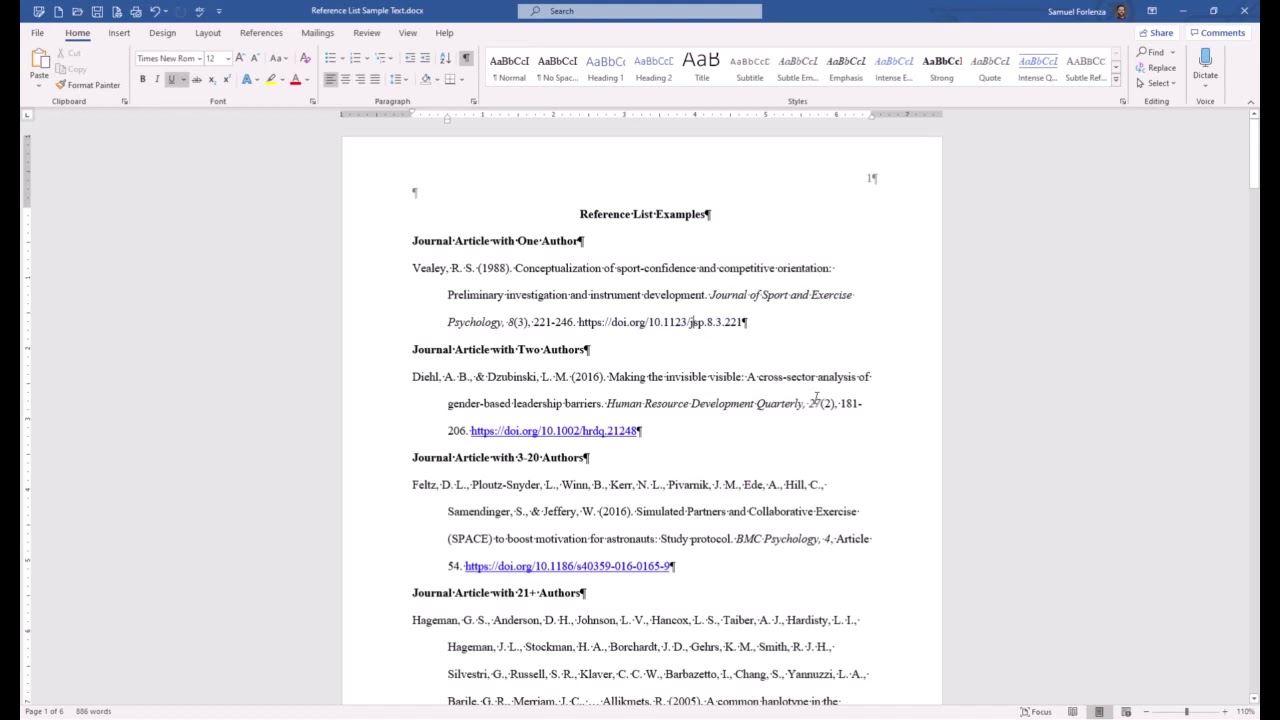
permutations and special scenarios that I cannot go into in one video but the publication manual will cover them all with a lot of examples so if you have a question you're probably going to find an answer in it the APA style blog and Purdue owl are two great online resources to check out as well I'll link to them in the video description I also have other videos on APA style so please check the video description for links to them thanks for watching and good luck ray