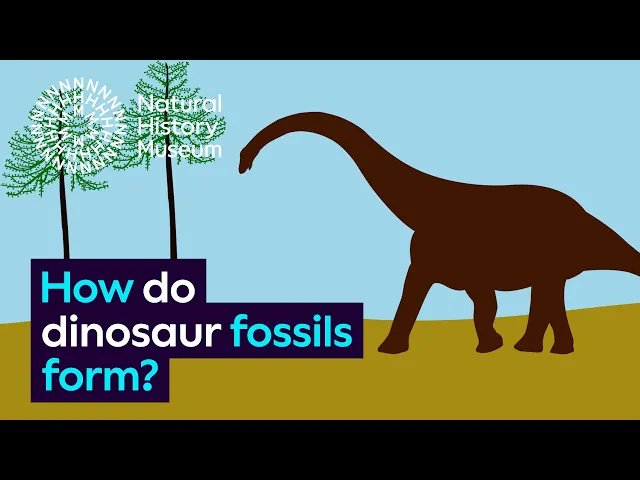
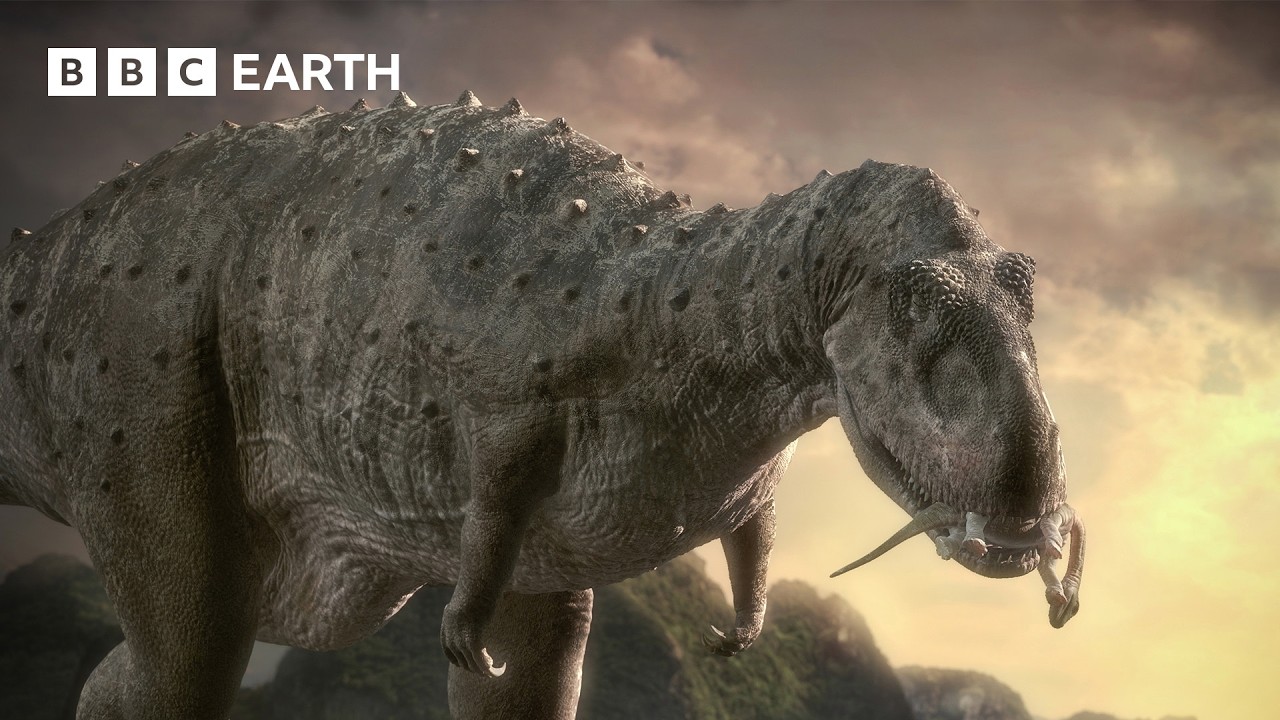
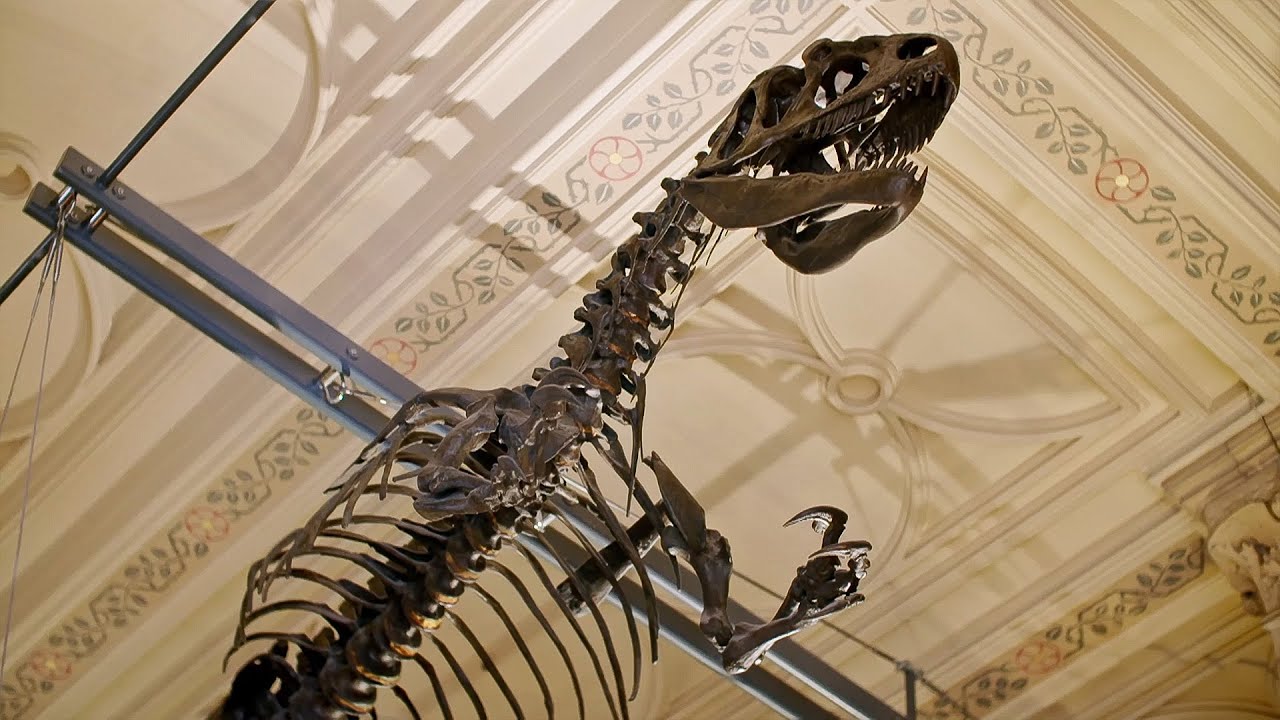
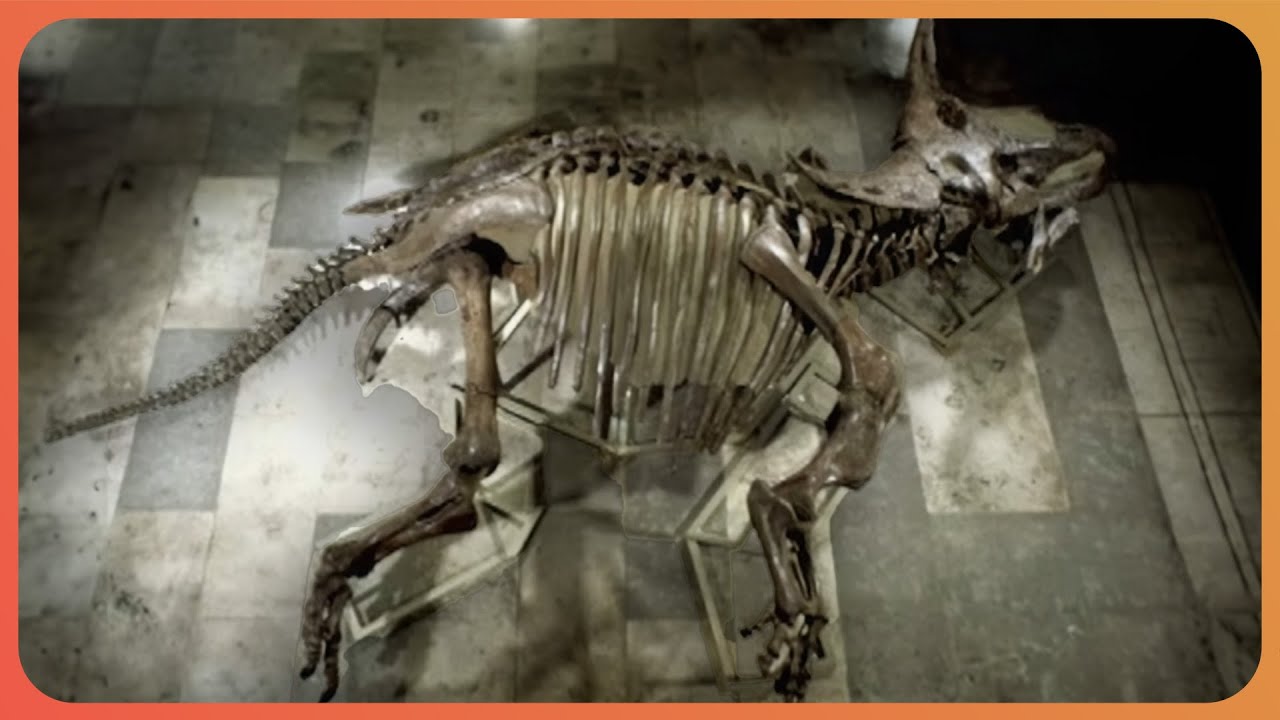
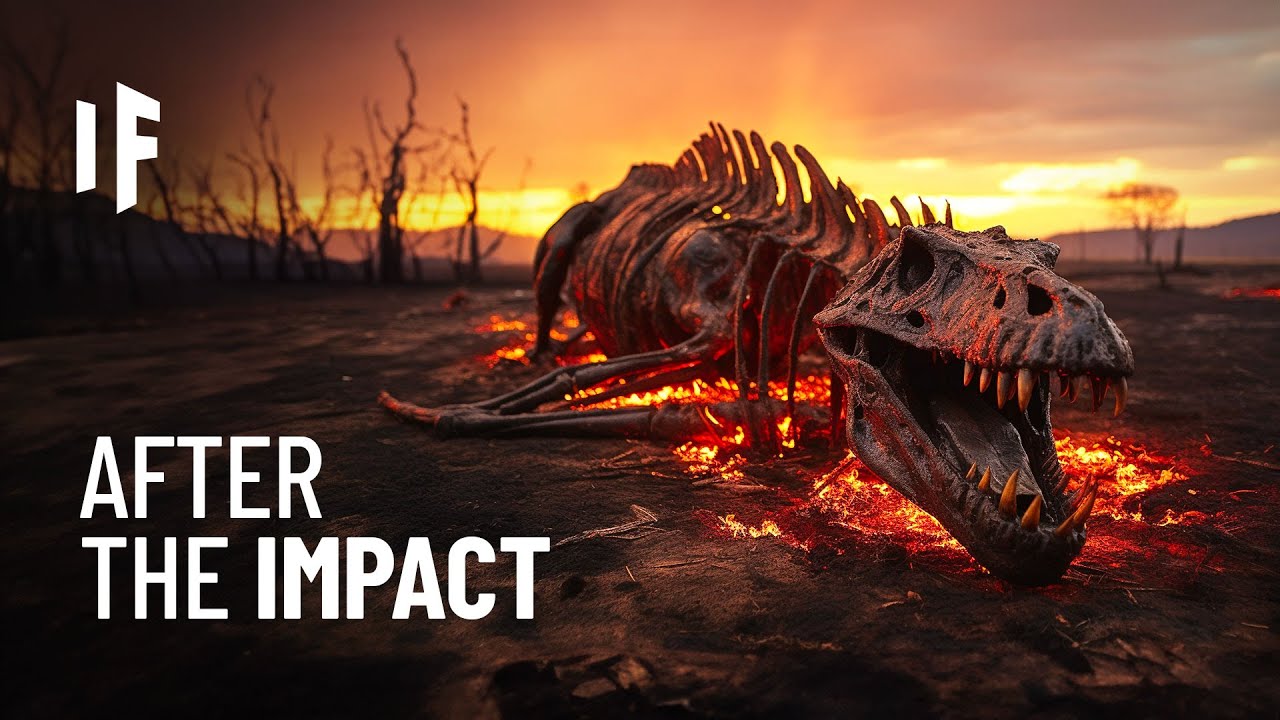
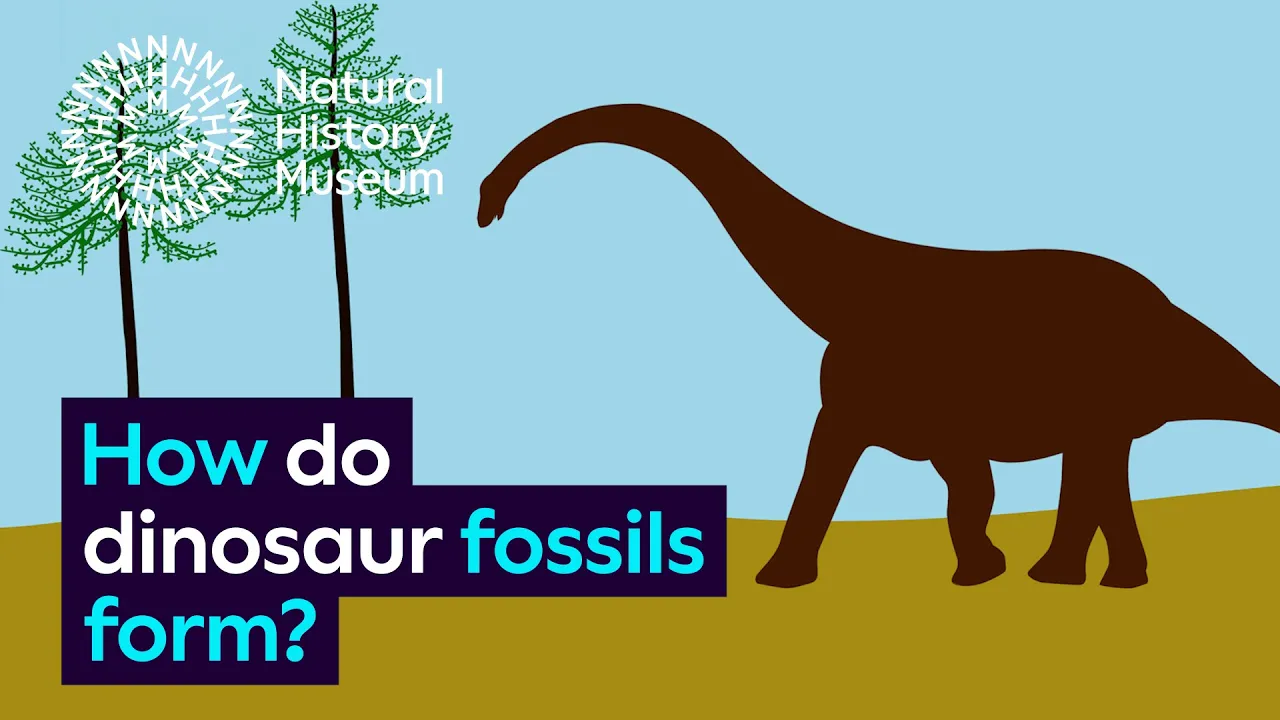
millions of years ago this dinosaur was going about his normal daily life but his day went from good to bad really bad [Music] after he died other dinosaurs ate him and the rest of his skin and muscles rotted away leaving just his bones these were quickly buried by mud over millions of years more layers landed on top mud sand and even volcanic ash this added up to a lot of weight on top of the skeleton some parts got crushed the layers of mud sand and ash turned into hard sedimentary rocks [Music] while this was happening
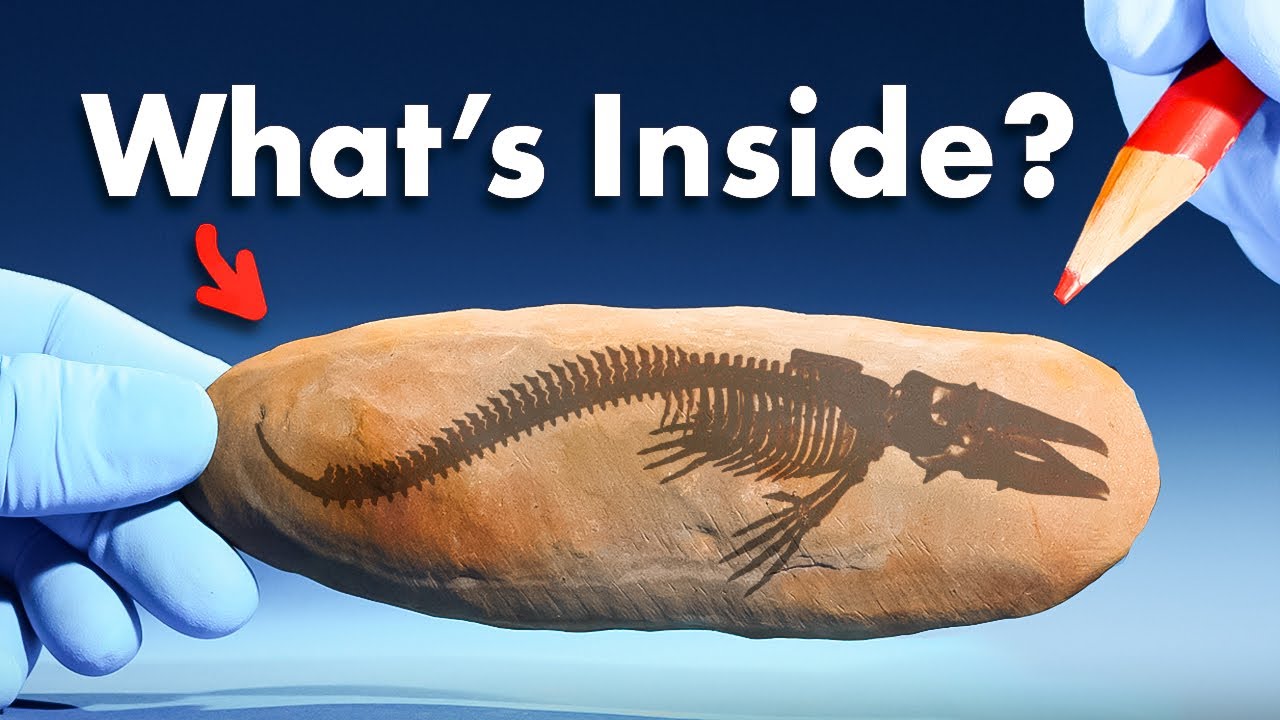
water seeped into the bones it left behind minerals turning the bones to stone and creating a fossil [Music] earth changed a lot over millions of years rocks that were once deep underground rose to the surface a process called uplift very slowly wind water and ice wore away the rock [Music] eventually bits of the fossil skeleton were exposed and became visible on the surface fossils are constantly getting eroded out of rock most are lost but if we're lucky someone will find one [Music] nearly all of the fossils we find around 99 are from marine animals such
as shellfish and sharks this is because they lived in the sea where sand or mud could bury their remains quickly after they died but dinosaurs live on land so how do they get buried so quickly most dinosaur fossils we find belong to animals that were living near to a lake or a river [Music] they died and a short while later the area flooded covering the remains in mud and silt occasionally something more dramatic happened in one example two dinosaurs protoceratops and velociraptor were fighting in the desert they were mid-battle when suddenly a sand dune collapsed
on top of them their fossils show them frozen in their fighting poses in another tragic example the feathered dinosaur city party was sitting on its nest of eggs when a sandstorm blew in and covered it fossils like this from animals that were alive when they were buried are really rare it's not just bones that turn into fossils dinosaurs can also leave behind footprints and impressions of skin and feathers so next time you're near some sandstone or mudstone think of what fossils could be hiding just waiting to be discovered it probably won't be a dinosaur fossil
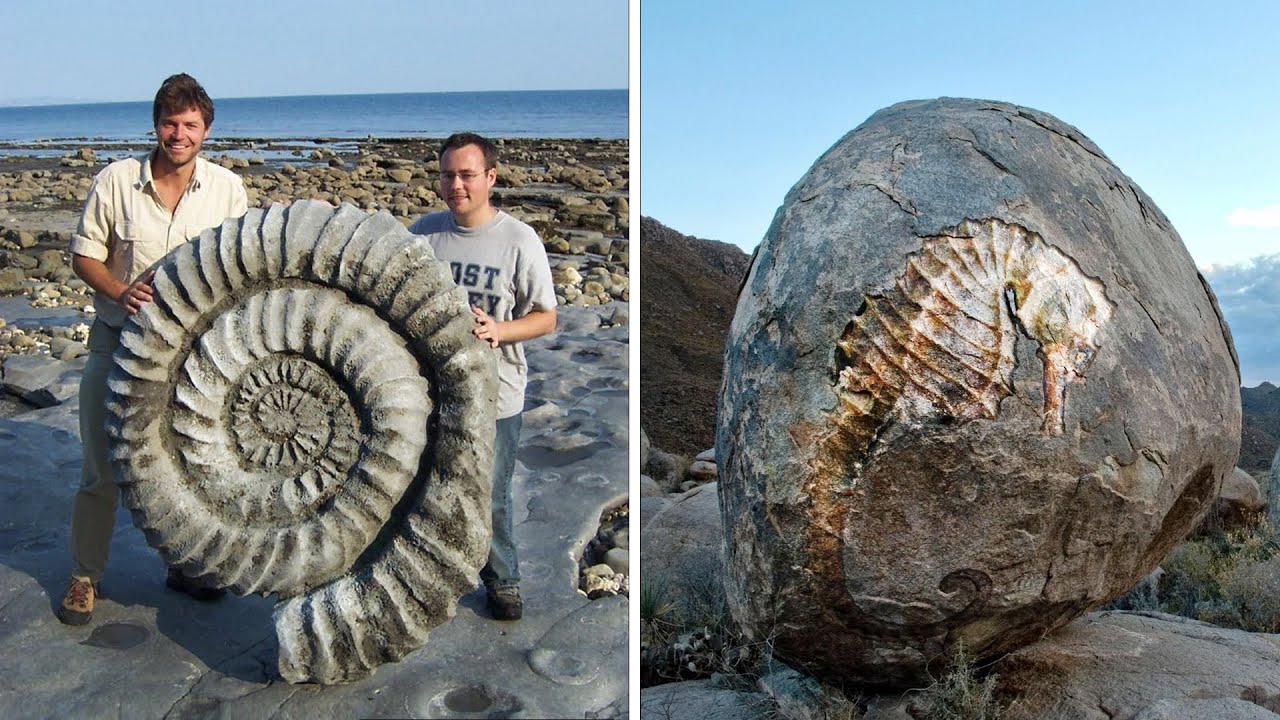
as they're so rare but it could be a prehistoric sea creature like an ammonite which went extinct at the same time as dinosaurs many millions of years ago [Music] you