I've been invited to talk about the capability approach and what role it might play in helping to integrate equality and human rights approaches but I thought it might help to start by motivating our discussion with some hypothetical examples of the types of Injustice we might be interested in trying to capture and indeed to tackle the first example is a school girl who's unable to participate in a school trip but because her parents are unable to afford it the second example is an elderly person receiving home care services but given no choice over what the meal
is that he receives or when he receives it perhaps only being helped to get out of bed in the morning uh as late as 10:00 and then having the lunch delivered at halfast 11 the third example a gay couple being refused a double room in a hotel on the grounds of not being married three very different examples of injustices but all ones that would be captured by a capability approach in the first case inequality of outcome and inequality of opportunity for the school GR in the second case constraints on choice and control for the Home
Care user and in the third case a clear instance of discrimination and a lack of respect on grounds of sexuality so what I'm I'm going to try and cover today is the following first of all an introduction to some of the key Concepts in the capability approach secondly how we might use the capability approach to monitor inequality and human rights through an application of the equality measurement framework which I'll say more about in a minute thirdly some ways in which the equality measurement framework in particular and the capability approach in general have been used in
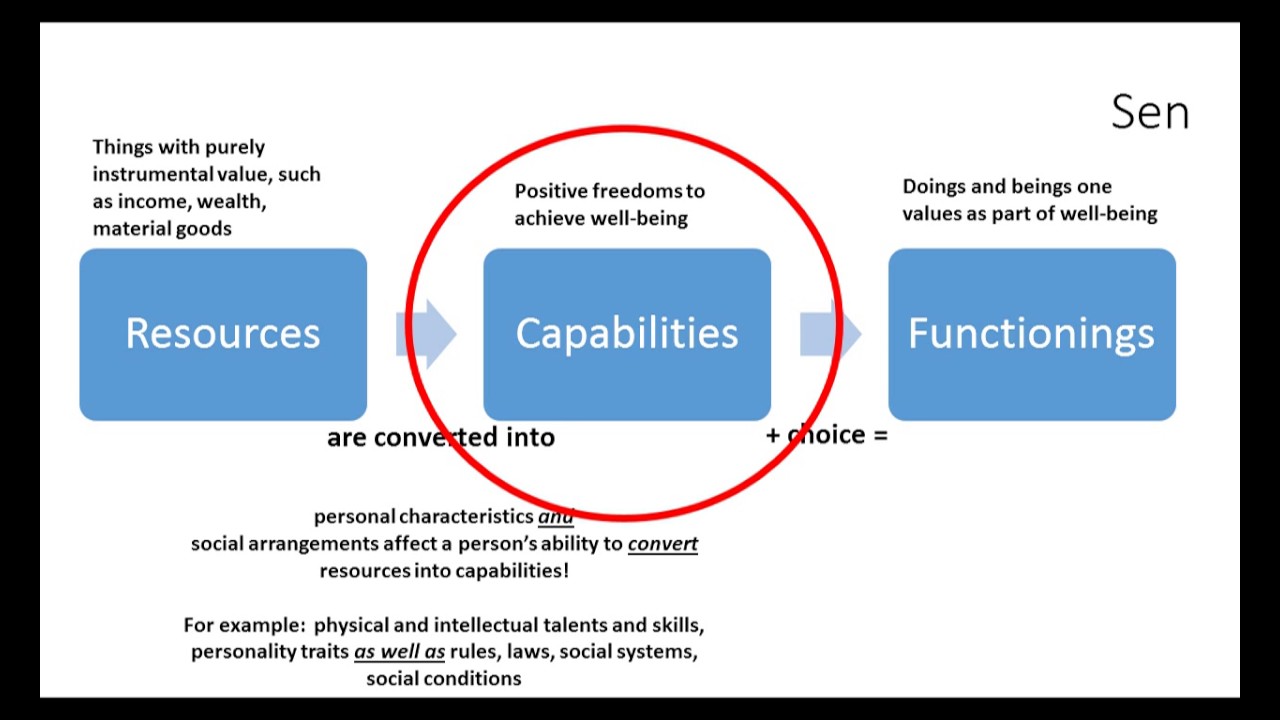
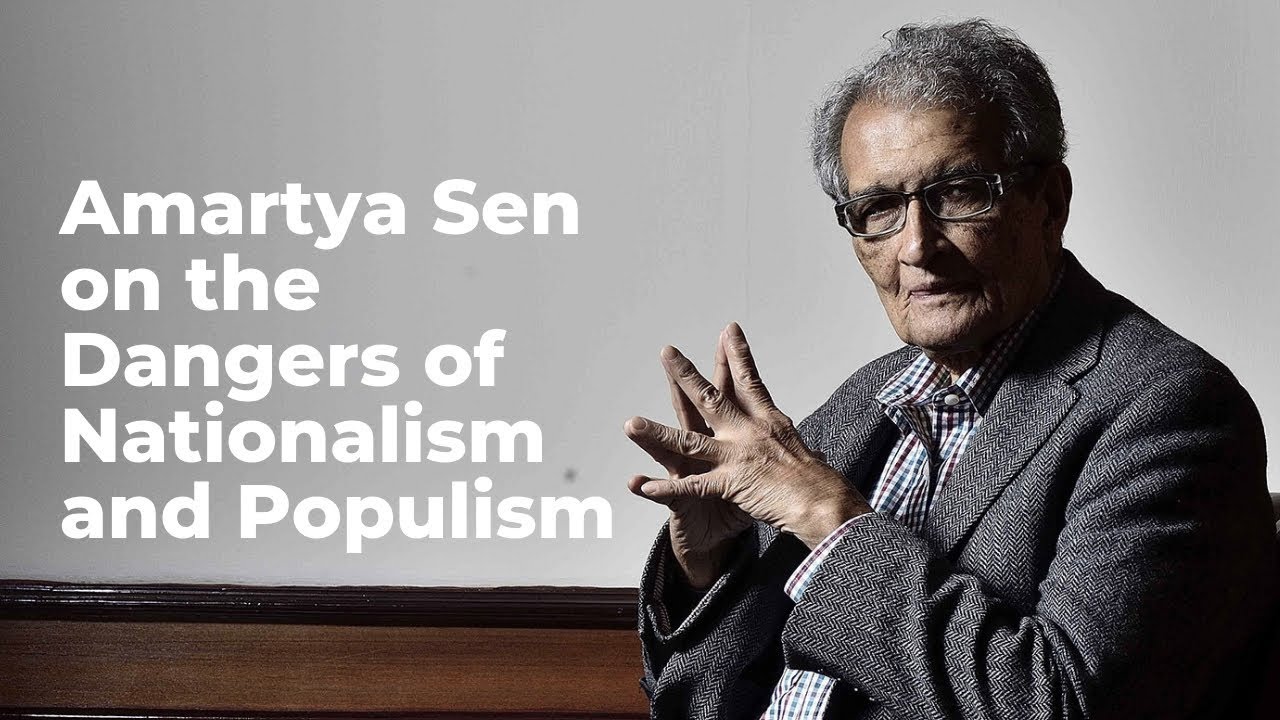
monitoring equality and human rights fourthly of course the capability approach has its critics and its weaknesses and I will discuss some of those and what possible responses there might be finally I will summarize by talking about the overall strengths and weaknesses of the capability approach as I see it so first of all some of the key Concepts the capability approach was developed by philosopher and Economist the mar sen who was subsequently awarded a Nobel Prize and the foundational concept is the idea of substantive Freedom substantive Freedom meaning freedom to be able to achieve important things
in life and the term substantive is used to contrast it with negative Freedom or mere Liberty so it's not about fre freedom from interference it's not about freedom from the state it's not about um civil and political Liberties alone it's about the freedom to be able to participate in society and to pursue your own goals indeed it's sometimes been described as flourishing or as having a wide range of capabilities the term capability itself is of course key to understanding the approach the capability is what you're enabled to be and do and that depends on your
own characteristics on the people around you on the resources and services that you draw on the rights you can access and more broadly the institutions structures and legal framework of society so we might think about an example the example of being able to participate fully in school life being able to decide what and when to eat being able to go on holiday with your partner without fear of being harassed these would all be capabilities so why might the capability approach be a useful starting point for thinking about equality and human rights well first of all
I think it does serve as one tool to promote the integration of equality in human human rights we can see this at the integration of the level of values so the Freeda principles are sometimes used in connection with human rights the principles of fairness respect equality dignity and autonomy and those apply equally to the human rights approach as to the capability approach secondly there's potential for integration at the level of which areas of life are of concern I'll explain a bit more in a minute how that might work but it's to do with the selection
and prioritization of which uh capabilities we might be concerned with another reason why the capability approach is attractive I think is because it takes account of variations in need between people because it focuses on what you're enabled to do the outcomes even if one person needs more resources than another that will be taken into into account so a disabled person may need additional income in order to achieve the same standard of living as a non-disabled person capability equality is assessed in terms of their achieved standard of living the actual outcome that's of importance to them
a more traditional focus on income inequality without making allowance for differences in need would in this case produce the wrong answer so taking account of variations in need I think is one of the attractive features of the capability approach another important feature is the ability of the approach to incorporate both objective and subjective outcomes so some valuable capabilities are subjective happiness or self-respect for example whilst others are more objective like having somewhere warm and dry to live the capability approach doesn't attempt to wrap everything up into a single measure of well-being it's inherently multi-dimensional and
that gives it the potential to incorporate both both objective and subjective components another strength is the three parts of the concept of equality which we work with in the capability approach and the measurement framework in particular equality of outcome equality of autonomy and equality of process the three examples the three injustices that I started with are examples of each of those types of of inequality and finally the capability approach has a strong theoretical basis which means that it can be non arbitary it's easier to defend an approach based on something like the capability approach uh
because it draws on a very wide uh academic basis an academic Foundation the equality measurement framework is an application of the capability approach developed by Polly vizard and myself in collaboration with many others including the equality and Human Rights Commission for Britain and this slide shows a number of building blocks of the equality measurement framework in the first case are the characteristics that we disaggregate or all analysis uh as far as possible by these are six of the characteristics protected under equality legislation plus social class one might also want to look at particular intersections between
these characteristics and of course the list can be expanded depending on the particular focus of the analysis or the context so in some instances it would be very relevant to consider pregnancy for example as an additional characteristic for disaggregation systematic disaggregation of this kind is required for human rights monitoring um as in the ohchr best practice on monitoring human rights and that's following on from the general prohibition on discrimination embedded in many human rights instruments so that's the first building block secondly we've got the concept of inequality as I described just previously the foundational concept
is one of substantive Freedom or a wide capability set but of course you can't directly monitor or evaluate substantive Freedom what could that possibly really mean in practice so in order to unpack that we talk about three components of inequality inequality of outcome inequality of process and inequality of autonomy outcome I think are reasonably self-explanatory but by equality of process we mean how people are treated are they treated with dignity and respect or are they subject to discrimination the third component autonomy and it's really about the degree to which the individual themselves has had a
chance to shape their circumstances and the extent to which they're consulted and have uh decisions made with them and including them rather than for them there's of course a significant question about which capabilities we should include in an analysis so the equality measurement framework looked to the international human rights Frameworks the international human rights covenants in order to guide the selection of capabilities this produced the 10 Dem domains listed on the slide and an extensive list of subdomains under each so for example we might take from the human rights uh framework the international Covenant on
civil and political rights the right to Liberty and security of the person article 9 that then is translated into a capability which is the capability to live in physical security and that translation took place through a process of deliberative consultation with around 200 uh individuals members of the public so those were uh both uh drawn randomly from the population and also oversampled uh groups at particular risk of discrimination and disadvantage and we invited those people in small groups to reflect on and consider what they regarded as the most important capabilities to include in an evaluation
of equality and human rights in Britain in the 21st century and through a process of iteration between the human rights framework and the initial list of capabilities we drawn up from that framework and the deliberative consultation we arrived at a comprehensive list of capabilities that goes to make up the uh set of capabilities included in the equality measurement framework then in a final stage those capabilities were translated through expert and stakeholder consultation into specific empirical measures so for example the capability to live in physical security identified from the international human rights instruments and then subject
to the process of deliberative consultation was translated amongst other things into a measure of the percentage of different gender ethnic and social class groups who've been the victims of violence uh over the past 12 months so this slide gives one example of such a measure and we can see that the types of violence have been broken down into mugging stranger violence acquaintance violence and domestic violence and in this case by uh social class groups the those who've never worked and who are long-term unemployed have a much higher likelihood of having experienced physical violence in the
past year than do those in the higher managerial and professional social classes but the types of violence have different patterns across the different social class groups that's of course also important to take into account the data source here is the British crime survey so it's not Reliant purely on reported crime uh to the police the equality measurement framework has a number of applications and uses perhaps perhaps the most significant is the equality and Human Rights Commission for Great Britain who've used the measurement framework in their trienal review and their quinquennial review to report on the
uh development of equality and human rights the state of equality and human rights in Britain it's also been used by the government equalities office uh under the previous administration in Britain by the Children's Commission in England by local governments evaluating equality in human rights at a local level by some Public Service organizations such as the uh NHS in some areas of England and by local equality networks and pressure groups but its wide use doesn't mean to say it's without its criticisms or weaknesses and I'm going to go through now a number of the key critiques
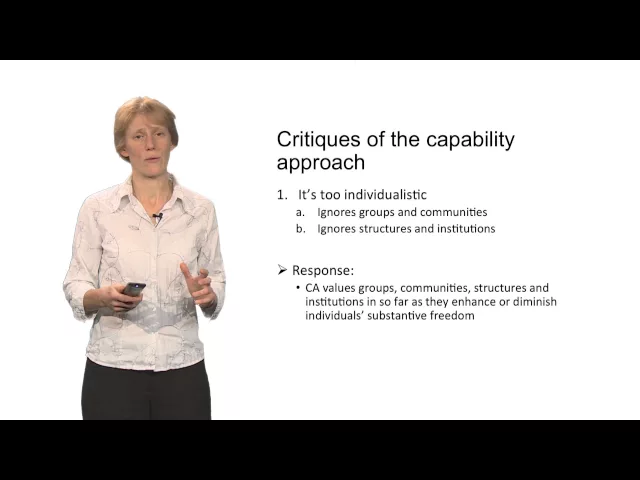
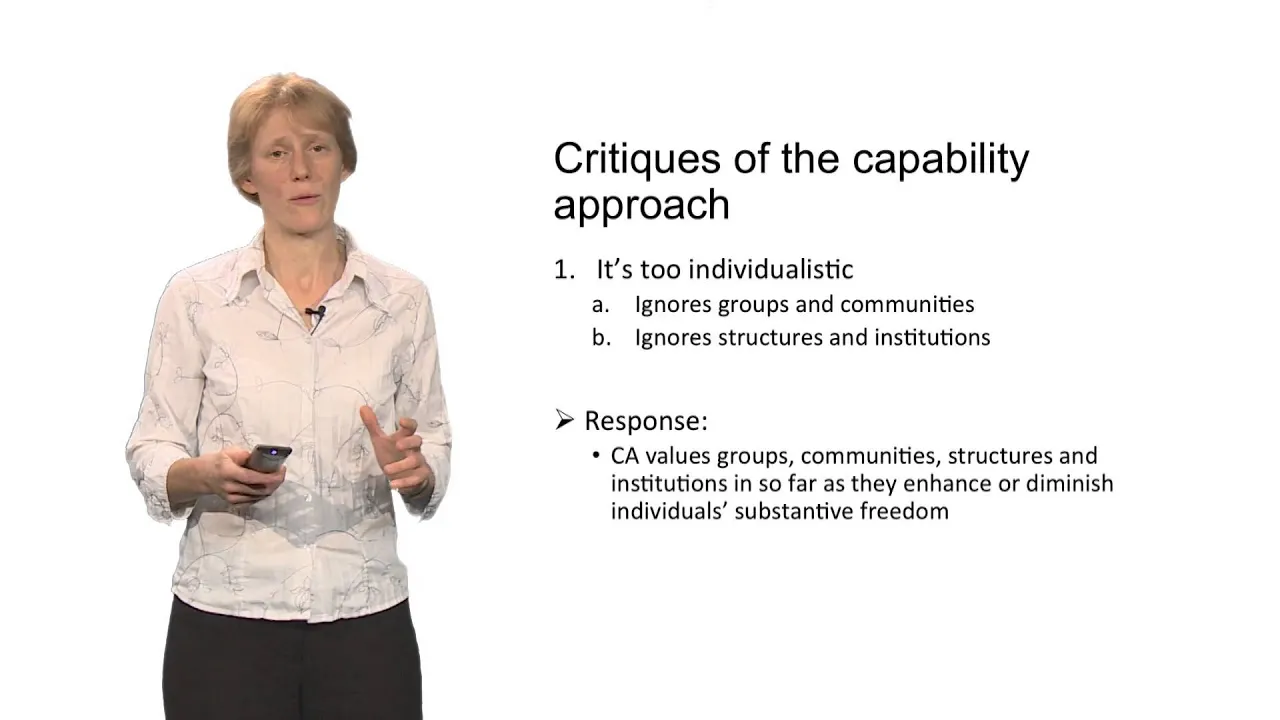
of the capability approach one that recurs very frequently is the idea that the capability approach is too individualistic and there are perhaps two variants of this criticism the first is that the capability approach ignores the importance of groups and communities the second version of the individualism critique is that the capability of approach ignores the significance of structures and institutions and I think the reason why this criticism is recurrent is because the capability approach does have a very strong focus on the individual but what I mean by that is that the capability approach has at its
heart the idea that what's of value is the lives that individuals are able to lead and it puts that ahead of valuing groups in themselves or communities or cultures or any of the other collectivities to which we belong but it is in no sense individualistic in ignoring the role that communities groups families cultures have in shaping the capabilities that individuals have so yes the capability approach is individualistic in terms of the holders of value individuals uh but no it's not individual istic in terms of its analysis of what shapes individuals lives so we can see
this on the onion diagram as I like to call it the individual there right in the middle and their characteristics are one of the important Shapers of their capability set but around them uh may be family and that is both an enabler and a constraint on capabilities in different ways in different cases around the family there is a community again that can be an enabler or acting as a constraint on different capabilities and we can think about the community both in terms of uh religious groups or other identity groups to which the individual belongs but
also a geographical community in terms of local Services more generally the local labor market the infrastructure available to an individual is a key determin of their capabilities beyond that of course the national picture and indeed the global where we need to take into account for example migration flows trade agreements indeed climate change so the individual is nested within a whole series of different layers of um capability enhancers and capability constraints and taking that into account when we unpick and analyze observed differences in the capability set of of different individuals is of course entirely crucial a
different criticism of the capability approach is that by through its multi-dimensionality it reduces the focus on redistribution of wealth or income from the rich to the poor so one line of criticism is that it's a distraction and that it allows wriggle room for policy makers and others to um reduce the focus on the hard objective facts of the income distribution I think there is a real risk there and perhaps particularly in times of austerity um with very significant changes in the income distribution it's important to retain a clear focus on um income but the capability
approach I think is useful in reminding us that that income is a means to an end rather than an end in itself and just as I explained in relation to the example earlier of the disabled person who may need more resources in order to achieve the same standard of living as a non-disabled person so here when we're talking about income I think it's important to remember uh that different incomes are needed by different people in order to achieve the same valuable outcome the same capability in the way of standard of living so the cap ility
approach doesn't ignore income but it treats income as a means to an end a very important means to an end and one that feeds into a very wide range of capabilities in fact not just that in the standard of living domain the final two criticisms of the capability approach that I want to Canvas are in a sense Polar Opposites so the capability approach is sometimes accused of being hopelessly idealistic and on the other hand it's sometimes accused us of being an apology for capitalism and again there is Justice in some ways in both of these
criticisms the capability approach itself as developed by Martia sen is open to quite a wide range of different interpretations and it can be used to justify some market-based inequalities for example in that sense it's correct that it doesn't automatically in imply a criticism of capitalism itself on the other hand in other interpretations if we take seriously an idea of equality of capability and if we look at the kinds of structural constraints that operate on people's capabilities it can have really quite radical implications so I think the important thing to note here is that it's all
in the interpretation and that as with any tool it can be put to a range of uses some more radical than others the analytical framework that lies behind the capability approach our understanding of what constrains capabilities and what levers we can pull in order to expand capabilities is key in understanding how the approach can be taken forward in policy terms so to try and summarize some of what I've said today then about the capability approach and its potential for integrating equality and human rights approaches is one weakness is that the capability approach is informationally demanding
by which I mean that if one is to take a very multi-dimensional approach and look for evidence across a whole different range of domains of an individual's life then look to disaggregate that systematically by gender age disability religion and belief and so on that means an awful lot of of data Gathering an awful lot of information is requ re ired and that can be challenging but I think on the other side the fact that it is genuinely multi-dimensional and doesn't seek to combine apples and pears into an overall index something called subjective well-being say or
simply a measure of uh GDP or resources is itself a strength particularly people coming from a human rights background and especially a legal human rights background are sometimes concerned that using a capability approach weakens the link with legally enforcable and specific rights and again I think to a certain extent that is true although some uh some human rights are at least in in principle enforcable under domestic and international law capabilities are not linked article by article and hence are not directly actionable it moves us one step away from a purely legal framework I think there
are ways in which one can link it back through two specific legal uh rights and indeed the human rights measurement framework uh that poly vizard developed alongside the equality measurement framework uh has done exactly that but by itself capabilities are not do not have share that that direct link uh to legally enforcable rights on the other hand because it does draw both on human rights principles human rights values and on human rights Frameworks in terms of identifying the capabilities that should be a priority some versions of the capability approach specifically for example the equality measurement
framework do I think serve to help to integrate equality and human rights thinking and perspectives another weakness of the cas capability approach that may be seen is that it's too academic too abstract too far removed from people's daily lives the the flip side of that I think is that it is well grounded theoretically and so can be defended against charges of being arbitrary perhaps more easily than some other approaches but there is a task to be done in terms of translating these more abstract principles into really concrete examp examples such perhaps as those that I
started the talk with today finally it may be seen as a weakness of the capability approach that it's underspecified Although our application the equality measurement framework has developed a comprehensive list of capabilities and indeed measures to set against those capabilities the capability approach itself in a Martis s's version has no spec pre-specified list of capabilities and in that case it is open to a number of different interpretations but that very openness does mean that there's plenty of room for adaptation to local context and indeed more participatory bottom up approaches to uh defining a capability list
uh and putting the capability approach to pract into practice in a particular setting and circumstances well thank you very much for watching and thank you for your time please do feel free to get in touch with me to follow up and continue the discussion I'd love to hear what your uh questions and comments are uh and I hope I may have a chance to do so in the future if you want more information uh there are Publications and further details of the equality equality measurement framework um at this link here or you can simply search
for equality capability and human rights Thank you very very much