many people criticize philosophy as being disconnected from our daily existence however this critique is not new it is in fact as old as philosophy itself in the ancient Greek Fable the astrologer who fell into a well thees of myus considered as the first philosopher is said to have been so lost in thought that while gazing at the stars he fell into a well how should one have knowledge of the Heavenly things above if one knows not what is beneath one's feet in recent history however there have been several philosophical movements such as transcendentalism pragmatism and
existentialism that turn away from abstract ideas to examine the world around us T an interest in our daily life and occupations with hopes to gain insights into the complexities of The Human Condition we will be exploring the works of a little known but unique thinker the Russian Jewish existentialist philosopher L shef known for his philosophy of Despair or philosophy of tragedy Chef's lack of recognition is however hardly surprising whatever Insight he had acquired could not be transmitted by intellectual processes to others but only by going through the same kind of intensive and personal struggle in
one's life shortly after his death his friend Nikolai berv himself a religious existentialist wrote that Lev shestov was a philosopher who philosophies with his whole being for whom philosophy was not an academic specialty but a matter of life and death for shefo the sources of philosophy were the human tragedy the horrors and sufferings of human life and a sense of hopelessness an inner development almost always requires going through suffering one must therefore include one's existential experience in one's philosophy and this cannot be done by reason alone shestov agrees with n that every great philosophy is
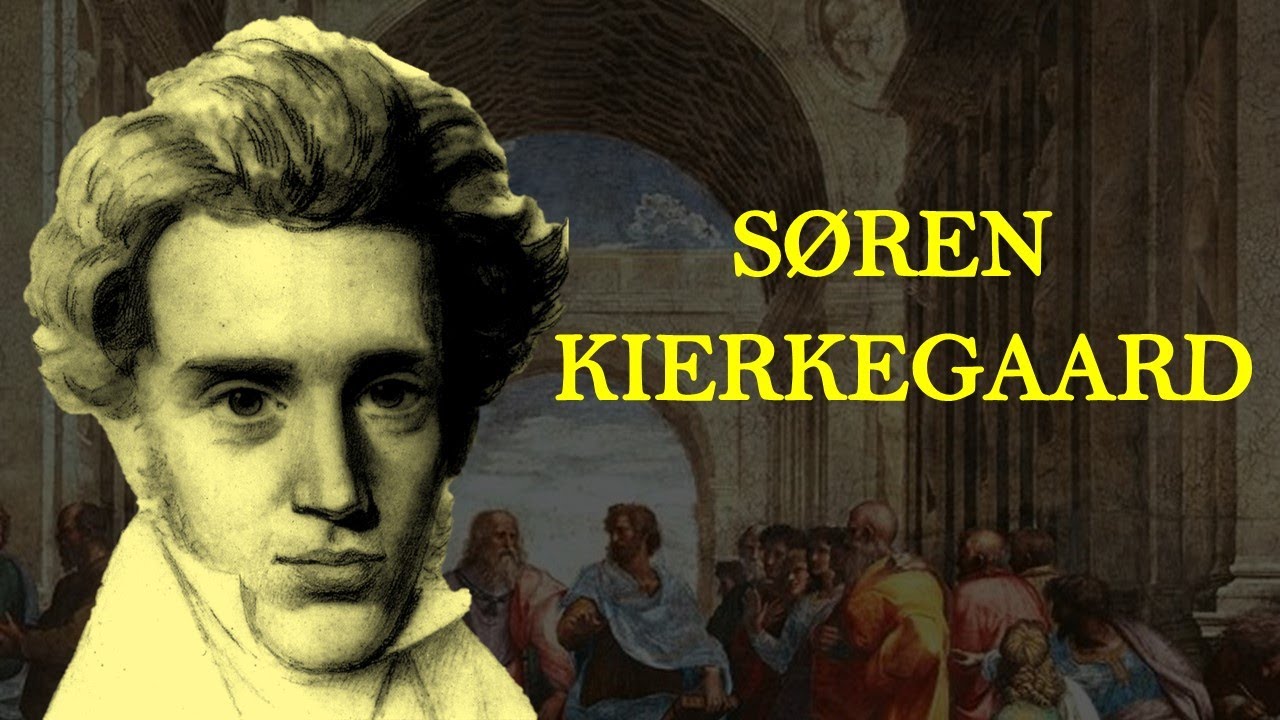
a confession and unconscious autobiography of the deepest kind shestov underwent what he calls a pilgrimage Through The Souls of the great minds he encountered the writings of the great Danish thinker kago in whom he found a kindred spirit he also held nature as his hero as well as dooi shestov was the first person to link these existentialists together seeing the greatness of the in their deep pring into the question of the meaning of life and the problems of human suffering evil and death United by the essential tragedy of human life nevertheless shestov is a thinker
in his own right in his first original work all things are possible or as in the original title the apotheosis of groundlessness shestov explores something that we all experience at One Moment In Our Lives it is what he calls groundlessness the UN certainty of our experience of the world it speaks to those who lived through a tragedy and felt at a certain point in the life that everything was falling apart that the ground gave way under their feet shestov believes that if rational thought were to be used in every sphere of Life reason would corrode
man's ability to connect to a more spiritual realm his Keen analysis of the malays of modern man is more important than ever in our depersonalized society struggling for meaning and purpose in life Chef undertook a vast critique of the history of Western philosophy beginning with the ancient Greeks which he saw as a battle between reason and Faith Like n shestov's philosophy offers no systematic Unity for no Theory can solve the mysteries of Life the culmination of his lifetime intellectual inquiry is his final work Athens and Jerusalem and attempted a religious philosophy exploring the philosophy religion
from an existentialist perspective he observed that the tragedy of human existence does not conform to materialistic systems of thinking Athens stands for reason while Jerusalem stands for Faith and the two are mutually exclusive he uphold the rationalization of religion of Western philosophy arguing that God is beyond rational comprehension and morality he criticizes both Kant who believe that religion is within the limits of reason alone and Hegel with his famous Proclamation that what is rational is real and what is real is rational in both abstractions predominate and ignore the fundamental questions of Life chest's philosophy is
a form of anti-rationalism but he's not opposed to scientific knowledge or Reason in everyday life this was not his problem he was opposed to the pretentions of scientism and rationalism the evil twins in modern society who consider themselves as the omniscient God who limits man's possibilities and Liberation from the tragic horrors of human fate life simply becomes a mathematical formula to be solved as dooi writes human nature is not taken into account it is excluded it is not supposed to exist they believe that a social system that has come out of some mathematical brain is
going to organize all Humanity at once and make it just and sinless in an instant quicker than any living process faith on the other hand is concerned with finding the truth in God shestov shares kyo's view that faith is the only way to free oneself from the despair born out of one's groundlessness thus Spiritual Development is bound to progress through a state of sickness for shestov philosophy is not pure thinking but some kind of inner doing inner regeneration or SE birth tragedies take place in the depth of the human soul where no eye can reach
out to see consequently he saw the beginning of philosophy starting not with knowledge not with Wonder but with despair despair is what he considers a penultimate knowledge that is a preliminary step that we must acknowledge in order to progress towards something higher man is a creature without an internal Compass his needs and dreams force him to Wonder perhaps that is why there's so much sorrow on Earth that man must wake up did the ghost that appeared to Hamlet not come to wake him up when we happen to have a nightmare while asleep we wish to
wake up in order to understand what caus it when in our Waking Life we encounter a deep unhappiness rather than try to understand the meaning and value of It We crave to fall asleep shestov draws to dostoevsky's close encounter with death when he was put up for the firing squad and at the very last minute was released a twisted form of psychological torture dooi was then sent to a prison labor camp in Siberia almost a death sentence in itself but managed to survive that too the encounter with the angel of death gave him new eyes
for life and produced a radical shift in his writings publishing The House of the Dead in which he described his own experience as well as the lives of the variety of prison prisoners he had encountered in Siberia shortly after he wrote what shestov considers as his greatest work Notes from Underground praising the underground man for his descent into the realm of groundlessness in the idiot dooi shows the feeling and thoughts of a person before execution mirroring his own experience he wrote it seemed my friend that he had only five more minutes to live he told
me that those five minutes were like an eternity he calculated the exact time he needed to take leave of his comrades and decided that he could do that in 2 minutes then he spent another 2 minutes in thinking of himself for the last time and finally 1 minute for a last look around there was a church not far off its guilt roof shining in the bright Sunshine he remembered staring with awful intensity at that roof and the sunbeams flashing from it he couldn't tear his eyes of those rays of Lights those Rays seemed to him
to be his new nature and he felt that he had somehow merged with them the uncertainty and the feeling of disgust with that new thing which was bound to come in a minute was Dreadful but he said that the thing that was most horrible to him was the constant thought what if I had not to die what if I could return oh what an eternity and all that could be mine I should turn every minute into an age I should lose nothing I should count every minute separately and waste none he said that this reflection
finally filled him with such bitterness that he prayed to be shot as quickly as possible shestov tells us that to awaken we must turn our attention to death which brings our existence into Focus that could open a path to another unknown Dimension which is found Beyond one's rational comprehension Beyond thoughts and words shestov experiences owner Awakening a nervous breakdown which he described as a rupture of time he delved into the monsters lurking in his psyche venturing to the brink of the abys echoing ne's famous words he who fights with monsters might take care lest he
thereby become a monster and if you gaze for long into an abyss the abyss gazes also into you shestov advances his idea of a near-death experience as Awakening from life as sleep sleep which combines horror and awe at the same time we are all Sleep Walkers in life until some inexplicable or life-threatening experience which can activate our thinking about death awakens us from our deep Slumber he writes the Ancients to awake from Life turn to death the moderns flee from Death in order not to awake and take pains not even to think of it which
are the more practical those who compare Earthly lives to sleep and wait for the miracle of the Awakening or those who see in death a sleep without dream faces the perfect sleep and while away that time with reasonable and natural explanations that is the basic question of philosophy and he who evades it evades philosophy itself the motive of Awakening encapsulates one of the main ideas of his philosophy the fight for the individual's right to freedom and to creative transformation and in the face of Despair and death reaffirm human life the penultimate knowledge is knowledge that
without God life is meaningless however it is a necessary step shestov writes the fool said in his heart there is no God sometimes this is a sign of the end and of death sometimes of the beginning and of life as soon as man feels that God is not he certainly comprehends the frightful horror and the Wild fly of human temporal existence and when he has comprehended this he awakes perhaps not to the ultimate knowledge but to the penultimate in his fearless and persistent struggle for the unattainable possibility to uncover the meaning in the Paradox of
human existence shestov attempted to expand his thoughts into another dimension over games the domain of necessity the domain of Reason stands God who symbolizes ultimate knowledge unlimited possibilities and freedom without boundaries for With God all things are possible shestov's philosophy is ultimately life affirming in his last years shestov kept returning to what he called the nightmare of godlessness and unbelief which has taken hold of humanity he was convinced that only through the utmost spiritual effort could men free themselves from this nightmare he aimed to establish a new free way of thinking which manifests itself as
a struggle against the delusion that we have a rational grasp of the necessary truths on matters that are of the greatest importance to us reason tells us nothing in which we can explore the problems of The Human Condition it is as if we are thrown into a dark cave without light faith on the other hand gives us light in order to find a way out of the darkness [Music] I hope you enjoyed this video you can support the channel and Patron or by liking commenting or sharing the content thank you for watching