I'd like to spend some time in Scripture dealing with what has become for me really a crucial topic something that Catholic Christians have to understand much better to grow as Catholics but also they have to study it more from scripture to help fallen away Catholics rediscover their faith the topic of course is the Holy Eucharist and I have to say that when I wasn't any Catholic it was one doctrine above all else that I opposed I was I was opposed to Mary I was opposed to the Pope both of those doctrines seem to be somewhat
superstitious teaching that the Pope is the infallible Vicar of Christ or teaching that Mary was conceived without sin but sooner or later I found scripture to back those up and a lot of testimony from the early church fathers but there was one thing that I found extremely repulsive about the Catholic Church and that was that they instilled an idolatrous sense within Catholics to worship a wafer you have to realize that some people are anti-catholic because of bigotry or cultural prejudice I would didn't fall into that category my concern was if that wafer up on their
altars is not God as they claim then this act of adoration is nothing short of idolatry sacrilege desecration of the true God and so I harbored a very deep conviction that the mass was a sacrilege at the Eucharist involved idolatrous worship it took years of study in prayer for God to blast me out of that sort of misunderstanding what I'd like to share in the next 45 minutes are the several steps by which I discovered through Scripture and quite inadvertently what the Catholic Church teaches about the Holy Mass the stage was really set for this
discovery process one Sunday morning I attended Lanesville Congregational Church which is where Kimber and I were going while we were attending seminary and my favorite professor and my dear friend and Hebrew instructor was preaching a sermon that Sunday and pastor Hugin Berger was dwelling upon just briefly for a few minutes Jesus death on the cross as it's recorded in John's Gospel and in passing he quoted from John 19 verse 30 where our Lord cries out it is finished and then in passing he raised the question he asked the question what does the it refer to
what did Jesus mean when he said it is finished now my mind immediately went toward a customary interpretation that I had heard from many people before and that is the it refers to Jesus work of redemption that once he died on the cross then there was nothing more for us to do to be saved but then he pointed out how in Romans 4 verse 25 st. Paul teaches how it was essential for Jesus to be resurrected for us to be justified so our salvation is not complete with the end of Jesus sufferings because his resurrection
is an essential part of our salvation as well all right i sat there listening wondering okay what does the it refer to and then he had the gall to say in front of the whole congregation that's it that's a question I haven't found an answer to let's move on so does he sat down like little wait a second that you don't do that you know and I was the kind of student who found that type of remark especially troublesome because I was always that Socratic gadfly who'd like to raise the hard questions and search out
the hard answers and so frankly I didn't hear another word of that sermon on that particular Sunday morning I just began burning through scripture to try to find an answer to the question that he had so impolitely raised without knowing the answer himself and it took me weeks and it ended up taking me months to find the answer and the ultimate answer came in 1986 when I joined the Catholic Church and receive communion for the first time but let's back up a few steps the first stage of my discovery process of trying to figure out
what the Jesus referred to when he said it is finished I wanted to back up I wanted to take a few steps backwards and figure out okay what is the context for interpreting Jesus sufferings on the cross as well as his last sayings and it's clear that when you back up and you study this in context that Jesus begins offering himself up as a voluntary sacrifice when he begins celebrating the Last Supper so the first stage of my discovery process began with studying the Old Testament background to Jesus Last Supper especially focused on the occasion
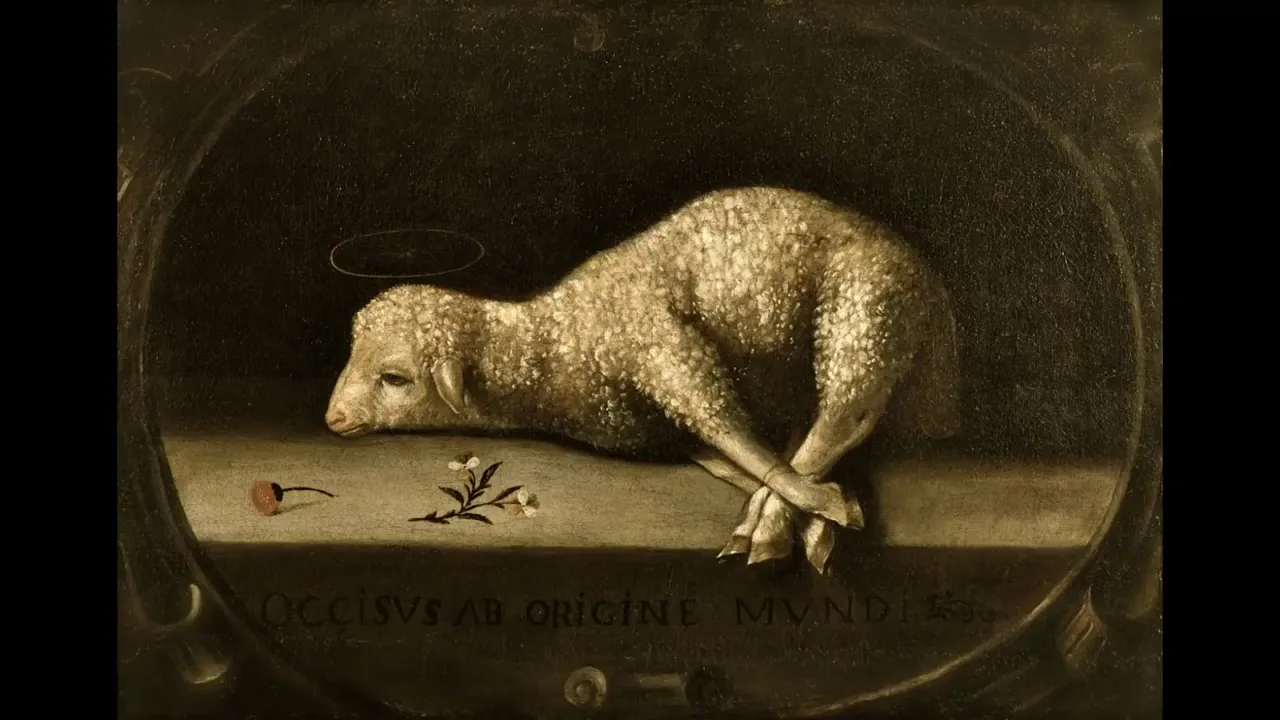
which was the Jewish Passover Feast I think all of us are aware of the fact that the Jews celebrate Passover with great awe and reverence it really is the most remarkable and venerable feast of the sacred calendar and it harkens all the way back to the time when the Jews found themselves in bondage down in Egypt and God brought about plagues and the tenth plague marked the firstborn of Egypt for destruction whereas the Israelite families were instructed by Moses to find an unblemished male lamb to slaughter it to sprinkle its blood upon the doorposts and
in that way their firstborn sons would be spared and so the evening of the Passover all the Israelite families in Egypt slaughter the lamb sprinkle the blood roast of the meat ate the meal standing up because as soon as they were done what do they do they fled out of Egypt at the leadership of Moses out across the Red Sea over to Mount Sinai where of course the Ten Commandments were given and the Covenant was sealed between God and Israel through animal sacrifice and a communion meal so the Passover in its original setting was something
that prepared Israel to be redeemed out of slavery and brought into a covenant relationship with God now part of this research for me led to the discovery that for the ancient Hebrews the Covenant was more than a contract that involved nothing less than a sacred family bond and in this case a sacred family bond between Yahweh the God of gods and Israel the people of God the family of Yahweh throughout Scripture this covenant bond is expressed in family terms Yahweh his father Israel is his firstborn son or Yahweh is the bride and the Israelite people
I'm sorry Yahweh is the bridegroom and the Israelite people are the bride of the Lord that's found in Jeremiah Ezekiel 16 Hosea 2 in many places that harken back to the Covenant that was sealed between God and His people there an on Sinai in light of this covenant viewpoint then all the liturgy and the ritual and the sacrifices conducted as part of the covenants all of these things were meant to signify and strengthen the family bond of communion between God and His people that's the essential purpose and meaning behind the Covenant liturgy and ritual sacrifices
of the Old Testament they signify the family bond between God and His people at the same time they strengthen that bond as well now with this idea of the Covenant in mind recognize something that I was recognizing back in the early 80s and that is Jesus only used this all-important term covenant on one single occasion as it's recorded in the Gospels that is at the Last Supper for instance in mark chapter 14 verses 23 and 24 we read and he took a cup and when he had given thanks and the Greek word there is Eucharist
a sauce we get the word Eucharist comes from Eucharist Oh to give thanks and when he had given thanks he gave it to them and they all drank of it and he said to them this is my blood of the new covenant which is poured out for many this is the one and only occasion when Jesus uses the word covenant because this is the occasion when he seals a new covenant as a new family bond between us and himself this was during the Passover meal during the Last Supper as he was preparing himself to be
offered up as a voluntary sacrifice it's also of course when he instituted the Eucharist so in his own mind Jesus is both the Lamb of God to be sacrificed as well as the firstborn son of God think back to ancient Israel's experience in Egypt when the firstborn sons were slaughtered or the lamb was slaughtered in this case Jesus takes into himself both images to fulfill them now the second step of my own research and discovery came when I focused on how Jews in Jesus day celebrated the Passover liturgy you may have heard of the Seder
meal the Passover Seder is an ancient liturgy by which you have the Passover celebrated according to a fourfold structure the Passover meal for the longest time going back as far as we can tell has been divided into four parts and these four parts are reflected in four cups of wine that are consumed by the participants in the Passover meal so when you study the Passover Seder meal you discover that the first cup is part of the preliminary course which begins with the festival blessing Jesus would have led his disciples in a prayer known as the
kaduche which led which would which would in effect sanctify consecrate and bless the Passover celebration and then they would pass around a dish of bitter herbs parking back to the bitterness of bondage as slaves in Egypt and after the herbs the first cup of wine was passed and drunk by all the participants then you proceed into the second part the second part of the meal begins with the recital of to this 12 which is the Passover narrative the original story of how God delivered Israel from the tenth plague the destroying angel and as soon as
the Passover story is told and it's usually told in a question/answer format the youngest member at the meal asks the questions and the oldest member in this case it would have been our Lord answers those questions and as soon as that recital is done Psalm 113 is sung by all it's known as the little Hallel Hallel means praise that's where we get the word hallelujah it literally means praise yah which is short for Yahweh hallelujah they sing Psalm 113 at the end of the second core at the end of the second stage and then they
proceed on to drink the second cup immediately after the second cup is passed around and everybody gets a chance to drink they proceed into the main course of the meal which consists of the roasted lamb along with the unleavened bread after the unleavened bread is eaten the celebrant of the Passover passes around the third cup of wine this is known as the cup of blessing the cup of blessing is undoubtedly the cup that Jesus blessed according to the Gospels now after the cup of blessing is passed around that everybody has a chance to drink from
it you come to the climax of the meal because at that point they sing the great hell which consists of Psalms 114 115 116 117 and psalm 118 after that long song is sung by all the fourth cup is passed and this is the cup of consummation it represents the climax of the Seder meal or of the sacred Passover now we know that the accomplished cheese is blessed and passed around the the cup of which he consecrated was the third Cup we know that because as soon as he's passed it around we read in the
next verse mark 14 26 and when they had sung a hymn which would be the great halal according to scholars in fact in 1st Corinthians 10 verse 16 Paul identifies the Eucharistic cup that we celebrate within mass as the cup of blessing the cup of blessing which we bless is it not a coin ania he says a communion in the blood of Christ but then a significant problem arises at this point I didn't know about it because I'm a Gentile but when you read Jewish sources where Jewish scholars and students are studying how Jesus conducted
the Passover meal at the Last Supper they barked there seems to be a serious disorder a serious problem in the sequence of the narrative that the Gospels present it's not lost to Jewish readers even if it is lost to us Gentile readers for them Jesus passes around the third cup and they drink from the third cup they proceeded to sing the song but as soon as they had sung the hymn in mark 14 26 Jesus and the disciples depart and go over to the Garden of Gethsemane the Mount of Olives now for us because we're
so familiar with the story we say ho-hum but when a Jewish scholar reads this he says whoa back something's wrong here not only is the fourth cup omitted but the climax of the Passover meal is somehow missed the fundamental purpose and meaning of the Passover meal is really expressed in the consummation the cup of consummation and so Jewish scholars and also others who are experts in the ancient Passover comment on how disruptive the sequence seems but then when you look at more closely you discover in mark 1425 right before they sing the hymn and go
out to the Mount of Olives but right after they drunk from the third cup listen to what Jesus says truly I say to you I shall not drink again of the fruit of the vine until that day when I drink it new in the kingdom he said that after drinking the third cup but before drinking the fourth Cup and as soon as he said that they sang the great Hillel and they went out into the night it's almost as though Jesus meant not to drink what he was expected to drink now a few scholars speculate
that maybe psychological factors account for Jesus omission here perhaps he was so troubled so distressed so psychologically upset that he just couldn't be bothered with you know precision in liturgical rubrics they point through mark 14 verse 32 where we read of how Jesus began to be greatly distressed and troubled and he said to them my soul is very sorrowful even unto death perhaps he was just too upset to be bothered with the fourth cup well this analysis may sound plausible I think it is in fact improbable it seems highly doubtful to me and to others
that Jesus would forget and interrupt the Passover liturgy after expressly declaring his intention not to drink again of the fruit of the vine right before singing the great halau in other words why would he declare himself so plainly before acting in such a disorderly manner it seems intentional it doesn't seem inadvertent it doesn't seem to be spawned from some psychological disorder or distress so why then did he choose not the drink of the fourth cup and again I want to stress the importance of this I mean you might not notice this in reading the Gospels
as I didn't eat her until I went further into research but can you imagine if you went to Mass on Sunday and the priest pronounced the words of consecration and then entirely skipped Communion and proceeded on to the benediction do you think you'd notice that of course you would and so Jews notice when the consummation and climax of the meal is skipped over so why then did Jesus choose not to drink the third stage of my discovery process occurred when I followed him out into the night over to the Mount of Olives because when you
follow him you discover that he enters into the Garden of Gethsemane and he enters there for prayer so focus with me on how he prayed in Matthew 26 verse 39 we read and going a little farther he fell on his face and he prayed my father Abba if it be possible let this cup pass from me nevertheless not as I will but thou wilt and three times altogether Jesus prayed to ABBA his father to take away quote unquote this cup now I think an obvious question arises at this point what is this cup that Jesus
is talking about some scholars suggest that it's a reference back to the Old Testament prophets and Isaiah 51 17 in Jeremiah 25 15 the prophets refer to the cup of wrath which certain people have to drink down to the dregs because of their sin but the connection seems rather indirect I suspect that with the Passover as the background a more direct connection between this Cup which Jesus prays to pass this the direct connection is to be drawn between that and the fourth cup which Jesus skipped which Jesus did not receive and in fact before going
out into the night recall how Jesus said truly I say to you I want a taste of the fruit of the vine until what until his kingdom is coming to us until he comes into his kingdom now the next stage of my discovery process was more subtle a little more difficult for me to really figure out but I began to focus upon John's Gospel narrative because after all he was the only eyewitness of all the subsequent events following the arrest the trial and the execution he was the one at the foot of the cross so
as the eyewitness I think it's helpful to study what he has to say about all these matters it's interesting that John seems to understand the coming of Jesus kingdom in a way that is almost ironic normally when we hear Jesus words I won't taste the fruit of the vine until my kingdom is established we think of what the second coming his final Advent at some point in the future when he returns to establish his kingdom but in John's Gospel you discover that Jesus kingdom is not so it's not primarily a political or military institution it
is a manifestation of mercy and of divine love in other words it's when Jesus Christ is lifted up that the ruler of this world is cast out and Jesus is enthroned as king this is the language that you find in John 12 verses 23 through 33 Jesus says when I am lifted up when I have lifted up I will draw all men to myself and he speaks of this time as being the judgment of the world when the ruler or the king of this world is cast out and then later on in John 18 verses
33 through 37 when Jesus is being tried by Pontius Pilate when he's at his weakest and most vulnerable moment it's that occasion when Jesus speaks more about his kingdom than in any other occasion he he speaks about the nature of his kingdom being truth and Pilate cynical response is what is truth but Pilate does notice he says so then you are a king and so he dresses Jesus up with ridicule in a purple robe and a crown of thorns and then in John 19 in verse 14 now it was the day of preparation of the
Passover about the sixth hour he said to the Jews behold your king they cried out away with him away with him crucify him precisely at the six hour John notices just coincidentally it's the sixth hour on the day of preparation that the Passover lamb was to be slain and here the Lamb of God is being sentenced to die on the precise moment when the Passover lamb was led off to die John also notices a few other important details as an eyewitness for instance in John 19 verses 23 and 24 John mentions that Jesus was not
only wearing the garments that were divided up among the soldiers but he was also wearing a seamless linen garment and the Greek it's a ketone they had to roll dice for that one what's interesting is that that word and Greek Cottone describing Jesus seamless linen garment is precisely the word used in Exodus 20:8 for in Leviticus 16 for to describe what the high priest would wear when sacrificing when the high priest would offer the sacrifice of the Passover lamb he too was wearing a ketone the seamless linen garment John notices that Jesus is not just
the victim the Lamb the sacrifice he's also the offering priest as well both priest and victim all in one John also is the only one as the eye witness the only disciple there to have the courage to stay with Jesus and his mother at the foot of the cross John alone notices in John 19 verses 33 and 36 that Jesus was the only one crucified that day among the three not to have any of his bones broken remember that the soldiers broke the legs of the two thieves to expedite their deaths shortly after Jesus died
and John notices thus to fulfill a scripture not a bone shall be broken now what does that refer to you go back to Exodus 12 verse 46 and God stipulates to Moses go tell them to take an unblemished passover lamb from the flock to slaughter for sacrifice but in Exodus 12 verse 46 God demands that the Passover lamb not have any broken bones so Jesus is both priest and victim from beginning to end and John sees it all and John prepares us for this when you read John's Gospel going back all the way to the
beginning how does John depict Jesus being introduced to all of us John the Baptist does the introducing in John 1 verse 29 John the Baptist points to Jesus and says behold the lamb of God who takes away the sin of the world in other words from the beginning of John's Gospel and till the end of John's Gospel Jesus is presented as the Passover lamb of the New Covenant who has been sent to take away our sins that is the background we need to understand what Jesus is doing there on the cross gradually these themes revolving
around the Passover and the kingdom that Christ was establishing began to converge in my mind I began to study more closely the passage where Jesus speaks it is finished for one thing I noticed that Jesus our King our priest and Paschal victim in his hour of glory while suffering in the cross says in order to fulfill the scripture I thirst says this after this Jesus know knowing that all was now finished said in order to fulfill the scripture I thirst now think about that for a minute realize that Jesus had not just noticed at this
precise moment gee I'm thirsty obviously for hours before this moment Jesus body had been racked on only with pain but with thirst as well in other words this is not just a passing comment that he makes moments before expiring this is something that he is saying deliberately with intended significance he says in order to fulfill the scripture I thirst realize how hard it is to speak when you're on the cross when Jesus was crucified what was the manner of death it wasn't blood loss that was actually minimal he lost far more blood in the scourging
than in the crucifixion it wasn't the pain either they could actually manage the pain the way a victim of crucifixion died was through slow asphyxiation it was grueling torture while you are on the cross your muscles collapse your rib cage then collapses and your lungs slowly fill up with body fluids until you slowly drown to death in your own body fluids the only way to breathe is to pick yourself up but what are you picking yourself up a pond the spike through your feet so you only breathe when it's absolutely necessary imagine if it's that
hard to breathe how much more difficult it is in the later hours to speak or to utter a word so here's Jesus not only breathing but picking himself up to say I thirst to fulfill the scripture and what happens John notices in this chapter that a hyssop branch they take there was a little bowl of sour wine right by the cross and there was a sponge and they took the sponge and they dipped it in the sour wine and they lifted it up to Jesus lips John records that but so does Matthew so does Mark
so does Luke all four evangelists record how wine was lifted up to Jesus lips but Matthew Mark and Luke do not tell us whether or not Jesus drank from the wine did he receive it or not because after all you recall how on the way up to cow Calvary what did they offer Jesus when he was carrying the cross they offered him wine mingled with gall or myrrh which is an opiate a kind of painkiller and on the way up to Calvary when Jesus realized what it was they were offering what did he do he
refused us after all he said I won't tasted the fruit of the vine until his kingdom is manifested so here he is saying with great pain I thirst Matthew Mark and Luke all corne how the sour wine is lifted through his lips but only John records whether or not Jesus received the wine and John not only notices whether or not he did but he notices that it was lifted high up to Jesus lips on a hyssop branch which just coincidentally enough happens to be the branch stipulated back in Exodus 12 as the branch used to
sprinkle the lambs blood on the doorposts another coincidence right hardly and John notices that as soon as he received the sour wine he said he'll tell us died it is finished all at once it occurred to me what it was that was now finished he said he would not taste of the fruit of the vine he omitted the fourth cup he was in the process of celebrating the Passover even while I was in the process of fulfilling the Old Covenant Passover by transforming it into the Passover of the New Covenant through the Eucharist he deliberately
interrupted the celebration of the Old Covenant Passover in order to bring about the completion and transformation of that so that it would become the New Covenant Passover all at once it dawned on me when Jesus said it is consummated after drinking the wine what was the it referring to the Passover which had begun in the upper room with his disciples while instituting the Eucharist which he had temporarily suspended he now completes and consummates by drinking the wine that would correspond to the fourth cup of consummation now when this occurred to me I began to realize
something I had an inadequate understanding of the nature of Jesus sacrifice as a non Catholic I had always thought that the you know there's a certain question when does Jesus sacrifice begin and the typical answer that I would have given was well when he's up on the cross at Calvary or perhaps when he scourge or perhaps when he is beaten spat upon or when he's carrying across all these are sacrificial moments but especially when that first spike would be driven into his hands or his feet that's what his sacrifice begins right wrong once you understand
that the Passover is the background to Jesus sacrifice then when does Jesus Passover sacrifice begin when he's celebrating the Passover he took the bread and he said this is my body then he took the cup and he said this cup is the blood of the new covenant he symbolically separates his body and his blood through transforming these elements by signifying the separation of your body and your blood what else are you signifying if you separate my body from my blood that signifies death right Jesus begins the voluntary sacrifice of himself there through the Eucharist in
celebrating the Passover in consecrating the elements that's when Jesus sacrifice begins it doesn't begin with the scourging it doesn't begin with the carrying of the cross it doesn't begin by hammering the spike into his hands and feet because the sacrifice of Christ is a Passover sacrifice it begins during the Passover but then that raises a second question when then does the Passover end does the Passover end when Jesus goes out into the night and travels to the Mount of Olives and goes in the Garden of Gethsemane hardly because they hadn't received yet from the fourth
cup the cup of consummation just as Jesus sacrifice doesn't begin on Calvary but the Calvary sacrifice begins in the upper room during Passover so the Passover doesn't end when they leave the upper room the Passover doesn't end until Jesus receives the wine on the cross that is the consummation of the Passover and that is the point at which Jesus finishes the transformation of the Old Covenant Passover into the New Covenant Passover that we call the Eucharist now I think that this makes clear enough sense it began to make a lot of sense to me around
84 to years before my conversion I began to work through the Gospel of John one more time just to see if anything else would support that and sure enough I found in John 6 strong support earlier this morning I read from John 6 verses 52 through 56 let me just quote a portion of that passage once more that's when Jesus says truly truly I say to you unless you eat the flesh of the Son of Man and drink his blood you have no life in you he eats my flesh and drinks my blood has eternal
life and I will raise him up the last day for my flesh is food indeed and my blood is drink indeed he eats my flesh and drinks my blood abides in me and I in him now when did Jesus speak these words during the bread of life discourse but when did he give the bread of life discourse in John 6 verse 4 we read around the time of the Passover Jesus proceeds to multiply the loaves and then give the bread of life discourse and speak of how they must eat his flesh and drink his blood
in other words a year or two before his crucifixion at Passover time Jesus the Lamb of God speaks of how we must eat his flesh and drink his blood significant that it was a Passover when Jesus speaks this way because the Passover represents the beginning of his sacrifice just as Calvary represents the end of the Passover now I've already suggested that when Jesus received the wine that represents the end of the Passover for him he said I won't taste the fruit of the vine again and then he tastes of it later on but here's a
question for all of you there was a question that occurred to me about 1985 just a few months before I joined the church if the Passover ends for Jesus with the fourth cup on the cross there's something more that remains for us when do we go about celebrating the Passover it takes a little bit of Jewish thinking here to answer this question think back to ancient Egypt if your ancient Israelites along with me and we were in bondage and we celebrated the Passover that night it wouldn't be enough for us to slaughter the lamb it
wouldn't be enough to sprinkle his blood it wouldn't be enough for us to roast his flesh and eat the unleavened bread and the bitter herbs the lamb itself had to be eaten not just the unleavened bread and the bitter herbs you had to eat the lamb suppose you don't like lamb meat suppose your family decided we'll slaughter the lamb we'll sprinkle the blood we'll roast the flesh but we won't eat it what would happen the next morning your firstborn son would be dead you had to eat the lamb you see God in requiring animal sacrifice
was not primarily interested in seeing lots of gore and guts he didn't want to see lots of bloodshed and he didn't want to smell lots of flesh being roasted the primary purpose in sacrificing animals was not killing them it was consuming them in a communion meal which symbolized the Covenant family the reason why God orders animal sacrifice is to bring about a communion meal to signify our family unity with him so when the Passover lamb is slaughtered and his blood is sprinkled something ultimate still remains and that is eating the lamb you had to eat
the lamb if you didn't it wouldn't take so Jesus Christ is the Lamb of God he is slain his blood is shed but something remains for us to do our land of slaughter his blood is sprinkled but we have to eat the lamb it isn't enough for us just to have him die just to have his bloodshed if he's the Passover lamb then we have to receive the Passover meal this is what I discovered Paul had in mind in 1st Corinthians 5 verse 7 listen to what Paul says Christ our Passover lamb has been sacrificed
there for what as a non-catholic I used to say once Christ has been sacrificed therefore nothing more remains for us to do except to celebrate and to accept our salvation but that is not what Paul says Paul goes on to say Christ our Passover lamb has been sacrificed for us therefore let us celebrate the festival not with the old leaven the eleven of malice and evil but with the unleavened bread of truth he's talking about Christ our Passover lamb being sacrificed and we still have an additional obligation we have to keep the feast and how
do we do it with unleavened bread what feast is he talking about the Passover of the new covenant which Christ instituted in the Eucharist that's why he goes on in first Corinthians 10 verse 16 to say the cup of blessing which we bless which is a reference to the third cup of the Passover is it not a communion in the blood of Christ and the bread the unleavened bread which we break is it not a communion in the body of Christ and then he goes on in the next chapter to say for anyone who eats
and drinks without discerning the body eats and drinks judgment upon himself in other words st. Paul teaches quite clearly that once Christ has received this wine once the Passover has been fulfilled for him something still remains for us to do and what is that we have to receive the lamb we have to eat the lamb the whole purpose behind the resurrection and the Ascension and the outpouring of the Holy Spirit these represent the means by which God makes the body of the lamb universally distributable so that we may all feast upon Christ the priest and
victim I began teaching this stuff to some seminarians and I had one ex Catholic in my class and as he heard me discussing this he raised his hand I said what is it John he said you know that a lot of the stuff you're saying it sounds very Catholic and at the time I wasn't I wasn't really kept on being Catholic or sounding Catholic and I said well you know maybe to you and he said no the whole idea that the sacrifice of Calvary begins with the Passover in the Eucharist and the Passover doesn't end
until Calvary what you're really saying then is that the Eucharist and Calvary are one in the same sacrifice I said yeah yeah that's what I'm saying it's less what the Baltimore Catechism teaches well I never heard of the Baltimore Catechism and I tried to assure him that this was not Catholic doctrine I don't want to lose my job people but I felt challenged to check it out for myself and as I did lo and behold I discovered that not only was this fully consistent with Catholic doctrine but Catholic doctrine took me even farther to show
me how the whole Liturgy of the Eucharist is based upon the Passover I had never attended Mass once in my life and as I began reading some of the doctors and the Saints and the Fathers of the Church I discovered that for them the whole Eucharistic liturgy is nothing but the new covenant Passover in fact I discovered that in the book of Revelation where Jesus is introduced to us in chapter 5 as the lamb from that point on in Revelation 5 6 7 8 9 10 practically the rest of the book revelation you have nothing
but a prolonged description of heavenly liturgy and the whole thing is celebrated by this priest and this king that John saw looking like a lamb and so Catholic scholars and I discovered to my shock Protestant scholars arguing from the very beginning of the church John's vision of the marriage supper of the Lamb in the heavenly assembly where the liturgy was celebrated by all of the Saints and the angels that represents the blueprint for the mass from the very beginning the mass is based upon the liturgy of heaven and the liturgy of heaven is a new
covenant Passover based upon the Passover meal and the main celebrant is Christ described as both priest and victim he is the king and he is the Lamb of God looking as though he's been slain as I discovered this I got up enough courage with God's grace to attend Mass for the first time one day at noon during a weekday celebration in the basement chapel at Jesu the parish the university parish at Marquette as I walked in I wasn't sure what to expect I had been conditioned by my own training to regard the mass as the
most blasphemous act of sacrilege a man could commit where Jesus is recurse affine where Jesus is Reese Accra Feist where Jesus bleeds again where Jesus suffers again where Jesus dies again as I sat there in the back pew as an observer I watched to my shock how this fully biblical liturgy unfolded before my eyes I could hardly contain myself at a couple points I want to sit up and say wait a second this is from Exodus that's from Isaiah this is Zechariah do you realize what you're doing it was so exciting and then when the
actual Eucharistic liturgy began I noticed how the prayers themselves were based upon the most ancient Jewish Passover prayers whole words phrases sentences were lifted entirely from the ancient Passover that Jesus and the disciples were celebrating this an unbiblical sacrilege no way it dawned on me that this is the Covenant family meal of jesus and his brothers and sisters when the priest got around to pronouncing the words of consecration and he elevated the host and then the cop I realized I mean I have to say the last drop of doubt drained away from my brain and
from my heart I said under my breath my lord my god it's you the Lamb of God the host of this banquet and the meal as well inviting all of the children of God to the table to celebrate the fact that were God's family we share flesh and blood we share the same spiritual supper we are the household of the Blessed Trinity I could hardly contain myself by the time the benediction was pronounced and people began leaving after a few moments of Thanksgiving I was still sitting in stunned amazement I couldn't tell anybody because I
didn't know exactly what had happened but I gotta tell you the next day I was back for the same noonday Mass and the next and the next and within a week's time I have to say I had fallen head over heels in love with our Lord in the Blessed Sacrament I had never known that he was there I never had the certainty that that was truly Jesus Christ my Lord and my land but it was [Applause] and the more we studied the Bible the more we understand the Covenant the more we do a little bit
of study on the Passover the more we come to see that the Catholic doctrine of the mass is rooted and grounded in the Bible but you need the Old Testament as well as the New Testament that's where most Bible Christians get off because the church is never taught that Jesus being Reese Accra Feist that he's being recruit ID that he's bleeding and suffering again and again hardly the book revelation and the Baltimore Catechism both present Christ as the celebrant and the meal the host and a victim but it doesn't bleed he doesn't suffer he doesn't
die anymore we receive the body of the glorified Lamb of Christ the Lamb of God do we understand what we've been given or do we take it for granted here we have so many fallen away Catholics so many anti Catholics who were once formerly Catholics bitterly opposed to the mass of the Eucharist and so many of them have never heard a biblical explanation they're in Bible study after Bible study but nobody's presenting them from the Bible the meaning of the mass they're studying the menu while we're enjoying the meal and we don't even know the
recipe or the ingredients so frequently because we're not soaking ourselves in Sacred Scripture we're not reading we're not studying a little bit of study will go a long long way can you imagine the triumph that Satan is celebrating right now because right now while we have well while America can boast of 20 to 25 million Roman Catholics do you know what the second largest religious grouping is among Americans the Southern Baptists are fourteen million but they come in third place the second largest religious grouping of Americans consists of 15 million fallen away non practicing Catholics
15 million baptized brothers and sisters who no longer come home for dinner if our hearts don't break then they must be I see called we need new ones are we appreciating what we receive enough to love them back home are we loving God and our brothers and sisters who have left the family who run away who've been kidnapped by false teachers do we love them enough to roll up our sleeves and get down on her knees and learn our faith well enough to answer their questions and help them with their objections so that they can
see what this is I've been in the front pew before on occasion when I see the line form and all these people go forward traipse up and stick out their hand or their tongues and and the priest says body of Christ amen Body of Christ amen just recently I was at a church and I was just watching out of the corner of my eye all these people receive the body of Christ amen Body of Christ they go back to their seat sometimes they just leave and go out to the parking lot and drive away body
of Christ body Christ also the dawn in me do they realize what they're getting I mean I looked around and then sanctuary the V the church was probably half empty and people were leaving very shortly afterwards and I thought to myself what would they do if instead of saying the body of Christ the priest was saying $10,000,000 amen ten million dollars amen and he was handing out bundles of cold cash what do you suppose would happen to your average Catholic parish if every day you go forward and the priest would say ten million dollars amen
ten dollars amen I think the communion lines would be miles long right we'd have everybody converting well you know what we're getting more than ten million dollars who do we love more God a goal Cillian we receive enough grace to make us all safe from one communion yet are we tapping it are we preparing ourselves are we prepared do we pray before we go to the church are we disposing ourselves to receive all the fullness of grace that we have there megatons of grace dynamite and then some we have in the Holy Eucharist the grace
we need to have our lives transformed we have in the Holy Mass the grace we need to go out and change our world instead we're sleep at the wheel we are sitting in poverty on top of Fort Knox not tapping the treasure that is ours by birthright let's go to the Lord and let's ask him for more grace to soften our hearts to prepare our souls to receive our Lord with far holier dispositions in the name of the Father and of the Son and of the Holy Spirit we pray Almighty God our Heavenly Father we
thank you for the Covenant that you have established through Jesus Christ in his body and in his blood we have a family bond that unites us to you O Blessed Trinity Father Son and Holy Spirit we wish to be enveloped in your love and your communion of life yet we are weak we are ignorant we are sinful we are miserable wretches who can't even admit it to ourselves have pity on us O Lord look upon your wayward children we're so proud of our technology our material wealth of our economic and political strength have pity on
us give us new Grace show us more mercy cause us to come back with far holier dispositions to receive the fullness of grace even as we receive leave the whole Christ I pray O Lord for your Holy Spirit to move in our hearts to soften them to move in our minds to toughen them by making us understand and believe and love the truth which Christ has revealed the truth which Christ embodies you know each person here today and what they're afflicted with what they suffer from whether it's their marriage their family or their job whether
it's a bodily ailment show us O Lord how close you really are in the Holy Eucharist that we might fly to thee that we might gain all the help we need from thee forgive us also for our waywardness and our ingratitude because we've taken so much for granted for so long you died Lord Jesus to make us one family and now you live to sanctify us and make us holy may it be lord jesus may it be our Father who art in heaven hallowed be [Music] [Music] hail Mary full of grace the Lord is with
thee blessed Mary Holy Mary Mother of God pray for us sinners now and at the hour of our death whenever the father and of the Son and of the Holy Spirit on