Periodic Table Everyone can recognize this lustrous metal very well. The TikTok Mobs, the businessman executives, or the average hip hop rapper can roughly distinguish gold from the rest of the metals since it has different characteristics. Despite its unique properties, gold is just one of many unique elements that exist on this earth.
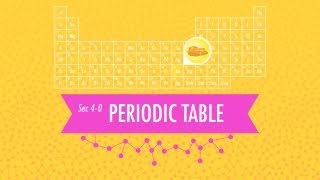
There are still many others with their own distinct characteristic that have been discovered. All of the elements are arranged periodically based on their properties and similarities in one periodic table. The periodic table is a table of substances that lists all of the elements we currently know about.
Since the 1800s, lots of chemists have tried to find the best way to organise the elements. Originally, there were a lot of different ideas including from Lavoisier, Dalton, Dobereiner, and Newlands. John Newlands thought the elements should be organised based on their atomic mass.
He found that elements with similar properties ended up at regular intervals and therefore divided the elements into 7 groups of 8, then called this the law of octaves. The problem was that although the pattern did exist at first, until calcium, it eventually broke down and made some elements being grouped together despite not having similar properties. Then came Dmitri Mendeleev, Russian chemist, who looked at the periodic table being used at his time.
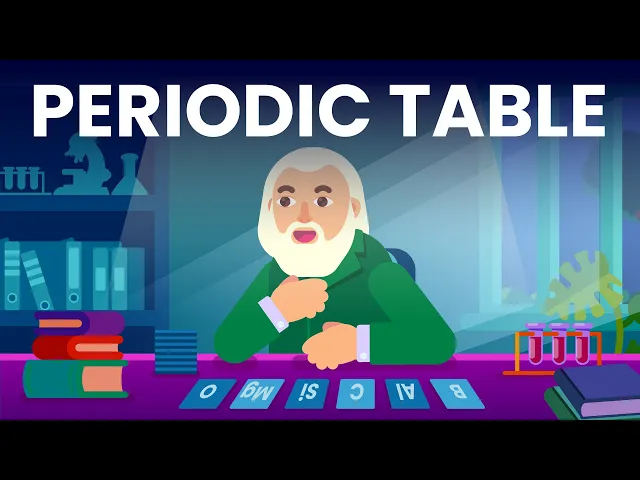
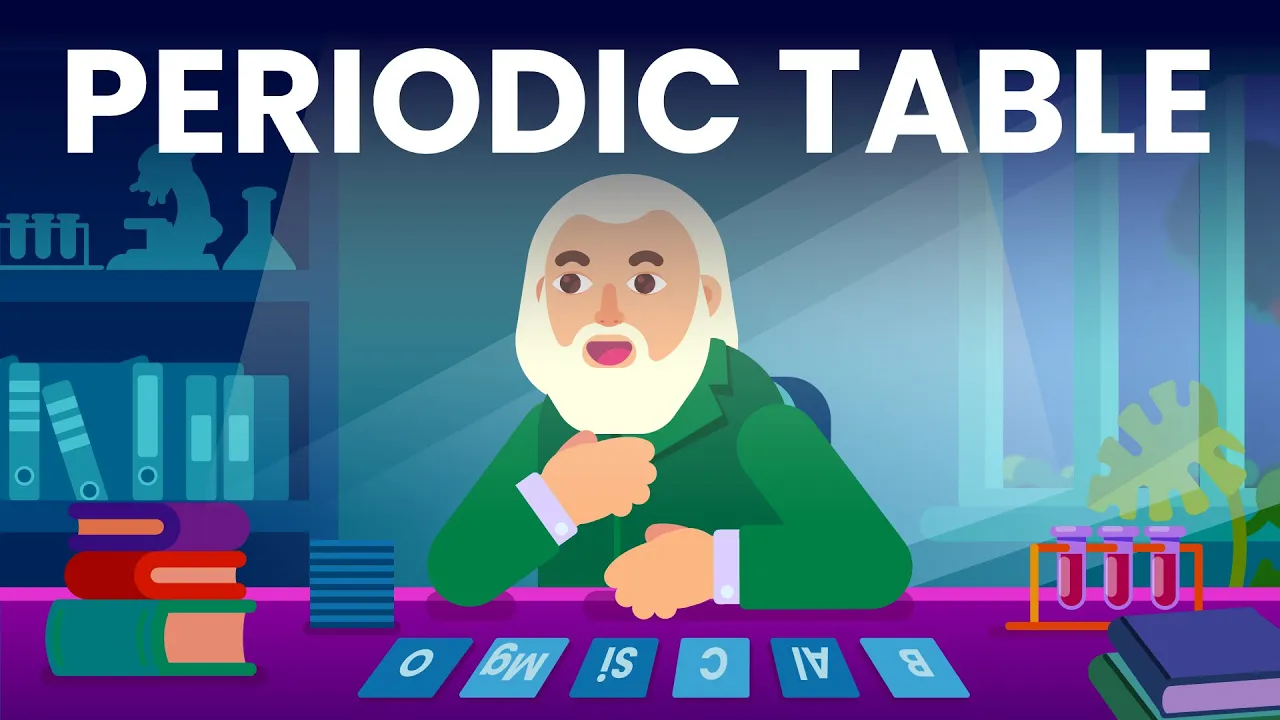
He noticed a few problems in it: some elements were being put into groups with other elements which they did not react similarly to, and some boxes of the periodic table were even having multiple elements put into it. Mendeleev started writing each known-elements on cards and kept rearranging them like playing cards. After relentless work, he fell asleep and instead of getting nightmares, he got the idea about how his periodic table should work!
Mendeleev took the elements that are problematic and placed them into the groups that share similar properties whilst making sure to keep one element in each box. This ended up leaving gaps in the periodic table that could be filled in by elements that were found later by other scientists. This was one of the main reasons his theory was so readily accepted.
And in fact, his design led him to obtain the nickname ‘the father of the periodic table’! The other reason his theory was accepted was that the discovery of isotopes showed that we could not base the classification of the elements was that the discovery of isotopes showed that we could not base the classification of the elements on the atomic masses alone like the previous scientists had done. This was improved better by young Henry Moseley, who deduced that the periodic table is best arranged based on its atomic number instead of its atomic weight.
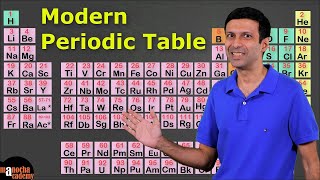
You can learn more about isotopes in our other video. Today’s periodic table of elements is an updated version of Mendeleev's design. Each element is given a square in the table that tells us its name, its chemical symbol, its atomic number (the number of protons), and its atomic mass, the number of protons and neutrons based on its isotopes abundance.
These elements are listed in order of increasing atomic number and are organised into groups, which are the vertical columns, and periods, which are the horizontal rows. Elements that were put into the same group were put there because they reacted similarly to the other elements in that group; and although this wasn’t known at that time, this was because the elements in the same group have the same number of electrons on the outer shell. You see how Mendeleev was just out here predicting all of this stuff without even knowing about the electron arrangements?
The guy was a genius! Until now, there are already 118 elements discovered. Some of them are synthesised, such as Moscovium, the element 115 on the periodic table.
It is produced by bombarding atoms of americium with ions of calcium in a cyclotron. However, we still have a long way to go in exploring the new element discoveries in the future. There are some suggestions about redesigning the periodic table, as we are in the process of finding element 119, which is something interesting to see.
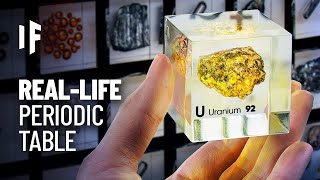
Now, it’s a great time for you, geeks, to appreciate these great works more. You don’t need to buy a periodic table with real elements inside or print it on your sweater just whenever you see a periodic table, be awed that the fact that the table has gone through several minds of great chemists.