The powers that be do not want certain things to be revealed. And I understand why! Some knowledge is just too dangerous!
But today, I want to give you one of the keys to understanding this knowledge, which, yes, it is dangerous! The more I study this topic, the more I observe how powerful this information is. And the more I realize how massive the manipulation we face truly is.
Nations continue at war, and religious institutions continue in conflict, trying to determine who is right. The powers that be simply fear that we might see the truth! But the time has come.
The time for us to awaken and see who we are and who they are has finally arrived! Throughout history, humanity has been misled, believing that certain beings, who presented themselves as gods, are the true creators of the universe. Here, in the videos on this channel, the word "gods" is used to refer to these beings.
The reason for this is quite simple: in all books, myths, and scientific articles from scholars and serious investigators of these topics, they are considered gods. This term "gods" has been used to refer to these beings who came from the heavens and established kingship on Earth. To be taken seriously, I just need to make this reference to them.
My point here is to "debunk the debunkers with evidence. " And this is why my starting point is always science. But if we take a deeper look, we will understand that they are not gods.
Or they probably are not. There is a mystery here, and we are going to explore this mystery throughout this video. By the way, this is the reason this channel is named "Anunnaki Ancient Mystery.
" There is a mystery here that we can get closer and closer to, but we may never know what the real truth is. This is a mystery. And through the mystery, we walk our path.
The figure often identified as God in the Bible is not the ultimate creator of the universe. It is possible that various entities have masqueraded as gods, misleading humanity into worshipping beings who possess far different characteristics from the benevolent creator envisioned in many faiths. These entities, drawn from ancient mythologies and texts, such as Zeus, Amen-Ra, Osiris, Thor, Odin, Anu, Enlil, and Enki, are sometimes conflated with the singular concept of God.
However, the ancient texts reveal that "gods," in plural form, were responsible for much of what is attributed to a singular deity in modern interpretations. This misunderstanding has led many to unwittingly follow energies of destruction and chaos, believing them to be forces of good. The violence ordered in the Bible, including the destruction of Sodom and Gomorrah, may not align with the characteristics of a benevolent creator.
Instead, these directives for death and destruction might stem from beings pretending to be divine. Such beings, mentioned in the Book of Enoch, for example, descend to Earth, offering knowledge not for peace but for war. One angel, Azazel, introduces humanity to weapons and armor, aiding in violence rather than uplifting human spirituality.
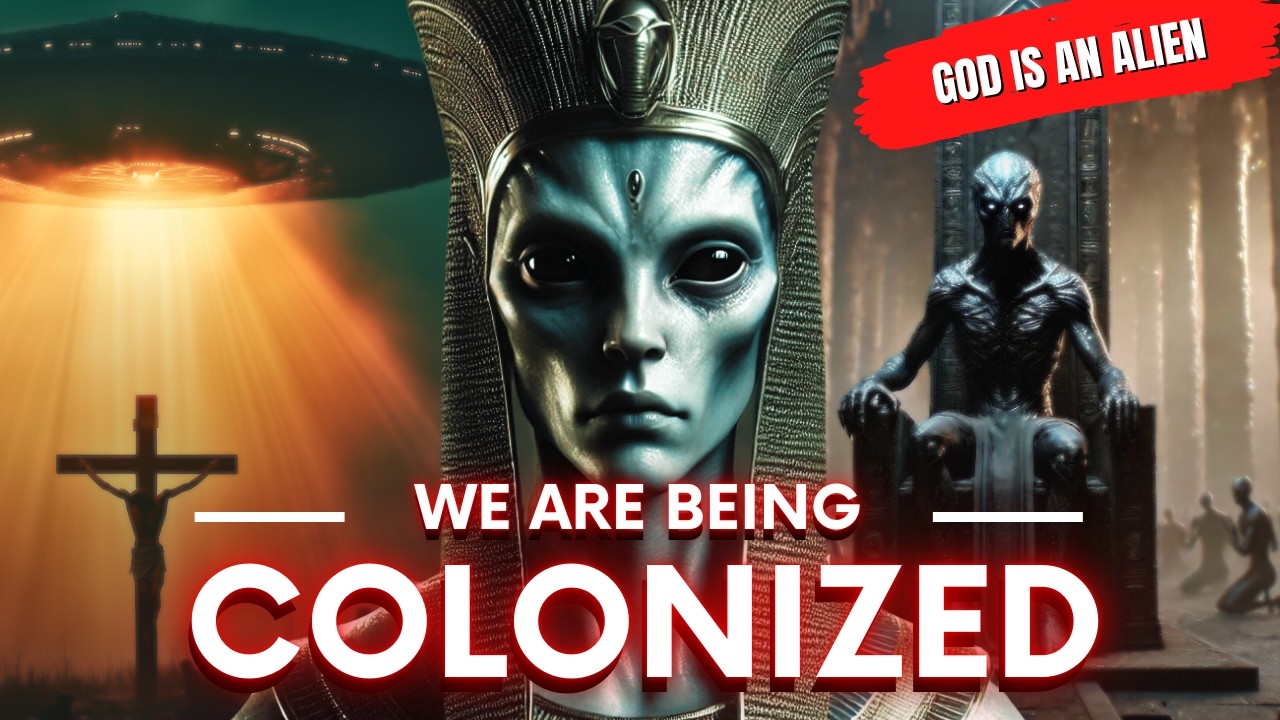
These figures, while often referred to as angels or divine beings, might better be understood as advanced entities. They have alien origins. They are aliens.
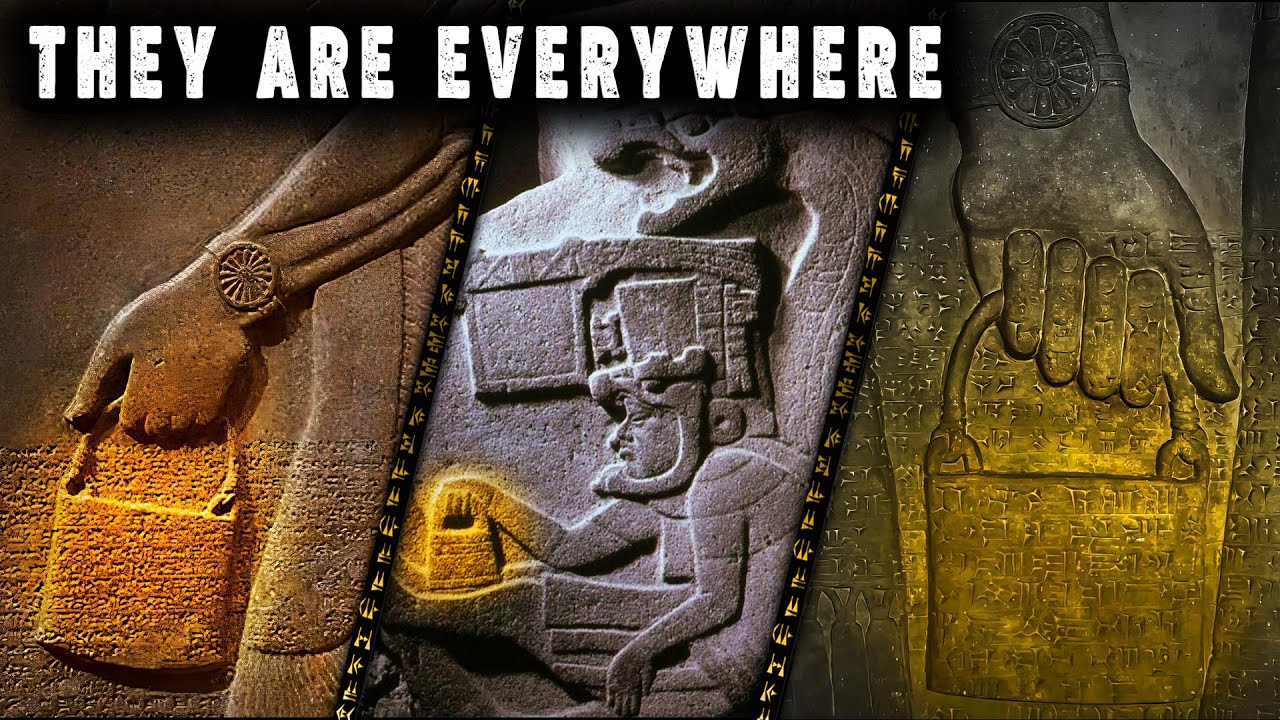
They are not gods. Ancient cultures around the world speak of beings descending from the heavens and coming to Earth. These beings, capable of advanced technology and possessing superior knowledge, were sometimes indistinguishable from humans in appearance, yet wielded incredible power.
They are said to have shaped early civilizations, bringing advanced knowledge and even altering the course of humanity. They were here before our existence. They were on Earth before humans had been born.
Many ancient cultures maintain that humanity was seeded on Earth by extraterrestrial beings. Many stories of the Bible suggest the influence of these beings. We have the so-called god of the Bible coming down from the heavens.
As well, we have some prophets being abducted and elevated to the skies. The story of Jesus, too, takes on new dimensions when considered in this light. Born of a virgin, Jesus may represent a unique hybrid, part human, part otherworldly.
Further exploration of apocryphal texts reveals that this virgin birth lineage extends beyond just Jesus, suggesting a deliberate establishment of a particular bloodline. We will dive into this concept another time. I'm preparing a special video full of research data and reflections on this topic in the near future.
So, if you don’t want to miss it, I invite you to subscribe to this channel. The study of ancient civilizations and their interaction with humanity reveals complex relationships between gods and humans, as depicted in various texts and mythologies. The idea that Yahweh, known as God in the Bible, may have been misidentified or misunderstood is explored through ancient tablets and stories.
In these ancient sources, Yahweh is sometimes linked to figures like Enlil and Enki, two brothers who played opposing roles in the development of humanity. Enki is often associated with wisdom and knowledge and sought to elevate humans, while Enlil, focused on control and planning, viewed such empowerment as dangerous. This dynamic is reflected in the story of the Garden of Eden, where the serpent, representing wisdom, gives Adam and Eve knowledge of their true potential.
Far from being an embodiment of evil, the serpent— which can be interpreted here as Enki and Ningishzidda—encouraged humanity to realize their higher consciousness. This realization led to conflict with Enlil, who sought to maintain control by keeping humans ignorant of their divine potential. The episode involving the knowledge of good and evil through eating the fruit of knowledge is a revealing story of control and deception.
Humanity has been deceived by this type of understanding, and that’s one of the methods they used to control humanity. In the Bible, we read that through this act, God says that man has become one of them. This is clear and literal.
In the King James Bible, you can read: “The man is become as one of us, to know good and evil. ” In a literal translation, it is written: “Then Yahweh Elohim said: Behold, man has become like one of Us in knowing good and evil. ” From here, we can understand, interpret, and conclude three obvious things: first, there was no God in the singular but plural, as it is clearly stated, “become like one of Us.
” The plural; the second thing is about who performed this action. It is Yahweh Elohim, or one of the Elohim, and not exactly a single being. The third and most important point is this: by eating the fruit of knowledge, we became like them because we now know good and evil.
And if we know one thing, we have to be punished. This is insane. .
. I have to state one thing clearly here. I do not believe the Bible, in any version, to be the ultimate truth in the universe.
But the Bible is and always will be an object of study and an important historical book for me. We can trace from the Bible important events in our past. We can also understand from the Bible the imposition of control since ancient times.
The idea was to prevent us from fully understanding and releasing our full potential as humans. We were expelled from the Garden of Eden, from the so-called paradise, because we sought knowledge, because we dared to understand, and we put ourselves in a position where we know we deserve to know all things. In light of this, I have created a new channel that I want to invite you to explore.
It is called Biblical Movies and Stories. There, I will use the King James Version to create a new narration and totally recount the story of the Bible without altering it. I want this new channel to become the most-viewed channel for Bible movies and stories on the internet.
So I invite you to check out my new work. This new channel is for everyone: for those who believe in the Bible and for those who want to study it. For this new channel, there will only be a small portion of videos that I plan to edit.
The majority of the work will be done by other editors I will hire for this new activity. The work of my life and my full dedication is for this channel here: “Anunnaki Ancient Mystery. ” Back to what we were discussing before, the banishment of Adam and Eve from Eden was not a punishment for disobedience, but rather an attempt to prevent the spread of knowledge that could disrupt the experiment of creating a labor force.
The ancient Sumerian texts, such as the “Enuma Elish,” “Enki and Ninmah,” and the “Atrahasis Epic,” support this narrative of genetic manipulation, where humans were created through the combination of existing hominids and the essence of the gods. These stories indicate that, at first, humanity was intended to serve the gods, particularly in labor-intensive tasks like mining. However, Enki's intervention added an extra dimension to humanity’s creation, giving us the potential to surpass their creators in the future, a fact that made the gods both jealous and fearful.
This can be verified in numerous Mesopotamian tablets where Enlil argues with Enki that this was not part of their original plan. In one of my recent videos, I talked briefly about the possibility that one of these so-called ancient gods might have spoken about the one true god. Ningishzidda, the Sumerian god, is often identified with Thoth in Egypt or Hermes in Greece, and he may have given us the Emerald Tablets and the hermetic principles.
In these texts, we find the concept of God as a frequency, as being the whole and everything. The concept of God as a frequency, rather than a physical being, introduces another layer to this interpretation. Ancient belief systems and metaphysical understandings suggest that all consciousness originates from a universal source, with individual beings acting as temporary manifestations of this greater consciousness.
This frequency-based understanding of God aligns with the idea that divine beings like the Anunnaki were not omnipotent creators, but rather advanced beings with knowledge and technology far beyond human understanding. This recontextualization of ancient myths sheds light on the origins of many modern beliefs, including the idea of the return of Christ. The Christ figure, understood in this framework, represents not the physical return of a singular person, but the awakening of Christ consciousness in every individual.
This consciousness, rooted in wisdom, understanding, and the realization of one’s divine potential, is the true return that Jesus spoke of, according to this interpretation. Through the spread of this consciousness, humanity can reclaim its power and ascend beyond the limitations imposed by ancient systems of control. Each person has the ability to access this higher consciousness, embodying the essence of Christ through understanding and enlightenment.
Many people in ancient traditions have done this before, even before the birth of Jesus. Siddhartha Gautama, the Buddha, is one clear example. God is often described as infinite and self-existing, without origin.
This suggests that God is beyond time and space, existing as the foundational force of the universe. However, attributing gender to such a being presents a significant contradiction. The assignment of gender to God raises questions about how humans have traditionally understood the divine.
A truly infinite and self-sufficient being would transcend human concepts like gender, indicating that referring to God as “he” reflects more of a cultural tradition than an accurate depiction of the creator of the universe. It is important to understand that the division between God the Father and Earth the Mother originates in Mesopotamia. At its core, this ancient belief system sought to answer the quintessential questions of human existence: our identity, our place in the cosmos, and our origins.
The Mesopotamian narrative provided answers that, while considered inaccurate by modern scientific standards, offered a cohesive view of the universe. They envisioned the earth as a flat disc within a vast cosmos called An-ki, signifying "heaven-earth," encapsulated by the heavens. This realm was filled with 'lil,' a mystical substance, and was thought to be bordered by an endless ocean that stabilized the cosmos, suggesting an eternal and primordial nature of water as the origin of all existence.
This narrative also depicted the creation of the celestial bodies, including stars, the sun, and the moon, from the dynamic space that separated 'Father Heaven' and 'Mother Earth. ' This cosmological vision set the stage for humanity's inception and the dawn of civilization, portraying a universe where every element had its place and purpose. It’s here, in Sumerian beliefs, that everything started.
In many religious interpretations still prevalent today, contradictions arise, and we continue to accept them without questioning. In the Genesis story, the figure of God. .
. seems unaware of events like the conversation between Adam, Eve, and the serpent, raising questions about whether this figure represents the true omniscient creator. When you know the story and dare to think about it—when you dare to eat the forbidden fruit—you instantly become aware of the manipulation we have been subjected to.
God’s omnipresence, the idea that the divine is everywhere, can be understood not as a physical presence but as the existence of the divine spark within all things. Everything in the universe, down to every atom, contains this spark, linking all matter back to the creator. This interpretation aligns with the understanding that God is a frequency or a universal consciousness, present in every part of creation, including human beings.
In this way, everything that exists is a manifestation of the divine, making God truly omnipresent. This teaching aligns with what we can interpret by reading the concepts of the hermetic principles. Yet, the depiction of God as an unchanging, all-knowing force contrasts with the biblical accounts of destruction and violence, often attributed to figures like other gods in opposition to the so-called real god, Yahweh.
A deeper exploration of these ancient texts reveals that the figure called God in many religious contexts may not align with the universal force of goodness and love that many believe in. The frequent use of "Amen," for instance, links back to ancient rulers like Amon-Ra, who demanded reverence and submission. The original form, "Amon," has evolved over time, yet its roots are tied to a figure who wielded power through brutality.
This historical connection raises questions about the use of such phrases in modern religious practice, suggesting that the words and rituals people use today may have origins that diverge from their intended meaning. Just think about what you say when you end a prayer in monotheistic traditions: “Amen. ” Have you been told that this is just a way to end a prayer?
But once you understand that this is the name of an ancient god of Egypt, where the Hebrews were enslaved, you have to dare to question. One of the so-called heresies of the traditional Catholic Church is Gnosticism. Gnosticism comes from the Greek term for knowledge, or ‘gnosis.
’ I find it interesting that one of the heresies for the Catholic Church is Gnosticism, which derives from the root of the word knowledge. The belief in Gnosticism supports the idea that each person carries a divine spark within. This "divine spark," present in every individual, has fallen into the material world, yet it remains part of the greater universal consciousness.
This aligns with the view that humanity, and indeed all physical matter, is a manifestation of the divine, capable of accessing higher wisdom and understanding. In this framework, each human is a reflection of God, walking in the flesh, containing within them the potential to rise above the limitations of the material world. This realization is key to accessing true knowledge and understanding the nature of the universe and one’s place within it.
But to believe in this, you would commit a crime that, according to the traditional belief of the Church, would lead you to hell. Do you know why you have to be baptized? Because of original sin.
And what is original sin? It was committed by Adam and Eve when they dared to eat from the fruit of knowledge and, by knowing good and evil, they became like God or like the gods. Digging deeper into this, we will find something even darker.
If Jesus Christ is a figure of light, an enlightened master, which I believe he is, as well as Buddha and other prophets before and after Jesus, why did Jesus have to die? Well, Jesus had to die because, with his death, he erased the sins of humanity. When Jesus died, his sacrifice erased the sins of humanity—the past, the present, and the future.
By accepting the sacrifice of Jesus, you go to heaven, and by denying his sacrifice, you go to hell. However, by accepting his sacrifice, you are also accepting that an enlightened figure had to die because of the sin of knowledge. If you deny the death of Jesus as a symbol of sacrifice, you gain another perspective.
You might understand that you are responsible for your own actions and that it is your actions that will lead you to the so-called heaven or hell. In this way, you understand that the spark of light from God resides within you, within me, and within Jesus as well. So, it is not necessary for an enlightened being to sacrifice himself for the sins of humanity.
In the 90s, the rock band Alice in Chains wrote the song “Man in the Box,” which can be interpreted along the lines of what I’m explaining here. When the lyrics say, “Jesus Christ, deny your maker,” it clearly states that even Jesus denied the unholy truth that he had to die for the sins of humanity. The repetition of the phrase "Feed my eyes," followed by "Can you sew them shut?
" suggests a struggle between the desire to see the truth and the temptation to remain blind to painful realities. I am not the only one who has perceived this truth I am trying to share with you. Outside the convictions of the Church, you will find religious and political explanations for the death of Jesus.
On one side, he criticized the religious practices of his time, claiming to be the Son of God and knowing the true essence of God's teachings and laws. Thus, Jesus was seen as a potential threat both to the Roman Empire and to the Jews, who considered it blasphemy for him to claim to be the Son of God. In literal translations of the Bible, we understand that Jesus referred to God with different terms such as Páter, Théos, and Kýrios, and none of these directly refer to Yahweh or Elohim.
In this sense, Jesus seemed to know the truth about our creation and the true nature of God. The Gnostics believed that all beings are manifestations of a single, universal consciousness. This one consciousness has fragmented itself into countless forms throughout the universe, allowing it to experience existence from every possible perspective—whether as a human, a plant, or even the atoms in an inanimate object.
This concept aligns with modern scientific insights from quantum physics, which. . .
Show that conscious observation has the power to collapse waves into solid matter. The decision-making process observed at the atomic level suggests that every atom, and therefore every aspect of reality, possesses a form of consciousness. The stark dichotomy between the Gnostic understanding of a universal, all-encompassing consciousness and the depiction of a vengeful, patriarchal deity in some biblical accounts raises profound questions about the true nature of the divine.
For the Gnostics, divinity is not tied to gender, violence, or dominance, but rather to the interconnectedness of all beings and the unfolding of consciousness through experience. In several biblical stories, God commands the Israelites to wage war, kill all the men, and take women and children as plunder. These acts of violence, attributed to divine orders, seem to conflict with the idea of a benevolent and omniscient God.
For example, the annihilation of the Midianites, where all the men were killed and women and children taken as slaves, raises serious ethical concerns. This is the same Moses who, according to the Bible, delivered the Ten Commandments, including "Thou shalt not kill. " Yet here he is, commanding mass slaughter under the directive of God.
The wars, slavery, and political power struggles justified by religious texts are evidence of how these scriptures have been misused to manipulate and control people. The contradictions between the compassionate attributes of a universal creator and the violent commands found in many religious stories suggest that the figures portrayed as gods in these texts may not be the benevolent force many believe them to be. Instead, they may represent other beings or entities that sought power and control over humanity.
The distortion of ancient religious texts has led to the poisoning of billions of minds worldwide, fostering a misunderstanding of the divine and promoting harmful ideologies. With billions of people on the planet, and the majority adhering to some form of religion, it is clear that many have been deeply misled. The violent and contradictory passages in religious texts, such as the Bible, bear no resemblance to the attributes of the true creator of the universe.
These passages, filled with commands for war, slavery, and punishment, are the result of manipulations by ancient beings who masqueraded as gods to control and manipulate humanity. In modern times, people continue to be misled by religious doctrines that promote division and control. Many believe that their success, such as buying a new house or car, is a sign of God's favor, while others suffer in poverty and despair, seemingly overlooked by the divine.
This belief system creates a false dichotomy, where material success is equated with divine blessing, and those who suffer are seen as unworthy. This misunderstanding of the divine has been perpetuated for centuries, obscuring the true nature of the creator and the interconnectedness of all beings. The manipulation of religious texts has profound implications for how people understand their relationship with the divine and with each other.
The teachings that have been passed down through these corrupted texts have justified countless acts of violence, oppression, and control, all in the name of religion. It is crucial to question the origins of these teachings and seek a deeper understanding of the divine that transcends the limitations of dogma and doctrine. The true creator of the universe is not a vengeful, gendered being demanding worship and obedience through fear.
Instead, the divine is a force of love, unity, and infinite consciousness, present in every atom and every living being. The awakening of this divine consciousness within each individual is the true path to enlightenment, not the blind adherence to ancient texts that have been manipulated to serve the interests of a select few. Understanding this truth is the key to breaking free from the cycle of manipulation and reclaiming our divine nature.
From the moment we manage to understand our divine nature, we can remove this attribution from the so-called monotheistic god of the Abrahamic religions. Only then, by eating from the fruit of the knowledge of good and evil, can we truly know the nature of God and reality. In the Hermetic treatises left by Thoth, even while recognizing the superiority and oneness of a naturally good god, there is no exclusion of the celestial gods and their daimons.
In these definitions, daimons and celestial gods are understood as assistant gods—helpers, protectors, and capable of various material feats. These, ultimately, are what the Egyptians called the Neteru, the Hebrews the Elohim, the Sumerians the Anunna, and the Akkadians the Anunnaki. From this conception arises, from the celestial and not terrestrial gods, Anu, the father of all other gods, the one who signifies the sky and embodies every conception of God.
If you liked the video, don't forget to subscribe to the channel, leave your comment, and hit the like button.