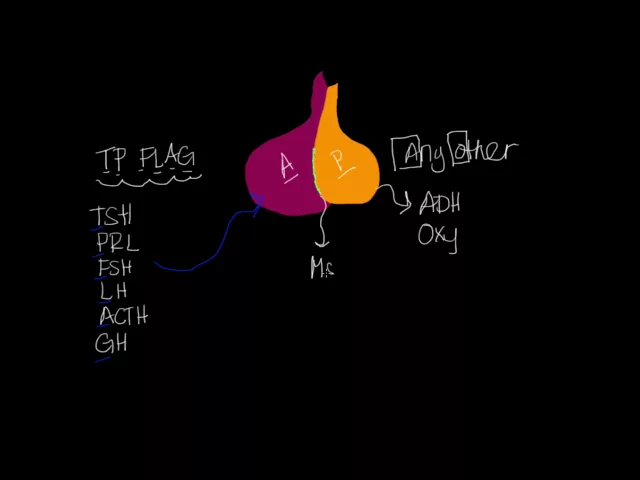
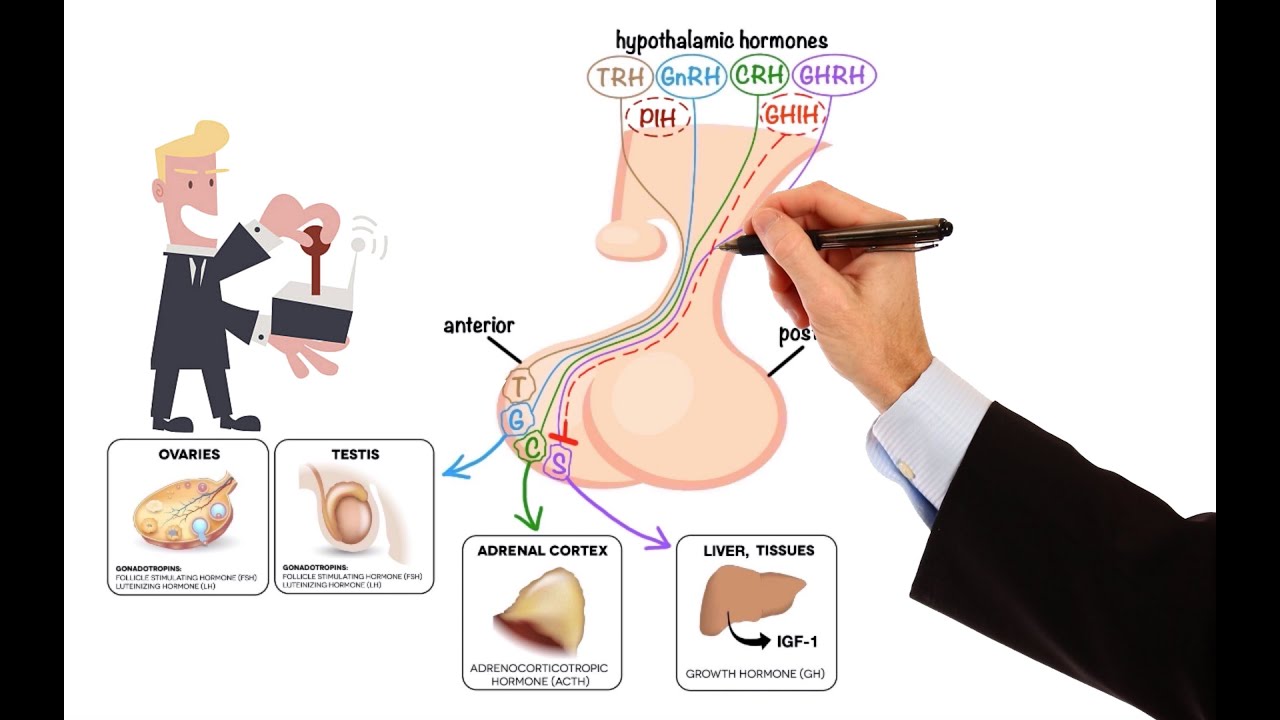
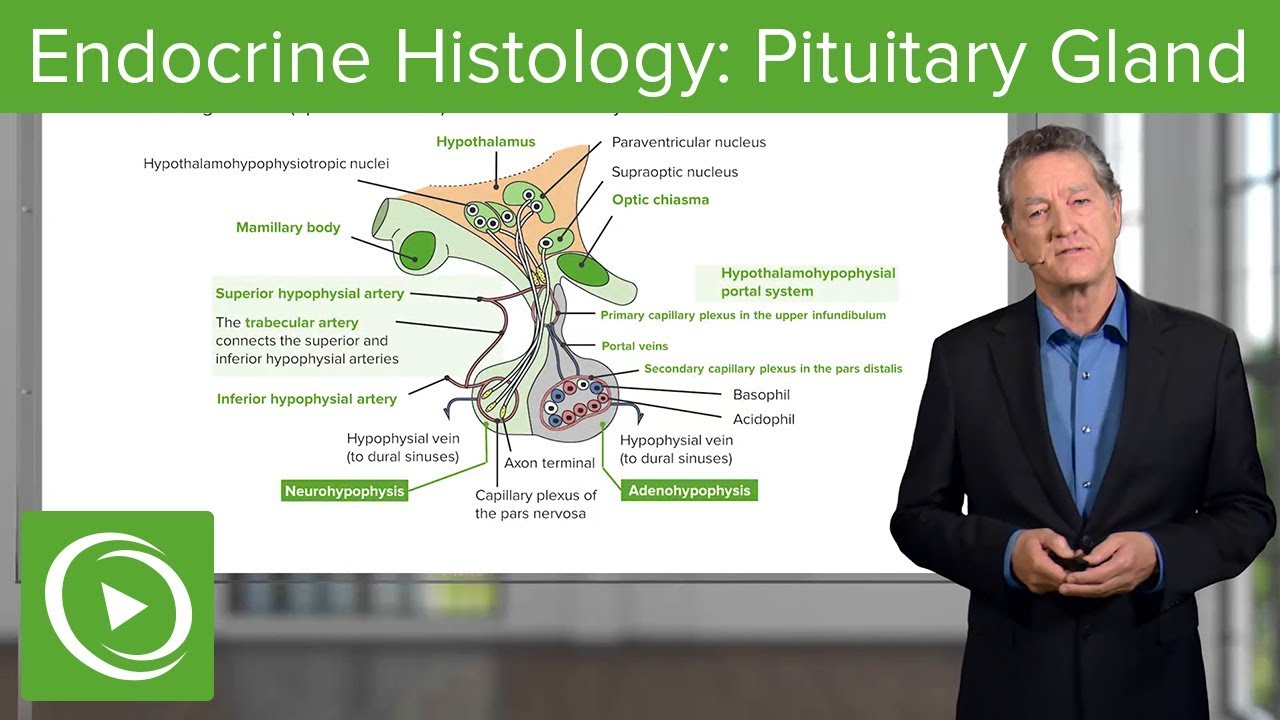
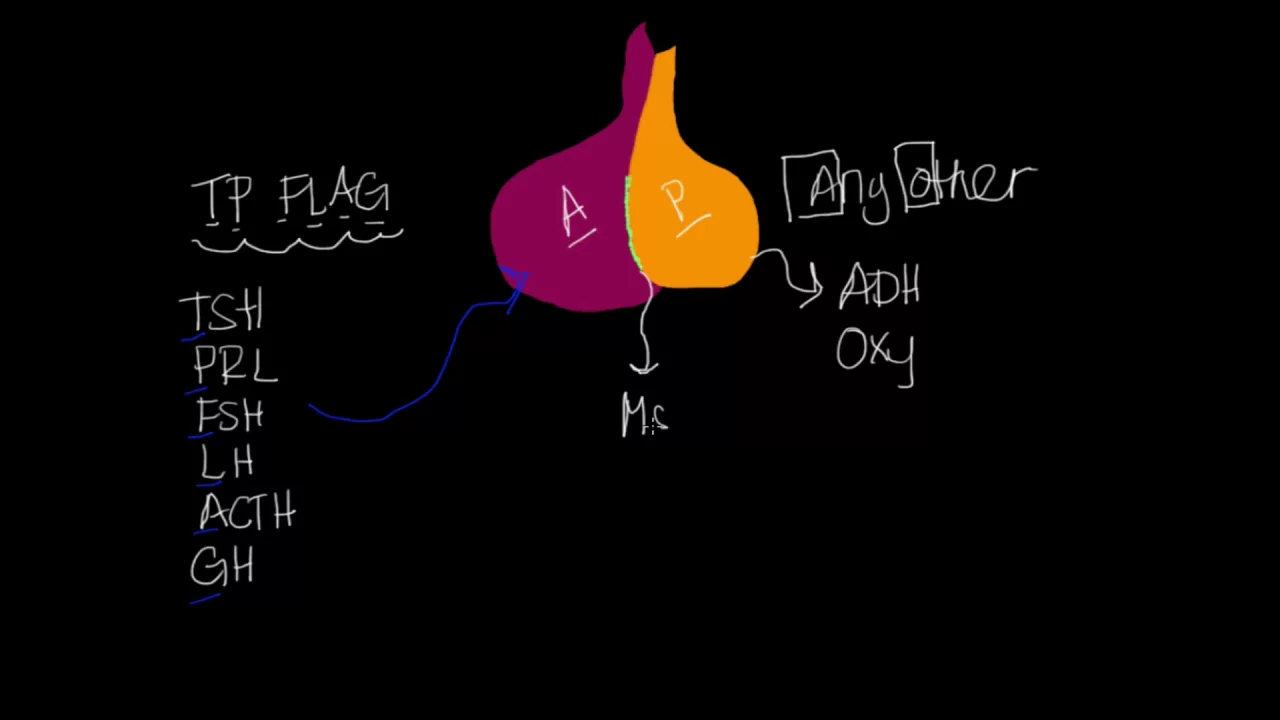
hey everyone it's Janna from Toren um I realized this is already a very funny picture to look at but I promise you this is my drawing or my rendition of the pituitary gland so we have our anterior pituitary gland here I'll just put a and our posterior pituitary gland here and we actually have a part that I would say we don't learn about too much um because it's a little bit rudimentary in uh humans but we have a intermediate kind of a middle gland so I'm gonna make this squiggly uh green line here and it's
more like a thin layer of cells between the anterior and posterior pituitary gland this would be our intermediate um most of what it does which really is one thing we're going to talk about in a minute is attributed to the posterior gland but truly it does arise from this little layer in between the both so I realized that endocrine is a topic that most students don't like at least the students that I come across for that that need tutoring help for instance um but as far as the pituitary gland goes it is a pretty important
gland and it's a major player in our endocrine system and there are a lot of different hormones that it controls and that often times is what trips up a lot of students um specifically when you're getting ready to take a test in Endo and you're having a hard time remembering what hormones go where and just a basic about what they do so remember that all of my tutorials um really focus on getting you to understand the basics because I promise you that you can understand anything and you can process anything if you know the basics
of what it does so with this in particular with the pituitary gland and remembering the hormones that arise from it that come from it I have a funny little acronym that I use so I'm going to talk to you about what that is because hopefully it's going to help you to remember the hormones and what they do so with the anterior pituitary gland there's something that I keep in mind your anterior pituitary gland is bigger than your posterior so with that said it's going to have more hormones that's how I rationalize it now I have
a funny acronym that I use and I'm going to write that here TP flag when there's something that I have to remember and it's a lot I like to try to make an acronym for it so it can help me to remember all the things things that go into it so for the interior pituitary gland I have an acronym that I use and I teach and it's called toilet paper flag and it's silly and crazy but just because it's silly and crazy is why I always remember it and toilet paper flag reminds me what hormones
come from the anterior pituitary gland so each letter t p f l a g stands for a hormone so I have my TSH that's my t i I have my prolactin that's my P I have my FSH that's my f have my LH that's my L I have my a h that's my a and then I have my GH that's my G so if you look at it this these are the letters here of my acronym toilet paper flag and so I remember that these are the hormones that come from my anterior now my posterior
is smaller so for me I remember if it's smaller it means that it has less and so it's got less hormones coming from it and what hormones does it have coming from it I remember this any other and this serves as a reminder too my a and my o my a is my ADH hormone and my o is my oxytocin hormone so I remember that any other comes from my posterior now this middle one that we talked about this little layer intermediate this has our msh a good way to remember that is the m middle
and that's our melanocyte hormone or melanocyte stimulating hormone you might see it written as that as well so this is a fun way that I like to remember the hormones that come from the pituitary gland so that I don't forget it I'm able to commit it to memory in a more fun way than just trying to read it a thousand times and I always remember the hormones because I always remember this silly type of acronym that I put together so in looking at this I'm able to kind of quickly remember okay these are what the
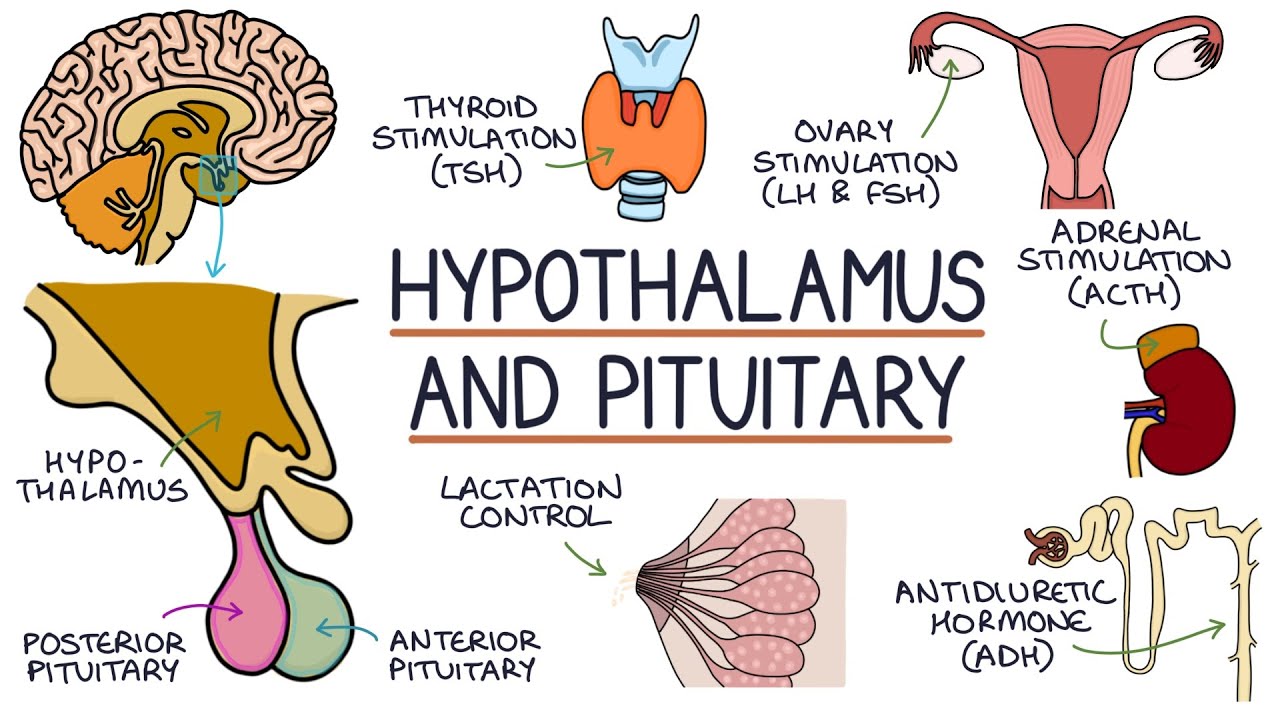
hormones are uh these are where they come from and this is what they do so I know my thyroid stimulating hormone has to do with my thyroid gland right I know my prolactin is going to act on the ovaries the mamories um estrogen progesterone uh milk production my FSH or follicle stimulating hormone that's going to act on my gonad and that has to do with the growth of my reproductive system LH is going to work on my gonads too that's going to work on my growth of my sex hormones act adrenocorticotropic what's that going to
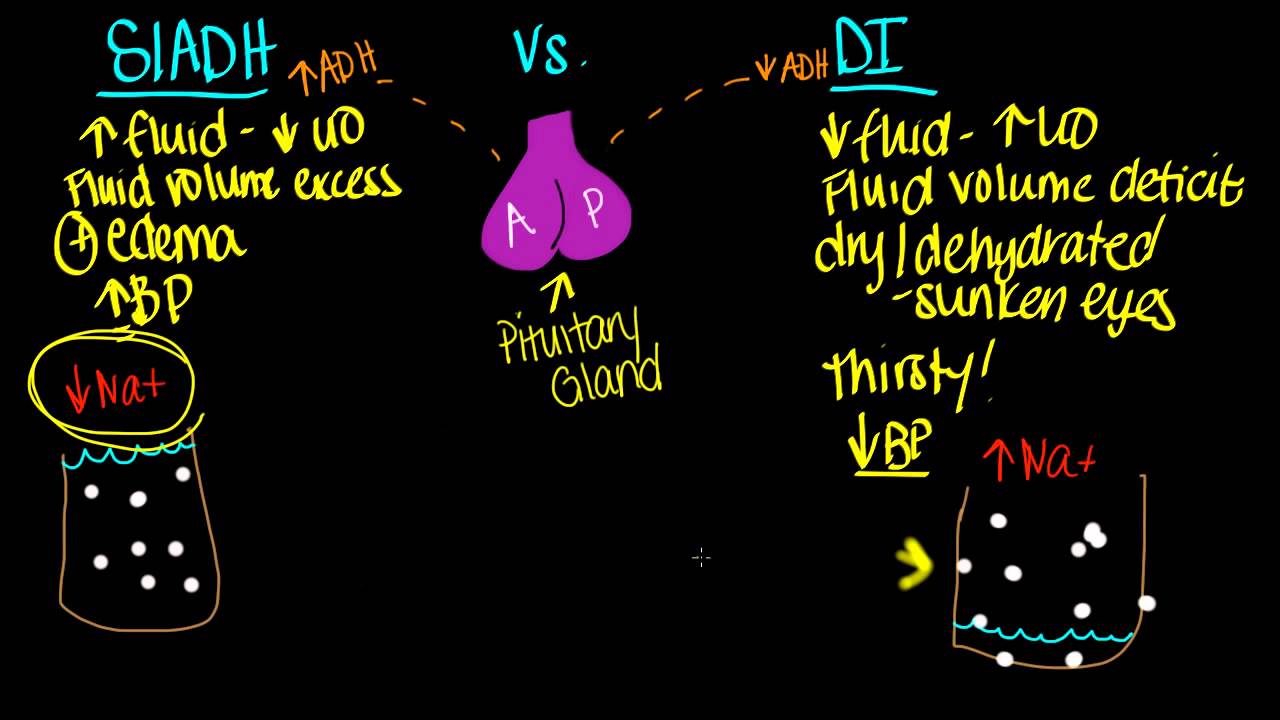
do that's our adrenal gland right we have the the term in it so our androgens are glucocorticoids GH my growth hormone thinking of growth right cell growth tissue growth and then my any other my ADH well we know ADH we talk about that a lot that's our anti-diuretic hormone so it's going to work on my kidneys my arterials it's going to um cause water retention it's going to increase blood pressure oxytocin I know that's going to work on the uterus and that's going to work on the mamories as well that's going to help with uterine
contraction that's going to help with lactation and the msh or the melanocyte stimulating hormone we talked about this one in the middle and think about melanin right our skin color so the more that's that is stimulated the more that's produced the darker skin tone that we have so I hope this is helpful to you when you're trying to you know study your endocrine system and when you get to the pituitary gland and you're like what the heck there's so many hormones how am I going to remember this this is something that I recommend that's pretty
easy and fun to do