[Music] So, welcome to our options crash course strategy series. I'm Jim Schultz, and I'm going to be your tour guide for this series. First up on the docket, we are going to cover the short vertical spread.
What we want to do is hit three things; we're going to hit these three things across each and every strategy within this series. We're going to talk about managing winners, we're going to talk about managing losers, and then we're going to talk about managing the dance floor. But before we get to all that, let's remind ourselves what a short vertical spread is.
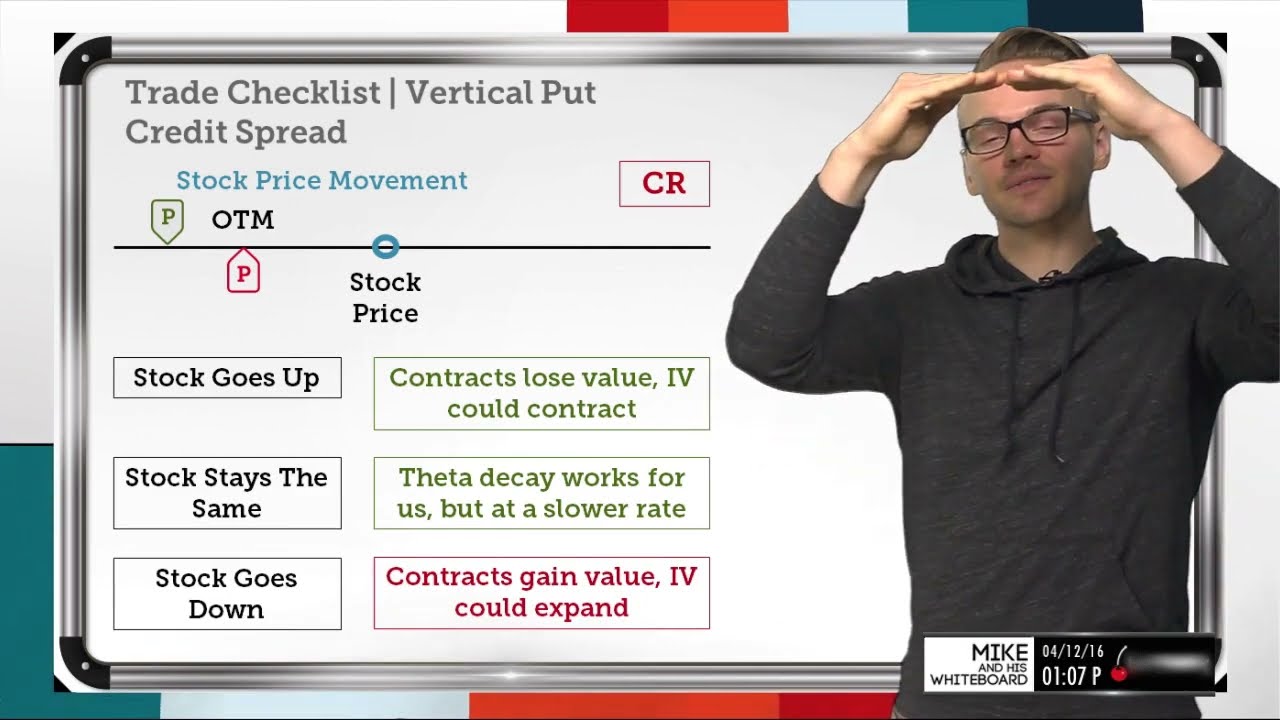
Okay, so a short vertical spread: this is a defined risk directional trade, and this is a great option for a beginner trader who's looking to, you know, understand and kind of get their feet wet in the world of options trading. Because it's a very, very strong thing with a ton of peace of mind to know what your worst-case scenario is on order entry. But how do we set these guys up?
Well, they all set up basically the same: you sell one out-of-the-money option, and then you buy a second further out-of-the-money option. By buying that second option, that is the thing that puts the safety net in place. As a reference point, we typically like to collect around one third the width of the strikes.
So, if it's a two-dollar wide vertical spread, we collect about 67 or 70 cents. If it's a three-dollar wide vertical spread, we'd collect around a dollar. We feel that this is a great risk-return balance, and a risk-return trade-off that sets us up in a nice high-probability situation.
Okay, easy enough. But once you put this thing on, how do you manage it? Well, first up: managing those winners, right?
The easy stuff, the fun stuff. You put on a short put spread, and the stock goes higher; that thing is going to manage itself. That thing is not going to be difficult to handle because it's going to be an easy winner.
It's going to be a fun time. You put on a short call spread, and the stock goes lower; then it's also going to be a fun time. That is also going to be an easy trade.
You set your profit targets at fifty percent of max profit for either this short put spread or this short call spread. And if the stock accommodates you, man, you just take it off, you move on, and you find another opportunity. Don't overthink it.
Okay, so now for the not-so-fun stuff: how do you manage your losers? What do you do when the position is a loser and the stock isn't accommodating you? Thankfully, though, this situation is actually pretty simple too.
If you get to 21 days to go, then look to roll this thing out to the next monthly cycle. Don't change the strikes, and don't add units. Just pick this guy up, move it out to the next cycle, and drop it down at 21 days to go.
However, what you want to make sure that you can do is roll forward for a credit. You don't want to pay a debit to roll your position, because this would add risk to the trade. So, if you can roll forward for a credit at 21 days to go, then by all means do so.
But if you have to pay a debit, which will be the case if the position is too far gone, then you have to sit and wait, right? We control our size on order entry, so in the event that this does happen, it's something we are ready and willing to absorb. And to be perfectly honest, this is going to happen to you a time or two, or ten, or twenty over your trading career.
It's a probabilistic certainty. But remember, as high-probability traders, this is not going to be the most likely outcome. We are most likely going to be managing our winners.
All right, so now we know how to manage winners with short vertical spreads and how to manage losers with short vertical spreads. But what do we do with everything in between, right? What do we do with all those dance floor situations where we're at 21 days to go?
Maybe we have a scratch; maybe we have a small winner; maybe we have a small loser, right? How do I know how to handle that situation? Well, I'm not even going to pretend that this is going to be an exhaustive list for how to handle those situations, but here is something that's a really good, sound, strategic way to approach these situations: look at the IVR on the trade.
Look at the implied volatility rank. If the IVR is still elevated, right, the IVR is still high like it was when you put the trade on, then consider keeping it on, because you know the implied volatility is a mean-reverting entity. And if it does indeed mean revert and come back down, then that's going to help you reach your profit target.
If, on the other hand, the IVR has collapsed, then it might be time to take that trade off. Whether it's a small winner, a small loser, or a scratch, it might be the best move to just close the trade, move on, and find something else. So, there you have it, man.
That is how to manage a short vertical spread. Be sure to save this video for reference, and when you are ready, check out the next video inside of this crash course strategy series: long vertical spreads. We'll see you there!