Are Humans the First Civilization? The Silurian Hypothesis Hey, I have a nice story for you. During my childhood, I used to live in Italy.
We would eat pasta every day and life was simple. I loved my house, but one day my parents decided to pursue the American Dram, and that's how I got to America. This new house was nothing like the previous one, and it looked kinda old.
But it soon felt like home. It was only when I turned 16 that three strange men knocked on the door. Their last name was Geller.
They said they'd lived in this American house before us, not for weeks, but for decades! For more than thirty years, this had been their house. Just like me, they'd grown up here.
Though I knew the house was old, it never occurred to me until then that someone else had lived in these rooms, that even my own room was not entirely my own. The youngest of the men, whose room would become mine, showed me the place on a brick wall hidden by ivy where he’d carved his and his beloved one's name. “Anna and Bob, 1972.
” It had been there all along, but I never even knew it. I think this story clearly shows one thing about the human race: even if we try to leave some traces of our passage on Earth, people might never find them, or it will take them a long time before they do. =============================================== We, humans, have woken to life with no idea how we got here, and we have no clue of what happened before us.
I mean, we can study history and gain some knowledge of the recent past and human cultures. But what if we asked ourselves if we are the only human race that ever existed on Earth? People don't usually think much about it.
Not because they are incurious, but because we do not know how much we don’t know, and it's basically worthless to ask ourselves such questions. Yet, we can't deny someone could have been populating the Earth before us. And this is not Insane curiosity talking.
This is Gavin Schmidt and Adam Frank talking. The first one is a climate modeler at NASA's Goddard Institute, and the second one is an Astrophysicist at the University of Rochester. They have a theory, called the Silurian Hypothesis, according to which every intelligent life that came before us, could have been gotten extinct in the past, without leaving any traces.
And, even if we spent our whole life looking for them, we would find nothing. Modern humans have been around for about 200,000 years, but life has existed on this planet for 3. 5 billion.
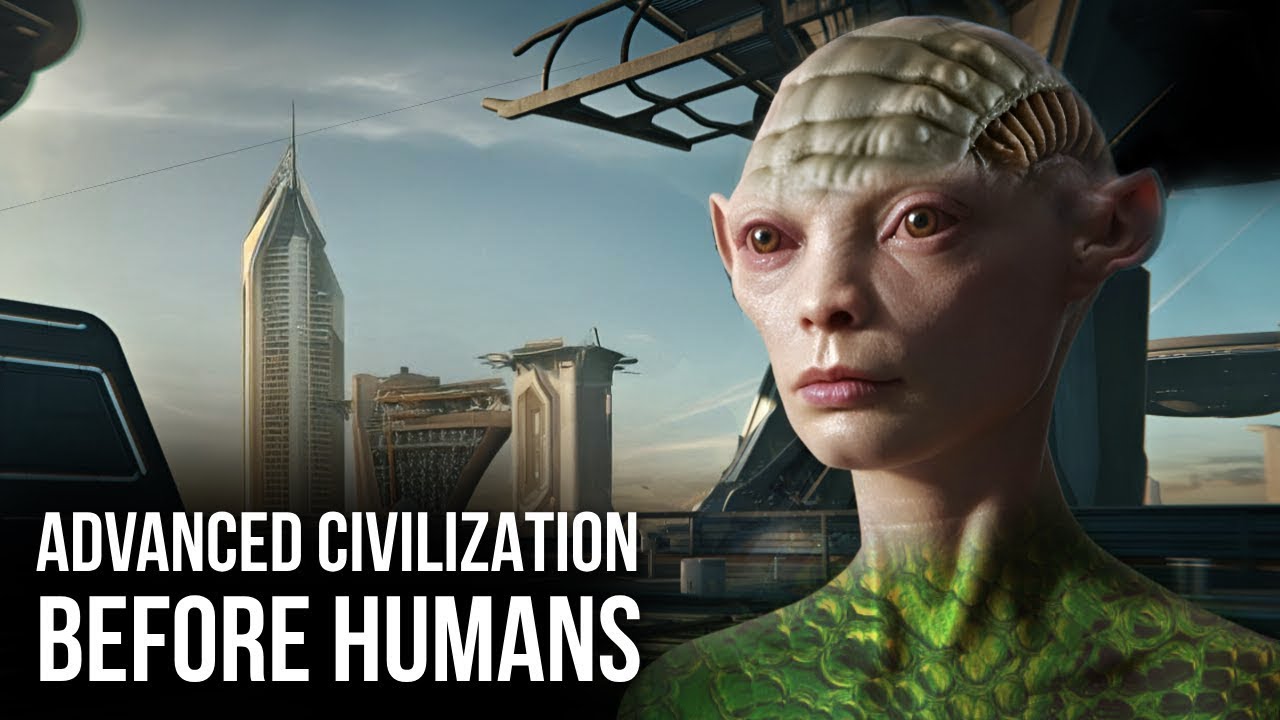
That leaves 3,495,888,000 pre-human years unaccounted for—more than enough time for the rise and fall of not one but several pre-human industrial civilizations. Imagine for a moment if, before us, some kind of aliens were populating the Earth. An alien race with alien vehicles and technology, alien folklore, and influencers.
Only the sky, for them, would have been quite the same as it is for us. However, there'd be no evidence of such bygone civilizations. No industries, no built objects will be there anymore.
Things like that only last no more than a few hundred thousand years. But this is not the end of the story. After a few million years, everything that's on the surface would be gone.
Plate tectonics modify the shape of lands, and what's on the surface will be at the bottom of the sea, and the bottom will likely become the mountain peaks! Your house will be somewhere else, and my house too! This is already happening of course, but it's a too slow phenomenon to be observed during the short time of our lives.
I'm not making this up. The oldest place on the Earth's surface, the Negev Desert, is just over a million years old. Compared to the universe's time scales, this is the blink of an eye.
Can you imagine if all of this was true? It would be like the Earth kept everything a secret, and this secret has been kept from all of humanity, which believes it has done the only real thinking and the only real building on this planet, as it once believed the earth was at the center of the universe. The Silurian Hypothesis was written in 2018 by Schmidt and Frank, both people involved in astrophysics.
One might think this is a coincidence, and anyone could have thought about it, but that's not the case. These two people live in the era of exoplanets. The atmosphere of an exoplanet is the fingerprint of the planet itself, and astronomers know that.
They also know that you can infer the presence of life on an exoplanet by looking at the so-called biosignatures. Schmidt, for instance, had been studying distant planets for hints of climate change, “hyperthermals,” the sort of quick temperature rises that might indicate the moment a civilization industrialized. If we'll ever find one of them, that would suggest the presence of a species advanced enough to turn on the lights.
Such a jump, perhaps resulting from a release of carbon, might be the only evidence that any race, including our own, will leave behind. This would be a mindblowing discovery because not only we could say we are not alone in the universe: but we could also say aliens are intelligent, just like us! If we reverse this reasoning, we could turn our attention from the cosmos to our own earth, and start looking for pieces of evidence of the past.
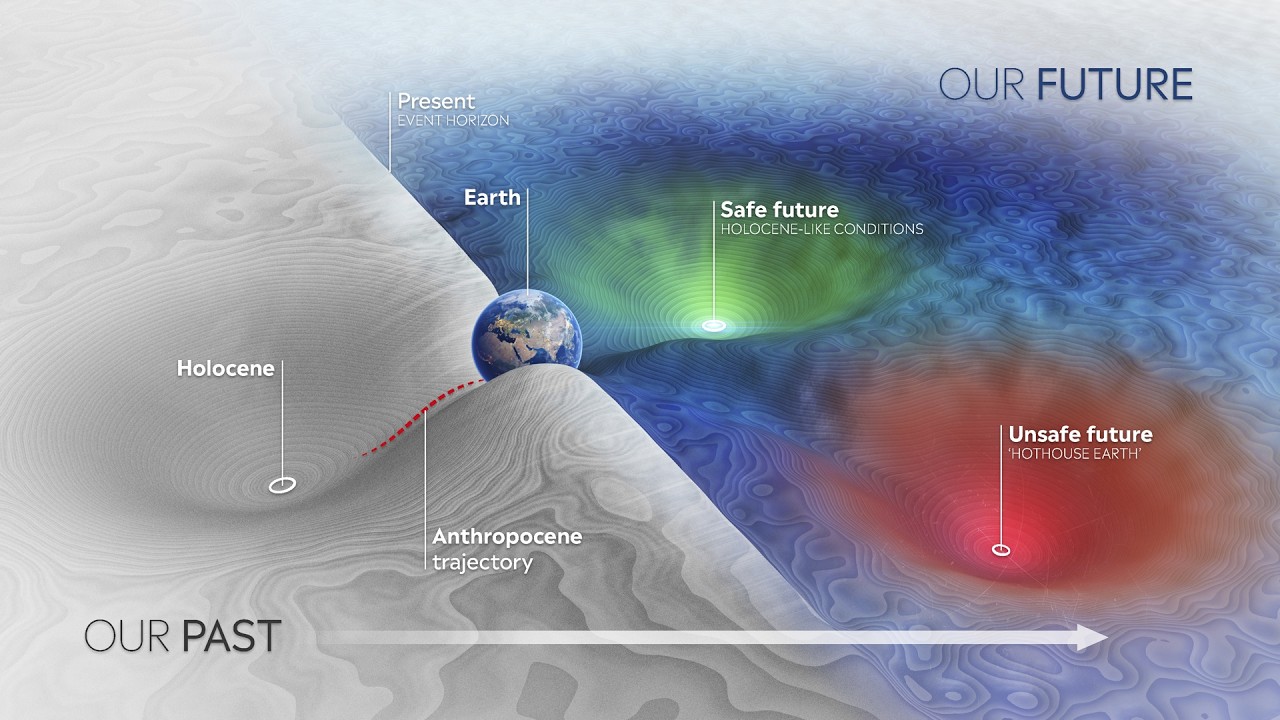
Not the pyramids, not the skyscrapers, not Shakespeare—in the end, we will be known only by a change in the rock that marked the start of the Anthropocene. What they found was unbelievable. There was indeed a mysterious jump in surface heat, and it happened 55 million years ago.
During that time Earth warmed by about 9 to 14 degrees and then returned to normal, all in about 100,000 years This helped lead to some extinctions and the rise of mammals. ìImagine if something like this happened now. 9 to 14 degrees jump?
Unbelievable. This maximum in temperature is known as the Paleocene–Eocene Thermal Maximum. It left the same sort of geological evidence that will be left by our current carbon consumption.
There may have been other jumps, but we wouldn’t know it, as the geologic record only goes back so far. From our point of view, it is as if we are living in a huge compactor: we are crushed, recycled, and returned as new. As far as we know, however, the registered maximum had nothing to do with carbon consumption.
Of course, it could have been caused by the awakening of an ancient civilization, which rose as we rose, then fell as we will, but this is unlikely, even if we don't know for sure! We have of course some more plausible explanations. Theories about the cause have pointed to increased carbon in the atmosphere from many erupting volcanoes; a Greenland volcano that cooked a huge coal deposit; and sudden methane releases from underwater.
But new studies suggest a meteor could’ve caused the thermal maximum, or it could’ve been the eruption of a monster volcano, the sort that presently smolders beneath the Atlantic. But isn't it interesting, to think that the universe is continually creating characters whose technology brings on the very end they’re trying to avoid? So, we know what is it about, but why is it called SILURIAN HYPOTHESIS?
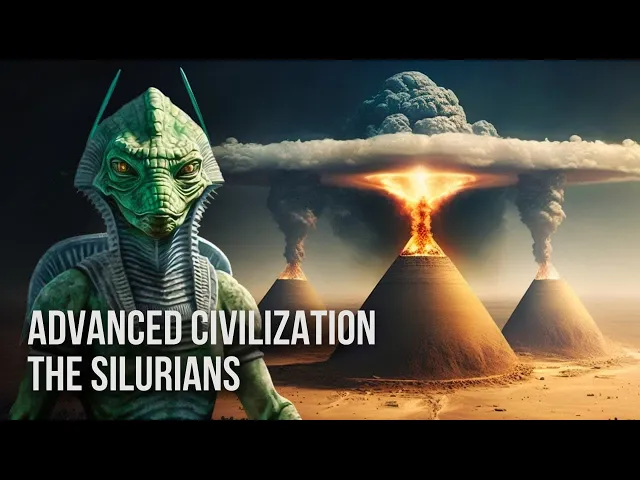
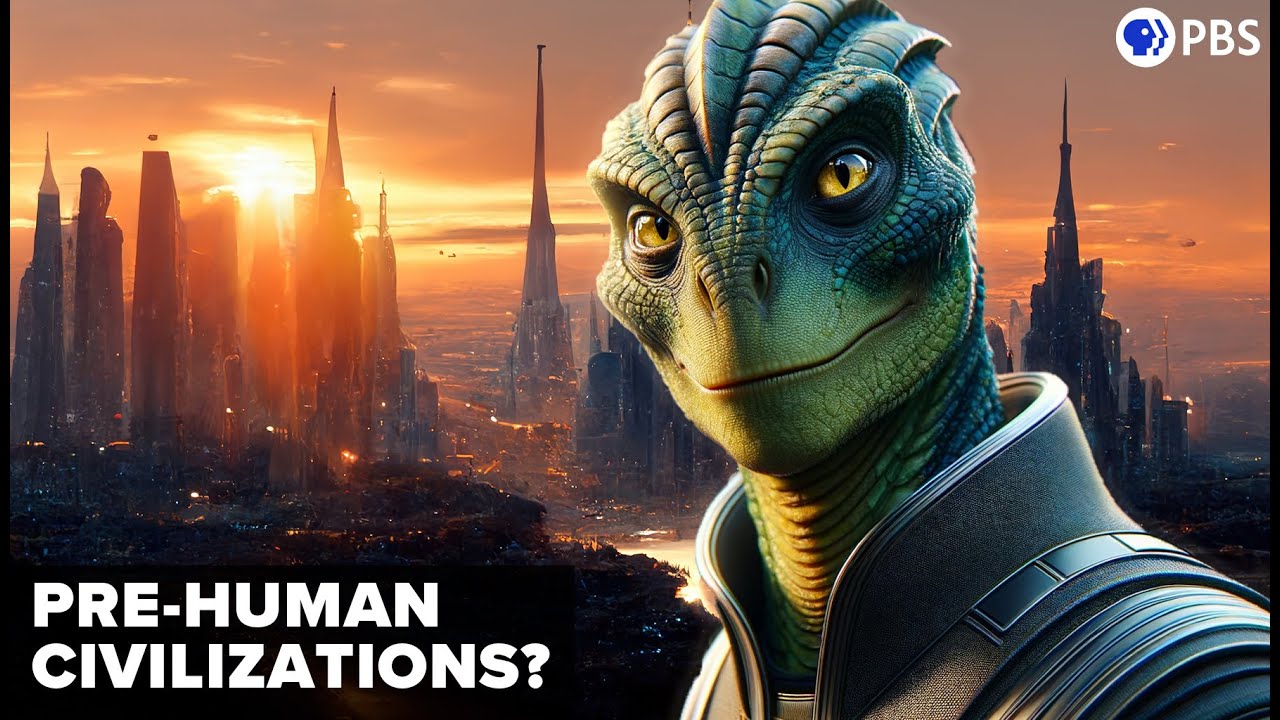
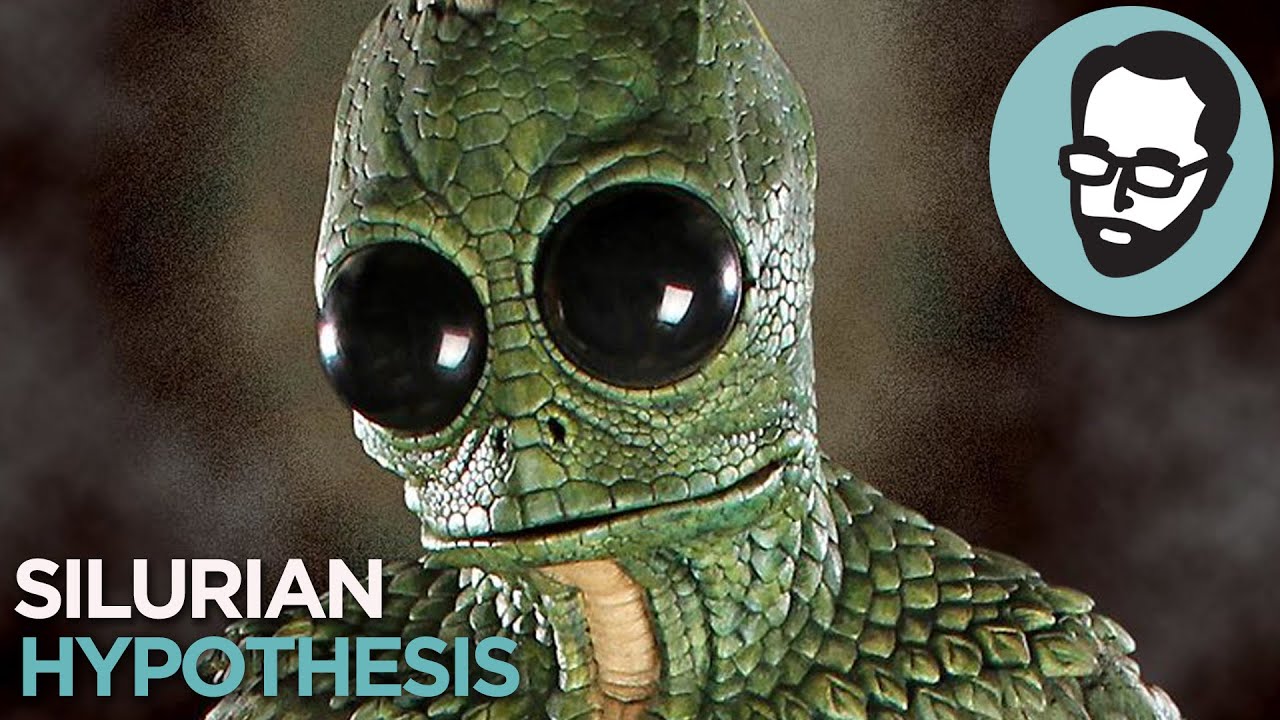
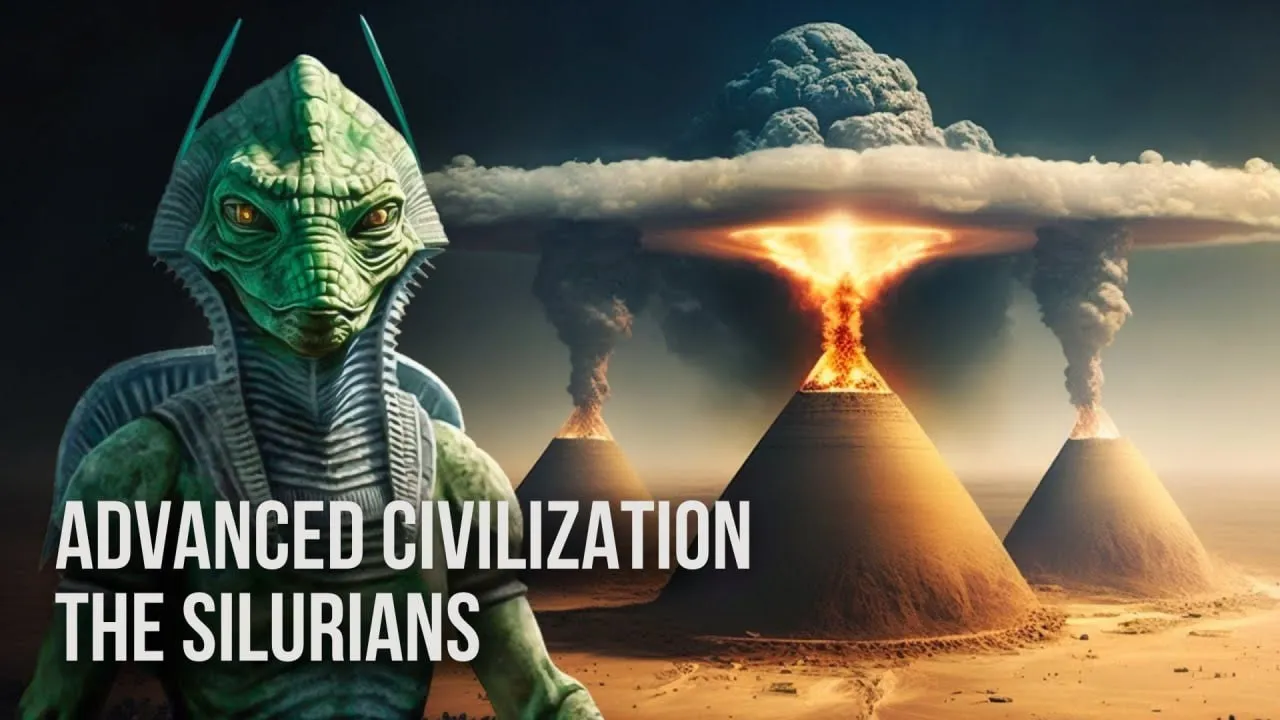
It comes from an episode of Dr Who. A time traveler visits an ancient species of advanced, long-extinct lizard people who’d achieved technological mastery 450 million years before modern man. The lizards were called Silurians, hence the Silurian Hypotheses.
So, to sum everything up, more than just one intelligent form of life could have lived on our planet Earth. The traces of their existence are buried at various depths in sites that are mostly inaccessible and unknown. If the human species disappeared tomorrow, erosion and sedimentation, over the period of two million years, would erase permanently any trace of the cities, cultures, and artifacts, produced by industrial civilization.
No territories, no lands, and no buildings will then be accessible to future humans. So what about fossilization? Wouldn't they be able to find fossils of men and women, just like we found dinosaurs' fossils?
Well, statistics tell us it would be really hard. Considering that urbanized humanity occupies less than 1% of the total Earth’s surface, the chances of recovering the buried remains of our civilization in the distant future are reduced to a minimum. Moreover, fossilization is an extremely rare process.
It depends on so many factors! For instance, climatic conditions and the ratio between soft and hard tissues of the dead specimen, are crucial for a fossil to be created and preserved. You might think the number of dinosaur fossils we found is big, but we only have a thousand specimens, while Earth was populated by billions of dinosaurs!
A thousand of them correspond only to a handful of dinosaur fossils for every 100,000 years. As a result, the chances of encountering the remains of an industrial civilization that existed millions of years before, but only lasted a few thousand years, are minimal. However, if paleontologists from the future decided to look for traces of the human race, they could find traces of the change in greenhouse gases such as methane and nitrous oxide.
Moreover, they could find traces of nitrogen originating from the spread of industrial civilization. This nitrogen is now being introduced into the waters or rivers, following the use of fertilizers in agricultural activities. But how will they find it?
The presence of large quantities of nitrogen favors the proliferation of microbes in the coastal ocean waters, which leads to a decrease in dissolved oxygen in the water column. This process creates the so-called dead zones. Paleontologists will probably be able to identify them in Anthropocene sediments through their higher organic content.
As you can see, two ingredients will be fundamental to prove the Silurian Hypothesis right: looking in the right place at the right time, and knowing what to look for. And, why not, a little dose of luck. Who knows, maybe, after long research, paleontologists from the future will find something that says: “Anna and Bob, 2022”.
This video ends here! What do you think about the Silurian Hypothesis? Let us know in the comments below!
And if you enjoyed the video, don't forget to share it, and I'll see you next time on the channel.