a new super Earth has been spotted by astronomers and it's quite intriguing this planet called toi 715b is about 1 and 1/2 the size of Earth which is why it's called the super Earth it's also relatively close to us in space terms only 137 light years away for comparison most exoplanets are hundreds of light years away and all the interesting stuff like black holes and nebulas are usually more than thousands of light years away from us so could it be habitable the habitable zone is an estimate of where a planet might have the right conditions
for liquid water this is what we call some distance from the Star where the temperatures on the planet should be okayish and water should stay liquid on its surface it's not super precise because it depends on a bunch of factors like the type of star how reflective the planet is its size and so on also just being in this Zone isn't enough for water to actually be there the planet also needs the right kind of atmosphere and a few other things so we invented a stricter definition in 2014 the conservative habitable zone it's a more
precise term to finding the best candidates that have liquid water otherwise we get too many potentially habitable planets that are not actually habitable at all the chz is based on how much energy a planet gets from its star compar compared to Earth if a rocky planet gets between 40 to 85% it's considered to be in the chz no matter how far away it is from its star these planets have a higher chance of being habitable and yes toi 7115b is located there this superar orbits the mtype star also called Red Dwarf it's a star that's
much smaller and cooler than our sun about a quarter of the sun's size and mass but if the planet is located in the habitable zone it's actually a better option for Life red dwarfs live much longer than our son a yellow dwarf this also means that they have more time to form little creatures on their planets and this red dwarf really is older than our star our son is 4.6 billion years old and this star is 6.6 billion years old give or take a few hundred million it doesn't have much magnetic AC AC ity so
it's not dangerous it doesn't flare up like younger red dwarfs these flares can be super strong and might even hurt planets by taking away their atmospheres although some planets around it do have thinner atmospheres it seems like this red dwarf has already gone all out these red dwarfs are where we're looking for planets that could support life right now our super Earth is really close to its star zooming around it in just 19 days since the the star is small and the planet is so close the planet passing in front of its star happens a
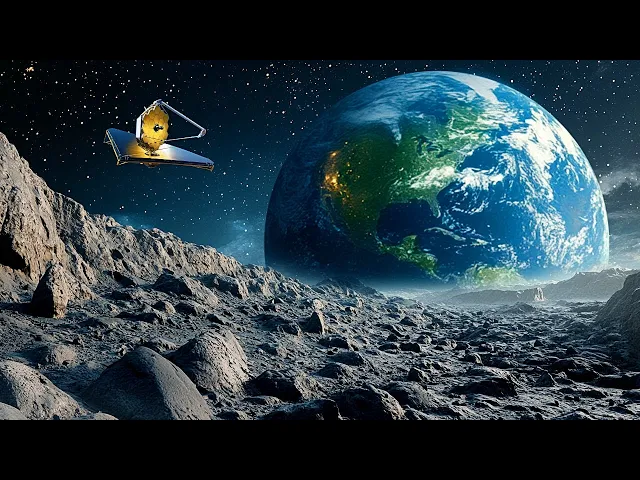
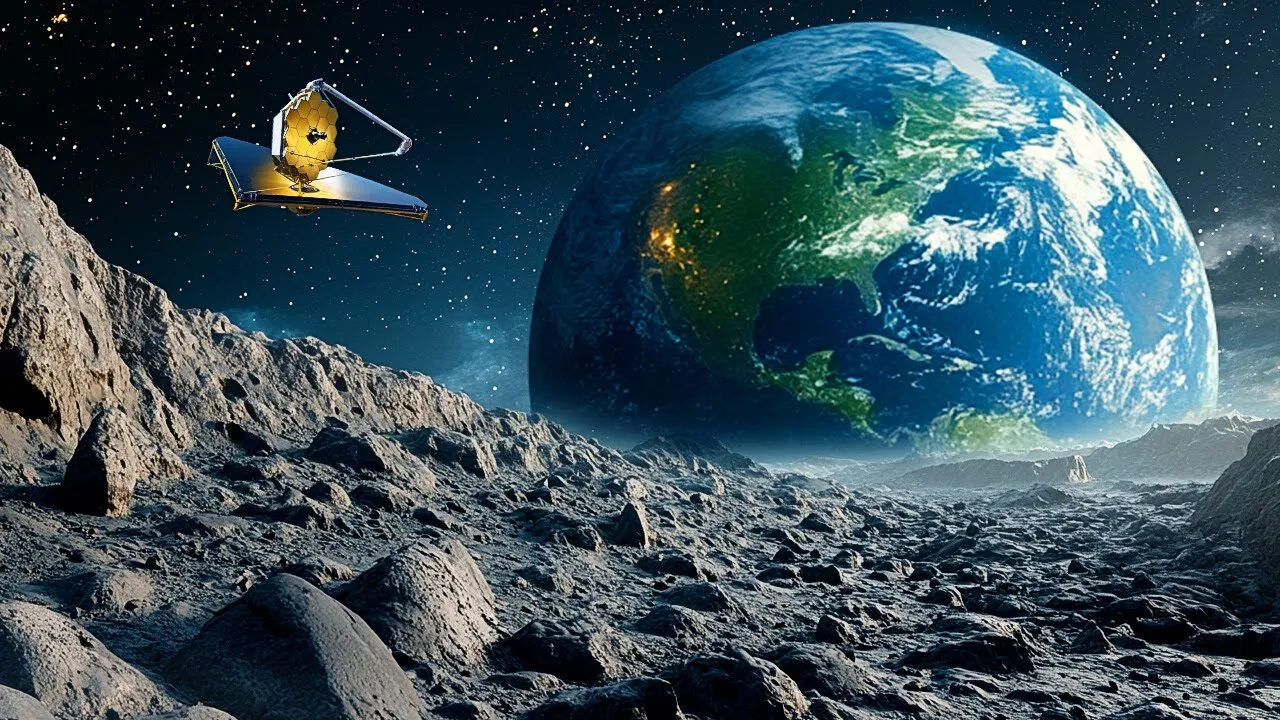
lot and looks really clear this makes it easy for telescopes like the James web to study its atmosphere without needing too much time now speaking of the James web Space Telescope it's bringing us into a new era of understanding distant planets beyond our solar system imagine being able to see what gases make up the air on a planet millions of light years away James web will help us to find worlds that could support life right now it's trying to figure out whether toi 7115b has an atmosphere if it does its atmosphere might be easier to
spot compared to a planet that's drier and denser and then we might get even more hyped because it would look like a good place for life on top of all that there might be another planet in this system also in the habitable zone we're not sure whether it's really there is as a candidate with a crazy name but if it turns out to be real it would be about the size of Earth also it would be the smallest planet in the habitable zone ever spotted by the test telescope now another cool thing about toi 715b
is that it cannot just have water on it but be an entire Water World an ocean planet is a type of planet that has an ocean covering its surface or has subsurface oceans they might not have much dry land because the water can cover everything sometimes the entire planet can be covered in other liquids like lava or ammonia when it comes to planets outside our solar system we can't see surface water directly with our current technology instead scientists look for water vapor in the atmosphere as a hint there might be liquid water below and of
course we wonder if these planets can have life hopefully not in the form of Leviathan likee monsters our models show that planets with oceans might be pretty common in our galaxy this means there could be lots of ocean worlds out there waiting to be discovered but the most important part about toi 7115b is that it's in the so-called small planet radius Gap if we give the planets a lineup there will be those that are bigger and smaller than Earth but there's a sudden Gap in planets that are about from 1 and 1/2 to two times
bigger than ours where are they this Gap is interesting to scientists because it tells us something about how planets form and change over time it's not that planets don't form in this size range they actually start off larger and then lose some of their Mass like a balloon gradually deflating perhaps it happens because of how they orbit their stars with stars blowing away some of their mass as they dance around it as our sun does with gas from Comet tailes this gas map holds a lot of mystery and planets like our new superar are clues
that could help us unravel it we aren't sure whether it exists around red dwarfs maybe it's a gap in how dense these planets are rather than in their actual size so studying our discovered planet is even more interesting it'll help us learn more about distant stars and their planets now I mentioned test a while back NASA's test transiting exoplanet survey satellite has been in space for six years now and has been incredibly successful NASA launched test because we already found over 5,000 planets orbiting other stars mainly thanks to the Kepler Telescope but Kepler mostly found
large planets not necessarily like Earth we decided to focus tests on finding smaller earthlike planets around nearby Bright Stars making them easier to study with future telescopes here's how it works the camera observes stars and looks for changes in their brightness if the brightness suddenly drops for a while and then gets back it could mean there is a planet passing in front of it but Stars can dim for other reasons too for example flaring up or having dark spots on their surface which is why we need to be careful with this data Tess shows us
the size and orbit of these planets then ground telescopes help determine their Mass with these three parameters we can figure out what the planets are made of and if they're Rocky like Earth or gassy like Jupiter yeah you want to avoid Jupiter after taco night one example of Tessa's discoveries was the toi 700 system there it discovered its first ever earthlike Planet toi700d this exoplanet also orbited a red dwarf and it's even closer to us about 100 Lighty years away unfortunately it's unlikely to be habitable because the temperatures there are crazy another big Discovery was
made in the Au microscopy system Tess discovered a planet about four times the size of Earth and another nearly three times earth size this system has become a key area for studying how stars and planets form and change over time Tess has also spotted a variety of other exciting finds including Supernova hot worlds and so on and as it enters its sixth year we can only expect more exciting findings to come that's it for today so hey if you pacified your curiosity then give the video a like and share it with your friends or if
you want more just click on these videos and stay on the bright side