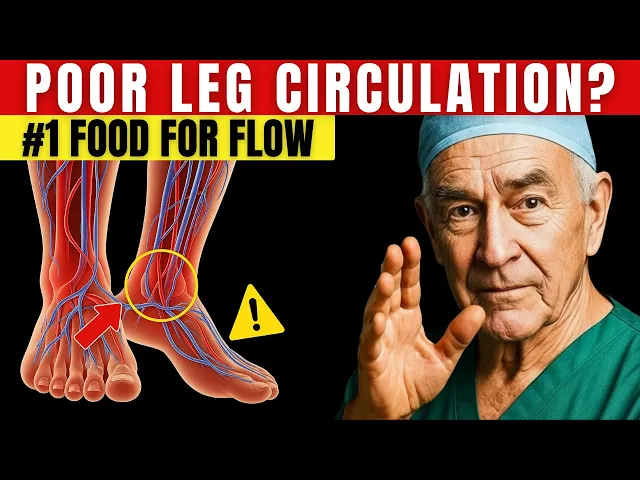
If you're walking along and your calves suddenly feel tight and fiery, [clears throat] making you stop even though you're not out of breath, don't brush that off. It's your body speaking up. Here's what makes it so sneaky.
You can sit and feel okay. Then you stand up, take a few minutes of steps, and your legs change the rules. Your feet feel cold, your calves feel heavy.
You pause. And when you rest, it eases almost like it never happened. The National Heart, Lung, and Blood Institute explains that leg pain or cramping during walking that improves with rest can be a classic sign of reduced blood flow in the legs, often discussed with peripheral artery disease.
It can also show up with numbness, weakness, or slow healing soores. Now, here's the belief shift that helps. This isn't always about stronger legs.
Sometimes it's about helping blood vessels open when your muscles ask for oxygen. Your body uses a natural signal called nitric oxide to relax and widen blood vessels. And this is where the surprising evidence comes in.
In a 2011 clinical study published in the Journal of Applied Physiology, researchers gave beetroot juice to people with peripheral artery disease and compared it to a placebo. The group drinking beetroot juice was able to walk longer, about 18% longer before leg pain began, and about 17% longer at their peak walking time. So today we're doing a simple countdown of five everyday foods that can support blood flow after 60, starting at number five and building to number one.
And please don't skip the last one because it's the most directly tied to that vessel opening signal and it has the clearest walking data behind it. Comment your age and where you live. Then like, share, and subscribe because one small food change can be easier to repeat than another complicated routine.
Number five, garlic. Garlic is one of those foods that's already in your kitchen, which is exactly why it works as a habit. Garlic doesn't ask you to buy a new gadget or memorize a routine.
It simply slides into the meals you already make. And over time, those small, steady choices can support the same big picture. Your legs depend on healthier blood vessels.
Here's what garlic really is in plain language. When you chop or crush a clove, you trigger natural compounds that give garlic its sharp smell and bite. That freshly cut moment is when garlic is at its most active as a food.
You don't need to obsess over chemistry, but this one detail matters because it changes how you use it in the kitchen. Now, will garlic unclog arteries fast? No.
And I won't promise that. What we can say carefully and honestly is that garlic, especially in supplement studies, has been linked to improvements in blood pressure in people with hypertension. A review by RIDE 2020 on PubMed discusses evidence that garlic supplements can lower blood pressure in hypertensive individuals.
And since blood pressure and vessel health are part of the overall treatment strategy for leg circulation problems like P A, it fits the support the system approach. NHL LBI NIH includes hearthealthy eating and risk factor control as part of P A treatment. But here's the part that keeps this safe and grounded.
Harvard Health Publishing is very clear that garlic supplements can increase the effects of certain heart medications, especially blood thinners and blood pressure drugs, raising risks like bleeding or dangerously low blood pressure. Mayo Clinic also notes that garlic may raise bleeding risk when taken with blood thinners like aspirin, clipidogil or warfarerin. That's why in this list, garlic stays in the food first lane.
So, how do you actually use it without making life complicated? Try this. Crush or chop one small clove.
Let it sit for a few minutes on the cutting board. Then stir it into something warm at the end. Soups, beans, sauteed vegetables, or a simple olive oil pan.
If raw garlic is too harsh, cook it gently and start with a smaller amount. Your goal is not intensity. Your goal is repeatability.
Let me paint a real life example. One woman told me she kept buying healthy foods but never used them. What finally worked was choosing one anchor meal, her evening soup, and making it her garlic meal.
One clove most nights. Nothing dramatic. Two weeks later, she said the best change wasn't a number on a chart.
It was that she felt more in control because she had a routine she could keep. Common mistake: treating garlic like a natural blood thinner and taking extra supplements on top of medication. If you bruise easily, take a blood thinner or have a procedure coming up.
Keep garlic as a normal food and check with your clinician before making big changes. Next, we'll move to a food that feels almost like a treat, but has strong research around supporting how blood vessels respond. Number four, dark berries.
dark berries are one of the easiest wins on this list because they don't feel like a health project. A handful can turn plain yogurt into breakfast. Small bowl can be dessert without the crash.
And the reason they matter for circulation is not magic. It's how they support the way blood vessels behave. Inside your arteries is a thin lining called the endothelium.
When it's working well, it helps your vessels relax and adjust blood flow smoothly. When it's under long-term strain, high blood pressure, high blood sugar, inflammation, those vessels can become less responsive. You feel it as heaviness, tightness, or that I need to stop and rest moment.
Dark berries, especially blueberries, are rich in anthocyanins, the pigments that give them their deep color. Researchers study them because anthocyanins are linked to measurable changes in vascular function. Here's a clean scientific anchor you can safely say out loud.
A 2024 systematic review and metaanalysis available on PubMed Central examined blueberry interventions and reported improvements in endothelial function markers. Across 11 studies with 400 participants, flow mediated dilation increased by about 1. 50% and reactive hypermia index also improved.
That's not a promise of a cure. But it is a measurable sign that vessels may respond better. Now the practical part because this is where most people get stuck.
If you want the simplest approach, keep frozen berries in your freezer. They're usually cheaper, they last longer, and they still work well in meals. Let them thaw for 10 minutes.
Then add them to plain Greek yogurt, oatmeal on or a small bowl of cottage cheese. If you prefer a warm option, stir them into hot oats so they soften without needing extra sugar. A gentle caution said with kindness.
Don't let berries turn into a sugar trap. The benefit gets blurred when berries come buried under syrup, sweetened yogurt, or a giant pastry. Keep the portion modest and pair it with protein or healthy fat.
The goal is steady support, not a spike and crash cycle. Here's a short real life picture. Think of berries like oiling a stiff door hinge.
You don't slam the door harder. You help the hinge move more smoothly. Over time, those small supports add up.
Come in mistake. waiting for motivation. The better move is to choose one berry moment and keep it the same.
Breakfast yogurt, evening snack, or a small bowl after dinner. Same time, same place, easy to repeat. Next, we'll move to the food that supports circulation from the foundation level by helping the heart and vessels through fats your body actually needs.
Number three, fatty fish. This one is less about a quick feeling and more about building a calmer foundation underneath your circulation. When blood flow feels sluggish, it's easy to chase dramatic solutions.
But your vessels tend to respond best to steady, repeatable support, especially when it comes to fats. Fatty fish means salmon, sardines, mackerel, trout. These fish naturally contain omega-3 fats, especially EPA and DHA.
Cleveland Clinic explains omega-3s are considered healthy fats that support heart health, including helping lower triglycerides. Here's the practical way to think about it. A fish meal often helps most because of what it replaces.
If fish replaces processed meats or heavy fried dinners, you're quietly reducing sodium and saturated fat while adding healthier fats. That fits directly with NHLBI's P A treatment guidance, which includes heart-healthy eating patterns as part of overall care. Now for the science anchor without turning this into a lecture.
Omega-3s have been studied for cardiovascular health in many ways and the clearest food first message is consistency. You don't need to mega dose supplements to benefit from putting fish on the plate regularly. Cleveland Clinic's guidance focuses on getting omega-3s from foods like fatty fish.
Here's a simple, doable rhythm. Aim for two fish meals per week. Make one of them a lazy meal so you don't depend on motivation.
Think canned salmon mixed with a little olive oil and lemon over greens or sardines on whole grain toast if you enjoy them. [clears throat] If chewing is hard, mash it well. If cooking is tiring, buy frozen fillins and bake them with salt, pepper, and herbs.
No breading needed. A short story moment you can picture someone who always meant to eat better. Finally picked one default dinner.
Wednesday fish. Same day, same grocery list. No decision fatigue.
That's what makes it stick. Common mistake. Turning fish into a fried salty comfort food.
If it's deep fried with heavy sauce, you've lost a lot of the benefit. Keep it simple and let the habit do the work. Safety note, gentle and clear.
If you take blood thinners, don't panic about eating fish. Just avoid suddenly adding highdosese omega-3 supplements without medical advice and keep your eating pattern steady. Next, we'll go to the food that supports circulation through the vessel opening signal we discussed by helping your body make nitric oxide more efficiently.
Number two, leafy greens. My leafy greens earn this spot because they work with a very specific pathway your body already uses to open blood vessels. Not with hype, with chemistry your body recognizes.
Harvard Health explains that nitric oxide's primary role is to relax and widen blood vessels. It also explains how dietary nitrates found in foods connect to this nitric oxide pathway. Leafy greens like spinach, arugula, romaine, and kale are a practical way to bring those nitrates into everyday meals.
The goal isn't a giant salad you force yourself to eat once. The goal is a small amount you can repeat without thinking. Here's what repeatable looks like.
A handful of spinach stirred into soup right before you turn off the heat. Roma tucked into a sandwich. Greens soautayed lightly with olive oil and a pinch of salt.
Miza then added beside dinner like any other vegetable. If raw greens bother your stomach, cook them. Warm and soft is often easier.
A short real life picture. Imagine your vessels as a garden hose that stiffens a little over time. You don't need to replace the hose today.
You simply want it to relax more easily when you turn the water on. That's the role nitric oxide plays in the body. And nitraterich foods are one of the ways to support that signal.
Common mistake, trying to catch up by eating a huge bowl one day and none the next. Your body responds better to steady signals than sudden spikes. One important safety note, said calmly.
If you take warfaren, vitamin K and leafy greens can affect how the medication works. Mayo Clinic's guidance is not avoid greens. It's keep your intake consistent, chucky, and talk with your care team before big changes.
If you're not on warfare, greens are one of the simplest, most supportive habits you can build. Next is the top payoff food on today's countdown. The one that has been studied directly in people with P A related walking pain with clear numbers you can point to.
Number one, beets. Beets are number one for a simple reason. They're one of the most concentrated food sources of dietary nitrates, and nitrates feed into the nitric oxide pathway that helps vessels relax and widen.
If you've ever felt that pattern where walking brings on calf pain and resting brings relief, this is where beats become especially interesting. Not as a cure but as support you can actually measure in a double blind placeboc controlled crossover study by Kjal and colleagues 2011 in people with peripheral artery disease. Participants walked 18% longer before claudication pain began after beetroot juice compared with placebo.
They also had a 17% longer peak walking time with peak walking time reported as 467 plus or minus 223 seconds placebo versus 533 plus or minus 233 seconds beetroot. That's the kind of detail that keeps this honest. It doesn't promise a miracle.
It shows a real measured difference in a real limitation people feel. Now, let's make it easy to use. If you like cooking, roasted beets are straightforward and you can buy them precooked to avoid mess.
Slice a few pieces into a salad or eat them on the side of dinner. If chewing is harder, choose softer forms. Diced cooked beets or grated beets mixed into a simple vinegar and olive oil sllo chucked.
If you choose beet juice, pick one without added sugar and start small. In the same study, diastolic blood pressure was lower after beetroot juice, which can be helpful for some people, but may feel too strong if your blood pressure already runs low. Common mistake, turning beets into a sweet drink habit with lots of added sugar.
Keep it clean and simple. One gentle reassurance, beets can temporarily turn urine or stool pink red. That can be startling the first time, but it's usually harmless.
Next is how to tie the whole countdown into a calm routine that supports steadier steps without making you feel like you're on a program. You've just built a simple, realistic support system for circulation without chasing extremes. It starts with a familiar flavor you can add to meals in a way that feels normal, not medical.
It includes a small treat that quietly supports how vessels respond, especially when it becomes part of a consistent breakfast or evening snack. It brings in the kind of fat that supports the heart's foundation over time, not overnight. And it does it through meals you can repeat.
It adds a daily handful of greens that nudges the vessel opening signal your body already uses. And it finishes with one food that has been studied directly in people dealing with walking pain from reduced leg blood flow, showing a real measured improvement in how long they could walk. Here's the long-term payoff when you keep these habits steady, more confidence leaving the house, fewer unplanned stops, warmer feet more often, and a sense that your body is cooperating with you again.
Not because you forced it, because you supported it. And if you're dealing with symptoms that worry you, pain with walking that eases with rest, sores that heal slowly, or a foot that stays unusually cold. NHLBI explains, "These can be signs of P A, and it's worth discussing with your clinician so you're not carrying this alone.
Now, I want to ask you one question. What's the one moment each day when your legs feel the most limited? The first walk in the morning, the afternoon errands, or climbing steps at night.
Please comment your age and where you live. Please like, share, and subscribe. And for your action step today, choose just one food from this countdown and add it to your next meal.