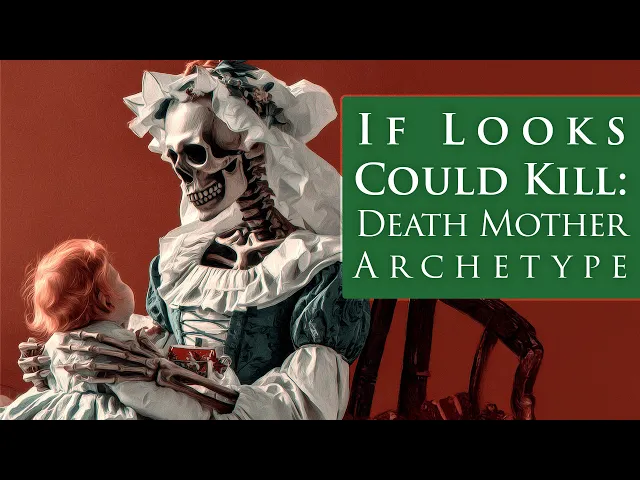
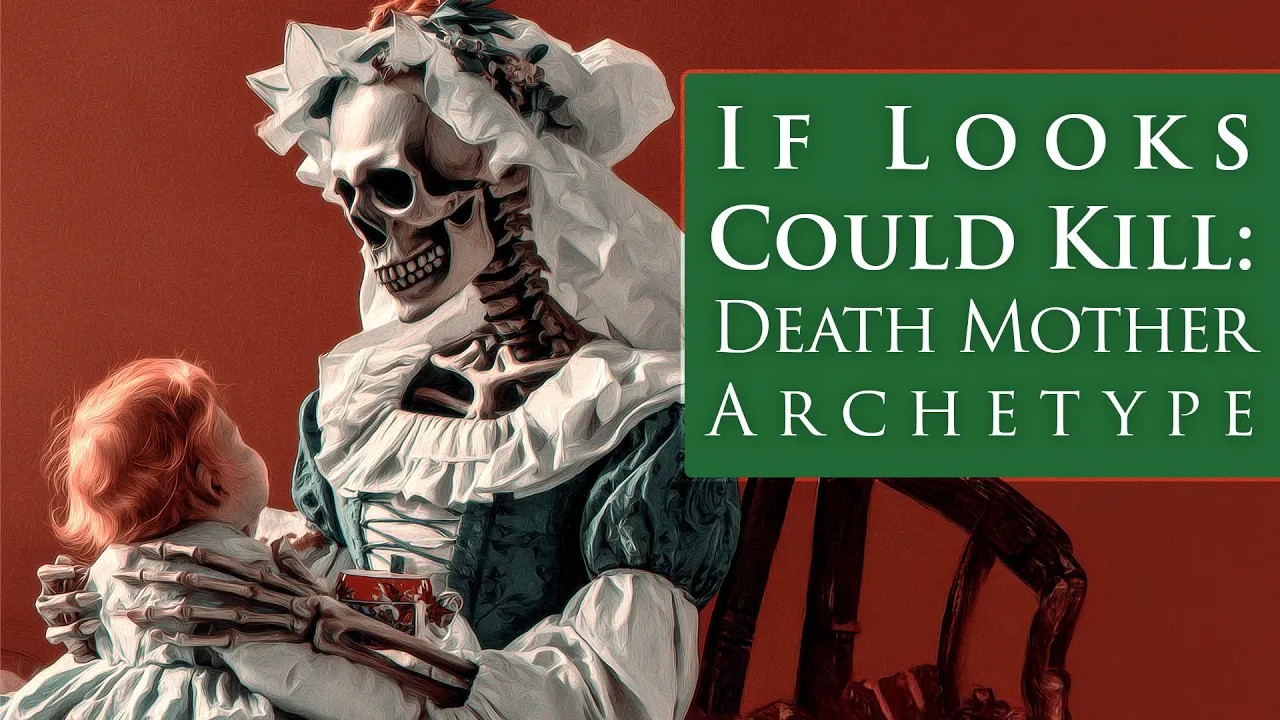
[Music] Welcome to this Yungian life. Three good friends and Yungian analysts, Lisa Mariano, Deborah Stewart, and Joseph Lee invite you to join them for an intimate and honest conversation that brings a psychological perspective to important issues of the day. >> I'm Lisa Marchiano and I'm a Yungian analyst in Philadelphia. >> I'm Joseph Lee and I'm a Yungian analyst In Virginia Beach, Virginia. I'm Deborah Stewart, a Yungian analyst on Cape Cod. Today we are going to talk about an aspect of the archetype of the mother uh that has been termed the death mother and that is
uh as I said the negative side that we're all very well acquainted with through fairy tales such as Hansel and Gretle and and the archetype of the witch. Uh and there are there are others as well like Medusa of that part of the feminine of the maternal that we Perceive and experience as killing psychic energy shutting us down. uh turning us off. The part of the mother archetype whether it comes from a teacher or some other figure figures in one's life that elicits in us feelings of uh anxiety, emotional hunger, shame, dread, uh all kinds
of things. It's part of the mother archetype. uh it certainly is part of many an individual's history of relational Emotional trauma and uh there is quite a bit of material and people have spoken about it. So with all that said, let's begin to understand this incredibly influential force in our lives. You know, it might make sense to take a minute and differentiate the death mother from the negative mother because we have talked about that before. In in a sense they're very close together and perhaps the Death mother is like a category of negative mother but
it's a very specific phenomenon because it has to do with a situation or an energy in which that from which we expect nurture behaves in such a way as to threaten our lives. And this could be an actual biological mother, but it could also be with something else that's supposed to be mothering in the environment, whether it's an institution or an organization, another kind of relationship, Or or even just the nature of nature itself. Because nature is that great mother that both gives birth to life and also destroys and kills. So at at at its
bedrock, the death mother is part of life itself. Marie Louise von France is the first I believe to coin that term and that shows up in her book the interpretation of fairy tales. And uh I'll just read this particular paragraph from the book so we Can kind of place it in that initial imaginative world and from that other authors have gleaned much more beyond that. So um this is this will take a minute or two to read her whole quote. Oh, the sun myth and the tree myth are connected. For in the morning the sun
is born in the east out of the tree. Therefore, for instance, the Christmas tree and every Christmas the tree gives birth to the new light at the moment of The winter solstice. So all the sun myths are in a way also tree myths. But then the tree is also a mother. You know that in Saxony even now it is said that beautiful girls grow under the leaves of trees. And I could show you pictures showing that children come from trees. The souls of unborn children rustle under the leaves. And that is why there are trees
in the center of all German, Austrian and Swiss villages. >> The tree is therefore the great mother. But the tree is not only the mother of life but also the death mother because from trees coffins are made and there are tree burials. The shamans of circumpolar tribes and people in certain north Canadian tribes are buried in a tree. Probably also the Babylonian zikarats and these columns on which the Persians put their dead are a travesty of the tree. So the idea of the tree burial that the body of the tree is then transformed into the
coffin is a link That vonf fron makes and also has older resonances to it including a cobalistic ideas that I think I'll bring up in a bit. So von Fron coins this term just through the observation of burial rights and myths and the similitude of various images and mythologies. So this idea of onf fron that there's there's sort of the the tree that gives birth and then the tree becomes the coffin speaks to The fact that the this death mother energy this death mother archetype that we're talking about is a sort of um essential part
of the the uh great round as Ericman calls it. Um, and I have a quote here by Anthony Stevens that I think is really beautiful. So, this Anthony Stevens is a a union an analyst and he's talking about he's talking about Gaia, the earth mother. He says her commitment to the continuation of life is central, but the commitment to Any specific life is nonexistent. There is an unconlicted acceptance of the value and necessity of death as an integral part of life. So if you think about it again, if you think about it in terms of
mother nature, she she puts forth an abundance, but then she also uh takes away abundance and mother nature is kind of totally impartial to the life of the individual. So, I was, you know, it was a beautiful fall weekend here in Philadelphia this past weekend and I went to the Morris Arburedum with some of my family and there was a monarch butterfly in a death and life and death struggle with some big ugly uh wasp and I have to say we did intervene and rescue the monarch. But those kinds of things are when you see,
you know, a bumblebee caught in a spider's web and you think, you know, the human compassion, you want to you want to rescue the poor little bumblebee, but The spider needs to eat, too. And and nature herself is impartial to that struggle. It's like, well, who is the bee going to tear itself free from the web or not? Because this is just how the cookie crumbles. So, the death mother energy is all around us all the time. and it and actually is an integral and unavoidable aspect of life. >> What you're saying here really brings
up, you know, the difference between our ego perspective a and uh this great Round uh that mother nature is in service to life, but uh she does not provide a whole lot of attention to an individual bumblebee. Or I think what sparks a reaction in us is to any single one of of us, >> right? >> There is such an abundance and my image of of life and my image for this is always the salmon uh swimming upstream and thousands and thousands of them Return to the streams where they were spawned. and only some relatively
small percentage makes it all the way upstream. And in the meantime, the fishermen are out there catching uh salmon. The bears are out there gorging on salmon to get them through the winter months. And it is a kind of a startling thing to think about. Are we kind of like the salmon that there are untold numbers of us? And uh the message is Sort of like, you know, you're on your own or as my daughter calls it, yo-yo. You're on your own and good luck with that. Uh swimming all the way upstream. Uh do the
best you can. uh you pays your money and you takes your chances which seems uh it seems a little sort of like oh really you know well what is supporting me and and my my life and my becoming um because it feels like mother nature is not there for us what is there for us So you know what I'm thinking about is we've kind of um at least given a a quick overview of mother nature at and that aspect of the archetype of the mother and then we can look at mythology to see what the
collective has done with this image over time. I referenced Hansel and Gretle of the lovely old lady who tells the kids that, you know, they can help themselves to the gingerbread and the candy Um only as a way like your image of the spider, Lisa, like lure you in and uh it only to devour you. Um there's the well-known story of Medusa who turned people to stone. um and uh media who killed her children to get back at her errant uh husband Jason who'd gone a wandering. There are many more examples I think in mythology
and fairy tale. >> And I'd like to offer another kind of archetypal layer that in many um ancient Religions there's a great tension between force and form or spirit and matter. And and this is intrinsic to much of the uh far eastern religions and that was also brought into Christianity um through Syria. That spirit is somehow unfettered, free without limits and and free from decay and that all that is brought into matter is subject to all of the suffering of the material world and illness and aging And all manner of other um vicissitudes. the story
of Gautama Buddha, you know, leaving the palace and looking at death and pain and suffering that life brings. And wouldn't it be wonderful if there was a method where we could transcend suffering and also not need to incarnate again? And to escape the wheel of birth and death would be to escape the womb. Because the womb is the thing that takes the spirit and in fleshes it and subsequently Subjects it to all of the struggles of being a physical being. So there's a tension theologically between spirit and matter and the whole process of incarnation. The
cobalists take another step which I think is helpful in our discussion is that the the light all of the cosmic potential emanates from one aspect of the tree of life is emanated and passed to the divine mother called Bina. Bina so fully understands the potential Of the spirit that she immediately predicts the succession of forms that the spirit must embody to force all of its potential to be actualized. And in that model, the form exists to facilitate the actualization of potential. And when the form has exhausted its utility, i.e. the spirit has learned all it
can, the same mother principle dissolves the form, liberates the inddwelling spirit And offers the next successive form for its development. And out of that we get this idea which is not uncommon that life and reincarnation is a succession of educative experiences for the soul or the spirit of the individual. So the cosmic mother provides all forms and then also dissolves those forms or is the death mother when there is no more utility To the experience. And that's uh one philosophic orientation towards the same principle of embodiment and the succession of forms. >> You know, one
of the things that I think comes up in everything we've been talking about is a total lack of sentimentality. >> Yeah. So that's maybe one of the defining features of the death mother is there's nothing sentimental which is Interesting because you think about sort of our cultural conception of motherhood is just steeped in sentimentality isn't it and I mean and I can tell you I I was you know when I wasn't being a deaf mother I was a very sentimental mother so you know that's that's a true part of the experience too it's like oh
look at this little onesie they don't fit in it anymore I have to give it way. >> So, sentimentalization and also idealization Of the mother then causes this split off. >> Yes. >> Um phenomena that all the other aspects of the archetype are then pushed away, but then they're vibrating under the surface. They're thrumming where nobody can see them, but they are still affecting things. So I think you know what this points to is that in our uh culture in in the western world at least in this country today uh we have kind of Split
the archetype. >> Mhm. >> Motherhood is wonderful. It's always wonderful all day every day. uh you know, you're going to have a first baby, you're going to have a shower, and make a list of all the things you want to get at one of these great baby supply outlets, it's become very very sentimentalized. >> Mhm. And uh your book, Lisa, on motherhood and any conversation anybody Has ever had with the mother of an infant or toddler will include how frustrating and difficult uh exhausting and anger making the constant demand of this of this infant and
toddler is. In addition to being uh many many shades of wonderful and adorable. But today in our culture hit motherhood has been hugely sentimentalized. The negative is not really dealt with or or permitted um as if these human feelings are the are somehow the equivalent of something related to annihilation or death and and you know Dub that that's really helpful. Well, I mean, I think you're you're identifying that there's this split, right? And I think that's so true because we we either just totally idealize it or um or the other side really goes into the
shadow, Doesn't it? And we don't we don't think about it, we don't talk about it. But as you said, Joseph, it's kind of knocking around. But I think that that idealization of of motherhood it has this other effect too that I see where you know I had someone I think where did this happen I can't remember but someone said you know I love my mother and I hate my mother and I thought yes you know it's like it's like somehow though an effect I think of idealizing motherhood is that we grow up expecting our mothers
to have been perfect just like somehow we've been sold an image of motherhood as this kind of totally beatotific experience all the time. As as you know, as adults, we look back and and we're like astounded that parts of our childhood or our current relationship with our mother might be disappointing or wounding. And you know, and I'm certainly not talking about Mothers who are are truly terrible or or philosidal or dangerous, but your sort of average mother who has, you know, faults and flaws and makes mistakes and, you know, is is infuriating at times and
and uh we that gets split off too. And then we're not afforded the possibility of having a sort of, you know, reasonable expectation of this entirely human person, you know. So I think we're, you know, if we're what I'm thinking about is that we've been honing And refining what you said earlier, Lisa, about the negative mother is not the death mother. The negative mother is that human mother who gets exhausted, who gets angry, who doesn't pay attention. You know, you can make a great long list of all the faults that mom very definitely had. And
it's our job given what Donald Winnott, a British uh psychoanalyst and pediatrician called we need the good enough mother. >> Mhm. uh who has from a child's point of view uh negative as well as positive attributes but overall uh is present, is loving, uh does care and can establish with her child a secure base, a secure relational base that that is at the center of that child's being from which then we're free to kind of go and come. But the death mother uh takes it into a different dimension. >> So I think as Jung has
said that Whenever there is a kind of archetypal disavowel that the gods then go into the body, they go into the unconscious. They're secretly influencing. And as you were both saying that when there is shame over natural ambivalence and occasions of hostility in a mother and that's combined with this intense cultural idealization that an essential part of the archetype is cut off. When an archetype is cut off And it is still active, it begins to grow in its potency and accrete all kinds of additional material. Then when it hits a critical mass, it will erupt
and become a possessing dynamic and a mother can experience herself being altered, being changed by the archetype. And if it becomes the death mother, then there are some very particular effects that it has on her as well as on her children. I would also Say that our vulnerability to archetypal possession comes from many different components. Part of it could be just a natural temperament, but also structural stressors. you know, a mom has limited resources or no social support if she's doesn't have a partner, she has lots of dependence. All of those things that um chip
away at our ego strength and AA does a good job. You know, don't get too lonely, don't Get too scared, don't get too hungry. All of the things that chew the ego down make it much more vulnerable to an archetypal possession of all kinds. Mhm. >> And if the deaf mother is hovering close, that exhaustion and chipping away makes the mom much more vulnerable to acting out the archetypal dynamic, which may not, by the way, show up as a literal lethal actions against the children, but can create a kind of deathlike energy in the Relationship
that causes the child to shut down and freeze up and be denied the lifegiving aspects of the mother. >> Yeah. I I I like your idea, Joseph, about it's sort of, you know, the fact that that we can be susceptible to possession and it makes me think of um the the you know, to speak to actual infanticide, the case, the famous case of Andrea Yates, who what year was that? It was in 2001. And um Anna Quinnland, so she dr she Drowned her five children I think in the bathtub and Anna Quinnland wrote a piece
in Newsweek um that was called playing God on No Sleep. And here's a here's a quote from that um which I just think speaks to the point you were making that it's like a universal possibility. Um so here's Anna Quinnland. She says, "Every mother I've asked about the Yates case has the same reaction. She's appalled. She's a gasast. And then she gets this look. And the Look says that at some forbidden level, she understands. The look says that there are two very different kinds of horror here. There is the unimaginable idea of the killings and
then there is the entirely imaginable idea of going quietly bonkers in the house with five kids under the age of seven. And I I think she's really really on to something that that in some sense this is sort of a universal potential. I want to I want to just Change tracks just a little bit and I Deb I think I'm going back to something you were saying a minute ago. You know Marian Woodman talked about the death mother and she said the death mother wants either wants her child dead or wants a part of her
child dead and and I think that this is this is sort of like what is that like in the relational field to feel like your mother wants you dead or wants part of you dead? And I go back to this thing that I just think About again and again, which is what a difference it makes to feel enjoyed. And and I'll have I'll have people come in and talk about their experience in childhood and and it's not so much my mother didn't love me. I'll say, "I don't think your mother enjoyed you." Sometimes when I
work with young mothers and they're all upset and am I doing a good enough job? will say, "Do you enjoy it at least some of the time?" And they'll say, "Yes." I said, "Then you're Doing a great job." Because when you think about the experience of knowing that you are enjoyed, think about it now in your life. When you walk into to a room and your partner, your friend, your co-workers turn to you and and you can just tell you can't fake it. They're genuinely happy to see you. It's why it feels so good to
make someone laugh. It's it's why it feels so good to to play together because you're you're Being enjoyed and you're enjoying the other person. There's mutual enjoyment. I mean, that's really what sex is about, too. So, it's sort of it's such an essential glue to feel that you're cherished. And I think especially for kids to know that your mother not just loved you but enjoyed mothering you. You know there's this wonderful quote. I'm going to just paraphrase it because I don't know the exact words but Mark Shagal said of his mother, "My mother Had a
very difficult time with me. I think she quite enjoyed it." >> That's a great quote. >> Yeah. And that is the opposite of the death mother, >> right? The death mother is there's no enjoyment here and I want you dead. >> So in the child the child feels that they are not wanted. >> Mhm. >> That they are a problem. And then when the child Realizes that they are not wanted, it shuts down their affect and their natural interest in exploration. And that can have a devastating effect on the child if it is repeated and
chronic. As you were saying, Lisa, and Deb, you've alluded to it also, that the world's not perfect. Kids aren't perfect, moms aren't perfect, life is tough. So, occasionally not wanting your kids around like, "Please let me go to the bathroom alone like for five Minutes, >> right?" >> Yeah. I mean, absolutely. >> 18 times a day. Yeah. >> Right. a pervasive attitude towards a child of I wish you weren't here ever that changes the child's psyche. >> You're both uh going right toward the death mother and that dynamic is pervasive. Uh, as you just said,
Joseph, it it's not that flaring of of exasperation That says, "Oh my god, you know, all I wanted to do was go to the bathroom. Is that too much to ask?" >> Which is a reasonable frustration. >> Exactly. But you can tell the difference that I'm kind of enacting a little bit of like ah versus that mother that doesn't want to be bothered with you. And it's often very uh sort of subtle and that is one of its Characteristics is that it's not always so overt. It's the mother that gets her uh toddler or or
child up and always provides uh a nice breakfast. Do you want cereal? Do you want eggs? What do you want? Okay, here's your breakfast. >> Well, there's no there's no enjoyment, >> right? There's no enjoyment. There's no connection. And there is a a deadness of affect and connection between mother and child That uh gives the child the message that I have a duty toward you. I feed you and I clothe you and I get you to your afterchool lessons and your playdates. Okay? And when the deadness is also explained as the child's fault that it
is inferred or sometimes explicit that the reason you're being treated that way is that there is something wrong and unlovable about the child. And we see this frequently enough in our practice that people come in with an Underlying certainty that they are unlovable. >> Right? And so this aspect of uh that comes out as not lovable, it's my fault, there's something wrong with me. I don't know what it is exactly. Um but I know it's me somehow. Uh it is definitely an aspect of a death mother that killed something off in the field or simply
didn't have it to to offer. And then where I'm headed after uh Having touched on this is then what we do is we create what an author named Robert Firestone calls the fantasy bond. Um so that'll that's a book. It'll be in the show notes. We have to create the illusion of connection. We have to or we will not survive. We are highly social, relational, bonded creatures and except in the presence of uh an annihilating mother that is physical as well as Psychological and emotional, what we do is we create our own fantasy about how
things work and where the relationship is. Uh and then we can carry that into our adult life and fantasies about how closeness, intimacy, and relationship work that is largely created in our own self projected onto other people as if it is an authentic multi-dimensional Interpersonal bond. But it got created long long ago as a result of relational trauma that if I'm a really good kid and I'm a really good woman or man and I do all these following things uh then uh that's intimacy that's connection. That's love. This is how I earn it. This is
how I get it. Um and the list goes on and on. So that conditional experience where the child might occasionally get a benign response and then the child is unconsciously Um registering that with great intensity and trying to create a very tight little keyhole through which they have to fit to get a pat on the head to get a benign look sometimes which means so much of the child has to be pushed way in order to try to figure out the little tiny thing that might give them the bit. And then as an adult, all
relationships can be seen that way. How do I need to constrict myself in order to get the Hope of a little bit of something good? Now when the death mother has totally possessed the and I'm going to say possessed the maternal field because the archetype transcends the individual. So the archetype may be active in the mother's psyche but it is in the energy of the household and there can be multiple strange effects but one of the devastating effects on the child is that It kills hope. that there is a sense of despair and hopelessness and
that death of hope then shows up in many many different environments. The hope that one will do well at school, the hope that one will have a future. And the pernitious quiet way that that shows up in a child is this mantra. It doesn't matter. It doesn't matter. It doesn't matter. What? I didn't get invited to the to the party in first grade. Doesn't matter. Doesn't matter. Nothing matters because if it matters, then you have hope. And if hope is going to be attacked by the death mother, it's best not to hope. that that's a
way of keeping yourself slick enough that there's no place for the death mother to go after you. M >> I liked your word a lot, Joseph, of constricting and that that is a great maybe uh overall descriptor of what what happens In a child is, you know, the exuberance and the going out there and I have a question and can I have a sandwich and versus all that energy having to be pulled back in and tamped down and that only certain certain kinds of energy are allowed like fitting yourself into that little keyhole. Uh that
performance is valued. Uh getting the lead in the school play is great. Um making varsity uh some sports team is great. All the things That are valued that become performative versus authentic expressions of self, >> right? It's like the child becomes a collapsing star. The vitality begins to crush into itself. And there are often strange sematic symptoms that the child will develop. >> Mhm. which I think is captured in the story of Medusa where it's not like she looks at people and they become neurotic or she looks at people and then they Develop some psychological
symptom that she looks at them and their bodies freeze their bodies change which is something that Marian Woodman really was interested in and and one of her areas of life work was the relationship between psyche and soma and particularly how The mother affects the child's relationship to their own body since she is the caregiver often of the body from from in utero on until that independence happens. So if the death Mother has this hopekilling hatred of her situation, the child's body registers that in very specific ways. So then you have children who refuse to eat
and they're terribly underweight. Children that refuse to sleep because they're constantly vigilant in the bed and they can't let go. >> Yeah. I'm going back to you referencing Medusa Joseph and that the mother that can't enjoy her children and delight in Their funny, quirky exuberance and their pain in the neck behaviors. Medusa has her own story. You know what happened to that mother? uh you know the mother that we some mother we may have brushed up against in personal life or even uh experienced. What happened there? Well, Medusa had been a very very beautiful young
woman and she was raped by Poseidon in a temple of Athena. And who got blamed for That? Medusa. So Medusa's punishment was that she would be hideous and ugly and have her famous venomous snakes for hair. So this goes to who was your mother's mother and who was your mother's mother's mother? And so it goes in a great chain of emotional patterns that are multigenerational. >> And Deb, I want to pick pick up on that and also bring back in your point about how we've split this because I because I Think that if you look
at women who have actually committed infanticide, you know, there there is a way that I think they carry shadow for the whole society most of the time. the point that you made, Joseph, a woman who does something like that, um, you know, is usually terribly underresourced and under supported and, you know, maybe suffering from some real mental health difficulties and isn't getting the help she needs. And so there's a way that There's a sort of sociological, psychological, and also an archetypal process going on. And I want to I want to just bring bring in this
this really uh great book and I'll we'll put this in the in the book list as well, but it's it's a book about infanticide written by a psychologist who works as a forensic examiner for women who've who've killed their children. And the title of it is uncovering the act of maternal infanticide from a psychological, Political, and yungian perspective. And it's by Brook Lauer. And um so but it but I and and the book really kind of makes this point right that that in some sense we've split off this this reality of this deaf mother energy.
It's being held by often the the the poorest most disenfranchised mothers and it may get acted out in in this way and uh and then essentially someone like that winds up carrying collective shadow to a certain extent. I also think that less Physically threatening that the death mother as a pattern was more visible let's say in American culture in the 1940s and50s in as much as women who didn't want to have babies were culturally pressured into having children and in their hearts knowing that this wasn't the trajectory that that their own autonomous spirit wanted. And
so then the pregnancy, all of the incredible challenges of raising children are foed upon them. And there Is there can be a pervasive feeling of I didn't want this. I don't want it now. I didn't want it years ago. And that some power greater than me forced me into this situation. And that reaction can then cause this feeling towards the children. I didn't want you. I didn't want you conceptually and I don't want you now and I'm putting up with this until you can get you out of the house. And I think that was more
frequent when Women did not have the autonomy and choice and support that they do now. At least again in Western cultures. Yeah, you know, I'm I'm thinking about fairy tales. We've already talked about uh Hansel and Gretle a little bit, but if you think about it, philicide is such a common theme in fairy tales. You know, even even some of the most common ones, there's there's Snow White, of course, whose mother is totally homicidal, going After her. you know, children are are almost always in danger and somehow they're being given away to witches like in
Rapunzel and um Little Red Riding Hood is is swallowed by the wolf who's sort of a standin for a kind of parental figure. So it it is a very common archetypal pattern that the child is endangered by by uh often by the the mother. One of the fairy tales that comes to my mind is um the juniper tree which is a is an Entirely spooky um grim grims fairy tale where there's a little boy and and the mother has died which is a very common setup right the the good mother dies and then there's a
stepmother and then we're we're in the realm as soon as there's a stepmother we're in the realm of the deaf mother and uh she she has a a daughter of her own. And the two children become fast friends, the the boy who's the stepson and then the little girl. But the the Mother doesn't like the little boy and she winds up killing him and serving him to his father to to eat. And then the the little girl knows that this is the case and she's bereff. And eventually the the little boy is kind of reborn
as a bird. the she gathers his the little girl gathers his bones and buries them underneath the juniper tree and then and then there's this this bird who kind of seeks revenge. But but the fact that it's such a common Theme in fairy tales tells us something about the archetypal power of this of this image of this mythology. If you've ever seen an animal reject its child, it is very stunning and frightening. This is easy enough on YouTube, but just typing in, you know, kind of a cow rejecting its calf or a dough rejecting its
fawn or the mothers will strike at the child and driving it away or trying to kill it. So as we said there is something in the ancient archetypal field that um humans have through the benefit of civilization and ethics and values can sublimate or can contain but is still absolutely there and affecting affecting the mother subtly and sometimes overwhelming. ing her to take dangerous actions. >> Joseph, building on that, I'm going to read this little anecdote which is Quoted in this really great paper by Daniela Se and we'll link to the paper and it's it's
about an anthropologist who uh kind of recorded the life story of a Kungw woman. I hope I'm saying that right. One of her this woman's name was Nissan. One of her earliest memories is of being on a gathering trip when her mother gave birth to an infant boy. And and here's what Nissa said about the experience. After he was born, he lay there crying. I greeted him. Ho ho, my Baby brother. Ho ho. I have a little brother. Someday we'll play together. But my mother said, what do you think this thing is? Why are you
talking to it like that? Now get up and go back to the village and bring me my digging stick. I said, "What are you going to dig?" She said, "A hole. I'm going the story. I'm going to dig a hole so I can bury the baby. Then you, Nissa, will be able to nurse again. You're much too thin." Misa recalls begging her mother not to Kill the infant, and the baby was allowed to live. But she makes this point that that that was normal. Like if you if you were a mother in in probably many
preodern cultures pro probably throughout history and you had one child and you couldn't feed that child and then you had another baby, maybe maybe you felt like you had to kill that baby. Maybe you did have to kill that baby so the first child could Live. So, it's heartbreaking, but like you were saying, Joseph, it it's it's it's it is part of the natural world and it's part of our history. >> Yeah. And uh it goes to what was being mentioned before about underresourced women. And if you are a a woman living in a a
tribal hunter gatherer type of uh community, you have invested in that little girl that you just read about, Lisa, >> right? >> There's a bond um care, food, uh all of it. And if there isn't enough to go around, it will be the infant with whom a bond has not yet really been established uh in time uh that will have to be sacrificed. Well, the correlary is uh women like is it Andrea Yates? Did I get that right? uh who killed her five children was also underresourced. She's five kids under seven and if I'm remembering
right, they were living in a trailer or something that was, you know, not really optimum in the way of space and all the rest of it. And she was the sole caretaker for all five children all day, every day. Now, that's underresourced in a different way. It's not literal food, but it it's not enough in the way of support. And you know, you can hypothesize uh you know, all of her Psychological difficulties that were, you know, just her own in addition to all this. >> The story I just read really goes back to that idea
about about it being there's no room for sentimentality. Like when life and death have claimed the space. >> Yeah. >> Then the archetypes often activate in any number of different ways. Not just the death mother, but any number of Archetypes will come to the surface and then structure belief and behavior in a certain fashion. But I do want to to try to take this um primordial energy and give a sense of what this looks like in a less dramatic circumstance so it can be monitored and because it's much and and this is where um Danielle
Leif and Marian Woodman help us by trying to take this big frightening archetype this ancient goddess and put her into a modern Like what does this look like when you're trying to make dinner and this energy surfaces and what does it sound like because I think that's the place where if we've encountered this we're more likely to have brushed against it or been marred by it. So couple of ways that they help us understand this that the mother who is possessed by the death mother experiences her children as a terrible burden that They are a
threat to her fragility and they are a great burden. But because that the knowledge of that experience is disallowed, it creates a defensive reaction and the mother finds herself constantly saying, "I only want the best for you. I only want the best for you." And that's a defense against the more deep reality, which is, I don't want you here. I can't tolerate this. I never wanted this. So the subtext for a mother in that Condition can be I'm too scared, insecure, and compromised to allow you to live your life. So just feeling into that. It's
tricky. I'm not enough. I don't have enough to allow you, my child, to live your life. So the child becomes a corrosive object to this kind of mother and there is an energy to obliterate the actual child. Now obliterating the child could be denying the needs of the child being unable to even perceive what the child Needs to be affected by the child's needs. Another way that this can show up is that the mother preferences only the robust child, which is something that you would see frankly in the natural world. If you've ever had a
dog that gave birth to puppies, if there's a weak puppy and it can't fight its way to a nipple, mommy dog doesn't really do anything about that, >> right? So when this energy is strong, The mother may have three kids, but she's really only attentive to the one that looks like it's the strongest, most successful, most appealing of the children, and the others are somewhere else in the house. Again, not a conscious choice but has a powerful effect on all the children including the one who is overpreferenced because that can also be very confusing. So
there is a field of domination, ever tightening rules, Sometimes intrusive monitoring and conditional affection. And that's all around this control masked as care. you've just said a lot that is very powerful uh to to hear uh because it's it's so devastating. >> It is. And it can be it doesn't have to be big and loud and and goddesslike. It can just be a pervasive field that everyone is living in. And again to be compassionate, no mother wakes up and Says, "Oh, I can't wait to be the death mother." Like that's not in anyone's agenda consciously,
but these archetypal forces, bidden or unbidden, the goddess comes. >> Yes. And that is so powerful that Jung had it inscribed over the front door to his house that the god will be there. the archetypal realities will be there and that it that the death mother is the mother who says I don't have a lot. I Have this much to give you. It's conditional upon your behavior and temperament and capabilities as a toddler, a baby, a 10year-old. and we have to have uh a bond with our parents and other caretaking figures. So we try to
sort of you know sus that out and figure out what are the ways that um we can be and feel appreciated, enjoyed, rewarded, attended to and e and try to get some of that. you Know, some kids rebel and uh and won't do anything. But that we're talking about whether it is a a person living in a hunter gatherer type of community or a modern mother like Andrea Yates of what are the resources internal and external available to that mother versus our sentimentalizing uh that mothers just love being moms. all day, all the time. Um,
except for these ever so brief little lapses where I was testy or snapped out at my kid every But that's not really me. It's not true. Uh we expect mothers today to do everything in a nuclear family, including hold down a job that pays you a salary, >> which can work well if one has enough inner and outer support. There are archetypes that can also awaken in a mother that allow her to be superhuman. And there are plenty of examples of superhuman moms that have have full hearts, full careers, and are raising kids. So, it's
it's not that the death mother must appear. It's that there are certain conditions that compel her appearance and and there are other possibilities which of course we also see. So, every mother is not condemned to being the death mother. I'm a a little curious, a little sort of suspicious of Um these moms that are on YouTube and other things where, you know, they make their own bread and they have some number of kids and they're farm animals and the list goes on and on of of like >> Deer, but but I can't even imagine even
if I were a saint getting up every morning at what time? 5:00, 5:30, and going through the day and simply doing all those things of I I don't I can't imagine how there could be enough Hours in the day. So, I'm a little that sort of feels one-sided to me of the everything's coming up roses. Um, most of us really can't do everything all at once. >> I understand. But there are other archetypes that are at play is what I'm trying to say. And demiter is an option to the death mother. And Demiter can support
a different kind of experience as the mother And is only one of many archetypes and not everybody is going to be a child of deer. And I understand that for sure. >> And the other flip side of Demiter is her daughter Pphanie who is innocent and is um abducted by Hades and raped. So very seldom all one thing. >> Undoubtedly. Undoubtedly. >> And I and I think Joseph in terms of your desire to sort of how does this look in in in a kitchen? Um and and and A little bit to the the uh discussion
that the two of you have just been having you know there's a way that the death mother is always a potential in all of us you know and I would say men as well right it is an archetypal energy so it is universal and even if we have a good enough mother there there we still have to contend with the death mother right all of us every single one of us has to contend with the death mother because it is a universal archetypal Energy and one of the examples, literary examples where where I think this
comes across in a really interesting way is the Neil Gaiman book Coraline and it was also made into a really fantastic movie. So Coraline is this little girl who's kind of at odds with her family and she's a little bit I think they've just moved and she's sort of bored and and she has a mother who is sort of irritating but like a good enough mother who gets a little irritated with her but Coraline kind of goes through this uh doorway if I recall and goes into what what winds up being sort of a mirror
world. It looks a lot like her house but it's a little bit different. And over there is the other mother. And the other mother is very sweet and solicitous and kind, although she has buttons for eyes. And and at first Coraline is like, "Well, this woman really appreciates me." But then quickly realizes that the other mother is is uh there to uh Ensnare her. And it it's it's a very frightening, deliciously frightening story, but but I but I kind of love the idea that there's there is always that other mother. Even when we have a
good enough mother, there's an other mother lurking somewhere. The movie is a wonderful uh teaching tool. Uh I think for kids, young people especially, adults as well. But in accomplishing that task of of early Earlier years of toddlerhood and young childhood of being able to integrate the positive and negative mother into one symbol, the quote real mother is distracted and pressured and all the rest of it. But um Coraline realizes that's that's the real mother with her positive and negative attributes versus the saccharine solicitus uh mother over there in the alternative world uh who is
really deadly. So, it's a great a wonderful story about accepting your real world mother and others that they're not perfect. They can be irritating as all get out. Um, and they also love you and have your best best interest at heart, even though they're also all those other things. And where I'm going with this is one way or another, we have to survive our childhoods. Uh not just physically, although that Certainly counts, but it is incumbent upon us to truly find our authentic selves, our life, engage in whatever unfinished business, etc. may be left from
our childhoods. the psychological and emotional and maturational uh and and fullness that is imposed on many of us in today's world that is not just physiological is really huge which of course goes to Jung's core Concept of individuation and it may be that there is a lot in our childhood to survive but um our mission is to be alive while we're alive and that is a quest. >> Yes. I think that Jung says in a number of places that by the time we are adults blaming our parents or anybody else that raised us isn't fruitful.
That whatever we're left with by the time we reach adulthood now it is our own burden to Sort out to to outgrow to monitor. There's a last part. I know that we're kind of winding up, but I think it's important to mention because some who have been raised by individuals possessed by the death mother that the death mother doesn't leave the children. And one of the very pernicious manifestations that needs to be acknowledged is that the children, some of them will be on a slow march to an early death because the Internalized agenda of the
death mother still prays upon them. And I find that the death mother is often at the bottom of life-threatening addictions. and that the addiction and the obsession that's connected to the addiction is going to finally get the job done that the death mother didn't complete since the person's reached adulthood. >> The the person has learned to substitute A substance for what is really truly needed and was missing. I'm saying something else that the death mother is telling the child to die and the child's unconsciously enacting behaviors that will hasten their demise. Yes, there's a way
to think about alcoholism as a comfort. I'm drunk. I'm warm. I'm fuzzy. And so that must be what it was like to be a well-loved child. But if we stay within The realm of the death mother that the death mother is instructing the person from their own unconscious to finally succeed in the agenda which is to stop being alive. So the womb and the tomb collapse into each other and there is a march to that. And by recognizing the connection between our own life annihilating addictions and this archetype, bring it into consciousness. That as yungians,
that is the path of Liberation. If we can hear the way the death mother is talking inside of us, we may be able to then be at a place of choice, which goes to what you were saying, Deb, which is I think I'll choose life. I'll choose aeros instead of >> Thanoos. >> But in order to choose at the right level, we have to discover what is at play in that deeper strata and putting us at risk. >> Absolutely. And and I'll add another element uh to that which is uh people who get into uh
relationships that are unhealthy, abusive, uh destructive, you know, all the things. Uh which calls up the archetype of the demon lover. that if this is what you have learned uh that a relationship is and there are many facets and complications to it uh that that may be another way in which The the life force heads into a kind of psychological uh destruction and death. this kind of relationship that is patently unhealthy, patently difficult. So we have talked about something important, something powerful and that requires an astonishing amount of energy and more on the part of
people that have experienced this. >> Yeah. And I think I think the point that you've just both made about if you grew up with someone who was possessed by the death mother, how it can um profoundly affect your your health and your life and uh and getting to the root of it may require coming face to face with this fearsome archetype. So, this is a good time for us to soberly pivot into a dream. And for those who may be curious, Deb needed to step away. And so, Lisa and I are going To field the
dream today. Our dream is a 31-year-old male who is a writer and titles his dream child nuclear meltdown. And here is his dream. I was touring a nuclear power plant with a group of people in the present day. During the tour, it comes out that I had actually designed the plant when I was 12 based off of the designs of the man who had designed the first ever nuclear power plant. But mine was a more modern take on this. Suddenly, the plant starts To have a meltdown. Water from the cooling tanks is rising quickly around
us and rivets are coming loose and firing off like bullets. We know we must evacuate the plant immediately. I begin feeling immense guilt that the failure of this structure that I was responsible for building was endangering others and the environment. But the others didn't seem to be thinking about that and instead found it quite natural that a nuclear power plant designed by a 12-year-old would eventually melt down. I'm conflicted as to how I should feel about this, but at any rate, I enter an elevator that takes me to ground level, and once I am outside
the plant, I wake up. For context, he writes, "I will soon be moving out of Paris after living here for 4 years. I don't know where I will end up in the long term or if maybe I will come back here eventually, but I know for the moment I need a change of Environment and pace. Living in Paris and learning French were major aspirations of mine since I was very young, almost inexplicably. Now I have accomplished those aspirations and I'm wondering what's next. The main feelings in the dream are guilt, confusion, anger, loneliness, but also
strangely calmness and support. And a sentence or two on associations. Nuclear power plant he associates with rationality, Structure, intelligence. Tour groups he associates with collective, family, and friends. meltdown he associates with overwhelm, danger, and uncontrolled energy. >> So, um I I have a couple of uh couple of sort of immediate thoughts, which is I'm struck by he said that um that he from a very young age he knew he wanted to move to Paris and and learn French, which is interesting. from a young age he knew he Wanted to do this, didn't know why, just
something he had to do. And now he's kind of done it and it's coming apart. And so without being too pat or obvious, it's a little bit like this was a plan that was conceived presumably in childhood that now he's lived it out and it's and it's it's, you know, his time is done. The rivets are old. um it's all melting down and uh you know so so it could be sort of he had a life plan and now that life plan is is is Over you know he's accomplished it and now what comes next
and it feels like this sort of meltdown um and a little going a little bit deeper one of my my intuition sang as you were reading it Joseph and I wondered I wondered if this is a person and of course I'm I'm Just this is purely conjecture, but I wondered if this is a person who was parentified as a child. >> There's something about the idea of a 12year-old designing a nuclear power plant. I found myself thinking, what enormous responsibilities did this person possibly find on his shoulders as a very young person? That was that
wasn't it wasn't fair. like you wouldn't expect a 12-year-old to be able to design a nuclear power plant that wouldn't melt down, you know. Um, so so just a just a little kind of question mark around that which is which is maybe Related. But in any case, I think what we can say is, and this is in the associations and it's in the dream, is whatever structure, design, plan he's had for his life, um, he's it's used up and it's time for something new and it feels like this transition is going to be potentially dangerous
and destructive. >> Frankly, I think you just nailed it. I think that's yeah I'm not sure they have much else to add but I think you're Right that there is the end of a cycle >> has happened he's experiencing that in terms of finishing up the fantasy of living in Paris my first association when I was reading it is are we talking about Paris Tennessee or Paris France very different experiences undoubtedly um but Paris France and that he's really absorbed feasted on the experience in a particular way and now what will be the guiding principle?
Where is he going to Get his life force for to run the next stage of the show? And we don't know yet. And that usually is um demonstrated in a kind of regression that often happens. So that he may have a kind of regressive depression where the life force withdraws back into the unconscious surrounds the next interesting seed idea and lends aid and support to the next stage. But that deconstruction and reconstruction is something that Happens. And the rising cooling tanks also remind me of the salutio. Something is dissolving. And that is in service to
change I would imagine. >> Yeah. Um let's see. I I was struck by his sense of guilt that he's you know going to might be damaging other people and might be damaging the environment. He's immense guilt >> that leads to the parentified child piece. Yeah. >> Right. Yes. And I'm struck by the fact that he's 12. Right. That is a threshold age really between childhood and adolescence. Um I'm also struck by the the image of meltdown which of course is a word that has you know we use colloquially to mean um you know as he
said overwhelm but but also when we have an emotional meltdown it's like you know it's it's a it's a big it's a big big feeling and and finally I want to say and you touched on This Joseph that the good news here is he has had a nuclear power plant. That is a heck of a lot of energy that has driven his life forward. Now, as you said, it's kind of regressing. He's losing it all. It's all coming undone, but it's not going to go away. The energy doesn't get lost. It's going to go somewhere.
It's going to go into the unconscious or somewhere. But but but it it seems that this person has a tremendous amount of just innate Life energy, just innate libido just because of this image of a nuclear power plant. And there is a sense of calm like the other people in the dream are like this this happens. >> Yeah. 12-year-old 12-year-old fantasies. They run their course. Nothing unusual around here. But I want to focus on the word touring because he's been a tourist >> in Paris for several years. You know, you think you're just a tourist
in your life In Paris and then you find out, wait a minute, I'm not just a tourist in my life. I've actually structured all of this myself. >> That's great. >> That's another interesting attitude. And we can feel very provisional. One way of describing the provisional life is like I'm a tourist. I'm an eternal tourist. And it sounds like coming back from several years living abroad. There's an opportunity to get your feet on the Ground to transition from being a tourist to being a but a homeowner perhaps or putting down roots in a place that
is stable, not transitional. and that one's life at a certain point has to be taken in hand as the main project not something that we're just visiting so to speak. I think it's a great dream actually. I think it's >> it's intense undoubtedly and I can also understand that in if we'd used a naturalistic lens A nuclear power plant falling apart is a life-threateningly dangerous event that can blight a city so to speak Chernobyl 3-mile island so I understand the level of alarm that one might feel so it's interesting that the tourists are more relaxed
about it because the repercussions could be massive. >> Yeah. But the dream ego, if we if we go with the uh the maxim that the least trustworthy attitude in the dream is that of the dream ego, the dream ego is Very activated by it. Everyone else is like, "Ah, it happens." I like what you said, Joseph, about him realizing that he's designed this whole thing. I really like that because it is is you know when we're adults we sort of realize oh if we're lucky we realize that we are the architect of our own fate
which uh you know which gives us agency because we can make different choices going forward. >> I think this conflict about how I should Feel about this and then this idea of guilt. Should I feel guilty that my plans that I made at 12 years old >> have come to a conclusion? And what I would say is thank goodness because I'm not sure that anybody at 12 years old has enough foresight to chart an entire life going forward. But if your inner 12-year-old has been given a really fun couple of years in Paris, France, good
on you. I mean, that sounds like a blast. end at 31, which is also kind of A transitional stage as we're moving towards but probably not at midlife. Yes, the agendas of the child do get put away and something more sober, something more grave, so to speak, often takes takes up residence for the second half of life. >> Thanks for listening. To submit a dream, suggest an episode topic, or join our mailing list, visit our website, this unionianlife.com. If you enjoyed this episode, give us Five stars and a good review on Apple Podcasts, Spotify, or
wherever you get your podcasts. Subscribe to our YouTube channel and make sure to click the notification bell to be alerted whenever we upload videos. And keep up with all things TJL by following us on Instagram, Facebook, X, and Tik Tok. [Music] [Laughter] [Music]