[Music] we're treating our customers like jellyfish they're just floating around and uh they you know no direction and we only pay attention to them when they sting us and once again welcome to the digital customer success podcast with me Alex turkovich so glad you could join us here today and every week as I seek out and interview leaders and practitioners who are innovating and building great scaled CS programs my goal is to share what I've learned and to bring you along with me for the ride so that you get the insights that you need to
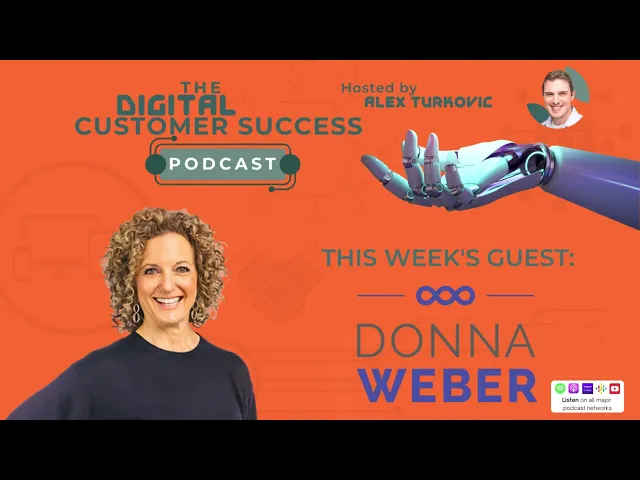
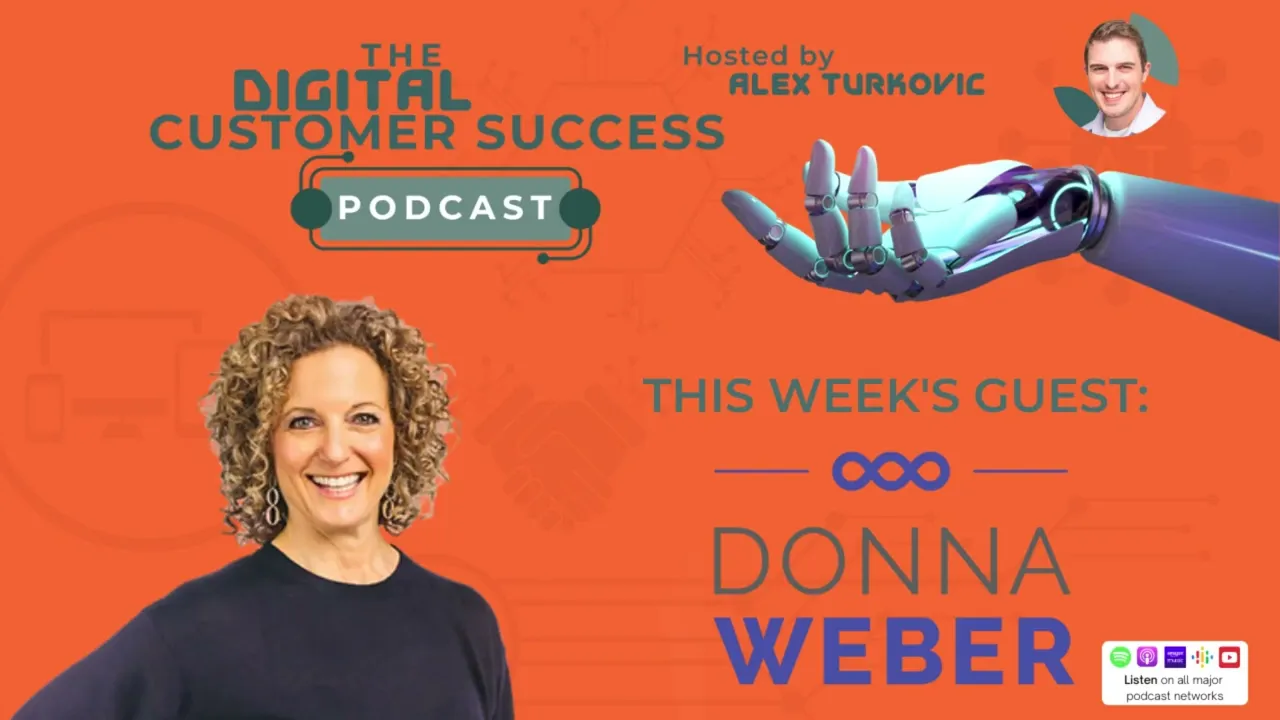
build and evolve your own digital CS program if you'd like more info want to get in touch or sign up for the latest updates go to digital customers success.com and if you have a question or commentary to be used in an upcoming episode call us and leave a message at 512 222 7381 for now let's get started and welcome back to the digital customer success podcast so great to have you back it is episode 24 and today we feature a conversation with Donna Weber who um no joke wrote the book on uh onboarding called onboarding
matters it's a great read it is a a a a book that is meant to help you and your teams collaborate around this notion of onboarding it sets the stage nicely and gives you awesome strategies for onboarding but um you know in the conversation today we go way beyond that talk a lot about some really cool examples of digital motions and we get into hybrid CS which is that magical combination of humans and digital motions naturally we talk a lot about the you know the handoff between you know sales and onboarding teams um but also
we just talk about the customer journey in general and how important it is for you to put um yourself in your customer shoes as you're rolling out these things so um fantastic conversation filled with all kinds of practical advice uh and and I really hope you enjoy my conversation with Donna Weber because I certainly did okay you ready to go ready to go Donna Weber welcome to the uh podcast it's so nice to have you Alex thank you so much for including me it's a pleasure to be here yeah absolutely um you uh so you
know when I got into starting to kind of record these episodes right at the out outset I I wanted to make sure that I hit a pretty broad you know broad brushstroke if you will of people that I wanted to talk to not I didn't just want to talk to only CS leaders I wanted to talk to operators and admins and marketing people and services folks and all that kind of stuff and I think you sit kind of in a unique position in terms of your expertise and the things that you talk about um as
you know being the author of onboarding matters had to get the plugin um but also I mean that's what you've been doing for I think the last seven or eight years is is really just you know Consulting and educating around the importance of onboarding for you know healthy long-term customer relationships and so um I was excited to have you on and I feel like you and I have a very have something in common in terms of our early work which is to say I saw that you spent a lot of time in instructional design and
curriculum development which is kind of where I cut my teeth as well and for me anyway it was a good transition into customer facing roles because I had that kind of education uh contextual emotionally intelligent backbone to to rely on when it came to customer conversations is that is that a similar experience uh for you in terms of your background well yeah Alex I mean the thing is you know customer success is is you know let's just say it's around 10 years years and counting um it's been around about 10 years in counting and while
um you know there is that kind of newer approach to hey we really need to look after our our new and existing customers the there's been many customer facing roles for much longer Professional Services Customer Support customer education and enablement and uh you know so a lot of us have been flying the flag for the customer including myself for a long time yeah and um and you know with customer success seeing how it needs to be part of a kind of a bigger bigger picture you know is not just about onboarding it's about getting your
customers to be successful right absolutely and you know so often we a lot I think a lot of customers or a lot of companies I should say set themselves up for failure right at the outset of that by not doing those proper handoffs and things like that and really understanding what the what the what the outcomes need to be for a specific customer to achieve success which is interesting it is interesting it continues to be inter it continues to be ongoing challenges and frustrations you know that a lot of you know since I started working
in this space um uh companies have really matured and and comp and companies have more mature um customer onboarding teams and yet there's still a lot of these gaps and challenges that I I hear about every day mhm yeah cuz it's it's not necessarily an easy thing either it's it can be challenging you know um working through those things so um you know this is the the digital CS podcast and of course I like to ask all my qu all my guests the same fundamental question which is to say you know what is your own
personal definition of digital CS if you had to give a quick elevator pitch sure well I would say it's all about delivering the right content or the right Right Touch for the right Persona at the right time so um to ensure that you're that you're driving the right Behavior that's going to deliver value for both you and your customers so you know Digital customer success is not just dump dumping a bunch of information and uh content on customers um I like to say it's about transformation not information so what are you doing to help customers
transform and um and then I'm also will dive more into this but I'm really uh talking more about hybrid customer success these days because digital success is a great uh let's just call it destination but uh it's a journey to get there and to do it well and to do it right yeah and I love I love the hybrid term as well just because I think so much of of your digital motions should help your Enterprise csms or your high touch you know csms whatever you want to call them deliver on the value much in
a in a much easier way than if they if they didn't have the automations and and kind of the efficiencies behind them yeah absolutely I can't even tell you Alex how many times I talk with companies who are treating every customer with special care I call it the Special snowflake treatment and um they're just doing these same things over and over and over and what I'm finding is I'm helping them calculate their cost of customer onboarding and they're often spending more than what the customers are paying them uh to to onboard and so what happens
is right now most most companies most CFOs are really uh examining and managing costs and so um you know we as customer success professionals have a responsibility to our companies to really look at how we're spending our time which equals money and so there's huge opportunities to digitize even components you know where there's basic repeatable stuff going on over and over and over and deliver more of a oneto many approach that can really scale and so therefore customer facing professionals can be these Specialists can be these strategic advisers and not doing the same roote things
over and over it's going to really help Elevate their profession our whole our whole industry and keep them you know I I don't know about you but I like to be challenged and engaged and solve real problems I get really really bored when I'm doing the same things over over and over and over and it's just shocking the amount of uh teams that that think that that's that's you know they're just stuck in that yeah you hit on you hit on a magic magic concept there which is repetition a a lot of people ask me
um you know when when I'm meeting with them or talking with them about digital you know where where do I start and the answer is often in what you do most often like what are those things that you're sending all the time what are those templates that you're Distributing on a regular basis what what is your highest volume of support tickets that come in you know like looking at those things that you're just spending tons of human Cycles on that's where you can start yeah and the thing is I know you you know you you
as in listener might feel well I'm too busy doing all these manual things I don't have time to look for Solutions or to track what I'm doing but that's exactly what you need to do so if I can give a personal example um you know I like to start with uh when I create new processes I like to start with the manual because it really um helps me know kind of what really is required how long things take um the great thing about manual approaches is that it um uh they're easy to get like immediate
feedback um and it's ALS they're also easy to tweak little things so they're easy to change easy to deploy easy to to understand what's working and not but then you need to like start to document the process so for example I teach my orchestrated onboarding master class and I I did it all manually all myself and at first that was good because it was like helped me to really go oh this is what's needed I could adjust it every time I deliver the course um and then after a while I'm like this is ridiculous you
know so I I wrote down all the steps that I'm doing and then that helped me Define the requirements for learning management system and then I went off looking for learning management system but I had my system documented so I was able to go hey these are all the things that I must do and so um now I have an LMS deployed and there's still manual components but a lot of it is automated and um it's so much fun every time I create a new cohort all I do is duplicate the last one and it's
like oh my goodness it's awesome it's ready to go but um you know it's not about throwing technology at problems it's about really really knowing what you need to do knowing those pain points about what's repeatable and then um defining your requirements as a result of that those pain points are really valuable it helps you don't to know your requirements totally reminds me of um uh the book The One Thing by I think it's Keller of Keller Williams um which is yeah basically like you know what is the what is the one thing that you
can do like today this week next week next month that makes everything else you do Downstream easier and I think automation is a big part of that but to your point you know building automations blindly is not the way to go because if you do it manually first you're going to figure out what doesn't work about it I I can't tell you how many people deployed you know technology customer facing Solutions because basically they're being they're being they're kind of um being led by the vendor about oh you need this you need that and they
don't even know what they need and so end up they end up ripping it out and starting all over and that is very very expensive yeah totally yeah absolutely absolutely um so in I I read through um I read through your book which I loved um for for a couple different reasons first off I'm not a reader reading puts me to sleep um it's just a known thing like I read a couple Pages I'm out so audiobooks is my game and excellent narration on your uh on your book by the way um but and I
think this is how you intended it um based on I think it's the forward or might be your website but but you kind of intended it to be a team resource that essentially a team could read get on the same page about you know what the framework was to successful onboarding um and uh and and what I liked about it is it does I wouldn't I wouldn't call it it's not it's not like dumb down but it's like plain English it's black or white like you know exactly what you're talking about and you're very good
about defining things as you go and whatnot but I was curious if you could just give us a little bit of insight into you know what led you to write it and and and just also the basic framework that you lay out in it is so great and if you could kind of give us a a a baseline of that well thank you yeah when I decided to focus on customer onboarding at that time what I saw you know customer success at that time let's just call that customer success uh probably 1.0 maybe kind of
M you know in the cuss between 1.0 and 2.0 but a lot of customer success teams were focused on the renewal and it was like why isn't anyone talking about onboarding I just couldn't like understand it it's so obvious like that's the most important part of the journey and um that's where you need to be spending your time and I realized oh no one's talking about it because I need to talk about it so so that's why um I focused my expertise there and then also um wrote about it yeah yeah exactly good um would
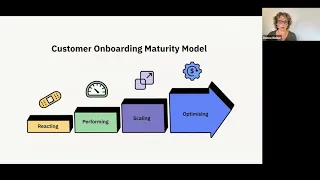
you mind giving us uh just kind of a cliffnotes version of the framework that you lay out yeah well first of all I'd talk about why onboarding is the most important part of the journey and that includes the Neuroscience of onboarding the Neuroscience of how our brains work and why you need to engage customers with the Y right up front and then I include the six stages of my orchestrated onboarding framework to really not go go much beyond the deployment of your product um the launch oops I got so excited I'm throwing my pencil around
me too uh to go much you know it has to be much bigger than just launching your product uh deploying your service or solution it needs to be about building a great relationship so we start with the first stage is called Embark and that's really about the big picture build building that strategic relationship and then we go into the handoff now uh you know will handoffs become less relevant um as we move more and more into digital customer success and onboarding maybe but still the customers teams you know let's say you're you're you're providing a
busino Business Solution that's complex the buyer you know is sold on the product but the users may have heard nothing about it so there still needs to be some way for the users to know the value of using your product and whether it's a you know a chatbot or um or a a high touch onboarding Specialist or customer success manager there still needs to be some transfer of what was purchased and why so that I would say the handoff does remain relevant with a digital customer success then we have the adopt we have the adopt
stage which includes the implementation which could take three minutes or three months or three years really depending on your um uh solution and um the adoption and just because you have a product that's gone live does not me mean there's a license to renew because in a B2B world the users need to be using it so um if if a year comes by and it's time to re renew and no one's seeing any value in it then then you're in big trouble so the adopt is is not just deploying a product and have something to
log into but really making sure the users are onboarded and enabled which is where all that instructional design that you and I come from come in uh then we have a review and again that's more of a high touch approach but you might be reviewing metrics you know are customers getting value and you know are they getting value from um you know the most important part of the product that you know like delivers value um uh are are you staying current on what customers need next I don't know about you but pretty much every talk
company I talked with is having a uh pivot is having a change of priorities and goals these days so even though you might have captured a lot of that with the initial onboarding guess what that's changing and you need to stay current because your uh your customers are changing your product may be changing you need to stay current and then there's the expand and earlier today I had a a customer success Forum where we talked about Reon boarding so how do you like stay engage with your existing customers um to help them you know deliver
a value journey and not just go live and say see you yeah exactly because that happens all the time um I I would love to dig in a little bit more on you know the second phase which is the handoff stage in the framework because that is that is one area at least in my experience that so many get wrong uh or somebody just don't do you know and and there's the old adage of a Professional Services leader who or or you know a project manager who gets a project and he's you know talking with
stakeholders at the customer who weren't even part of the purchase decision they end up having to resell things and it's like you know it happens all the time we see it all the time we're both smiling because we encounter it a lot um and I guess where I'm going with this is is twofold one is what have you seen or what you have you advised customers um on your customers on um to to Aid that handoff and to make a a particularly seamless handoff there's there's obvious obviously you know exchanging mouth wordss between people is
always very good um but also from a documentation standpoint or a transfer of data standpoint are are there some specific things that you can you can point to that that you find particularly effective well first of all you know everyone thinks they don't have time for a handoff and then they run into all these issues Downstream with onboarding in fact I was working with a company where that was was costing them a half a million dollarss a year doing resales and botched implementations so you know and the sales you don't have time for escalations yeah
yeah we don't have time for handoffs so you know time kills all deals But the irony was that they were having to come back in and resale resell to existing customers when they should have about been out there selling to new customers so it's costing them personally a lot of money and the company as I said a half a million dollars a year so I always say you slow down to speed up later Simon syny Says start with why and the reason for that is the way our brain works we need to kind of understand
that big picture and that's where the handoff can really help you kind of describe what was purchased and why maybe you know let's say you're selling to a company and they have you know medical practices all around the country and there's a procurement office that they bought the they bought the uh product and just because you know they're convinced does not mean that the all the receptionists of the medical practices are going to use it they might say hell no I'm not using your product because if I do I'm G to lose my job so
in a higher Touch model I would I would bring the stakeholder the buyer in and make sure that they hear it from their buyer uh why the product was purchased and how it's going to make their lives better so that one the onboarding or the csms or the customer facing teams don't have to try to convince the users um you know from a transfer of information can you can you um you know this one company I worked with they had this whole you know Google doc okay sales rip you got to fill in all this
stuff every time a deal closes I'm like dude like you got to prepopulate that from your CRM like 80% of that should have been captured no sales rep's gonna fill that out so you know maybe then you know you're capturing what's unique about each account so again this is for higher touch kind of engagements but let's say Alex is my main point of contact I want to know how technical is Alex you know what's his personality like so that I can be successful you know maybe Alex has has used our product before as a huge
Champion he's ready to go you know then I'm that's going to help me be be successful rather than dragging you through all these steps you you already know versus like he's never done anything like this before you're going to have to repeat everything three times because he's not very technical um he just had a baby like you got to you got to go through everything three times then I'm going to help you know that's going to help the relationship so um so you know one there should be some automated way that's some digital CS right
there to to transer all of that information that sales reps capture you know can you pull stuff out of gong calls with some uh gen AI you know there we go um and then um I know there's a company um I'm not I don't think they're live yet and I'm not um I'm not you know saying um you know recommending any specific Solutions but it's called handoff and they're all about kind of from geni pooling all this to give you like a kind of like your um your um handoff you know document so you're so
you're not having to dig through all this stuff just to get to know a company and then let's say you know at some point maybe you start feeding that into chatbots or onboarding um you know in product guidance that may create some customized personalized um experiences as well yeah sure I mean at the you know at the very least I think I think it can be incredibly useful to just automate what you have you know if you're if you're working with Salesforce and some kind of you know customer success platform you might as well pull
over the medp pick data or you know who your Champions are at the very least you know but but I think you pointed to something that's that's very important as well it's it's yes you need to know why the customer purchased and what their goals are and and you know how they themselves um made the business case for you know for for the purchase but then also the seller has this wealth of information that they've gleamed from the their contacts as to so and so is super easy to deal with so and so is super
hard to deal with you know it's like those things um don't get passed on um and and and I think there's been tons of you know failed attempts I'd say across all companies for these handoff documents like Confluence okay that's where stuff goes to die Google Docs okay did we link it anywhere where's that go you know uh and so tangibly it can be incredibly hard everybody wants this but it can be incredibly hard to actually do it in an organized way to where you almost need like a project manager involved or something um have
have you experienced like the the building of those processes before well so there's a couple things I do I just want to jump in there before before I answer that so one is um you know okay I was at saster last year and you know basically everyone was practically walking around chanting product lad growth plg plg yeah and that's great that's a great aspiration and I see Digital customer success people kind of going you know having that same kind of chance sure the reality is in the realm I tend to work but not not exclusively
is in business to business products are pretty complex and to have a a a a a a plg B2B tech product I think that that's more of a unicorn you know oftentimes implementations take you know on average three to six to nine months and people are involved and so um we I think there's an element where we've got it that doesn't mean we can't scale there's always opportunities to scale but I think you know we need to accept that things are complicated there's data Mig to migrate there's customizations there's um apis to connect there's a
lot going on there's whole change management and um and then just earlier today I interviewed Neo cubain Dr cubain is the president of High Point University and you know he his his his audience his uh clients or customers as you like or his faculty and his students and the students parents and so I was asking him for advice around busines to business and he's like look we're all people it's human to human you know that's and and so we got to keep that in mind we're dealing with people um and and so whenever we're looking
at digital Solutions we're still dealing with people yeah we're dealing with complex technology often complex business processes and so so we need to just be realistic around that and just throwing some kind of you know automated something uh it does not solve it which is again why I talk about hybrid customer success and we can delve more into that so while plg and Digital customer success are great aspirations it doesn't mean you know we click our fingers we're there and all of our problems are solved yeah I yeah and I think a good digital program
should augment the human to Human element right to your to your point earlier it's like you know the the sales the the account executive shouldn't have to fill out this entire you know handoff document it should be 80% completed out of the CRM and then you can put the final touches on it you know just just to get it over I think I think to your point that's that's a phenomenal example of of hybrid CS yeah can I share a couple more examples let's go yeah so here's a digital moment in a high touch jour
Journey so this is a company based in the UK and they do um a big data platform and the customer success managers were doing the same things over and over those basic repeatable tasks we talked about a lot of that was uh teaching new customers about the data um how the data is structured about their product about their platform and I'm like you guys are too smart to be doing this you know over and over you need to be focused on what's unique for each customer and that um and I have a quote I want
to come back to and um and so the digital uh touch and a high touch Journey there was uh having customers take some basic required courses from their Academy so those were self-paced they get a digital touch and now they get the foundations the the customer success managers can be more specific to what's unique to each account they're more challenged they're they're more a focus on on what's special and they can handle more accounts now um that brings me to the quote um I was I really like from this is from the the the the
person who founded the Four Seasons Hotels and and they said you want to um systemize the predictable so you can humanize the exceptional so again that's that's a great way I'll say that again you want to systemize the predictable the basic repeatable stuff so you can humanize the exceptional so you can be that strategic advisor really helping to transform your customer's business not just you know deploying your product or H doing going through the rot um actions and because we were talking about um education earlier it's kind of like the Con Academy style model where
you know you're you're you're giving somebody the lecture digitally or in a video or in an e-learning module or whatever it is and then when they come to class that's their time to ask questions and do the homework and actually do the hard work and and you have everybody has this Baseline of understanding so that your high value you know employees aren't spinning their wheels re-explaining the same thing over and over and over and over you're you're reminding me years ago I worked at a company where I was uh uh helping to run sales enablement
and this was a very high growth company and every month we'd bring in hundreds of new sales reps and from all over the world and then we'd sit them in the dark and have them watch PowerPoint slides after PowerPoint slide and I was like this is ridiculous we should be using the people here to be doing role playing and really practicing skills rather than just doing a data dump and they would leave at the end of the week exhausted not really even knowing what they learned you know so so like you know we got to
leverage these are people let's make sure that they're leveraged appropriately yeah absolutely absolutely going to give another example which is a high touch moment in a digital Journey this coincidentally is another big data platform based in the US and um they were building out a self-paced journey uh for a big uh chunk of their customers and what I kept hearing when I interviewed internal stakeholders and their customers was we need to be able to ask questions we need to be able to get answers and so um what from interviewing customers and asking about great onboarding
experiences we learned from them that they really value inapp chat from um other vendors that they use and so we were looking at this initially as a high as a as a human you know someone behind the chat um so they could people can get their questions answered and the you know these are data scientists data analysts data admins and they generally like to be self-sufficient and so when they need they need help they need help and so there are two great things one it get it helps people from dropping off in the journey and
there this company has a consumption model so if a customer drops drops off you're losing potentially a huge unfathomable amount of expansion and two the company can really learn what are the what are the drop off points and they can then build them into the digital Journey um and then you know eventually you can start to move some of that into a chat bot um but I thought that was a great way to really address the customers needs and learn from customers at the same time learn from customers what a novel idea I mean you
know nine times out of 10 it's your customers who you know we we fail to listen to customers a lot of times and they have so much to say like because they're the ones experiencing what it is that you're offering you know there's absolutely I think I think we and I've said this before on the on the the podcast but we sometimes fail to put ourselves into the shoes of the customer like you know what does this journey feel like to us you know not just that is one of the biggest um I'll just say
opportunities many other words ran through my head but uh sure one of the biggest opportunities businessto business uh B2B Tech has because uh you know to be to speak frankly a lot of companies really are focused on their techn techology and they're not listening to their customers and everyone thinks they're too busy to listen to their customers and so I like to that's I I can't tell you how many times I tell them listen to your customers you know it's you could just listen to five to 10 it's amazing what you can learn from five
to 10 customers half hour each it's just it's not a lot of uh listening but but you know the reality is that we are all consumers every day your your your buyers your users they're all they're all consuming uh products you know every day we all have digital experiences and we know what we like we know what we want and the reality is B2B wants a lot more of a b Toc kind of experience a lot more transparency a lot more accountability a lot more visibility I you know I get text so your shipments on
its way how can we help um and you know customers have no idea in B2B Tech where where we going where we been where where are we who's doing what who's you know they they have no idea and and that is it's really not acceptable when you know I can order a pizza and know exactly when it's going in the oven and when it's going to arrive at my house so I can have the the dinner plates and forks and knives and napkins on the table so funny you say that because literally one one of
my other guests we were talking about this exact same thing and this is something that um a few companies ago I wanted to implement we called it the Pizza Tracker because basically you wanted your customer to just have context about where they were in the customer Journey because a lot of times they're just like floating in an ocean and not sure who to talk to when and all that kind of stuff whereas it would be as simple as sending them a weekly or a monthly email that has literally a Tracker in it that says your
you know using the example your pizzas in the oven your pizza's being you know sliced up your pizza is in the car for delivery hey guess what your pizza's at your doorstep like those kinds of it seems childish a little bit but having that context of where you are in the journey and what your responsibilities are and all that kind of stuff is important and trust is the beginning of of enduring relationships when you're say it's like floating they're like floating in the ocean I just have this vision of H this image of like you
know we're treating our customers like jellyfish they're just floating around and that they you know no direction it's it's it's it's not a way we only we only pay attention to them when they sting us I love that I'm writing that down there's well we go you you dropped a really good quote and we just created a horrible quote um are there other like blunders and things that you've seen that are just like I can't believe they're doing this or I can't believe I've seen this or things that you know you've seen implemented that just
fell flat on their face and you learned a valuable lesson from maybe well one is just um as we already mentioned was the amount of high touch treating every customer with special care doing oneto one with every customer like oh my God that there's so many there are so many opportunities for one to many even not that aren't digital automated there are so many ways to do one to many approaches like really and customers want to learn from each other you don't need to be one to one um some customers don't want that like they
don't they don't want to be you know talked to like every second of the day like it's just like you know in in customer success we think oh we got to have our review meetings we got to do this meeting checkin they don't realize that you know most of our customers are dealing with many products and you are not the only person trying to get their a piece of their time yeah I I worked with a company that um that was building out a self-pace journey and uh you know things like um they would say
they would they would get to a place and there were four um links I'm like I don't want four links just tell me what to do like you got to like remove all the friction and then this company um LinkedIn with it integrated with Microsoft Azure and um which is the you know a cloud the data Cloud solution and um so then there was like oh if you want to learn about Azure it ended up I think it's the I think the name is plural site I may not be right but it was like the
entire library of Microsoft uh training for every single product they ever h h h h created and it would probably take an hour just to find what I needed on Azure so right that goes back to what I was saying it's the right content for the right Persona at the right time so um you know the solution to that would be knowing like am I a data scientist am I a data admin you know guiding me on a journey to get some value very quickly and just giving me the content that's going to deliver that
be drive that behavior that you know gets me to Value yeah and I think um it's interesting because um I think some companies are tackling the problem of not knowing who the person Persona is within their customer in very unique ways like you know there's there's like inapp modals that'll ask a user to self-identify like are you an executive are you an admin are you a whatever um which I think is very smart but I also think that um if you have that high touch relationship you know there there's there's an element of data hygiene
there that can also be quite important for your high touch csms for example to to really go through and identify you know the the personas that exist within their customer so that then you can create those digital flows you know and and and help them kind of achieve success without you having to like babysit you know absolutely yeah another um another uh uh challenging situation is working with the company and they're like oh we've built out all of our self-paced uh course uh content for our Academy and when I took the courses they were just
one very boring and at two all about the product so you know everyone wants to know what's in it for me so you got to make sure when you're helping your users help them to know how they're you're going to make their lives better it's not about your product it's about your users and and and helping them be heroes and so that that's a big fail everyone thinks if I just show you how to navigate around my product you're you're going to be better no it's not about the product it's about how how you use
[Laughter] it um I feel like we could go on forever but you know it's inevitably it's time to start kind of wrapping things up but I would love to know how you keep yourself fresh and what's in your content diet and what you absorb and uh you know to to keep yourself informed of what's Happening well um I I'll watch a webinars that pick Peak my interest H to be honest I'm not a big uh podcast listener I'll listen every now and then but um I'm I I I listened and read books I listen to
and read a lot of books um so I just finished one last night um about uh customer value um and I like reading about the neuroscience and like things about like you know how um like one I read recently was the Paradox of choice that's about 20 years old but by Barry Schwarz that was really interesting to see how you know the more choice we give people the more stressful it is and so we it's really up to us to guide customers along that journey of best practices um and then you know I'm reading so
I have all the I'm constantly uh overwhelmed with all the books I want to read between uh fiction books to help me you know run my business better books on customer success books on value and Neuroscience um uh so that you know so I I'm a I'm a long form reader uh we joke that my husband hband uh reads the entire internet every day and uh but I like to like dive into a good book um and so I tend to read books more than I read you know I read articles um and then also
I really like learning from uh people from conversations so I've been interviewing uh Chief customer officers uh chief executive officers um uh Chief Financial officers uh to help help uh you know I'm I'm a uh doing research for my next book and so listening to what what's going on in people's heads and what they think is really that's that's often how I like make my ahas and connections I'll often have a lot of information but I have to kind of talk it through to really go oh that's where those things connect it's fascinating isn't it
I mean that's a big part of why I started you know the podcast is just to you know to talk with interesting people that think about things in a in in a in a little bit different way and and putting it up putting all that together is is a is a cool thing because there are many light bulb moments oh I was just I was reading a book about um about money I the title is not coming to me right now but um it talked about compounding you know and like compounding interest and compounding and
as savings is just like you know the the the most powerful thing you can do with investing right and it's just like start early and just leave it alone and but that just made me think was like that's what we have to do with customers it's not just about taada the product's ready it's got to be this compounding experiences it's not like a great experience here and there we've got to do this compounding you know that then it all starts to build up into that great experience where they become our our Champions um and so
that that you know that was a connection it wasn't really about customer success at all but this how we compound um is really important yeah you know it takes a lot lot of compounding to to achieve desired outcomes but it only takes one withdrawal to mess it all up exactly exactly um is there a book that you look back on let's say over the last decade or so that you read that had a massive impact it's probably a hard question to answer but well there is one book it's called a a more beautiful question by
Warren Berger and it's not about customer success it's not about um you know um Tech it's about asking questions and what that really did for me as a consultant was um help me get out of that that headp space where I think oh I'm the expert I need to have all the answers that is not my job my job is to ask the questions and Alex it's like it gives me goosebumps when I talk about it but that you know when I work with companies um you know it's about getting out of the way asking
questions and like letting the the the solutions be un covered and be revealed and that that is a really beautiful and um uh uh well it's a beautiful process and things come out of it that I you know I don't have all the answers and that the the amazing uh brilliant people I work with at all the companies um they don't have all the answers like we you know there's this Synergy this magic that happens when we when we ask questions and we get you know um uh uh know start start learning to see you
know what is it's hard to even articulate but you know we ask the questions and then things come up that nobody was thinking of yeah well it's it's interesting because as as a consultant you probably walk into situations where there's you know a definite set of outcomes that the customer has hired you for they want to achieve and but but they've probably they're so busy in their day-to-day that they've probably never actually sat down as a group and focused in in a in on this set of problems in a way and so you know where
where you come in or where the consultant comes in is the facilitator of these thoughts and and and really developing group think around those issues and so I I love that and I need to go read that book because um I've experienced that where one question kind of knocks everybody loose a little bit and it's like oh yeah and in most corporations there is this um uh um more of an emphasis on having answers and uh and and being right or wrong and so there you know Warren berer really emphasizes how how important it is
to uh be the you know the one asking questions and let that be a safe thing to do and and he doesn't go into this but it also kind of opens up you know more of the right side of the brain uh where we can kind of you know get to the more Creative Solutions when we're just trying to kind of get rather than just just getting to the um you know the answer right away yeah we were very you know um black and white thinking right wrong good bad black white uh you know very
binary around that so so sometimes this opening it up allows things nobody was thinking about that's great that's great um is there anyone you'd like to give some Kudos or a shout out to that's doing cool things in digital at the moment well usually it's from a BTO C experience I would say uh so you know one thing we're talking about the pizza delivery I had an experience with apple where I sent my computer off to be uh repaired and that's stressful you know my whole world's on my laptop and they sent me immediately here's
your repair number it's been received at the repair center your issue's been resolved we're shipping it back to you you'll receive it um by this time so that that gave me a lot of peace of mind so that's a that's an experience um there you know I ordered um some online cosmetics and they send a little like onboarding video of how to use them for and to get the best results like that's you know those are really simple things but it helps to build some some of that um kind of that some of that uh
uh trust and um accountability brand juice brand juice yeah um yeah I I think that in a lot of ways um you know folks think that this notion of digital CS is a new one but it's really not it's just a focused kind of version of things that have been done to your point in B Toc for a long time I mean you know ever since e-commerce became a thing this stuff has been kind of around marketing teams have been you know doing this stuff forever product teams have been doing this a lot in terms
of like in product and those kinds of things you know so it it's interesting you say that because absolutely like B Toc by the nature of their business has had to be digital and has had to figure that out just because you know Apple millions and millions of customers yeah for sure that's cool well where um where can people find you engage with you and uh and learn more well uh you can find me on my website www.don weber.com and that's two end and 1B so I like to say like Madonna and Weber the grill
um so Donna Weber and uh and you can subscribe to I have a monthly newsletter I have um tons of resources on my website including my success plan template uh articles webinars podcasts Etc and I'll include the link to this podcast when it's once it's available and on LinkedIn find me on LinkedIn that's awesome yeah there's so much great stuff on your website it's awesome um I I really appreciate you taking the time spending some time with us uh I've I've learned a lot of great little nuggets uh over the last 45 minutes or so
so it's been awesome so thank you very much well thank you for including me on the Digital customer success podcast Alex thank you for joining me for this episode of the Digital customer success podcast if you like what we're doing consider leaving us a review on your podcast platform of choice it really helps us to grow and to provide value to a broader audience you can view the Digital customer success definition word map and get more details about the show at digital customers success.com my name is Alex turkovich thanks again for joining and we'll see
you next time