A trader who is known for taking a $700 account, $89,000, publicly verified and in only three weeks. Market structure does not need time element at all. If you take any kind of data and place it into a chart, you're going to see market structure, whether it's going up or whether it's going down. Price for me, I have to see structure component first. Time just adds a volatility, the speed In which it gets to where it's already going. Dave is a short-term scalp trader focusing on market structure. But the crazy thing is he believes the market
is completely fractal and not bound by time. Meaning he would trade down to the 1 minute time frame, the 30 secondond time frame and even lower. There's one setup that I choose to take each and every day that I can depend on because that setup gives me three to five opportunities around this particular POI. This is where price tends to mitigate a specific as price is making higher highs and higher lows trading to a supply. You should at least have four higher highs, four higher lows before price actually turns and goes the other way. If
I don't have those four swings as of yet, then I'm not looking to take an entry from that supply. Back test it. Anybody can go and look at it. Run the data on it. Come back and tell me I'm a liar. But you're going to see it on Every pair in any market. How are you defining liquidity pools in the market? Because there's a long list. It could be just an M1 buildup. It could also be a trend line. Previous day high, previous week high. And that long list can also mean, well, there's an opportunity
in every single one of them. Do you believe every single zone that could be liquidity is worth trading or do you prioritize a list of a few? So I would say that Ladies and gents, welcome back to another episode. I'm joined by Dave. He's flown in to be here today. And I think we're going to have a technical deep dive. Um I want to start off right away with something controversial. I I get a little bit of uh comments of how are you trading the M1 time frame? That that M1 is noise. the lower time
frame, you can't you can't make sense of it. H1 and and above only, my man, you're down in the in the seconds time frame. So, With the fractal nature of the market, which I'm I'm a complete believer in, do you not feel like you took it too far going down to the seconds time frame? I mean, when you're the Jordan of trade, you know, you you tend to be able to do anything, do what most can't. But what I will say is M1 isn't noise. It's just you have to understand the bigger picture. So M1
is pretty easy to trade if you understand where price is going, but you need that higher time frame Overhead to be able to operate on M1 a little better. When you are uh building a narrative, let's say a playbook of a A+ setup for you. Um can you walk me through the steps? You come to your screen and what are you what are you looking for and and do you do a top down analysis or you write down to the lower time frame? Top down is very very important. I top down is essentially your compass.
If you don't know where prices go in, it's easy to get lost on Any little impulse going one way or another. Most people tend to chase what they call displacement and then their profits end up being displaced. So for me, what I like to do is go to the daily time frame, look at where we are in the daily. Are we within a daily wick? Some people might refer to a rejection block. Are we in a daily fractal? Are we in a daily supply demand? Whatever it is, I look for that. Then I go into
the 4 hour and look at what the 4 hour is doing. Is The 4 hour wicking? Has the 4 hour swept something? I might go into the 15 minute and see have we had a closure above or below wherever it is that price is looking to go directionally. And then on the one minute, what I'm doing is trading in that direction of wherever I am in that daily time frame. when you are connecting these time frames together apart from where you are let's say wick- wise or points of interest wise are you also factoring in
market Structure and trend uh so market structure is the crux of what I trade I don't believe that you should do anything outside of market structure market structure lets you know the side of the market that price is more efficient on it's not that you can't trade against the trend but you just have to know where those particular points are and you need to be a little more advanced than doing so. But if you, as they say that the trend is your Friend. If you stay on the side of the trend, it's a lot easier
to just get in and get out, take your money and then go about your life. When you are um kind of doing a hypothesis of of trend analysis and it's kind of conflicting where the daily might be bullish and the M15 bearish and you don't have alignment in all the time frames. Are you waiting for now M1 zones to come and then working your way up or is it you wait for the daily zone first and then work your way Down? So I generally wait for something that's a little more in between. If I'm in
a daily zone, I understand that price may need two 4hour candles, three 1-hour candles in that daily zone in order to shift. We know it as a three bar pattern, right? Okay. So basically, you're not taking the first M1 breakup structure in a daily zone. No, and hoping it removes. Yeah. No, no. Some people try to get in on a a 5-second zone and try to take it to a RA POI. And I don't believe in that. You definitely have to wait for price to consolidate and then shift. But you need first a sweep, a
manipulation, and then you trade in the direction that price is going in. Beautiful. Um uh just from the prep of the show with with the team, I I see that we are aligned in many ways, but probably some areas that um maybe we can have a bit of a debate, which I look forward to. Um but I I just want to kind of get, as you said, compass on on on How you view everything. When when something is not in a point of interest, let's say you do your daily analysis and and price is in
no man's land. You got your demand up there, you got your supply down, sorry, the other way. Demand down here, supply up here, and you know that it might take days to get to either one of them. Are you still considering the higher time frame if it's not in a a pivotal moment? Well, what we have to understand about the Fractal nature of price is that we are always in a point of interest. It just depends on what time frame that point of interest is. So the point of interest that we currently are in, like
you mentioned, it might be a no man's land. That might just be something that's pivotal in price to send it back as a retracement before it moves towards maybe the supply that's up above or the demand that's below. But we are always in a point of interest. It just depends On where it is on that time frame. Mhm. How do you qualify in in in your own terms a quality point of interest as opposed to any old a higher high seeing that as a supply or rejection zone but it's against the trend let's say what
is a quality POI for you? So a quality POI is more of a previous range that is the only thing that I use. It's meaning previous consolidation. No, this would be that price broke up above a previous swing high. So, we get a swing high, we Get a swing low, and then now we have the current swing high that's put in. That breakup structure from the breakup structure to the low, that is the previous range. So, I'm expecting price to drop back into that previous range by about 30, 50, or 70% somewhere within there. And
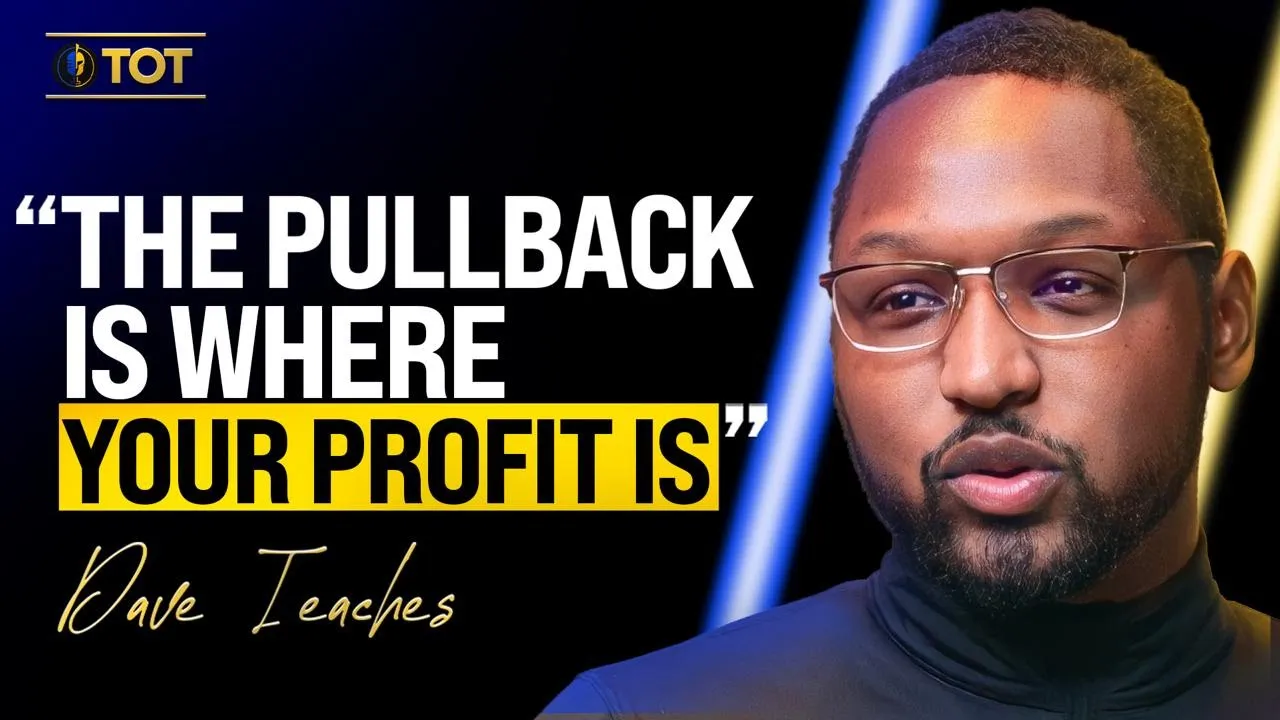
then I'm looking to trade price back to the high that it retraced from. So, you're not just trading every new push in the market. is the original first push in the market that caused the Breakup structure. Yes. Yes. Because that's higher in quality. I always talk about the pullback being where your profit is. So most people see it as catching a falling knife. They prefer to trade a breakout, but at the pullback you're able to reduce your risk to a lot smaller than the entire range that's there. And then it allows for your reward to
be higher. and and you mentioned fractal but this initial break of structure and change in state Therefore and then a larger targets of course there's the falling life kind of view but it's also like you got so much upside left yeah yeah what time frame are you gauging this on um so it's on everything usually is on the one minute the 3 minute and that's because if we understand that price is fractal we could zoom out on a one minute chart and we can see the weekly highs and lows from it so my my chart
tends to be pretty zoomed out and I understand that We might be breaking up above a 15minute down candle just based on maybe the time of the candle and the time the candle the way it ended that maybe let's say 10:15 10:15 close as a bearish candle the open of 10:15 as long as we get up there and close by the time 10:45 comes then I know we're trading up above that down candle does this imply you find importance in time of day the correlation of time and price. Uh so um for me I you
know I'm known as price Then time and the reason why is because if you trade market structure market structure does not need time. It does not need time element at all. It maybe for trading some of these asset pairs but if you take any kind of data and place it into a chart you're going to see market structure whether it's going up or whether it's going down. You can take a business revenue that comes in and you can see when their business revenue is breaking structure, when it's Looking to trade back into that structure and
when it's going short, when it's continuing in freef fall. So price for me, I have to see the structure component first and time just adds in the volatility part. It's just the speed in which you know it gets to where it's already going. I think that makes sense where nothing magical happens at a specific time in the day. I think I think time of the day represents higher probability moments Because there's increased volatility or increased manipulation liquidity and these things usually skew towards more probable opportunities. Either way, are you utilizing time to discriminate? Let's say
let's say it's not something that you use as a confluence to get in but you'll also use time to say okay these time zones is not for me an Asia range let's say for example so Asia is where I became profitable how interesting yeah yeah Yeah that um Asia taught me the market Asia taught me the different trend changes in the market as always within a range but if we understand the fractal nature of price is still trending in ranges so when you take Asia and you place it on maybe a weekly time frame, a
daily time frame, you're going to see some of the same elements of that range that's in Asia in those higher time frames. So, Asia taught me the fractal nature of price. I can trade in Asia. I Can trade in London. I can trade in New York. It doesn't matter what time, what zone, what uh sorry, time frame that we're in. I want to take a moment from the episode to remind you of Alpha Capital, a long-term sponsor of the show, a leading prop firm in the entire industry. And in the last year, they did over
$50 million in payouts. That's why they are a top ranked profirm that's been around for years and is not going anywhere. And with the multiple step Plans they have and the multiple packages that they have, there is going to be something catered specifically to your needs at the most competitive pricing. And because we have a long-term relationship with them, we are able to bring you a massive discount of 20% off all evaluations. So click the link in the description or use the code toot to get 20% off all your funded accounts. working with the best
prof in the industry, Alpha Capital. Something that I say very often more to myself and even even online. It's there's a difference between what you can see meaning I predict this could happen versus what I justify as something I shouldn't trade. So, as you're saying here, I can trade Asia, I can trade London, I can trade New York because you can plot with a degree of certain it's likely reaching the top of the age range is probably going to bounce and go to the bottom of the range. There's an element of Probability in there. Does
that mean it's worthwhile to put risk and capital because at the end of the the month you want to have maybe 10% 15% exposure to the market. Is this going to be one of those 15% during an age range? Let's say it really comes down to your experience in being able to trade ranges. Some people ranges are not clear to them. So it's not very easy. They might call it what is it? Search and destroy or whatever term they use. Seek And destroy. I believe they may not have the experience to understand when price is
looking to trade to the other end of the range. Most times if you don't get in within the middle of the range, you'd have price rebound from the low of the range to the high of the range, back to the low of the range, back to the high of the range until it's ready to break out. At some point, you may take a loss within that when it's breaking out of that range. But if you look at any Range, most times price sweeps the high, sweeps the low, sweeps the high, sweeps the low. doesn't respect
the supply and demand within the ranges. And I think that's where people fall short in range trading. But as far as time goes, that first hour of trading, I usually tell students to stay out. People that I'm teaching, I let them know. First hour of the New York open of the New York open. Yes. I usually tell them to stay out because that time you could see price go Straight up and torpedo right down. Right. There's a manipulation that does occur within that that first hour. Okay. So, you do have some belief of time importance
because for me when I'm when I'm training EU or GU, a Frankfurt's open and a New York open, that initial hour as you're saying, I often see it as uh showing a hand, allowing people to fall for the trap and then spiking them out and then giving the real opportunity shortly afterwards. Uh so for me, it's a Invalidation moment to be trading as a New York token also. Yes, that that's what it more or less would be for people who are new, for beginners, for people who are not as quick in thinking or knowing where
they are within the higher time frame structure. If you zoom out and that first hour comes in, let's say you're on the 15-minut time frame, the hourly, you're going to see price tap into a POI, it's going to tap into a wick, it's going to tap into a zone, Whatever it is, and then turn the other way. You can trade that manipulation if you want to. Like I mentioned, the previous range is where I look for entries. So that first hour, it's prime for looking for price to go into a previous range and then reject
the other way. The new trader may not fully understand that dynamic. What they might end up doing is chasing the impulse up and it trades the other way. So I tend to tell traders, stay out of that first Hour if you're not as experienced, but that first hour is totally tradable. If I break down the market in very simple terms, I would say the market is um expanding or consolidating. A level above that is like you're you're um in a range. You're either in the range and then you're breaking out. So it's kind of continuation.
You you were bullish range and then continue bullish and then there's the reversal. Uh which segment of that a bullish push up a Consolidation during Asia bullish to grab manipulation and then bearish reversal. Which portion of that sequence which is just high higher low and then break of structure. Uh which portion of that is your preferred portion to be looking at? Uh the preferred portion is the second swing. So you have price break up above the range and then you see it put in a low through the low of the range. So in which case
it's not necessarily catching a falling knife. It's you're more it's almost like a break test continuation. Yeah. Okay. What what usually happens though with something like that is that if it's breaking up above that consolidation, putting in a high, and then going back down below the low, that's only because maybe on the hourly or the daily structure has already broken. So you're trading the manipulation part of it going down into where you expect price to violate, you expect price to run. And The reason why we expect the consolidation to be ran is because the consolidation
is usually happening on a zone already and that consolidation is weakening the zone. So by the time price goes back to that zone, we expect it to trade through not only the consolidation but the zone that it was sitting on top of as well. When it comes to trading in general, I think it's very common for people to think trading is like a business. You should know your numbers. Um, do you target certain KPIs, meaning a range plus or minus something of a win rate you want to be at at a riskreward and if the
trade doesn't meet the criteria of I don't think this trade will reach this riskreward, I won't take it. Do you have KPIs for riskreward, win rate, uh, risk per trade, profit taking systems, how are you breaking down these kind of metrics? So, when it comes to the account size, risk per trade is is going to be different for everybody, Right? But um I know people tend to use the 1 to 2% risk per trade as something that's acceptable for me when I first started out trading and I actually understood what price was doing because at
the time I was trading for a need I was using a little more size on it 5 8% maybe and that's essentially what people are using when they trade prop firm accounts but that risk per trade I was essentially risking a little more and that's only the risk the reward reward That can be anything. It's whatever the trade actually gives you. It's how you manage. So, I could easily say, "Yeah, this riskreward looks like, you know, a a one to three." But if I'm managing that trade properly and I see how much price actually gives
me from that, I'm only thinking about the risk in the trade, not how far it's actually going to go. Unless I have a specific target, but most times I'm looking for the trade to start to develop. And if it's going To a higher time frame POI between where I'm getting in and where I expect price to go, I'm looking to pay myself somewhere in there. It might end up as a 1 to3, it might end up as a one to five, but as long as I have that one set on what I'm willing to lose,
then the RR could really be anything. And in terms of the win rate, um win rate, that that's really just how many times you've actually taken that setup before. Like you could have a high win rate with EMA Crossovers, with support of resistance. It's all based on your discretion to actually take the trade. Do you believe win rate is like um someone that goes to the gym, the more they bench press, the stronger they get and and therefore win rate is performance indicator and the better trader has a better win rate. Or do you think
win rate is in your control and if you want to have a if someone had put a gun to your head and said you need 80% win rate, you'd find a way and Therefore it's kind of a choice. So, um, it really all comes down to how you frame the trade that allows the trade to be a high probability trade and and you go ahead to win it. Some people have a winning trade that turns into a loser. That's not necessarily something that reflects the win rate of the model. That's the decision that the trader
made. So for me, win rate the the higher the probability of winning a trade is that is based on the higher time frame POI that you're trading out of. So as long as you have your higher time frame that that's your compass that trade though you might get stopped out while you're trying to find the actual position, you still have the same trade idea expecting price to head the other way unless it goes to your invalidation. So win rates it it can be anything right you most people try to put whim rate into a model
when whim rate is either whether you follow the plan or not if You follow your plan more times than you don't the reason why you made it your plan to begin with is because you saw it was a high probability plan if you follow that more you'll see more wins than losses yeah I think the human error can can ruin the data that you planned just by emotions getting in the way yes do do you have I I gather multiple trade models within your system or is it kind of like one key setup that you
kind of so there's one setup that I take now There are multiple models that you can create through you know price making higher highs and higher lows right but there's one setup that I choose to take each and every day that I can depend on because that setup gives me three to five opportunities that I can take all five of them if I want but it's giving me multiple opportunities around this particular POI in per day, per week, per day. That's And and that's not even per day. It's per occurrence on the zone Itself. I
call them mms, right? This is where price tends to mitigate a specific area multiple times. It continues to tap onto it. It gives about three taps to the left, two taps to the right. It breaks through that first break. You know, that's manipulation. Then it runs that out like kind of like inducement as you mentioned in your own trades, right? and then it actually trades and goes to the opposite direction. So that one spot that it's breaking there, you can find That on many different time frames. You can find it on the weekly, the daily,
the 4 hour, the 1 hour, and it just shows up all the time. This is price breaking the range and trading back in. But when we have that range, we're usually ranging between two POIs, a supply and a demand. So this is why I mentioned with range trade and if you have the experience to do so, this is what Asia taught me that we're going back and forth between two spots. So Those two POIs, the one above and below, I'm either trading back to one or back to the other. It gives me multiple opportunities with
the risk just behind the POI in order to take a trade. So there's never a day where I don't see anything at all. See, I used to host people and and if someone said something like this, I'll be like, "That doesn't sound real to me. It doesn't sound realistic." But, um, I've come across a lot of traders that are doing something Like this. In fact, recently we interviewed Fabio Valentini, who's a World Cup champion. Yeah. And he took 600 trades in a couple of months and and and the proof is there like you can micro
scalp and these things. It's just maybe not common place or seems very crazy to some. I'm surprised you still got your hair, but there we have it. Um, one thing that I the first thing that jumps out to me when you're explaining these range situations is when you have A range, I call them inflection points and I'll elaborate. You have a range and then price breaks out. Someone might see that as a bullish breakout as you mentioned and then you're looking for price to come back into the range to buy a continuation up to a
supply zone. But at the same time, you might get a range and price breaks out to manipulate the liquidity of the range to then reverse. In both situations, it taps back into the range. It's just moments later it Either went up or down. Yeah. And then you have that crossroad. Yeah. What helps you differentiate or invalidate um buying when it should have been selling and vice versa. It's the rounding that occurs. Now most people might talk about you they might say something like a cup and handle you know where it's round at the bottom or
it's round at the top inverse cup and handle something like that. But when price manipulates below and and this is it doesn't have to be Manipulating the range below. This could be just sweeping something to the left and then trades up above the range and now you're expected to tap back in and you're looking to buy it. It needs to be above an area that it had like a round sort of semiircle kind of right at the top of it. What are you sensing in that rounding as opposed to just a flat uh level of
double top, triple top, resistance level? So, what I've found is that when we have that rounding and we See a little fractal or like a down move created just before the rounding, price breaks up above the rounding and comes right back to that spot that sent it up. We call it the S accumulation, I guess. Yeah. Yeah. So, it breaks up above it, taps back in, and then it goes. But if it breaks that particular part there, it just means that you on the wrong side and likely you'll see price take the floor out. So
that is how I differentiate between whether I'm going To be a part of the breakout of that range or if I'm going to be waiting for a trade to go the other way. If I can read between the lines of everything that we've shortly discussed now, I'm seeing catalyst as the word that comes to my mind. You're waiting for a range and waiting for a catalyst to break out of the range. You're waiting for a break of structure, meaning a catalyst in a new direction. Time as well. You were mentioning at Certain times there is
a better catalyst. Would you also use liquidity or manipulation as also an imperative as a precursor to a catalyst? So, um I think that price always needs a sweep for any trade you take. I always say that if there is no sweep, you are the sweep. And if you cannot see the liquidity, you are liquidity. Yeah. Yeah. You know, we have so many different ways to say it, right? But it's it's still true. If if there's no Sweep, then likely the zone that you're trading from, the spot that you're trading from, price is slated to
take that out and then go. So, what I like to tell people to look out for is at least a low or a high above your POI. And when price sweeps that and manipulates into a certain level of the POI, that's when you should be expecting price to turn around and go the other way. Now, that sweep isn't the only criteria for you to just ape into the trade and go. There's A confirmation that you can find after the sweep, meaning price sweeps the low, trades up above the previous down candles high. Just cause and
effect. Yeah. Yeah. That's it. and and you know we take the trade and and it's more of a successful trade than trying to be a part of you know something without a suite. I finally have a special offer to share with all of you from the US or my futures traders which is over 20% of the listeners of the show and that is Alpha Futures a leading futures prop firm that is working with trade of 8 and ninja trader that are compliant with CME regulations with the largest end of day balance draw down in the
industry and 90% profit split and same day payout and with the most competitive pricing in the industry with accounts starting at just $79. On top of that, just by being a viewer of the show, you get up to 40% off all evaluations. So, why not get started with an evaluation right away? Trading $50,000, $100,000, and you already know the power of prop firms and larger capital. So, go ahead and use the link in the description or code toot for the best prices in the industry, plus the best discounts in the industry to make this a
home run offer if you are a futures trader. I'm in agreements and I think the things you were mentioning earlier on as as a breakup structure and so forth are symptoms of the sweep. like you wouldn't get the sweep without a Real fuel to to to move it. How how are you defining or viewing liquidity pools in the market because there's a long list uh it could be just an M1 buildup. It could also be a trend line. It could also be previous day high, previous week high. When we talk about liquidity, you can get
a long list and that long list can also mean well there's an opportunity on every single one of them. Do you believe every single zone that could be liquidity is worth trading or Do you prioritize a list of a few? So I would say that I trade as a part of both the generation of liquidity and the sweep of liquidity. So, if we're creating that little range below and we're placing some lows there and then price sweeps through those lows and then moves back up again, that's I can trade a part of that generation or
I can trade the sweep and run back up above. Now, it's looking to see Can I clarify the generation is trading within the range Or generation is before we go and sweep low and reverse, you will sell it and then buy it up. Oh, no. I don't believe in the the sell to buy, buy to sell, you know. I believe in just looking for the thing that you need to see so you don't confuse yourself. Some people they short here, long there, short here, long there. I mean, they Yeah. Yeah. They trade like a squirrel
and and they end up getting confused. They get lost on a particular side. And now when they go on What they call tilt, now they're trying to just buy as price is going down. they keep buying every low and selling every high as it continues to put in more highs. And I want to avoid that by just knowing exactly what I'm looking for and taking the trade within that. So by generation of liquidity, I mean that we're we're putting in lows, but we're not going below that. Right? I understand that closure back up above. When
we respect that low, we go back to The high. But if we break those lows, what I tend to focus on is if there's a wick to the left, I call it a prominent wick. So, you know how I mentioned the rounding that's at the top of it of the the consolidation. When we get that rounding, it usually sends price lower to a prominent wick that's on the left side. This is a wick that stands out. You can zoom in and zoom out and you still see that wick clearly. it runs that wick and then
you see an immediate Push trading back into the range and now above that range. So that pool of liquidity that's there. Sorry, that's what I want people to focus on the most. That is the highest in probability to be able to trade a continuation that would with with whatever trend price is already going in. When someone is trading on a lower time frame, let's say an M1 execution, and you're fueled by a catalyst, a run of liquidity, and you have plenty of upside targets and a buy Scenario, are you targeting resting pools of liquidity above,
or is it just market structure based to the next POI? Because let's say you are in a daily time frame uh zone, then you know if you're bullish and you're a daily demand, but you entered on M1, you could buy all the way up to a new high on the daily, meaning you can turn a scalp entry style into a swing outcome and have an insane risk-to-reward. Is this an approach you believe in? Um, I I Believe that an advanced trader could very well have that approach, but for the person who doesn't necessarily win trades
a lot or it's very difficult for them to find trades, trying to hold on to an entry that's going all the way to a daily high when they can't even secure profit consistently. That's something that I tend to teach against. So, when it comes to targeting, I tell people to target if there's a prominent wick to the left. Let's say, you know, you get Into an M1 reversal. Now, price is trading higher. It takes out a high usually where the trend came from, the impulse that came down, where the trend came from, there's a wick
there. If you target the beginning of the wick that's there, a lot of the times you see price hit the beginning of the wick and then retrace. And that retracement can go all the way back to your entry, stop you at a break even, and then actually trade to where it's going. So, you want to make Sure that if you're a part of the initial reversal, partial somewhere, target something that's within reach, and should price end up coming back down to your entry, stopping you out, and it actually goes, now you have enough mental capital
to be able to get back in and continue trading in that direction of wherever price is going. But some people tend to get into a trade, they up a sizeable profit, they give it all back and that usually causes a spiral for Them. Do you scale out of positions or trail stops or it's it's trail stops? I'm just one in one out. If I put five contracts in, I'm taking five contracts out on the same trade. I don't do the partial or I don't do the they call it pyramiding. You know, some people might add
a position here, add another one and draw down, add another one up here. I don't do any of that. I like to take the entry at the exact spot that I'm expecting Price to leave because that allows me to manage the position properly. And if I'm stopped out there, that means that I'm invalidated on the trade idea rather than trying to just scatter a couple trades in. And oh, I might be early here, but I'm going to put a feeler trade in. And then I'm going to put another trade in below here. Some people might
have the appetite for that. I do not. I need to see my trade get hit, tagged in, and then price begins to Leave. I'm not interested in sitting in draw down or anything. I tend to trade the manipulation. So, like you mentioned with the manipulation, it's catching a falling knife 100%. But that zone, since I know it's high probability, we're manipulating into the zone near the low. It looks like we're getting ready to break out and then you see price turn the other way. That part of it, I've become so consistent in trading that, you
know, now that's where I take my Entry and I know price should not come back to take out that manipulation. How do you when you're doing a training stop, how do you accurately do it to not just get clipped out? So, um there's multiple ways depending on the position that I'm in. If we have green candle, green candles going up, like bullish candles. I place my stop below the green candle lows. This is as price is impulsing, right? That's on what time frame is is any any time frame. It Doesn't matter what time frame it
is. any time frame as it's impulsing straight up, I'll trail my stop under those green candle lows. And then when you see price tuck back, usually it can tuck back, hit the first imbalance, and then put in a new high. And that new high, often times we put in that high and then trade back below that low. Now, that's another opportunity to get in to another trade going up. or when you wait for it to put back in that low and now Go higher. That's where you take it from break even to put it below
the low. So, you want to trail the swing lows or you want to trade the bullish candle lows. That's how I generally trade my stop trail my stops. But there's one way that I've taught on my YouTube channel how to trail and it's with a 21 EMA. If you put a 21 EMA on your chart as price is leaving and you know you caught the reversal, you got the bottom, now it's going to wherever it's going. When price Closes below the EMA and then trades back up above it, you can tuck your stop right below
that low because that low tends to be very reliable to hold where price will stay above the EMA, tap back into the same range that's there and then trade higher. When it comes back to the EMA again, you see a closure below the EMA and then it trades higher again. So if you want to trail in, you know, more loose way, you could wait for those closures below the 21 EMA and then just Place your stop under each closure of the 21 EMA when it takes out the high that brought it to the EMA. I
like it because I I I did consider trailing stops as well, but let's say you have a hard level that you you're putting your TP on and you stop doing that and you wait for a trailing stop. you might and let's say you put it on a 50 fib where you given away 50% of the potential profit. Um so I always thought like trading was okay nice if it reversed on You because you didn't hit break even you caught something but uh if you just have a hard level you would have caught something more but
in this case I'm seeing you're you're trading not the full move you're trading kind of a reaction and the moment it starts to retrace on you one candle is all you're kind of giving back. Um and then after that you can maybe get in again or or maybe not. Um, but as a is it correct in saying you're kind of a reaction trader, Not the not the trend trader necessarily? Yes, I'm I'm a reaction trader. Whatever price gives me, that's what I do. That first reaction, whether it goes to 1 to three or 1 to
5, uh, you hold it full volume and then one candle protection. Yes. And that's given that I understand it's the first move inside of a higher time frame POI. What a lot of people tend to do is they see price tap into let's say an hourly POI, a daily POI. They see a V-shaped recovery form And now they believe price is getting ready to run and they look to chase that breakout. What does price do? Turn right back around, slowly go down, take out that low and then actually trade out. So for me, it depends
on if I'm a part of the first traders that are involved and then they get swept or if I'm a part of the second move. So, usually on double bottoms, if price is tapping into one low and then puts in another low, takes it out and then go, I know that if I'm In that the bottom of that trade now, I can just trail a little more, you know, loose rather than having to trail strict. So, it all depends on where I'm actually at. If I'm trading on M1, you have to remember that we need
three or or four 15 minute candles and a 4hour POI for it to actually leave. So that means that you're trading in that that consolidation for about an hour. So that first trade that you take, your stop or your invalidation of the idea is behind The 4hour POI. If you don't want that large of a stop, then you need to understand that when we first get in there and we begin to react and trade out of there, you need to manage that position appropriately because it's slated to come back, sweep that inducement, as you call
it, and then trade out. So just understanding that dynamic, it depends on if I'm a part of the aggressive move or the move after the sweep. It's making a lot of sense to Me. Um when you were doing back in the day a larger risk amounts, 5% let's say and you are trading reasonably fast riskreward. It might not be high because you you you cut it at a at a reaction, let's say, but you do see 5% turn to 10, turn to 15, turn to 20 in the space of minutes. uh 5 10 20 minutes
you got this huge number. What do these large numbers do to your psychology? I don't really pay attention to it. I don't look at the P&L. I trade the move. I trade the System. Whatever it is that price gives me on that, that's what I walk away with. Most times I don't even know the exact take profit like the the number value that's on it. I just know that I'm looking to take profit at the beginning of this week. I'm looking to take profit maybe at this high. I might get stopped out underneath this low
and whatever it yields me on the other side of it, that's what I got from how I manage that position. But I don't really look at the P&L at all. Sometimes I'm in like a flow state where I'm just taking the model, taking the trade, you know, trading in one direction, looking for re-entries, and I'm not really interested in paying attention to how much it gives me until the end of the trading day. So, the crypto bull market is well upon us and with opportunities left, right, and center, why not utilize other people's money instead
of your hard-earned money? So, introducing to you the world's first Crypto prop firm, Bitfunded. And they've partnered up with an exchange to bring not only the world's first crypto prop firm, but actually a prop firm that has an exchange-like environment. Imagine as if you're trading on Binance with all the benefits that prop firms bring with the leverage you can have or hundreds of thousands of dollars in buying power utilizing other people's money. So, your total risk is just a couple hundred max or as cheap as $79. And with the special Offer that they have going
on right now for you as a Titans of Tomorrow viewer if you buy two Profome accounts, you will get a third one for free. So, click the link below this video to head over to the Bitfunded website and start to utilize other people's money to benefit from the crypto markets whilst minimizing your downside. I think this one is uh with experience you can but easier said than done because there's a lot of pulling voices or just hope like Okay I see I I have this M1 entry but based on M15 it could go here based
on that liquidity could go there. How do you avoid those thoughts of let me not put my trading stop. Let me give it a bit of breathing room because it could could go for that huge liquidity pool up there that that trend is looking very strong. The reaction is great. All of these thoughts that creep in, discretionary, intuition maybe we can even call it. Do you battle with these Voices or is it just as mechanical as it can be? In the beginning, I did, you know, I was trading for money. I was trading for a
need. So, you battle with the greed, right? The first part of it is that you understand the technicals. At least that's what I try to teach the traders. You understand the technicals first. You understand why you're getting into the entry, where you're getting into the entry at. And now that you have the model down and you can see your Entry go into profit more than it goes straight to your stop loss. Now this is an uphill battle on you're juggling fear and greed. The for the entry itself it's just fear. You're hoping that you don't
get stopped out. Now while you're in position it's fear and greed battling between what if it comes back and takes me out and now I walk away with nothing but what if it can go more? And for me, it's really about trading within your experience. Some people don't have the Experience to target that, right? For me, if I took that trade within a higher time frame, POI, I'm not aggressively trailing or anything like that. It starts as a one one and let's say we get into a an hourly zone, right? The entry starts at the
50% of the zone. The invalidation is below the zone. Are we talking about the zone of let's say you're in a daily zone, you've seen a bearish breakup structure. Is your stop at the what caused the breakup structure Or the whole POI? The whole POI. Okay. Because so you do have a fairly large stop. That that that's my invalidation though. That's not the stop. So what happens is you put in the low, you put in the high, you break it. There's the breakup structure, right? That high that was put in went into a higher time
frame POI. That was a manipulation in there. or maybe it's got a week to the left and then traded down and broke the low. So now that it's broken the low, I'm Looking for it to retrace back into that previous range. The low that we just broke and the high that was put in. I'm looking for it to move back inside of there. Now, when it gets back in there, I can use one of two things. I can place my entry at the 50, place my stop behind the 70%. Or I could wait for something
that I call candlestick structure where you have bullish candles going in, you have a bearish candle that closes below the bullish candle. You have price Retrace into the bullish candle and then it drops lower. So when it retraces into that bullish candle, that's where your entry is and your stop is behind that bullish candle that that went up above. So, it's essentially reducing your stop from the zone that's up there to now just where price currently is at. Now, you can run the risk of being stopped out and then price actually leaves, but it's all
about, you know, what you need to see within that, right? The the Closures, the one thing that I um talked to Nagi about was any entry that I'm taking, I count my swings before I take the entry. And what I mean by that is as price is making higher highs and higher lows trading to a supply, you should at least have four to six swings before you're expecting price to reverse. So on the one minute time frame, if it's trading to a 15minute or hourly POI, you should at least have four highs, four higher highs,
four higher lows before Price actually turns and goes the other way. So, okay. Why why have you found that number in terms of the the retracements back to the POI should be in a in four sequence? Yes. Yes. Um and and if it's not, it's just not a trade for you. Well, that's essentially what I look for before taking up the the entry to go against the the POI that it's trading into. So if it's going into a supply, if I don't have those four swings as of yet, then I'm not looking To take an
entry from that supply. It has not given me as an invalidation. Yes. So there are times where it can create one swing and then it can just impulse and go straight through the supply you were looking to short out of. If you waited for the four to six swings, then and it's generally around four, maybe five sometimes. I have to test this. I never considered and any anybody can look at this. You can go and back test the data. You will find that Most times when price is looking to reverse, you're going to have the
swings mature to about four to six swings. After that fourth swing, you might get a little consolidation and then you see price actually trade the other way. That can be whether you're bullish, whether you're bearish. But if you get that swing count, back test it. Any anybody can go and look at it, run the data on it, come back and tell me I'm a liar if you don't see it that way. But you're Going to see it on every pair. You're going to see it in any market regardless of time. That's the thing. So, I
became profitable in the Asian session because the Asian session taught me how many swings I should see before I expect price to reverse. So, as you talk about with the ranges and how do you know to trade from one end of the range to the other, what you should see on smaller time frames are price leading up in swing counts to the other range. If it's Tightening and going up to the other range, then you end up seeing it break and now it's going back down to the lower portion of the range. So that's kind
of my conver my consolation. Yeah, it is actually now that I'm thinking about just visualizing trades that I've taken. Uh I can see this it is it is for three to six. It makes it makes sense to me and kind of using that as a way to protect yourself from weaker points of interest that you may have Taken a loss if you if you didn't think of it like this. Mhm. I wonder if you have a similar analysis on not the retracement but the the new push uh the the protrend movements. Have you found that
it's in increments of maybe two or something or it's only in the retracement that you consider it? Uh so with the protrend movement, the protrend it should be leading to a low that led it up to that that supply, right? All that means is that low that it's going To to close below, there are other swings on the higher time frame that that low that is going below is just another number. So what you have is it's four to six swings leading up to the POI and now it's trading down to the low for the
protrend movement, right? But if you go on a higher time frame or you look at the swing that it tapped into and begin to trade protrend, you'll see that there's a number of swings coming down too. So you might have three swings Coming down and now here you have four one minute swings going up to the third swing that's there. It taps into that third swing and now it rejects and goes the other way. As it's going the other way, when it goes to the low, that's just a fourth swing being put in. So any
direction whether it's counter trend whether it's with the trend you whether it's a retracement whether it's a continuation you should see that four to six swings there on any asset class you Trade and this is again regardless of time interesting how much do you allow your intuition to affect your decision-m because you have years of market experience you got thousands of hours of chart time certain things may not fit your rules but you've seen it you've sense it and you have a gut feeling at times. Is this something you follow or is it just follow
the plan? So, um I was listening to uh I believe her name was Linda. This was uh uh the creator of Turtle Soup. Um Raises Pod. Yes. Yes. Yeah. Yeah. I was I was listening to her. I can't pronounce her last name. I don't want to ruin it, but I was listening to her and she said that intuition is compounded experience over time. So there are times where she knows prices getting ready to reverse because it looks a certain way, but when she enters into the market, she might get stopped out because she thought that
it might reverse early. There's the fear of Of missing out. She wasn't wrong in that idea. She was just early. And then when it actually, sorry, when it actually leaves, now she's looking to get in and she doesn't even have to really pay attention to it. is just stick the order in, place it behind this low, and now you expect it to go. You've seen it so many times before. So intuition, it only comes from execution experience, nothing else. It cannot come from you watching a course. It cannot come from you watching Someone else trade.
It has to be from the times you've gotten stopped out and then you watch price go. that series of of executions over time is going to teach you when to get in, where to get in if you get stopped out, where you can get back in. You've you've been there so many times before. So, it's really just compounded experience of executing. That's what it is, executing. It's not that I know, oh, support turns into resistance or some people tend to be Librarians of concepts, right? you know, they they know the Nwog, the end dog, the
Costco hot dog, all these different things that are there. They understand how it all moves, but they don't know how to get in. They don't know how to place the trade. They don't know how to feel confident with it. And that's going to come from taking the trade and seeing that execution through each time. So, your intuition sort of comes from just the execution experience alone. I agree. I see so many people that are great at back testing, but they just cannot convert it to the live market and they'll be like, I understand all your
videos. I understand all the child work. I just can't do it myself. It's it's this intuition/experience which you can't buy it. You can't fake it. You just you have to do the reps yourself. when you do have an intuition with the experience that you have now, do you allow it maybe not to affect uh if you Trade against the plan but maybe size up and say okay this uh this I see as a favorable setup and I'm I'm sensing an intuition that this is going to this is going to go my direction instead of my
ordinary risk let me double it or something like that. So I tend to trade the same size every time I get in. I'm not someone who like, oh, let me, you know, put five contracts on it instead of three because I know that this like I feel something in me that this will Occur. I trade the same size each time. That's just the way I've always been. With your with your foundation where you were a little bit more aggressive because of the need of money, I guess because it turned out favorable, it would have maybe
reinforced a belief that this is the way because it worked. Yeah. Um, how did you pivot away from something that was working uh to something that maybe seemed at the time of the pivots counterintuitive or at Least capping your progress or slowing things down to reduce your risk from five to what is your risk at the moment actually? So, it's about maybe 3 to 5% somewhere. It is. It is as it always has been. Yeah. Yeah. Yeah. It's the same thing. It I I believe that your risk is relative to the account size that you
have. So, if you're trading with a $1,000 account and you're trading on something like ENQ, right, you should only be trading with one micro. And Every $1,000 you have in that account, you can size up to the next micro. So, for me, I'll graduate in size to a a new size that I'm trading with at this level, at this at this stage in my account. So, um I'm not sizing up based on feeling good about the entry. I'm not sizing down based on, you know, feeling uncertain about the entry, but it's just whatever capital I
have in my account that allows me to graduate to the next position size that I'm using. On Average, how many trades because you could take three to five per day. How much do you usually average week or an average month, how many trades do you normally execute? Um, I would say it's about maybe two, sometimes three trades a day. Okay? You know, sometimes it can just be one trade. Like I mentioned, whatever I'm risking, that's the risk, the reward is always going to be something different every trade, right? It's how I manage that allows me
to get A little more out of that trade. Sometimes I could be in a position and I'm just expecting it to trade to an internal high and it starts impulsing. Trump gets up and says something and now the market is just pushing the other way. Now I'm going to trail behind those candles. And what originally would have been, you know, 1 to 3R ends up being a 1 to 12 or 1 to 13 R, right? And if I can catch something like that during the day, then there's no reason for me to Trade for the
rest of the day, right? I like to um when when I'm trading my position sizes or or when I'm targeting anything, I love to be able to compare it to what I would have gotten at my previous job, my old salary. Okay? And if that was enough on the day, I did so much in my old salary. I did so much for my with my old job. If that was enough on the day, then, you know, that's all I got. If it was over that, that's all I got. And I'm okay with that. Some people
Need to learn how to meet their daily expenses and their budget first before trying to target 10,000 in a month or if X amount of trades makes me x amount, you know, during the week. They just need to be able to trade within the experience. As a trader, it's very simple. You have to find an edge and then you have to have a mind so you can follow that edge. But how do you know if you're performing correctly or not? You have to know your data. And Tradeseller Is going to show you everything that you
need beyond the surface level win rates and performance and equity curve. It's going to show you detailed reports. It's going to be your back testing tool, strategy testing tool, playbooks, notes, and it's going to be a full journal. It makes your journaling easier, faster, and more meaningful. Whereas if you were just documenting on an Excel spreadsheet or taking screenshots on your iPhone, you wouldn't be able to pull out the Data that you need. The correlations that the AI within Trade Zelda is pulling out for you. There's so much variety and utility within the software that
I think it's essential for any trader. So the link somewhere below is going to take you directly to the Tradzella website. I'm not getting paid. This is for you. If you want it, if you like it, go ahead and explore it and probably you'll be using it for years to come. I want to hear about when things Don't go to the plan. So let's say you just have a bad day or a bad few days and because it's let's say 5% betrayed three times a day you can on a few losses end up in quite
a big hole of 20 30% and then maybe the regret or the emotions or the or the fear or analysis paralysis a lot of emotions that can weigh amplified by a larger loss. When was the last time you encountered something like that and and how did you navigate it? Um, so when I Take large losses that was unexpected, what I like to do is go back over them. I always tell people that if let's say you have a 30 40% win rate, right? On the other side of that, it's 70% losses, 60% losses there. The
same way that those wins had a pattern, those losses have a pattern, too. So if I go over those losses and I actually look at what occurred, what I maybe didn't account for, there's a win on the other side of that, most people frequently Lose in the same place. Y So what I tend to do is go and look at where I struggled, what was occurring while I struggled, and then the next time that I do trade, I'm staying out of that kind of environment. So when I when you heard me talk about the rounding
earlier, the reason why I speak about that rounding a lot is because when price was creating that semiircle, that little umbrella, that you know, inverse cup and handle, I would be under there trying to take all Little longs, trading higher, and price would sweep out those lows, tap into something lower, and then move above those highs. And once it gets above those highs, now I'm trying to short it down. just ended up being on off ended up being offsides, you know, at any point within that price action. So, when I went over my losses, I
realized here's the part that trips me up the most. Now, I just have to stay out of that and actually trade something around it, Right? Or maybe just trade according to the model that occurs. If this is happening on my model, then I can't take that entry because experience has told me this is where intuition comes in. Intuition is not just to take the trade, it's also to stay out of the trade. Yes. So intuition has told me across time that this is something that you lose in the most and you just need to stay
out of it altogether. When you were starting out and you you had this in your own Words, need for money. Um how long ago was this this moment when you were starting out your uh this was 2021. Yeah. Okay. December 2021. So at that time prop firms were around. They they were getting more and more prevalent. Uh, was that not a route you considered? I didn't know anything about prop firms when I first started trading. When I was profitable, I was trading a live brokerage. I didn't know anything about, you know, passing an eval and
then Getting no money from from doing the work and then having to trade a couple more days for I I didn't know anything about that. I just traded the money that I had. So, I've always been a live trader. I will always remain a live trader. And live trading is what actually taught me risk management. If I traded with prop firms, I would have probably tried to size up and lose my money with just a slow bleed. If if I had $600, I wouldn't be able to trade 10 Mini contracts with $600 only having 2500
in equity. That's not something that even exists in a real live account. So, I needed to trade based on what my equity could allow me into margin and what I was able to, you know, risk on that trade. But I didn't have that route because I was ignorant of it. I didn't know anything about it. And that's not to say prop firms are, you know, you shouldn't use it. You should definitely leverage it, not depend on it. Absolutely. But I didn't really have I didn't know what that video game style of trading was. If you
were to start again, would you recommend or would you use prop firms? Absolutely not. I I would not. Yeah. Because the temptation is there. The whole business model of a prop firm is they prey on your consistency, right? They create rules that will eventually exhaust you. Some will succeed, absolutely. But the business model is to make the business Money. And how do you make the business money? By creating rules that's going to essentially have people cut their losses, lose their fees, right? So with something like that, because the business model is a little more predatory,
I would not even go that route. I would tell people to just go into a live account and trade small. I would do the same thing myself. I would not change the way that I did it at all. What about that feeling of, well, it's Going to take a long time because I only have $5,000 to play with and and if I want to get to the 100k accounts that the prop firms can give me, that might take me forever and I might blow it in in the meantime. Leverage. Prop firms are leverage. That's all
it is. So leverage is the thing that I would tell people to get access to. I'm not saying overlever. I'm saying that if the same trade cost me $200 in margin, that would generally cost me 2,000 in margin. Go For the one that cost you 200 in margin. And now you have a little more to work with in your equity. So leverage is the fastest way to wealth. All prop firms are as leverage. You give $200, they give you $2500. That's leverage there. And they give you access to larger contract sizes. So it's just managing
a larger position with a smaller entrance fee. So I would tell people use leverage and with your years of experience and probably thousands of trades with the The trade frequency that you have. As we end the episode, I want to hear your biggest advice to a new trader who is looking to introduce fractal trading, reaction trading, lower time frame trading, and it seems like uh so much to learn and kind of overwhelming. Where would you where would you want them to begin, and how would you advise them to start? Well, um I have a free
course on YouTube that people can use to learn lower time frame trading, learn the Things that they need to see in it. That free course is more than enough for people to find profitability. There's people like Stoic TA that's out there that teaches lower time frame trading um with a very direct approach and a system. People need to learn to trade a system. Learn how the market moves first and then you try to, you know, trade some model within it. Most people these days are very model driven. Stay away from the model. Look at how
it all moves First. In order to drive a car of a specific model on a road, you need to understand the rules of the road and how to operate a vehicle on the road first before you drive your favorite model. So, most people are kind of doing it backwards. And I think that people should tend to lean towards someone who has a system that they trade within. And they trade the same exact way. and you try to replicate what it is that they're doing. But there's so much free Information out there. Use YouTube. Get off
of X. Get off of Twitter. Stop comparing your entries to other people. Stop trying to chase other people's P&L. A lot of these people are losing traders, but you know, just showing the P&L porn that's up there. And it's causing you to have FOMO to think, I need to do what they're doing when you need to do what price is doing. And you can only learn that through first learning a system and then back testing. Back testing is the fastest way to profitability. So that's what I would tell a new trader. Back testing builds confidence.
BBC. A wonderful way to end my life. Boom. Great stuff. Great stuff. Way to end. And up.