[Heavy typewriter keystroke, chimes, typewriter return slide] When we think of fairies today, we often envision tiny, winged, pixie girls, and few believe that such things exist. But this image is largely a 19th-century invention, not based on fairy lore: those who actually saw the things typically described human-looking beings with little resemblance to the way that they’re portrayed in children’s books. In the late 17th century, a Scottish minister wrote a manuscript on the “secret commonwealth” of fairies that shared the Earth with humans.
His book is a rare example of a formal exposition on the “invisible people,” as he called them, and offers a more evidence-based description of their kind. [Typewriter keystrokes, return slide] Robert Kirk was born on December 9th, 1644, the seventh and last son of the Episcopalian minister of Aberfoyle, Scotland. Like his father, Kirk studied theology, attaining a masters degree from Edinburgh University in 1661.
After graduation, Kirk joined the ministry, serving first in Balquidder before returning to serve his hometown parish of Aberfoyle in 1685. He authored and aided in a number of publications in these years: most notably, by translating the Scottish Metrical Psalms into Gaelic. In 1689, he went to London to oversee the printing of the first Gealic Bible in Roman type, and stayed most of a year.
Like many of those in Aberfoyle, Kirk believed in a race of “invisible people,” also referred to as; elves; fauns; fairies; Sith; sluagh maithe; “aerial people”; and “good people,” among other names. Kirk also referred to them as the “subterranean” people, as he believed that they lived underground. The invisible people had their own civilization, with their own culture, government, and industry.
They generally avoided contact with humanity, however, and were rarely seen or heard from. But while many of the common people believed that they were real, European intellectuals were becoming increasingly doubtful of their existence, which could not be squared with the rationalized, mechanistic philosophy of the late seventeenth century. Kirk indicated in a diary entry that he encountered skepticism of fairies and other anomalous entities while living in London.
Historians have long maintained that encountering these doubts - especially those of his host and benefactor, Edward Stillingfleet, the bishop of Worcester - was a big factor in Kirk’s decision to write The Secret Commonwealth of Elves, Fauns, and Fairies: a treatise on the invisible people and other mysteries of Scottish folklore. In his own words, Kirk’s aim was to “suppress the impudent and growing atheism of this age” by drawing attention to God’s unacknowledged creations and miraculous gifts. After returning from London in the Spring of 1690, Kirk travelled around the Scottish county of Perthshire talking with people who claimed to have encountered anomalous entities.
He also collected evidence of anomalous experiences more generally, as he believed that the invisible people could be responsible for a range of unexplained occurrences. Much of the treatise also discusses what the Scottish called “Second Sight,” a visionary gift thought to be prevalent amongst the people of the Scottish Lowlands. Those with Second Sight, called “seers,” were better able to see the invisible people, as well as other apparitions.
Some seers were also said to have healed the sick and wounded, and had premonitions of future events. Kirk finished The Secret Commonwealth sometime in 1691, but he never got the chance to publish it: the following year, he was found dead on the fairy hill beside his manse, at the relatively young age of 48. There is a gravestone for Kirk in the Aberfoyle Cemetery that gives his date of passing as May 14th, 1692.
However, his cause of death has never been determined. In 1830 - nearly 140 years after Kirk’s passing - Walter Scott, a Scottish historian, published in his Letters on Demonology and Witchcraft what he’d learned from the minister of Aberfoyle at the time: the locals believed that the fairy people had captured Kirk, either in body or in spirit. They said that his body was never recovered, and that his coffin was buried empty, or filled with stones.
When the anthropologist Walter Evans-Wentz visited Aberfoyle in the early 20th century, he was told the same story. Those locals still sympathetic to the fairy faith generally assumed that the good people were unhappy with Kirk for divulging their secrets, and took his soul to their world forever. The same minister also claimed that an apparition of Kirk appeared to one of Kirk’s relatives, and exclaimed that he was “captive in Fairyland.
” The apparition commanded the relative to tell Grahame of Duchray, Kirk’s cousin, that Kirk’s apparition would appear at the baptism of his son, with whom his wife was pregnant at the time of his death: if his cousin threw a knife over the apparition’s head, he would scare away the fairy people, allowing Kirk to return. Allegedly, Kirk’s image did in fact appear during the ceremony, but the astonished Grahame was too awestruck to throw a knife. Of course, all of those that shared these stories with Scott and Evans-Wentz were speaking of events alleged to have occurred well before they were born.
There’s no evidence that Kirk’s body went missing, and no corroborating record of Kirk’s ghost appearing anywhere. It’s likely that all of these stories were simply invented by later generations. [Typewriter keystrokes, return slide] The Secret Commonwealth refers to the network of invisible people that were alleged to inhabit some regions of the British Isles.
Aside from being mostly invisible to human eyes, it was well known that these beings avoided people, so they were rarely seen. Kirk thought of the invisible people as another species of creation, alongside angels, demons, and the people that many assumed to be living on the moon at the time. He believed that they were a “middle nature between Man and Angel” in the spiritual hierarchy of beings.
They had light, “changeable” bodies made of a substance like “congealed” air. Their amorphous forms allowed them to fit themselves into narrow crevices, and to become invisible to human eyes. Alongside these natural abilities, the invisible people possessed powerful ointments that allowed them to change forms, and had fires that could burn forever.
Kirk believed that their senses were specialized in the same way as animals’, and that they could sometimes “give warnings” of future events. He also believed that they had the ability to cure their own ailments, and that they lived much longer than humans. Eventually, however, their bodies perished, and their spirits remained as orbs until the final judgement.
Kirk assumed that the invisible people must procreate or else they’d be extinct. Their children survived on milk, like human babies, and the adults ate human foods like grains, and drank liquor. However, they could also absorb the ether through their pores for sustenance.
Kirk claimed that the women made their clothes, and seemed to model them on the fashions of the neighbouring humans. They were not known to practice religion, but Kirk insisted that they had some metaphysical beliefs, and that they disappeared when people spoke the name of God or Jesus. The fairy people had government, but no monarchy: instead, they were organized into a commonwealth of tribes and orders.
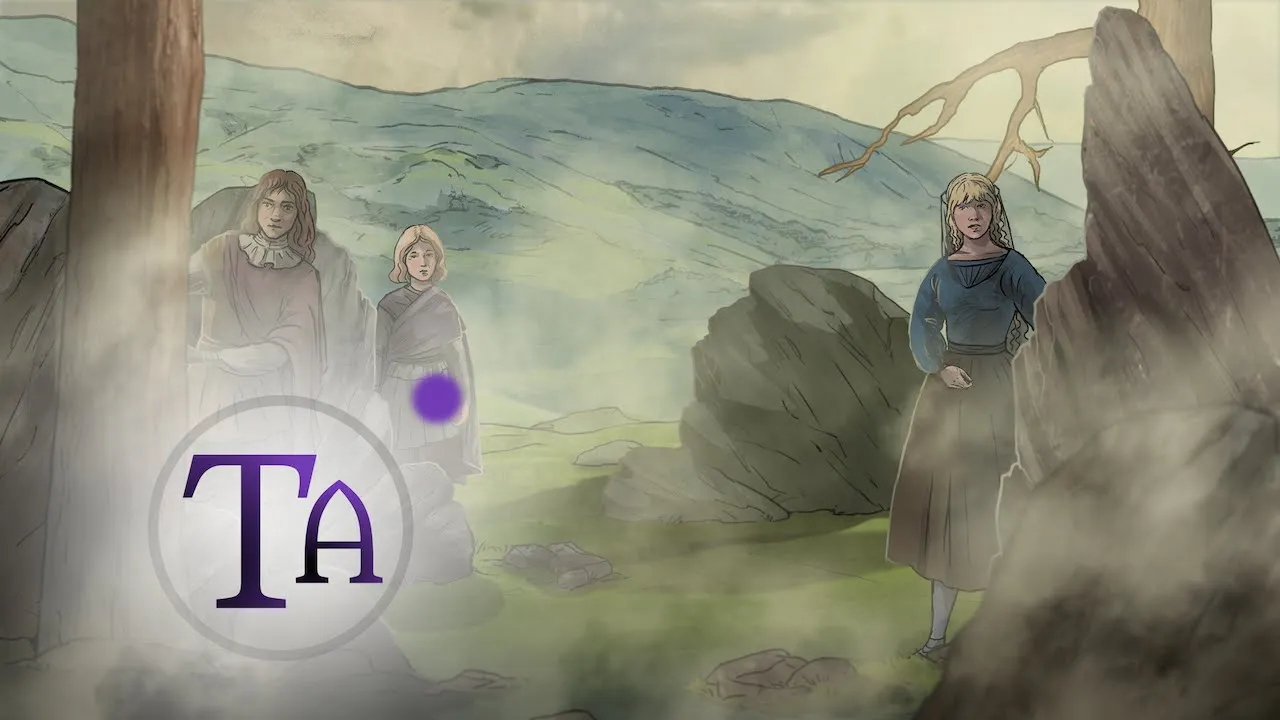
Kirk states that the fairies used to live on the surface, but when humanity began dominating the land, they retreated underground, where they built their civilization within earth’s caves and caverns. They were also thought to inhabit the “fairy hills” frequently found beside churches and graveyards. No one had ever found an entrance to the subterranean world as the invisible people didn’t use windows or doors: instead, they came and went by slipping through the cracks in the earth.
Many believed that the invisible people moved to new dwellings four times a year, with the changing of the seasons. One of the most common times to see them was when they were on the move, but nearly everyone that Kirk spoke with advised against any entanglements with fairies, as they were known to be quite deceptive, and potentially very dangerous. Their chief vices, Kirk claimed, were “envy, spite, hypocrisy, lying, and dissimulation.
” Seers insisted that these encounters could be “terrifying,” and Kirk referenced a number of instances in which people were abducted by the fairies, and often not returned. In light of this, it was custom amongst the Scottish and Irish to avoid travel during the changing of the seasons, and to hold church on the first Sunday of the quarter. Some also warded against abductions by keeping bread, a Bible, and a cold piece of iron on their person.
Many people even took measures to protect food and animals. Those taken were brought to the subterranean world, where the invisible people lived. This place was thought to be particularly hazardous, as it was very difficult to leave, and one’s soul could be trapped there forever.
[Typewriter keystrokes, return slide] While Kirk is generally sparse on details, he mentions a few stories of contact between human beings and fairies, many of which were threatening, and a few of which were fatal. Many of these stories involved nursing mothers being kidnapped to feed subterranean children. One informant told of a woman who was abducted for two years, while a “lingering image” of her remained in her home, then slowly decayed.
Eventually, the likeness died, and the family buried it, just before the mother returned, and told of her capture by the fairies. The woman said that she was held in a large space, full of light with no apparent source. She said that she could rarely see her captors until she anointed her eye with an oil left nearby.
Once she saw them, the people made her blind in that eye with a puff of their breath. Kirk was also informed that some children were abducted and never returned. Evans-Wentz also reported a number of folk stories in which fairies abducted people and animals, or caused their deaths.
Other writers after Kirk’s time also claimed that the fairy people were known to occasionally sacrifice humans, in what was assumed to be some form of arrangement with the devil. The invisible people were individually much stronger than even multiple men, and could not be killed by human weapons. In combat, they were known to use stone weapons and throw little barbed darts, and they could strike their targets dumb.
Still, they never attacked anyone, except when provoked. One seer told Kirk that he cut a fairy clean in two, but nothing remained of the body once he’d halved it. Another time, he wrestled one of the invisible people, and his neighbours claimed to have seen him disappear and reappear an hour later somewhere else.
Kirk also wrote of certain objects - usually stones - being thrown around the house, or at inhabitants, but with no apparent intent to harm. Kirk attributed these events to the action of “invisible wights,” though today, anomalists would probably classify them as instances of poltergeist activity. Kirk also spoke of “Brownies,” as they were called in Scotland, who were known to clean houses and wash dishes while their host families slept, and take food for payment.
Some fairies were also said to occasionally reveal unsolved crimes, and turn up forgotten treasures, much in the same way that hauntings tend to draw attention to traumatic accidents and unsolved murders. Kirk also makes mention of encounters with the dead, and a range of other beings and apparitions. He makes passing mention of encounters with succubi, as well as with “evil angels” who suck the blood of witches.
Kirk even mentions doppelgangers, as we’d call them today. These “Doubleman” or “Co-walkers” were physically identical to humans on the surface, but they lived in the subterranean world. All of these creatures were God’s creation, in Kirk’s view, and one should not be surprised to encounter them.
[Typewriter keystrokes, return slide] Kirk’s treatise circulated in manuscript form for the next 120 years, but was only disseminated privately. Walter Scott published the first printed edition in 1815. In 1893, the writer and folklorist, Andrew Lang, published a second, more popular edition based on Scott’s printing, as the source manuscript had been lost.
Lang added a lengthy commentary and gave Kirk his popular moniker, “The Fairy Minister,” by which he’s now memorialized. Many more editions of the Commonwealth followed, based on Scott’s text, though later editions are based on a more complete manuscript source. Kirk was not the first to document the existence of the invisible people or other anomalies like Second Sight, and he was far from the last: references to supernatural abductions, poltergeist activity, and apparitional experiences have appeared in a number of sources throughout history - particularly since the 5th or 6th centuries CE.
Folklorist Lewis Spence surveys all references to fairy beings in British tradition, and notes that by the twelfth century CE, one could identify three distinct types of fairies in the literature: a diminutive type, a dwarf-like or goblinesque type, and a tall, stately, female type. Still, The Secret Commonwealth was among the first works in history to be devoted exclusively to the topic of fairies, and it was unique for featuring the stories of common people, and drawing heavily from local lore. Kirk was likely not aware, but the same kinds of invisible beings were known to people all around the world.
Icelanders called them the huldufólk, or “hidden” people, who lived underground and were invisible to humans. In France and Quebec, they call them the Lutins, thought to be house-spirits like brownies. The Slavic peoples of Eastern Europe and central Asia call them Domovoys, and honored them as household deities.
And by no means were belief in such beings unique to Medieval Europe: representations of otherworldly beings appear in some of the earliest human cave art. Ancient Greek philosophers like Pythagoras, Plato, and Socrates all spoke of other classes of beings like demi-gods and personal spirits called daimons that wielded strong influence in human affairs. While pagan-era beliefs in spirits and supernatural beings were condemned by most established Christian churches, Kirk championed them as a bulwark against the growing threat of “atheism” in the seventeenth century, or what we’d call materialism, or physicalism today.
Kirk’s work was a plea against a growing tide of doubt in any other beings but God, angels, and demons. Evans-Wentz observed that by the early 20th century, the fairy faith had nearly disappeared, and was then only adhered to by the elderly. Today, polls indicate a minority belief in fairies, but the topic is taboo, and believers are prone to ridicule.
However, in his 1969 book, Passport to Magonia, Jacques Vallée reinterpreted The Secret Commonwealth and other fairy stories in the context of the contemporary discussion of UFOs and entity encounters. Vallée asserted that contemporary belief in “flying saucers” and alien beings was nearly identical to belief in fairies and other spirit-beings in Medieval Europe. He observed that while anomalous entities appeared differently in different times and places, they always behaved in similar ways, and wielded similar powers.
Vallée drew attention to a number of these similarities in subsequent books. For example, both the UFOnauts of the postwar period and the invisible people of the Scottish lowlands tended to abduct people, and bring them to well-lit rooms, frequently described as having no obvious source of light. Many female UFO abductees, or experiencers, have also reported being asked to nurse children for their captors.
Both fairies and modern UFOnauts have been said to teleport, become invisible, and even paralyze people from afar, or prevent them from speaking. Both were also known to vanish in an instant. These commonalities led Vallée and other anomalists to posit that encounters with both fairies and so-called “aliens” should be considered instances of the same underlying phenomenon.
[Typewriter keystrokes, return slide] The image of the fairy is deeply ingrained in Western culture, appearing in everything from garden ornaments to children’s books. But these whimsical, Victorian-era depictions are not faithful to the historical source material on fairy people and other supernatural beings. The beings that Kirk described, when visible, were closer to humans than anything else, and they lived beneath our feet.
Kirk proposed that the reason that the fairies appeared to humanity was to convince us that an invisible realm exists, and that it’s not entirely out of reach. Their occasional interactions with humans served as both a “caution and warning” that we are not alone in the world, and that unseen, intelligent forces occasionally meddled in our affairs. Maybe these forces are still at work.
(Sources are listed in the video description. ) Help support quality videos on anomalous phenomena. Give to Think Anomalous on Patreon or donate by Paypal at our website.
Every bit helps.