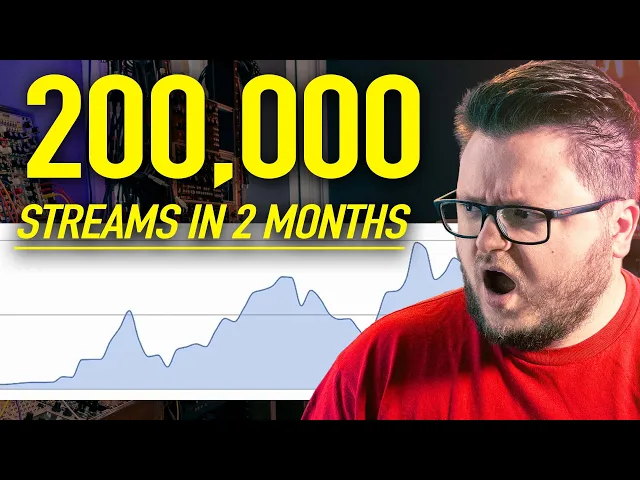
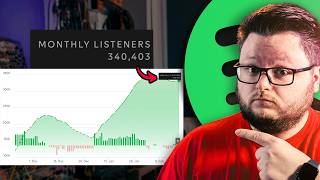
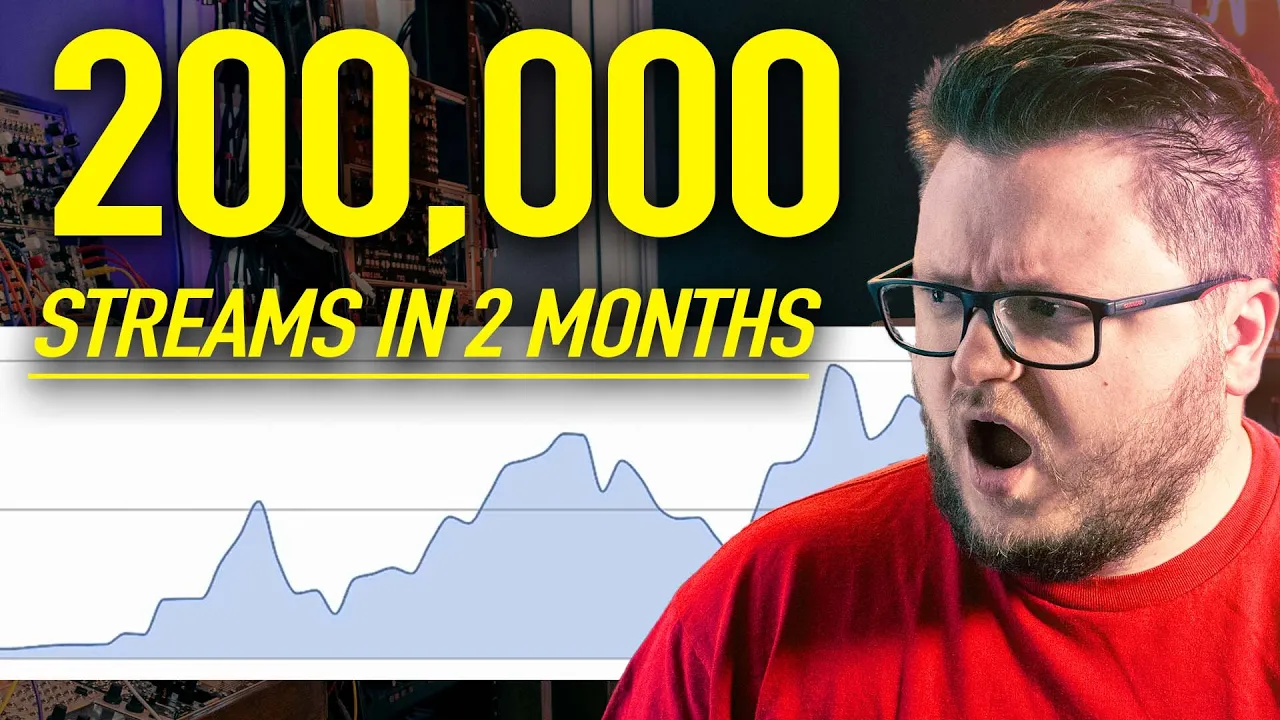
In this video I'm going to show you an artist where we managed to get over 200,000 streams in 2 months from September 1st to October 30th using just Meta ads, no third-party playlisting, no social media strategy whatsoever, just Meta ads. I'm going to walk you through some of the Spotify data and kind of what we're looking for and I'm also going to walk you through some of the Meta ads that we've done so you can see exactly what we've done including what we've spent. First of all, looking at the Spotify stats, again I set this graph from September 1st to October 30th.
So we did have 226,000 streams in that two-month period just in Spotify. There there is traction on YouTube Music and Apple Music and and just regular YouTube and and other platforms as well but we're just not going to cover that in this video cuz I don't have all that data yet. I don't have access to all the the artist dashboards yet either.
But going over this we have a stream per listener of 3. 5 which this is across the whole catalog and there are maybe four albums. So this isn't a great stream per listener but it is a relatively short time period of two months and the artist is super new.
Like all of this material has been released uh this year. So it's all it's all super new. Saves are pretty high.
Like we have 65,000 listeners and we have 45,000 saves. So we actually have a pretty crazy save rate, right? This is this is 2/3 of every person that checks out the material is um saving it and then another 10,000 engagements in the in the form of playlist ads and then also 591 followers.
This is kind of like a EDM pop project so followers are usually not as good as a lot of other genres. Um I'd say like hip hop, EDM, pop have their lower follow rates specifically with EDM um but if you start getting more towards like rock or it's I guess regular pop or singer-songwriter folk, follow rates end up getting a lot better. Metal has really good follow rates.
But the engagement is is partially so good cuz we're sending people to albums here. Like we we we're sending people directly to albums and so they're saving the entire album instead of saving the track. So that's one thing to factor in here.
This isn't like one song, right? This is a whole catalog material that we're promoting. Now I want to walk you through this the breakdown of streams too before we jump over to the the Meta ad portion.
If I go into source of streams, we can first just look at active versus programmed. And active is essentially what we're directly driving with the ads. Programmed is a combination of different algorithmic sources.
Right off the bat you can see we're we're actually not getting a gigantic push from the algorithm. We're we're getting maybe another 50% out of 143,000 we're getting 70,000 here. So like that's roughly half which is 50% extra growth from algorithmic.
We can get more granular with this and we can look at like algorithmic radio and other and you can see like we we don't have any third-party playlisting going on. It it it is just ads but then the algorithmic chunk and specifically radio which is another form of the algorithm is is the biggest factor here. I expect that to go up more.
In fact, that's like a big thing we're trying to focus on now is how can we get the algorithmic portion to actually equal the active streams and then push further, right? Like we we want the algorithm to be more than what we're driving and we also want it to hold long-term because that'll lead into like actually having this this project be financially viable. Because you might be wondering like well how much did you spend to get 226,000 streams in two months?
And the answer is too much. This isn't my my project. This is this is someone else that's a client that's funding the project and so um it's their budget.
But the the strategy that they have is uh long-term, right? They they aren't trying to profit month over month. They're trying to profit like over the course of like several years really.
Like we spent $6,000, right? So that's the throw-up number. That's the number that everyone is going to yell at in the comments saying, "Oh my god, you're so crazy.
You spent $6,000 and you only made back depending on the country distribution between, you know, as in a better case like $750. I don't know, worst case like half of that, something. So between like 300 and 750.
" So but this is the thing. When you're trying to grow any project, you are going to be losing money no matter what for the first year and probably several years. That that is just like the unfortunate reality of marketing any new music project and honestly any most businesses too.
Most regular businesses are not making money right out the gate. If you think of everything in like month over month having to be profitable, then like you're very limited to what you can do in life. Um but I don't want to get into a big rant about that but I want you to think about like we're trying to trigger activity that will linger for years to come and I'm going to show you a a few a few examples of that later in the video.
But but jumping back into the ads, so each of these individual campaigns here up and down are campaigns for different songs and/or albums. And you can see that there's very different costs per result. Our cost per result is essentially the cost to drive someone to a streaming platform.
Most people are going to Spotify but some people might be going to Apple or YouTube Music or Tidal or Deezer or Amazon or Napster or whatever. Uh but probably 80% are going to Spotify specifically because Spotify is just the biggest streaming platform. You'll also see that we're not spending the money evenly, right?
It's heavily concentrated in two of these releases. And that's because these two are off. These two have gotten the most budget because they've done the best, right?
They're both 24 cents and 29 cents. This is the cost per fan acquisition essentially uh to go listen to the to the music. Uh and this is a newer one that we've launched.
It's newer but it's doing better than these other two already. And so we're not spending the money evenly. We're spending it where it gets us the best result.
We're running a campaign and we're giving every song a push or every album a push but then we abandon the ones that don't do well and then we push harder on the ones that do well and specifically the ones that we see triggering the algorithm the most. I won't give you the specifics on every song just because this project wants to stay anonymous. But essentially it if you're looking at the streaming data, it's like in the last month like this song has like 60,000 streams and this song has has like 35,000 streams or or something like that.
When we are promoting an albums but we're driving people to specific songs and then there is this kind of like waterfall effect. I don't want to call it waterfall cuz that might mix terms up but so you have a thousand people check out this song and then like 700 check out the next one and then 500 check out the next, right? So there's this drop-off across the album.
We're driving people to a specific song they're hearing in the ad but then they're they're good chunk of them are listening to the whole album and different levels in between and there's the kind of like a decay curve of how far people listen to in each album. And part of that strategy was like we're trying to build a catalog but we're trying to increase the stream per listener of each person that we send. And if we go to the Spotify here um for these different sources of streams, we can actually look at stream per listener.
So like if we look at just the active portion, we're actually getting a nine stream per listener and and that's because like most of these are 10 to 12 song albums. So we're we're averaging out to each like on average each person we send listens to the entire album which is actually kind of crazy, maybe a little bit less. But so there's probably a bunch of people that listen to one song and there's a bunch of people that listen to the whole album twice or they listen to multiple albums and then the average is somewhere in the middle.
Um so this is actually really cool stat that we're getting nine streams per listener. But the strategy with that is we're trying to increase the the streams per listener, right? Like these people listen nine times.
Um it costs money to send each person to that, right? So the more they listen, the better. What really matters isn't how much they listen each month.
It's it's how do these people listen over the next like three years, right? And that's what comes down to the money side of things. One, how how many times do these people listen to over several years?
Do they stay fans? Do they not? And then two, what does the algorithm do, right?
If we turn off the ads, do the streams triple over the next year? Which is actually what I expect. I expect that if I run a campaign even without some crazy algorithmic thing, that the streams will triple over the the next year just by themselves from fans re-listening, just through normal activity.
And then if you have the algorithm, they could very well 5x or 10x or or something crazy depending on on what you end up getting. And that's what you're banking on when you're trying to actually do the streaming thing financially. Which I'll say again just because I don't say it in every video and then people uh attack me in the comments for it.
Um you you shouldn't ideally promote your song on streaming and and try to like make money off of that. Typically the way artists make money is they have an ecosystem built around their music where they use tactics like this and social media and all the touring and collaborating to gain top of level fans and then they they tour which makes money, they sell merch which makes money, they have a Patreon which makes money. The streaming might be 20, 30, 40% of their income but the other big chunk is from all those other revenue sources that they're actively pursuing and that's how the artist actually makes their money.
But you need fans to do any of those other things. So this is just a top of funnel uh marketing activity. Let's dive deeper into this campaign and just for funsies let's pick the campaign that has the most results, 10,000 conversions.
We have three audiences. We have one targeting electronic dance music. We have one targeting pop music and we have one targeting video games.
And uh you'll notice here they're all called Kashi and the reason is for that um for the visuals I've been using this software called Kashi to generate the visuals. I mentioned them briefly in another video. Uh this video isn't sponsored.
I've been talking to them about potentially doing something like that but I do have an affiliate link if you want to check it out. I'll give you a quick little tour um because I think it's super useful for a lot of people. You can upload your song, you can transcribe lyrics and then you just pick one of these visual folders.
If I click on bold lyrics and I click play, you see it's syncing the lyrics on these cool visuals. And let's say I'm like, "Oh man, I really like this visual style for this song. It fits really well.
" I can just go click shuffle. Bam, new video. And then bam, new video.
And I can scroll down and be like, "I really like this this crazy surreal sunset thing. " And generate a visual. And basically each one of these I can click generate and generate a video.
And I can do the full clip, I could do 30 seconds, 15 seconds, and I could change the types how how the lyrics look, and this this elegant one is actually pretty neat. Uh if if it's on brand, they also have the brat style that you've probably seen a lot on social media. Um and they have all these different folders that you can shuffle through, and you could also, of course, just turn off lyrics.
You don't have to transcribe stuff if you don't want it. And you could also change the aspect ratio. So, it basically it makes it really easy to get a bunch of ads for your material.
And I've actually been experimenting lately with posting this on social media for for one of my bands, because like we're horrible at social media. We just don't have the time, which most bands can probably resonate with. Um ideally, you would have content where you're in it and you're performing, right?
Like that's the way to do it. You really should have good content for your music, but in the absence of that, like these caustic visuals look cool, and they can actually perform well on on TikTok and Instagram Reels. Like I've gotten served videos like this on TikTok with music saying to lyrics that have millions of views.
So, these videos can work for the right music, but for ads, they've been working pretty great, and that's all we're using here. But moving on to the rest of the campaign set up here, our set up is pretty typical. If you watch any of my other videos on setting up campaigns like this, which I'll I'll link to uh a video here where you can learn how to do it from start to finish in more intricate detail.
Uh we're doing our tier one, tier two country list. We are doing 18 to 50 ages, and we are targeting people who like video games essentially. All right, so I have a very blurred image of YouTube Music here, cuz I wanted to show you for this project, like how does this translate to YouTube Music specifically?
Obviously, we have hundreds of thousands of streams on Spotify. We're not actively marketing YouTube Music, and YouTube Music is kind of a niche platform overall. Like it's it's like seven times smaller than Spotify in terms of total users, and three times smaller in terms of paying users.
So, but still, we have we have tens of thousands of streams here, right? I have 10,000 here. We have almost another 10 here when you add up some others.
So, what we have we have like over 20,000 streams on this just as a side effect. So, like another 10% of our growth is happening on YouTube Music, and I would expect I don't have the numbers cuz I don't have the access on Apple Music as well. Just because typically, I found in a lot of cases when I'm promoting a project on Spotify that I get about 10% of those numbers on Apple Music for artists as well.
So, I wanted to show you a quick example of what I meant by that tail. Like long after you stop promoting things, you're still getting like residual effects over long duration. This is a song that has 423,000 streams over the past year.
And uh if I look at the saves, you can see that it was it was promoted from this period to this period. So, pretty long period of time, and you can see the tail of the streams, right? This is this is when they stopped the marketing, and the streams just they fell, but they didn't go to zero.
Like the artist is still getting hundreds of streams a day. If I move my face a little bit. Um going all the way like 10 months out, it's still getting a few hundred streams per day.
So, the campaign has been over for about like six, seven months, depending on when you consider it over, and it's gotten an additional 120,000 streams. Out of 420, so it went from 300 to 120, so it's grown by like 40% or something over six months. Not a perfect case study, but a real one, right?
So, this is shows you how like things can develop, and this song helped pull a lot of people into the other songs in the artist's catalog, too. So, you will see residual effects anytime you do marketing to other songs in the artist's catalog, at least if what you're doing is like, you know, good. So, if you want to see more information on how we run campaigns like this from start to finish, check out this playlist right here to learn the entire process from start to finish.
And if you want to see whatever YouTube thinks you should watch, check out that video right there, and make sure you subscribe so you don't miss my next video. Anyways, thanks for watching, and I'll see you in the next one. Bye.