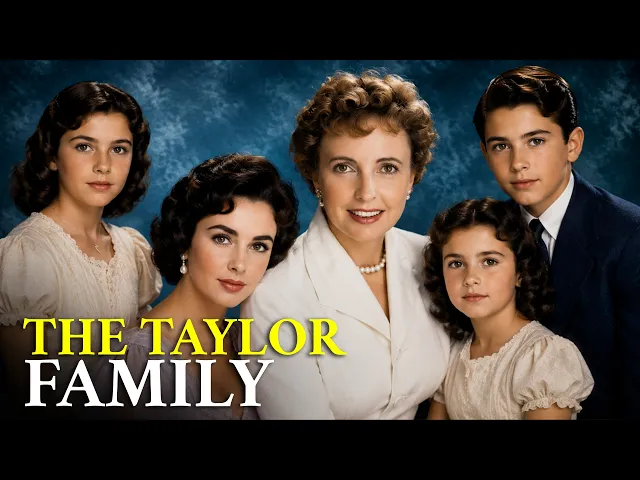
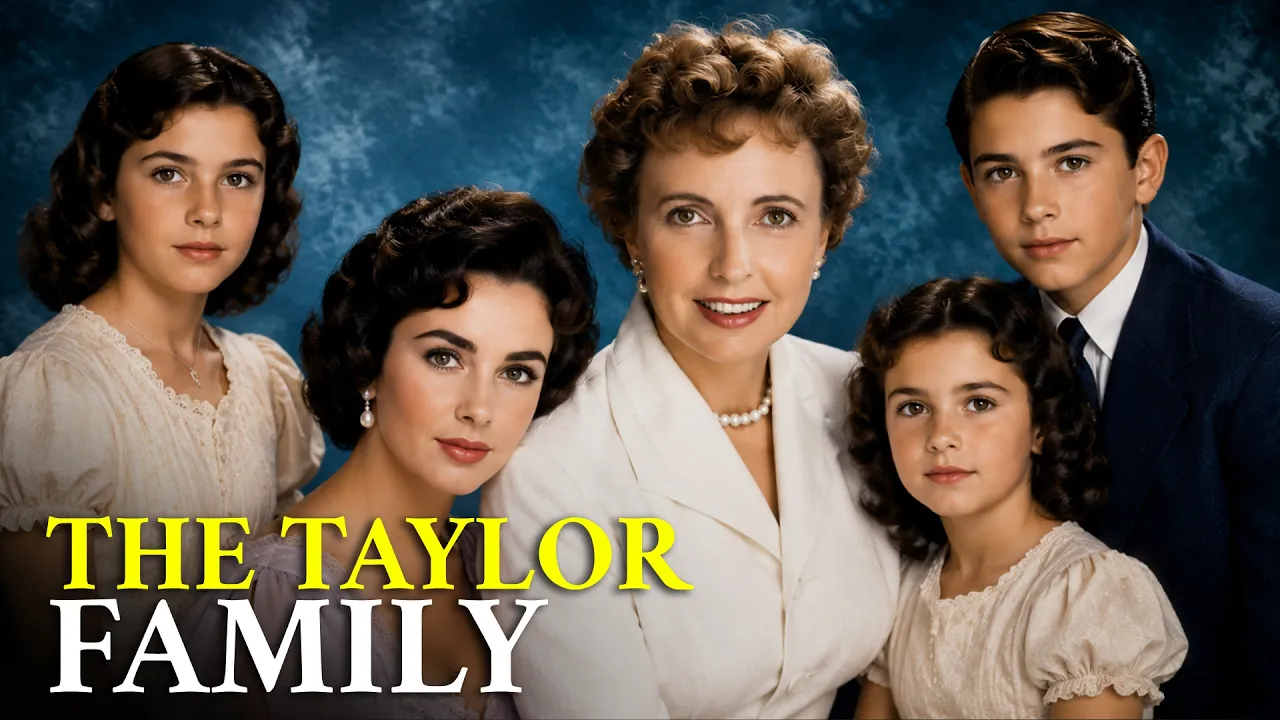
There is a line that Elizabeth Taylor's own director once wanted to shout across a crowded MGM commissery. Sitting across the table from a young Elizabeth, who was barely a teenager at the time, he watched her mother answer every single question on the child's behalf, saying, "Elizabeth says this, and Elizabeth thinks that," while the future icon sat in complete silence beside her. That woman was Sarah Sothan, and long before the world knew the name Elizabeth Taylor, it briefly knew hers.
What happened to Sarah and to both of her children is a story that has been quietly overshadowed by the dazzling, complicated life of the daughter she helped create, and it deserves to be told in full. The girl from Kansas who wanted to be someone long before she ever stepped foot inside a Hollywood soundstage. Sierra Southern was simply Sarah Viola Warro born on August 21st, 1895 in the small town of Arkansas City, Kansas.
She was the third of six children and the only daughter born to Samuel Sylvester Wombro and Elizabeth Anne Wilson, a name that decades later her granddaughter would carry as a middle name. Her father's family had Swiss roots, and the Warmro were by most accounts an ordinary Midwestern family with no particular connection to the world of theater or film. Yet from a young age, Sara wanted something different from the quiet life Kansas seemed to promise her.
Her family eventually relocated to California, and it was there, with her mother's encouragement, that Sara began chasing a career on the stage. She joined a group led by the well-known actor and director Edward Everett Horton, and before long, she was ready to try her luck on the biggest stage of all, Broadway. But first, there was the matter of her name.
As the story goes, Sara sat down with her mother and worked through a phone book, searching for a stage name that sounded more suited to a leading lady than Warmro did. She landed on Southern, and she also trimmed the letter H from the end of her first name. Sarah became Sara, and Sar Southern was born.
The gamble paid off almost immediately. In 1922, at the age of 26, Sara was cast in a Broadway production called The Fool, playing a young character named Mary Margaret, a homeless girl who could not walk. It was a demanding, emotionally heavy role, one that called for exactly the kind of raw vulnerability that could make or break a young actress in front of a Broadway audience.
Sara delivered. The production ran for well over 200 performances, an enormous success by the standards of the time, and for a brief moment, Sara Southern's name meant something in the world of American theater. A newspaper profile written about her a few years later even reflected back on that breakthrough, describing how a young woman with striking dark eyes had traveled all the way from California to bring that particular role to life.
a detail that suggests just how memorable her performance had been to audiences and critics of the era. She followed that success with a string of other Broadway roles throughout the mid 1920s, appearing in productions with titles like Arabesque, The Dagger, and Fool's Bells. None of them reached the heights of the fool, and by her own account, something of a jinx seemed to follow her through those years, landing her in shows that closed quickly or failed to capture the public's imagination the way her first major role had.
Still, Sara kept working, kept building a modest career, one that most young actresses of her era would have envied. She seemed for a time to be exactly where she wanted to be. And then, almost by accident, a chance encounter at a glamorous New York social event changed the entire direction of her life, steering her away from the stage lights forever and toward a marriage that would eventually produce one of the most famous faces in the history of cinema.
A marriage that ended one career and began another. Sara Southern and a young art dealer named Francis Len Taylor were not strangers when their paths crossed again in New York. The two had actually known each other years earlier back in Kansas, where their families had crossed paths in childhood.
But life had pulled them in different directions. Francis had gone to work for his wealthy uncle, an art dealer named Howard Young, while Sarah had chased her theatrical ambitions west and then east again to Broadway. By the time they reconnected at a glittering ball at one of New York's most fashionable hotels, both of them had grown into entirely different people than the ones who had known each other as children.
Accounts of the encounter suggest that Sara made her decision almost instantly. She reportedly told a friend that very night in 1926 that Francis Taylor was the man she intended to marry and within a matter of weeks the two were engaged. There was however one significant obstacle standing in their way.
Francis's uncle, Howard Young, the same man who had given him his start in the art business, did not approve of the match, at least not at first. He eventually came around, but only once Sara agreed to a condition that would define the rest of her adult life. She would have to give up acting entirely.
Sara accepted the terms. She married Francis Taylor in New York in 1926, and true to her word, she never returned to the stage. It is worth pausing here because this detail matters enormously to everything that came afterward.
A woman who had built a genuine hardone career for herself, who had proven she had the talent and the discipline to succeed in one of the most competitive professions in the country, walked away from it entirely the moment she became a wife. For some, that trade might have felt like a natural and welcome transition into a new chapter of life. For Sara, as the years unfolded, it increasingly looked like a door she never fully closed in her own mind, one she would eventually try to reopen through someone else entirely.
Francis, for his part, came from a very different world than the one Sara had grown up in, even though both of their families originally hailed from the same small stretch of Kansas. His uncle Howard Young had built a considerable fortune as an art dealer and had connections that stretched into some of the wealthiest and most influential circles in the country. Connections that would later extend to friendships with figures as significant as a future American president.
That kind of access gave the young Taylor family a level of comfort and social standing that neither Sara nor Francis had known growing up. and it set the stage for the unusually privileged childhood their two children would soon experience an ocean away from Kansas. Shortly after the wedding, Francis was transferred by his uncle to manage an art gallery in London, and the newlyweds relocated across the Atlantic to build their life together in England.
It was there, in a comfortable and increasingly prosperous household, that Sara would give birth to both of her children. And it was there that the family's story would take its first unexpected turn in a city that could not have felt further from the dusty plains of Arkansas City, Kansas, where it had all begun. Two children born an ocean away from home.
Once settled in London, Francis and Sarah Taylor built a genuinely comfortable life. Backed by his uncle's wealth and connections, Francis ran a successful art gallery and the couple socialized within elevated social circles, reportedly crossing paths with figures as prominent as Winston Churchill and attending events like the Royal Ascot horse races. They lived in a house they named Heathwood in the wellto-do London district of Hampstead, complete with a garden and a tennis court.
an entirely different existence from the modest Kansas upbringing both parents had come from. Their first child, a son they named Howard, was born in 1929. Sarah reportedly described her infant son as looking like something out of a Renaissance painting, a comment that hinted at the aesthetic standards she would apply, consciously or not, to both of her children throughout their upbringing.
Roughly three years later, on February 27th, 1932, their second and final child arrived. They named her Elizabeth Roseund Taylor. And from her very earliest days, there was something about the child's appearance that seemed to strike people immediately.
Most notably, a pair of large, strikingly colored eyes and an unusually thick double row of eyelashes, a genetic trait that would later be written about extensively once she became famous. Because both of her children were born on English soil, Elizabeth held British citizenship from birth in addition to the American citizenship she inherited through her parents, an unusual dual identity that would follow her for the rest of her life and career. The Taylor children spent their earliest years in that comfortable hamstered household, taken on trips around the English countryside, given riding lessons on a patient pony, and by most accounts thoroughly spoiled in the gentle oldworld manner that came with their parents' social standing.
Sarah, however, had not entirely let go of the ambitions that once drove her to Broadway. Friends and biographers who studied the family later suggested that she had begun quietly and perhaps not even fully consciously to notice something remarkable in her young daughter. People who met Elizabeth as a small child often remarked on how strikingly beautiful she was, occasionally comparing her, even at that young age, to established stars of the era, sometimes specifically to the celebrated British actress Vivian Lee.
Sara herself was said to have leaned into those comparisons, at one point, even using an eyebrow pencil to emphasize a small, distinctive mole on her young daughter's cheek, a tiny but telling gesture that hinted at just how closely Sara was already paying attention to the way her daughter's appearance might be perceived by others. It would not take long before those casual compliments began to plant a seed in Sara's mind, one that would eventually grow into a defining, sometimes controlling force in her daughter's life. But before any of that could unfold, world events intervened, and the comfortable English chapter of the Taylor family's story came to an abrupt and frightening end.
fleeing London on the eve of war. By early 1939, the political situation in Europe had grown alarming enough that people with connections inside the British government were quietly advising American families to leave the country. According to several accounts, Francis Taylor's social circle was influential enough that a well-placed aid connected to Winston Churchill personally warned him that war was likely to break out within months, and that his family should not wait to find out.
It was a serious enough warning that the tailor did not hesitate for long. The decision was made for Sara to take the two children back across the Atlantic first, while Francis remained behind in London to wind down the art gallery and settle the family's affairs. In April of 1939, Sar boarded the ocean liner SS Manhattan with 7-year-old Howard and six-year-old Elizabeth, leaving behind the comfortable life they had built in England.
During that long crossing, Elizabeth reportedly watched her very first film, a Shirley Temple picture called The Little Princess. A small and seemingly unremarkable detail at the time that would later feel almost like a sign of things to come, given how many American mothers of that era had already begun dreaming that their own daughters might follow in Shirley Temple's footsteps. Sara and the children settled first near her own family in Pasadena, California, moving in with Sar's mother while they waited for Francis to join them.
He arrived several months later, having successfully closed the London Gallery, and the family soon relocated again, first to the Pacific Palisades and later to Beverly Hills, where the Taylor children were enrolled in the Hawthorne School and began the difficult process of adjusting to American public schooling after years spent in private English education. Their new life in Southern California could not have looked more different from the gentile English world they had just left behind, and the contrast seemed to unsettle Sara in ways that would soon reshape the entire trajectory of her daughter's childhood. Both children, according to accounts from the period, lost their English accents within a remarkably short time, adapting to their new surroundings with the kind of ease that only young children seem able to manage, even though Elizabeth reportedly retained the ability to slip back into a British accent whenever it suited her for the rest of her life.
Francis, once he arrived, made the decision to open his new gallery not in a purely commercial district, but inside the lobby of one of Hollywood's most elegant hotels, a strategic choice that placed his fine European paintings directly in front of the very audience, most likely to have both the money and the desire to buy them. It did not take long after their arrival for people to start commenting on young Elizabeth in ways that felt strangely familiar to Sarah. Echoes of the very compliments and comparisons that had first been paid to her own younger self back when she still dreamed of a life on the stage.
What began as passing remarks from friends and even strangers would soon transform into something far more deliberate, as Sara began quietly engineering the exact kind of opportunity for her daughter that she had once pursued so single-mindedly for herself. The mother who built a star. Almost as soon as the tailor settled into life in Los Angeles, people began telling Sara that her young daughter belonged in the movies.
Elizabeth's striking looks paired with the poise Sarah had already begun cultivating in her made an immediate impression. Friends and even casual acquaintances would stop Sarah in public just to comment on how much the little girl resembled established stars of the era. For a woman who had walked away from her own stage career under the terms of her marriage, watching those comments accumulate around her daughter appears to have reignited something she had never entirely let go of.
Sara did not wait passively for opportunities to arrive. She actively worked to place Elizabeth in front of the right people. She enrolled her daughter in music classes alongside children connected to executives at Metro Goldwin Meyer, one of the most powerful studios in Hollywood.
She reportedly worked her social connections carefully enough to eventually have the head of Universal Pictures over for tea, and it was young Elizabeth, not Sara, who was left to charm the intimidating studio executive during the visit. There were also stories repeated for decades afterward that Sara had claimed her daughter took dance lessons at a prestigious London school attended by British royalty, an embellishment that seemed designed to add an extra layer of polish to Elizabeth's growing reputation before she had even appeared in a single film. One particularly telling detail from this period involves the very play that had once made Sara's own career.
She would pull out the script from The Fool, the melodrama that had defined her Broadway years, and have young Elizabeth rehearse the emotional, demanding role late into the evening over and over until her daughter could summon tears on command for the scenes that required them. When Elizabeth finally managed to cry precisely on cue, biographers who studied the family noted that Sara was, in their words, well pleased. It is a small moment, but it captures something essential about the dynamic between mother and daughter during those formative years.
A relationship built as much around performance and achievement as it was around ordinary affection. Elizabeth's first professional screen role came in 1942 in a minor part for Universal Pictures. Though the studio dropped her contract after only a year, reportedly unconvinced she had what it took to become a genuine star.
It would prove to be one of the more significant miscalculations in studio history. Before long, Elizabeth was signed by MGM instead. And by 1944, at just 12 years old, she starred in National Velvet, a film that turned her almost overnight into one of the most beloved young stars in the country.
The role about a young girl who trains and rides a horse to victory in England's famous Grand National steeplechase drew directly on Elizabeth's own genuine love of riding, a passion she had developed years earlier on that patient pony back in the English countryside, and it gave her performance a natural authenticity that audiences and critics responded to immediately. Sarah had gotten exactly what she had been quietly working toward for years. But getting her daughter into the spotlight turned out to be the easier half of the equation.
Staying close to that spotlight, managing it, and shaping it according to her own vision would consume the next two decades of Sara's life. And it would come at a cost that neither mother nor daughter could have fully anticipated at the time, living in the shadow of her daughter's fame. Once Elizabeth's career took off, Sarah Taylor became something close to a permanent fixture on set.
Studio insiders who worked alongside Elizabeth during her early years at MGM later described a pattern that repeated itself constantly. Rather than allowing her daughter to speak for herself in professional settings, Sara would frequently answer on Elizabeth's behalf, framing her responses as though she was simply relaying what the child actress herself was thinking or feeling. One of Elizabeth's directors during this period admitted he often felt the urge to interrupt Sara directly and asked why she would not simply let the girl speak for herself, a frustration that reportedly built for years without ever being resolved.
This dynamic placed an unusual and heavy weight on Elizabeth from an extraordinarily young age. She was in every practical sense a working professional by the time she was still a small child, expected to perform not only in front of cameras, but in her everyday interactions with studio executives, journalists, and the adults who orbited her mother's ambitions. Whatever her own private thoughts or preferences might have been during those years often seemed secondary to the narrative her mother had already decided to present to the world.
It created a version of childhood that looked glamorous from the outside and according to many who later studied the family felt considerably more complicated on the inside. At the same time, it would be an oversimplification to describe Sara purely as a doineering or exploitative figure. Those close to the family often described a woman who was fiercely protective of her daughter, one who kept Elizabeth away from certain corners of the film industry precisely because Sara's own background as a stage actress had left her deeply suspicious of Hollywood's reputation.
She reportedly kept her distance from certain circles, specifically to shield her daughter, even while simultaneously pushing her further into the very industry she distrusted. It was a contradiction that would define much of Sara's relationship with her daughter for years to come. An uneasy mixture of genuine maternal protectiveness and an ambition that had never fully found its own separate outlet.
There is a particular irony in that contradiction that becomes clearer the longer you sit with it. Sarah had, after all, spent her own 20s navigating exactly the kind of theatrical world she now viewed with such suspicion when it came to her daughter's experience of it. She understood, perhaps better than most stage mothers of that era, precisely what could go wrong for a young woman thrust into an industry built around image and attention.
That understanding did not stop her from placing Elizabeth directly in the middle of it, but it does help explain why she remained such a constant, watchful presence on set, unwilling to simply hand her daughter over to a studio system she trusted only partway. Whether that vigilance ultimately protected Elizabeth or simply added another layer of pressure to an already demanding childhood remains a question biographers and family friends have debated for decades without ever arriving at a tidy answer. As Elizabeth grew from a child star into a teenager and then into one of the most photographed young women in America, the pressures on both mother and daughter only intensified.
Elizabeth's personal life and increasingly her romantic life began attracting public attention at an age when most young women were still figuring out who they wanted to become. And it was there, in the years that followed, that the tensions quietly built up over the previous decade would begin to surface in ways that neither Sara nor her daughter could fully control. a daughter who grew up too fast.
By her late teenage years, Elizabeth Taylor was no longer simply a beloved child star. She was becoming one of the most visible young women in the entire country. And with that visibility came an intense, often invasive level of public interest in her personal life.
In 1950, at just 18 years old, Elizabeth married hotel heir Conrad Hilton Jr. in a ceremony that received massive press coverage. Treated almost like a genuine royal wedding by the American public.
The marriage, however, proved troubled almost from the beginning and ended within less than a year. A painful and very public disappointment for a young woman who had barely had the chance to live an adult life outside the glare of cameras before her first marriage had already come and gone. For Sarah, watching her daughter's personal life play out under such intense scrutiny must have presented an entirely new set of challenges, ones that no amount of stage experience could have prepared her for.
The very fame she had worked so hard to help build for her daughter was now generating headlines over heartbreak rather than movie premieres, and there was little Sara could do to manage or contain a narrative that had in many ways grown far beyond her control. Elizabeth would go on to marry again just two years later to British actor Michael Wilding in 1952, a union that lasted longer than her first marriage and produced two sons before it too eventually ended in divorce by 1957. Throughout these years, Sara remained a constant presence in her daughter's orbit, though the nature of their relationship gradually shifted as Elizabeth moved further into adulthood and increasingly made her own decisions, for better or worse.
Elizabeth's third marriage to flamboyant producer Mike Todd in 1957 appeared to bring her a level of genuine happiness that had eluded her in her first two attempts and the couple welcomed a daughter together. Then in March of 1958, tragedy struck without warning. Mike Todd was killed when the private plane he was traveling in crashed in New Mexico, leaving Elizabeth, a widow at just 26 years old, devastated in a way that friends and family described as unlike anything she had experienced before.
It was an enormous sudden loss, one that reshaped the emotional landscape of Elizabeth's life for years afterward, and it placed Sarah in the difficult position of watching her daughter navigate profound grief entirely in the public eye, with journalists and photographers documenting every stage of her mourning. Reports from that period describe Sara staying close to her daughter through the darkest weeks that followed. One of the few steady presences Elizabeth could rely on while the rest of the world watched her grief unfold on news stands and in gossip columns.
It was in many ways the clearest example of what Sara's presence could offer her daughter beyond the ambition that had once defined their relationship. A source of genuine comfort during a moment when almost nothing else in Elizabeth's life felt stable. Whatever complicated dynamics existed between mother and daughter by that point, Sara's role as a source of stability during this period appears to have mattered a great deal, even as Elizabeth's life continued moving toward chapters that would prove even more controversial in the eyes of the American public.
Not long after Mike Todd's death, Elizabeth's next marriage to singer Eddie Fischer ignited a scandal that dominated headlines for months. given that Fischer had until recently been married to another popular actress, and the public reaction was often harsh, painting Elizabeth as a home wrecker in ways that followed her for years. Sara found herself once again navigating the fallout of her daughter's personal life alongside her, a role she would continue to occupy through Elizabeth's most famous and most tumultuous relationship of all, her on-again, off-again marriage to Welsh actor Richard Burton.
A relationship so consuming and so heavily documented that it would come to overshadow nearly everything else in the public's understanding of Elizabeth Taylor for the rest of the decade. Controversies that would test the relationship between Sara and her famous daughter in ways neither of them could have anticipated. The brother who chose a quiet life.
While Elizabeth's every move captured headlines around the world, her older brother Howard followed an almost entirely opposite path. Born in London in 1929, 3 years before his sister, Howard grew up alongside her through those early years in Hamstead, and through the family's abrupt relocation to America in 1939. As children, the two shared much of the same unusual upbringing, the same transatlantic move, the same adjustment to a new country, and a new set of expectations placed on them by their ambitious mother.
But once Elizabeth's career began accelerating in the early 1940s, the paths of the two Taylor children diverged sharply. Howard, by most accounts, showed little interest in following his sister into the entertainment industry, and their parents, whatever their ambitions for Elizabeth, do not appear to have pushed him in that direction either. Instead, Howard pursued a life largely outside the public eye, deliberately keeping his distance from the glare that surrounded his younger sister for the rest of both of their lives.
He built a private lowprofile existence for himself, one that rarely if ever generated headlines or public attention of any kind. That choice, whether made consciously in response to watching his sister's life unfold under constant scrutiny or simply reflecting his own natural temperament, meant that Howard Taylor remains even today one of the least documented figures connected to one of the most documented families in American entertainment history. There are no tell all memoirs from him, no lengthy interviews unpacking his childhood alongside one of the most famous women of the 20th century, and almost no public record of how he felt watching his younger sister's private life become a permanent fixture of tabloid coverage decade after decade.
In an era when nearly every detail of the Taylor family's lives was picked apart by journalists and biographers, Howard's determination to remain outside that story stands out as its own quiet, deliberate act. What is clear is that despite living such different lives, brother and sister maintained a close relationship throughout their years, one that endured through Elizabeth's many marriages, her health struggles, and the relentless public attention that followed her for over six decades. Family friends who knew both siblings often noted that Howard's steadiness offered Elizabeth something rare in her life.
A relationship with someone who had known her since before any of the fame began, who did not need anything from her, and who was not interested in trading on her name for attention of his own. Howard lived to the age of 91, passing away in August of 2020, having outlived both of his parents and by less than a decade, his famous younger sister as well. Howard's decision to step back from the spotlight stands in quiet contrast to the life his mother had so deliberately built for Elizabeth.
And it raises an interesting question about the two very different ways children of the same ambitious parent can choose to respond to fame that surrounds them without being entirely their own. While Howard chose distance and privacy, his mother's story was heading toward its own quieter, more reflective final chapters, ones that would eventually reveal just how complicated her feelings about her daughter's extraordinary life truly were. Sara's later years and the weight of a legacy.
As Elizabeth Taylor's career reached its absolute peak in the late 1950s and 1960s, becoming one of the highest paid and most famous actresses in the world, Sara increasingly settled into a different kind of role, one built more around support than active management of her daughter's career. She remained close to Elizabeth for the rest of her life. Present for many of the milestones, both joyful and painful, that defined her daughter's remarkable and often turbulent journey through fame, multiple marriages, serious health scares, and very public triumphs.
Francis Taylor, Sar's husband of more than four decades, passed away in November of 1968, leaving Sara a widow for the final quarter century of her own long life. She continued living largely out of the public eye after his death, though she remained for the rest of her years permanently linked in the public imagination to the daughter whose career she had once so carefully engineered. Photographs from the years that followed occasionally showed the two together at family gatherings and public events.
An older Sara standing quietly beside her daughter, a reversal in some ways of the earlier decades, when it had been Sara doing most of the talking, and Elizabeth standing quietly at her side. Sarah lived an extraordinarily long life by any measure, eventually settling in Palm Springs, California, where she quietly grew old, far removed from the Broadway stages and MGM soundstages that had once defined so much of her existence. Sara Southern died on September 11th, 1994 in Palm Springs at 99 years old, just weeks past her birthday.
She had lived long enough to watch her daughter's career evolve from a beloved child star into one of the most celebrated actresses of the 20th century, and long enough to see Elizabeth transform herself once again in later decades into a passionate advocate for AIDS research and awareness. A cause that would come to define much of her daughter's legacy beyond acting entirely. Whatever complicated dynamics had once existed between an ambitious stage mother and the daughter she had pushed so hard into the spotlight, Sara ultimately witnessed nearly the entire arc of her daughter's extraordinary life.
From those early rehearsals of The Fool in a Los Angeles living room all the way through six decades of stardom, there is something quietly poignant in that timeline. The woman who once gave up her own stage career under the condition of marriage spent the following decades finding an entirely different, far more complicated way back into that world. Not through her own performances, but through the daughter she shaped, coached, and occasionally overshadowed along the way.
It leaves behind a legacy that is neither entirely admirable nor entirely troubling, but something far more human than either extreme. A mother who wanted more for her child than the ordinary life she herself had once been asked to give up. What their story leaves behind.
Looking back at the lives of Sar Sothen and her two children, what emerges is a family story shaped as much by ambition and reinvention as by the glittering surface of Hollywood fame that eventually surrounded them. Sarah herself began as a genuinely talented young actress from Kansas, someone who earned real success on Broadway entirely on her own merit, only to trade that career away the moment marriage demanded it of her. What she did afterward, whether consciously or not, was find her way back to that world through her daughter, shaping Elizabeth's earliest steps into the film industry with the same discipline and determination she had once applied to her own career.
That effort produced one of the most enduring stars in the history of American cinema. But it also came bundled with real complications. A childhood defined by performance and expectation as much as by ordinary affection.
and a mother-daughter relationship that had to constantly renegotiate itself as Elizabeth grew from a carefully managed child actress into an adult who increasingly charted her own course for better and for worse through multiple marriages, profound personal loss, and eventually a second act built around advocacy and philanthropy that had nothing to do with her mother's original ambitions at all. Meanwhile, her brother Howard's quiet, deliberately private life offers its own kind of answer to the same set of family circumstances, a reminder that not every child raised inside that same household responded to their mother's ambitions or to their sister's overwhelming fame in the same way. Where Elizabeth spent her life largely in public view, Howard spent his almost entirely out of it, and both choices in their own ways reflect just how much room there was inside one family for two entirely different lives to unfold.
What remains today is a far more complete and human picture than the simplified version of Sara Sothen often mentioned only briefly in passing as a footnote inside the much larger story of her famous daughter. She was an actress before she was ever a mother, a woman who understood better than most people around her exactly what it took to build a career out of raw talent and sheer will. Whatever else can be said about the way she raised her children, that understanding shaped every part of the story that followed, from a rehearsal room in Los Angeles to a Broadway stage decades earlier in New York, and all the way to a quiet home in Palm Springs, where she finally laid that long, complicated chapter of her life to rest.
Two children raised inside the same remarkable and demanding household walked away from that upbringing with two entirely different relationships to the spotlight their mother had once dreamed of for herself. One embraced it fully and became one of the most recognizable women of the century. The other quietly stepped away from it and spent his life largely unnoticed.
Somewhere between those two outcomes sits Sara Sothen herself. A woman whose own name rarely appears in the history books anymore, but whose fingerprints remain on nearly every chapter of the story that made her daughter a legend. If you enjoyed this video, please like and subscribe to our channel so you never miss out on more fascinating stories.