Hi everyone and welcome to Al Accent Lounge. My name is Anna and I'm so excited that you're here with me today. If you have ever felt nervous about speaking English, if you've ever wanted to join a conversation but didn't know what to say, or if you just want to sound more confident and natural, you're in the right place. Here on this channel, we learn English step by step in a way that's simple, clear, and Practical for real life. My goal is to make learning English fun and stress-free so you can enjoy the process and feel
proud of your progress every single day. In today's lesson, we're going to practice together. Not just listen, but really speak, repeat, and improve as we go. I'll guide you through each step and I promise by the end of this video you'll be speaking more fluently and confidently than you do right now. So stay with me until the Very end. Each part of this lesson is carefully designed to build your skills and keep you motivated. And trust me, the last part is the most powerful. It will help you put everything together and use it in your
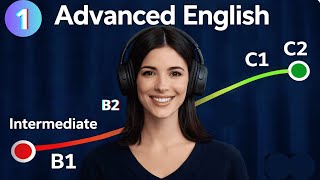
real conversations. Take a deep breath, relax, and let's get started on this journey to fluent English together. So, grab a pen and paper. Let's get started. When we think about moving from a B1 level in English to a C2 level, the First thing that comes to mind is vocabulary. Vocabulary is the foundation of fluency. Without the right words, we cannot express ideas fully. We cannot describe emotions accurately and we cannot participate in advanced conversations naturally. At the B1 level, you already understand the basics. You know how to introduce yourself, talk about your day, and share
opinions in simple sentences. But at the C2 level, you must learn how to shape your words into precise, rich, and flowing expressions that carry confidence and clarity. For example, at the B1 level, you might say, "I am tired today because I worked a lot." That is correct, but it is simple. At the C2 level, you could say, "I am exhausted after such a demanding day at work." Or, "I feel drained after handling so many challenging tasks today." Notice how the meaning is the same, but The advanced versions show variety, emotion, and stronger vocabulary. This is
the first step we are going to practice together. Learning to take simple sentences and expand them into advanced fluent expressions. Let's practice together. I'll give you a basic sentence and you try to say it in a more advanced way. Here's the first one. The food was good. Now, how can we make it sound more advanced? You could say, "The food was delicious." Or, "The meal was absolutely delightful." Or even, "The flavors were exquisite and every bite felt satisfying." Each of these upgrades shows you how to go from simple vocabulary to richer, more advanced vocabulary. Pause
here. Repeat after me and try to create your own advanced version. Now, let's try another one. The basic sentence is I don't like this movie. At the C2 level, you might say, "This movie Doesn't appeal to me." Or, "I found this film rather uninteresting or the story line failed to capture my attention." Can you hear the difference? Each version is clearer, more expressive, and closer to what advanced speakers would naturally say. This kind of practice is what will push you from B1 to C2 step by step. Another important area is connectors. At the B1 level,
many learners often use simple connectors like and, but because. At the C2 level, however, you must use more advanced connectors such as although, nevertheless, moreover, consequently, on the other hand, these connectors make your speech smoother and more logical. For example, instead of saying, I wanted to go out, but it was raining, you could say, although I wanted to go out, the heavy rain kept me indoors. or I wanted to go out. Nevertheless, the weather forced me to stay inside. These connectors are like bridges that Carry your ideas forward in a professional and fluent way. Let's
practice this together. Repeat the simple sentence after me. I stayed home because I was tired. Now upgrade it. I decided to stay home since I was feeling exhausted. Another version. I stayed home as I was completely worn out after work. And an advanced version, I remained at home for fatigue had overwhelmed me by the end of the day. Do You notice how each version becomes richer and more advanced? That is exactly the type of training that will lift you toward the C2 level. When learning at the B1 level, many students hesitate to use new words
because they fear mistakes. But at the C2 level, confidence is key. You must dare to use new vocabulary and advanced structures in real conversations. Making mistakes is part of the process. In fact, each mistake is like a stepping Stone toward fluency. For example, if you use a difficult word incorrectly, you may feel embarrassed, but the next time you will remember it better, and soon it will become a natural part of your speech. So in this master class, I encourage you to practice loudly without fear and to embrace every mistake as progress. Now let's do a
short daily life practice exercise. Imagine you had a long day at school or work. At the B1 level, you might say, "My day was busy." Now let's push it to C2. Try saying, "My day was incredibly demanding, filled with non-stop activities." Or, "Today was overwhelming with back-toback responsibilities that left me little time to rest." Another option could be, "It was a hectic day packed with challenging tasks that required constant focus." Repeat these after me slowly and try to picture yourself saying them in a real Conversation. The more you connect your words to your life, the
faster you will progress. Finally, let's talk about rhythm and tone. Fluency is not just about vocabulary. It is also about how you deliver your sentences. At B1, many learners speak word by word with pauses that break the natural flow. At C2, you must learn to speak in chunks, linking words together. For example, instead of saying each word separately, like I went To the store, try saying it smoothly as I went to the store. And then for advanced practice, I went to the store to pick up some essentials before dinner. Notice how the sentence flows naturally
when spoken in rhythm. This kind of fluency comes from shadowing practice where you repeat sentences exactly as you hear them, copying the tone and flow of native speakers. We will continue practicing this throughout the lesson. One of the clearest signs of progress from B1 to C2 is the ability to describe things with precision. At B1, you may describe something in broad or simple terms. For example, you might say, "The weather is nice, but at C2, you need to add more color and detail." You could say, "The weather today is pleasantly warm with a gentle breeze
that makes it comfortable to walk outside." Or, "The day feels refreshing, the air is crisp, and the sunlight is perfectly balanced, Not too harsh, not too weak." Notice how these advanced sentences paint a picture. At higher levels, your English should not just be in form, but also create images and emotions for the listener. Let's try a practice together. The basic sentence is, "My room is small." At an advanced level, you could say, "My room is compact but cozy with enough space for everything I need." Or though the room is modest in size, it feels warm
and inviting because of its Simple design. Or even, "It may be small, but it has a charming atmosphere that makes me feel comfortable every time I step in." Pause here and repeat after me. Now, create your own advanced description of a small space in your life. Another area that defines C2 fluency is the use of idiomatic expressions. At B1, learners often use direct and literal words. At C2, however, idioms, collocations, and phrasal verbs become essential for Sounding natural. For example, instead of saying, "I am very tired," you could say, "I am worn out." Or, "I'm
completely drained." Instead of saying it's easy, you could say it's a piece of cake. Instead of I don't understand, you could say I can't make sense of it. These expressions bring your English closer to how native speakers communicate every day. Let's practice with a few idioms. Repeat after me slowly. After working for 8 hours, I was Completely wiped out. Now, another one. Understanding advanced grammar at first can feel like climbing a mountain, but with practice it becomes easier. And one more. I was over the moon when I passed my exam with high marks. Each of
these examples uses idiomatic language to replace simple B1 expressions with colorful advanced alternatives. Try making a list of your own favorite idioms and practice using them in your daily conversations. Moving forward, we must also pay attention to nuance. At B1, you might rely on one or two basic words to express yourself. But at C2, you must learn synonyms that carry different shades of meaning. For example, let's take the word happy. At B1, you might only say, "I am happy." At C2, you could use joyful, delighted, thrilled, ecstatic, content, pleased. Each word describes happiness, but with
different intensities. Thrilled means very Excited, while content means quietly satisfied. Mastering these subtle differences will make your English richer and more precise. Let's practice synonyms together. Repeat after me. I was delighted to meet her after such a long time. Another one. He felt content after finishing his project successfully. And one more. She was ecstatic when she heard the good news. Now try to imagine different situations In your life and use a specific synonym for happiness. Instead of only saying happy, push yourself to select the right word that fits the situation best. This will bring you
closer to advanced fluency. Another important skill for C2 is paraphrasing. In real life situations, sometimes we forget a word or we don't know the exact term. At the B1 level, this can cause pauses or hesitation. But at the C2 level, you must learn to Express the same idea in another way smoothly and without breaking the flow. For example, if you forget the word restaurant, you can say the place where people go to eat food. Or if you forget the word generous, you could say someone who gives a lot and is very kind. This skill keeps
your speech fluent even when your vocabulary isn't perfect. Paraphrasing is a survival tool for advanced learners. Let's do a short exercise. Imagine you forget the word Expensive. How could you explain it? You could say it costs a lot of money or the price is very high. Now imagine you forget the word library. You might say the place where people borrow books. One more. Imagine you forget the word shy. You could say someone who feels nervous when speaking to others. This practice trains your brain to keep speaking without stopping, which is one of the strongest signs
of fluency. Finally, let's touch on register the Ability to adjust your language depending on the situation. At B1, you may use the same words in both formal and informal situations. But at C2, you must know how to change your tone. For example, with friends, you might say, "Hey, what's up?" But in a job interview, you might say, "Good morning." It's a pleasure to meet you. Both express greetings, but they are appropriate in different contexts. At C2, you should be able to move smoothly Between formal, neutral, and informal registers. Depending on where you are and who
you are talking to, let's practice this. Imagine you're inviting a friend to dinner. You might say, "Want to grab dinner tonight?" That's informal. Now, imagine you are writing a professional email to a colleague. You could write, "Would you like to join me for dinner this evening?" That's formal. Both mean the same thing, but the Register is different. Try practicing by taking one sentence and saying it in an informal, neutral, and formal style. This flexibility is what makes you sound truly advanced. One of the most important qualities that separate B1 speakers from C2 speakers is flexibility
with grammar. At the B1 level, learners usually rely on simple tenses like present simple, past simple, and future simple. At C2, however, you need to comfortably use a wide range of tenses And grammatical structures. For example, instead of saying, "I lived here for 5 years," which is grammatically correct but basic, you could say, "I have been living here for the past 5 years, and during this time, I've learned so much about the culture." This not only shows advanced grammar, but also adds depth and detail to your ideas. Let's practice with the sentence. Basic version. I
studied English last year. Now try advanced versions. I was studying English throughout last year, focusing on my pronunciation and fluency. Or I had been studying English for several months before I decided to take an advanced course. Or even I have studied English continuously since last year and it has transformed the way I communicate. Each version uses a different tense and structure, but all show a higher level of control over grammar. Another big step towards C2 fluency is Mastering conditionals. At the B1 level, learners may only use simple conditionals like if it rains, I will stay
home. At C2, you must also use advanced forms like the third conditional or mixed conditionals. For example, if I had studied harder last year, I would have passed the exam with flying colors. Or if I were more confident, I would speak in front of large audiences without hesitation. These conditionals allow you to talk about unreal situations, regrets, and hypothetical scenarios with fluency. Let's try some practice examples together. Repeat after me. If I had woken up earlier, I wouldn't have missed the bus. Another one. If I were living in London right now, I would be practicing
my English every single day with native speakers. And one more. If I had taken that opportunity, My life would look completely different today. These sentences may feel challenging at first, but once you master them, they will give you incredible flexibility in expressing ideas at the highest level of English. Apart from grammar, you also need to build advanced vocabulary for emotions and abstract ideas. At B1, you might say, "I am sad." At C2, you could say, "I feel disheartened by the outcome." or her words left me feeling Deeply discouraged. Similarly, instead of I am angry, you
could say, "I am outraged by this unfair situation." Or, "His rude behavior left me utterly frustrated." Notice how the advanced words carry stronger emotion and more precise meaning. This is the type of vocabulary that will make your English stand out. Here's a practice exercise. I'll give you a simple word and you'll try to replace it with an advanced synonym. The Word is big. Instead of big, you could say huge, enormous, massive, gigantic, tremendous, immense. Now try the word small. Instead of small, you could use tiny, miniature, compact, minute, modest, delicate. Now let's try good. Instead
of good, use excellent, outstanding, remarkable, impressive, exceptional. Repeating these words and practicing them in sentences will help you naturally upgrade your vocabulary from B1 to C2. Let's build some Sentences together. Repeat after me. The building was enormous, towering over everything around it. Another one. Her performance was exceptional. Every detail was carefully polished. And one more. He gave a minute description of the event, covering even the smallest details. By practicing in this way, you start to internalize synonyms and naturally replace simple words with advanced alternatives when speaking. Another area We must focus on is advanced discourse
markers. These are phrases that help you organize your thoughts and connect your ideas smoothly. At B1, you may only use first, then finally. At C2, you should use expressions like on the contrary. As a matter of fact, in other words, to put it simply, having said that, in contrast, by and large, all things considered, these markers make your speech sound logical, structured, and professional. Let's practice with a Short example. Instead of saying, I like coffee. I don't like tea. You could say, I enjoy coffee. On the contrary, tea has never appealed to me. Another example,
she is usually quiet. As a matter of fact, she prefers to listen more than she talks. And one more, the movie was long and slow. Having said that, the acting was truly outstanding. Repeat these with me and notice how they give your English a polished and advanced feel. Now, let's take a step Into real life practice. Imagine you are giving your opinion in a meeting. At the B1 level, you might say, "I think this idea is good." At the C2 level, you could say, "In my opinion, this proposal holds great potential for success, provided we
implement it effectively." Or from my perspective, this suggestion could be highly beneficial if we consider the practical challenges involved. These advanced forms show not Only your opinion, but also critical thinking and confidence. That is exactly what you need to move towards C2 fluency. Let's practice together. Repeat after me. From my point of view, this approach is more efficient than the one we used before. Another one. As far as I am concerned, developing strong communication skills is essential for career growth. And one more. In my view, consistent practice is the only path to mastering advanced English.
Try saying These sentences with confidence, imagining yourself in a real conversation where your opinion matters. This is how you bring advanced fluency into your daily life. To reach C2 fluency, you must also learn how to tell stories in English. At the B1 level, many learners tell stories in short, simple sentences, often repeating the same structure again and again. For example, yesterday I went to the park. I met my friend. We talked. Then we went Home. While this is correct, it is not engaging. At C2, you must use richer vocabulary, time expressions, and descriptive details to
make your story flow. For example, yesterday afternoon, I happened to meet an old friend at the park. We ended up having a long, engaging conversation about our lives. And by the time we finished, the sun was already setting, painting the sky with beautiful colors. This version sounds alive and interesting. It draws the listener into the experience. Let's practice together. Start with this simple version. I cooked dinner last night. Now, let's upgrade it. Last night, I prepared a homemade dinner with fresh ingredients, and the aroma filled the entire kitchen as I cooked. Another upgrade. Yesterday evening,
I decided to cook a warm, comforting dinner. And the process of chopping vegetables and stirring the pot felt Surprisingly relaxing after a long day. Do you hear how each version adds life, color, and rhythm? This is the storytelling skill you need at the advanced level. Another key element at the C2 level is the ability to express subtle opinions and emotions. At B1, you may say, "I like this book." At C2, you can add layers. I truly enjoyed this book because the author managed to capture emotions in such a realistic way. Or, I Found this novel
deeply moving. The characters felt so alive that I almost forgot they weren't real. Advanced English gives you the power to show not only what you feel, but why you feel it and to do so in a sophisticated way. Here's an exercise. Repeat after me. I appreciated the movie not only because of its story, but also because of the way it made me reflect on my own life. Another one. I enjoyed the music mainly due to its Emotional depth and the way it connected with my memories. And one more, I admired the speech since it combined
clarity with a powerful message that stayed with me afterward. These kinds of sentences go beyond simple opinions. They give reasons, explanations, and emotions, all signs of advanced fluency. Another important skill at C2 is being able to hedge your opinions politely. At B1, learners often sound too direct, saying things like, "You are wrong." But At the advanced level, you can soften your language and show respect even when disagreeing. For example, I see your point, but I'm not entirely convinced. Or that is an interesting perspective. However, I would look at it differently or I understand where you're
coming from, though I'm not sure I completely agree. This type of language is essential in academic, professional, and social contexts. Let's practice some polite disagreement. Repeat after me. I Respect your opinion, but I would like to offer a different point of view. Another one. You raise a valid concern. However, I believe there might be another solution and one more. That's certainly a good idea. Although, I wonder if we should also consider other possibilities. Notice how these sentences keep the conversation positive while still expressing your own view. This ability is as one of the hallmarks of
C2 Communication. Now, let's turn to advanced practice with phrasal verbs and collocations. At B1, you may know some basic phrasal verbs like wake up, sit down, turn off. At C2, you should learn and use phrasal verbs that carry more complex meanings. For example, bring up means to mention a topic, come across means to find something unexpectedly. Run out of means to have no more left, and carry on with means to continue. Native speakers use these constantly and mastering them makes your English sound natural and advanced. Here are some practice sentences. Repeat after me. During the
meeting, she brought up an important issue we had all overlooked. Another one. I came across an interesting article while browsing online. And one more. We ran out of milk this morning, so I had to go to the store. Try using these phrasal verbs in your daily life until they become Natural. Then challenge yourself to learn new ones every week. In addition to phrasal verbs, collocations, words that naturally go together are another mark of C2 fluency. For example, we say make a decision, not do a decision. We say strong coffee, not powerful coffee. Learning collocations will
make your speech smooth and natural. For example, take responsibility, deeply concerned, fast asleep, heavy rain, crystal clear. These Combinations are natural to native speakers, and using them correctly will instantly make your English sound more advanced. Let's practice a few. Repeat after me. He made a quick decision after hearing all the facts. Another one. I was deeply concerned about her health. And one more. The explanation was crystal clear and everyone understood it immediately. Notice how natural these combinations feel. Try practicing collocations in Sentences every day and soon they will become automatic. At the C2 level, you
should also be able to shift between abstract and concrete ideas with ease. At the B1 level, learners often stick to very concrete language, saying things like, "I like dogs," or, "I want a new phone." At C2, however, you need to handle abstract concepts such as freedom, success, identity, or responsibility. For example, instead of only saying, "I Like learning English," you could say, "For me," learning English represents a pathway to freedom, connection, and growth. Notice how the second version goes beyond the action itself and touches on a bigger idea. If you found this lesson helpful, make
sure to subscribe to Al Accent Lounge so you never miss a new episode. Click the like button if you enjoyed this video and share it with your friends who are learning English. I'd also love to hear From you. Leave a comment below and tell me what you learned today or what topic you want next. Your support helps this channel grow and bring you even more English lessons every week. This is what advanced speakers do. They link their experiences to larger universal concepts. Let's practice moving from concrete to abstract. Start with this sentence. I need money.
At a higher level, you might say, financial independence is essential to living with Dignity and making free choices. Another one, I want friends. At C2, you might say, human connection plays a crucial role in our emotional well-being. and I value building relationships that bring meaning to life. By practicing like this, you train yourself to see beyond the surface and connect your English to deeper ideas. Another important step is learning to use metaphors. And I majory native speakers Often use metaphors to make their speech more powerful. For example, instead of saying he is very busy, you
might say he has a lot on his plate. Instead of she is nervous, you could say she has butterflies in her stomach. These phrases give life to your language and make it more expressive. At the C2 level, mastering metaphors will make your English sound artistic and memorable. Let's try some practice. Repeat after me. Learning a language is Like planting a tree. It takes time, care, and patience, but eventually it grows strong. Another one. Her smile was like sunshine warming everyone around her. And one more. Life is a journey and every challenge we face is just
another step along the path. As you practice these, try creating your own metaphors about your daily life. This creative habit will make your English both advanced and personal. At C2, it is also important to master emphasis and Subtlety. Sometimes you want to highlight something strongly and sometimes you want to say it gently. At B1 you might only use very for emphasis like this is very important. At C2 you can use alternatives extremely, absolutely, utterly, incredibly, remarkably, tremendously or for subtlety you can say slightly, somewhat, relatively, fairly, kind of. This range of emphasis allows you to
Express exactly how strong your opinion or feeling is. Let's practice together. Repeat after me. This is absolutely essential if you want to succeed. Another one. I was utterly shocked by what I saw. Now try subtlety. The movie was somewhat disappointing though still enjoyable. Another one. I felt slightly nervous before the interview, but it quickly passed. Being able to shift between strong and soft emphasis. Another key part of advanced fluency is Rhetorical questions. At the B1 level, learners usually make direct statements. This is difficult. At C2, you can use rhetorical questions to engage listeners. Isn't it
fascinating how quickly technology changes our lives? Or don't we all wish we had more time to do the things we love? Rhetorical questions add rhythm and connection to your speech and they make you sound persuasive and confident. Let's practice with a few. Repeat after me. Isn't it amazing how Small changes in your routine can completely transform your day? Another one. Don't you think learning English opens the door to countless opportunities? And one more. Who wouldn't want to sound natural and confident in another language? Practicing rhetorical questions will help you learn to speak not just correctly,
but also in a way that connects emotionally with others. Now, let's do a real life exercise. Imagine you are telling a friend about a book you read. At B1, you might say, "I read a book. It was interesting." at C2. You could say, I recently finished reading a fascinating novel that explored themes of love, loss, and personal growth. The story was deeply moving, and I found myself reflecting on my own experiences as I turned each page. Notice how this version adds detail, Emotion, and depth. Try practicing this exercise with your own favorite book, movie, or
story. Begin with a simple sentence, then upgrade it step by step until it sounds advanced. To wrap up this section, remember that moving from B1 to C2 is not just about grammar and vocabulary. It's about expanding your ability to think, describe, and connect. Advanced English is the bridge between everyday conversation and meaningful, Powerful communication. Each time you add detail, each time you practice synonyms, metaphors, or rhetorical questions, you are building your way toward true fluency. At the advanced level, another powerful skill is the ability to use emphasis in your sentence structure, not only with vocabulary.
At B1, learners usually follow a simple subject, verb, object order. For example, I like this idea. At C2, However, you can rearrange sentences for style and impact. For example, what I really like about this idea is its simplicity or this idea, I must say, appeals to me the most. Or it is the creativity of this idea that makes it stand out. These variations show control over word order and highlight different parts of the message. Advanced English isn't just about what you say, but how you shape it. Let's practice a few. Repeat after me. What inspires
me the Most is the effort you put into your work. Another one. It was the kindness in her voice that comforted me. And one more. What makes this place unforgettable is the warmth of its people. By practicing these, you will learn to emphasize exactly what you want to highlight in your sentences, giving your speech variety and strength. Another key skill is mastering reported speech. At B1, learners usually use direct quotes. She said, "I am tired." At C2, you need to use reported speech naturally, especially in conversations, essays, or professional settings. For example, she mentioned that
she was exhausted after the long journey. Or he explained that he had been working on the project for months. Reported speech shows maturity in language use because it allows you to share information smoothly and clearly. Let's practice this together. Direct. He said, "I like this plan." Reported. He said that he liked the plan. Another one direct. She said I will help you tomorrow. Reported. She promised that she would help me the following day. And one more direct. They said we are leaving now. Reported. They told me they were leaving at that moment. Repeat these slowly
until they feel natural. The more you use reported speech, the more professional and advanced your English will sound. Let's now focus on building arguments and Persuasive language. At the B1 level, many learners simply state their opinion. I think learning English is important. At the C2 level, you must back your opinion with reasons, evidence, and persuasive structure. For example, I strongly believe learning English is essential as it opens countless doors to education, career opportunities, and cultural exchange. Or in my view, English fluency is not just about communication. It's about Connecting with the world on a deeper
level. Persuasive language shows you can think critically and express ideas with conviction. Practice with me. Repeat. In my opinion, practicing English daily is far more effective than studying only once in a while. Another one, I believe technology has made learning languages more accessible than ever before. And one more, there is no doubt that consistent practice is the key to mastering English. Try to use this type Of language in debates, discussions, or even personal journaling. The more you practice structured opinions, the more fluent and confident you will become. Another important feature of C2 fluency is advanced
linking devices for cause and effect. At B1, learners might say, "I didn't sleep well, so I'm tired." At C2, you can say, "Due to a restless night, I am feeling exhausted today." or as a result of staying up late, I found it difficult to concentrate in class. Or Owing to the heavy traffic, I arrived later than expected. These advanced cause and effect expressions make your English smoother and more academic. Here's a short exercise. Repeat after me. As a consequence of poor planning, the project faced serious delays. Another one. Owing to his dedication, he achieved remarkable
success and one more. Because of the sudden rain, the event had to be postponed. Practicing these structures will help you sound Natural in both professional and casual contexts. At the advanced level, you also need to master contrast and concession. Instead of only saying, "I like it, but it's expensive." You could say, "Although I like it, the price is too high." Or, "I like it nevertheless, I can't afford it right now." Or, "While I do enjoy it, I must admit it is far too costly." These structures allow you to present Balanced, nuanced ideas, which is a
clear sign of advanced thinking. Let's practice some contrast sentences. Repeat. Although the film was long, it was captivating from beginning to end. Another one. While she is young, she has already achieved incredible success. And one more. The weather was cold. Nevertheless, we decided to go hiking. The more you practice using contrast, the more flexible and sophisticated your English will become. Finally, let's touch on rhythm and fluency practice. Again, fluency is not only about words and grammar. It is about flow. At B1, many learners pause too much saying, "Uh, I went to the park." At C2,
you learn to group words into chunks. For example, I went to the park yesterday afternoon and I had a wonderful time walking among the trees. To train this, try shadowing exercises. Listen to a native speaker and repeat exactly Matching their rhythm. Shadowing builds muscle memory for natural speech and helps you develop the flow of a native speaker. Another crucial step towards C2 fluency is mastering subtle differences in meaning between similar words. At B1, many learners often rely on a limited set of vocabulary, repeating words like good, bad, nice, big, small. At C2, however, you must
be able to choose the exact word that fits the context. For example, Instead of always saying bad, you could say terrible, awful, dreadful, appalling, unpleasant, disappointing, unacceptable. Each word has a slightly different shade of meaning. Awful may describe something emotionally negative, while unacceptable works better in a formal or professional situation. This sensitivity to context is what makes your English advanced. Let's practice this idea. The simple sentence Is the service was bad. At C2, you could say the service was dreadful and it completely ruined the experience. Or the service was unacceptable for a restaurant of that
standard. Or the service was disappointing given how highly it had been recommended. Repeat these after me and then try to create your own upgraded version. The more you experiment, the better you will get at selecting the perfect word. Now, let's talk about Building fluency with advanced adjectives and adverbs. At B1, you might say, "She runs fast." At C2, you can expand. She runs incredibly fast with remarkable strength and stamina. or she runs astonishingly quickly, leaving everyone else far behind. Adding stronger adverbs and adjectives makes your English more vivid and expressive. Instead of the room was
big, you could say the room was spacious and elegantly designed or the room was impressively Large with high ceilings that gave it an airy feel. These additions turn basic descriptions into advanced ones. Practice with me. Repeat. The speech was remarkably inspiring. Another one. He worked tirelessly to finish the project. And one more. The city was breathtakingly beautiful at night. Notice how each sentence paints a picture. Try to add at least one advanced adjective or adverb each time you describe something in English. This Habit will steadily raise your level towards C2. Another area where advanced learners
excel is using passive voice effectively. The company hired him. At C2, you must also know when to use the passive form. He was hired by the company. Passive voice is useful when the focus is on the action or result, not the person doing it. For example, the meeting was postponed due to bad weather. Or the novel was translated Into 20 languages. Advanced English speakers use both active and passive forms naturally depending on what they want to emphasize. Let's practice passive sentences. Repeat after me. The decision was made after careful consideration. Another one, the problem was
solved with teamwork and patience. And one more, the bridge was built more than a hundred years ago. Practice switching between Active and passive sentences until you feel comfortable using both. This flexibility is key to advanced grammar. At the C2 level, you also need to use advanced relative clauses. At B1, learners may say, "I have a friend. She lives in London." At C2, you could say, "I have a friend who lives in London." Or even, "I have a friend who has been living in London for several years working as a teacher." These structures allow you to
combine Ideas smoothly and add detail without sounding repetitive. Another example, this is the book that inspired me to study literature. Or the man whose car was stolen reported it to the police immediately. Relative clauses make your sentences more advanced and complex. Let's practice. Repeat. I admire people who are always willing to help others. Another one. This is the place where we first met. And one more. She spoke to the teacher who encouraged her to keep studying. By mastering relative clauses, you can express richer ideas in a single sentence, which is a major sign of C2
fluency. Now, let's focus on advanced connectors that add sophistication. At B1, you may use because or so. At C2, you should use phrases like owing to, in light of, with regard to, in spite of, notwithstanding, provided that. For example, Owing to the rain, the event was rescheduled. Or with regard to your question, I believe we should look at the data first. These connectors sound formal and polished, making your English more versatile. Let's practice connectors. Repeat. In spite of the difficulties, they manage to succeed. Another one. Provided that we all contribute, the project will be a
success. And one more. Notwithstanding His lack of experience, he handled the situation very well. Advanced connectors like these will strengthen your speaking and writing skills at the highest level. Finally, let's do a practical fluency exercise. Imagine you are describing your weekend at B1. You might say, "I went shopping. I bought clothes. I met my friend." At C2, you could say, "Over the weekend, I went shopping and treated myself to some new clothes. Later, I met a friend and We had an engaging conversation over coffee about our future plans. Notice how the advanced version flows like
a story with details, connectors, and variety in grammar. Practice this exercise with your own daily activities. Start with a basic version, then expand it step by step until it feels like advanced storytelling. At C2, fluency, one of the most valuable skills you can develop is precision in Expressing opinions. At B1, you might only say, "I think it's good or I don't like it." At C2, you must expand your toolbox. For example, in my view, this is a highly effective solution to the problem. Or I would argue that this approach is not the most practical or
from my perspective the idea holds merit though it requires further development. These structures show your ability to think critically and to express your ideas in a more Professional nuanced way. Let's practice together. Repeat after me. As far as I'm concerned, consistent practice is the most important element of language learning. Another one, I am convinced that vocabulary building is the key to advanced fluency. And one more, I would argue that confidence is just as important as grammar when it comes to communication. Try to use these expressions when giving your opinions in English. they will Immediately make
you sound more advanced. Another powerful area is building contrast with advanced phrases. At B1, learners often rely on but. At C2, you can use alternatives like nevertheless. On the other hand, at the same time, conversely, even so, for example, I was tired. Nevertheless, I completed the project. or I enjoy city life. On the other hand, I sometimes miss the peace of the countryside or the task was challenging. Even so, we Managed to succeed. These alternatives give your English rhythm and sophistication. Let's practice with a few. Repeat after me. She was nervous before the presentation. Nevertheless,
she spoke with great confidence. Another one, he is often quiet. On the other hand, he can be very funny once you know him. And one more. The weather was bad. Even so, we decided to go ahead with the trip. Practicing These will help you vary your language and avoid repeating the same simple structures. At C2, you should also master advanced noun phrases. Instead of saying it is a problem, you could say it is a serious environmental problem affecting millions of people. Instead of he is a teacher, you could say he is an experienced language teacher
with more than 10 years of classroom practice. Expanding noun Phrases is a great way to add detail and sound advanced without making your sentences too complicated. Let's practice. Repeat after me. She is a highly respected professor of linguistics at a leading university. Another one. It was a once- ina-lifetime opportunity to study abroad. And one more. He has an impressive collection of rare and valuable books. The more detail you add, the richer your English Becomes. Try expanding your own noun phrases about your life, your job, your hobbies, your experiences. Another feature of advanced fluency is flexibility
with modal verbs. At B1, you might only use can, must, should. At C2, you need to use modal verbs in different tenses and with different nuances. For example, I could have studied harder, but I didn't. or you should have told me earlier or he might have forgotten the Meeting. These advanced uses of modal verbs allow you to talk about possibility, regret, criticism, or speculation in a sophisticated way. Let's practice. Repeat after me. I could have joined the trip, but I chose to stay home. Another one. She should have apologized for her mistake. and one more.
They might have taken the wrong train. Try practicing modal verbs in past, present, and future context until they feel automatic. At the advanced level, you must also become comfortable with expressions of probability and certainty. At B1, you might only say, maybe he is right. At C2, you could say it is highly likely that he is right. or there is a strong possibility that he has already left or it is almost certain that the results will be announced tomorrow. These phrases make your speech precise and formal when needed. Let's practice a few together. Repeat. It is
quite possible That she will join us later. Another one. There is a high probability of rain this weekend. And one more. It is almost certain that technology will continue to transform education. Using these expressions will help you speak with confidence in academic, business, and everyday discussions. Now, let's do a short real life exercise. Imagine someone asks you, "What do you think about learning languages?" At B1, you might answer, "It Is good." At C2, you could say, "In my opinion, learning languages is one of the most rewarding experiences a person can have as it not only
opens doors to communication, but also expands cultural understanding and personal growth. Notice how the advanced version is full, precise, and inspiring. Try practicing with questions about your daily life. Start with a simple answer, then push it further, adding details, connectors, and advanced vocabulary. At the C2 level, another essential skill is mastering advanced comparisons. At B1, you might say, "She is taller than me," or, "This book is better." At C2, you can expand your comparisons to sound more polished and natural. For example, she is significantly taller than I am, which makes her stand out in a
crowd. Or this book is far more insightful than the previous one I read. You can also use advanced structures like not nearly as, just as, as or Nothing like the exam was not nearly as difficult as I had expected or the movie was nothing like the trailer suggested. It was far more complex. Let's practice. Repeat after me. This course is much more challenging than the one I took last year. Another one. The view from the mountain was just as breathtaking as the photos promised. And one more. The new policy is not nearly as effective as
the old one. By practicing these forms, you add precision and variety to your Comparisons. Moving closer to true C2 fluency at the advanced level, you should also master inversion for emphasis. Instead of saying, "I had never seen such beauty before," you could say, "Never had I seen such beauty before." Instead of, "I rarely go out on weekdays," you could say, "Rarely do I go out on weekdays." Inversion gives your English elegance and a more formal literary style. It may not be common in casual Conversation, but it is excellent for advanced writing, presentations, and speeches. Practice
with me. Repeat. Never have I been so inspired by a teacher. Another one. Seldom do we realize how much progress we are making until we look back. And one more. Only after failing several times did he finally succeed. These may feel unusual at first, but once mastered, they will make your English sound truly advanced. Another key feature of C2 fluency is Advanced conditional structures. At B1, learners usually know first and second conditionals. At C2, you should be comfortable with mixed conditionals, which connect past events with present or future results. For example, if I had studied
medicine, I would be a doctor now. Or if I hadn't missed the train, I would be at the office already. These sentences show you can think across different time frames, a sign of true mastery. Practice with me. Repeat. If I had learned English earlier, I would be more fluent now. Another one. If she had joined the company, she would be managing the team today. And one more, if I had taken that opportunity, my life would look completely different. These conditionals take practice, but they are powerful tools for expressing complex ideas. At the C2 level, you
should also master advanced question Forms. At B1, you might ask, "Why is this important?" At C2, you can make your question sound more sophisticated. To what extent is this relevant in today's world? Or in what ways can this strategy improve our results? Or how might this decision affect our long-term goals? Practice with me. Repeat. To what extent can daily practice improve fluency? Another one. In what ways does vocabulary influence confidence? And one More, how might advanced grammar structures change the way people perceive your English? The more you practice forming these types of questions, the more
professional and thoughtful you will sound. Another important skill is mastering advanced expressions of time. At B1, you might simply say, "I will finish it soon." At C2, you can expand with expressions like in the long run, sooner or later, in the meantime, from now on, at the last Minute, let's practice. Repeat. In the long run, consistent practice always pays off. Another one. Sooner or later, you will see the results of your hard work. And one more. We finished the project at the last minute, but it was a success. These expressions make your English sound smooth,
natural, and precise. Thank you for learning with me today. If you found this video helpful, please give it a like and subscribe to the Channel. It really motivates me to keep creating more lessons for you. For example, in the long run, consistent practice always pays off. Or from now on, I will dedicate at least 30 minutes a day to improving my English. These expressions give your English natural rhythm and variety. Let's practice together. Repeat. Sooner or later, your hard work will show results. Another one. In the meantime, keep practicing every day to stay sharp. and
One more. At the last minute, he decided to change his presentation. Using time expressions naturally is another way to demonstrate fluency at the highest level. Finally, let's do a short real life practice. Imagine you are describing your goals. At B1, you might say, "I want to be fluent." At C2, you could say, "My ultimate goal is to achieve fluency in English so that I can participate in international discussions With confidence and ease." Or, "I long run, I aim to master advanced vocabulary and expressions that will allow me to express myself with precision and elegance." Practice
expanding your own goals this way. It will not only improve your English but also strengthen your motivation to keep going. At C2 level, one of the clearest signs of fluency is your ability to handle uncertainty and speculation naturally. At B1, you might Say maybe he is late. At C2, you can express the same idea in more advanced ways. He might have been delayed by traffic or it's possible that he lost track of time or he could well be running behind schedule. These alternatives make your English sound more precise and adaptable to different situations. Let's practice.
Repeat after me. She may have forgotten to check her messages. Another one. It's quite possible that The event will be postponed. and one more. They could well be considering other options at this point. Using a variety of speculative phrases shows that you can think flexibly in English, which is an advanced skill. Another important aspect of C2 fluency is mastering emphasis with cleft sentences. Instead of saying, I enjoyed the movie, you could say, what I really enjoyed was the movie soundtrack. Instead of she inspired me, you could say it was her determination that inspired me the
most. These structures allow you to highlight specific parts of your sentence, making your speech more dynamic and expressive. Let's try a few together. Repeat. What surprised me was how quickly I improved after daily practice. Another one. It was his positive attitude that motivated the whole team. And one more. What I appreciate most is your willingness to Keep learning. Practicing cleft sentences helps you add variety and emphasis to your speech. An important step towards C2 mastery. At the advanced level, you also need to refine your ability to agree and disagree diplomatically. At B1, you might simply
say, "I agree." Or, "I don't agree." At C2, you can use more nuanced phrases. I completely agree with your point as it highlights the importance of practice. Or, "I agree to some extent, though I think there are other factors to consider." Or, "I'm not entirely convinced, but I see where you're coming from." These expressions allow you to participate in discussions respectfully and with depth. Practice with me. Repeat. I totally agree that vocabulary is central to fluency. Another one. I agree to a certain degree, but I believe grammar is equally important. And one more. I can
See your perspective, though I would interpret it differently. These advanced expressions will help you sound balanced, confident, and respectful in any conversation. At C2, another important area is mastering discourse in longer terms. Many B1 learners struggle to speak for more than a few sentences without pausing or repeating themselves. Advanced speakers, however, can hold the floor by structuring their ideas Clearly. For example, you could say, "There are three main reasons why I believe practice is essential. Every liked, every comment, and every new subscriber helps us grow this learning community. So, hit the like button, subscribe, and
share this video with your friends who want to improve their English too. Firstly, it builds confidence. Secondly, it helps vocabulary become automatic. And finally, it develops Rhythm and flow which are necessary for fluency. Notice how the sentence is organized with signposts. Firstly, secondly, finally, these keep your listener engaged and help you deliver your thoughts smoothly. Let's practice with a sample. Repeat. There are several advantages to reading books in English. To begin with, it exposes you to new vocabulary. In addition, it helps you see grammar in context. And finally, it improves your Imagination and creativity. Now,
try creating your own structured speech about a daily topic like food, hobbies, or study habits. This practice will help you speak more confidently for longer periods, which is essential at C2. At the advanced level, you also need to use subtle intensifiers and down toners to control your message. For example, instead of saying I like it, you could say I really like it, I absolutely love it, or I quite like it. Each phrase changes the intensity of your opinion. Similarly, instead of saying it is difficult, you could say it is fairly difficult, it is somewhat challenging,
or it is extremely demanding. These small shifts in intensity make your English more precise and natural. Let's practice together. Repeat, I absolutely love the concert last night. Another one. The exam was fairly challenging, but I managed to do well. And one more. I'm rather interested in learning more about this topic. Practicing intensifiers and down toners gives you control over how strong or soft your message sounds. An essential element of advanced communication. Finally, let's do a real life exercise to bring everything together. Imagine someone asks you, "How was your weekend?" At B1, you might say, "It
was good." At C2, you could say, "My weekend was absolutely wonderful. I spent time With close friends and we had a fascinating discussion about our future goals." What I really enjoyed was how relaxed and refreshing the whole atmosphere felt. Notice how this answer uses intensifiers, cleft sentences, and advanced vocabulary all in a natural way. Practicing this kind of response with common questions will steadily move you toward advanced fluency. At C2, one of the most impressive abilities is Mastering nuance when expressing emotions and attitudes. At B1, you may say, "I am happy." Or, "I am sad."
These are correct but simple. At C2, you need to show shades of feeling. For example, instead of I am happy, you could say I am overjoyed by the news. Or I am deeply content with the results. Instead of I am sad, you could say I felt heartbroken when I heard the story. Or I was a little down after the meeting didn't go well. Each choice of word expresses a Different intensity. Choosing the exact emotion is what separates advanced speakers from intermediate ones. Let's practice. Repeat after me. I was thrilled to hear about her success. Another
one. He was devastated after losing his job. And one more. She was slightly disappointed, but overall she remained hopeful. By practicing different levels of emotion, you will gain control over the mood and style of your English. Another advanced Skill is mastering indirectness and politeness. At B1, learners often speak very directly. Give me the book. At C2, you must know how to soften your requests. Could you pass me the book, please? or I was wondering if you could help me with this. In professional or social situations, indirectness shows respect and sophistication. For example, instead of close
the window, you might say, "Would you mind Closing the window?" These small changes make your English polite, advanced, and natural. Let's practice. Repeat. Would it be possible for you to explain that again? Another one. I was wondering if we could discuss this tomorrow. And one more. Could you please let me know your opinion on this? By practicing polite forms, you prepare yourself for professional and academic conversations where tone matters just as much as accuracy. At C2, you should also be comfortable with advanced academic and formal vocabulary. At B1, you might say, "The test was hard."
At C2, you could say, "The exam proved to be particularly demanding." Instead of, "I need to think about it," you could say, "I need to reflect on this matter." Instead of, "He said no," you could say, "he declined the offer." These choices make your English more professional and elegant, suitable for Essays, presentations, or job interviews. Let's practice. Repeat after me. The results were satisfactory, but further analysis is required. Another one. We must evaluate the options before making a decision. And one more. She expressed her gratitude for the support she received. Notice how each sentence uses
more formal verbs and nouns. Practicing these will give you the flexibility to move easily between Casual and formal situations. Another step toward advanced fluency is mastering hedging language. Native speakers often use hedging to sound careful and precise. For example, instead of saying this is true, you might say this seems to be true or this is likely to be the case. Instead of everyone agrees, you might say most people would agree. This type of cautious language is common in academic and professional contexts. It Shows that you are aware of nuance and don't overeneneralize. Let's practice. Repeat.
It appears that students improve faster with regular practice. Another one, this method is likely to be effective in many situations. And one more. There seems to be a connection between reading and vocabulary growth. Using hedging language makes your speech sound careful, balanced, and advanced. At the C2 level, you should also master rhetorical devices such as parallelism. This is when you repeat similar structures to create rhythm and emphasis. For example, practice builds confidence, practice builds fluency, practice builds success, or she was determined to win, determined to succeed, and determined to never give up. Parallelism gives your
speech a powerful, memorable quality. Practice with me. Repeat. We need patience. We Need persistence and we need passion to reach fluency. Another one, he studied every morning. He studied every afternoon and he studied every night. And one more, to learn is to grow. To grow is to succeed. And to succeed is to inspire. These rhythmic patterns make your English sound inspiring and professional. Finally, let's put everything into a real life scenario. Imagine you are in a job interview and Someone asks, "Why do you want to work here?" At B1, you might say, "Because I need
a job." At C2, you could say, "I am genuinely motivated to work here because your company values innovation and I strongly believe my skills in communication and problem solving would allow me to contribute meaningfully to your team. Notice how the advanced answer is polite, precise, and persuasive. Practicing responses like this will Prepare you for real situations where advanced fluency truly matters. At C2 fluency, one of the most noticeable skills is the ability to summarize complex information clearly. At B1, learners may struggle to condense long ideas, often repeating themselves or leaving out important points. At C2,
you can take a large amount of information and express it concisely without losing meaning. For example, instead of retelling every detail of a meeting, you Could say, "In summary, the team agreed to extend the project deadline, allocate more resources, and schedule weekly updates." This ability to summarize shows maturity, confidence, and precision in your communication. I was wondering if we could discuss this tomorrow. And one more. Could you please let me know your opinion on this? By practicing polite forms, you prepare yourself for professional and academic Conversations where tone matters just as much as accuracy. At
C2, you should also be comfortable with advanced academic and formal vocabulary. At B1, you might say, "The test was hard." At C2, you could say, "The exam proved to be particularly demanding." Instead of, "I need to think about it." You could say, "I need to reflect on this matter." Instead of, "He said no," you could say, "he declined the offer." These choices make your English more professional and elegant, suitable for essays, presentations, or job interviews. Let's practice. Repeat after me. The results were satisfactory but further analysis is required. Another one, we must evaluate the options
before making a decision. And one more, she expressed her gratitude for the support she received. Notice how each sentence uses more formal verbs and nouns. Practicing these will give you The flexibility to move easily between casual and formal situations. Another step toward advanced fluency is mastering hedging language. Native speakers often use hedging to sound careful and precise. For example, instead of saying this is true, you might say this seems to be true or this is likely to be the case. Instead of everyone agrees, you might say most people would agree. This type of cautious language
is common in academic And professional contexts. It shows that you are aware of nuance and don't overeneneralize. Let's practice. Repeat. It appears that students improve faster with regular practice. Another one. This method is likely to be effective in many situations. And one more. There seems to be a connection between reading and vocabulary growth. Using hedging language makes your speech sound Careful, balanced, and advanced. At the C2 level, you should also master rhetorical devices such as parallelism. This is when you repeat similar structures to create rhythm and emphasis. For example, practice builds confidence, practice builds fluency,
practice builds success. or she was determined to win, determined to succeed, and determined to never give up. Parallelism gives your speech a powerful memorable quality. Practice With me. Repeat. We need patience. We need persistence. And we need passion to reach fluency. Another one, he studied every morning. He studied every afternoon and he studied every night. And one more. To learn is to grow. To grow is to succeed. And to succeed is to inspire. These rhythmic patterns make your English sound inspiring and professional. Finally, let's put everything into a real life scenario. Imagine you are in
a Job interview and someone asks, "Why do you want to work here?" At B1, you might say, "Because I need a job." At C2, you could say, "I am genuinely motivated to work here because your company values innovation, and I strongly believe my skills in communication and problem solving would allow me to contribute meaningfully to your team." Notice how the advanced answer is polite, precise, and persuasive. Practicing responses like this will Prepare you for real situations where advanced fluency truly matters. At C2 fluency, one of the most noticeable skills is the ability to summarize complex
information clearly. At B1, learners may struggle to condense long ideas, often repeating themselves or leaving out important points. At C2, you can take a large amount of information and express it concisely without losing meaning. For example, instead of retelling every detail of a meeting, you Could say, "In summary, the team agreed to extend the project deadline, allocate more resources, and schedule weekly updates." This ability to summarize shows maturity, confidence, and precision in your communication. Let's practice. Imagine you watched a 2-hour movie. At B1, you might say the movie was about a boy. He had powers.
He fought bad people. He won. at C2. You could say the movie followed the journey Of a young boy with special powers who overcame challenges to defeat his enemies and discover his true identity. Notice how this advanced version is short, clear, and complete. Try summarizing your own day, your favorite book, or even this lesson in just a few sentences. That's how you develop summarizing skills. Another advanced skill is paraphrasing. At B1, many learners repeat the same words again and again. At C2, you should be able to Rephrase the same idea in different ways. For example,
if someone says, "It's important to practice," you could respond, "Yes, consistent practice is essential." Or, "Absolutely. Regular training makes all the difference." or I agree. Nothing improves fluency more than daily repetition. This flexibility shows that you are not limited by vocabulary and can adapt your language to any context. Let's practice together. The sentence Is, I like reading books. Advanced versions, I really enjoy reading novels in my free time. or reading is one of my favorite pastimes. Or I find great pleasure in exploring different stories through books. Repeat these and then create your own versions. The
more you paraphrase, the more natural and advanced you will sound. At C2, you also need to master advanced transitions when giving presentations or telling stories. At B1, learners often use basic connectors like then, next, after that. At C2, you should use transitions like moving on. Furthermore, having said that, in addition to put it differently in contrast, for example, in addition to building vocabulary, regular listening practice is equally important. Or having said that, grammar cannot be ignored if you want to express yourself clearly. These advanced transitions guide your listener smoothly through your ideas. Let's practice. Repeat.
Moving on. Let's discuss the importance of fluency in daily life. Another one. Furthermore, practice with native speakers can accelerate progress. And one more. In contrast, studying without speaking practice often leads to frustration. Using transitions makes your English flow logically and professionally, which is essential for C2 mastery. Another skill to practice is advanced negation. At B1, learners may simply say, "I don't Know." Or, "That's not good." At C2, you can use more sophisticated forms. I'm not entirely sure about that or that doesn't necessarily mean it's wrong or it's not uncommon to make mistakes in the beginning.
These kinds of negative structures add subtlety and prevent your English from sounding too blunt. Practice with me. Repeat. I'm not completely convinced by that argument. Another one. It doesn't mean we should give up. It just means we need a new Approach. And one more. It's not unusual to feel nervous before speaking in public. Notice how these sentences sound gentle, precise, and natural, just like advanced speakers. At the advanced level, you should also be comfortable with expressions of certainty and doubt in formal and informal contexts. At B1, learners often say, "I know," or, "I don't know."
At C2, you could say, "I'm absolutely certain about this point." Or, "I have my doubts about that claim." Or, "I strongly suspect that practice is the missing key." These phrases allow you to show confidence or caution with elegance. Let's practice. Repeat. I'm fully confident that you will improve with practice. Another one. I have serious doubts about the effectiveness of that method. And one more. I strongly suspect that regular shadowing exercises can boost fluency. Practicing certainty and doubt will make you more persuasive and Natural in real conversations. Finally, let's do a real life exercise. Imagine a
colleague asks you to explain why English is important. At B1, you might say it's important for jobs. At C2, you could say English is vital in today's globalized world because it serves as a bridge between cultures, careers, and communities. Whether in professional contexts, academic environments, or personal connections, fluency in English creates Opportunities that would otherwise remain out of reach. Notice how this answer is structured, detailed, and advanced. Practicing expanded answers like this every day will move you closer to C2. At C2 fluency, one final key skill is the ability to adapt your language to different
audiences. At B1, learners often use the same style with everyone, friends, teachers, colleagues. At C2, however, you need to adjust tone, vocabulary, and Formality depending on who you are speaking to. With a close friend, you might say, "Hey, want to hang out later?" But with the manager, you would say, "Would you like to meet later this afternoon to discuss the project?" Both are correct, but each is appropriate in its own context. This flexibility shows that you are not just fluent but also socially intelligent with your language. Let's practice. Imagine you want to ask for help.
Informal. Can you give me a hand with this? Neutral. Could you help me with this, please? Formal. I would greatly appreciate your assistance with this matter. Repeat these slowly and notice the shift in tone. This ability to change register is one of the most advanced skills you can develop in English. At C2, you should also be able to use humor, irony, and figurative expressions comfortably. At B1, many learners avoid humor because they fear making mistakes, but humor is part of real communication. For example, if something is very obvious, you might say jokingly, "Well, that's as
clear as daylight." Or if someone is late, you might smile and say, "Better late than never." These playful uses of language make you sound natural and confident. Practice with me. Repeat. I was so hungry I could eat a horse. Another one. That test was a walk in the park compared to the last one. And one more. She always breaks the ice with the funny comment. By practicing idiomatic humor, you connect more easily with native speakers and show advanced fluency. Another important part of C2 fluency is mastering the skill of reflection and self-expression. At B1, you
might only say, "I learned English." At C2, you can reflect. Learning English has been one of the most transformative journeys of my life, teaching me not only new words, but also new ways of thinking. This depth of reflection makes your English meaningful and memorable. Here's an exercise. Answer this question. What has English given you? At B1, you might say it gave me knowledge. At C2, you could say, "English has given me the chance to connect with people across the world, to learn about different cultures, and to See myself as part of a global community. Try
reflecting in this way about your own journey. This practice will give you emotional fluency alongside linguistic fluency. Now, let's bring all of this together in one last real life practice. Imagine you are introducing yourself to an international audience. At B1, you might say, "My name is Anna. I live in Spain. I like reading." At C2, you could say, "My name is Anna and I come from Spain." I have Always been passionate about reading because it allows me to explore new ideas and cultures. And I'm especially interested in how literature connects people across borders. Do you
hear the difference? The advanced version flows naturally, provides depth, and reveals personality. That is what you should aim for in your own English. Finally, let's close with some motivation. Reaching C2 fluency is not something That happens overnight. It requires patience, dedication, and daily effort. But remember, every small step you take adds up. Each new word, each corrected mistake, each practice session, it all pushes you forward. Fluency is not just about speaking perfect English. It's about communicating with confidence, clarity, and authenticity. So keep practicing, keep shadowing, keep expanding your vocabulary and keep Challenging yourself with advanced
structures. You are not just learning English, you are building a bridge to the world, to new opportunities, and to your own personal growth. Thank you so much for spending your time with me today. If you reach this part of the lesson, that means you truly care about your English and your future, and I'm so proud of you for that. If you found this lesson helpful, please consider supporting this channel. Hit the subscribe button so you never miss a new lesson, press the like button to let me know that this content helps you. And most importantly,
share your thought in the comments. Tell me what you learned today or what you want me to teach in the next video. Your likes, comments, and subscriptions are what keep this channel alive. Every time you interact, you're helping me create even more free lessons for learners just like you all over the world. Remember, you Are not learning alone. We are building a global community of English learners who support each other. So join the conversation below and inspire someone else with your progress. Thank you again for being here, for learning with me, and for taking one
more step toward fluency today. I can't wait to see you in the next lesson. Until then, keep practicing, keep smiling, and keep believing in yourself.