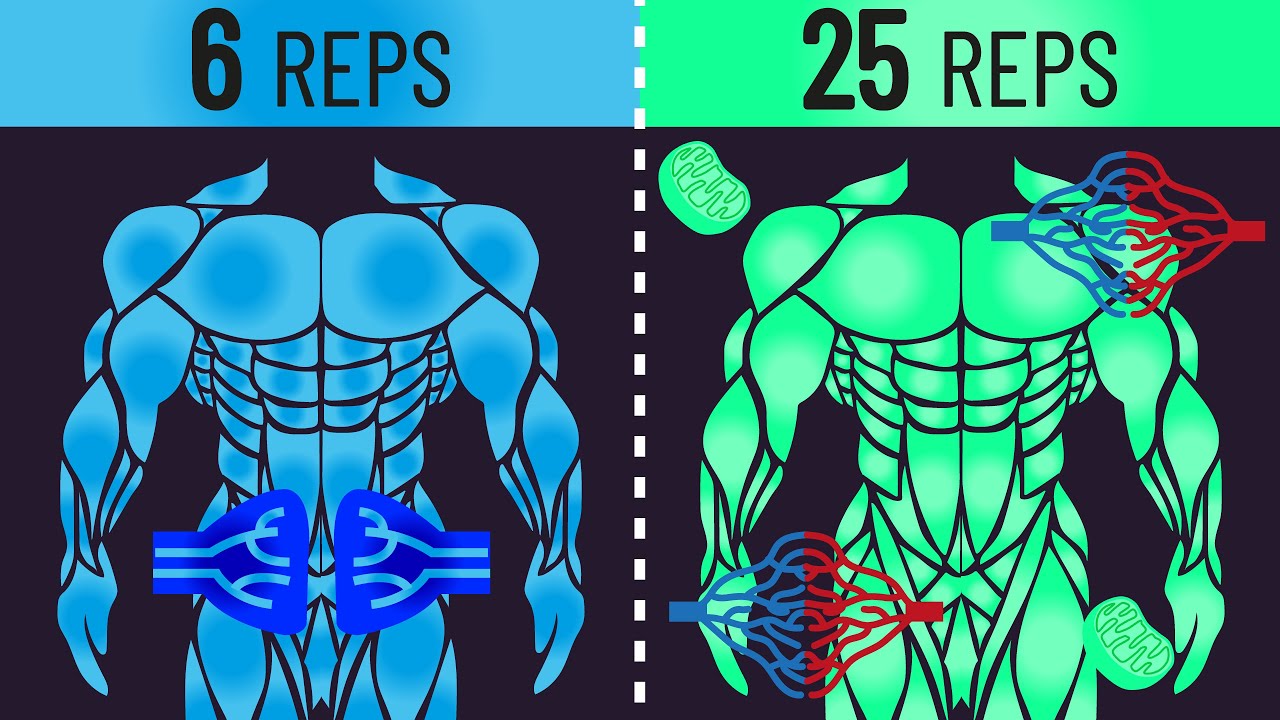
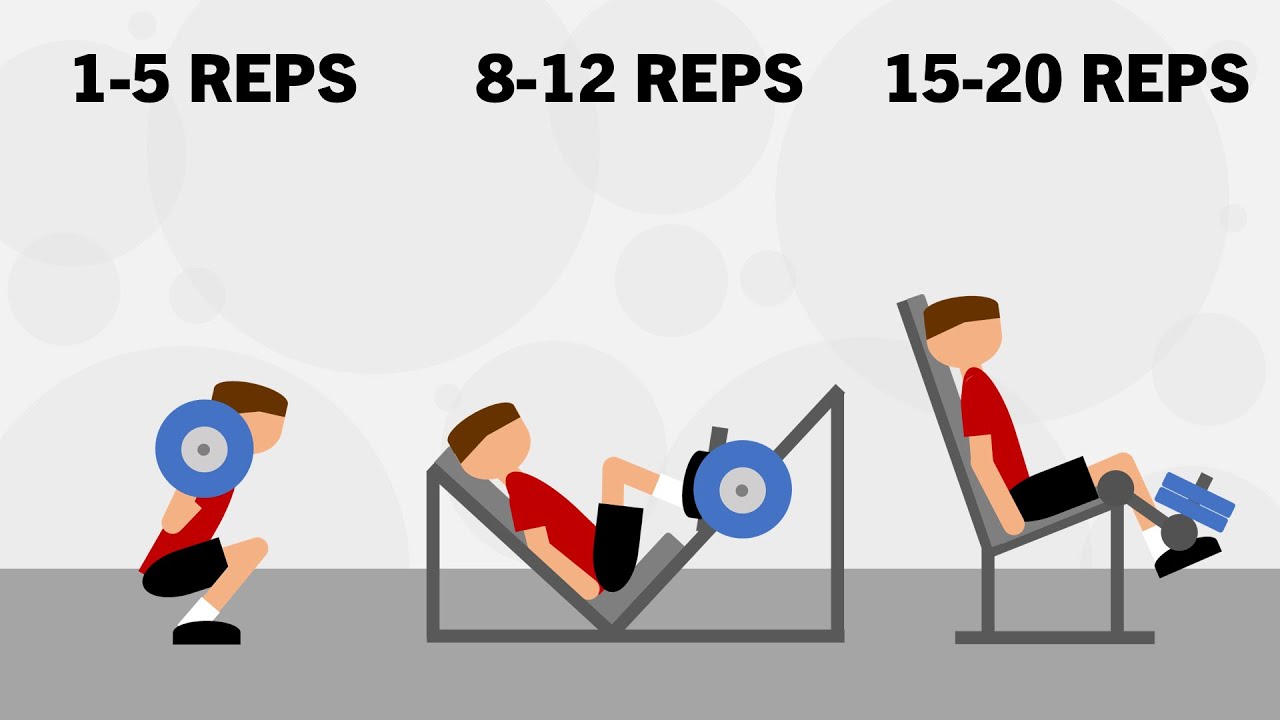
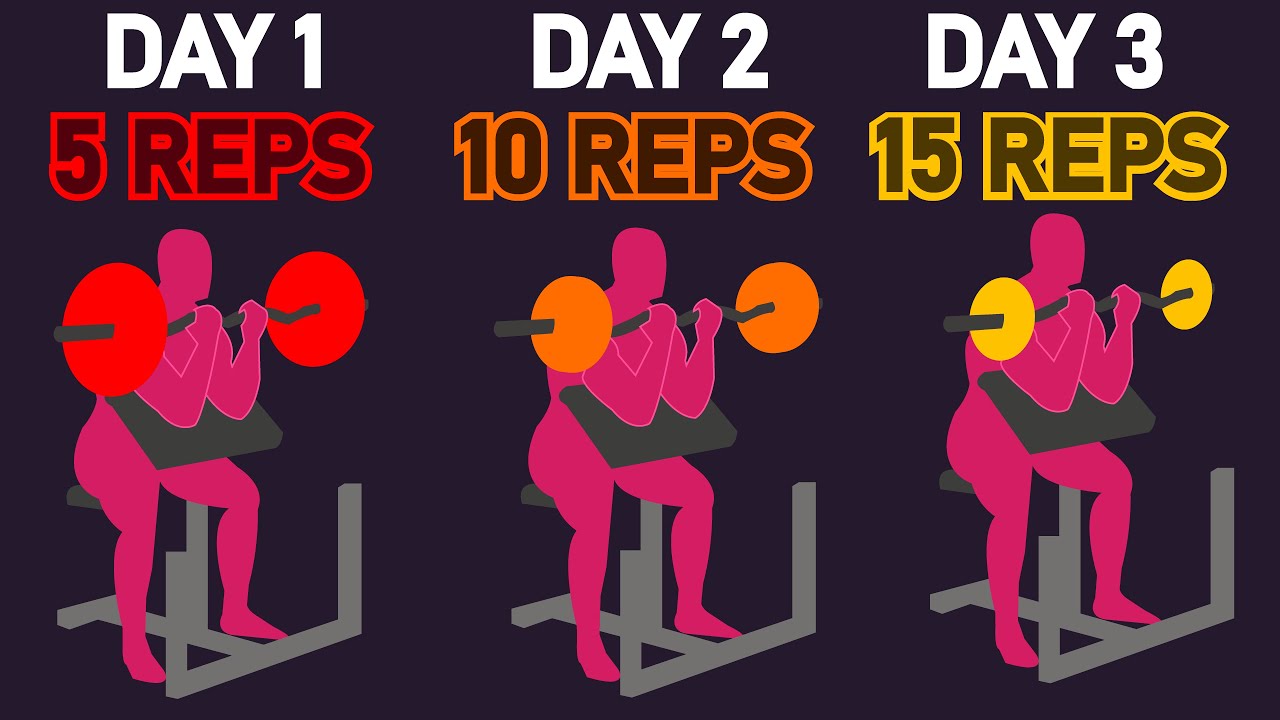
We now have two meta-analyses indicating light loads can produce similar muscle growth to heavier loads, provided repetitions are performed to or close to failure. Meta-analyses combine the results of numerous studies looking at the same topic. In the two meta-analyses, most studies had subjects use loads between 30% and 85% of their one rep max,roughly equating to repetitions between 35 and 5.
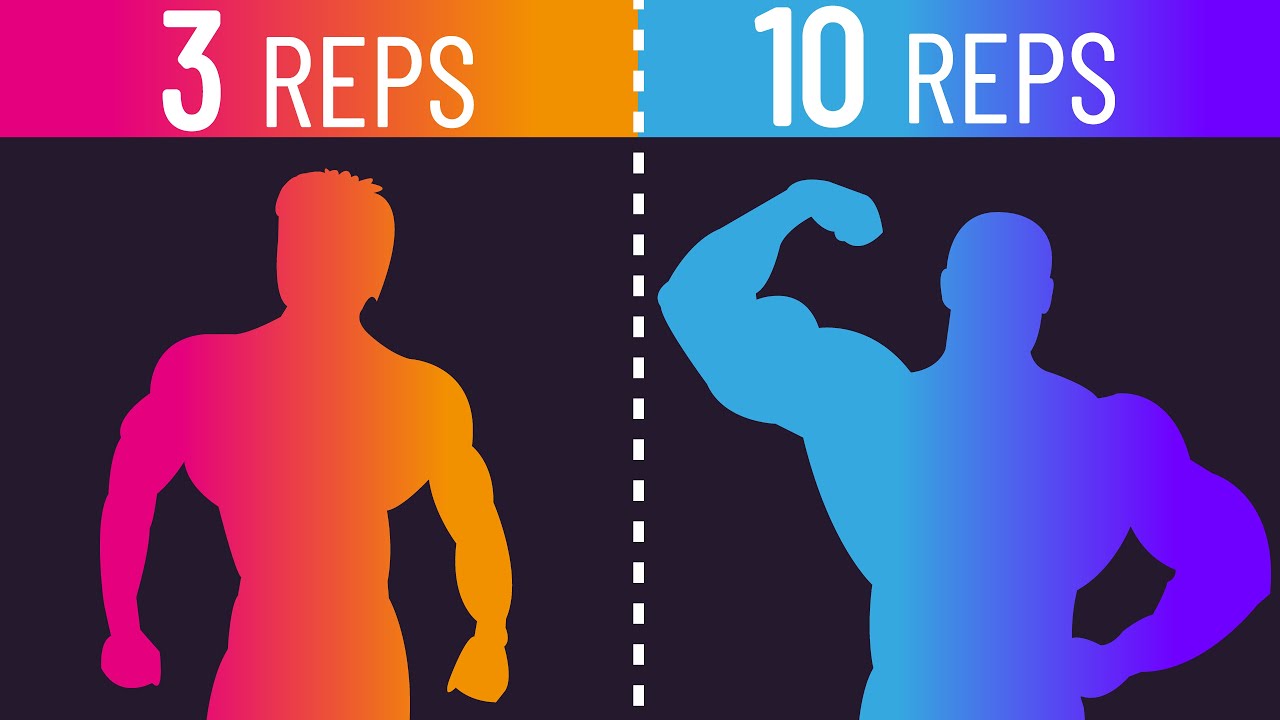
But, what about repetitions below 5? Last video, we demonstrated the research suggests one rep max training is not effective at building muscle. This video, we'll evaluate research exploring repetitions between 2-4 for building muscle.
On the bottom left and right we'll be keeping a tally of the study supporting or opposing the effectiveness of repetitions below 5. Starting things off, Schoenfeld and colleagues split 19 men with at least one year of training experience into a heavy or moderate group. Both groups trained the bench press, overhead press, lat pull down, cable row, back squat, leg press, and leg extension for 3 sets and 2minutes of rest between sets, 3 times per week for 8 weeks.
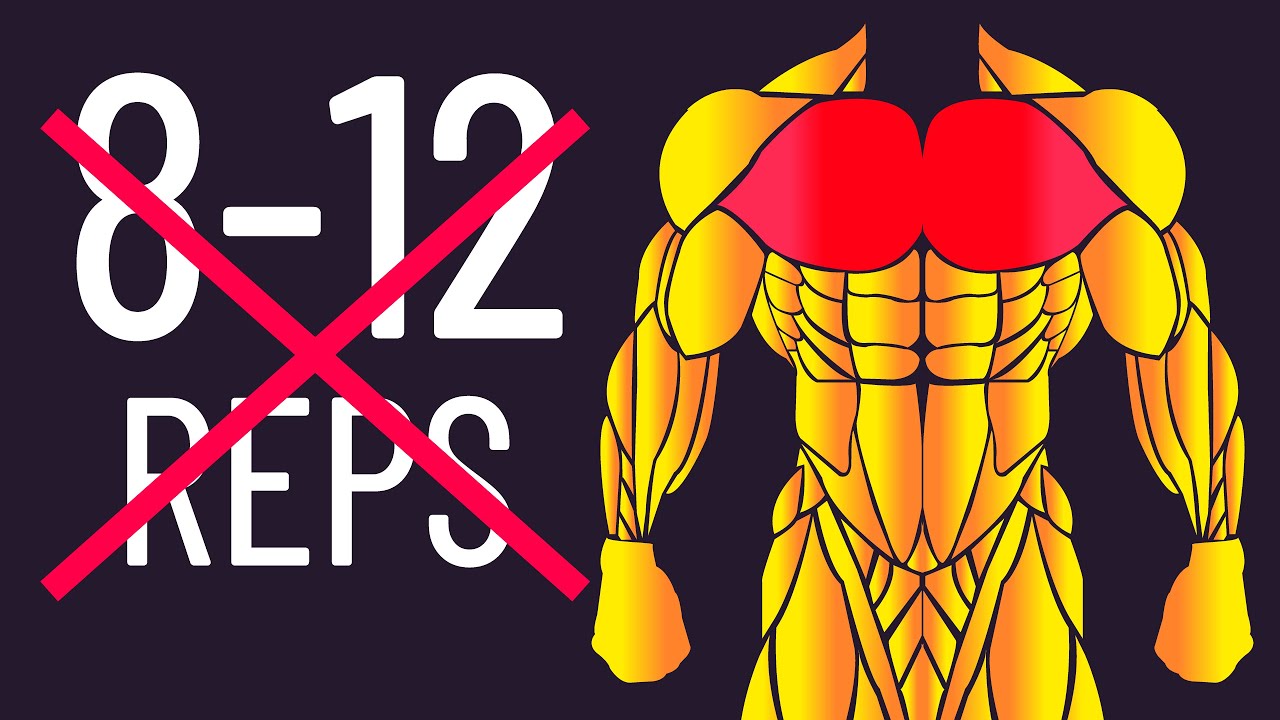
The heavy group used a load that allowed them to perform 2 to 4 repetitions to failure each set. The moderate group used a load allowing them to perform 8 to 12 repetitions to failure each set. Both groups aimed to progressively overload throughout the study.
Increases in vastus lateralis thickness were significantly greater for the moderate group. Increases in elbow flexor thickness also favor the moderate group, while triceps thickness increases were similar between both groups. So overall, this study indicates 2 to 4 reps is not as effective as 8 to 12 reps.
Weiss and colleagues split 44 untrained men into a low rep, moderate rep, or high rep group. All groups trained 4 sets of the back squat with 6 minutes of rest between sets, 3 times per week for seven weeks. The low rep group used a 3 to 5 rep max load Each set, the moderate rep group used a 13 to 15 rep max load each set.
. The high rep group used a 23 to 25 rep max load each set. All groups aimed to progressively overload throughout the study.
Increases in quadriceps thickness were similar between all three groups, suggesting reps below 5 are effective for maximizing muscle growth. Managine and colleagues divided 33 men, with at least two years of training experience, into an intensity or volume group. Both groups trained 4 times per week for 8 weeks.
The program is listed on screen. The intensity group performed each exercise for 4 sets of 3 to 5 reps with a 90 % one rep max load and 3 minutes of rest between sets. The volume group performed each exercise for 4 sets with 10 to 12 reps with a 70% one-rep max load and 1 minute of rest between sets.
Both groups aim to progressively overload throughout the study. Increases in rectus femoris, vastus lateralis, pectoralis major , and triceps brachii cross-sectional area were statistically similar between both groups. They also measured increases in lean leg and arm mass via DEXA scans.
Increases in lean leg mass were similar between both groups. But, increases in arm mass were significantly greater in the intensity group. So, 3 to 5 reps were equally as effective as 10 to 12 reps in most measures and actually superior in a lean arm mass measurement.
One limitation of this study was the intensity group used 3 minutes of rest between sets, while the volume group used only 1 minute. In our rest interval video, we demonstrate the research suggests with compound exercises, 2. 5 or more minutes of rest between sets was superior for building muscle compared to rest intervals of 1 minute or less.
With this in mind, the volume group would probably have been at a disadvantage. If they used a 3-minute rest interval, they could have experienced greater growth for all measures. Another study by Schoenfeld and colleagues split 17 men with at least one year of training experience into a strength group or hypertrophy group.
Both groups trained the same exercises 3 times per week for 8 weeks. The hypertrophy group used a bodybuilding split schedule, while the strength group used a full body schedule. The hypertrophy group trained each exercise with 3 sets of 10 reps to failure and 90 seconds of rest between sets.
The strength group trained each exercise with 7 sets of 3 reps to failure with 3 minutes of rest between sets. Both groups aimed to progressively overload. Volume load, the product of sets X reps X load, was equated between the two groups, explaining why the strength group needed 7 sets per exercise and the hypertrophy group only 3 sets.
Increases in biceps thickness were similar between both groups, supporting the effectiveness of repetitions below 5 for building muscle. However, similar to the previous study, the strength group used a 3-minute rest interval, while the hypertrophy group used only a 90-second rest interval. Also, the researchers justified equating volume load by suggesting volume load was strongly correlated to muscle growth.
Therefore, equating it between groups would avoid this potential confounding effect. However, strong evidence indicates with all else equal, reps between 5 and 35 produce similar muscle growth. Within this range, with the same number of sets performed, volume load would be dramatically different.
Suggesting volume load is not strongly correlated to hypertrophy. If it was, higher repetition should cause more growth. but this isn't the case.
Furthermore, we have research indicating more sets generally result in more hypertrophy (probably up to a certain point). Considering all this, the strength group was probably put at an advantage with the more sets. Nevertheless, moving on, Campos and colleagues spit 27 untrained men into a low rep, intermediate rep, or high rep group.
All group trained the leg press , squat, and leg extension for 8 weeks, 3 times per week for the first 4 weeks and 4 times per week for the last 4 weeks. The low rep group trained to each exercise for 4 sets with a 3 to 5 rep max load to failure and 3 minutes of rest between sets. The intermediate rep group trained each exercise for 3 sets with a 9 to 11 rep max load to failure and 2 minutes of rest between sets.
The high rep group trained each exercise for two sets with a 20 to 28 rep max load to failure and 1 minute of rest between sets. Volume load was equated between groups, explaining why the groups used a different number of sets/ Increases in vastus lateralis type 1, type 2a,and type 2b fiber cross sectional area were similar between the low rep and intermediate rep group, and both greater than the high rep group, supporting the effectiveness of repetitions below 5 for building muscle. That said, equating volume load and the use of different rest intervals between groups are again potential confounding factors.
Chestnut and Docherty split 19 untrained men into a 4RM group or a 10RM group. Both groups trained the close grip bench press, triceps press down, barbell curl, and dumbbell curl. These were the core exercises.
They also trained the normal bench press, bench pulls, and shoulder press. These were the supplemental exercises. These exercises were trained 3 times per week for 10 weeks.
The 4RM group used 4 reps with an 85 percent one rep max load to failure and 3 minutes of rest between sets. Each session, 6 sets were used for each core exercise and 2 sets for each supplemental exercise. The 10RM group use 10 reps with a 70 one rep max load to failure and 2minutes of rest between sets.
Each session, 3 sets were used for each core exercise and 1 set for each supplemental exercise. Increases in cross-sectional area for the middle and lower portion of the upper arm (which included the triceps biceps and brachialis muscles) were similar between both groups, supporting the effectiveness of reps below 5 for building muscle. Again, equating volume load and the use of different rest intervals are potential confounding factors in this study.
To sum up, the majority of the evidence supports the idea reps between 2 and 4 are effective for building muscle. Having said this, of the 5 studies finding this, 4 either had the low rep group perform more sets, in attempt to equate volume load, and or the low rep groups used longer rest intervals. Based on the reasons provided in the video, these are probably confounding factors.
Interestingly, the only two studies that did not have these confounding factors are in disagreement with each other. Weiss and colleagues suggest 3 to 5 reps can maximize growth, whereas Schoenfeld and colleagues indicates 2 to 4 reps do not. Small differences, such as the use of 2 reps in the Schoenfeld and colleague study and the use of 3 reps in the Weiss and colleague study could be a reason for these different results.
Nevertheless, more research that avoids confounding factors is most definitely needed. What is clear is that reps between 2 to 4 do have the capacity to build significant muscle. As most of the studies in this video did, perhaps you may have to perform more sets than usual and ensure longer rest intervals to achieve this.
Note, in most of the studies mentioned here strength gains, so one rep max gains, were greater for the low rep groups. Therefore, if your priority is strength gains, but you would like some degree of hypertrophy, using reps between 2 to 4 is probably very effective. If your goal is hypertrophy, to er on the side of caution, it's probably sensible to ensure most of your training is done in the 5 to 35 rep zone.
There does exist some interesting research exploring reps higher than 35 for building muscle. I plan to cover this in the next video. After that, we'll explore if using different rep ranges in your program could improve muscle growth.