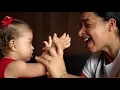
Early childhood as the name implies is the importance of the beginning. The beginning of life is everything. The future of the country depends on it.
Early childhood. A Happy Child is a child who has all their rights attended to. Who can reach out, play in the dirt.
Involving themselves with the nature. There are little things that, sometimes, we don't give anything. And they mean a lot to our children, don’t they?
It's not the things you get, but the things you learn that are truly rewarding. And I have learned a lot. The Happy Child Program, of the Brazilian Federal Government through the Ministry of Citizenship, is the world's biggest home visitation program, and it promotes the integration of various public policies to assist young children and their families all over Brazil.
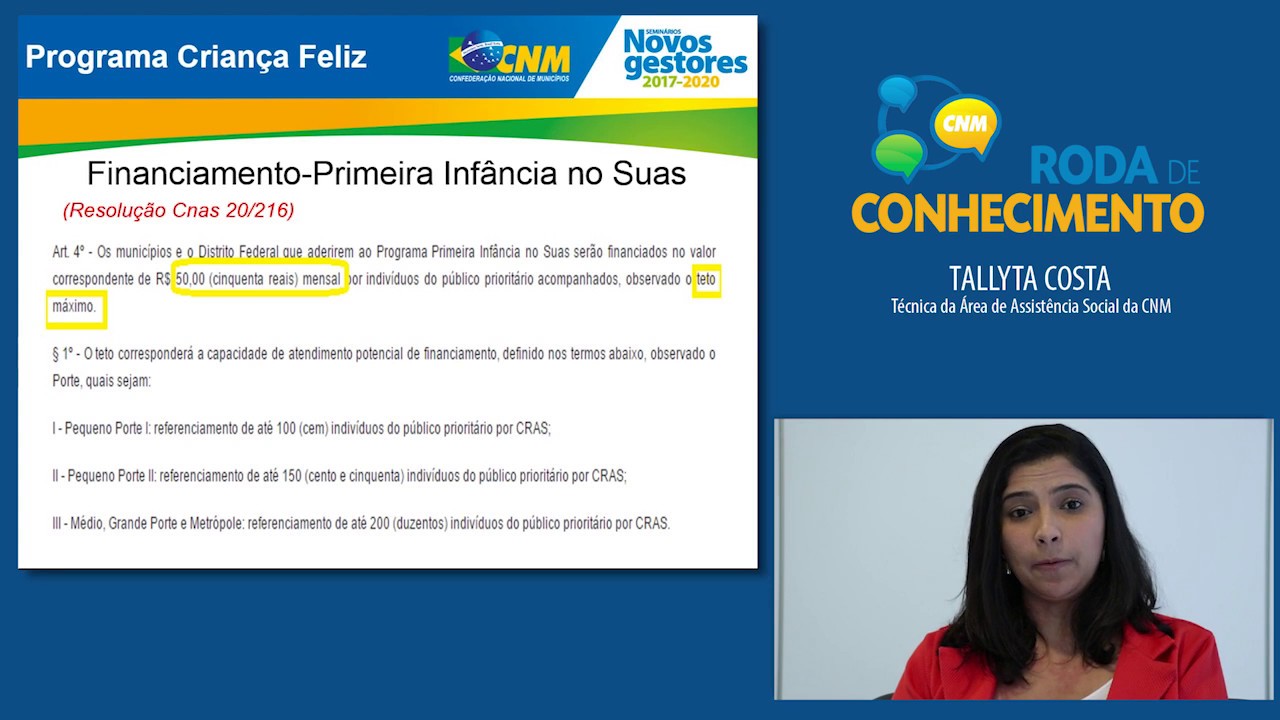
Happy Child Building better lives from early childhood and on. The Legal Framework for Early Childhood established the guidelines for the implementation of public policies and guarantees of rights for children aged 0 to 6 years. Law 13.
257/2016TW. The Happy Child Program consolidates these actions. There are many people who think that because they are children, child, that's it.
Children don't need to receive attention No one needs to know. So, I think the child has to be heard. It is important to know what this child needs.
If this happens, this child is happy. From the moment they arrived at my door I felt very supported by them. Then the staff from Happy Child came by.
I say: "Hey, girl, come here. How can I get into this program? " That I had heard about.
Then, it was like a gift, right? Happy Child came, right? Then, I even had Stherzinha on my arm, - Look daddy, look there.
Then, she thought it would be interesting, started to laugh and all. Then, I got emotional because what is good for my children is good for me. She came to me first and then asked If I wanted to participate in Happy Child.
Then I said: yes, I do. Then, for me it was going to be a simple little thing. But then, after she came to do the follow-up I liked it very much.
And what is this tree? This one here? It is a flower tree.
I didn't even want to get into this program. Marciene came and asked me to enter this Program. I told her I wasn't going to enter.
And she came. I didn't want to. Then she came again.
She called me. And I didn't want to. Then she came And I accepted.
I thought it was very good that he already knows a lot of little things. In the beginning it was quite difficult for the families to understand, what the objective of the program was. They thought that we were going to do an inspection in their homes.
Later when they saw the work, the families now come to us to join the Program. To be enrolled. A strange person is entering their houses.
So, it's like this: it's intimacy. It's entering inside a home. Now that they have begun to understand the program, that they are joining in and participating.
Every time she comes here, I say: "Nara come back again. It's early. " She already waits for this day.
She knows that new activities are coming. Here, baby, here. Press here.
And now, put it here. The biggest dissemination is by word of mouth. One family tells the other.
Home visiting is one of the pillars of the Happy Child Program. The home visitor in the Happy Child Program is responsible for making the visits in the homes of the beneficiaries depending on the profile of the child. If it is a child from 0 to 3 years old, we go once a week.
If it is a child in the BPC profile, we go every 15 days. If it is a pregnant woman, we also go every other week. And, then our role is to bring activities that help in the development of that child or pregnant woman.
And also, helping, networking between sectors, according to the family's profile, with what they need. With what we observe. After her diagnosis, I felt alone.
Because I have a child who has Down's Syndrome. We feel a little. .
. we see a bit of prejudice, right? from the people.
And they supported me. Both me and my daughter, the project. Weekly, the visitor coming here, bringing the activities.
Sometimes when I have some difficulty, Then we have a WhatsApp group There, I communicate with her everything She is always attentive to me. I learned a lot with her Even to make these little toys. When she sends me pictures, I get a little confused, but then I ask, and she teaches me.
Then, I search on the internet. Then, I can do it. That's right.
It is not just him who learns, no, ok. I also learn. It was in the period that I was feeling very lonely, you know?
Because, unfortunately, I had a disappointment, that was to spend a period of my life without my other boys. That's when I was just there, just me and Maria Cecília. With the absence of my other boys, then the Program brought something good.
Something that also filled this emptiness. And it became part of me, right? Of me and Maria Cecília.
I didn't know how to take good care of him, how to do things. What was the way to educate, how to teach him to do an activity. These ways of playing with them.
I got pregnant in my teens and I didn't imagine that it could be this way right. I introduce her to the activities, I give orientation on how they can do these activities with the children, using mainly the materials that they have at home. What are you going to do?
To eat? What is it? Rice.
- Rice, look at that. . .
And what else? Rice and beans! We create a relationship, in fact, with the family, With the main goal that I believe it is to guarantee the rights, to ensure the development of that family, of that child.
To make sure that they really have a healthy early childhood, that they grow up with a different relationship, many times than the one their parents had. Because it's a baby that can't talk, can't tell where it hurts, but our eyes on theirs identify what they are feeling. Each child, we give differentiated care by age group.
A six-month-old child. They are not walking yet. We do a light activity, that is, to put them in a cloth, drag them.
At one year, we start an activity that attracts attention. An activity with colors or shapes too. And not with the three years old.
It is more advanced. Because the three years old we know that is the time to learn. We already start with numbers, with letters.
The pregnant woman, we will talk to her privately about the pregnancy, about her doubts, about childbirth, the fear they feel. We orient her to do this as well as she can, call the father of the child to be there, telling them a little story, talking to the child. The first visits, when we go for the first time, we call the father for a conversation.
Then, we end up bringing him, involving the father so that he feels important. An important part for his wife. For his children.
By incentivizing the father's engagement, the Program seeks to strengthen family bonds and encourage a more balanced division in caregiving. When I was a child, my father taught me how to play with a horse. He would tell me how to do it, he would put the little horse here on the neck make the "little ears", the eyes.
Do you understand? Then, we continue teaching the same things that our father taught us when we were children. I like to play horse.
You found ox, didn't you? My husband, he went through some problems, you know. .
. He was already a somewhat depressed person and now with Cláudio getting closer, it is even improving for him, you know? He would get upset, he would say, He would talk like this: "He doesn't like me.
Why doesn't he like me? " He used to tell me that, you know? I said: "it's not that he doesn't like you.
" There is something wrong. Then little by little we started to get there. And today he likes his father.
Very much. He hugs, he kisses. If his father leaves, he cries.
Every day we go for a walk. I catch cows with her. Myself.
. . I have a relationship with her, that she.
. . whenever she sees me, she goes crazy.
. Well. .
. he is emotional. This is also a cool part of the visitor because we go every week, we see the development of the family.
Hello, today we are here in our video corner, where we do the remote activities of the Happy Child Program during the pandemic period. So, as the Happy Child Program is an intersectional program, today I brought here the nutritionist from our Basic Health Unit, John Lennon. Intersectionality is the second pillar of the Happy Child Program.
It is the articulation of the actions of social assistance, health, education, culture, and Human Rights policies. So, John: what tips do you give to our pregnant women regarding to healthy eating during pregnancy? Pregnancy is a process that changes the mother's body, very drastically.
So, it is important during this phase to have a very balanced diet and a very regular diet as well. Because it has vitamins, minerals, fibers, which help in the process of the mother’s gestation. So, the calmer environment, he greater the intake of fruit, vegetables, the water intake, it is very important.
Because all of this interferes in the gestation process. So, John, thanks a lot for your time, and we hope you have enjoyed it. She had it like.
. . in her little tongue, you know.
It was a little bit outside. And the speech therapist is working a lot with the stimulation of the tongue. And she is having a great development with her tongue turned in.
Consultation with a speech therapist at the Multidisciplinary Care Center in Vicência-PE. The sound with the mouth. Blowing, blowing out the candle.
Blowing it in front of the mirror, making a face. Then she'll recognize it. I understand it.
And she'll start to feel the sound. I understand it. Is that right?
That's right Andreza, she really gets to me, you know, in the appointments, because she takes care of her five children by herself. We managed to get her a birth certificate, Her ID, which she didn't have. During the visits, Luan, her son, started to tell me that he didn't study.
That it was a dream of his to go to school. He saw his older sister Luara, going to school. And we managed to set up a network.
And today Luan is enrolled in school. He is very happy to be going to school. When I went to Happy Child, I used to imagine that there were some needs, that one thing or another could be missing, but I had never thought that in some houses would lack everything.
When I arrive at their houses, sometimes I don't even know if they have eaten, but they have a big smile to welcome us… and. . .
I think that one of the most difficult things is that: we arrive, we find a reality. We are touched or we are are indignant about it. It's just that we have steps to follow.
We cannot break their space. We always try to be searching for this network, according to what our user needs. Since they came here, when I was 5 months pregnant, right after the loss of my husband.
They talked to me. . .
gave me support. So that I would not fall into depression like the one I already was. What 's up?
Today I brought a suggested activity for Diego, it is a little more elaborated. As you mentioned to me on the cell phone, he is already crawling. He is already developing well.
I thought of an activity to work on his laterality. Go, there. .
. I think he thinks it is too small. .
. Go, my love! Go get the little ball!
He passed! ! Yay, he got the ball!
Do you like the ball? There were no early childhood programs in the territory where we worked. So we started to go after these families, explaining what it was.
We had a first list because of the Unified Registry, so we went and did an active search based on this list. The Unified Registry organizes the information of Brazilian low-income families for access to social programs of the Federal Government. I entered at the very beginning of the pandemic and we started to adapt.
So, we did all the planning of how the visits were going to be, how we were going to do them. So, we read the Manual a lot. We would make calls, videos.
In these videos we used to send them instructions about how the activities were going to be. They did the activity with the child, they filmed it and sent the feedback to us. It was not very good because we could not be together, next to them, talking, having fun, but the cell phone was nice too.
What about prenatal care? Have you been going to the appointments? Yes, I go to all the appointments.
So, in this case, you already have your next appointment scheduled as well. Yes, as I leave there, I already schedule the next one. Oh, that's good.
And the activity that I gave you last month's visit? To caress the belly, talk to the baby. .
. Have you developed that? Yes, I have!
Even, my children do that too, you know. They are always by my side, always caressing it, singing songs, and talking to the baby. Sing.
. . [Song of Lullabies] "The frog's wife, she told me.
. . that her husband is going to be a doctor".
Because of the pandemic, I could no longer keep this direct contact at home. And the supervisor Dagmar, then. .
. she came and gave us the idea to create this comic book telling Franciel’s story. How it was my arrival, how his acceptance was until his development.
You are a dedicated mother. One of the things we learned in the training was was that how can the caregiver take care if they are not taken care of? If they are not well psychologically, emotionally, how are they going to take care of that child?
I had a beginning of depression as soon as I lost my husband. It's been one year and six months. Since I lost him and then I got strength from them, you know?
From the little baby that was in my belly. And now it is me. It is me and my three children.
It is sunshine and rain, you have to fight. As time went by, we began to have conversations. I could see that her attention was not only on Gael’s issue.
Sometimes she looked at me and said: "Graciete, is something wrong with you? " "You are strange, you seem different. .
. " That is, she began not only to notice the changes in my son, but also to notice when I was feeling bad. When I needed to, at least, I don't know.
. . scream.
So, for her to realize that it is not a problem that she needs some sort of support, that there is not a problem at all with her being overloaded, because it is difficult. I cannot just assign an activity. I need to know how it was, notice how the environment is.
And all of this matters a lot. Because I always encourage the caregiver to also invite the other people in the house to get involved in that activity, and then I see the interactions among them as well. It is not to focus only on the mother.
You have to focus on the whole family, because this depends on uniting them to create an affective relationship. With whom permanently is there in the house. It doesn't matter, there has to be a bond.
This is my daughter Fernanda. So, we get along very well. She and her two little girls live with me.
On the first visits that she had, Rebeca was totally different. She didn't play, she didn't talk. The first times she played, we had a little problem because she didn't want to play.
When she said no, it was no. How old are you? 2.
My son helps me a lot with the activities. He follows me in her appointments. She is heavy and doesn't walk yet.
My mother, she likes very much, of us together, doing the program, right. . .
doing everything with my brother. When I started doing the home visits there at the Quilombo de Ponta do Morro, there wasn't any child included in the Happy Child Program yet. "But I am a Quilombola, The historical term Quilombo represents the resistance of black populations through the maintenance of territories, memories, and ancient culture.
And I have a king's blood I have no prejudice no and I want to be filmed so I can be on television. " My boy had some difficulty speaking. So, I talked to her and told her about a speech therapist, if she wanted a recommendation or something.
She said no at first. I made a plan with my supervisor and we worked out what activities I could do with her that would meet her child's needs, right? Of communication.
Then, after I entered this program, Marciene brought some little books for me to read to him. I read to him and what I would say, he would say it to me. Then it went on, it went on, it went on, and he developed.
It was quickly. Then I took computer images with things from everyday life, things from home, animals that they have there for her to present to her son. And she would create a little story from those images.
So here is the horse. They like horses a lot, even because of our culture, that has a "vaquejada. " The horse here is used for a lot of work.
We saw that there was a lack of stimulus. She could develop this language with him only with the visits. I don't think she will be able to do it, in my mind, "will she be able to do this activity?
" Let's try it, right? First, let's try it. But this one, at first.
She got it. I was so happy! I congratulated her and said: wow, she has done it.
Gael until he was 4 and a half months old it was difficult for him to cry. It was difficult to respond. Sometimes I would play with him, and he wouldn't give any smile.
Not a thing. He would simply stay catatonic looking at me. Then, as time went by, with some incentives that came, with physiotherapy, the assistance of my visitor who always saw that.
"How about this activity? " "Does he respond to this one? " "Shall we try this one?
" "Ah, this one didn't work…" "But how about the next one? " After I was doing the activities and talking to the mother, as soon as the mother talked to me, I noticed that Gael was looking for her with his eyes. Then I realized that he was paying attention to the situation.
Then I realized that it would be a good thing. Then I realized, wait. .
. Now I can throw a different activity. And, so, we could see that Gael is almost sitting up today.
He will soon sit down. He laughs. Which I guess is one of the best things.
The fourth tooth smiling. Look, you have no idea the emotion for a mother who thought that her child would not have any kind of movement. But then I realized that Gael's progress was continuous.
It came gradually. When he yelled the first time. .
. I didn't know if I looked to see if he was in pain, if I cried, if I. .
. what I should do. .
. And as I always say: he is not a sick child. He is a non-rush child.
My children never had the opportunity that Rebeca had. After the program, she is already talking, learning to count, learning to use colors. A totally different behavior from the beginning.
A friend of my mother's arrived here, she opened the gate. When she looked at the woman, she said - "You again here? " Today I see that she plays with the other children.
She picks up objects very well, in the right way. She became more like that, more of a friend to me. And I became friendlier with her.
Mom, put the fruit in the bag, mom. My vision after I entered the program was totally different. We have more proximity with our children, right?
To hug, to kiss, to say that you love them. I think it's interesting even for me too, as a mother, that I didn't know the importance of taking time to talk to the child, that this helps in the child's development. That it can be even at bath time, to talk to her.
. . that this is important.
It doesn't matter the amount of time, but the quality time, right? It is very good. For the way she is developing at 10 months of age.
Feeling more secure, right? I hope that through this she can strengthen her muscles, find courage, and start to move from crawling to walking. Before he didn't sit, but today he already sits.
So, it helped a lot. In his speech and physical development. Hold this.
Look. I'm going to make a very nice ball. Now, put it here.
- Ê, ê. . .
[CLAPPING] Congratulations, Marcos! You've knocked it down! I really believe in this Program.
I really believe in my beneficiaries. I really believe in their development. I believe a lot in our role.
And I hope this Program perpetuates itself, that it grows. Because there is no doubt that it is of extreme importance and necessity. I hope that people come to me and say: My child has learned a lot since you started working with us.
If a child doesn't have a good development, a warm welcome from the family, having a good bond in their early childhood, they will not be a happy adult. This was strengthening our union, you know. The affection for the child.
I saw a sentence once that a child's heart belongs to whoever arrives first. If you arrive with love, with happiness, with good things, you have already won them over. They are children that we are developing for the future.
That when they have love they develop enormously. I have the opportunity with Anielly that I didn't have with my other daughters, which is to follow this phase. She imagines things, right, and when they come true, it's a joy.
Money can't buy it, right? Money can't buy it. The family’s bond.
What makes me very proud is having my children by my side, you know? That is so good. And many families are already in the waiting list, they want to enter the program to receive encouragement, the family care, because they have seen the results in other families, and this, for me, is priceless, to see the transformation in these houses, in these homes.
And the gift here. He slept. He slept.
In partnership with the Ministry of Citizenship, the United Nations (UN), through the Joint SDG Fund, is working in Brazil to strengthen the Happy Child Program, improving the conditions of Brazilian children and their families, and helping to accelerate the achievement of the SDGs. The Joint SDG Fund is a United Nations initiative to accelerate progress on the 17 Sustainable Development Goals (SDGs) in several countries. For more information, visit: jointsdgfund.