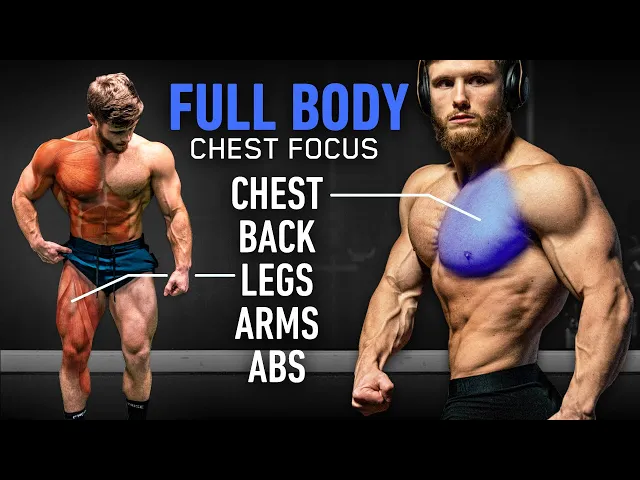
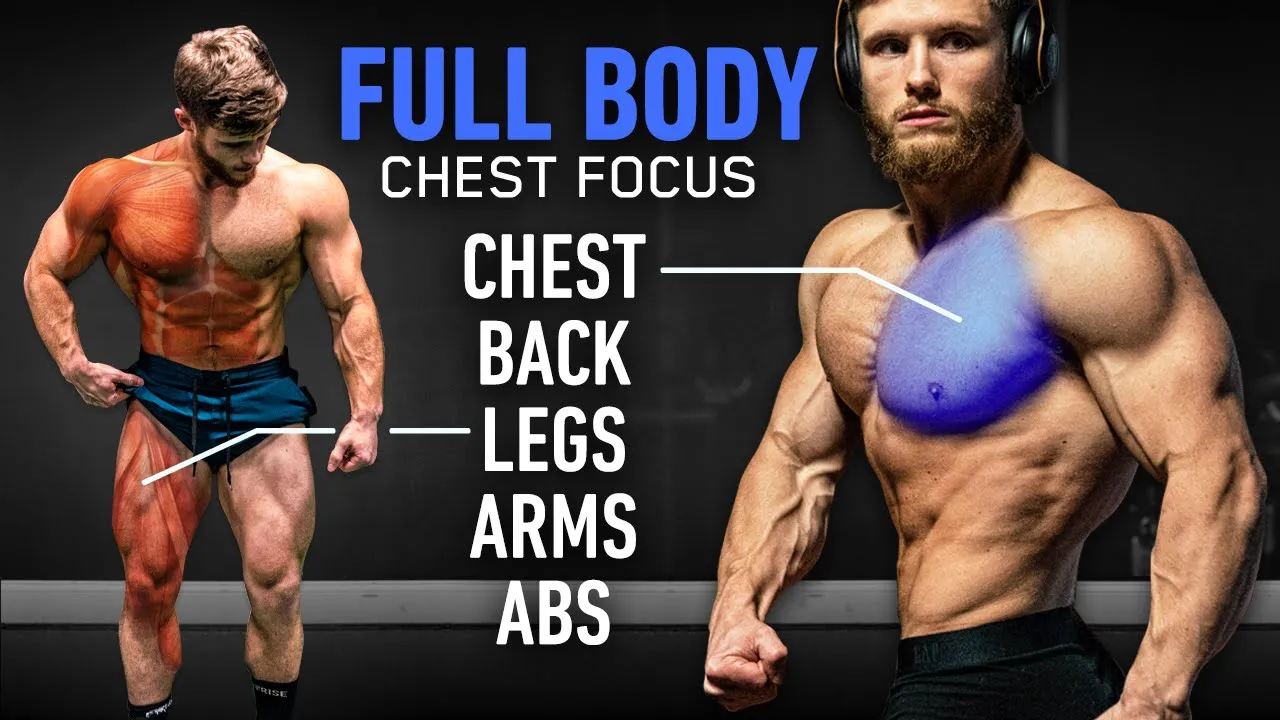
[Music] okay welcome everyone to episode two of the full body science applied series so in this video we're gonna go through the second full body workout of the week on our new five day per week high frequency split and as before if the split just seems totally crazy to you make sure you check out my science explained video on high frequency training to put it in context so in this video we're hitting a chest focused workout so even though we're still hitting our full body we're prioritizing the chest by placing it earlier in the workout
which has been shown in a scientific literature to increase strength and performance so we're kicking things off with three sets of three reps on the bench press with 85% of our 1 rep max and even though they're not max effort sets they're still quite heavy which begs the question do rep counts as low as 3 along in a hypertrophy focused program at all well I think it depends I personally like to include some pure strength work because first of all I'm not only concerned about building muscle I also care about getting stronger and strength is
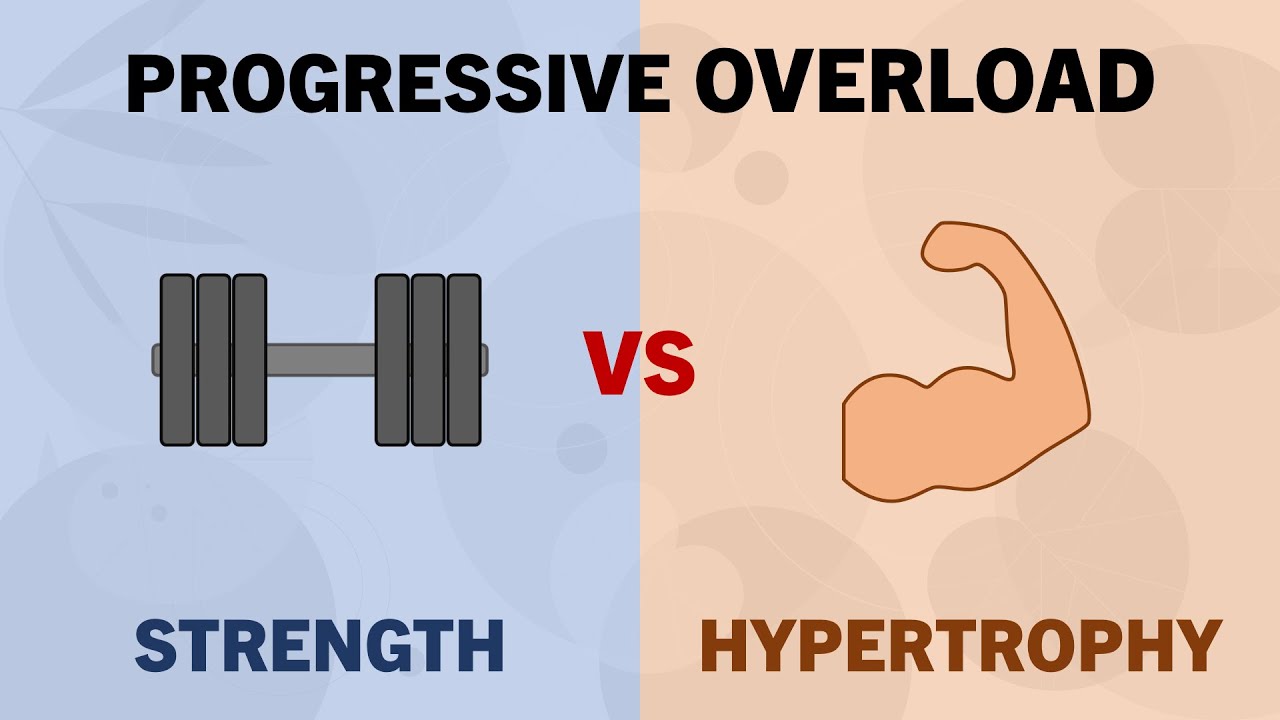
specific so if you want a stronger bench you've got a lift heavy but secondly I think a lot of people under play the fact that low rep strength work does actually contribute to hypertrophy both directly and indirectly indirectly getting stronger and lower rep ranges is going to allow you to overload more heavily in more moderate rep ranges leading to more cumulative tension over time and in my opinion as you get more advanced continuing to get stronger is important for continued progress also as long as volume is matched research shows that low rep sets cause similar
hypertrophy as high rep sets in 2014 Schoenfeld and colleagues split subjects into a group doing 3 sets of 10 reps and 7 sets of 3 reps and found that after eight weeks of full body training both groups gained to the same amount of muscle however it's worth noting that the heavy workouts took over four times as long to complete and had a higher dropout rate so it probably wouldn't be sustainable over the long term but contrary to what we used to think low rep heavy training canned build muscle it just isn't always the most practical
way to train so when it comes to the benchpress we generally want to use external cues rather than internal cues meaning you want to focus more on moving the weight with good technique rather than worrying about the mind muscle connection in fact despite the fact that recent evidence shown value in using the mind muscle connection on some isolation exercises over 15 years of research has consistently found that an external focus on the movement itself improves motor performance including strength so with this in mind I'm just gonna run through a sequence of a few cues I've
picked up on over the years first you want to squeeze the bar as hard as you can before lowering it next think about bending the bar forward which is going to cue your elbows to tuck in a bit and help maintain upper back tightness on the bench as you near the bottom actively puff your chest up and then push the floor away from you as you press the weight up and back so in terms of progression here we're alternating heavier sets of three with relatively lighter sets of five from week to week and the ideas
for those heavy 3s to have strength carry over to the fives which will then have strength carry over to eight later down the road so building up this raw pressing strength can help you continue to make progress as you get more advanced even if your main goal is hypertrophy all right up next we're hitting low to high cable flyes for three sets of fifteen at an RPE of nine so because this is an isolation exercise we can push these sets a little closer to failure without having to worry as much about fatigue and here I
like to queue for all three biomechanical actions of the PEC by thinking about hugging a big tall tree so you're not only hugging you're also lifting your arms up because say the tree is really tall and I like to have my palms facing up at the bottom and then down at the top to take the pecs from a fully stretched to a fully contracted position and this cueing is going to allow us to Train horizontal shoulder adduction shoulder flexion and internal rotation all at the same time okay after that we're hitting three sets of twelve
reps on the Romanian deadlift now because our tiel's cost so much muscle damage by loading the hamstrings in a highly stretched position we want to be mindful to stay about 2 to 3 reps shy of failure as sore hamstrings can really deteriorate future training performance at least until the repeated bout effect starts to kick in around week 2 or 3 but regardless I usually try to bracket any workout I do already ELLs with low-impact hamstring work so you'll remember from day one that we hit lying leg curls and then on day three you won't actually
do any direct hamstrings work at all to allow for adequate recovery from these rdls also we're not doing any direct quad work on day two because those squats from day one tend to be pretty disruptive and I'd usually try to have day of recovery after hitting those so we'll give the quads one day of rest before jumping into the leg press that we'll be hitting on day three I'm so it isn't the point that you need to hit every muscle every single day you want to think of it just like taking your weekly volume that
you need to make progress on any split and just spacing it out evenly across the week in a way that makes sense for performance and recovery and I prefer to use our deals as a lighter mind-muscle connection type movement I find that if I load them too heavily my lower back simply takes over and remember from technique Tuesday that you should simply focus on setting your hips straight back and for most people the end point should be just below the knees and going deeper than that will often just result in lower back rounding all right
up next we're hitting a chest supported row for three sets of 15 reps and you can do these on a t-bar machine the key is just that they're actually chest supported remember from day one that for the most part we're alternating between a vertical pole and a horizontal pole so today it's time for a row and we're opting for a chest supported variation just because it spares the lower back with high frequency training it's really important that we not overtax the spinal erectors since they play a stabilization rule in most free-weight compound exercises so by
bracing your chest you relieve the lower back of that stabilization rule allowing for more recovery there while still smashing the mid traps and lats and one thing I've been doing on these lately is really exaggerating the scapular protraction and retraction allowing the way to sort of pull my mid back apart at the bottom and then really retracting all the way at the top okay next we're hitting the standing Arnold press for three sets of 12 reps now the main reason I like doing these standing is that there is a bit more of a stabilization role
to be played which means there might be more involvement from the lateral delt and I really try to emphasize my lateral delts in my programming because in my experience they can tolerate quite a lot of volume and they're just so important for developing that x-frame broad-shouldered appearance another thing I'm focusing on here is initiating the press by sweeping the dumbbells out almost like doing a reverse PEC deck and then pressing them up this way you can get the rear delts involved at the beginning and then as you press the side and front delts will contribute
more all right after that we're moving on to three sets of 15 on the tricep press down and on this split I'm alternating between bicep and tricep isolation work from day to day so on days we do tricep work we won't do any direct bicep work and vice versa now both of these muscles get a lot of indirect work from all the compound exercises in the program so I think they only need about six to ten sets of isolation work per week especially when the effort is very high for them as it is in this
routine also I'm doing these one arm at a time starting with my weaker side and I'm allowing my elbow to come forward a bit to stretch the triceps at the top and then I'm hyper extending my shoulder at the bottom turning the movement into a sort of push down kickback combo which absolutely smashes the long head of the triceps at least for me anyway and we're gonna finish out the work out with some smith machine shrugs again similar to the chest support on the row the smith machine is gonna help spare your lower back since
it won't have as much of a stabilization demand now of course if you don't have a smith machine free weights will still work fine but as an extra recovery precaution especially since i've had lower back issues in the past I really like the smith machine for these and we're gonna go with the usual cues here we're gonna use a wider grip to emphasize scapular upward rotation as the upper traps don't only elevate the scapula they also rotate them upward so think about shrugging both up and in like you're trying to lift your shoulders to your
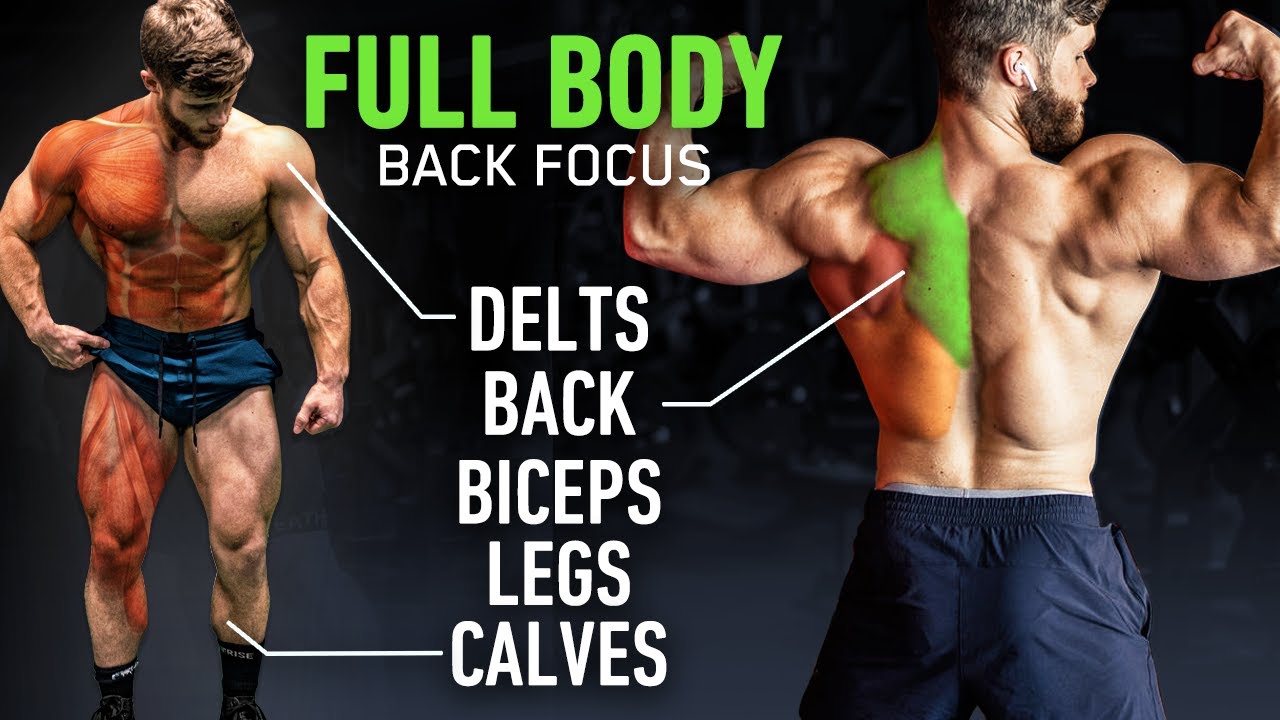
ears and remember the shrug isn't a contest to see who can hold the most weight so I'll choose shrugs certainly can have their place in the context of a high frequency plan I think it's much smarter to emphasize more controlled movements using a lighter load and a stronger mind muscle connection okay and that's gonna be it for this workout guys I'll put a link to the first leg focused full body workout over here if you'd like to check it out and I'll put a link to the next back focused full body workout over here once
that actually goes live if you're interested in having all this information put into a complete 10-week training program you can check out my new high frequency full-body program designed for intermediate to advanced level lifters over on Jeff pepper calm don't forget to leave me a like if you enjoy the video subscribe if you haven't already and I'll see you guys all here and the next one