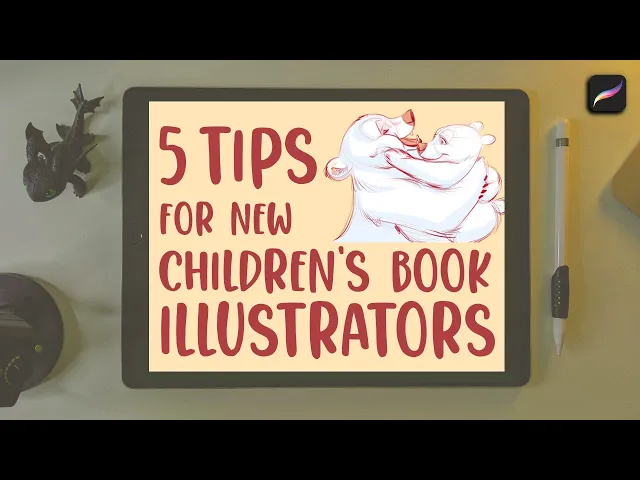
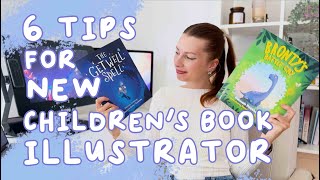
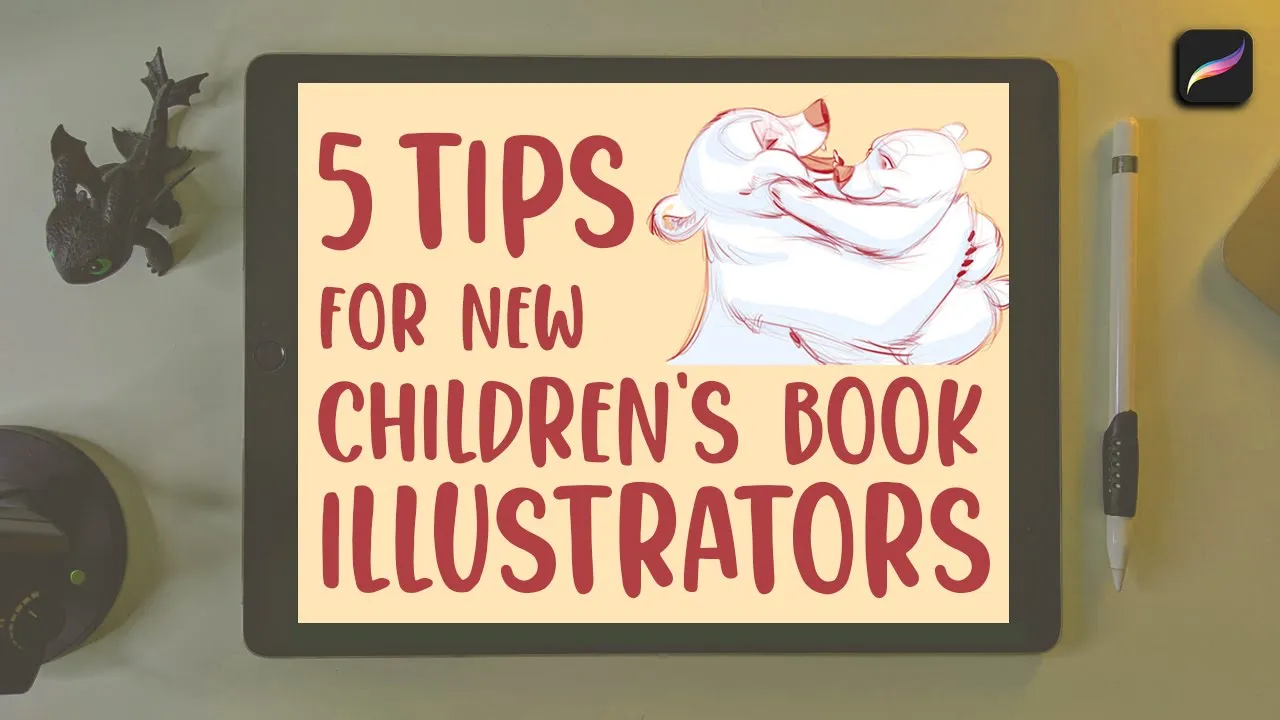
five tips for being a new children's book illustrator number five i would say make your own book just start with the story and then just do a self-published book that's what i did for my first book it's really great for you to be able to go through the process of writing the story making the storyboards figuring out like how you want the characters to look how you're writing the story and how that equates to making illustrations for the story be your own client do it for yourself first and that will sort of help you get
over that hump of turning the words into beautiful images okay next number four learn to draw animals and children there's lots of other things that you're going to have to draw if you want to draw if you want to draw children's books you're going to have to figure out if you want to do backgrounds or no backgrounds are they in a car are they in a field are they in some sort of office all of that stuff has its own place where you're going to have to figure out how to work that out but the
most important things is going to be kids and animals 100 most children's book stories have children and animals some are just animals some are just children most are probably both so for all of my children's books have been animals and children or animals and humans so just work on that perfect your craft so that you feel confident in in drawing any sort of animal or any sort of human or person because that's what you're going to have to be doing and it's a lot more stressful if you're doing it for someone else so just get
a handle on it just keep practicing that be obsessed with it and eventually you'll just fall into your own style people always say about like they want to figure out like a drawing style or figure out a um is that what they call it drawing style the the style will find you use references and take what you can from artists that you really love and art that you really like and eventually you will find your own style art artistic style that delivery was not smooth okay so number three learn to say no i did a
whole video on this a while back but it's very important to just be okay with saying no not every project is going to be right for you try to do what's in your wheelhouse try to do what you do best and also you have to be careful with some clients because some people just aren't great to work for it can be a nightmare if you're working with people that you just don't like working for and you're doing art that you don't like that you don't want to be doing it makes the job so much more
difficult and you're not going to produce the best of your ability so it's going to look bad for you the client's not going to be happy and it's going to be a dumpster fire so just learn to say no just just be aware of your of your talents if you're aware of your talents then whatever project that you that you get if they're coming to you then it's you that they want it's your creativity that they want so just make sure that you're thinking like oh like how can i make this the best of my
ability and if you can say oh i think i can do something with this then then you're okay then you at least you have some footing to walk on but if it's something where you're like i really have no idea how i'm going to do this drawing these types of things isn't fun for me or drawing this way isn't fun for me or they need it in a month and trust me if you can't do that it's gonna be a nightmare it's better to just say no number two use a contract i'm not a lawyer
i am not i don't know much about the law all i did was go on the internet and i looked up about five or six illustrator contracts so i just found contracts online like i just googled illustrator contract and i read what i could understand i read through them and i just kind of mixed and pulled what seemed relevant for the kind of for what i was doing so i just mixed and match five or six different different contracts and that's what i use as my contract it's clear it's concise i don't have too much
legal jargon because then i wouldn't even be able to understand it so but for now i mean i shaped it up it looks fairly professional and it just makes sense so i understand it the client can understand it it's not only to keep you from being ripped off i mean obviously it's that too but it's also just a place where you can look and say okay i agreed to do this many images in this time frame for this amount of money the client can see okay i owe them this amount of money i'm going to
be getting this work and just to have everything clear and concise and out in the open it's just an agreement but you definitely need it and definitely don't start the work or do the work without being paid i usually do like half up front and then half when it's done i don't start work until i've gotten paid because you don't know what's going on with the people they might not have the money together for a month or two months and if you start doing all this work and then something happens and the job doesn't come
through you're gonna be upset and you've wasted a lot of time so definitely wait till you get paid to start the work that's the only trust me you'll feel a lot better doing artwork once you're already paid it'll just save you the headache i see a lot of things in the groups about people that they do artwork for people and they're upset when the person like goes and makes money off of it you can't really complain if you don't have a contract and you don't specify what the art can be used for what it can't
be used for so if you're going to do artwork for someone and give it to them and not have a contract like just be okay with them making money for from it that's how i am if i do artwork artwork for someone if they want to put it on shirts if they want to do whatever i'm happy i'm happy with that but if i'm doing a client like a job for a client then i do i have a contract if this thing blows up and then they want to sell it someone some big corporation wants
to buy disney wants to buy the characters or the book or the story i still have the right so then i'm still brought to the table so i don't give all my um when i do jobs i don't just give the copyright away like i don't sign the copyright away like i say that in the contract i say that i still own the the rights to the characters but i'm licensed licensing lice licensing licensing them out to whoever the client is so they can use them either indefinitely or for whatever they want i don't know
again i'm not a lawyer but i just feel more comfortable having in writing that i still own the copyright to the characters because you just you never really know where it's going to end up so again just have a contract read through a bunch of contracts try to understand it and have a contract for your work because your work is worth it and it's worth you making extra money down the line if it's owed to you number one this is the this is what i think is the most important thing don't become a children's book
illustrator because you think that children's book illustration is easier because it kind of looks some can look kind of kid-like because it has a certain style that's easier to produce than some other type of artwork that's definitely not the reason to become a children's book illustrator like that's not the right mindset because it's not easy children's book illustration is not an easy way out you have to be consistent with your artwork you have to draw the same characters over and over again in different poses that's just not a good path because you're going to find
yourself in a position where someone wants you to do a project and you're going to be overwhelmed because it's a lot you're doing 12 images 24 images 32 images from sketch character design um there's a it's a it's a really in-depth process and it requires a lot of skill and it's fun it's really fun i love it don't don't sleep on children's book illustration it's it takes a lot of work i just finished another book where well it wasn't what wasn't a book it's actually connected to the first book it's like 18 supplemental images and
i learned how to draw mandalas mandalas mandalas i learned how to draw those i learned how to kind of do an instruction manual where the characters sort of like helping out with the instructions all of these things that i've never done before it's a learning experience but i i had to relearn how to draw the characters because i had finished the book during quarantine and i had to re-learn how to draw the characters there's things like that that are very technical and very difficult so just be serious about it you know only do it if
you like that type of illustration like if that is exciting to you if you wouldn't mind doing that all the time because once you get a job it's a lot of work so and just as a just as a disclaimer i'm not this isn't like professional advice i mean i guess i mean i i guess i'm a professional children's book illustrator i guess maybe i am maybe i just said it out loud so maybe that means that i am but the legal advice all of this stuff i'm just telling you about the bumps in the
roads that i've been through because i don't want you to deal with that like i dealt with it i dealt with it you're gonna have some bumps in your journey but i just wanted to tell you about mine so that way yours will be that much easier um if you have any questions or if you you're wondering or anything that you want to ask me about what i've talked about feel free to reach out to me privately or just you know just leave a comment which is probably better because other people might be they might
want to know the same answers or anything like that but i'm happy to talk about my experiences with clients times i've said no contract stuff i can send you my contract you can change the name on it and you know you can use that contract you can bring it to a lawyer maybe they'll say that it's crap maybe they'll say that it's pretty good for someone who's not a lawyer but it works for me for now and as time goes on i get better and i develop and i get smarter about my decisions and that's
what i want you to do that's that's how i want your journey to go so hopefully this was helpful and hopefully you'll have a nice smooth transition into the world of children's books because it's really rewarding once you kind of have a handle on it and you start feeling comfortable and feeling confident in your skills and kind of learning the business side and dealing with clients and money and money is always difficult and it's even worse when it's like friends when it's like people you know money can be the money business side can be very
weird uh so just be careful with that you know what i mean like just and just make sure you get paid regard if it's friends make sure you're getting paid don't like to say oh i'll do the work and i'll get paid later because it's a friend get your money it's your time they're asking you for a favor so make sure you get your money and also every year um raise your rate like you know if you get a job or two in a year like raise your rates once you once you get a job
and once you complete that job that means your skills have leveled up because you have more experience so don't forget to raise your rates my rates are 225 a page and um it's gonna keep going up you know so that's just the reality of it hopefully this helps um and always a pleasure talking with you guys i don't know i like i like i i want to say thank you to you all but it's really awkward saying it to a camera so anyway as always keep drawing and i'll see you in the next video let
me know what you think if i should do more more tips like this or if i should just stick to the drawing stick to the drawing hey guys thank you so much for watching the video i appreciate each and every one of you if you want to see more content like that then follow me on instagram youtube tick tock all drug free dave and also if you want more in-depth structure tutorials then definitely check out my skillshare i have about 11 skillshare classes now you can use the links below and get two weeks free and
in those two weeks you can take all of my classes for free so of course as always keep drawing and i'll see you in the next video