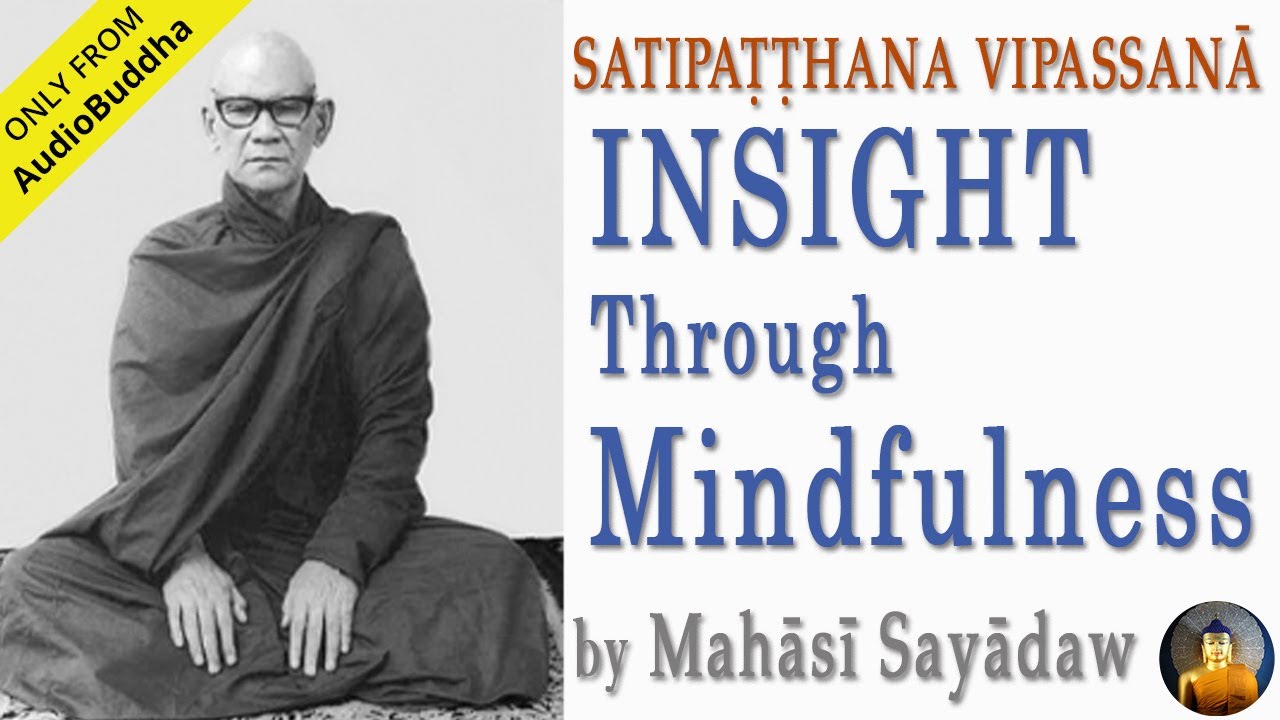
This is audio buddha audio buddha presents the progress of insight a modern poly treatise on buddhist satapathena meditation by the venerable mahasi sayadaw translated from the pali with notes by nayanaponica thera buddhist publication society translators forward to present to the reading public a Treatise on buddhist meditation needs no word of apology today in wide circles of the west buddhist meditation is no longer regarded as a matter of purely academic or exotic interest under the stress and complexity of modern life the need for mental and spiritual regeneration is now widely felt and in the field of
the mind's methodical development the value of buddhist meditation has been recognized And tested by many it is in particular the buddha's way of mindfulness satyapathana that has been found invaluable because it is adaptable to and beneficial in widely different conditions of life the present treatise is based on this method of cultivating mindfulness and awareness which ultimately aims at the mind's final liberation from greed hatred and delusion the author of this treatise the Venerable mahasi sayadaw usabhana mahathera is a buddhist monk of contemporary burma and an eminent meditation master a brief sketch of his life is
included in this volume the path of meditation described in these pages was and still is taught by him in his meditation center called that hanayaktha in rangoon and is also set forth in his lectures and books in the burmese language The framework of the treatise is provided by the classical seven stages of purification just as in accordia buddhigosa's famous visuddhimakka on gradually reaching these stages various phases of insight knowledge are developed leading on to the stages of ultimate liberation the approach followed is that of bear insight where by direct observation one's own bodily and mental
processes are seen with increasing clarity as Being impermanent liable to suffering and without a self or soul the meditational practice begins with a few selected subjects of body contemplation which are retained up to the very end of the road with the gradually increasing strength of mindfulness and concentration the range widens and the vision deepens until the insight knowledges unfold themselves into order as a natural outcome of the practice This approach to the ultimate goal of buddhist meditation is called bear insight because insight into the three characteristics of existence is made use of exclusively here dispensing
with the prior development of full concentrative absorption jhana nevertheless and it hardly needs mention here too a high degree of mental concentration is required for perseverance in the practice for attaining to insight knowledge and for Reaping its fruits as stated in the treatise itself p5 it is not the author's purpose to give a detailed introduction to the practice for the use of beginners the foremost concern in this work is with a stage where after diligent preliminary practice the insight knowledges have begun to emerge leading up to the highest crest of spiritual achievement arahantship of the
basic exercises the treatise Gives only a brief indication at the beginning of chapter one detailed instruction about these may be gathered by the student from the author's practical insight meditation or the translator's book the heart of buddhist meditation also a knowledge of the buddha's original discourse on the foundations of mindfulness cytopath and assotha will be indispensable this treatise was first written in the Burmese language and later in 1950 a poly version of it was composed by the author as the treatise deals chiefly with the advanced stages of the practice it was originally not intended for
publication handwritten or typed copies of the burmese or polyversion were given only to those who with some measure of success had concluded a strict course of practice at the meditation center For the use of meditators from foreign countries only a few cyclist styled sheets in english briefly describing the phases of insight knowledge were issued instead of the treatise itself this was done to enable the meditator to identify his personal experience with one or other of the stages described so that he might direct his further progress accordingly without being diverted or misled by any secondary phenomena
that may have appeared during His practice in 1954 the venerable author agreed to a printed edition of the pali version in burmese script and after this first publication he also permitted at the translator's request the issue of an english version he had the great kindness to go carefully through the draft translation and the notes with the linguistic help of an experienced burmese lay meditator upe thin who for many years had abele Served as an interpreter for meditators from foreign countries the translator's gratitude is due to both his venerable meditation master the author and to upe
thin nyanaponica thera forest hermitage candy salon on the full moon day of june 1965 introduction homage to him the great omniscient sage who spread the net of rays of his good Law these rays of his good law his very message true long may they shed their radiance over the world this treatise explains the progress of insight together with the corresponding stages of purification it has been written in brief for the benefit of meditators who have obtained distinctive results in their practice so that they may more easily understand their experience It is meant for those who
in their practice of insight have taken up as their main subject either the tactile bodily process of motion evident in the rising and falling movement of the abdomen or the tactile bodily process based on three of the primary elements of matter evident in the sensation of touch bodily impact it is meant for those who by attending to these exercises have gained progressive insight as well into the Whole body and mind process arising at the sixth sense doors and have finally come to see the dhamma to attain to the dhamma to understand the dhamma to penetrate
the dhamma who have passed beyond doubt freed themselves from uncertainty obtained assurance and achieved independence of others in the master's dispensation one purification of conduct purification of conduct means here in the case of male and female devotees the Acceptance of the precepts and the proper guarding and protecting of their observance whether it be the five precepts the eight you pass at the precepts or the ten precepts in the case of bakus purification of conduct is the well-kept purity of the four-fold conduct incumbent upon monks beginning with restraint according to the disciplinary rules of big coups
called the patamaka Of that fourfold conduct the restraint according to the patemaka rules is of first importance because only when that restraint is pure will one be able to accomplish the development of meditation the method of insight in brief there are two kinds of meditation development tranquility and insight a person who of these two has first developed tranquility and after having established himself in either access concentration or full concentration Subsequently contemplates the five groups of grasping eleven is called a samatha yanuka one who has tranquility as his vehicle as to his method of attaining insight
the papansa siddhani commenting on the dhammadayada sutha of the machima nikaya says herein a certain person first produces access concentration or full concentration this is tranquility he then applies insight to that Concentration and to the mental states associated with it seeing them as impermanent etc this is insight in the visa democracy it is said he whose vehicle is tranquility should first emerge from any fine material or immaterial genre except the base consisting of neither perception nor non-perception and he should then discern according to characteristic function etcetera the jana factors consisting of applied Thought etc and
the mental states associated with them path of purification 18.3 he however who has neither produced access concentration or full concentration but from the very start applies insight to the five groups of grasping is called siddha vipassana yanaka one who has pure insight as his vehicle as to his method of attaining insight it is said in the same commentary to the Dhamma diet as sutha there is another person who even without having produced the aforesaid tranquility applies insight to the five groups of grasping seeing them as impermanent etc in the visa de makka two it is
said thus one who has pure insight as his vehicle contemplates the four elements in the system of parabajaka sutha two it is said by the buddha first arises the knowledge comprehending the Actual happening of things and afterwards arises the knowledge realizing the banner when purification of conduct has been established the meditator who has chosen pure insight as his vehicle should endeavor to contemplate the body and mind in doing so he should contemplate according to their characteristics the five groups of grasping that is the bodily and mental processes that become Evident to him in his own
life continuity at his own sixth sense doors insight must in fact be developed by noticing according to their specific and general characteristics the bodily and mental processes that become evident at the sixth sense doors in the beginning however it is difficult to follow and to notice clearly all bodily and mental processes that incessantly appear at the sixth sense doors Therefore the meditator who is a beginner should first notice the perfectly distinct process of touch perceived through the door of bodily sensitivity because the visa de maca says that an insight meditation one should take up what
is distinct when sitting there occurs the bodily process of touch by way of the sitting posture and through touch sensitivity in the body these processes of tactile sensitivity Should be noticed as sitting touching and so forth in due succession further at the seated meditator's abdomen the tactile process of bodily motion that is the wind or vibratory element which is breathing as its condition is perceptible continuously as the rise expansion and fall contraction of the abdomen that too should be noticed as rising falling and so forth while the meditator is thus engaged in Noticing the element
of motion which impinges continuously on the door of bodily sensitivity in the abdomen it becomes evident to him in its aspects of stiffening of vibrating and of pushing and pulling here the aspect of stiffening shows the motion elements characteristic nature of supporting the aspect of vibrating shows its essential function of movement and the aspect of pushing and pulling shows its manifestation of impelling Hence the meditator noticing the tactile bodily process of rise and fall of the abdomen accomplishes the observation of the bodily process by getting to know the characteristic nature etc of the element of
motion later when he has accomplished the observation of mind and the observation of both body and mind he will also come to know the general characteristics of the processes concerned their impermanence liability to suffering and Their being void of a self but while he is engaged in just noticing the rising and falling of the abdomen and other tactile processes there will appear thoughts of desire etc feelings of pleasure etcetera or acts such as adjusting various parts of the body at that time these activities of mind and body must be noticed too after noticing them he
should turn again to the continuous noticing of the tactile process of the rising falling of The abdomen which is the basic object of mindfulness in this practice this is a brief sketch of the methodical practice of insight it is not the place here to treat it in detail because this is a brief essay on the progress of insight through the stages of purification it is not a treatise explaining in detail the methodical practice of insight 2 the purification of mind during the early part of the methodical Practice as long as the meditator's mind is not
yet fully purified wandering thoughts arisen by his thinking of objects of sense desire etc will also appear intermittently between thoughts of noticing the objects of meditation sometimes the beginning meditator will perceive occurrence of these interruptions and sometimes he will not but even if he perceives them it will be only after a short time as elapsed after their appearance For then the momentary concentration of his mind is still very tender and weak so these wandering thoughts continue to hinder his mind while it is occupied in developing the practice of noticing hence these wandering thoughts are called
hindering thoughts when however the momentary concentration of his mind has become strong the thought process of noticing becomes well concentrated hence when attending to the objects to Be noticed the abdominal movement sitting touching bending stretching seeing hearing etc his noticing thoughts now appear as if falling upon these objects as if striking at them as if confronting them again and again then as a rule his mind will no longer go elsewhere only occasionally and in a slight degree will this happen and even in those cases he will be able to notice any such stray thought at
its very arising as expressed In common speech or to be exact he will notice the stray thought immediately after its actual arising then that stray thought will subside as soon as it is noticed and will not arise again immediately afterwards he will also be able to resume continuous noticing of any object as it becomes evident to him that is why his mind at that time is called unhindered while the meditator is thus practicing The exercise of noticing with unhindered mind the noticing mind will close in upon and fix on whatever object is being noticed and
the act of noticing will proceed without break at that time there are rises in him in uninterrupted succession the concentration of mind lasting for a moment directed to each object noticed this is called purification of mind though that concentration has only momentary duration its power of Resistance to being overwhelmed by opposition corresponds to that of access concentration in the commentary to the visit himaga in the explanation of the chapter relating to mindfulness of breathing it is said thus momentary unification of mind means the concentration of mind lasting only for a moment for that type of
concentration to when it occurs uninterruptedly with its respective object in a single mode and Is not overcome by opposition fixes the mind immovably as if in absorption it occurs uninterruptedly with its respective object refers to the uninterrupted continuity of the thoughts engaged in noticing after noticing one object one attends in the same manner to another that follows immediately again having noticed that object one turns to the next one and so on in a single mode means though the objects to be noticed as they present themselves are numerous And varied yet the force of concentration of
the mind uninterruptedly engaged in noticing remains virtually on the same level for what is meant here is just as the first object was noticed with a certain degree of concentration so the second third and other subsequent objects are noticed in each case with the same degree of concentration is not overcome by opposition this means that the momentary concentration in its Uninterrupted flow is not overwhelmed by the mental hindrances as if in absorption this means that the strength of the momentary concentration is similar to that of concentration which has reached full mental absorption however such similarity
of momentary concentration with fully absorbed concentration will become evident only when the methodical practice of insight reaches its culmination but is it not said in the commentaries That the term purification of mind applies only to access concentration and fully absorbed concentration that is true but one has to take this statement in the sense that momentary concentration is included in access concentration for in the commentary to the cytopathic sutha it is said the remaining 12 exercises are subjects of meditation leading only to access concentration now in the case of the subjects dealt With in the sections
of the sata path in a suta on postures clear comprehension and elements the concentration of one who devotes himself to these exercises will be definitely only momentary concentration but as the latter is able to suppress the hindrances just as access concentration does and since it is in the neighborhood of the noble path attainment concentration therefore that same momentary concentration is spoken Of by the name of access or neighborhood and also the meditation subjects that produce that momentary concentration are called meditation subjects leading to access concentration hence it should be understood that momentary concentration having the
capacity to suppress the hindrances has also the right to the name access and purification of mind otherwise purification of mind could not come about in one who has made bare Inside his vehicle by employing only insight without having produced either access concentration or fully absorbed concentration three purification of view one analytical knowledge of body and mind endowed with purification of mind and continuing the practice of noticing the meditator now comes to no body in mind analytically as follows the rising upward movement of the abdomen is one Process the falling downward movement is another sitting is
another touching is another etc in this way he comes to know how to distinguish each bodily process that he notices further he realizes the knowing of the rising movement is one process the knowing of the falling movement is another in that way he comes to know each mental act of noticing Further he realizes the rising movement is one process the knowing of it is another the falling movement is one process the knowing of it is another and so on in that way he comes to know how to distinguish each bodily and mental process all that
knowledge comes from simply noticing not from reasoning that is to say it is knowledge by direct experience arrived at by the mere act of noticing And not knowledge derived from rasheos nation thus when seeing a visual object with the eye the meditator knows how to distinguish each single factor involved the i is one the visual object is another seeing is another and knowing it is another the same manner applies in the case of the other sense functions for at the time in each act of noticing the meditator comes to know analytically The mental processes of
noticing and those of thinking and reflecting knowing them for himself through direct knowledge by his experience thus they have the nature of going towards an object inclining towards an object cognizing an object on the other hand he knows analytically the material processes going on in the whole body which are here described as the rising and falling movements of the abdomen sitting etc knowing them thus These have not the nature of going or inclining towards an object or of cognizing an object such knowing is called knowing matter or the body by its manifestation of non-determining for
it is said in the mulatika that principle subcommentary to the vipanga in other words non-determining as in the passage quoted should be understood as having no faculty of cognising an object such knowledge as this which analyses in Each act of noticing both the bodily process noticed and the mental process engaged in noticing according to their true essential nature is called analytical knowledge of body and mind when that knowledge has come to maturity the meditator understands thus at the moment of breathing in there is just the rising movement of the abdomen and the knowing of the
movement but there is no self besides at the moment of breathing out there is just the falling movement Of the abdomen and the knowing of the movement but there is no self besides understanding it thus in these and other instances he knows and sees for himself by noticing thus there is here only that pair a material process as object and a mental process of knowing it and it is to that pair alone that the terms of conventional usage being person or soul i or another man or woman refer but apart from that dual process there
is no separate person or being i or Another man or woman this is called purification of view for purification by overcoming doubt two knowledge by discerning conditionality when purification of view has come to maturity the conditions necessary for the bodily and mental processes observed will also become evident firstly the consciousness that is the condition of the respective bodily process will be evident How for instance when bending the arms or legs the consciousness intending to bend these limbs is evident so the meditator first notices that consciousness and next he notices the act of bending and so
on then he understands by direct experience when there is consciousness intending to bend a limb the bodily process of bending arises when there is consciousness intending to stretch a Limb the bodily process of stretching arises and in the same way he understands other instances too by direct experience again he also understands by direct experience the condition for the mental process in the following manner in the case of consciousness desirous of running off the track there arises first a corresponding consciousness giving initial attention to the distracting object if that consciousness is not Noticed with mindfulness then
there arises a consciousness that runs off the track but if the consciousness of initial attention to the distracting object is noticed and known no stray thought will arise it is similar in the case of other types of consciousness for instance when taking delight or being angry greedy etc when both the sense door of the eye and a visual object are present there arises Visual consciousness otherwise visual consciousness will not arise and so it is in the case of the other sense doors if there is a noticeable or recognizable object then there arises consciousness engaged in
noticing or thinking or reasoning or understanding as the case may be otherwise no such consciousness arises similarly he understands what occurs in every other instance of mind door cognition At that time the meditator will generally experience many different painful feelings arising in his body now while one of these feelings is being noticed but without concern another feeling will arise elsewhere and while that is being noticed again another will appear elsewhere thus the meditator follows each feeling as it arises and notices it but though he is engaged in noticing these feelings as they arise he will
Only perceive their initial phase of arising and not their final phase of dissolution also many mental images of various shapes will then appear the shape of a dagobah a monk a man a house a tree a park a heavenly mansion a cloud and many other such images will appear here too while the meditator is still engaged in noticing one of these mental images another will show itself while Still noticing that yet another will appear following thus the mental images as they arise he goes on noticing them but though he is engaged in noticing them he
will perceive only their initial phase not the final phase he now understands consciousness arises in accordance with each object that becomes evident if there is an object there arises consciousness if there is no object no Consciousness arises between sequences of noticing he also by considering inferentially comes to know thus it is due to the presence of such causes and conditions as ignorance craving comma etc that body and mind continue such discernment through direct experience and through inference as described when noticing body in mind with their conditions is called knowledge of Discerning conditionality when that knowledge
has come to maturity the meditator perceives only body and mind processes occurring in strict accordance with their particular and appropriate conditions and he comes to the conclusion here is only a conditioning body and mind process and a conditioned body and mind process apart from these there is no person who performs the bending of the limbs etc or who experiences feelings of pain etc This is called purification of insight by overcoming doubt three knowledge of comprehension when this purification of insight by overcoming doubt has reached maturity the meditator will discern distinctly the initial middle and final
phases of any object noticed by him then in the case of various objects noticed he will discern distinctly that only after each earlier process has ceased does there arise a subsequent Process for instance only when the rising movement of the abdomen has come to an end does there arise the falling movement only when that has ended is there again a rising movement so also in the case of walking only when the lifting of the foot has come to an end does there arise the carrying forward of the foot only when that has been completed does
there follow the placing of the foot on the ground In the case of painful feelings only after each single feeling occurring at its particular place has ceased will another new feeling arise at another place on noticing the respective painful feeling repeatedly twice thrice or more the meditator will see that it gradually grows less and at last ceases entirely in the case of the variously shaped images that enter the minds field it is only after each single image noticed has Vanished that another new object will come into the mind's focus on noticing them attentively twice thrice
or more he will see well that these mental objects which are being noticed move from one place to another or they become gradually smaller and less distinct until at last they disappear entirely the meditator however does not perceive anything that is permanent and lasting or free from destruction and Disappearance seeing how each object even while being noticed comes to destruction and disappearance the meditator comprehends it as impermanent in the sense of undergoing destruction he further comprehends it as suffering painful in the sense of breaking up after each arising having seen how various painful feelings arise
in continuous succession how if one painful feeling ceases another Arises and when that has ceased again another arises having seen that he comprehends the respective objects as just a conglomeration of suffering further he comprehends the object as consisting of mere and personal phenomena without a master in the sense of not arising of or by themselves but arising subject to conditions and then breaking up this comprehension of an object noticed as being impermanent painful and without A self impersonal through knowing its impermanent nature etc by means of simply noticing without reflecting and reasoning is called knowledge
by comprehension through direct experience having thus seen the three characteristics once or several times by direct experience the meditator by inference from the direct experience of those objects noticed comprehends all bodily and mental processes of the past present and future and the whole world By coming to the conclusion they too are in the same way impermanent painful and without a self this is called knowledge of comprehension by inference alluding to this very knowledge it is said in the patasambadamaga whatever there is of materiality past present or future internal or external coarse or fine inferior or
superior far or near all materiality he defines as impermanent That is one kind of comprehension and so on also in the commentary to the catholic is said even if the impermanence of only a single formation conditioned phenomenon is known there may be consideration of the rest by induction thus all formations are impermanent the words all formations are impermanent refer to an understanding by induction and not to an understanding by perceiving a co-present object at the Same moment this passage is the authority for the usage of the term inductive insight also in the commentary to the
majima nikaya it is said because in the case of the realm of neither perception nor non-perception the insight into the sequence of mental factors belongs to the buddhas alone and not to the disciples he the buddha said thus thereby indicating the insight by groups this passage is the authority for the Usage of the term comprehension by groups for knowledge of arising and passing away the ten corruptions of insight when the meditator in the exercise of noticing is able to keep exclusively to the present body and mind process without looking back to past processes or ahead
to future ones then as a result of insight the mental vision of a brilliant light will appear to him To one it will appear like the light of a lamp to others like a flash of lightning or like the radiance of the moon or the sun and so on with one it may last for just one moment with others it may last longer there will also arise in him strong mindfulness pertaining to insight as a result all the successive arisings of bodily and mental processes will present themselves to the consciousness engaged in noticing as if
coming to it Of themselves and mindfulness to seems as if a lighting on the processes of itself therefore the meditator then believes there is no body and mind process in which mindfulness fails to engage his knowledge consisting in insight here called noticing will be likewise keen strong and lucid consequently he will discern clearly and in separate forms all the bodily and mental processes noticed as if cutting To pieces a bamboo sprout with a well sharpened knife therefore the meditator then believes there is no body and mind process that cannot be noticed when examining the characteristics
of impermanence etc or other aspects of reality he understands everything quite clearly and at once and he believes it to be the knowledge derived from direct experience further strong faith pertaining to Insight arises in him under its influence the meditator's mind when engaged in noticing or thinking is serene and without any disturbance and when he is engaged in recollecting the virtues of the buddha the dhamma and the sangha his mind quite easily gives itself over to them there arise in him the wish to proclaim the buddha's teaching joyous confidence in the virtues of those engaged
in meditation the desire to advise dear Friends and relatives to practice meditation grateful remembrance of the help received from his meditation master his spiritual mentor etc these and many other similar mental processes will occur their arises also rapture in its five grades beginning with minor rapture when purification of mind is gained that rapture begins to appear by causing goose flesh tremor in the limbs etc and now it produces a sublime feeling of Happiness and exhilaration filling the whole body with an exceedingly sweet and subtle thrill under its influence he feels as if the whole body
had risen up and remained in the air without touching the ground or as if it were seated on an air cushion or as if it were floating up and down there arises tranquility of mind with the characteristic of quietening the disturbances of consciousness and its Mental concomitants and along with it appear mental agility etc when walking standing sitting or reclining there is under the influence of these mental qualities no disturbance of consciousness and its mental concomitants nor heaviness rigidity unwieldiness sickness or crookedness rather his consciousness and its mental concomitants are tranquil through having reached the
supreme relief in non-action they are agile and always functioning Swiftly they are plant in being able to attend to any object desired they are wieldy in being able to attend to an object for any length of time desired they are quite lucid through their proficiency that is through the ease with which insight penetrates the object they are also straight through being directed inclined and turned only towards wholesome activities there also arises a very sublime feeling of happiness suffusing all his body Under its influence he becomes exceedingly joyous and he believes now i am happy all
the time or now indeed i have found happiness never felt before and he wants to tell others of his extraordinary experience with reference to that rapture and happiness which are aided by the factors of tranquility etc it was said superhuman is the bliss of a monk who with mind at peace having entered a secluded place wins insight into dhamma When he fully comprehends the five groups rise and fall he wins to rapture and to joy the deathless this for those who understand damada verses 373 to 374. there are rises in him energy that is neither
too lacks nor too tense but is vigorous and acts evenly for formerly his energy was sometimes lacks and so he was overpowered by sloth and torpor hence he could not notice Keenly and continuously the objects as they became evident and his understanding too was not clear and at other times his energy was too tense and so he was overpowered by agitation with the same result of being unable to notice keenly etc but now his energy is neither too lacks nor too tense but is vigorous and acts evenly and so overcoming these shortcomings of sloth torpor
and agitation he is able to notice the Objects present keenly and continuously and his understanding is quite clear too there also arises in him strong equanimity associated with insight which is neutral towards all formations under its influence he regards with neutrality even his examination of the nature of these formations with respect to their being impermanent etcetera and he is able to notice keenly and continuously the bodily and mental processes arising at the time Then his activity of noticing is carried on without effort and proceeds as it were of itself also in adverting to the objects
there arises in him strong equanimity by virtue of which his mind enters as it were quickly into the objects of advertence there arises further a subtle attachment of a calm nature that enjoys the insight graced with the brilliant light and the other qualities here described The meditator however is not able to discern it as a corruption but believes it to be just the very bliss of meditation so meditators speak in praise of it thus only now do i find full delight in meditation having felt such rapture and happiness accompanied by the brilliant light and enjoying
the very act of perfect noticing which is ably functioning with ease and rapidity the meditator now Believes surely i must have attained to the super mundane path and fruition now i have finished the task of meditation this is mistaking what is not the path for the path and it is a corruption of insight which usually takes place in the manner just described but even if the meditator does not take the brilliant light and the other corruptions as an indication of the path and fruition still he feels delight in Them this is likewise a corruption of
insight therefore the knowledge consisting in noticing even if quick in its functioning is called the early stage of or weak knowledge of arising and passing away if it is beset and corrupted by those corruptions for the same reason the meditator is at that time not in a position to discern quite distinctly the arising and passing away of bodily and mental processes V purification by knowledge and vision of what is path and not path while engaged in noticing the meditator either by himself or through instructions from someone else comes to this decision the brilliant light and
the other things experienced by me are not the path delight in them is merely a corruption of insight the practice of continuously noticing the object as it becomes evident that Alone is the way of insight i must go on with just the work of noticing this decision is called purification by knowledge and vision of what is path and not path six purification by knowledge and vision of the course of practice after noticing these manifestations of brilliant light and the others or after leaving them unheeded he goes on continuously as before with the act of Noticing
the bodily and mental processes as they become evident at the sixth sense doors while thus engaged in noticing he gets over the corruptions relating to brilliant light rapture tranquility happiness attachment etc and his knowledge remains concerned exclusively with the arising and passing away of the processes noticed for then at each act of noticing he sees the noticed object having arisen Disappears instantly it also becomes clear to him that each object disappears just where it arises it does not move on to another place in that way he understands by direct experience how bodily and mental processes
arise and break up from moment to moment it is such knowledge and understanding resulting from the continuous noticing of bodily and mental processes as they arise and dissolve moment after moment And the discernment in separate sections of the arising and passing away of each of them while being free from the corruptions that is called final knowledge of contemplation of a and passing away this is the beginning of purification by knowledge and vision of the course of practice which starts from this insight and extends to adaptation knowledge five knowledge of dissolution noticing the bodily and mental
processes As they arise he sees them part by part linked by link piece by piece fraction by fraction just now it arises just now it dissolves when that knowledge of arising and passing away becomes mature keen and strong it will arise easily and proceed uninterruptedly as if born onward of itself also the bodily and mental processes will be easily discernible when keen knowledge thus carries on and formations are easily discernible then Neither the arising of each bodily and mental process nor its middle phase called presence nor the continuity of bodily and mental processes called occurrence
as unbroken flux is apparent to him nor are the shape of the hand the foot the face the body and so on apparent to him but what is apparent to him is only the ceasing of bodily and mental processes called vanishing or passing away or dissolution For instance while noticing the rising movement of the abdomen neither its initial or middle phase is apparent but only the ceasing or vanishing which is called the final phase is apparent and so it is also with the falling movement of the abdomen again in the case of bending an arm
or leg while noticing the act of bending neither the initial or the middle phase of bending is apparent nor is the form of the limb apparent but only the final Phase of ceasing and vanishing is apparent it is similar in the other cases of stretching a limb and so on for at that time each object that is being noticed seems to him to be entirely absent or to have become non-existent consequently at this stage of knowledge it seems to him as if you were engaged in noticing something which has already become absent or non-existent by
having Vanished and the consciousness engaged in noticing appears to have lost contact with the object that is being noticed it is for that reason that a meditator may hear think i have lost the insight but he should not think so for formerly his consciousness normally took delight in conceptual objects of shapes etc and even up to the knowledge of arising and passing away the idea of formations with their specific features was always apparent to him Hence his mind took delight in a plainly distinguishable object consisting of formations with its particular structure and its particular feature
idea but now that his knowledge has developed in the way described no such idea of the formation's features or structure appears to him still less any other cruder concept at such a stage the arising of formations that is the first phase of the process is not apparent as it is in The case of knowledge of arising and passing away but there is apparent only the dissolution that is the final phase having the nature of vanishing therefore the meditator's mind does not take delight in it at first but he may be sure that soon after becoming
familiar with that stage of the practice his mind will delight in the cessation of the phenomena to which is called their dissolution with this assurance he should again turn To the practice of continuous noticing when thus engaged he perceives that in each act of noticing there are always present two factors an objective factor and a subjective one the object noticed and the mental state of knowing it which dissolve and vanish by pairs one pair after the other for in each single instance of a rising movement of the abdomen there are in fact numerous physical processes
constituting the rising movement which Are seen to dissolve serially it is like seeing the continuous successive vanishing of a summer mirage moment by moment or it is like the quick and continuous bursting of bubbles produced in a heavy shower by thick rain drops falling on a water surface or it is like the quick successive extinguishing of oil lamps blown out by wind at the time of offering lamps to a stupa similar to that appears the dissolving And vanishing moment by moment of the bodily processes noticed and the dissolution of consciousness noticing those bodily processes is
apparent to him along with the dissolution of the bodily processes also while he is noticing other bodily and mental processes their dissolution to will be apparent to him in the same manner consequently the knowledge will come to him that whatever part of the whole body Is noticed that object ceases first and after it the consciousness engaged in noticing that object follows in its wake from that the meditator will understand very clearly in the case of each successive pair the dissolution of any object whatsoever and the dissolution of the consciousness noticing that very object it should
be borne in mind that this refers only to understanding arrived at through direct experience by one engaged In noticing only it is not an opinion derived from mere reasoning it is the perfectly clear understanding of the dissolution of the two things pair by pair that is one of the visual or other object appearing at any of the six sense doors and two of the consciousness noticing that very object that is called knowledge of dissolution 6. awareness of fearfulness when that knowledge of dissolution is mature there will gradually arise just By seeing the dissolution of all
object and subject formations awareness of fearfulness and other higher knowledges together with their respective aspects of fear and so on having seen how the dissolution of two things that is any object noticed and the inside thought engaged in noticing it takes place moment by moment the meditator also understands by inference that in the past to every conditioned thing formation has broken up in the Same way that just so it will break up also in the future and that at the present it breaks up too and just at the time of noticing any formations that are
evident these formations will appear to him in their aspect of fearfulness therefore during the very act of noticing the meditator will also come to understand these formations are indeed fearful such understanding of their fearfulness Is called knowledge of the awareness of fearfulness it has also the name knowledge of fear at that time his mind itself is gripped by fear and seems helpless seven knowledge of misery when he has realized the fearfulness of the formations through the knowledge of fear and keeps on noticing continuously then that knowledge of misery will arise in him before long when
it has arisen all formations Everywhere whether among the objects noticed or among the states of consciousness engaged in noticing or in any kind of life or existence that is brought to mind will appear insipid without a vitalizing factor 39 and unsatisfying he sees at that time only suffering only unsatisfactoriness only misery therefore this state is called knowledge of misery eight knowledge of Disgust seeing thus the misery in conditioned things formations his mind finds no delight in those miserable things but is entirely disgusted with them at times his mind becomes as it were discontented and listless
even so he does not give up the practice of insight but spends his time continuously engaging in it he therefore should know that this state of mind is not dissatisfaction with Meditation but is precisely that knowledge of disgust that has the aspect of being disgusted with the formations even if he directs his thought to the happiest sort of life and existence or to the most pleasant and desirable objects his mind will not take delight in them will find no satisfaction in them on the contrary his mind will incline and lean and tend only towards nabana
therefore the following thought will Arise in him between moments of noticing the ceasing of all formations that are dissolving from moment to moment that alone is happiness 9 knowledge of desire for deliverance when through this knowledge now acquired he feels disgust with regard to every formation noticed there will arise in him a desire to forsake these formations or to become delivered from them the knowledge relating to that desire is called knowledge of desire for Deliverance at that time usually various painful feelings arise in his body and also an unwillingness to remain long in one particular
bodily posture even if these states do not arise the comfortless nature of the formations will become more evident than ever and due to that between moments of noticing he feels a longing thus oh may i soon get free from that oh may i reach the state where these Formations cease oh may i be able to give up these formations completely at this juncture his consciousness engaged in noticing seems to shrink from the object noticed at each moment of noticing and wishes to escape from it 10 knowledge of re-observation being thus desirous of escaping from the
formations the meditator makes stronger effort and continues the practice of noticing these very formations with the Single purpose of forsaking them and escaping from them for that reason the knowledge arising at that time is called knowledge of re-observation the term re-observation has the same meaning as re-noticing or re-contemplation then the nature or characteristics of the formations there being impermanent suffering and without a self will be clearly evident to him and among these Three the aspect of suffering will be particularly distinct at this stage two there will usually arise in his body various kinds of pains
which are severe sharp and of growing intensity hence his whole bodily and mental system will seem to him like an unbearable mass of sickness or a conglomeration of suffering and a state of restlessness will usually manifest itself making him incapable of Keeping to one particular posture for any length of time for then he will not be able to hold any one position long but will soon want to change it this state however simply manifests the unbearable nature of the formations though he wants to change his bodily posture still he should not give in easily to
that wish but should endeavor to remain motionless for a longer period in the same posture and continue to Carry on the practice of noticing by doing so he will be able to overcome his restlessness now his insight knowledge is quite strong and lucid and by virtue of it even his painful feelings will at once cease as soon as they are firmly noticed even if a painful feeling does not cease completely he will perceive that it is dissolving part by part from moment to moment that is to say the ceasing vanishing and Disappearing of each single
moment of feeling will become apparent separately in each corresponding act of noticing in other words now it will not be as it was at the time of the knowledge of comprehension when the constant flow or continuity of feelings of the same kind was apparent as a single unit but if without abandoning the practice that feeling of pain is firmly and continuously noticed it will entirely cease before long When it ceases in that way it does so for good and will not arise again though in that way the inside knowledge may have become strong and perfectly
lucid still he is not satisfied with that much he will even think my insight knowledge is not clear he should however dismiss such thoughts by applying the act of noticing to them and he should go on with his task of continuously noticing the bodily and Mental formations as they occur if he perseveres thus his noticing will become more and more clear as the time passes in minutes hours and days then he will overcome the painful feelings and the restlessness in being unable to remain long in one particular posture and also the idea that his insight
knowledge is not yet clear enough his noticing will then function rapidly and at every moment of noticing he will Understand quite clearly any of the three characteristics of impermanence etcetera this understanding of any of the three characteristics of impermanence etc through the act of noticing which functions with promptness in quick succession is called strong knowledge of re-observation 11 knowledge of equanimity about formations when this knowledge of re-observation is Mature there will arise knowledge perceiving evident bodily and mental processes in continuous succession quite naturally as if born onward of itself this is called knowledge of equanimity
about formations now in the act of noticing effort is no longer required to keep formations before the mind or to understand them after the completion of each single act of noticing the object to be noticed will then appear of itself and insight Knowledge too will of itself notice and understand it it is as if no further effort need be made by the meditator formerly owing to seeing the dissolution of formations there arose in successive order the aspect of fearfulness the perception of misery the aspect of disgust the desire for deliverance and dissatisfaction with the knowledge
so far acquired but now these mental states no longer Arise even though in the present state too the breaking up of formations which are dissolving more rapidly is closely perceived even if a painful feeling arises in the body no mental disturbance grief arises and there is no lack of fortitude in bearing it generally however at this stage pains will be entirely absent that is they do not arise at all even if the meditator thinks about Something fearful or sad no mental disturbance will arise be it in the form of fear or of sorrow this firstly
is the abandoning of fear at the stage of equanimity about formations at the earlier stage on attaining knowledge of arising and passing away great joy had arisen on account of the clarity of insight but now this kind of joy does not arise even though there is present the Exceedingly peaceful and sublime clarity of mind belonging to equanimity about formations though he actually sees desirable objects conducive to joy or though he thinks about various enjoyable things no strong feeling of joy will arise this is the abandoning of delight at the stage of equanimity about formations he
cherishes no desire nor hate with regard to any object desirable or undesirable that comes into the range of His sense doors but taking them as just the same in his act of noticing he understands them that is to say it is a pure act of understanding this is equitable vision at the stage of equanimity about formations of these three qualities just mentioned it is said in the path of purification having discarded fear and delight he is impartial and neutral towards all formations visa demarca xxi point 62. if he resumes the practice of noticing With the
thought now i will do it vigorously again then before long the noticing will function efficiently as if born onward of itself from now onwards there is no need for the meditator to make further deliberate effort though he does not make a deliberate effort his noticing will proceed in a continuous and steady flow for a long time it will go on even for two or three hours without interruption This is the state of long-lasting practice of equanimity about formations referring to this it is said in the pata-sambita makkah the wisdom lasting long is the knowledge present
in the mental states of equanimity about formations the great commentary to the path of purification explains as follows this is said with reference to knowledge functioning in a continuous flow now when noticing functions Spontaneously as if born onward of itself the mind even if sent out towards a variety of objects generally refuses to go and even if it does go it will not stay long but will soon return to the usual object to be noticed and will resume continuous noticing in this connection it was said he shrinks recoils and retreats he does not go forth
to it twelve insight leading to emergence so through knowledge of equanimity about Formations which is endowed with many virtues blessings and powers he notices the formations as they occur when this knowledge is mature having become keen strong and lucid on reaching its culmination point it will understand any of the formations as being impermanent or painful or without self just by seeing their dissolution now that act of noticing any one characteristic out of the three which is still more lucid in its perfect Understanding manifests itself two or three times or more in rapid succession this is
called insight leading to emergence thereupon immediately after the last consciousness in the series of acts of noticing belonging to this insight leading to emergence the meditator's consciousness leaps forth into nibana which is the cessation of all formations taking it as its object then there appears to him the stilling Subsidence of all formations called cessation this mode of realization of nibana has been mentioned in many discourses of the master for example the vision of truth arose whatsoever has the nature of arising is bound to cease here in the words bound to cease indicate the aspect of
realizing the stilling and ceasing of all formations which have the nature of arising also in the questions of king melinda it Is said his consciousness while carrying on the practice of bringing to mind i.e noticing passes beyond the continuous occurrence of phenomena and alights upon non-occurrence one who having practiced in the correct manner has alighted upon non-occurrence o king is said to have realized nibana the meaning is this the meditator who wishes to realize nibana should repeatedly bring to mind through the practice of noticing every bodily and Mental process that appears at any of the
six sense doors when he brings them to mind thus his consciousness engaged in noticing here called bringing to mind will until adaptation knowledge is reached fall at every moment upon the conditioned bodily and mental formations called here continuous occurrence because they go on occurring over and over again in an unbroken flow like a river's current but in the last phase instead of falling Upon that continuous occurrence consciousness passes beyond it and alights upon non-occurrence which is the very opposite of the bodily and mental formations called here occurrence in other words it arrives at non-occurrence that
is to say it reaches as if it alights upon cessation which is the stilling of the formations or condition phenomena when the meditator having already before practiced correctly and without Deviation by way of the knowledge of arising and passing away and the other knowledges or by way of the purification of conduct of mind a view etc has in this manner arrived at non-occurrence by the consciousness alighting upon it he is said to have realized nibana he is called one who has made nabana a direct experience and has actually seen it 13 knowledge of adaptation hear
the knowledge by way of noticing That occurs last in the series constituting insight leading to emergence is called knowledge of adaptation this is the end of the purification by knowledge and vision of the course of practice 14 maturity knowledge immediately afterwards a type of knowledge manifests itself that as it were falls for the first time into nibana which is void of formations Conditioned phenomena since it is the cessation of them this knowledge is called maturity knowledge 7 purification by knowledge and vision 15. path knowledge it is followed immediately by knowledge that abides in that same
nibana which is void of formation since it is the cessation of them this is called path knowledge it is also called purification by Knowledge and vision 16 fruition knowledge that again is immediately followed by knowledge that belongs to the final stage and continues in the course of its predecessor it abides in that same nibana which is void of formations since it is the cessation of them this is called fruition knowledge 17 knowledge of reviewing the duration of that threefold knowledge Of maturity path and fruition is however not long it is very short and lasts for
just an instant like the duration of a single thought of noticing subsequently there arises knowledge of reviewing through that knowledge of reviewing the meditator discerns that the insight leading to emergence came along with the very rapid function of noticing and that immediately after the last phase of noticing the path Consciousness entered into the cessation of formations this is knowledge reviewing the path he also discerns at the consciousness abided in that same state of cessation during the intervening period between the path and reviewing this is knowledge reviewing fruition he further discerns that the object just experienced
is void of all formations this is knowledge reviewing nibana in this connection it is said in the Path of purification by that path indeed i have come thus he reviews the path that blessing was obtained thus he reviews the fruition that state has been penetrated as an object by me 44 thus he reviews the deathless nibana vesuri makkah xxii 20. some meditators but not all have reviewing of defilements after having reviewed in this way the meditator still continues the practice of noticing bodily and mental processes As they become evident but while he is thus engaged
in noticing the bodily and mental processes appear to him quite coarse not subtle as before at the time of the knowledge of equanimity about formations why is this so this is so because the knowledge present now has the nature of the knowledge of arising and passing away for when the noble disciples namely stream winners etc resume the practice Of insight by noticing the knowledge of arising and passing away usually arises at the beginning this is the usual course of order in this respect however when some meditators emerge from the attainment of path and fruition great
faith happiness rapture and tranquility produced by virtue of the attainment arise flooding the whole body owing to that they are unable to carry Out the practice of noticing anything apparent at that time even if they make double effort and attempt to proceed with the practice of insight they fail to discern the phenomena clearly and separately at the moment of their occurrence they continue to experience only rapture tranquility and happiness which occur with great force this state of mind which is extraordinarily serene through the Strong faith prevailing lasts for one hour two hours or more without
break because of this meditators feel as if they were in some such place as a wide open space suffused with radiance and most delightful the rapture and happiness of a serene character that then arise are praised by meditators thus surely i have never before felt and experienced such happiness after two or three hours have passed That faith happiness rapture and tranquility will fade the meditators can once again proceed with noticing the bodily and mental processes as they occur distinguishing them separately and they will be able to discern them clearly but at that time two first
the knowledge of arising and passing away will appear 18 attainment of fruition while he is thus engaged in noticing his insight knowledge will gradually grow And soon will again reach the stage of equanimity about formations if his power of concentration is still short of perfection only the equanimity about formations will go on repeating itself but if his concentration has reached perfection then in the case of one who does the inside practice of noticing with a view of attaining only to the first path and fruition the fruition consciousness of the first path alone Reaches cessation of
formations by way of the attainment of fruition point 46 this occurs in precisely the same way as the path and fruition consciousness that occurred earlier in the consciousness sequence belonging to the initial attainment of the first path the only difference here is the capacity of the fruition attainment to last long one should also set one's mind resolutely upon the further tasks to be able to repeat the achievement of Fruition attainment to achieve it rapidly and at the time of achievement to abide in it a long time say for six ten fifteen or thirty minutes or
for an hour or more in one who applies himself to achieving the attainment of fruition knowledge of arising and passing away will arise at the beginning advancing from there in the do sequence soon the knowledge of equanimity about formations is reached But when skill in the practice has been acquired the knowledge of equanimity about formations will arise quickly even after four or five acts of noticing if the power of concentration has reached perfection the fruition consciousness will repeatedly become absorbed in cessation by way of fruition attainment the mind can thus reach absorption even while one
is walking up and down or while taking a meal and the fruition Attainment can remain for any length of time resolved upon during the fruition attainment the mind will abide only in the cessation of formations and will not be aware of anything else 19 the higher paths and fruitions when the meditator has thus become skilled in achieving the fruition attainment he should resolutely set his mind upon the task of attaining to the higher paths and fruitions What should now be done by one who has set himself that task just as before he should carry out
the practice of noticing anything occurring at the sixth sense doors hence the meditator should notice any bodily and mental process that becomes evident to him at the sixth sense doors while he is thus engaged he will see at the stage of knowledge of arising and passing away that the first objects consisting of formations appear to him Rather coarse and that his mind is not well concentrated the development of insight belonging to the higher paths is in fact not as easy as that of insight belonging to the fruition attainment already achieved by the meditator it is
in fact somewhat difficult due to the fact that insight has to be developed anew it is however not so very difficult as it was at the first time when beginning The practice in a single day or even in a single hour he can gain the knowledge of equanimity about formations this statement is made here basing it on the experience usually gained by persons of the present day who had to be given guidance from the start and who did not possess particularly strong intelligence here it is applied by inference to similar types of persons in general
but although equanimity about formations Has been attained if the spiritual faculties have not yet reached full maturity it just goes on repeating itself though he who has won one of the lower fruitions may be able to enter into it several times within one hour yet if his spiritual faculties are immature he cannot attain the next higher path within as much as one day two three or more days he abides merely in equanimity about Formations if however he then directs his mind to reach the fruition already attained he will reach it perhaps in two or three
minutes when however the spiritual faculties are mature one who carries out the practice of insight for attaining to a higher path will find that immediately after equanimity about formations has reached its culmination the higher path and fruition arise in the same way as before I.e as at the time of the first path and fruition that is to say it is preceded by the stages of adaptation maturity after the fruition the stages of reviewing etc that follow are also the same as before anything else concerning the method of practice for insight and the progress of knowledge
right up to arihant ship can be understood in precisely the same way as described hence there is no need to elaborate it Any further conclusion now the present treatise on the progress of insight through the stages of purification has been written in a concise form so that meditators can easily comprehend it hence complete details have not been given here and since it was written with a view to making it easily intelligible in many passages of this treatise relevant Canonical references have not been quoted and there are repetitions and other faults of literary composition but these
shortcomings of presentation and the incompleteness of canonical references may here be overlooked by the reader only the meaning and purpose should be heeded well by the wise it is to this that i would invite the reader's attention though in the beginning it was mentioned That this treatise has been written for those who have already obtained distinctive results in their practice others may perhaps read it with advantage too now these are my concluding good wishes for the latter type of readers just as a very delicious appetizing tasty and nutritious meal can be appreciated fully only by
one who has himself eaten it and not without partaking of it in the same way the whole series of knowledges Described here can be understood fully only by one who has himself seen it by direct experience and not otherwise so may all good people reach the stage of indubitable understanding of this whole series of knowledges may they also strive to attain it this treatise on the purities and insights for meditators who have seen things clear although their store of learning may be small the elder mahasi By name in insights method skillful has written it in
burmese tongue and into poly rendered it the treatise on the purities and insights composed on 22.5.1950 is here concluded the venerable mahasi sayadaw mahasi sayadaw the venerable yfsab hana mahathera was the son of yucanta and dasho okay of saikon village which is about seven miles to the west of shuebo Town a one-time capital of the founder of the last burmese dynasty he was born on the third waning of the month of second hueso in the year 1266 of the burmese era july 29 1904. at the age of six he began his studies to monastic school
in the same village and at the age of 12 he was ordained a samara novice on reaching the age of 20 he was ordained a bickle on the fifth waning of the month of tuzonman in the year 1285 Of the burmese era november 23rd 1923. he then passed the government poly examinations in all the three classes of pathamenge pathamelat and pathamagii in the following three successive years in the fourth year after his bicoordination he proceeded to mandalay a former capital of burma where he continued his further studies in the kinmagan kyong take under various monks
of high scholastic fame in the fifth year he went to mulmein Where he took up the work of teaching the buddhist scriptures at a monastery known as tong wang gali te kyung in the eighth year after his ordination he and another monk left mulman equipped with the bare necessities of a bhikkhu ie aam's bowl a set of three robes etc and went in search of a clear and effective method in the practice of meditation at thatton he met the well-known meditation instructor the venerable Unirada who is also known as mingun jedwin sayadaw the first he
then placed himself under the guidance of the sayadaw and at once proceeded with an intensive course of meditation after this practical course of meditation he returned to mummain and continued with his original work of teaching buddhist scriptures he sat for the pali lecturership examination held by the government of Burma in june 1941 and succeeded in passing completely at the first attempt he was awarded the title of sasana in the year 1303 of the burmese era 1941 and in the eighteenth year of his bicker ordination he returned to his native village saikon and resided at a
monastery known as mahasi kyung because a drum burmese s.i of unusually big maha size is housed there he then introduced the systematic practical course of satopathena Meditation many people bickus as well as layman gathered around him and took up the strict practical course and were greatly benefited by his careful instructions they were happy because they began to understand the salient features of satopathana and had also learned the proper method of continuing the practice by themselves in the year 1311 be 1949 the then prime minister of burma you knew and sir youth Win executive members of
the buddhist asana nagaha association requested the venerable mahasi sayadaw to come to rangoon and give training in meditative practice in his 26th year of big coordination he therefore went to rangoon and resided at the that hanayaktha the headquarters of the association where since then intensive training courses have been held up to the present day over fifteen thousand persons have since Been trained in that center alone and altogether over two hundred thousand persons have been trained throughout burma where there are more than one hundred branches for the training in the same method this method has also
spread widely in thailand and in sri lanka mahasi sayadaw was awarded the title of aga mahapandita in the year 1952 he carried out the duties of the questioner at the sixth buddhist council Held at rangoon for two years culminating in the year 2500 of the buddhist era 1956. to appreciate fully the importance of this role it may be mentioned that the venerable maha kasapa as questioner put questions at the first council held three months after the passing away of the buddha then the venerable yupali and the venerable ananda answered the questions at the sixth council
it was tipitaka Daradama bandagarika ash and visited sarah by vamsa who answered the questions put by the venerable mahasi sayadaw the venerable mahasi sayadaw was also a member of the committee that was responsible as the final authority for the codification of all the texts passed at the sixth council he has written several books on meditation and the following notable works may be mentioned One guide to the practice of vipassana meditation in burmese two volumes two burmese translation of the masatipuna sara with notes three visuri yahana katha in burmese and pali four burmese translation of the
visuri makkah with notes 5. burmese translation of the visuri makka mahataika with notes for volumes 6. patissa samuppada dependent origination two volumes A large number of his discourses based on the pali suthas have been translated into english and published by the buddhist sasana nagaha association sixteen hermitage road kakkhein rangoon myanmar mahasi sayadaw passed away on august 14 1982 following a brief illness [Music] you