Have you ever been saved by a safety belt? How about flying? Do you know how much a plane weighs?
The answer is the same every time: there's an extraordinary world of fibres revolutionising transportation, which we're about to meet. STRENGTH LIGHTNESS TOUGHNESS LONGEVITY THE EXTRAORDINARY WORLD OF FIBRE The Correia family is getting ready to travel. They're still not aware of this, but many of the elements around them are made of fibres.
They will ensure the trip is safer and comfortable, with a better performance. It will all depend on a secret ingredient, the fibre. David is still far from understanding why he has to be stuck to a baby seat.
And more so with a seat belt that has him well stuck to the car seat. But even if he doesn't like it, safety will always set the rules. It's all down to inertia, the principle of physics where a body with mass may stay still or move.
When braking suddenly, you'll be thrown in the direction of the car. The safety belt will contradict that force. The curious thing about this story is that, unlike what you may think, the first seat belt didn't appear in a car.
This experiment took place during WWII on aviators due to quick and emergency landings. Then the car industry took this concept from aviation and introduced it in vehicles. David's safety belt isn't different from his parents and uncle's ones.
But it was designed in Portugal, in a Portuguese company. We must consider that, during a shock, the body may weigh 10 to 50 times more therefore, we must have the seat belt's resistance as a reference so that we can meet the needs of a safety belt. In the past, it was made from polyamide, but now it's highly tenacious polyester.
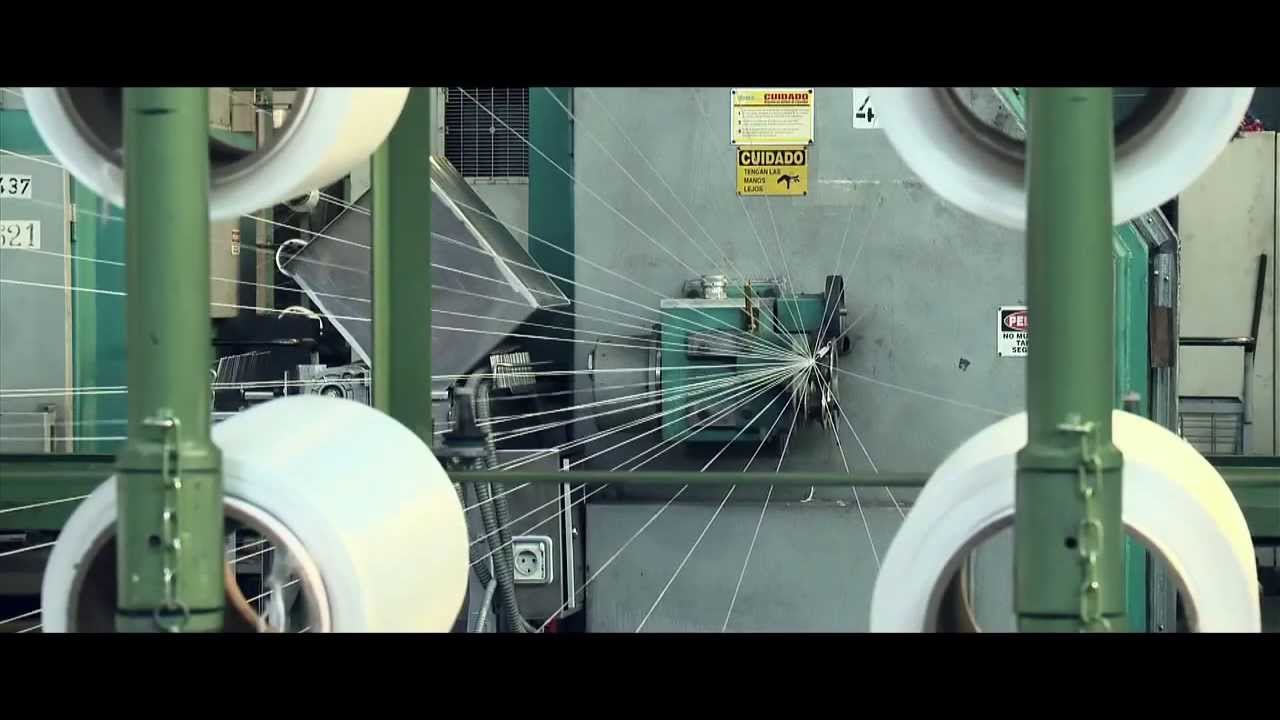
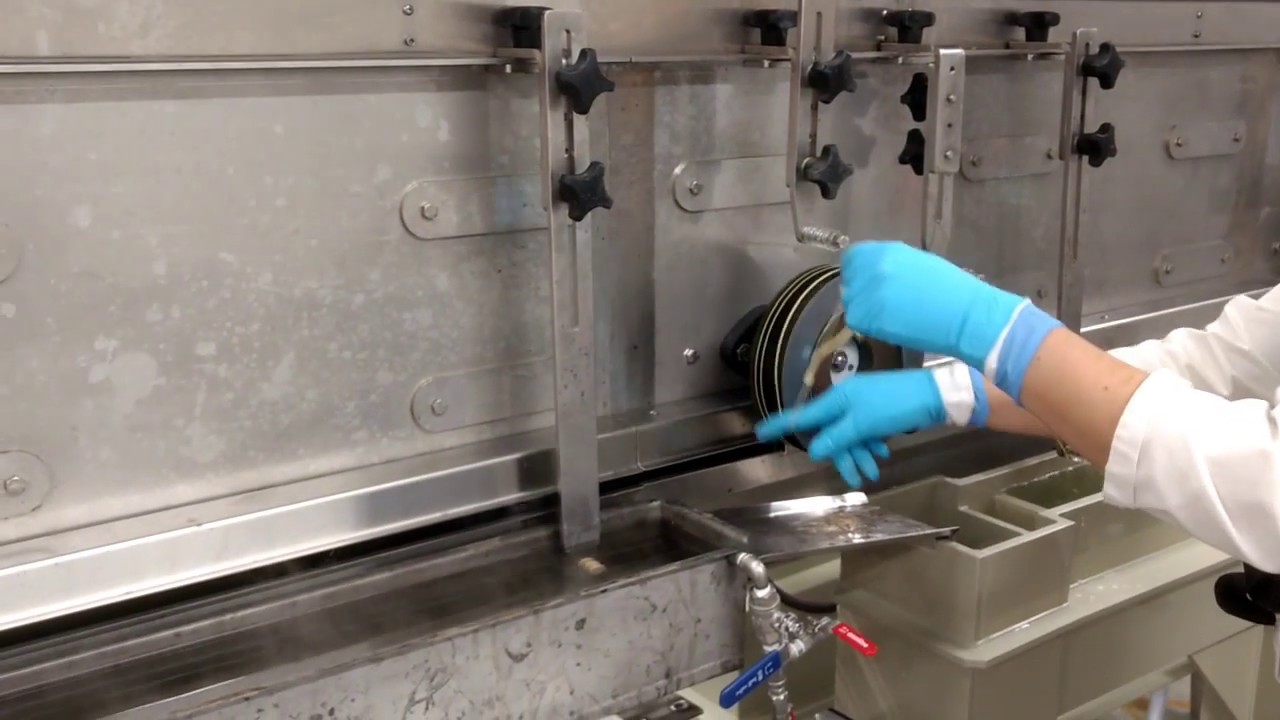
It's not just cheaper, but it's also more resistant and stretches less. This fibre comes to the factory in coils. This employee is responsible for installing the fibre coils in a creel leading the isolated wires to a spinner's weasel, which will then reorganise them in a new coil designated as a "warp".
After being filled, it usually weighs between 44 and 66 lbs. At the same time, an order for a new safety belt is being analysed in the development and design area. The customer is requesting precise characteristics for the new model.
The microscope helps us see that the sample has intertwined straps. The technical information for weaving is made from this analysis, a set of instructions that will enable a strap like the one in this sample. If you notice, safety belts are all made with intertwined straps.
And why's that? Because the strap is denser and not as thick. That is, we're able to achieve a quite small thickness and great density.
This provides us with a highly flexible belt. This employee will connect the wires of two or more warps in the loom in compliance with the technical specifications. After calibrated, the strap is woven at an impressive 5.
2 ft per minute. After a certain quantity of the strap has been woven, it is finalised, the dye process may start, where in this case a dark grey will be used. But the process will only be completed after sewing and patternmaking.
Here, the strap's worked on according to the customer's project. We can't forget that the seat belt is not only the strap. The seat belt is made of three essential components: it's the strap, the buckle, and patternmaking.
So, all the three components together must result in a final behaviour. Seat belts are subjected to structural and chemical quality controls. Every year, this factory makes enough belts for 60 000 seats.
In the end, they must all work fully and resist loads of up to 3527 lbs. When you least expect it, you may need to put your foot on the brakes. In this case, the seat belts did their job.
But even before the seat belt, the tires took on the lead role. There's a lot to find inside each layer of this high technology piece. The shell is the most resistant part.
It is formed of polyester lining that supports the car's weight and loads. The beads are steel-wire based keeping the tires on the wheels. The bands are a stabilising lining supporting moving loads.
The tread enables the tires to stick to the road. The "shoulder" supports the tires on the curves and the central rib ensures an encircling contact with the ground. The goal is to support the vehicle's weight, the weight from a static point of view, but then we move on to a dynamic point of view and stop mentioning weight but rather the strength and loads supported by the vehicle.
This is related to the fact that the tires will provide friction against the surface where the vehicle is moving. If there were no tires and no friction, we wouldn't be able to move forward or to stop. After the pneumatic came along, it absorbed all anomalies on the pavement.
This is actually a fibre compound inside a rubber matrix, which contribute towards the tire's performance. These fibres are present in many pneumatic parts. However, we should pay attention to the shell.
The Textile Industry of Ave produces the fabric used in Continental tires. Fibres are chosen based on the type of tire being produced. The most common are HMLS polyester tires.
About twenty years ago, the polyester wire manufacturers started developing HMLS polyester, usually believed as dimensionally stable in high temperatures as to ensure an eventual commitment between that low stretching, but, at the same time, it will not shrink much in high temperatures. That's why their application is extremely important on the shell. But before reaching the shell, this polyester is subjected to a long and complex treatment process.
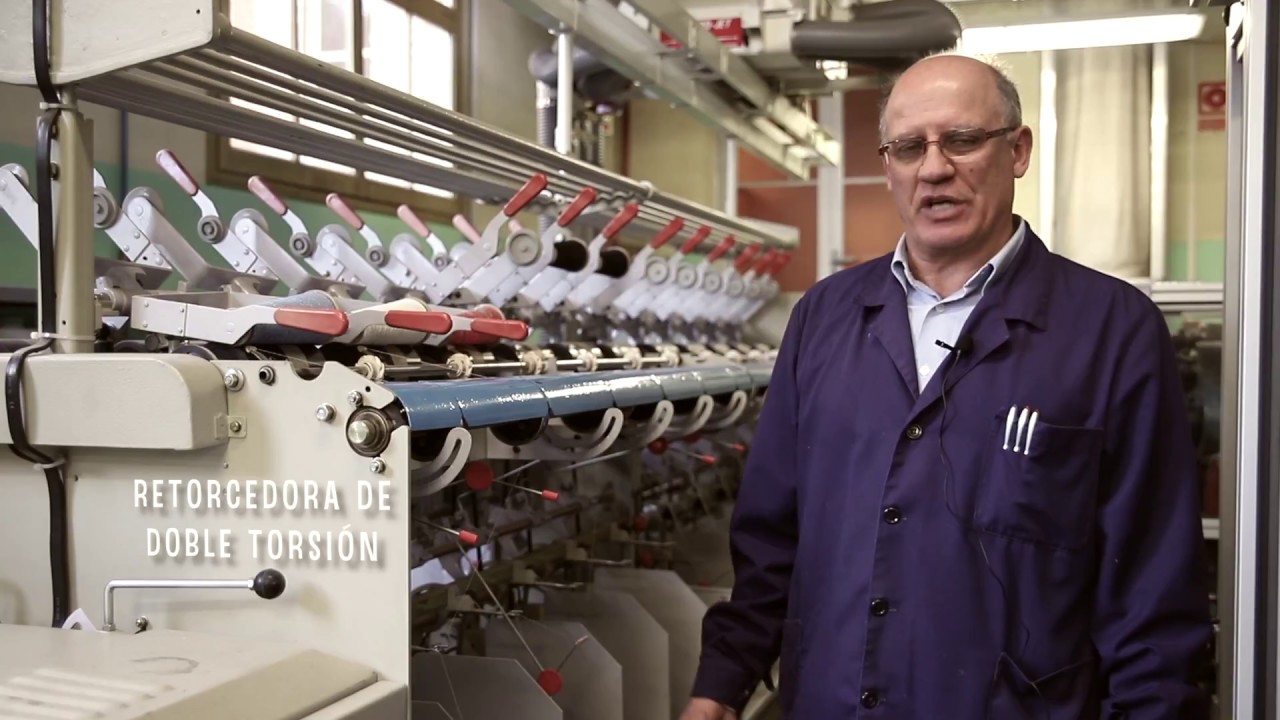
Firstly, two virgin fibre coils are installed in the Direct Cable, a machine that twists two wires up to a speed of 9000 rotations per minute. This makes fibres more resistant to the stress riser in the tires. The fibres will work as a spring.
It has certain features and the interesting ability, as it stretches and shrinks, of not losing those features. The speed of torsion is so fast that it becomes invisible in the naked eye, so, we need a strobe to register that movement. After 10 hours of torsion, 10 to 21 miles of reeled wire will be woven.
The number of wires per fabric is based on the tire specifications. Here, wires are aligned and united by a cotton mesh setting them in their place. When a roll becomes complete, we come to a crucial moment.
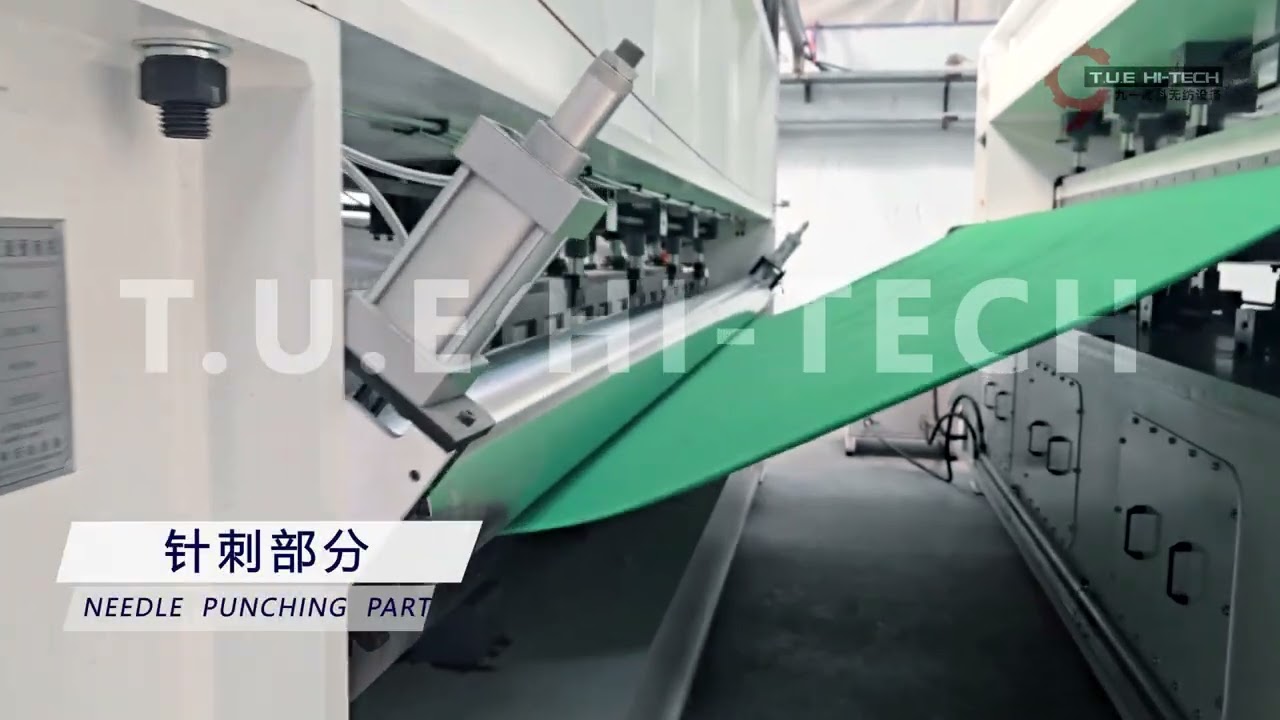
Using this machine that is as big as a seven-floor building, the fabrics start by being washed with resorcinol formaldehyde resin. This is the impregnation stage. One of the tasks is actually creating a chemical interface between the fibre and the rubber model.
This interface, which is created, this impregnation has chemical affinity with the fibre and, at the same time, it has affinity with the rubber. Heat setting follows, where the fabric is extended and subjected to over 392¼ F temperatures for a specific purpose. We change the actual characteristics of the polymer.
By changing these characteristics there's an important relation between how much the fibre will stretch if subjected to stretching and how much it will shrink if subjected to a temperature. We can customise anything. By the end, the impregnated fabric becomes a brownish colour and is sent to Continental's assembly line, where it's placed in a calender.
Here, any additional moisture is removed from the fibres and another impregnation is made, this time using rubber on both sides of the fabric. In the next stage, the fabric is cut based on the width of the shell. In this stage, fibres become oriented 90¼ towards the tire's performance.
The assembly line goes on and after all the components have been met, the pneumatic will finally enter the vulcanisation process. These are pressure cookers, where due to water vapour, the tire will assume its final form and texture, after which it'll be ready for any vehicle's wheels. The proper pressure will influence fuel consumption in a vehicle.
Besides slower driving at a regular pace, the great battle is still reducing the weight of vehicles. And yet again, fibres and compounds may be a big help. They enable us to reduce the weight of vehicles, they enable us to increase car safety, since they are highly resistant fibres.
They enable us levels of geometric freedom in opposition to metal parts. Nowadays, we're able to have rounder cars compared to older ones at such low prices, like in the old days. The electrical option requires a nationwide of charging points.
Luckily for this family, there's one in the route they traced on their GPS. It may not look like it, but there are also compounds behind this device. The first charging point was born here, where not everyone has access as a lot of the work carried out here is confidential.
It's the state of the art of moving technology, which not everyone can see. But they made an exception. Here, a design team is creating a draft of the customer's proposal for an electrical charging point.
The hand-made sketch is scanned and perfected on the computer. Only then will a third designer start work on a 3D model. Style design will prevail over engineering.
Therefore, structural engineers face the challenge of making their colleagues' concepts real. They choose materials and create the structures for the final product. Of course, this isn't a linear process.
There are developments and going back. For example, price constraints may imply changes in the project. Some requirements are easy to understand.
They're exposed to vandalism, so they must resist impacts and violence. Fibres meet these requirements very well. There must also be another set of characteristics: they're exposed to the sun, so they must resist UV radiation.
There is one final simulation before the prototypes are produced. Therefore, we enter an immersive virtual reality room, where design and engineering teams meet the customer in order to look at a close image of the final result. Here, we aim at reducing costs and time for a product to be developed.
Our greatest example was developing everything, from the design to release of one of our first prototypes, an electrical vehicle, in 18 months. These deadlines usually don't happen in a traditional product development. After the design has been validated, the first experiments are made.
Here fibre glass takes on the leading role, used in a mat and fabric. In a Trim Cabin, two technicians receive production instructions for the lamination process, so that the final result will meet the intended specifications. This was only an experiment.
The serial production will take place in the customer's premises. The Correia family is heading to the airport but there's still time to drop Marcos at a bus terminal. He is going to Viseu.
He doesn't know which bus to take yet, but we're sure of one thing: he'll have fibre glass all around him, a material that became common in the 1960s. If, nowadays, we wanted to replace all the parts of a bus with metal parts, we would be talking about a weight difference between 6614 and 8818 lbs increased by the metal to the bus. This would increase the cost of fuel and bus wear.
Many buses built in Portugal have fibre glass produced in this factory. The first stage is what we call "model scheming". Customers will send a 3D file with the intended piece.
This file will have the required coordinates for a robot to model the intended piece on a bit of expanded polystyrene or polyurethane. From back to front, the buffer-stop, the grate, and the headliner, passing by the wheel-protection trenches and the back of the vehicle, all the big parts are produced in fibre glass. One of them is the lead that covers the engine of the bus, the model of which has been sculpted by the robot's millimetre precision.
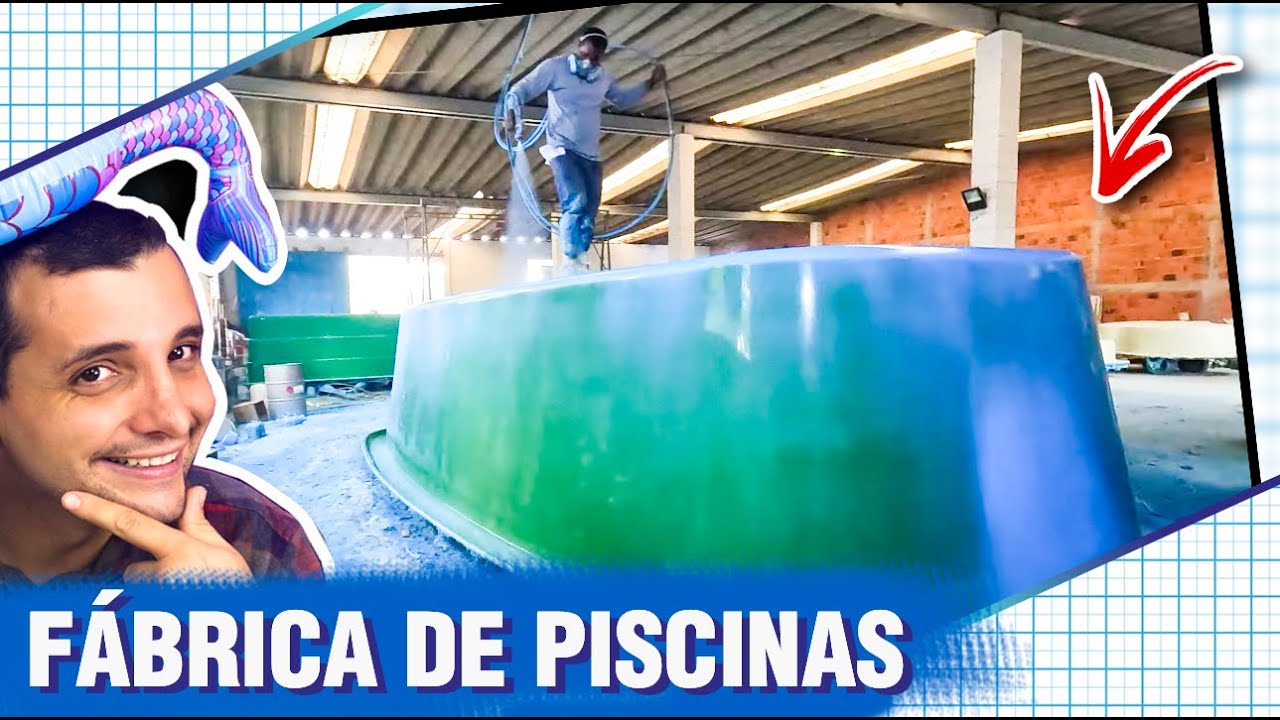
The mould starts by receiving a layer of gel-coat, a film that will help to take the mould off in the end. While the mould is drying, an employee is preparing the fibre glass for the right size of the piece. At the same time, another employee prepares the polyester resin, mixed by a catalyser, in order to start the lamination process.
The fibre glass mat then covers the mould. A uniform layer of resin is spread over it, and with the help of a roller, any air bubble or impurity that may weaken the piece is removed. It is actually during all this resin and fibre glass setting that the compound becomes resistant.
The resin molecule has a double carbon connection. That connection is broken when you use the accelerator. As soon as it's broken, radicals are released.
A carbon atom is connected to the accelerator while another carbon atom is free to connect to other molecules, which starts a chain. When that chain begins to form, the pieces become solid until there are no more free molecules, and that's when the piece is at a more solid state. This happens during the curing stage, which may take up to 8 hours.
In the end, the mould is taken off with the help of compressed air and the piece is taken to be finished, where fibre excess is removed and it is ready to be sent to the customer. During its development, the piece is analysed in terms of vehicle fixation. Using our own means, we apply the previously developed hardware, we impregnate the hardware itself in the fibre glass.
When the mould is taken off, the hardware is already there and the customer goes to the bus during the assembly and all it needs is the fibre glass, which already has all reinforcement. In this case, the true final client is Marcos who can travel on a bus that would have weighed four more tons and would have been ten times more expensive had it been made with metal instead of fibre glass. Through the skies, compounds had an atomic impact on the aircraft weight, which is currently 20% to 30% lighter than its metal ancestors.
And development doesn't stop in this scope. Something that the Correia family is about to find out. In the 90s came the boom for aviation fibres.
Carbon fibres are essentially the most used in aviation, particularly in terms of airframe and wings, the crucial parts of a plane. Fibre glass is also used a lot in aviation for less relevant surfaces, the performance of which isn't as important, and aramid fibre is also used in parts that are more subjected to an impact, pressure, or more tension. Many will not know it but Portugal has been adding experience in this sector.
The greatest team of aeronautical engineers is precisely found at CEIIA and they have proven themselves in several multi-national projects. From a helicopter's side load door to the back of an aeroplane, to the tail of a plane, part of the airframe, specific plane components. We believe that in a few years we'll be able to produce a whole plane, a whole helicopter, a whole small plane, and a whole UAV, which is an unmanned aerial vehicle.
Making a part of it will lead us to making the whole thing. It gives us the technical skills to produce and design an entire aircraft. It all begins with a meeting with the aeronautic engineering teams.
The customer's request is analysed and discussed. The coordinates for the final design are set based on specifications, such as the height, pressure, and speed which the plane will go through. Each order coming to these labs is usually a challenge.
Whether it's part of a helicopter or the wing of a plane, the goal is to obtain the best design and performance at all times, aiming at the lowest weight in compliance with the strict civil aviation standards. A plane won't go up if it doesn't comply with the technical requirements of the European entity, in this case. And these are very strict requirements.
When you apply fibre on a plane, you must comply with the standards set by the entity that rules aviation on a national and European level. You can only use fibre that complies with the legal aeronautic standards. Keeping a permanent dialogue with the customer, they choose the materials to be used and work on a 3D file of the piece without losing sight of the aircraft.
Several tests are carried out in order to detect and correct early mistakes. The matter of choosing materials is crucial in this process. When we receive an order to make a helicopter blade, for example, we must be able to see where we can innovate.
I mean, weight is essential, performance is essential, so, we need to play with these crucial factors as to obtain the end component. We need to know the variables at stake in order to have a certified product, which will be qualified to fly in a helicopter, on a plane, or wherever. After the design has been validated, a first prototype is built, which will be subjected to many tests and computer simulations.
Only after this has been perfected, the tools will be made - or patterns - and delivered to the customer. In this case, we are able to see a close piece to the actual production. In a clean room, free from impurities, which may jeopardise lamination, two compound technicians overlap three pieces of resin-impregnated fabric.
Then, the mould will be headed for curing. After the door has been closed, the inner pressure will rise to 248¼ F for a certain period of time based on the piece being produced. When a company develops a component, it becomes responsible for it until the end of the component's useful life.
That is, from its design to production, in an initial stage, and then we have to supervise that component through its entire life. That manufacturer will make all material or performance changes, therefore, CEIIA has a great responsibility in aeronautics and it's something that will last a lifetime. The result of this work is often invisible inside a plane's airframe.
That's the case of the plane where the Correia family will be flying. Due to the carbon fibre parts that make this TAP plane, it became lighter and takes up less fuel. 40% CARBON FIBRE 15 TONS LIGHTER Reducing carbon dioxide emissions is only a part of the fight for more efficient and environment- -friendly transportation.
In light of this, there's a lot of material waste harming the ecosystem. In order to measure the size of this problem, we only need to think that every year 12 million cars end their useful life. And the compounds don't always have a green ending.
In this chapter we'll see two types of challenge: recycling and natural fibres. Fibre should be used in terms of natural fibre. And used polymer also should be biodegradable.
In the case of fibre, it's all about improving its interface with polymer, which may bring problems related with adherence and mechanical resistance of produced structures, fibre may be worked on the surface, which will improve their adherence, but we can even go as far as the plant and work its genetic part ensuring that by the end we'll have fibre with the required properties. On one hand, the environmental impact of these materials is a real challenge with scholars and companies around the world looking for innovative answers. In light of this, pre-requirements for such materials are becoming more complex.
Although we can already register related developments. We're talking, for example, about fibres with the capacity to regenerate. These are obviously intelligent materials that think for themselves.
And they are also capable of, after a certain charge, which may cause malformation, maybe a fissure in the hood or structure of a vehicle, they will act on that fissure and cover it with polymer, which has been kept in a micro or nano-capsule. Properly seated, comfortable, on an ergonomic seat, with his seat belt on, little David can't reach the floor with his feet. Next to him, his mum switches off all mobile devices, following the rules.
Now, his dad tries to cover up his nerves. Luckily, the fibres are everywhere, even on the carpet. Our journey to the wonderful world of fibre will stop here for now.
The Correia family's journey is just beginning.