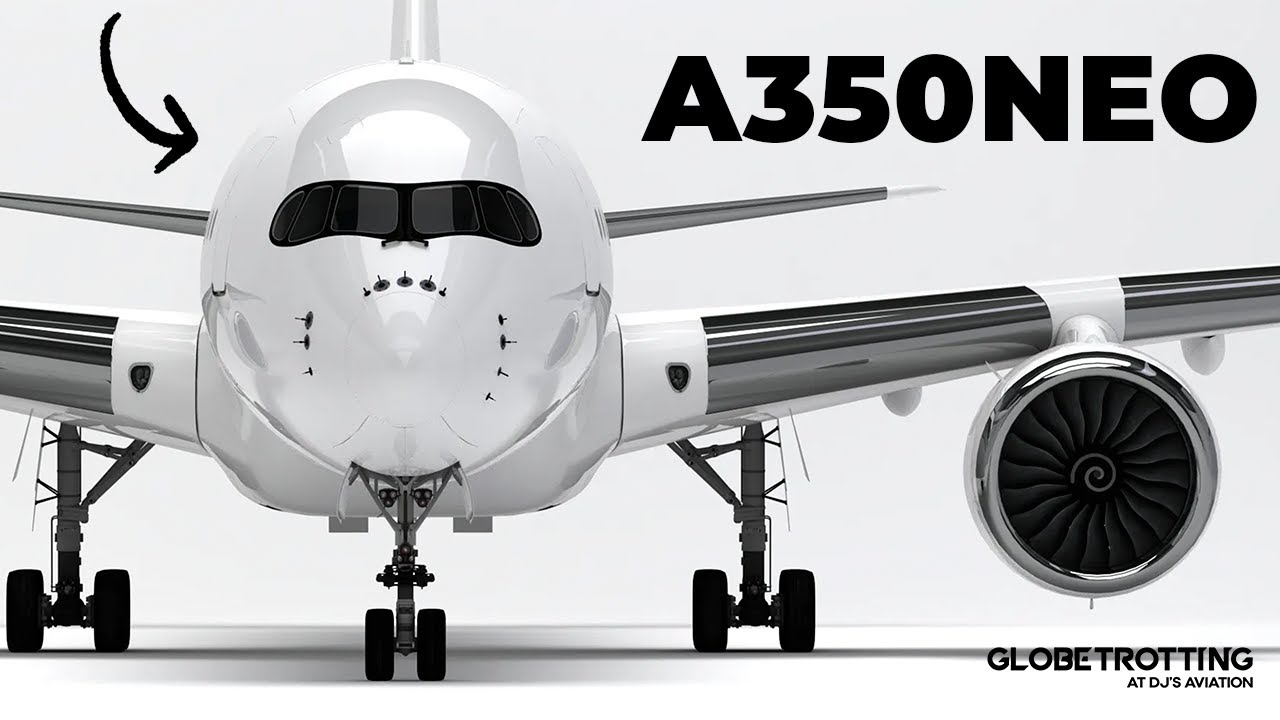
Sue Partridge head of airbus's ambitious wing of tomorrow's program announced that Airbus created a kind of composite Wing capable of high-speed production a revolutionary feature destined for their upcoming aircraft aimed at dominating the market segment currently held by Boeing 757 industry insiders are already buzzing that this new aircraft when launched could obliterate any competition in its class including the older 757 the most striking feature of this emerging design is its game-changing Advanced engineering poised to redefine the playing field entirely so what's this new aircraft all about why do experts believe it can surpass the 757 can it dominate the last segment still held by Boeing let's dive in so what exactly is that aircraft is this the first time you've heard of it it is named Airbus a 322 a potential new aircraft that the European plane maker has been mulling over for quite some time almost like nurturing a long-held dream as Airbus strategizes its next move in the fast-paced aviation industry where standing still means getting left behind the aircraft has emerged as a potential extension of its popular sibling the a321 an aircraft we've seen soar a great success recently right now the a321 program is one of airbus's crown jewels consistently performing well year after year and the a322 is viewed as a way to expand on that success attracting even more attention and curiosity the hype around it SP spiked in 2021 when Bloomberg hinted that Airbus was considering adding newer more efficient engines to the A320 lineup this wouldn't just be limited to the A320 but could also potentially extend to the a350 line with Whispers of a possible a350 Neo appearing sometime in the mid 2020 s of course this isn't happening right away but the news reveals where airbus's Ambitions are pointed continuous innovation Relentless expansion and who knows maybe the a322 could be the next game Cher in commercial Aviation additionally Airbus is planning to look into a new composite Wing design to ramp up production if needed this new Wing concept has been a Hot Topic in what Airbus calls its new era yes they're making it sound as epic as possible keep in mind that Airbus is still brainstorming ways to make their planes even more efficient in the future will this new Wing take them soaring ahead hard to say but Airbus isn't the only one eyeing the next gen Wing game Boeing is over there struggling a bit but still trying with their ttbw project in collaboration with NASA if that works out they're hoping it could be the next big thing for commercial aircraft and yes this new composite Wing design brings some flashy features picture this the wing tips can fold up making it look like a serious standout in the A320 family lineup setting it apart from every other Airbus commercial jet to date it's a little reminiscent of the folding wing tips on the Boeing 7x definitely not your average Airbus wing it goes without saying that an Airbus a 322 would basically look like a stretched out a321 but what else is in the mix well how much further they can stretch that fuselage according to sash Tusa an analyst at agency partners this longer a 321 could add up to four more rows of seats with the standard 33 seating configuration that Airbus loves to put on its A320 family Jets that's an extra 24 seats now Airbus claims that the a321 can carry up to 40 more passengers than the A320 which is just over six extra rows so slapping on four more rows could stretch this aircraft to just under 50 m in length basically the length of a football field give or take but wait there's more using next gen engines might even require shifting around the landing gear position maybe they're planning on giving the a322 a bit more kick in the landing Department finally let's dive into the interesting of airplane measurements so how much longer could the a322 really get when you stack it up against Boeing's narrowbody Jets the 737 Max 10 is just a hair shorter than the a321 coming in at 43. 8 M which is approximately 143 8 in it's not bad but still a bit shy of the a321 now the 757300 which is no longer in production measures a beefy 54. 4 m 178 F 5 in this shows that modern narrow body planes can definitely stretch out if they want to kind of like that friend who just needs a little more space in the car going way back in time the longest versions of the Douglas dc8 were 57.
1 M 187. 5 ft now that's one long classic jet so what does all this tell us about the a 322s potential Mission well it's clear that Airbus isn't shy about stretching things out out and could be aiming for a secret conspiracy what is it when we bring up the 757 it's hard to ignore the fact that there's still a gap in the market for a plane in that segment with no true successor in sight so when Airbus reveals information about this potential new jet the question arises could the a322 be the long awaited air to the 757 demand for a new mid-range aircraft falling somewhere between widebody Jets like the Boeing 787 and Airbus A330 and single is plane like the Boeing 737 and Airbus A320 is growing airlines are eager to phase out their aging Boeing 757 fleets which have long served as the Workhorse for long narrow routes stretching the Airbus a321 by a few more meters to create the hypothetical a 322 in would make it a perfect candidate to directly replace the Aging 757 despite its age this Boeing aircraft remains a key player for major airlines like Delta especially especially for those longer thinner routes that require the kind of reach and efficiency only it has been able to provide currently the closest successors to the Boeing 75 7200 are the Airbus a 321 XLR and the Boeing 737 Max 10 both of these aircraft can seat over 200 passengers in a two-class configuration though the 737 Max 10 offers a longer range the a321 XLR an upgraded version of the A320 1 with new engines added fuel tanks and a redesigned cabin for more seating is airbus's solution to filling the 757 shoes without the need for a longer fuselage this design Choice helps avoid the additional cost and certification requirements that come with stretching the aircraft the arrival of the XLR underscores an important fact which we'll dive into next so will the a322 appear while there's been some Buzz about its potential the chances of such an aircraft materializing are pretty slim at least in the short term Airbus loves to explore new aircraft ideas and put a lot of effort into research and development but let's face it many of these designs don't even make it past the drawing board just because we're talking about the a322 doesn't mean it's definitely happening but that doesn't mean all that research is pointless you might wonder why well as we've seen over the last 50 years a lot of those failed Concepts actually laid the groundwork for future aircraft these research efforts are crucial for shaping Shing the future of the manufacturer and guiding them toward more profitable programs even though it's not officially confirmed there are rumors that the a322 could include four extra rows of seats possibly expanding business class or at least giving more room for economy however public interest in this new aircraft hasn't exactly been through the roof and now more reasonable options are starting to steal the spotlight why it might not appear one of the more reasonable reasons might be the development of the A320 Neo series specifically the a321 XLR a longer range version unlike the a322 which focuses on stretching the fuselage the XLR is all about stretching that range announced in 2019 the XLR quickly became a crowd favorite with hundreds of orders rolling in from Airlines since its debut it's been a hit even with the usual certification hurdles the massive number of orders proves that there is a solid demand for longer range aircraft like this on the other hand while the a322 aims to integrate new more efficient Technologies to deliver better economic benefits to customers there's a pretty strong case to be made that today's Tech isn't quite up to Snuff to justify buying a whole new aircraft right now if Airbus had pitched the Airbus aircraft to Airlines and barely got any interest or Worse an interest that wasn't strong enough to push forward then well maybe it's a sign to let this one slide back into the hanger for a while in the end the UPG upgraded a321 Neo in its XLR version may have turned out to be a much shinier and more attractive option for Airbus while the a322 set out to bring in fancy new tech for better economic perks for customers some would argue that today's Tech just isn't quite ready to make that aircraft a hot seller with the added fuel tanks giving the XLR some serious range it became a pretty sweet alternative without needing major changes like new engines or Wings Airbus could even argue that if an airline's eyeing the A320 2 they might as well just go for the A330 Neo instead so the a321 Neo and its variations are like the perfect Bridge To The Future and deciding to put the new one on pause isn't exactly a huge blunder at this point while you can't completely rule out its possibility of emerging in the distant future as there might still be demand it's believed that the XLR is the Pinnacle of what's currently needed in that aircraft category for airline customers so what do you think should Airbus focus on the XLR or continued developing the a322 to bring a new product to the market while airlines are expecting the next airplane Boeing's been too tied up wrestling with its own problems to make it happen Airbus spotting a golden opportunity as Boeing sinks into the quicksand has been introducing the a321 Neo which dominates the market share with its sweet spot for medium Hall flights has become the go-to choice for Long Haul single aisle routes with alluring low operating costs Boeing's lack of new off offerings has opened the door wide for Airbus giving the European giant a major upper hand but Airbus isn't resting on its Laurels they're always brainstorming ways to add unique twists to each new model ensuring every variant brings Fresh Value sure the a322 might not hit the assembly line right away but if demand grows over the next 10 20 or even 30 years Airbus might just go for it meanwhile they're on The Cutting Edge exploring the next gen Tech that could Define find commercial aviation's future they're not looking to just slap on a recycled engine for a new a 320 Neo they're working to create a tech forward plane that's truly Innovative Boeing for its part has hinted they're holding off on New midsize airplane until technology feels truly Next Level Airbus sees this ongoing rivalry as a golden chance to reinforce its own dominance with a stronger footing than Boeing at the moment Airbus is happily plotting its path forward aiming to stay a few steps ahead and maybe just maybe rule the skies for decades to come what are you hoping to see from the new a322 ideally it'll build on the stretched a321 but more than anything we're excited to see if it can overcome some of the limitations and introduce even more advanced tech for instance the XLR lacks a designated crew rest area so it would be amazing if the new aircraft took care of that and the big question which engines will power the a322 there's no official word yet but Airbus has hinted it'll feature high performance nextg engines so what future engines from which manufacturer do you think could land the job Boeing strike has just ended after 7 weeks the manufacturer is reestablishing the rules to get production back on track can Boeing catch up with its rival when Airbus has just released its huge plan for its new weapon the future of airbus's Next Generation aircraft is promised to dominate the skies with explosive features opening a new era for the aviation industry so what is the plan for the new aircraft will it help Airbus consolidate its advantage over Boeing the global aviation industry is more competitive than ever with new Airlines and advanced aircraft models emerging in this context continuous innovation and the development of groundbreaking products are vital for Airbus to maintain its leadership position Airbus CEO guom F emphasized that the Boeing 737 was launched 50 years ago while the Airbus A3 20 has been on the market for 30 years he revealed that Airbus is now preparing for a real Revolution with a plan to completely replace old aircraft platforms not simply upgrade like the move from A320 to A320 Neo or from 737 Next Generation to 737 Max this will be a major shift with completely new technology and design fundamentally different from previous improvements although a decade may seem like a long time according to to fory this actually means that this comprehensive replacement program will be implemented from around 2027 or 2028 and no later than 2030 thus in just a few years we will witness the first steps of a new generation of aircraft from Airbus this orientation is not only to meet current needs but also to create a solid foundation for the aviation industry in the future with outstanding improvements in performance fuel economy and sustainability which this new generation of aircraft will bring understanding the importance of this Airbus has invested heavily in its research and development capabilities particularly in the UK where it has just inaugurated the new Wing technology Development Center or wtdc for short this Center will play a key role in research and testing becoming the place to build demonstrators for many of the company's pioneering programs and projects with state-of-the-art facilities the wtdc will help Airbus accelerate the design production and testing of next generation Wings by applying Cutting Edge Technologies WTC will support Airbus in continuously improving the aerodynamic performance of aircraft Wings a key factor in optimizing aircraft performance and fuel efficiency Innovations in longer thinner and lighter Wing designs will create major breakthroughs contributing to reducing carbon emissions and accelerating the aviation industry's goal of net zero emissions by 2050 in addition Airbus is exploiting biomatic techniques to design aircraft inspired by Nature giving Engineers insights into building lighter and more efficient aircraft this approach not only reduces aircraft weight but also improves fuel efficiency meeting the increasing demands of Airlines and passengers for sustainability and cost Savings in addition to aerodynamic improvements Airbus is also accelerating Research into clean energy aircraft Concepts to replace traditional fossil fuels among them hydrogen is emerging as a potential and promising candidate for the aviation industry with the ability to emit no carbon when burned hydrogen meets increasingly stringent environmental standards contributing to the mission of mitigating global climate change one of the biggest challenges today many governments and international organizations are also actively supporting clean energy projects including hydrogen fuel to promote the transition to a sustainable aviation industry investing in research and testing with hydrogen is not not only part of airbus's long-term Innovation strategy but also an important move to maintain competitiveness in the market and minimize future legal risks in addition to protecting the environment hydrogen engines also offer higher efficiency than traditional fossil fuel engines creating a major economic Advantage advances in hydrogen technology have the potential to revolutionize aircraft construction and operation opening up new opportunities for Airbus in designing the aircraft of the future thanks to that Airbus not only consolidates its pioneering position in the industry but also lays the foundation for a green and sustainable Aviation era airbus's zeroe project is opening a new chapter in the aviation industry as it continuously explores many aircraft configurations and Advanced Technologies to turn hydrogen into an energy source for future aircraft not only stopping at researching hydrogen combustion techniques this project also aims to build a sustainable ecosystem to produce and widely Supply High hydrogen meeting the development needs of the aviation industry in the future the project is currently testing three prototype aircraft each designed to meet different flight requirements but all based on hydrogen combustion technology the gas turbines on these prototypes have been improved with new fuel systems and fuel injectors allowing hydrogen to be used in a similar way to current jet fuel the first prototype the turbofan is capable of flying over 2,000 nautical miles and carrying fewer than 200 passengers it uses two hybrid hydrogen turbofan engines to provide thrust offering Superior performance and greater environmental friendliness the second experimental concept the turbo prop is designed for shorter routs with a range of more than 1,000 nautical miles and a capacity of fewer than 100 passengers the two engines on the turbo propop are hybrid hydrogen turbo props using eight bladed propellers to generate thrust making making it suitable for small and medium-sized transport needs especially in areas with limited access to major airports finally the Blended Wing body or BWB for short is a unique design with a blended Wing body structure which optimizes aerodynamics and interior space the BWB has the same range and seating capacity as the turbofan with two hybrid hydrogen turbofan engines providing thrust this configuration not only reduces drag but also saves fuel offers higher efficiency and opens up new avenues for future aircraft designs in addition to the hybrid hydrogen aircraft Airbus is also developing a groundbreaking concept based entirely on electric propulsion a bold step forward in the journey towards green Aviation this unique concept was first announced in December 20th of 20 when Airbus unveiled a prototype aircraft powered by an electric propeller system powered by hydrogen fuel cells the system converts hydrogen into electricity through a chemical reaction allowing the aircraft to operate purely on electricity without burning traditional fuel by the end of 2023 the zeroe project team reached a major Milestone when it successfully activated the iron pod a hydrogen fueled propulsion system specifically designed for Airbus electric aircraft the iron pod integrates a hydrogen fuel cell system electric motors to turn the propellers and temperature management devices to maintain stable system operation with a capacity of up to 1.