it comes as no surprise when I say that flesh and blood is a unique card game so many games have created their own resource systems magic has its Mana Netrunner has clicks and money one piece has Dawn Digimon has the wild shared resource pool and Yu-Gi-Oh has whatever it has but Fab is wholly outside of these confines where every card represents up to four functions depending on when and how it is drawn what's more Fab's unique draw four mechanic sets up a cycle in which your turn is only one half of the story and your
opponent's turn is the other half this give and take back and forth give some to take some is what most players cite as their primary reason for enjoying the game that and prism which is still a video I'm struggling to make but one thing I do not hear often enough in Fab and one of the things that really grabbed me right from the get-go was this way back when I started I told my friend Jake my friend who got me into the game man this reminds me of a fighting game Big Bird will not say
die here we go this said it's either for the reset or for the tournament one round away again the tension miss sweet punishes difficult range the Jabs they're both playing the game but both looking a little tentative here oh yeah but he doesn't want to let him out of the corner that's the critical story here he gets out here we go big bird with this pressure delayed B reversal smart oh got one hit but nothing oh he makes it out one meter spent building that b trigger bar again oh that's another hit here we go
okay he's good not enough do a lot of damage he's not gonna be able to kill he goes for them he's still in this it's not going to kill he's got one more chance it jumps back he read it and he takes it full chin in this moment your grand champion for evolution 2019. this is a sentiment I still maintain flesh and blood is a fighting game wearing the cold foiled dress of a card game and that's why it's so damn good but let me break down my arguments fighting games and the fgc are also
extremely unique people dedicate their lives to improving at every core aspect of Any Given fighting game and they are brutally unforgiving in their learning curve a better fighting game player will always beat a lesser skilled one not only that but fighting games also Foster nigh on religious dedication to their characters take Ryu for example I don't even need to show you a picture of him you know what he looks like and he's just the start an even better example would be Faust or Bridget from Guilty Gear or zangiev from Street Fighter or Eddie from Tekken
or Sagat or dalsum Sub-Zero folgore maishiranui or even Carmine from undernight in birth exit latest yeah that's a real name these characters have had dedicated fan bases in some cases for decades there's an identity which gets wrapped up in devoting so much time to one character which becomes a beautiful melding of human and game Dolson becomes an extension of the Dawson player's personality professional players too have garnered a reputation for who they play take Punk for example a professional Street Fighter player he plays and is well known for his incredible skills as a Karen player
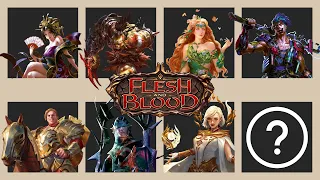
or Daigo umahara who's as famous for his Ryu as he is for his guile or nage who's known for being the best Faust player in the world a great one who I love is named hilariously Fab who's probably the best known potemkin player in all of Guilty Gear now does that sound familiar I'm just going to list a few names and you say the first hero that comes to mind Mara Faris Ethan Van Sant Joshua Lau Michael Hamilton Matt Rogers Majin Bay Yuki Lee Bender Hayden Dale and those are just the pro players tall Timmy
go again gaming didn't even say his name Breezy Tommy fresh if you follow the Flesh and Blood Community you probably correctly identified each player and their Associated hero it's in the blood of Fab this distinct association between player and game piece a long-standing conversation in the flesh and blood Community is that of archetypes in Magic we have aggro combo and control aggro is categorized by aggression that being achieved the goal as quickly as possible through traditional damage dealing means whereas combo is to assemble specific game pieces that renders the game engine in a pattern in
which the victory condition is all but certain then finally there is control in which the goal is to run either aggro or combo out of relevant game pieces while presenting some form of hard to deal with inevitable win condition mid-range while something which has become sort of a fourth category is much light control but faster it wants to win the game somewhere in between aggro and control the goal with mid-range is to Simply have a highest density of value so that anytime the mid-range player goes to refresh their resources on average they will have higher
value resources these definitions work really great for magic aggressive creatures are easy to Define by their mechanics it's easy to see why a three-card combo is a three-card combo and control spells are also easy to understand the triangle of competitive games revolves around offense defense and a mixture of the two but they don't always fit very well it's hard to say that Reinhardt is a control hero and Soldier 76 as a aggro hero they may Prime Aphasia remind one of archetypes but only in the broadest of terms this brings me back to flesh and blood
what exactly is a combo deck in Flesh and Blood sure there have been pure combo decks in the past like otk viseri decks though LSS tends to remove those from the format relatively quickly and so then combo isn't so much a thing in Fab as it isn't Magic combo is usually a combo in a deck like Channel Mount Herald backed up by a ready loaded embodiment of lightning plus force of nature this is a combo but Breyer is not a combo deck Icelander has frostex isaternal combos but Icelander does not win because of this combo
so much as it's a tool in her kit and what is mid-range his mid-range control with slightly less blocking we tend to call control fatigue because the mechanical goal of control in flesh and blood is to run your opponent out of their stronger cards in the early game sometimes takes the form of blocking and sometimes especially an outsider's draft takes the form of presenting one's own damage so this fatigue really control or another type of mid-range additionally Icelander is considered a mid-range deck and also sometimes a control deck depending on who you talk to and
which style the player tends to favor Icelander could be considered a control deck because she has access to many disruptive cards which make her opponent's attacks harder to use but in Magic that isn't control so much as its prison or taxes I have often found troubles when I attempt to help players out when they say things like I'm interested in flesh and blood what should I play if I like John mid-range well not rhinar but also Reiner or maybe draw my or Iceland and where I usually fall down on is you actually just need to
try a bunch of different Heroes on felt table and see which one you like because Fab is a fundamentally different game and this is where fighting games come in in fighting games there is also this ongoing discussion as to what exactly is aggro mid-range and control no one really categorizes a character in a fighting game as aggro so much as Rush down rushdown is a term which is used to describe characters who specialize in offense and speed they often employ something called Mix-Ups in which the aggressor forces their opponent into guessing what they are going
to do guess wrong and the Damage piles on rushdown characters are Nimble have long combo strings and typically poor defensive options I actually like this terminology better for Fab than I do Magic's traditional definition of Acro which is a little inelegant Phi is a perfect example of a rushdown character he presents absurd amounts of damage has really weak defense and regularly puts his opponents in a position of to block or not to block taking a hit from mounting anger could be total Doom or it could be he banishes a blue card to attack for two
that card in his Arsenal could be an art of war or it could be Phoenix Flame the most obvious signifier of a rushdown character in a fighting game is their Total Health pool in Street Fighter for example Seth has one of the lowest Health pools in the game if Seth loses their pressure in the game it can spell disaster because Seth has weak defense and has fewer guesses than most of the characters to reach neutral or parody when you look at Phi most of his deck is two blocks and worse if you look at a
Phi hand structure blocking with any one card from hand disrupts his turn almost completely the next archetype I would like to talk about is that of the all-rounder all rounders are what they sound like they are relatively good in most categories but do not particularly exceed at any one they have a decent mixture of offense and defense all rounders include Ryu or Soul bad guy all rounders are usually the face characters of Any Given fighting game because they are good at teaching the fundamentals of Any Given fighting game you will learn a lot about Street
Fighter if you learn the core concept of reuse Fireball uppercut game since all rounders are capable of both offense and defense they have tools for both and can focus in on one or the other but not so much like rushdown I like to think of an all-rounder like Azuri who can put out impressive damage and defense disrupting Missouri's hands doesn't work quite as well as it does against firebriar all rounders tend to win the game later than rushdown but earlier than the next category zoners zoners the second least liked archetype in fighting games zoners are
categorized by having a fundamentally different goal than the other two main archetypes zoners do exactly as their name implies they control zones their intention is to keep the other two archetypes away from them with long range attacks they do this because keeping a fighting game character away from you protects your life total if they can't punch you they can't do damage zoners are typically but not always slower movement have hard to deal with attacks and sometimes even have traps but weirdly they don't always have great defensive options often they'll have one great evasion tool like
Dawson's teleport but they usually have lower Health pools in all rounders so while they are not defensive stalwarts they are often considered defensive characters and this is because as earlier stated they are not intending to reduce life totals to zero so much as they're intending to control the tempo of the game Guilty Gear is a frantic White Knuckle frenzy of a fighting game until you fight Axel who pokes you and prods you and keeps you away from him with nearly full screen attacks Guile's defense is impenetrable in the right hands and refuses to allow you
to advance toward him on the ground via his Sonic booms and also denies your air access via his somersault kick this control of zones is usually where players get most frustrated because they feel like they aren't playing the game if they can occupy these two areas and it's not wrong they are not playing what they thought was the game they are playing the zoner's game and then breathe with me fighting game fans Grappler Grapplers also don't quite fit into an aggro mid-range or control category nor do they really fit in the rushdown all-rounder OR zoner
category Grapplers take many forms they sometimes have great defensive options and sometimes have weak defensive options they sometimes have great offensive options like potemkin's completely [ __ ] megafist and sometimes have very weak offensive options like slow easy to read attacks Grapplers also typically have very slow walk speed they often have high Health totals and very rarely can they attack from significant ranges unless you're [ __ ] potemkin the thing which categorizes grappler's best though is that of the grapple the grab zombie doesn't have incredibly long combos he doesn't have what are traditionally considered Mix-Ups
outside of will I grab you or will I punch you but what zangiev does have is the lingering fear of this yeah sure he was bumper and head behind the super the whole time look at the damage though 50 coming off just like that grabs in a fighting game are a unique third category of interactivity in a fighting game you have attack block and grab a normal attack easy block it by holding back your opponent is blocking great jump and kick them or strike low when they block high but grabs are different if you are
attacking your opponent and they block everything constantly so that none of your damage is getting through there is usually only one option grab them grabs can't be blocked if a grab is executed they will get their damage while very frustrating for most players to play against and me too when I play against [ __ ] potemkin and his [ __ ] Mega fist or [ __ ] potemkin Buster or [ __ ] whatever else potemkin has Grapplers are usually spending their defensive options and high Health pools waiting for the right moment to reach out and
smash their opponents into the ground and once they do it's time to start guessing now you may be wondering who I consider to be the aforementioned categories and I am here to deliver this Theory feel free to disagree with me in the comments below I am also only doing this for cc because I just don't understand Blitz enough to talk about it Rush down katsu levia visarai Breyer Phi Lexi Jane Dash all-rounder Reiner dorinthea Breyer Bolton Missouri zoner prism Icelander dromai Lexi Dash Kano Grappler hold him Azalea Bravo and Lexi and Riptide hasn't been figured
out yet and arachni's card pool hasn't quite been parsed by the community though I'm inclined to put Arachne in either zoner or all rounder you'll notice of course that a few of the characters are put in more than one box and this is to account for them being billed quite differently Breyer is both an all-rounder and a rush down this is because Breyer can be built Cheerio style or a beefier make embodiments of return and gain extra value out of my defensive card style she can also pivot based on how she sideboards Dash as well
can be a tree frog or a wombat one signifies Uber defense and one signifies Uber offense I have never met a wombat nor a tree frog so I will have to take the word of the Dex creators as gospel I want to reiterate that any character in a fighting game as well as any character in Fab can be played extremely defensively yes Phi can commit all four cards to block it return run every defense reaction available and ultimately be pretty hard to kill as a result but it's clearly not what he's designed to do just
like chip the longtime Ninja and guilty care is not designed to be a defensive stalwart rather a lightning fast offensive maniac every game is dictated by a prescribed Flow by the developers of set game while Rainbow Six Siege is a slow methodical multiplayer shooter where the anticipation of violence is the majority of the experience which is then broken up by a sudden Collision of two teams Doom or Quake are frantic quick twitch Shooters it's also easy to see after playing both games why someone would prefer one to another card games are no different while magic
is the relatively steady accumulation of resources culminating in the two players playing at the peak of their powers in later turns Fab is the complete opposite Fab is a starting at Peak powers and losing Effectiveness over the course of the match sometimes magic is a lot like an RTS or real-time strategy game much like Starcraft or Age of Empires where accumulating and caring for your valuable resources and when and how to use them is the game these games are characterized by starting at nothing and slowly building up to a war machine fighting games and Fab
on the other hand all moves are available at the start of the game while yes fighting games often do have a secondary meter which players build up to unleash a ridiculously powerful super special move I contend that this is a feature of the genre and doesn't contribute quite so much to the flow of the game as the Box standard kicks punches and canceling of those kicks and punches into special moves what I contend then is the relationship of flow between Fab and fighting game is the concept of neutral neutral in fighting games is a term
which means players are at parity this is neutral characters are positioned in such a way that neither attacks can really reach and in order for fighting to occur one of the two will have to move toward the other what happens when a player does this is of course the fighting players will fish for mistakes in their opponent attempting to create the most efficient scenarios for creating damage while remaining relatively safe depending on whether the opponent blocks or doesn't block if one player scores a hit they now have the opportunity to maximize on their reward spending
as much resources as necessary to maximize damage output they do this because once their turn is over they return to neutral fighting game players think of their game as turn taking just as much as card game players do and what's weird about this is the idea of stealing turns okay to explain this I need to do a quick dive on some fighting game mechanics in a fighting game every move has a certain number of frames it needs in order to complete a character cannot execute any other actions while this animation is occurring conversely every time
a character blocks in a fighting game there is a certain number of frames for the block animation to complete during which a character also cannot execute any commands a turn in a fighting game begins when neutral is broken the offensive player's turn goes until they commit to something which in fighting game turns is called negative in which all the offensive players animation will take longer to complete than the defensive player's block animation most combo strings in a fighting game end with something which is negative allowing for the defending player who is astutely watching their opponent
to either take their own turn or return the game to neutral turn stealing then sounds complicated but it is really simple if a Player is taking their turn and then reaches the end of their combo string they now must consider the defending player's offensive capabilities perhaps in anticipation that their opponent will begin their offensive turn with a low attack the player will jump into the air and do an air attack this is the original offensive player stealing their turn back because the cycle has started over an even easier explanation of this is the grappler who
can steal turns with abilities like armor in which they block oncoming advances then activate one of their abilities with armor to push through offense leading to a grab or knock down combo I like to equate this to flesh and blood in various forms but let's do some of the easiest ways opponents can take and steal turns exhibit a spinal Crush Terrace Hunter crippling crush crush the week and my favorite pummeled CNC exhibit B red in The Ledger hypothermia Channel Lake frigid snatch at the end of a five attack combat chain red in The Ledger again
mask of momentum frostbites the concept Barbed undertow inertia tokens and one more time red in The Ledger but there's even more though they take the forms of parries a Parry in a fighting game is when a well-timed defensive maneuver can lead to a more effective offensive maneuver parries I contend are like defensive reactions this one is obvious but this one will also do nicely these comparisons go on and on and on we could even talk about Frame data that being my theory that each individual attack within the math matrix of Fab actually tracks quite nicely
to the fighting game concept of Frame data but I need more time to work on that so perhaps in Fab writ fighting game part 2. does Fab line up perfectly with every single aspect of a fighting game no not even close there's an execution barrier in fighting games that simply does not exist in card games but my contention is that they are not so different than one would think I often recommend Fab players play fighting games and vice versa whereas I would never recommend magic players to play a fighting game because they like magic to
enjoy a fighting game one must love the dance between two people attempting to outsmart the other fighting game players especially good ones will very often say fighting games aren't about long combo strings and execution is not the end-all be-all of skill being a skilled fighting game player is recognizing situations and what is best to do in any given situation fighting games have maintained their existence despite market trends for over 30 years for three simple reasons they feel so good to play they are so pure in their gameplay focused mentality and they provide all the tools
to get better and provide no excuse for blame other than yourself so the next time you sit down to play a game of Flesh and Blood maybe think about some of the shared DNA it has with games like Street Fighter hell maybe give Street Fighter 6 a try when it comes out this year I think players in both games would benefit greatly by dipping toes into the other as the mentality is what carries over best alright then time to go practice some combo strings foreign