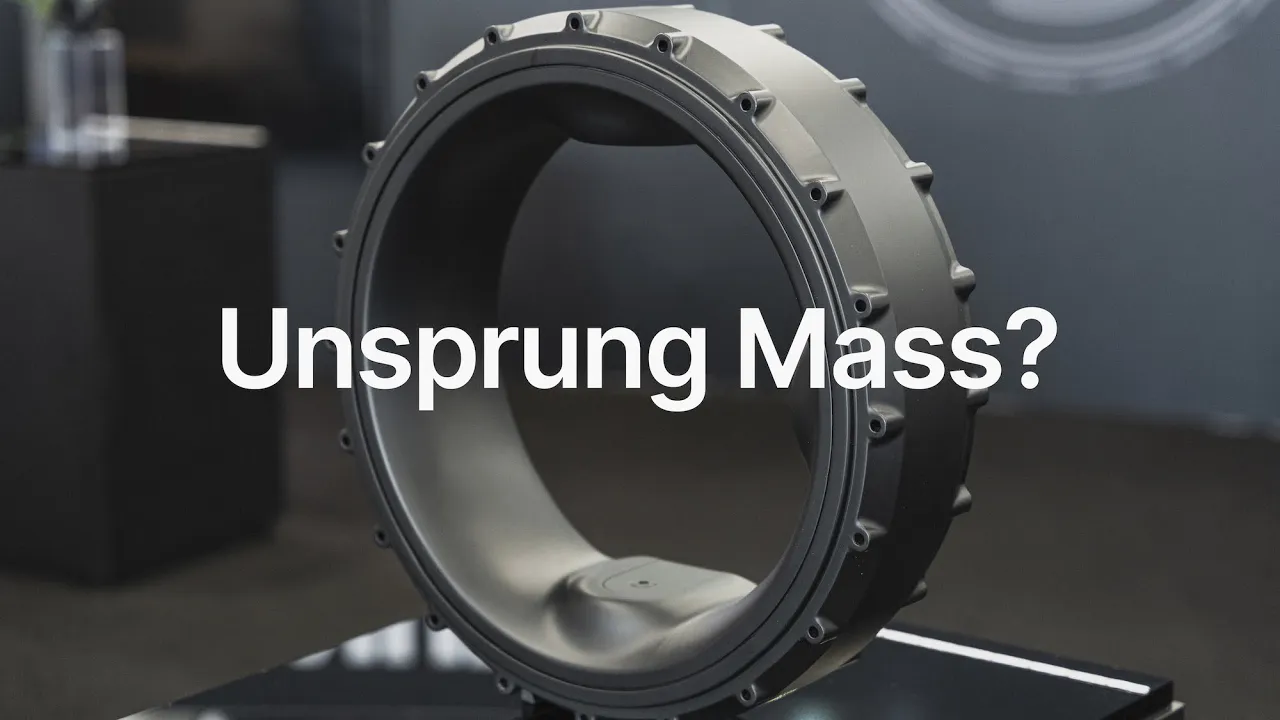
hi my name is G Roberts I'm the head of propulsion at Verge motorcycles and Donut Lab so I'm in uh basically in charge of developing the the new motor technology products that we've got today um I've been in the industry for over 30 years designing um diesel engines and now in the last 15 years designing uh inhe motors for various different companies I want to talk today a little bit about the unsprung mass myth that's around um inhe motor Technologies so the first thing that a lot of people say when they hear we're putting motors
in the wheels is ah yeah what about unsprung Mass so unsprung mass is not as much of an issue as people think it is lotus did a study where they took a Ford Focus which is a fairly light car so it's a car that should be affected by unsprung mass that um Ford Focus had a 50 kgr unsprung Mass to start with they added another 30 kg of unsprung mass that to take it up to 80 kg they then made a subjective um analysis they got drivers to drive these cars to see if that was
discernable and the majority of drivers cannot discern extra 30 kgs of unsprung mass that's to do with rideability handling safety and all those things the rideability and drivability of the car is really controlled by the suspension and there's tweaks you can make to the spring rates and the damping rates which will um make the unsprung mass just not be an issue anymore so the other thing to realize is that you've got other advantages of an in-hee motor in terms of control because you can control the torque at the wheel individually and very very quickly you
can do other things that make the the car a lot safer even the small kind of detrimental unsprung mass is more than that way by the positive Advantage you get of having the the unique control each of the four corners of the wheel