If governments don't completely eliminate fossil fuels by 2040 society is doomed says jeff nesbitt author of this is the way the world ends that kind of apocalyptic rhetoric costs us trillions hurts the poor and fails to fix the planet says bjorn lombor the author of false alarm are fossil fuels an imminent threat to Human life or are attempts to eliminate them more destructive that was the subject of an oxford style online soho forum debate hosted on sunday october 18 2020. arguing in favor of the complete elimination of fossil fuels over 20 years was nesbitt who's
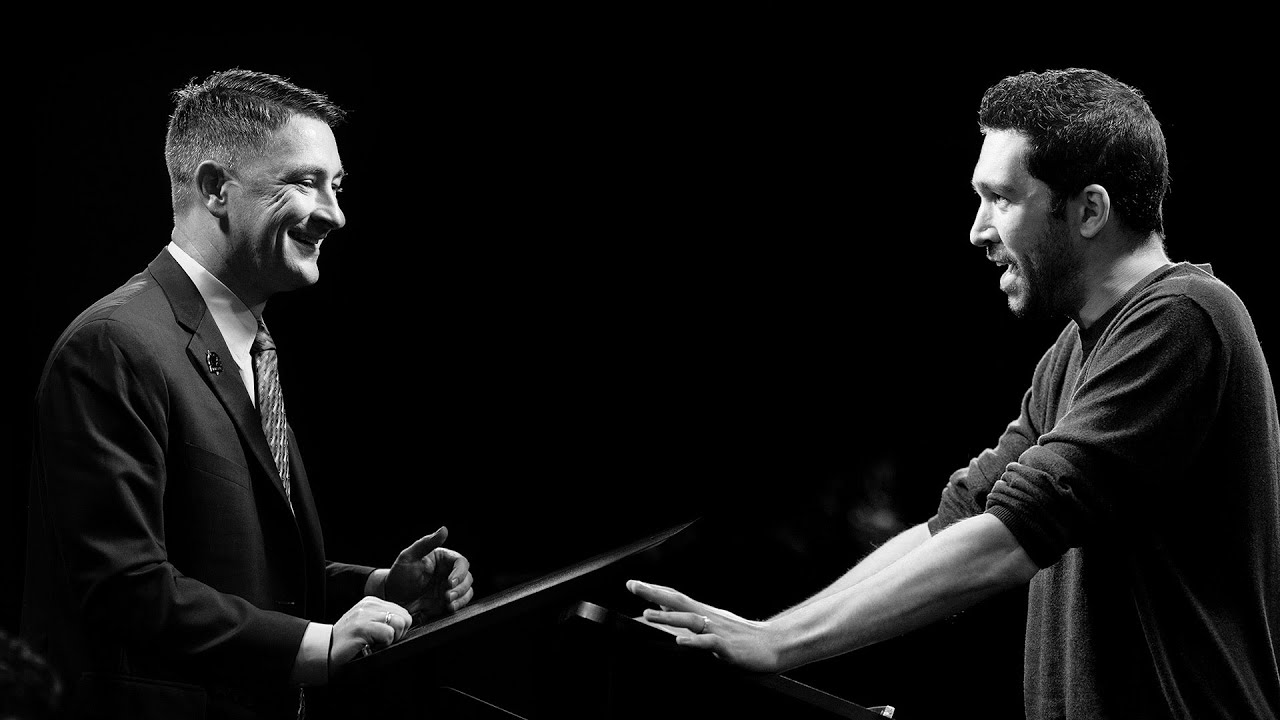
the executive director of climate nexus he went up against lomborg who's the president of the copenhagen consensus Center here's jeff nesbitt and bjorn lomborg in an online debate moderated by soho farm director gene epstein [Music] again tonight's resolution reads to combat climate change the world's leaders must make it their highest priority to completely replace The burning of fossil fuels within the next 20 years i'll be keeping track of time to debaters and we'll briefly interrupt each of you to say when you have five minutes left and one minute left uh jeff you're first up to
defend the resolution jane please close the initial vote and take it away jeff okay great so i wanted to thank you all For for for uh letting me talk to you uh this evening about meeting the climate moment and why we um why i'm arguing with that we need to go as fast as we can as as quickly as we can today i'm not going to talk about ipcc reports parts per million of carbon dioxide 2 degrees celsius climate models cap and trade schemes carbon taxes Economic theory or polar bears instead i'm going to start
with my book it's called this is the way the world ends and i'll just a quick note for those of you who are authors i did not choose the the title for this book my publisher did i think i'm oh for 27 with my books in terms of titles for my books so um but i wrote the book to shift the discussion i wanted to i wanted to shift the discussion with Thought leaders with the media i wanted to describe how um i wanted to describe how climate impacts are happening right now not not 50
years from now so we all we all see it right now we see climate change with our own eyes hurricanes are stronger and faster wildfires are more intense extreme flooding is catastrophic heat waves are scarier ice shelves are Melting more sea levels and storm surges are rising and on hurricanes i i just want to say this i'm i'm not saying there are more of them or even that climate change is causing them what i'm saying is that climate change is making them worse and the impacts are here right now not 40 or 50 years from
now they're dramatically affecting water resources Across the planet they're impacting hundreds of millions of species right now they're driving dangerous geopolitical strategies which i talk a lot about in my book and i'll get to those in just a second they're creating huge climate risks for businesses insurance companies and financial groups virtually every species on earth is on the move Half of all species are experiencing local extinctions right now and for those who don't know what local extinctions art means when a species can't move fast enough can't migrate fast enough they go extinct in that part
of the world about 80 percent of migrating species are doing so because of quote physical constraints on their habitats Extinction rates are a hundred times what we might expect two-thirds of all species on earth have shifted to earlier spring breeding migrating or blooming earth's third pole the himalayas is under serious duress um the himalayas for those who are familiar with it they're they're really the engine of the climate system they're the primary source of water for A billion people temperature increases there are now double the global average glaciers that took thousands of years to grow
or vanishing in just 25 years and in fact and i talked about this in the book the chinese just opened up their research that they've had underway in the himalayas for the last 50 years or so and hundreds of glaciers in the one Small part of the himalayas they studied have entirely vanished uh in the past generation and that's um so if you extrapolate from there that means that thousands of smaller glaciers have disappeared entirely the melting rate for the biggest glaciers is accelerating it's doubled in just one generation the world's pollinators are disappearing as
well and that's not good so Climate change is crushing bumblebee species in both north america and europe this comes from um a united nations a special report with experts on pollinators that they gathered on an emergency basis to study what's happening with the pollinators and what they found is that they've retreated 200 miles from their historic ranges in just a generation but that still Quite honestly isn't fast enough nearly all of the 20 000 species of pollinators are equally stressed hundreds of billions of dollars from our food supply every single year are at risk so
what about climate's evil twin ocean acidification for the longest time the two were not linked ocean health ocean acidification and climate change up in the atmosphere really were not linked but folks have Started to do that very closely first of all oceans are a carbon sink and second of all they can actually affect what goes on in the atmosphere 550 billion tons of carbon dioxide have dissolved in the oceans um since the since the pre-industrial revolution times that's a dangerous change in its chemistry oceans have grown 30 percent more acidic In the past 100 years
that's the fastest change we've ever discovered we've all heard about the collapse of the great coral reefs that's been documented quite well but the last time we saw ocean chemistry changes like this 55 million years ago during a mass extinction event and just one final note i'd like to add phytoplankton has dropped Six percent in 30 years and as if you know ocean chemistry phytoplankton is what's what drives oxygen um in the oceans it's and it's all that that that level six percent in 30 years is already affecting oxygen levels meanwhile the arctic is changing
right before our eyes i know folks early on in the climate uh discussion started to focus on polar bears i'm not Talking about polar bears here permanent ice which is known as multi-year ice has shrunk 20 percent to just 2 percent in 30 years the jet stream's been wobbling for a decade now and that jet stream wobbling effect affects extreme weather events in both north america and europe the truth sadly is this the arctic is going through an ecosystem regime change Right now a big pivotal study that was that involved a half dozen countries recently
found 19 separate ecosystem shifts underway at an unprecedented pace the great green wall in north africa it's uh which is was conceived as literally hundreds of millions of trees around the desert it won't save the sahel despite that four billion dollar pledge to build a wall of trees around the Desert it won't save the nations in around the sahel and one caveat when i started to research my book i really believed that that pledge would help that you'd have those trees they would they would they would hold back the desert the truth is it doesn't
in one example which i described in the book they planted 15 million trees uh in one of the countries around In the sahel and they died within three months um so that's not going to solve this problem thousands of farms are being swallowed up two-thirds of africa's arable land could be lost in just the next 10 years half of the world's population now depends on food imports so all of this has profound implications in that part of the world most of us now see what are called domes Of heat on a regular basis cities in
the sub tropics and again the the subtropics is where climate scientists have said for quite some time that we're going to start to see the most severe impacts from global warming so right now cities in the subtropics keep setting records for the hottest temperatures in human history record highs outnumber record lows now two to one that imbalance You would expect it to be 50 roughly 50 50 is one of the clearest climate signals we have in fact meteorologists had to add a new zone for australia australia a purple zone on top of their existing graphics
and charts heat waves kill tens of thousands every few years now on a regular basis category six hurricanes and by the way there is no such thing as a category six Hurricane um it's you only go to category five but if there were category six hurricanes and you know and there were that chart um they're just around the corner in fact we've probably already seen a few hurricanes now intensify much faster and they drop more rain they're fueled by warmer oceans they're carrying eight percent more water circulating in the atmosphere which which is what Drives
these extreme precipitation events which means that some coastal cities are becoming uninsurable right now because of the risk of catastrophic flooding water wars have already begun in the subtropics and i spend a lot of time on this on the on the geopolitical implications of climate impacts right now throughout the subtropics Climate scientists in fact and environmental groups saw yemen's civil unrest coming before others did when the water ran out the internal wars began saudi arabia has drained its aquifer it's effectively out of water and granted there are multiple reasons for that they grew wheat when
they shouldn't have they drained the aquifer they traditionally don't give very much Rain but climate is sits over the top like the 800 pound gorilla and has and has driven them to this situation it's one of the reasons again why they're buying land for food in places like arizona there's there's scouring for land for food up and down denial right now a multi-year drought in syria drove farmers off the land and into the cities that in turn created a political crisis Water scarcity in jordan is making the palestinian refugee problem much worse again i'm not
saying that climate change is the cause of that but it's certainly driving it combined with mistakes that they're making on water distribution and how they're dealing with their water infrastructure water scarcity also creates instability the lack of water and somalia has made It nearly uninhabitable and very dangerous pakistan and india have nearly gone to war over water issues in kashmir a water war there seems inevitable in india there are emerging scientific studies that show the monsoon might become unstable that will affect a billion people and because of the situation with the gobi desert china is
now buying virtually every Soybean on the planet these are some of the geopolitical stories i talk about in my book and i want to be clear about this these are very real costs they are affecting much more than just a small fraction of the global economy right now but there is some good news in all of this we have a blueprint we'll need 90 trillion dollars in new infrastructure in the next 15 years this is going to happen whether we have a Climate and clean energy strategy or not and i'll add this build out isn't
based on hypothetical economic theories it's based on need we have two political conversations going on right now they're on parallel tracks environmentalists focus focus on climate change the business and investment community focuses on energy and cost i've been arguing for Years that we need just one conversation and to really make this work we need a transition we have to go from green to blue we need to change the paradigm from green or save the planet to blue which effectively means save humanity we have the technological communications and science capacity world output has doubled since 1980
hundreds of millions have been lifted Out of poverty but two and a half billion people still live on less than two dollars a day they're the energy poor and i'll say this right now of course we should focus on their needs we also need to recognize this the age of fossil fuels is coming to an end we have the technological capacity to replace fossil fuels for electricity and cars within 15 years Microgrids and battery storage can power the energy energy needs for the energy poor utility companies are choosing renewable energy over natural gas right now
transportation companies are placing similar bets and they're not betting on fossil fuels so are major financial institutions they finally see both the climate risks and economic opportunity a renewable energy Future is in reach right now wind sunlight and water sources are 55 times what we need each year by 2030 10 years from now analysts say we'll need 17 terawatts of energy in the year 2030. we have 667 terawatts of available solar wind and water energy right now utility minutes five minutes utility scale sold thanks gene Utility scale solar and wind energy is now cost competitive
it'll be the cheapest new build in within five years electric vehicles are also at that inflection point it's why california just banned gas-powered cars by 2035. others will follow and i'd like to say this synthetically while i'm nuts well i'm certainly not opposed to it We do not need breakthrough technology we don't need to research this for 30 years we just need to deploy what we have now and i'll tell you china gets it they're racing toward a clean energy future china said they'll peak carbon dioxide emissions before 2030. they see a major disruption of
current electric power and car business models by 2030. china is doubling its renewable energy capacity each year now It'll add more generating capacity for renewals renewables by 2035 than the united states europe and japan combined because of this clean energy solutions will they'll receive two-thirds of the five trillion dollars invested in new power plants in the next 10 years so if you don't believe that change can happen very quickly i want you to think about this google and amazon incorporated in 1995. Both of them had upended established industries within 15 years google offered the new
york times a 25 stake early on the new york times said no they didn't see the internet threatening publishing tech industry titans like facebook google and amazon now dominate the global economy and it took less than 20 years a clean energy economy is truly the next Big thing and the analysts see it energy exploration and cheap power drove the global economy in the 19th century the tech industry drove it in the 20th i would argue clean energy is poised to be the 21st century's economic opportunity and no one honestly wants to be the next blockbuster
or sears or toys r us borders minolta or kodak the truth is decarbonizing the Economy will create jobs there's a recent report by a group called rewiring america that shows electrifying everything in america by 2035 that's 15 years from now creates 25 million jobs electrifying everything would also save the average family 2 000 a year in energy costs all 50 states in america can transition to 90 clean energy in just 15 years with no Additional consumer costs it's why clean energy jobs are growing nearly twice as fast as any other sector sector in america even
the oil and gas majors now clearly see this uh see that they see this future bp just announced it'll increase its low carbon business investment ten-fold in the next decade it'll increase its investments in this area five billion dollars a year And it will immediately shrink its oil and gas production by 40 percent so do other oil and gas majors royal dutch shell eni of italy total of france repsol of spain ecuador of norway all 10-year targets which leaves exxon and mobile and chevron to fight for oil for the next 20 to 30 years so
i'll say right off the bat that it's true it could take 20 years to switch Out a billion internal combustion engine cars but the electric vehicle trend is accelerating and it's impossible to ignore tesla's battery that might last a million years and cars that compete on price are obvious examples and volkswagen is clearly becoming an electric vehicle company now so are others Meanwhile the age of electric cars is dawning ahead of schedule battery prices are dropping much faster than analysts expected 80 in just 12 years analysts also say electric vehicles won't need government incentives in
the near future vw's id3 same price as a golf tesla model 3 same as a bmw 3 series china's neo company sees price parity In just three years by 2023 and when electric vehicle prices match internal combustion engine sticker prices across the board the race to switch is on so i'll predict this renewable energy will win the fight with fossil fuels in less than 20 years berkeley had a 2035 grid study that shows all 50 states in america can reach 90 percent renewable Empowerment in just 15 years the rockefeller foundation has a microgrid solution to
solve india's cheap power needs even the airline industry is decarbonizing airbus will have zero carbon prices um zero carbon planes within 15 years the world's fortune 500 companies see it as well facebook google apple microsoft unilever all have 20 30 targets others are moving even faster The us commodities future trading trading commission has a new report that sees climate risks and this is what financial institutions are finally seeing chase morgan stanley blackrock bank of america citibank all are looking to invest hundreds of billions of dollars to look at climate risk transparency or to study their
emissions even huge numbers of americans want to act right Now two-thirds across the board they want 100 clean energy they want congress to act they want climate policies to spur innovation they want a multi-trillion dollar stimulus and they even want to retrain workers in fossil fuel industries or lose their jobs so to closing we have a choice a clean energy future is within our grass we have the technology the investment Incentives and the political will there's no reason at all to rely on fossil fuels for much longer disruptive energy sector changes can clearly happen on
20-year time horizons and the clean energy transition designed to meet this climate moment will be no different and i'm certain we can meet that challenge and then one last uh set of slides yeah if you're about 50 seconds 30 seconds in the hole All right but i just want to show these just really quickly this is fifth avenue yes this is fifth avenue in new york during the easter parade at the turn of the 20th century the parade was all horse-drawn carriages ten years later same same easter parade same fifth avenue they were all cars
change can occur that rapidly thanks all right thanks jeff uh bjorn i'm going to give you an extra 45 seconds to match uh jeff's uh and hopefully you'll make the most of those extra 45 seconds uh uh speaking for the negative uh john lemberg take it away bjorn good uh and jeff thanks a lot for your presentation i'm very glad that it also took a little bit of time to get your slides up and running so now i can now i can fumble around as well so yeah Okay by the way i got a thing
at the start so so you know so uh for taking time to set it up just i just just wanted to say that yeah you guys you guys have been great you guys jeff let let you unspiel on thanks very thank you guys so look first of all uh let's and and uh you know i i had to prepare these slides before i knew what jeff was going to talk about so let me just Uh most of it is going to address directly what jeff talks about uh but let's just get this out of the
way climate change is real it's man-made it is a problem so our conversation really here is a question of policy so the question is should we eliminate fossil fuels in 20 years and to answer that i think we need to look at a few key points so let me just summarize What i'm going to go through here the first one of course is how big is the challenge of climate change jeff's presentation makes you believe my god this is really sort of end of the world kind of stuff that's not the correct answer it's a
moderate problem in the world of problems big and small it is an issue it's not the end of the world and that of course matters in the terms of how much are we willing to spend on This then the second question is how much good will this end fossil fuels in 20 years do how much good will it actually produce i will show you the evidence from the u.n climate panel that indicates that this will do some good roughly if we adjust it towards the global gdp it will roughly be equivalent to each one of
us becoming about two percent better off Remember when i'm measuring this in gdp doesn't mean that everything is measurable in gdp it simply means it gives us an understanding of what is the size of this when you try to incorporate all the different challenges many of the non-markets many of them you know disappearing wetlands and many other problems so also how much bad will this proposed policy Do because obviously it has cost and i'll get back to that because jeff sort of alluded to maybe it won't cost money at all it will but how much
will it cost well turns out that it will have quite a lot of cost likely around 16 of gdp now spending 16 of gdp to avoid two percent cost is a bad deal that's the fundamental reason why this is a very bad proposal This does not mean we should not be focusing on and i'm a little surprised that my um my clicker doesn't work anymore um yes this is what i this is the kind of thing that you don't want to see apparently my uh my computer just decided to uh halt so overall more bad
than good and we should still do climate policy and i'll get back to that but we should do it Smartly i'm not sure my computer seems to be freezing up a little bit anyway so how big a problem let me go through these three points that i tried to make so the first one is what is the big environmental problems let's just take a look at the uh how is the world's most deadliest environmental problems a lot of people would tend to believe that that's global warming they'd be very very wrong So very clearly some
of the biggest problems is indoor and outdoor air pollution which is only marginally related to fossil fuel use it's about 20 that comes from fossil fuel use unsafe water lead unsafe sanitation hand washing ozone only then comes global warming at about 140 000 this is the world health organization estimate from 2020 the rest of the Global burden of disease 2019 yes global warming will in 2050 be a little higher up to about 250 000 but it'll still be much much smaller so it's important to have a sense of proportion yes global warming is a problem
by no means it's not the most important environmental problem it is indeed not the world's biggest problem by any standard of course the biggest problem in the world is Arguably poverty which kills about a third of all people that die every year so again we need to get a sense of proportion this does not make global warming unimportant but it makes it very important that we don't over focus on global warming to the detriment of all the other challenges that we face this is also why when the un asked the world this is the biggest
uh survey that we've had they asked About 10 million people what are your top priorities this is the answer that people across across the world gave us they told us it's education health jobs corruption nutrition whereas action and climate change came out at the very bottom of 16 of 16. again we're an advanced civilization it doesn't mean we can't do many things at once but it's important that we don't over focus On global warming and again then why do we know how big of an impact global warming has well we do that because climate economics
have been spending the last 30 years uh this is from last year and a report in 2014 it's also from the only climate economist who got the nobel prize nord house will nordhaus at yale uh who's done these estimates uh and again i'm sorry it looks like uh it shifted a little bit Because i just moved it to another computer but there you are it's roughly true so what it shows is as te as as temperatures get higher and higher you get more and more negative impact in the world uh this is nord house best
estimate of what the total damage cost is what it tells you is at a realistic impact we're going gonna see somewhere between two and four percent Of total global decline in gdp from global warming that is a problem but again not by any means the end of the world and this is not just nord house model this is also uh what the page in the fun model shows these are three models that the obama administration used as its foundation to make uh an estimate for the social cost of carbon so if we Have this set
up and we hear that global warming is going to cost us a couple percent but not this end of the world stuff you got to ask yourself why is it that i hear something entirely different in the news and you also heard that from nesbitt's presentation just a little while ago well the answer is that we often hear the story without adaptation let me just show you this one Study but there's many many many of these studies if we look at flooding that was one of the things that jeff mentioned flooding right now is estimated
to cost about 3.4 million people being flooded the cost is about 11 billion dollars in cost of 13 billion dollars in diet cost per year that leads to a total cost of 0.05 percent of global gdp from flood cost that's not as big as i Think you might have imagined but it's not trivial however if you then look at a world that is going to be much warmer that will have much higher population and much higher cost what will happen at sea levels wise this is the typical answer that you hear that because we do
not adapt you will actually have huge costs you will see a a situation where 187 million people are going to Get flooded every year it'll have a cost of 55 trillion dollars uh this is the typical argument that you hear with no adaptation five percent of global gdp a hundred fold increase in costs but what that neglect of course is that we will adapt all of these models assume that we will adapt and this is what you actually see if we adapt we will see fewer people flood it we will see Higher costs yes but
that's mostly because we're richer we'll also see much higher cost from dike cost but overall the total cost and proportion of gdp will actually decline almost tenfold what that tells you is that you hear stories that are very very good for headlines that gets great amounts of attention but that are not realistic global warming again is a problem it would be a Disaster if we did nothing to towards it but it's not going to be a disaster because nobody imagines that we're going to do nothing about it that's why global warming is a moderate problem
and then one we need to ask well how much is going to cost us to actually tackle it so how much good will we get from this proposed policy uh proposal well we know that many of the policies That you think will have a lot of impact actually will do fairly little even extreme policies like uh all of the rich world stop all their co2 emissions tomorrow if you run that through the u.n climate panel model it will reduce temperatures by the end of the century by just 0.8 degree fahrenheit much less than what most
people would probably imagine So how much good will this cost well ending fossil fuels in 20 years will likely land us around 2 degrees centigrade we know how much good that will do because the un climate panel report from 2018 actually very specifically tells us if we do nothing it will cost the world it will cause further damages of two point six percent If we get to two degrees it'll get us to zero point five percent instead so doing nothing will cost damage worth two point 2.6 ending fossil fuels in 20 years will cause damage
worth 0.5 percent so the benefit will be to avoid 2.1 percent of gdp damages that's the simple answer to what's the cost of what's the benefit but there'll also be a cost of course There's a cost and here i think we need to address head-on uh something that jeff also uh uh seems to indicate that oh my god this is going to be cheap well no across europe we've seen that the more renewable energy you put in the higher the cost this is not because individual solar panels are not cheaper they are much cheaper now
than they used to be and they're possibly Even cheaper than new fossil fuels but of course it's only cheaper when the sun is shining when the sun is not shining it's actually infinitely costly and that's why you can't actually easily supply the world with renewable energy that's also why when the un climate panel did their modeling they found that of 128 models All 128 models had real cost so the story that you often hear is the standard slightly schizophrenic story on the one hand renewables will inevitably take over as they get cheaper and on the
other hand that this is going to be a herculean world war ii sort of mobilization kind of effort i think uh actually that jeff landed most in the top one that this is going to be cheap we don't even need to have this Conversation then of course i wonder why we're having this debate because then we don't need to decide anything it's just going to happen there's a little bit of truth and a lot of misdirection that argument no this is going to be phenomenally expensive and i'll show you why we do have estimates not
for how much this is going to cost but we do have reasonable estimates of some policy estimates that are close to This so let me just show you how absurd this proposal that we're going to stop in in 20 years uh let me go back to 1800 uh when in 1800 we got almost all of the world's energy from renewable energy and 94 we've spent the last 170 years getting rid of renewables and for the last 50 years we've stayed pretty stably at about 13 To 14 this is mostly uh developing countries using bad fuels
like wood dung cardboard inside their homes to cook and keep warm even today we're at 14 percent renewables if we look at the paris agreement this is the international energy agency if we totally fulfill paris we'll get almost to 20 more realistically to about 16 if you Look at all the un uh basic scenarios they have five scenarios we will in the very best scenario get to 45 by the end of the century so this is important to get a sense of proportion over the last three sorry last 200 years in the next hundred years
we're basically likely to get rid of fossil fuels in the very best case maybe Get back to 50 however what jeff wants you to do is to do this go from about fourteen percent today to a hundred percent in two decades this is not going to happen but if we try to estimate how much is this going to cost it is going to be phenomenally costly we don't know exactly how much because there's literally nobody has ever costed such an Extreme policy but there are two other studies that do indicate what the cost is to
get eighty percent below uh 1990 levels by 2050 so a longer timeline and less ambitious timeline will cost somewhere between five and ten percent of gdp every year uh to get to a hundred percent to by 2050 so 100 that jeff proposes but further down The line for new zealand will cost somewhere between 16 and 32 of gdp so it's realistic that this will be very costly and of course it will fail to get implemented for a very simple reason remember the washington post last year uh asked people and we have many of these surveys
uh they found that uh two-thirds of all americans think that global warming is really important and if you ask them As jeff posed the question do you want a a trillion dollar uh uh green package they'll say yes but if you actually ask them will you pay for it they'll say no more than half of the u.s population weren't willing to spend 24 a year remember the uh uh biden climate package is gonna cost about fifteen hundred dollars per person in the u.s And of course getting these uh uh these uh sixteen percent of gdp
uh even just five percent of gdp in in the us by 2050 will cost about 12 500 per person per year thank you so no this is not going to happen and that's of course why we need to recognize look the cost of the policy ending fossil fuels will vastly be outweighed Will vastly outweigh its benefits that doesn't mean we shouldn't do anything it means we should start tackling climate change smartly and so let me just very briefly say what we should be doing we should have a realistic carbon tax i know that jeff has
talked about 40 per ton uh i probably think that's a little optimistic but let's just go with that but that's certainly not going to solve all the problems we should also Look at adaptation and mostly we should look at lots of green innovation i'm sure that's one of the places we're going to be discussing jeff told you we have all the technology we need no we don't uh and and there's a lot of reasons for that uh bill gates famously said that we uh we're short about two dozen great innovations to get there uh that's
why we uh and my organization Has been arguing for a long time we should be spending about 100 billion dollars on research and development into green energy every year the world spends about 20 billion dollars right now so that's a five-fold increase that would help enormously because the trick here is to make sure that we actually get green energy be so cheap that everyone will want to switch Rather than right now as we have to do twist everybody's arm to get a little bit of reduction in co2 emissions but let's not do the dumb stuff
and that is this proposal ending fossil fuels in 20 years is spectacularly wasteful way of helping a little it'll likely fail it will make us ignore the policies that will fix climate when we're so focused on getting all of our fossil fuels out And get renewables in we forget to invest in innovation we forget to invest in a carbon tax which we've seen fail most places around the world if you forget to focus on adaptation but it also means that we ignore the solutions for most people around the world matter a lot more the ones
that matter much more the ones that help much more the ones that'll help much faster and Help at a much lower cost like for instance education nutrition and health so the fundamental point here that i'm trying to make is simply to make us realize yes global warming is a real problem it's a moderate problem we should make smart policies but we should not please not make the policies that will make us incredibly much worse off and that will also fail and that will Make us forget all the other issues that we really need to focus
on so thank you very much i'm looking very much forward to a great conversation with you jeff and all the questions from the audience thank you bjorn uh we now go to the rebuttal part of the debate uh five minutes for you jeff uh to rebut take it away jeff So um first i just wanted to say um at the opening i i i enjoyed the presentation bjorn you're you are clearly a statistician um you uh chart after chart after chart lots of statistics um so i i enjoyed that so um i also want to
say very quickly i i even though i say we don't need to have innovation i'm a big fan of innovation i'm a big fan of r d i mean i spent Years of my life the national science foundation and first in the bush administration then the obama administration um i clearly believe that lots more research and innovation can only help so so i want to get that out of the way i also want to say that i look i my organization helped launch the climate leadership council which advocates for a 40 carbon tax we've put
out the statements from hundreds of Economists i'd love to see a carbon tax i just don't think it's politically realistic i don't think it's clearly not feasible in the united states um and finally there's no question that we're going to have to adapt i i think that's obvious that we're going to have to adapt so where this sort of boils down to is uh as i view this bjorn is arguing this is a moderate problem maybe not so big a problem i'm saying clearly it is a Big problem it has interlocking with saw impacts across
the board on other things but i will also see this i just want to point you know my son runs a global public health organization that is working on the front lines with with community health workers my wife is a physical therapist my daughter's a physician works in in in medical poverty my son is a lawyer who represents migrant workers there are Lots of big problems and so i just want to just put that out there i'm not saying there aren't other big problems so what it boils down to is one is climate change a
bigger you know a big problem as i'm arguing or a moderate or non-existing problem as bjorn's arguing or or and is there going to be exorbitant costs so let's go to the cost equation so uh you know i know bjorn you're a big fan of william northhouse his dice theory i Get it he says the gdp costs are huge enormous but there's another nobel prize-winning economist for economic science joseph stiglitz he and nick stern had their own panel and they which was supported by the world bank where he was the chief economist he says that
isn't true at all climate goals can be achieved with a moderate price well within the range of What global the global economy absorbs from variable energy prices now i'll be the first one to admit i'm not an economist um i would let joseph stiglitz argue that as opposed to me i'm a writer and a journalist who interviews folks and and and you know pulls that away from that north house also in my opinion and others that i've talked to severely underestimates the Damage from climate change climate impacts as i think i've tried to show and
i've written about in my book that are cited by hundreds of studies aren't limited to just a few outdoor places so the impact that it's somehow only going to be two three four percent is not true you know just look at things like acidification rising sea levels storm surges water scarcity in the Subtropics food insecurity biodiversity changes that create pandemics i'm not saying that climate change causes these but they're clearly interlocked with them that's a lot of impact across the board and so i think how we how we how we how we disaggregate this the
climate change pure climate change impacts with these whipsaw effects i think is Important to understand i'll also say that climate change fuels extreme events there there's lots of attribution studies studies in the scientific literature that's now starting to show this um and i'll also say in terms of gdp laws just in one year alone in 2017 the united states lost one and a half percent of its gdp uh from these extreme events and again i can you know just Anticipating where you're going to come at this bjorn i'm not saying that these hurricanes or these
extreme events are caused by climate change and that's the sole reason for the property and loss of life but they're clearly interlocked and so the question is how much are they responsible for it i think i think we can have a reasonable debate about that the arguments i would also that your Arguments they really don't take into what's known as tail risk and somebody i've learned from hank paulson who is the secretary of the treasury his risky business report was issued out of my own organization hank also wrote an op-ed for the new york times
where he talks about this tail risk he calls it a a a climate risk bubble again this is hank Who who who who laid out who helped save the united states economy coming out of a recession so i think you would want to take it seriously when a guy like hank paulson a republican treasury secretary says tail risk and climate risk bubbles are real we need to pay very close attention to it um that's what i do so i i i take that and finally i'll just say um i don't think it's right for us
to Ignore or discount the environmental so societal impact of climate change on future generations so i'm uneasy with talking about but costs now um and benefits for for for generations in the future um that somehow we can incur costs now for benefits in the g in the future and i'll just say i know this is a terrible analogy but i'll just it's it's i'll just use it anyway I have three kids my wife and i paid for their college education that's a cost right now for a future benefit it's a pretty simple equation i think
that we can do that as a society as well thank you uh jeff uh five minutes uh for you uh bjorn take it away thank you so jeff uh thank you very much and i also enjoyed your uh presentation a lot uh and i think you're absolutely Right that we should you know really boil this conversation down uh to the two questions of is this a big problem uh i you somehow mentioned that i was almost suggesting that it's not a problem all that's not what i'm saying right but that it's a more moderate problem
uh which i think uh uh the overwhelming literature and certainly also the young climate panel Tells us that it is uh but i think much more importantly so you were talking about is it going to be an exorbitant cost um i think it's important to recognize that none of the policies that we've done so far have come out cheaper they've come out much more expensively so the eu 2020 policy which is the best uh study policy that we can now see how much cost it was the eu said it would cost 0.5 percent of gdp
uh the uh the big climate models that came out of the stanford energy modeling forum uh showed that it would cost about one percent of gdp uh but unfortunately the eu decided to implement it in a rather foolish way uh as politicians often like to do uh which ended up costing about two percent of gdp Now it's important to recognize that none of these will bring the eu to the poor house and so i think your point is right in saying of course we can do this we can spend you know 16 of gdp and
remember by 2050 and especially by 2100 we will be much much richer so again uh to go to your uh your college analogy for your kids Uh clearly you want to leave your kids with smart stuff uh and and generationally one of the things that we found is one of the best ways to leave your kids and future generations is through knowledge and through of a technology of resources so basically make sure that kids are the next generation have lots of resources Lots of knowledge that they will be able to figure out the problems that
will come in the next generations the next two generations but let's just make sure that we actually do that you gave your kids a college education i'm pretty sure if you were the weird dad who had decided to invest all of his money in i don't know model trains you you you Went first with a bad analogy so i can just go on along with that uh you know i'm pretty sure they'd be pretty annoyed if you'd given them all your resources and model trains and you'd be like all excited about the point is of
course we should make sure we leave our kids and future generations with really good stuff it's very hard to know what is good stuff in a hundred years uh you showed the uh The uh mayday sorry for east yeah uh from new york remember you see switches very very quickly when there's an obvious benefit to individuals one of the big problems with climate policy is that there's no obvious individual benefit if we really get the climate revolution right sorry if we get the energy of revolution right You will get exactly the same out of your
plugs as you used to get namely stable cheap electric power at the very best it'll just feel like nothing changed at worst of course it will feel like oh my god i only get it when the wind is blowing or the sun is shining which i think nobody really wants so the point here is it's a very different technology transition it's only one that is driven by cost There is no other great thing you wanted a car rather than a horse because it was cheaper it was better in so many different ways you want it
to switch to google because it was so much better than using the library you want it to switch to a cell phone because it was so much better than waiting at a wide phone and all these other things most innovations have been great because They changed something we're actually talking about making an innovation that will change nothing and that's why this is going to be about cost and i think we can't really ignore the fact that all of these studies so the u.n climate panel very clearly tells us that all of these impacts will have
costs yes we'll get uh jobs but you get jobs No matter what you do the point is you get jobs when you have someone doing productive stuff but you don't get much welfare if you do unproductive stuff thank you very much so the sorry did you say one minute well yes yes yeah yes yes good great so fundamentally you you're right we're basically down to is this the end of the world and i understand why a lot of people Will present as the end of world both it's a much easier and much more nicer story
to tell it also makes it much easier to say we've got to spend anything you know obviously if this was an asteroid hurtling towards earth we should spend everything we should send you know bruce willis up there and fix it uh and that only works for people of the older generation right but the But the point is it is not such a thing it is a problem and unfortunately your solution the 20-year uh solution of of going entirely fossil free is not only i think absolutely unrealistic but if we try to do it be phenomenally
expensive and there's no good reason to believe that that is not exactly what that will happen Thank you thank you bjorn all right we now go to the q and a portion of the evening we have questions that came in from the audience and the first rule of q a is that uh any uh either of the debaters at any time have uh the prerogative to ask the other a question and i'll begin by asking if you want to exercise the prerogative now or wait for questions Uh jeff would you like to pose a question
to bjorn at this moment or waive the opportunity until later um yeah i have a couple of questions i've asked i like to ask bjorn do i just go one or two okay the first is that's the first and then we'll get to the second going okay first bjorn you talk about but the the the you know about that if if if the rich world which we're talking about the eu And the united states and several others if they act it's still not going to have enough of an impact well of course that's true i
mean it you know but that's not what we're talking about the paris climate agreement was every country in the world china has committed to to doing things if if china alone acts that's 17 of the problem so and india is all a Bigger so i so my question is is that fair to just focus on if the rich world acts and the rest of the world doesn't is that is that a fair way to address impacts yeah yeah and and it's a good question uh lor i think it's worthwhile because we have this conversation in
the rich world it mostly is the rich world conversation it mostly is in the rich world There where there's conversation about actually going actively uh net zero by 2050. you're right that china i think mostly strategically uh come out and said that they want to peak in 2030 and that they want to go carbon neutral in 2060 if you read their document they also promise that they'll go democratic by 2050. so i think it gives us a sense of what we can realistically expect Uh i think it depends a lot on what will happen in
in the far future uh if we manage to innovate the prices of green energy down below fossil fuels and we also have a way to make sure that that just doesn't work when the sun is shining or the wind is blowing which either mean batteries it means much better biomass right now biomass i think is a terrible choice But it could become a really good choice uh or nuclear power or or a fusion there are many other ways that we can imagine this but if some of these things come true of course everybody's gonna jump
on the on the bandwagon you mentioned for instance electric cars uh i think many people are gonna switch to electric cars over the next 10 years uh we should also just have a sense of Proportion of what that's going to do so the international energy agency estimates that if we actually successfully managed to get to uh 360 million uh electric cars about a third uh by 2030 it will reduce carbon emissions by about one percent this is a very small part of the solution and it's the easy one and it's not going to solve transportation
needs in general It's going to solve a rather niche problem it's great thing i i love the fact that it's happening i hate the fact that we're right now spending ten thousand dollars in subsidies in each electric car uh we should not be doing that uh well the u.s is spending what seven seven thousand five hundred in california in california you also give a top-up So i think it becomes ten thousand right many other countries they're spending about you know somewhere between six and ten thousand dollars that's a terrible idea but again innovations can come
and you know the electric car for some parts is going to be a great innovation and great that'll happen but this only shows that's the kind of solution that we need in a lot of different areas Sorry i think i meandered a little bit away from here yeah okay i'll hold you a second question jeff i want to i want to put the ball back in uh jeff's into bjorn's court uh do you have a question for jeff if you want to wave it i i think it's much more fun to hear the audience questions
i hope we might be able to get back to questions to each other but i think we Want to get others in we'll begin to audience questions but jeff has the second question for you i do it yeah and i actually think it's it's just in line with what what you were just talking about bjorn so i very quickly a bit of a backdrop so when uh the the u.s economy was collapsing i was at the national science foundation i was their chief lobbyist and their chief public affairs official it was my job to try
to to pull money From the recovery act so i was able to successfully lobby for three billion dollars for the national science foundation to fund you know spectacular r d well one of the biggest bets was on battery storage a billion dollar bet on battery storage this was back in 2009 so i think i would encourage you to sort of update the way you think about this because the truth is that big bet In r d which you're a fan of way back then is now paying dividends you now see this this question of when
the sun is shining or whatever that's no longer really an issue anymore thanks to r d that has really accelerated along with other things like microgrids storage solutions and other things so my question to you is if that were solved if r d were to solve This problem would you worry so much about about solar and wind uh no uh but you're unfortunately not very i'm i'm very happy you got a billion dollars for batteries uh but i think you uh you you're entirely missing the scale of a problem i'm sure you you actually know
this uh but right now there's batteries enough in the whole of the us to cover 14 Seconds of u.s electricity consumption average u.s electricity consumption so no we're nowhere near being able to fix this and and the real reason i think a lot of people fail to get this um the real reason why solar and wind cannot actually uh uphold and end up making the the grid much more expensive is because all solar especially comes at The same time this is also true but slightly less uh uh true for for win but if you look
at all solar it all comes around midday that's great for the first couple percent of energy because typically in most countries uh noon is about the the the peak time so it actually eats into the peak time which is some of the most expensive production of electricity So it actually helps a country but what very quickly happens is that it starts eating into the revenue of all the other producers you end up with an enormous glut of electricity so when you when you hear countries for instance going uh you know typically for the first for
the first time oh we've just produced a hundred percent of electricity of uh for a country what you Never hear is and the price went negative uh it's actually worth nothing because you can't sell this at any other time so what you end up with is you're selling a lot of electricity at very low cost and then you have to get the rest of the cost covered for the non-solar and non-wind by much much higher cost electricity that's Produced elsewhere which is why you end up seeing all these effects and you've seen that much more
in europe than you have in the u.s because europe just has much more uh renewable power and also done it probably but worse i i would say but mostly simply because you can't have a lot of solar or a lot of wind without much much more battery so when You're talking about batteries they're trivial and they will still be trivial by 2040. now if we can get much more uh battery so the ia has done so the international energy agency has done a big study uh especially on india because india has some of the best
solar not surprisingly there right uh you know the at the equator uh and they could actually have a Situation where they'll have so much battery that they will start not putting up new coal fired power plants after 2030. that'd be wonderful it cut a full percent of emissions uh towards 2040 but it's not going to solve everything it's going to solve a bit a bit part and yes we should be spending a lot more money on this uh but we need to get a sense of of of size of this issue and you know just
To give you uh just sorry wrap this up um if you look at solar once you have 15 percent of solar uh for instance in california the price drops by two-thirds uh once you have about 13 30 percent of wind the price drops more than 50 percent which is why when people tell you it's uh competitive it's only competitive if you Don't think about the fact that you have lots of others uh already running so yes we should have a little bit of solar and wind but once you start having a lot of solar and
wind you're basically disrupting the whole energy system that's why you end up with much higher cost and without much much more storage we're talking about storage that would run into months uh which is right now and certainly in the next Decades almost um fantastical to imagine that that would happen even if prices drop dramatically as we're hoping they will and we're hoping that r d will make him drop even more even faster thank you bjorn uh and uh so let's uh turn to a couple of uh audience questions uh uh there's a certified uh symmetrical
questions for both of you uh let's start with you born uh the Challenge is this you were speaking in terms of dollars in gdp and the impression for the audience is jeff is speaking in terms of human lives that human lives are being threatened even as we speak by all the things that he listed uh the himalayas uh acidification all of that and so could you change your metric for the moment and say what's What what's it what's it gonna save in terms of human life to do what jeff proposes and august what might it
cost in human life to do what just jeff proposes yes uh there's uh because we only had 17 and a half minutes i've cut back a lot of slides i'd love to show so now i'm just gonna have to tell you and you have to take me on the i'll i'll tweet this afterwards Uh so if you look at the last hundred years uh the number of people have died from climate-related sas floods droughts uh uh storms uh extreme temperatures uh it's dropped precipitously it's actually drop is that the right word precipitously yeah good thank
you sometimes i worry that that meant precipitation anyway so uh so it's dropped 95 percent and since we've at the same uh 100 years quadruple Global population the individual risk of dying from climate-related disasters has dropped by 99 so uh i actually showed you graphs of human life i showed you one of the biggest uh uh uh environmental problems that kill the most humans clearly many many other problems especially indoor outdoor air pollution and and water and sanitation kills many more people Than global warming does but also it's very likely that things that jeff worries
about that we're going to uh more extreme storms uh so just to give you a sense of that the u.n estimate will probably see fewer storms but we'll see more violent storms and violent storms are worse than fewer of them so overall we'll have bigger impacts So jeff is right that this is going to be a bigger problem but it'll actually kill many fewer people because we'll get much richer and we'll be better able to adapt so the real answer here is to say this is the world where we used to see about half a
million people die from climate-related disasters today we see about 20 000 people die globally from climate-related disasters In the future we'll probably see many fewer we'll maybe see say 5 000 but had we not had global warming or had we have jeff's projection of a policy institute we might see four thousand or three thousand people and honestly i'm making up these numbers because we don't have data because they're so small but that order of magnitude we'd save a few thousand people but the cost would come in terms of Especially poor people but that's both poor
people in rich countries and poor people in poor countries who would have less access to more expensive and less reliable energy that would have much greater health care costs very clearly it has cost when you both have uh heating and cooling which is one of the big killers of of humans around the world we estimate Probably in the order of 10 percent of all deaths are due to heat and cold deaths most of them are cold deaths actually and we know that when people have to pay more to heat their homes they heat them worse
and so more people will die it is very likely and i can't give you the exact numbers but it's very likely that orders of magnitude so 10 100 maybe even a thousand times more People would die from these policies than would be saved from them from not having uh climate related disasters jeff could you comment on uh response so i i will say this the problem here is that what we're talking about is what's happened in the past versus what might happen in the very near future again the reason why i wrote the book uh
Whether folks want to agree with it or not i hope they lose you know take a look at it check out the citations is that i'm arguing that these impacts are here now right now not 50 years from now because one of the big arguments that you hear now for those who are arguing for the status quo is let's just wait and see how bad it gets Um and which the truth is if these if there is a tail risk and if these as i believe are going to be significant costs to society to human
life across the board um we can't wait 50 years to see how bad it's going to get it's going to be significantly much worse 50 years from now so that's why acting now is important so i i believe it's a bit of a red herring to talk about well things haven't happened in The past you know it's true nobody's migrated from bangladesh because bangladesh is not underwater so there are no climate uh related problems uh but if bangladesh goes underwater and they have to go somewhere then there are going to be all sorts of impacts
yemen's another great example i really dug into yemen as a very perfect example of the climate Scientists said because it's in the subtropics because we're seeing climate impacts now that water scarcity is an issue right now it's only going to get worse in the very very near future it's going to drop these wells that's exactly what happened in yemen and the warlords took control after 14 of the 16 aquifers went dry took control of the remaining two created this internal strife It led to a great deal of loss of human life and a great deal
of suffering in yemen you can see this play out across the board the same thing is happening in the cell you can make a very clear case that because the climate impacts are happening right now again not a hundred percent you know responsible but this whip saw uh interlocking uh impacts is driving things even like the Creation of terrorism in some of these countries so there is a great deal of impact on human life but my main response is that just looking backwards um to climate impacts that that aren't yet happening is is a is
an unfair comparison to what's going to happen this water already what's happening now but is going to happen in the very near future Not 50 years from now can i just say something very very quickly all right go ahead sorry so just jeff if you're saying this is happening right now we have the data we know that there used to be half a million people dying from climate related disasters 100 years ago now there's 20 000 people dying from climate-related disasters this is not something we can have an opinion on this is simply true That
the risk has reduced 99 and it's kept reducing since the 1980s as well so look there's just you know if you're going to say it's right now you're just wrong now you can say that in the near future something bad is going to happen and that the past is not a good example for for the future and you know that that's a fair argument but i think the models very clearly tell us that that's not going to happen either You want to respond jeff or do you want to wait for the next question well that's
fine i mean i uh i'm not wrong but that there are impacts right now i mean that's those are nice statistics you've thrown out there but clearly um we see climate impacts right now i mean i could go i'll just i'll just give you one example i mean the fact that half of all species are experiencing local extinctions that is as big a canary in a coleman as You're going to see and i interviewed terry root for my book who is the preeminent biodiversity expert in the country she's beside herself that nobody quite understands what
is happening to species on earth the human species is just one of hundreds of thousands of species but the fact that we're seeing that occur right now means something that is a Big statistic not a small one that is a very large statistic so to say that i'm wrong that impacts are happening now i would argue that's you know that's not correct they are happening now and every it's that's why that's why um the thousands of climate scientists who look you know talk about you know multiple levels to describe the climate uh fingerprint and the
climate impacts There that they've they've they've anticipated and now they're seeing it question for uh bjorn uh jeff mentioned uh another nobel prize winner joseph stiglitz who takes a different position on costs and benefits of jeff's proposals from the other nobel president you mentioned could you respond to jeff's point about the alternative measures that Joseph stiglitz has associated himself with beyond yeah something uh two points first of all uh joe sticklitz got his nobel prize in the communication of uh information in in markets like youth uh cars uh he did great work in that he's
not a climate economist nobody nordhouse got his economics price in climate economics uh i don't know all of joe sticklet's work but i do know the uh the uh the work that Jeff uh mentioned uh and uh he did that work together with nicholas stern what they showed was and i think jeff also correctly mention it was that a carbon price can actually manage a transition to a lower carbon economy at a reasonable price that's absolutely true there's no one who would deny that you can do this at a reasonable price especially if you get
To decide yourself what is reasonable uh but clearly you can have a reasonable transition so you know if you go for the 80 below to 1990 levels as the eu did uh you can probably do it for five percent that's that's doable that's reasonable uh i think a lot of people would still think it's way too expensive and as i Pointed out i think most voters are going to say no to that way before that happens but they did not show that this was a good investment of money and i think it goes to the
whole point of of jeff's uh jeff's argument uh i think jeff slightly skewed or sort of slid away from his answer and start talking about a lot of other species I was simply making the point about we have good statistics for humans and you're saying it has impacts on humans right now and it doesn't in in those statistics uh but but but but the but the main point here remains that the question is what would have happened for instance in yemen and other places had we made an enormous climate policy Back in say 1980 or
1990 1992 when when we first promised had the whole world stopped using climate uh uh uh uh fossil fuels what would have happened well very little we know it would have had very very tiny impact on the temperatures for yemen and the 2010s it would however have made every country in the world much much poorer including of course making many hundreds Of millions of people keeping them in poverty so the real question here is not would i love to be able to snap my fingers and make climate change go away yes i would love that
because yes jeff is right climate change is a problem the real question is of course outside this sort of uh wishful thinking is we have to pay a price For a climate policy to get a benefit and the question is how big is the cost how big is the benefit and joe sticklitz and nicholas stern did not do that uh calculation and i don't i don't i'm not very surprised they didn't do it because they know what the answer is there's been lots of people doing lots of those estimates uh over the last Couple years
sorry over the last couple of decades and they've all found the same thing we should do some but not a lot uh do you want to respond uh to uh uh john bjorn's answer jeff well no i don't think so because i i i i wouldn't presume to answer for joe stiglitz i mean i think he defends himself quite well i think he's actually written uh About some of this about your book bjorn in the new york times so i think he answers this for himself uh and i've characterized it somewhat here here in this
discussion uh question for jeff then uh the the audience is characterizing your argument jeff as a little bit ambivalent as to whether you think that uh that conversion from Fossil fuels to clean energy is so efficient that it's going to happen anyway versus the opposite idea that it might not happen anyway but policy makers have got to make it happen force it to happen because unless they force it to happen it won't happen so could you clarify your position with respect to those two different approaches yeah i will and i'll and i'll say It's a
that's a really good question i i believe this it will be a messy transition and i'm going to use the transition on the internet as a good example and and and i think this will be i i hope this will be helpful for the audience uh again i worked at the national science foundation when there was a thing called the world wide web long before anybody knew what it was Uh the pentagon was running super computers they they handed off things called pops they handed off things you know uh you know that that could create
this interconnected thing uh you know the worldwide web long before there was the internet well the national science foundation placed a big bet they bet a big part of their budget to connect Every university in the united states and then on the planet to connect with these plots to basically build the architecture of the internet so there was a big bet that was a policy that was a political decision by congress actually al gore was involved in that he was the reauthorized national science foundation specifically to build that architecture So there is there are policy
drivers there are political drivers there are financial incentives there are public incentives and i believe the same thing is going to happen here uh it's true as bjorn has noted i i did focus very heavily on where private financial groups are going i didn't focus as much on public drivers like the paris climate agreement like nationally determined Carbon dioxide levels for for for companies you know the ndc is under the paris climate agreement i didn't focus on the public side of the equation there's going to have to be both the reason why i thought i
wanted to focus on the private sector side of the equation is because i really believe you're seeing a very clear signal right now from financial analysis analysts who see Both climate risk and opportunity from big business ceos who are clearly i mean if you look at the big tech companies they're clearly trying to get they're competing with each other to get to 100 renewable energy in their supply chains and you know by 2030. they're doing that for a reason they're under pressure both from the public side and the private side so i think ambivalence Probably
the wrong word to describe what i'm trying to articulate i'm focusing on the private sector i'm focusing on private uh financial analysis but i do believe absolutely there may there has to be a public component to it it can be regulatory it can be political it can be policy oriented um and honestly it's probably going to be a bit Messy just like the transition to the internet was a big a bit messy go back to what i said about the new york times had an opportunity once upon a time early on to buy 25 percent
of google their answer was google what's the internet that's not a that's not going to compete against me um and so so they said no i think the same thing is going on right now some are placing big bets on a future That i believe is going to be here much sooner than people realize jordan you want to comment on jeff's response so um well i mean the private sector is mostly in uh on this because it is pr you mentioned that most the big tech companies want to go to 100 by 2030. well that's
because they mostly emit fairly little co2 it's easy to do when you have little uh Uh emissions uh sky and europe was the first uh uh big corporation in europe to go carbon neutral that's because they basically just have a few pcs that they had to offset so it's very very easy when you're small companies most of these private companies do it because it's profitable for them because they're going to get lots and lots of money that's going to be handed Out by a lot of different programs to a lot of different policies but let's
not for one second presuppose that that's going to fix global warming there global warming is at heart a public problem it's a problem where putting out co2 creates problems that have nothing to do with me it has everything to do with everyone else Which is why you need public regulation for it that's also why unless you get public regulation you're never going to attack very much of the problem so i think in some way it's it's a little disturbing if jeff if you if you've almost entirely focused on the private bit because this is going
to be about all of us this is about the paris agreement and how we're going to do both as Individual nations and certainly as as a global community and that's where our in our our experience has been we've constantly been promising stuff and not living up to it uh we promised in rio in 1992 didn't live up to it in kyoto most didn't live up to the only reason why some did was because of the financial crisis Uh and now we promised in paris and even if everybody does what they promise it will have a
minimal impact on temperatures so we're still far far away from what we need to do and that's why i'm arguing that the uh that the studies clearly show this is going to be very very expensive all right we have a a time for like one final question i guess lob to you bjorn uh uh jeff has mentioned a few times uh the idea of tail risk and your Instance interpreting that to mean that there's some you know one in a thousand chance likely or something like that of a true disaster do you acknowledge that risk
and if so what do you propose doing about it yes so uh it's actually a good argument and i think it is the best argument for making uh bigger investments so nordhaus and many others have looked at this and it does increase the amount of Investment that we should put in and climate policy uh one of the things that i try to work with my organization uh since jeff has been uh flaunting his book i guess i should also just mention that i have a new book out uh and you should take a look at
that uh but but what i mostly actually do uh is is focusing on on looking across all the different areas so with my think tank the copenhagen Consensus uh we look at all the different investments that you can do in the world so should you be investing in nutrition or an education or in health care or in global warming or in uh or in air pollution and gender equality and all these other challenges that the world faces and i think one of the problems that we have when we talk about existential risk is If you
look out till 2100 almost every policy that you can imagine can have a potential existential risk all you need is to say there's a non-zero risk of if we choose this deci if we go down this route it'll open up you know say if we don't tackle hiv in sub-saharan africa it's gonna make some african countries collapse you're gonna get terrorism throw in bio uh uh terrorism Throwing you know the ability to make viruses and wham bam you have the death of everyone before 2100. again it's not uh given it may even be a very
very small risk but it's a non-zero risk and so we should be spending more money here the problem with the argument of tail risk is if everything has tail risk you really have to ask How do we handle these different issues and i like to just uh very briefly say we we actually have a good estimate uh because back in the late 1980s early 1990s uh we started realizing that you know asteroids could hit the earth we we've always known but you know people started realizing we could actually figure that out and the us congress
asked nasa to find 90 of all these uh asteroids that could hit earth nasa had also provided a budget for finding 99 of them but congress felt that that was too costly so there we have it you actually have a very clear estimate of how much we're willing to spend extra on safeguarding us against the next nine percent of tail risk and the answer is not very much And i think that's also what we see generally across history we have tail risks everywhere we look we cannot afford to worry about each and every one of
them of course every single participant who's just arguing for their particular issue will say tail risk give me more money but overall we have to recognize that their tail risks everywhere not just in global warming Jeff like we we are out of time for the q a please if you want to respond to what do i just said roll that into your final summation we'll have seven and half minutes for that you have to go to that part of it so uh jeff uh for the final summation would you take it away great you know
i'll just say that was uh that was uh i enjoyed listening to that discussion About tail risk so um it's it tail rescues was just one of those very diff i mean insurance companies take a look at tail risk you know financial analysts who have to manage vast sums of money look at tail risk so um it's certainly a valid question i so let me just try to sum up this way if i can i don't have a prepare i just want to sort of go through sort of where we've had the discussion first I
would argue that the paris climate agreement because my organization we were there we were there every single day we we held like 24 press conferences over a 12-day period in paris the paris climate agreement was a breakthrough moment for the world rio copenhagen all the kyoto all those things that bjorn talks about it's true they didn't get a whole lot done there's a lot of talk That was not the case for the paris climate agreement the paris climate agreement changed everything when you have every single country in the world rich and poor um coming together
saying we are going to take this issue seriously we're going to get this done we're going to figure out a way between public and private sector that was a big deal so i so that's why things have changed And i will say in the united states it's interesting bjorn talks about there isn't this public will to deal with this that's not the case in the united states climate change for the democratic party for democratic voters in the united states is it is now their top issue you saw it very clearly we had we had climate
change questions for both presidential debates and the Vice presidential debate it was the one issue that dominated across all three it is a very big deal in the united states as an issue it's at the bottom of the list for the republican party for multiple reasons and this is from somebody i worked in a republican administration i was dan quayle's communications director in a republican white house I was a republican political appointed the fda a science-based agency i also worked at the national science foundation in a republican administration um and it has always bothered me
immensely that the republican party has not dealt with this issue from a science basis so that continues to bother me but i will tell you it is absolutely a paramount concern in the united states There is massive public support for clean renewable energy and for a transition whether we want to argue about whether it's going to take 20 years 40 years 50 years 60 years the public would like to see it they'd like to see jobs as many as possible that's why i mentioned this rewiring america study that showed quite clearly there are millions of
new jobs waiting to Happen um it's because there is a pent-up demand for this um i i would say and i would say at least in the united states and and it could be around the world it's a bipartisan approach people want to see this transition and they'd actually like to see it sooner rather than later it's one of the reasons i would argue that virtually every analyst Says that clean energy a clean energy economy is the next big thing um if if you look i mean most people think that the global economy may not
um growth thank you may not see dramatic growth um uh absent this clean energy revolution so yes i know i'm focusing on the private sector i'm happy to talk about the public sector which i will in just a Second but but why not bet on that future why not i mean just as some people said let's bet on a technology revolution in a technology driven global economy why not bet on this clean energy uh revolution as well and on the corporate sector yes i i hear you bjorn when you say they look like it's it's
done for public relations purposes It may be done because they don't have necessarily an outside footprint but i will say this when virtually every fortune 1000 ceo gets in the game and just puts their company's reputation behind it at some point and i hope certainly much sooner than later those commitments by those corporate leaders translate into real meaningful action across the Board when you see facebook and google and amazon and microsoft and unilever and salesforce competing to get to 20 30 targets they could just as easily provide net zero by 2050 targets they're not doing
that they're saying it'll be by 2030. i would argue that's going to translate into a global economic opportunity probably within a Decade then on the public sector side and i can speak most of the united states because i have a great deal of experience in the political sector i'll predict right now in 2021 i guess we'll see what happens with the elections in in two weeks but i believe there's going to be a massive public sector approach to dealing with this issue It could come in the form it could come in one of three forms
it could come in the form of a multi-trillion dollar economic recovery package that that creates conservation cores and and and rebuilds things and puts together infrastructure but also infrastructure on the financial side of the equation that's a public sector driver i believe you'll see um the first Serious effort for a big climate uh bill i just interviewed the chairman of the house select committee and climate i've talked to senate democrats um they're prepared to move on the public sector side of the equation finally after years of not being able to do so and i think
there also is going to be across the administration if it if joe biden does win the election there's a very good chance that across Every single public sector aspect of the federal government they're going to do something both on the climate emission side of the equation but also on the clean energy revolution side of the equation um i also wanted to talk very briefly and then close with this that um we talked earlier in this discussion about rich versus poor action among rich versus poor And it's true that the rich countries they can't solve this
problem yemen couldn't solve the problem if had they taken and i think that's a bit of a red herring to talk about if if you saw you know yemen couldn't solve the climate problem but if the world solves the climate problem if water scarcity was not an issue in yemen then there's a then there's every chance that you don't see some of those societal problems there That's the point here that this is a global public comments problem that the global economy needs to respond to it the countries and the leaders and the business leaders need
to respond to it and i do believe it yes it's in china's best interest because they don't want they lost the technology race they do not intend to lose lose the clean energy race i can guarantee you that that's part of What's driving them and if china acts and they act meaningfully that will have an impact likewise in india i i've talked to the leadership of the rockefeller foundation that's that's that's betting on a microgrid solution that will help um the energy poor in india i think i i i believe india is going to get
there they would love to see um a clean energy a cheap clean energy solution because they That's that's what's going to get to those 3 400 million people who don't have power right now they would love to see that and i actually genuinely believe they will they will they will get there and that will help with that problem and then i'll just close with this i i i will i what i've been arguing here is that we have public will we have financial interest we have um human interest finally after so many Years of looking
at raw statistics and questions about policy we're starting to see human beings interested in this and i'll just leave you with one discussion this is the united states there are there are victims in 20 states that have banded together called higher ground who have who have lost their homes or lost property from flooding That's driven by climate change um and we we could talk about the science behind this and the climate science behind it and so i'm just going to put it out there as a given climate change is is is is now intersecting with
this and so you have human interest people you see people in houston who are worried about the flooding that swept through the city you're seeing wildfires and we can you know this is a Climate science uh question but you know wildfires are bigger and hotter um and it's one of the reasons why it's it's becoming very hard to ensure things in california you're seeing human interest in this story so the combination of all of those things uh leaves me convinced that the world thanks to the paris climate agreement and others Is going to act so
thank you and thank you for for the opportunity to hold this discussion thank you jeff okay and uh bjorn seven and a half minutes for rebuttal for summer excuse me well yes i think it's more going to be a summary so uh yes jeff thank you very much for this conversation uh i i think the way that we've been framed this is very much uh sort of leading up to Whether you should vote yes or no uh to this proposition uh so so i i think we need to get a sense again of proportion so
uh jeff is very upbeat uh and and uh you know i was i was at paris as well i didn't hold as many press conferences as you did clearly but i think we also got to be honest and say yes countries made a lot of noise there was a lot of reporting there But even if all countries live up to all of their promises it'll have a miniscule impact on temperatures even 80 years from now now if they kept those promises and kept them for the rest of their century it would reduce temperatures by 0.3
degrees fahrenheit that's very little and of course no major partner is actually poised To keep their current promises let alone the bigger promises that they're now going to be rattling off climate policy has constantly been about making grand promises and then not keeping them and i question whether that's the best way to leave our kids uh you know so instead of giving them a college education as you were talking about We'll just promise them stuff and not give it to them i think that's probably one of the worst ways that we can deal with the
climate problem or indeed any other problem and so it gets back to saying is the right way to do this is that to promise not just what we've already done and is not keeping not just more than what we've already promised but an absurd amount namely let's go carbon Neutral in 20 years something that we know is not going to happen something we know is going to be phenomenally costly something we know is going to be much much costlier than the benefit of the drive plus at the same time it will take away attention from
all the things that will help both with climate so adaptation carbon tax and Certainly a lot of innovation and also all the other issues in the world so jeff also talks about there's massive support and yes you're right if you ask people very sort of shallowly do you want us to do something about climate change they'll say yes if you ask them is this a really big crisis they'll say yes it is a really big crisis They'll also say lots of other things are big crisis crises uh but if you then ask them are you
willing to pay for it most people are only willing to pay a couple hundred bucks for this as i mentioned the uh the washington post twenty four dollars but you can get others uh you know surveys that'll show that people are willing to pay a couple hundred dollars for it Right if you're then proposing the sorry five minutes to go yeah yeah five minutes yeah five minutes okay good if you're then proposing to people that you're gonna pay fifteen hundred dollars per year per person which is just the you know the biden uh proposal the
trillion dollars of his 2 trillion over 4 years uh and that's just a simple math you're going to get people upset People are not willing to spend that much more money you're saying that it'll generate more jobs that'll generate more opportunity but the reality is of course if you are getting and you know i'm just using the official statistics if you can get solar energy and employ 39 people from solar energy for every time you can employ one person with gas you got to realize That that's not a great thing that means 38 people are
working not on something else not on educating your kids not on taking care of your kids in kindergarten or taking care of your elderly or making better health care or making better infrastructure and all the other things that we also need people for using people to make incredibly unproductive work is not a great idea Uh the if the famous skit is you know when uh when you're in in china and they're working uh just digging uh digging with shovels uh when when you when people claim well that generate more jobs then the obvious answer is
well why don't they just use teaspoons if that's what you're trying to do but of course the reality is we're actually trying to make people more productive so that we have Better opportunities so again when you say that clean energy could be the new thing in the 21st century i think this is fundamentally wrong and for a very simple reason we alluded to that before if you get the clean energy revolution just right nobody's going to be able to tell the difference because you'll just get clean power now out of your socket before when you've
Before got not clean energy out of your socket but it'll feel the exact same way there's no way to get people excited about this google provided new uh opportunities all technologies in the past have provided new opportunities the only thing that will drive this is either a lot of money spent on political uh hold or that we get innovations that Just simply makes it cheaper than fossil fuels i argue that we should be focusing on making it cheaper because that's the only way that we're going to succeed in getting the clean energy revolution but we
should not allow ourselves to believe that this is going to be easy and certainly not that this is going to be cheap and so that comes back to saying we can have this conversation and you Rightly say this is a big issue and and the u.s and it's also a big issue in europe but the issue here is how do we get people along with us to actually accept that we're gonna be spending you know five or ten percent of gdp i don't think you can do that and i think that's why we need to
recognize instead of trying to essentially curt with the yellow vest as we saw in france when Uh when macron imposed a carbon tax that's equivalent to 13 cents in the gallon of gasoline and you basically get the country rioting for half a year we need to find a way that allows us to solve global warming within the budget frame of what most people say they're willing to pay not by making trillion dollar deals that will not be sustainable in the long run and quite frankly if Corona has taught us anything it is that we've pretty
much run out of money now we're not going to be able to also support a huge and subsidy hungry uh green energy reform so uh you you talk about that we have public will we have private will we have human interest well we have human interest as long as it doesn't cost very much we have private will as long as we get lots of money from The public and the public will i think thank you the public will is really just a question how much money are we willing to spend i would argue we can
spend a little and we should spend it smartly i think jeff and i'm sorry i'm now going to characterize you especially because you can't come back at me but i think jeff's proposal is basically Say let's spend lots and lots of money badly on not fixing this problem very well and that's why i'm arguing we should really say no to this proposition it doesn't mean say no to climate policy it means let's say yes to smart climate policy unlike just saying let's all go carbon neutral in 20 years which is just not going to happen
Is going to be phenomenally costly and unfortunately going to derail our conversations about real impacts for climate and all the other things that we also need to tackle but again thank you very much jeff it was i think it was a great conversation i'm sorry it's a slightly sort of uh this confrontorial uh conversation at the same time thanks for your apology bjorn and uh thanks uh for Your contribution to what is a clash of views it's not an attack on individuals it's not you guys have been uh marvelously polite to each other which is
quite appropriate no ad hominems you disagree with each other and that's what the audience wanted to hear the the clash of views between you and i commend you jeff and i commend you bjorn on meeting that challenge both The resolution of course reads to combat climate change the world's leaders must make it their highest priority to completely replace the burning of fossil fuels within the next 20 years uh well all right uh jeff you began with 13.33 percent of the of the vote for yes the svo got 13.33 and you held at 13.33 so you
kept your position but you didn't add uh bjorn began with 60 Of the vote went up to 86.67 for a gain of 26 points uh bjorn it looks as though you win the tootsie roll and uh so congratulations to you born thank you very much jeff and uh jeff i want to tell you bjorn english is not bjorn's first language so he was at a little bit of a disadvantage but he did very well in english jeff you did as well thank you to you both and uh and good Night to all thanks very much
good night thank you very much and thanks jeff you your english is really good jeff that word you stumbled on beyond if you fall off a precipice you fall violently that's where precipitous comes from right okay great but good english very very good english bill thank you guys everybody [Music] you