[Music] what do you think of when you hear the term carnivorous plant do you think of a venus flytrap [Music] do you think of a little shop or is it something else entirely [Music] for some carnivorous plants are more than just a novelty they can mean profoundly different Things to different people throughout 2016 i captured glimpses of the lives of four people who have been affected in different ways by their cultivation of these fascinating plants perhaps in watching you too will find a new appreciation for these plants and have them inspire you as well [Music]
new york in the winter is probably not the first thing you associate with carnivorous plants But even here in the empire state we can embark on a journey to see how these captivating plants can engender livelihood art community and discovery we begin at a small nursery on long island [Applause] my name is eric cunns i'm proud owner of seymour carnivorous gardens which is located on north shore of long island just about dead center on the island I was born and raised in port jefferson uh my interest in carnivorous plants started when i was about 10
years old that's when i was initially exposed to them like everybody the first plant that i was exposed to was the incredible venus flytrap and who doesn't love that plant it's just an amazing plant anything that moves and traps its prey is phenomenal and i stumbled upon these plants when i was about 10 years old Down in yapank new york and at that time these plants were everywhere there were pitcher plants there were sundews there were butter warts in the water there were frogs and turtles and it was just absolutely phenomenal i was actually born
into the industry my parents owned kun's greenhouses in nursery up in port jefferson which uh has been in continuous operation now for over 55 years and from the day i was born i have been Involved in all aspects of horticulture in fact mom says the day i was born the next day i was out pulling weeds it's a wonderful industry and it was a family business and we spent every waking hour together learning about the wonders of nature and the beauty of it and i spent all of my years and my younger years uh up
with in the garden center up until i was about about 25 or so is when i finally left but prior to that it was a retail garden center and i was involved in every aspect of it from the the marketing to the designing to the potting up of the plants when i reached into my late 20s i needed to spread my wings a little bit and explore a little bit more in the industry so with the saddened heart i left the business And over the course of 35 years have explored everything from landscape design uh
to running to working at wholesale nurseries over in dick's hills and i decided to make a dramatic change in career choices and become a full-time carnivorous plant grower seymour carnivorous gardens was founded Back in 2006 it was a hobby that grew continuously and i was able to take the wonder of beautiful carnivorous plants and incorporate this into my livelihood which originally started off as a landscape designer i had a good idea of what i wanted to do and where i wanted to go with it but getting there there was no clear path it became obvious
to me that the only Way that i was going to be able to make this business viable was to do it on my own and create my own unique brand of plant eric devotes a substantial portion of his nursery to the cultivation propagation and sale of saracenia cyrusenia are the north american family of temperate pitcher plants these plants form cup shaped leaves called pitchers which are both photosynthetic and Capable of trapping and digesting prey some species form upright picture leaves called trumpet pitchers other species form recumbent pitchers that rest on the ground carnivorous pitchers attract
and catch prey through several methods several species produce sweet secretions near the mouth of the pitcher while other species exhibit bright white patterning that can be backlit by the sun Curious and hungry insects slip off the waxy surface of lip or the underside of the lid into the body of the pitcher where three mechanisms prevent escape first a waxy interior surface is slippery enough to prevent climbing second the shape of the pitcher prevents winged insects from achieving lift no matter how hard they flap and third large hairs on the interior surface of The lid point
down toward the mouth of the pitcher presenting a formidable obstacle for insects trying to climb out regardless the pitcher produces a digestive enzyme that washes over the trapped insects digesting their innards and absorbing the nutrients the plant stores this energy in a bulb-like structure called a rhizome [Music] these temperate plants go dormant in winter all but ceasing photosynthesis When the growing season returns the plant draws on the stored energy of the rhizome to produce new leaves however even these incredible plants aren't enough to make the early years of eric's nursery run smoothly and i would
say for the first honestly the first seven years of being a grower i was hanging on by a threat uh bills were barely getting paid there was a lot a lot of stress involved in it uh Because it took so long to grow the plants and the market wasn't a fixed market it's this is a want not a need and i needed to turn people's mindset around and make them a need want to need this and not just want it but to need it because it served the purpose in the environment so it was an
uphill struggle and the business almost faltered quite a few times there was some very very bad seasons And it's a very short season you know the plants only wake up in like late april may and for the most part by november by mid-november the plants are dormant so you have six months really to to make a living where everybody has 12 months of a year to do it plus vacation times and all and that didn't happen in this industry to this day it is a struggle because it requires a lot of energy and the market
is constantly changing from What i started off growing uh pitcher plans the industry is now slowly changing back over to venus fly traps is where there's a lot of interest so you never quite know it's always different but the pitcher plants are the primary focus of the saracena of seymour carnivorous gardens that is the bread and butter plant for me i'm growing these plants and i'm trying to find a way to make a living at it and what i found was That by doing craft fairs and events i was able to reach a very very
broad market of exposure every weekend as i have been doing for the past 10 years would go out and do events uh on the average year i would probably do about maybe 200 events so it's it's a phenomenal amount of energy that goes into it so these plants are phenomenal in where they've taken me in life They've shown me things that even inside myself that i never knew i was capable of doing [Music] my name is matthew and kalyn uh as a child i was really interested in creepy crawlies of any sort and i had
discovered carnivorous plants and i was just enthralled right away with them let's say 1999 I was taking art class in europe and a friend of mine who had said hey you know i know you're into this kind of thing check out this book and that was my introduction to the savage garden and he gives him this book and i just must have read it like backwards and forwards on this trip so it was moving back to long island uh for work that i started really coming into the first Challenges of growing carnivorous plants because you
can't leave them outside during winter time they're going to freeze to death except for maybe the ones that go dormant but a lot of the ones i had were tropicals i do continue to be passionate about all the canvas plants that i've grown and i look forward to growing other genus that i haven't grown yet i was never really into photography when i was younger i had a polaroid camera Which was cool and it was fun but it was the carnivorous plants first i was growing these plants and i love these plants and they're fantastic
plants and the idea was to photograph the plants in a way that brings out their beauty and again a very evolutionary process because at first what i'm doing is just kind of Photographing photographing them in interesting ways uh sometimes taking close-ups focusing on one of their traps in particular and then kind of like yeah my art background starts taking over and then you start kind of composing the photograph or using the right angle or or focusing on the right spot as like the evolution continued of the photography Then i started getting into the production of
the photographs and kind of looking for uh places to exhibit i did a couple of like small exhibits with the new england canopus plant society for the exhibitions but then i would say the first big exhibition was probably still like one of the biggest exhibitions i've done which is at yes gallery in brooklyn uh towards the end of 2014 That's where i began working on the book and from that point forward up until now it was basically everything every ounce of my energy was put into this book and as an artist one of the things
i'm a fan of doing is you kind of take a tool box and you dump it onto a table and you sift through it and see what you can use for your project the book it was in itself like an art project it's kind of like three separate parts But they're all kind of uh they're tied together between the art photography and the background of the art photography is the cultivation how i grew these plants because all the photographs that you're going to see in this book are plants that i grew myself personally these are
not someone else's plants or at botanical gardens or anything like that photography was new and that was difficult enough to Pick up a new trade a new technique now writing was another new technique where i just didn't just write dry information i wanted to craft it so that's kind of what i tried wanted to convey with this with the writing of the book it's not just the images it's it's the information with the images you look at a lot of books out there and it's either a picture book or it's An information book and i
kind of wanted to like well if you have the photographs anyway you should fill out with good solid information uh information that really applies to what you're looking at and also in a very engaging and interesting way so where the book is right now um it's done it's out of my hands and i love that fact so now they're preparing it for Production for printing i hope to get the advanced copy in a few weeks and then i have my book fantastic well it's not over yet they still have to produce it you know to
to fill to fill the warehouse basically and to ship it to the distributors for now it's really like focusing on the book to bring up awareness of the project that i'm working on but also Just to share the experience to share the beauty that i see with these plants this is my project this is expressing what i what i do what i see what i feel and i just hope people like it well my name is jonathan and i'm the general night time manager at a restaurant in manhattan i collect video games and i grow
carnivorous plants i was born in brooklyn and raised in the Bronx and i studied biological sciences at the university of vermont but i came back after college to work in the city i first learned about carnivorous plants in ap bio in high school i was a sophomore and my teacher brought all these plants into the classroom then he told us that they were all carnivorous plants but he gave each table a different plant and we were Supposed to come up with uh what adaptations this plant has to capture insects and i thought that was really
cool but what cemented uh carnivorous plants as a hobby for me was that same year same teacher gave us a extra credit assignment to go to the reptile expo and at the show i actually bought a bunch of carnivorous plants they died soon after but it was the first time i've ever bought carnivorous plants before so i think uh That class really helped me get into the carnivorous plants jonathan's fascination with carnivorous plants leads him to cultivate a collection of pinguicula plants which he maintains indoors throughout the year the pinguicula are a family of carnivorous
plants commonly known as butterworts these plants form rosettes of fleshy carnivorous leaves that are often mistaken for succulents The surface of each leaf is covered in a lawn of small stocked glands each of which produces a sticky droplet until the surface of the leaf glistens small insects are attracted to the droplets believing that they may be water or nectar the droplet sticks to the insect and as it struggles nearby droplets cover the insect in more mufflage until it is unable to move digestive enzymes produced by the glands Digest the insect's innards absorbing the nutrition through
the surface of its leaf leaving behind only the shell more than half of penguicula species are endemic to mexico and central america where they are believed to have originated while those species are tropical temperate species are also found throughout europe and north america some species form non-carnivorous leaves In the winter while others form winter resting bodies known as hibernocula while their carnivory may be fascinating these plants are often cultivated for their colorful and long-lasting flowers which resemble miniature orchids despite his thriving collection of penguikula jonathan's deeper interests lie not with the butterworts but rather with
the carnivorous pitcher plants beginning with the tropical nepenthes and later shifting to north american saracenia Like these so in college i was actually walking through the halls of the science department i find this guy and he has a bunch of nepenthes in a tank and i go in and i start talking to him and i say hey are those carnivorous plants he gets really interest interested in the story of you know my interest and he tells me that there's a professor at the college studying Saracenia the great thing about the university of vermont is that
there was opportunities for undergraduates to do research with professors and so i started doing research with nicolas catelli the summer of my freshman year after college i really missed that sense of community and so i was looking to join uh communities online so other forums are you know really big and they sort of have too many things going on to Get into the nitty-gritty which is why i wanted to create the saracenia forums and uh when i did it was very slow going i created the forums i posted links on facebook i looked for other
people who were into carnivorous plants and i invited them to join but because the community there was so small in the beginning nobody wants to join it's just the content on the forum wasn't there that was the major problem [Music] after a few months i forgot the form existed the form i created and eventually i received a very interesting message from this guy named mike wang his collection i think is one of the best genetic preservations of plants he was very interested in helping grow the forum he was looking for a community Of you know
people who love saracenia and he was wondering if i could make a few changes to the forum to make it better and so we split the plant pick section into species and different things he started posting pictures of plants in the wild and different things from his collections very quickly after mike started posting his awesome collection loads of people started coming into the forum and i started thinking hey maybe We can do something more we don't have to just sit around and share information and trade plants perhaps we can also help plants in the wild
and so we looked into creating a farm t-shirt and we donated all the profits to an organization chosen by the forum uh the second year we did the t-shirt and sarasota purporea was chosen the sales weren't as much as the first year but if still successful we still donated uh Money to meadowview biological research station for the second year of the t-shirt sales we had the first auction and that went very well um the north america saracenia conservancy actually helped us set up the auction i'd never done an auction before and i had all these
concerns in my head like so many things could go wrong here in my head i was very nervous thanks to people Who donated some rather expensive plants we were able to raise a good amount of money for them eventually my ultimate goal for the forum would be to set up a seroceneogenetic preserve that really helps propagate the plants and keeps sort of a genetic library of plants let's say you have a saracenic collection And eventually you're not going to be here and your plants still might what happens to those plants you know do they get
divided amongst 10 20 30 people or do you you know give it to a botanical guardian which might not have the resources to care for them i think the best way to care for those plants would be for those plants to go into a preserve and to be cared for with a long-term Goal no matter who's in charge of the preserve the same goal would be to preserve the genetics of these plants and to make them available to people in the form of seeds in the form of divisions and such so i think for a
noble cause for the forum that would be the best thing we could possibly do currently we're just working on education right uh raising money for conservation and that sort of stuff Yeah everybody on the forum just has like a really friendly community-based attitude it doesn't matter if your question is what species or hybrid is this or a more advanced question like hey my seedlings just germinated when can i first fertilize and what kind of fertilizer should i use everybody's there just to help and to you know lift everyone else up [Music] my name is yvonne
i was born in Argentina in 2009 buenos aires and then my family moved over to the united states so my dad at tian he works in finance my mom gabriella she's a psychologist and both my sister and i obviously we go to school she's in eighth grade i'm in 10th grade and i go to bronx high school of science uh well i always like science specifically plants since i was a little child i always enjoyed germinating like beans and wet paper towels always Enjoyed growing plants and i thought that was really interesting and i'm also
a volunteer at a place called earth matter which is a compost learning center in governor's island we gather food scraps from around the island compost them and then use the compost for gardening and then we also have animals there which i take care of goats chickens and also bunnies but it's just open space there's no cars or anything so it's really peaceful and relaxing I always like enjoyed growing some plants i always had some plants in my house i'm the plant guy usually it's my family trying to tolerate all the things i do related to
plants well i think i always knew like that venus fly traps existed like some vague memory but i never really had them present but that changed in sixth grade and i found this book on carnivorous plants it was pretty simple the vocabulary wasn't Advanced or anything but immediately i found them really interesting the venus fly traps so from there on i started investigating and that's when i got my first venus flytrap so for my birthday i asked my aunt for one so i got a bristle tooth venus fly trap which has the short hair short
cilia and then place the venus by jump on my windowsill and that's how it all started and most people who start going carnivorous plants start off with a Venus fly trap i mean it's the one that displays the most movement everybody likes in the traps closed and then my next one was the nepenthes uh it was a pretty big plan it arrived in the mail and the grower who originally who i bought i got it from grew it in a greenhouse with high humidity so i was sort of worried it wouldn't do well on the
windowsill but i started off as a short plant but Right now it's finding all across my window so it's over three feet long and it's flowered i've gotten seeds from it and i still have it after about four or three years the books that sparked my interest in carnivorous plants but from there on i went to the internet and from there started researching different species different types of plants to care for them and but from there on ebay i kept i started buying different plants and i Got my first drawstring was which was a drawstar
tokyonsis which i still have uh well i spend a lot of time on carnivorous plant forms uh and people always post pictures of their plants so i always look through pictures of people's plans with lights and everything i'd be like wow that plan is really cool i want to get that one and then i would look into that plan like research about it and see like oh maybe that one's not the best like given Like the setup i have now to keep on looking and like that i would just keep on finding species that i'm
interested in like look up the care and then see if i could actually own it and from there see if i could actually purchase one i enjoy propagating plants a lot uh it's one of the most enjoyable things about growing carnivorous plants especially the different species there's different methods and the way they grow it's really fun to be able to just create new Plants out of one single plant so if you have one plant purchase it and be able to have ten plants say a few months later and the different ways different plants can be
propagated is also interesting how some methods work with some plants and some don't with others despite like the similarities between them and i'm trying to grow a bunch of seeds right now i have a bunch of seeds trying to germinate so if When they all grow up i have easily over 300 plants i'd say over the past few years my family and i have taken a few excursions to see carnivorous plants the first one we took was to florida we we often go there just for vacation but i was doing some research on where you
can see carnivorous plants in the wild and i knew you could see venus fire traps only in north and south carolina in that area but i found out that in florida there's A certain serosenia josura um pinguaquilla and some tricularia so we decided to go uh some place in the middle uh where we were able to see dresser capillaries seriously minor and some penguin killing nutricular species as well well just in general i hope my plant collection grows i'm trying to acquire some more south american josura and hopefully some other independence [Music] after a harsh
winter spring finally arrives in new york in manhattan the warmer weather is bringing an influx of customers to jonathan's day job elsewhere yvonne continues his studies making the long daily journey to the bronx bringing him closer to graduation with each long day [Music] It's been a very very difficult spring it's been extremely cool as it stands right now we are uh more than halfway through the spring season and it's kind of sad because we had such a late start due to the extremely cool temperatures we're still down in the mid 40s in the evenings here
so spring is going by very quickly but in the past two weeks a miracle has Happened inside seymour universe gardens uh we're back for 2016 big time uh the saracenists have broken dormancy we have absolutely gorgeous flowers coming up the pipes are now starting to form and become turgid so there's very shortly begin uh trapping their prey it's a really really cool process to watch these plants break dormancy put the flowers up first and once the flowers are pollinated then all the Pipes are coming up and then when the salt just hits again uh nectar
production starts and then the whole feeding process starts on the plants it's just an amazing process to watch and there's really nothing to do here except to respect the environment of how these plants grow which is pretty much leave me alone all right it's it's a really easy plant to deal with the sun dues like this filiformis here Are up and going they're actually actively trapping right now i did break out some new introductions this year uh i'm stepping into the world of tissue culture and not so much uh doing rhizome divisions and things of
that nature and was able to uh procure bugbat and uh another uh saracina paporia called fat chance so it's kind of exciting to Watch these plants grow because sarasina fat chance i have absolutely no idea what this plant is going to do and it's nice all these years later 40 plus that i've been playing with the plants there's still new things going on out there the venus fly traps this has been the best crop i ever had i can't let out all my trade secrets but i did change a couple little growing processes and in
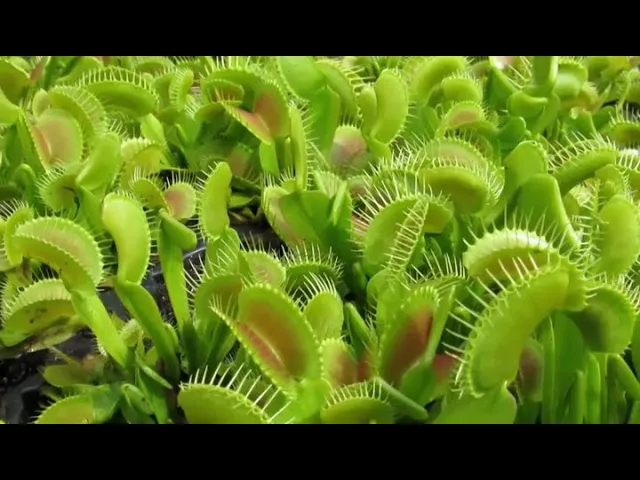
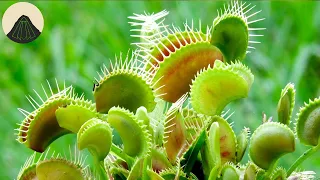
the 10 years plus that i have been Growing these plants commercially uh we're dialing it in though often misconceived as an exotic rainforest plant the infamous venus flytrap is in truth native to north carolina the plant forms a rosette of leaf petioles each ending with a trapped leaf on the surface of each trap leaf are three to six tiny translucent trigger hairs when an insect lands on the leaf and brushes against it the trap closes with marginal cilia functioning As bars on a jail cell as the prey struggles the trap seals completely glands on the
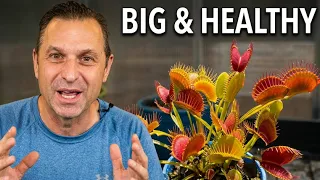
trap surface produce a digestive liquid that dissolves the insect's innards for absorption into the leaf when the trap reopens several days later only an empty shell is left behind as a temperate plant the venus flytrap goes dormant for the winter saving its energy in an underground bulb-like structure called a rhizome in spring the plant once again resumes growth while There exists only one species of venus flytrap cultivated varieties or cultivars have been developed with distinct characteristics some are chosen for their large trap sizes others for their distinct color [Music] variations in leaf structure can also
be found as can variations in cilia formation severely deformed mutants have also been isolated And the others contain different combinations of those characteristics as with most carnivorous plants mature venus fly traps produce flowers in the spring and if fertilized these yield seed later in the season i have some events lined up with libraries right now they're always a lot of fun and a couple of schools uh the schools there's been a little change in their programs uh we won't get into all the details but Everything is dynamic you guys having a good day so far
yeah you guys all ready for a really cool and exciting seminar that's the cool thing about this business is that there's so many avenues and so many things that you can do uh if something starts to falter a little bit there's always something else you can do you just uh keep an open mind and Follow what people are you know listen and follow what people are talking about and network now between now and june are they actually producing enzymes and the liquid in there is there anything to a point that really starts once they start
trapping the insects and also it requires moisture at the same time and that's why these plants um i think carnivorous plants are wonderful teaching tool well teachers have always Used plants in the classroom but there's something about the carnivorous plants that the students are really intrigued about they're fascinated they're fascinated about their carnivorous mechanism just the beauty of them the way they look they're different and so that helps to draw them in it's so interesting the students come in interested they want to know about how things work how the world works And um so it's
intriguing to them they they have this natural interest in science i think most students do uh well i just finished a seminar over at the brentwood middle high school we had 10 research students who were very interested in the saracinas the uh the pitcher plants and it was an absolutely amazing event uh great questions from the students we had a bog garden here that was put in About two years ago and they actually asked me to quadruple the size of it so that's one of the reasons why i do these events is this is how
i keep the business viable uh everything leads into something else bigger and better and that's the name of the game when you're growing carnivorous plants with a little changing of my schedule i actually spend more time here at the nursery which is working out better because now Entire families are coming in here and not just one or two people that you meet at a show or something like that so the public awareness of these plans and of my business is growing uh very nicely right now by dialing it down and relaxing a little bit with
it and working on different revenue streams and the way of making bog guards and things of that nature i was able to get the the joy of the Uh the business back again so it's really it's very very exciting it's actually the 10th year of of business it's an anniversary for the business this year so it's kind of cool that this whole filming is going on because it is a milestone in this business right now so uh it's very very interesting and i can't wait to see what's going to be coming my way [Music] okay
yeah so the uh so since february That was when i was wrapping up the book the final edits and the final corrections final uh layout placements a lot of work in a short amount of time it all came together beautifully i'm really happy with the way the book came out not much longer after that i got my author advanced copy got the book in my hands the physical book of my hands got to open it up and Read it and that was really a rewarding moment for the whole process of making the book to getting
to see how how it came out and i really love it and i think it looks great it's what i intended to do there's always like ah maybe i could have did this a little differently or that but overall you have to keep in mind that Uh you can't keep changing things forever you have that there's a point where it has to be this is it the official release date was may 28th i think the first ones were being shipped as of june 1st or around that and since then you know the book's been released
more and more places are carrying it um seems to be doing well It's not just a um a book about uh about carnivorous plants specifically it's not a book uh about how to grow them specifically it's really an art collection and the cultivation shows how i cultivated all the specimens myself that i photographed none of these are from uh from a botanical gardens or anything like that these are all plants i grew myself for for a long time and Photographed for anyone that has seen the book there's also the quick breakdown of long island's converse
plants but really it's about beautiful photography of the plants in their natural habitats with daylight as opposed to in the studio uh it's it's the two opposite ends of the spectrum with the photography with Going to these habitats and photographing them i would also make observations and um write them up into sort of reports and send them off to contacts with uh conservation organizations uh so they can use them for their records to kind of track you know how they're doing and how they kind of fit in uh the historical perspective of you know are
they for um persisting or are they disappearing In some cases yes unknown both of those uh questions uh well we're in one of the ponds that are part of the long pond green belt in bridgehampton and there's number organizations that are involved with the preservation of this land as you can see from the sign there's a nature conservancy they own this land um there's friends of the long pine greenbelt And uh the south fork natural history museum these are uh ponds that were formed from glacial processes and uh they're very unique habitats very sandy very
shallow and uh also it's a really rich biodiversity going on here and what we're particularly looking for are converse plants of course and in this spot you'll see all three of the sundews that are native to Long island which are uh drosera rotundifolia dresser intermediate and especially tricera phil formus uh josera philformis is they're not nearly as widespread as the other two in fact pretty yeah pretty rarely co you know encountered and they're very particular about their habitats and this is really one of the best habitats you're going to see for these plants Drosura commonly
known as sundew plants are found on every continent except for antarctica the plants produce leaves with stocked tentacles upon each of which is a gland these glands produce a sweet sticky chemical droplet that attracts nearby insects lured insects attempt to take a drink and get partially coated by this syrupy secretion the leaf then bends more tentacles Toward the captured prey as demonstrated here with a freeze-dried blood worm the struggling insect becomes more coated in the syrupy chemical preventing flight and movement the glands secrete a digestive chemical which dissolves the innards of the insect with the
nutrients absorbed into the leaf the remaining shell is eventually washed away in the rains some species are tropical growing year round In australia a number of species have been termed pygmy sundews these species grow to a far smaller size many of which are smaller than a coin however in the winter only the pygmy sun jews form modified leaves called gemei which resemble green seeds when disturbed these gemmae shoot out of the center of the plant those that land on suitable ground can grow into a clone of the original plant yet other drossera species are temperate
Growing exclusively in warm seasons receding into a hibernaculum for the winter and resuming growth in the spring like the drossera found here so just this area just a few years ago was all underwater and there were no thread leaf sundews to be seen as you can see this year there are fully grown [Music] flowering individuals all over the place so Uh that kind of shows that although they may be inundated underwater they'll survive and then they'll come back when the the water levels drop and it becomes a little bit drier [Music] and what we're looking
at here at the at the bottom of the valley is a swale and the sand at the bottom of the swell stays permanently wet And there's a cranberry bog there with the stars of the show of course are the canvas plants and this is really one of the greatest habitats for the thread leaf sundew drosera filiformis that's what we're here to see today [Music] and most of the time what i do is i use manual focus for all my photos but in this case it's not just for fun and now it's just getting to be
The first uh signings and presentations that i'm doing and there's going to be more in the future so this is kind of like another milestone in the journey and a major milestone since the last update i mean a lot's happened between now and then and for the uh for the next update i'm sure there will be a lot that has happened since and we'll see Where this whole thing goes [Music] with the growing season in full swing we find eric at the nyack fair one of the nearly weekly street fairs and events where seymour gardens
participates as a vendor things are going outstanding here we're at the nyack street fair here up in beautiful niacc new york the weather is outstanding as you can see it's packed with people Uh a lot of interest as always and we're just having an absolutely fantastic day i would say we're on the way to record-breaking day here uh with the shirvan people we're speaking with it's fantastic it's quite too [Music] so here we are in in the pine barrens of long island and there's a series of ponds that are unconnected to any um rivers or
streams or anything like that These isolated ponds they tend to be fairly shallow with very gently sloping shorelines even small fluctuations of water can expose the shoreline or cover it up with water but it tends to be very stable which is great for carnivorous plants and they love it those are also great breeding grounds for dragonflies and Tiger salamanders and other amphibians and the such and so at these ponds that we're looking at today we're looking more for vetricularia bladderworts although this year 2016 is very dry year because of that there may not be as
many uh of the representative species but they're still reliably fantastic spots to uh to see various forms of tricularia and that's what we'll be seeing today The bladderworts or utricularia are a diverse family of carnivorous plants which like drastera are found on nearly every continent different species may be either aquatic terrestrial or even epiphytic the plants produce long stems called stolons photosynthetic shoots grow from these stolons as do carnivorous structures called bladders Mostly found beneath the surface of the water or wet ground the bladders are tiny trap chambers produced by the plant that are constantly
under negative pressure when a small organism brushes against trigger hairs near the traps opening the trap snaps open and shut in a fraction of a second during that time the negative pressure sucks in the surrounding water and nearby triggering organisms into the Trap where digestive enzymes dissolve the organism and the nutrients are absorbed into the plant meanwhile the trap pumps water out resetting the negative pressure for the trap to be triggered by more prey different species produce traps of different sizes with some aquatic species producing traps large enough to capture small tadpoles some aquatic species
are Temperate forming winter resting bodies called turians from which the plant re-emerges in the spring like its distant relatives the pinguicula utricularia produce colorful flowers on stalks akin to orchids or snapdragons and are often a motivation for cultivators of these species [Music] so what we have here is one little Pocket uh a deeper area where some of the water is still remaining and there's all these utricularia appropriate just kind of crowded in here and all the rest of this area which is all dried up as you can see use usually is all underwater [Music] so
[Music] so here's a pond system that's nearby a Uh abandoned cranberry farm it's mostly like a saturated peat underneath the water very mucky where you see the tricularia gibbet here and on the floating bog itself there's just great populations of saracenium purpurean it's really something to see [Music] Hey so we're here now at the brooklyn botanical gardens i come here like three or four times a year they have a really nice display in the conservatory of different saracenia and out here outside the conservatory they have like these pots of sarcenia like floating in their waterfall
fixture so the base is a coco core so that's a byproduct of the coconut water industry it's just the the fuzzy husk on the outside of the coconut basically Stuffed into these logs [Applause] last time we spoke about the auction it had just started and so now the auction is over it's been over for a few months actually and we raised money for the nature conservancy in alabama to help uh with some projects they had over there to actually help some rare forms of saraceni or purperera at one of their sites also we had our
t-shirt sales for this year which did Actually really really great because a lot of other organizations had like put it on their list serves and emailed it out to people that we were selling shirts for the saracenia forum and so it was actually one of the best years for the t-shirts [Music] the forum's been really busy it's actually been very busy a lot of the members have been posting a lot of pictures this year more than Ever of their different varieties and plants and a lot of people have actually been posting very strange things like
companion plants a lot of different types of lilies and orchids have been posted this year so it's really exciting and we have a lot of new members as well people from different plant organizations have joined and just from all over the world we're still planning on doing our October seed event next month so hopefully a lot of seed will be given away on the forum like it was last year i think we had like over 50 different people winning seed packets last year so that's still coming up and that's very exciting because who doesn't like
free stuff on the saracinia forum we encourage the people growing saracenia to if they don't have any plants for their Flowers instead of cutting the flower stalks off let them stay open let them pollinate either pollinate it themselves or open pollinate and give the seed away to people on the farm if they don't have any plants for it so it's a great way for a beginner to start saracenia from scratch and to find you know new varieties because you know seas are the best way you know to get new and interesting varieties you don't know
What you're gonna get so it's it's kind of fun uh right now it's uh the beginning of september uh school is about to start tomorrow actually and during the summer i traveled to argentina visit family and then went to mexico for a week for vacation uh my plants actually did very well despite the fact that i was away for almost half the summer my highland plants despite the heat they All did very well so i'm actually pretty surprised with how well they did but they're all growing well now i also planted seeds a few months
ago of joshua toca yensis cecifolia i got i also have some venus flytrap seedlings most of those i bought a few online cesafolia and the venus slide trap why one from a giveaway but then i also sewed my own tokayansa seeds and also planted some nepenthe seeds and Right now i have nepenthes by calcutta germinating i always want to grow more plants but i have to consider that i live in a fairly small apartment and they take a lot of space so i have to see what my parents allow and what i can manage to
grow or propagate i mean always looking to get more but hopefully at the show this weekend i'll be able to pick up one or two it's the weekend of the annual new England carnivorous plant show in massachusetts jonathan and yvonne meet for the first time in union square manhattan to begin a long journey [Applause] [Music] hi my name is dave sackett i'm the president of the new england carnivorous plant society or necps we're just getting started our annual show we have it here in tower hill Botanic garden in boylston mass people are starting to roll
in people are amazed at the plants we have we're expecting at least 2 000 people to show up today in attendance so we're hoping for a good show and we support the effort the annual necps show presents hundreds of carnivorous plants each year including saracenia pitcher plants drastera sundews pinguicula butterworts Utricularia bladderworts aldravanda the waterwheel plant cephalotus the australian pitcher plant heliamphera the marsh pitchers the carnivorous bromeliads dianea venus flytraps and nepenthes tropical pitcher plants the carnivorous plant display itself came out better than i had imagined i mean transporting them in the vehicle bring them
to the location And putting it all together and building it there on the spot and then being able to break it all down and move it back and get it out [Music] hi i'm ryan george of native exotics welcome to our display here at the tower hill botanical garden society we brought lots of nepenthes as you can see here we do have some other carnivorous plants available as well this is going to be a fantastic event in Boylston massachusetts so far i've picked up an appendix and a nobody's hi i'm h maurice welcome to the
necps show lots of vendors preventing some plants today some books that i wrote as well and hope you guys have a good time [Music] as the show settles into the afternoon matt kalan takes the stage to discuss His book the sinister beauty of carnivorous plants but this is really like an artistic look at universe plants artistic photography in the main and uh this is a macro photograph of josera reggie and the kingston which is really fantastic some new from south africa and you can see how it has these great droplets And one of the things
i like particularly and the title is flurry movements in the elegant dance with that but you have these great you know very dramatically lit and composed pieces kind of thing where you have the driftwood that kind of that creates the movement it's it's meant to symbolize kind of the movement of the wind so it kind of gives the idea that Wind is kind of flowing through the piece there's the river stones which so i start taking photographs and then it starts looking at me and i guess it's still alive and then you can see how
it's arms that unfolds its arms and it starts kind of waving them around and i can almost hear in a tiny little voice and say another question back um i apologize if I missed it but for those photos that you take with the black backdrop are you using like any specific lighting or something to light the muppet those are just like amazing photos thank you but you're asking my secret formula oh no i'm kidding i'm kidding actually no it's uh it's a it's a black belt yeah um so later in the presentation you had shown
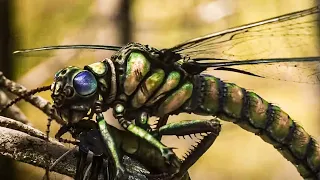
the dragonfly that just looked completely helpless But in this photograph on the top towards the left there's a small fly you haven't mentioned the flight when you've shown the photograph but i was wondering if that was something that was purposely put in there or if it was just like the flies there and that's just where it is actually yeah it's an excellent question usually i try to avoid having um uh pray in the photographs for a number of reasons Humorous plans right now are looked at by the public in a lot of cases is this
kind of like like a carnival like curiosity and part of it as like oh we're going to feed the meal bugs and stuff this is kind of trying to take into account like serious art so usually i do try to keep them from having any uh prey in the frame that kind of like tells you that it's it's blown up you know but without the Prey it almost looks like it's going to eat you the viewer yeah and that's kind of one of the things we're trying to do here it's like essential it kind of
draws you in as a viewer but then also it's frightening like it's going to come out and attack you [Music] with match talk reaching its conclusion jonathan takes the opportunity to introduce himself and yvonne meets matt for the very first Time [Music] the new england universe plant society uh yearly shows are always a great time and to just be part of the whole the whole energy the whole you know activity and the whole event so much fun you know it was exhausting but it was also very rewarding and i just absolutely loved [Music] native exotics
in ithaca new york is the East coast's largest supplier of nepenthes the tropical pitcher plants [Music] owner ryan georgia invites us for a tour well it's been a it's been a passion starting in this business i i personally started out in the hobby when i was about 12 years old did some work at cornell university worked with a few graduate students There and that sort of fed my interest and fueled my my passion for the plants and over the years going to college plant science syracuse it just the ball kept going my interest in plant
tissue culture expanded working more with ferns and carnivorous plants as well as orchids in the lab I decided with a lot of the excess plants that we had from the lab that you know start selling the plants and so that that slowly led to us building this business about five years ago we have a lot of customers that reach out to us and and ask questions about growing or or the interest in getting into into growing carnivorous plants and uh one one customer for quite some time of Ours that i've actually had the fortune of
meeting at the new england carnivorous plant society here this this uh september um uh ilan is a is a young man who's who's been interested in these plants for a while now i started his own collection uh and i had the the fortune of meeting him at the new england carnivas plants society show which is always really nice to meet some of our customers it's one thing you Know talking to them over the phone or talking with them through emails but actually getting to see the individual and see their passion for the plants it really
reminds me of myself and getting into the hobby it's really it's really uh encouraging it's it's exciting to meet people i like this just that human interaction is pretty fantastic and i really had a had a good time meeting him and he had a lot of Questions about the plants in particular and he's got a lot of similar interest to mine personally we both like the highlander ultra island and the penthes and nepenthes in general and so it was really quite a great experience to be able to talk about these plants with another person who
enjoys them as much as i do we primarily started With an interest in orchids and carnivorous plants and a lot it's just such a large group of plants in general and kind of focused and narrowed down to nepenthes as that is something that i've always been passionate about and interested in you know a tropical southeast asian pitcher plant that produces pictures that are absolutely enormous and the the variance In color patterns and morphology of these plants is pretty incredible it just holds a lot of interest with a lot of our customers new people coming into
the hobby and myself included i think i'll always be intrigued by these plants the tropical pitcher plants or nepenthes are a genus of vine forming carnivorous plants found in a number of countries most notably in borneo sumatra and the philippines At the end of each leaf on the vine is a tendril that can elongate with the tip developing into a carnivorous pitcher trap like its temperate cousins the saracenia the penthe's pitchers produce a sweet attractant on the underside of the pitcher lid a slippery peristome that helps prey to fall in and a waxy pitcher interior
to keep insects from escaping the pitcher also produces a digestive Pool that helps to drown and digest captured prey nepenthe's plants form juvenile or lower pitchers from their earliest leaves as the plant continues to grow the newer leaves form upper pitchers which in many species are visually distinct from the pictures of the younger leaves species that are found in nature at elevations below 1000 meters are referred to as lowland nepenthes and Require hot humid conditions year round whereas highland nepenthes found at higher elevations require hot humid days with distinctly cooler nighttime temperatures [Music] unlike most
carnivorous plants nepenthes are dioecious in that individual plants are either male or female with each gender producing distinct flowers [Music] with the tour of the greenhouse completed ryan gives us a tour of the remainder of the facilities including the propagation laboratory [Music] [Music] oh well we just visited ryan george's greenhouse here at native exotics in upstate new york and it was it's very it's unbelievable how many different varieties and the panties and other Plants he has and especially seeing his district culture lab was pretty cool and all the new species and all the all the
plants he's propagating [Music] uh it's mid-december 2016 it is a balmy 40 degrees out and plunging as you can see i have the plants all wrapped up for the winter and although the plants are winter hardy i do this actually to prevent evaporation of the moisture in the trays it's what they call a frost Cloth that keeps the cold air from actually falling down and freezing the water that's in the trays because what happened in the past when i left it exposed is that the water in the trees froze the plants transpired all the moisture
out of the pots and they ended up dehydrating and i had an incredible amount of attrition these plants right now uh have taken a low of 22 degrees so far inside this greenhouse so it's a pretty cool little Process i'm very proud of discovering these little things how i can create these little micro environments to keep the business going strong uh even at this time of the year there are still insects lying around i still have insects buzzing around in here they come in because they think it's sanctuary little do they know okay this is
the last place you want to be okay uh the pitcher plants i've been cutting Them open and looking at their feeding habits uh incredible amount of flies this year not so many in the way of moss uh last year there seemed to be a heavier population of moss but this is one of those things you know it's kind of cool just to play around and see what's going on inside these plants i did some great educational programs and one of the last ones that was really phenomenal was working with the 4-h Group out in suffolk
county here of the plant because what you're actually looking at here is the root structure of the plant because the roots do not pull up any food all the energy is from the insects they trap and they pull that energy down can you guys see that see just a couple little roots and the people that i met there and the children that were involved in this this Organization were absolutely phenomenal and they have actually embraced this to the point where they want to have a educational garden on on uh on the grounds there get them
in there just gotta wait for them to move wasn't that cool that's the thing that really got me going this year was the educational programs and the desire to have these For continuing education on the grounds really really kicked up quite quite a lot saying carnivorous plants nearest plants uh the sales over the holiday season so far have been phenomenal word is getting out i'm getting incredible emails from people who met me during the course of the season at numerous events that i did are asking me already to do events starting in February of 2017.
it's been a very interesting journey as we mentioned in the very beginning my exposure to the plans through scouting and my parents uh became a hobby and uh when there was a little bit of an economic downfall and i had to figure out i had to reinvent myself and my landscape design business And find a way to reinvent what i was doing and realizing that the carnivorous plants which was a hobby actually could become a form of a livelihood uh was an interesting decision to make one that i am glad i made uh it has
not been easy it has been a challenge every single day if and this is a commitment this is not something that you just step into and you throw some plants on the Counter like a box store and the people come in and they get it i love it i i'm glad that i'm involved in it it's not it's a passion and i will continue this for as long as i possibly can [Music] so over the course of a school year we get oh somewhere between 20 and 24 000 Students visiting us we do a lot
of workshops with them and use plants as a way of educating them about the world around them so carnivorous plants are kind of a source of fascination because they're certainly our plant but in some aspects they kind of act like animals uh which trips a weird wire in our brains uh we tend to empathize and sympathize a lot more with animals and notice them a lot More carnivorous flam plants are are certainly very charismatic in that way but as you look around the world there are certainly lots of different examples of various entry points to
these scientific practices and content uh art literature uh where you can find these entry points throughout They really help connect these different worlds that the kids see they think of plants they think of animals they think of humans and soil all in these separate sort of bubbles and that's really often how we teach it but we should be teaching it more full circle and connecting those dots between different you know ecological systems and i think that carnivorous plants really help to do that and they really Help tie together a lot of these different workings that
come together in a really fascinating way [Music] just being able to expose children to carnivorous plants because we live in new york city we don't really see them on the street they're not like dandelions so to be able to see things that we normally wouldn't see i think that alone is that great big exposure and hopefully a couple of years down the Line and they get more involved and they look at something that's carnivorous they can turn around and say i know that that a carnivorous plant doesn't use its flower to trap its prey i
know that this plant uses its picture to trap its prey so i think things like that are really what um i would want people to kind of think about when they think about education and carnivorous plants because they just go hand in hand there's so many things that we don't Know about them yet so much has yet to be discovered i think carnivorous plants they play a huge role in reaching out to new people and that they're a really good way to draw people in people that might not typically think they like science might hear
oh there's a carnivorous plant workshop and be like oh that's cool i want to do that so then they'll come in and start to learn more and i think it helps widen What people think science is and i think carnivorous plants are a really great access point that draw in a variety of people so we've done a number of carnivorous climate programs which have been hugely popular it's usually kids and their grown-ups that come along with them you get to see these kids and they're really focused we have a very hands-on active audience so to
get our audience To sit still and focus on one thing is really difficult so these workshops do that and you can just see how intuit people are you see the parents they're leaning in they're looking at the plants too they're holding the magnifiers they're asking questions and we love programs that really capture a wider audience you know you're getting the kids and you're getting the parents and people are excited and Engaged and it's really great i think what first drew me to carnivorous plants is there's kind of a rebellious aspect to them they seem to
upset the natural order of things plants actually wielding power over the lives of animals carlinaeus the foremost botanical authority of his time he refused to believe that the plants were carnivorous because he believed in this hierarchy where plants were put on The earth just to be sustenance for animals so carnivorous plants are important i think because they really make us rethink that animal centric viewpoint and really look at plants as organisms that are capable of manipulating animals it really opens your eyes to a new way of looking at the natural world so the real moments
of magic that we see happening in our garden are the aha moments where we see something click in A child's mind and often in an adult's mind you just see the spark where they see that there's something more to the natural world than what you first glance at and a lot of folks who don't spend a lot of time getting to know plants don't quite appreciate their amazing strategies to survive and the kind of unique stories that are behind the science of every plant there's a lot to be curious about there's a lot to be
learned science is ongoing so we have a Lot of interpretation in the garden about the mysteries in the natural world we really haven't figured everything out about carnivorous plants and how they work and about the rest of the plant world and there's still so much out there to be discovered so here at the garden we're really hoping to generate the next generation of stewards who will just care about nature take care of it and help us figure out what else there is to be Learned and studied [Music] how else can carnivorous plants affect people's lives
what else can we learn from these captivating plants maybe what we can learn isn't defined by science or research carnivorous plants confound the expectations of the natural world maybe their role is to inspire us to do something as unexpected Like create art or forge a different path or bring together a new community or discover something new or share a story make carnivorous plants come to captivate and inspire you as they have me and the incredibly generous subjects of this documentary and to all who helped make this project possible my deepest gratitude [Music] [Music] [Music] do
[Music] hi my name is anthony safarito welcome to my organic garden in south bronx new york i have perennials here on the left and that is one of the reasons why i love these carnivorous plants Big glory lots of bad songs lots of horse flies a lot of the things that i don't really like and ever since these have been in my garden we have noticed a dramatic change and how much that we're bothered by pesky flying insects while we're having barbecues or having some friends over on our patio on the other side of the
garden these are one of my favorite plants of the garden Saracinos they're pitcher plants i have a small venus fly trap in the front he's been overwintering for about four years now he just put off his flowers this has been thriving here and i'm just gonna let them keep doing their thing so once again thank you for checking out my carnivorous plants and i hope everybody enjoyed taking a sneak peek at my garden here in south Bronx [Music] [Music] [Music] [Music] [Music] you