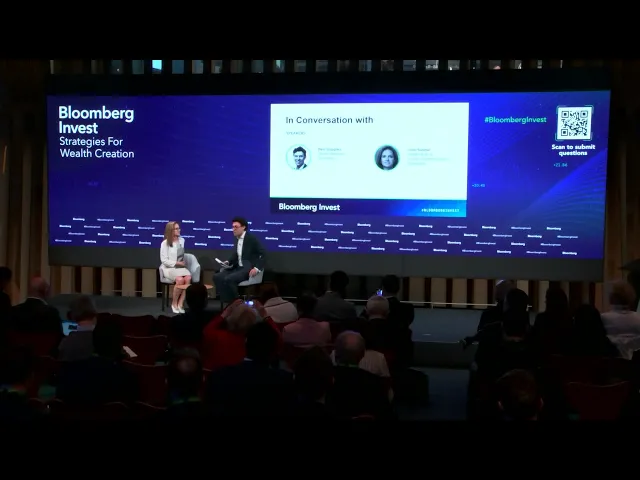
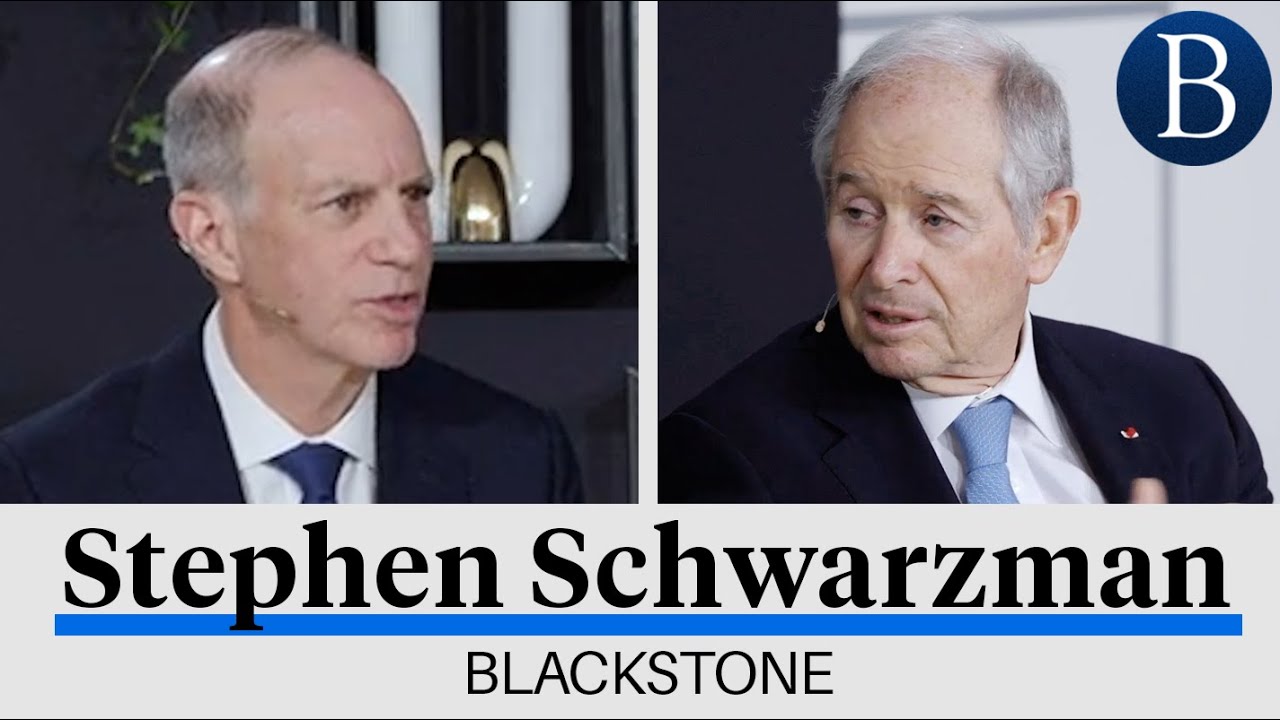
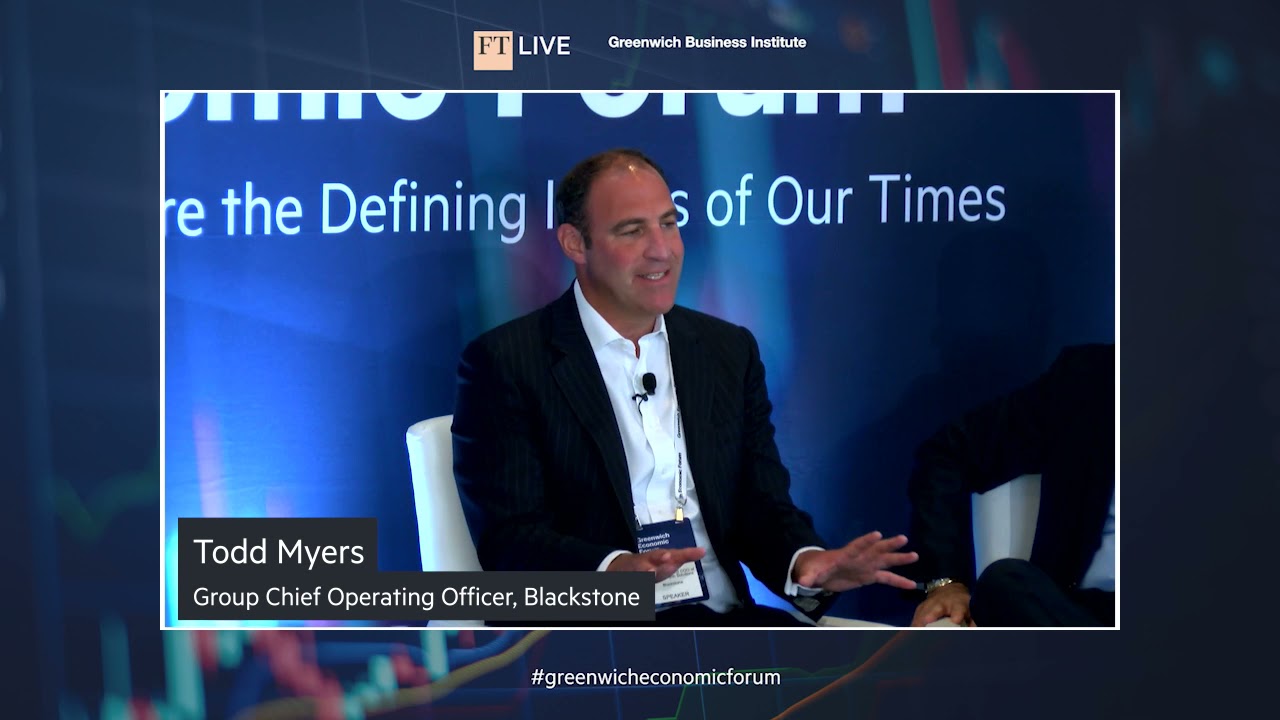
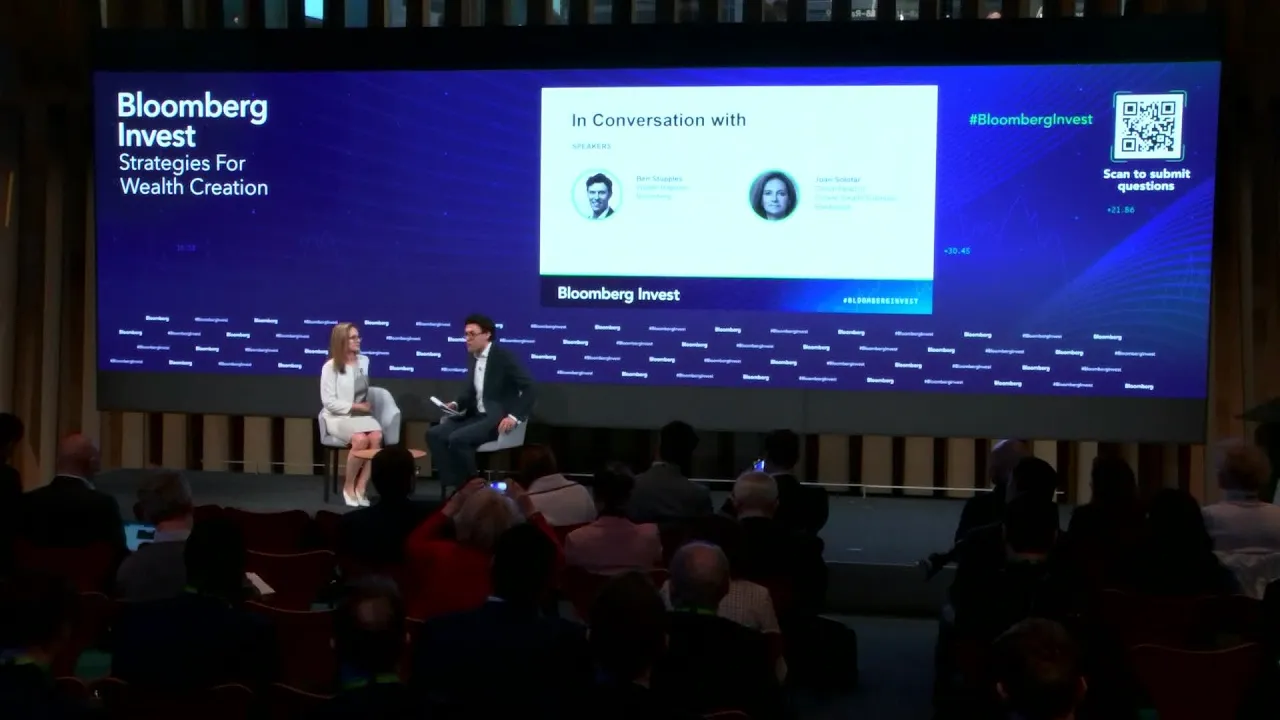
Hello, everyone, and hello. Thank you very much for flying in from Paris, found out to join us today through via New York, of course. I'm gonna let the numbers do the introductions for you.
Thing I've been back as we see your division at Blackstone. Private wealth division in 2011 had about 10 billion under its management. Now you're about two hundred and thirty nine billion driving about making up about a quarter of Blackstone's total.
I am on the sort of race towards Steve Schwarzman, the goal of 1 trillion. Now, before we dive into private markets, I want to get the big QR code out behind us so that you oh audience can have a say in why you think some big returns are going to be made this year. In private markets now do so as we go along.
Please take us some questions. I've tried to make this as as slow as much as possible rather than say from the end, I've tried to ask the questions as we go along. The June audience is going to have their say in a moment where you tell us first, how is business?
Your business has boomed over the last decade, still booming. How is it going now? Sure.
While just speak about Blackstone first and then we can talk about private wealth. So I would say overall there is definitely a continued secular tailwind to more allocations to private investments and with which basically just means like private equity. Those are companies that are not publicly traded.
Private real estate. Just real estate, not publicly traded. And that encompasses more than 90 percent of investable assets in the world.
So it's really most of that. And we see rising allocations, whether it's institutions or private wealth individuals. So last year as a firm, we raised over 200 billion dollars.
Our group raised about 50 billion dollars. And so, yes, I would say our our part of the world and Blackstone in particular continues apace. And the range of drastic losses spanned credit, real estate, hedge funds as well.
Correct. So we're the largest to level set where the largest investors in commercial real estate in the world. We have the largest and broadest private equity platform in the world where one of the larger providers of private credit, if not the largest, and we are the largest allocator to hedge funds.
And then there are a lot of sub strategies underneath. Whether it's infrastructure growth, equity, life sciences and the like. There wasn't anything in your inbox right now with a lot of clients.
One thing for me. Well, I would have had a different answer a week ago than I do today. But, you know, I'd start with you.
When you had disruption emerge in the US last week, the initial questions were very much just around Blackstone exposure, but it was de minimus. And so the conversation very quickly moved to where are opportunities? What do you think will happen in the wider world?
Because we see so much. And that's largely what we've been focused on. There is a big focus on private credit, a lot of inbounds on that, given that you can today initiate loans, private loans, senior, very secure and at double digit yields and relative to what you would find elsewhere in fixed income, much more stable and the like.
So a lot of outreach on that. But I would say the conversation over the last week is much more around just what's happening in the world, implications for macro economy and then subsectors and where we think opportunities will emerge. Would love to unpack that a bit more in a second.
But first, let's get the results up from the poll. If we're able to do that would be fantastic. Of an already.
Can swiftly move. Where are the best returns in private markets right now? Oh, well.
Well, number one, it's looking like a Formula One race neck and neck with private credit. Well, I'm private and it's not so much is playing this club out of people. That's interesting.
Well, I'm just going to ask you, feels like a relay race happening here. This really isn't. I see you.
A private credit zoomed up from being rid of states from behind. Well, that's interesting. I'm going to say stop voting because is it going to make, for instance, that difficult?
Oh, I love this. This is how my life has been for the last week. The show yo, real time sentiments stock prices of regional banks.
Joan, what do you make of what? Private equity? What do you make of that?
Stop voting, everyone. And you're gonna ask that. So private could be number one.
That's so interesting. So I would say beyond the asset class where you invest matters so well, it's moving. If you go back to the founding of Blackstone, Steve Schwarzman had the idea that patient capital.
So the value of compounding and investing against the herd is how you make the most and create the most wealth. So if you look at your results, you'd probably say they're going to be a lot of opportunities in real estate. And I would agree.
But where do you invest matters? So when I think about our portfolios, again, I mentioned we're the largest commercial real estate investors in the world. Fifteen years ago, half of our portfolio was office to day.
U. S. office.
Traditional office is 2 percent. We've completely changed our focus because we saw that the cost to maintain, refurbish going up, lease durations, shrinking just office trends generally and focused on sectors where there was big supply demand gap and that remains today. So those are logistics, rental housing, data centers, offices that are built to suit for biopharmaceutical companies and the regions that you choose.
All of that matters. Investors tend to paint a broad brush and I think often miss opportunities, number one. Number two, the value of compounding.
It can't. If there's one take away, it's trying to time markets and trade markets. I don't believe that's how you create private wealth, just like that's not how anyone would create their own company.
Right. You're doing it over a series of years. That's how we're creating portfolios.
That's how we're creating value. And so I think they're going to be a lot of opportunities in private equity as well. It's deals right now very slow.
I think you will see a tightening of credit. I think those that have an advantage in sourcing credit will be an advantage. Those who can do deals in scale will be an advantage.
Those who, when they own the asset, have enough scale to effect change and enough knowhow will be an advantage. But there, too. You don't want to fall into value traps.
You want to be investing in good neighborhoods where you can generate good cash flow and where the winds are at your back. So whether that's cloud computing or cyber security or as I mentioned in real estate, some of the more attractive areas, data centers and this a lot of attractive sectors. But equally important is what you're going to avoid.
Private credit today probably offers one of the most attractive risk rewards you can have. Because as I mentioned, these are first of all, are floating rate. So they reset as rates have been rising.
They're the most senior secured in the capital structure with a lot of equity underneath them. And, you know, it's not often you can get double digit for something seniors caught, but that's what you can get today. And that should suggest to you, if I could get double digits on senior secured, my bar for equity should be really much, much higher.
And so that kind of narrows what you're interested in today on the equity side. Right. And you used to work at first Boston, which the SEC writes, the sort of current turmoil to the markets, as you may know, spin outs of Credit Suisse.
You've built up relationships with some offices, private banks to sort of build out this products that on with independent wealth advisors. So you're not exposed, have minimal exposure to what's going on with Credit Suisse, for example. Well, we have Credit Suisse has been actually quite a valuable distribution partner of ours, as has and continues to be in UBS as well, exposure as relates to a question would be exposure to equity or bonds or anything of that nature, which we don't have.
And the same is true for regional banks in the US very de minimus. Our relationships, by and large, whether it's lines of credit or borrowing, are really with the biggest, the biggest banks. But I guess so not any negative exposure.
That's the question. Exposure. And just I'm one of you.
One of the big drivers of your success as being the real estate products be. Yeah, a huge amount. Millions per quarter going in in the last few quarters.
You've had a few nervous investors wanting to take money out. How is that sort of state of play now? Yeah.
So first said, I don't know that they're nervous investors, but I'll I'll start with these. Yes, we have. And I think this is important because I think there's been a lot of hand-wringing that has existed only in the world of the press and not all press.
But a lot of the press, we have literally hundreds of thousands of investors be read. And guess how many complaints we've have? Zero.
No client complaints. This is a very high performing fund, so I think that's really important just to set the stage. What's in the press and what's actually happening on the ground.
But if you go back to 20 21, this was an incredibly strong performing fund and the same in 2020 to. A lot of holders in Asia were at the same time experiencing the Hang Seng at a low. World markets coming down as we all know what happened in 2022.
There's no capital gains tax in Asia and there were margin calls happening. And so the only asset or one of the only assets in the portfolio that still had a gain. Was buried, and so we started seeing outflows.
And then news articles started writing about it. Then we started in questions, blah, blah, blah. But I think in a world what's changed over the last week in conversation, we don't take deposits.
Our structures are meant so that we are never forced to sell assets. And the appreciation for those caps on liquidity today is far greater than it was. And so, you know, we work with our biggest distribution partners, private wealth firms, private banks.
When we're thinking about new products and what we're hearing today is we're fine with even less liquidity. So I think that rhetoric will change coming out of what you're seeing today, which is a very different crisis since it's really a crisis of confidence and a crisis of liquidity and having structures in place that do not mismatch. So if you want to own buildings, if you want to own companies, you shouldn't be looking for daily liquidity.
As I mentioned and, you know, make one other comment about BBM, because I think this is so fascinating when we talk about not market timing. You could be the worst market timer in the world if you would not be read anytime. And it's an entire almost seven year history held it for a year, even if you sold it at the worst possible moment, which would have been April of 20 20.
Because we marked the portfolio down in the middle of Covid. You still would have made profit. So I think, you know, thinking about it as a monthly product, a trading product.
It's it's not the way it should be bought. And generally it's not the way that it was bought. And I would also say as a percentage of the total portfolio, the percentage of clients who've been redeeming is actually pretty small.
So we're very happy with the structure. It's the right structure for that kind of asset. And at the end of the day, when you perform well.
Why do people invest? They invest to make money. And when you make it money for investors, they give you more money to, you know, to manage.
And that's what we've found over our entire history through every up and down cycle, because we do outperform. We tend to gain share in. And I would also say this is so critical.
This is of course, this matters whether an institution or private wealth individual, the firm that is investing your money, that is managing your assets, that is so important. But it is even more important on the private side, if you look at how private equity, private credit, private real estate firms perform. There is a wide spread between the top quartile and the bottom.
When you look at public equities and fixed income, it's pretty narrow. So, yes, you can make a wrong decision, but they tend to kind of cluster and sometimes you get enamored by the shiny new toy. And I would just suggest that's probably not a great idea, that if you're investing in any of these categories, you want to be with the firm that has managed these assets through many, many cycles.
These are not like buying stocks and bonds. One final quick question on how long will it take to clear that redemption backlog next quarter? I don't really know.
I'd hate. I'm not in the prediction business and I don't want to predict, you know, what what investors will do on on any monthly basis. I would say that in prior months, we've seen a steady decline.
Whether that changes in some interim period of people are nervous, not nervous about the world. I don't really know. I wouldn't want to predict.
But what I will say is that it will not affect the performance of the fund. And to me, that's really the most critical. Let's move to the question we've got from the audience.
What is your secret? So often other people are faced with this still at the same time building up teams in this area of office that have built up a sort of private wealth team. What makes you special?
What a nice question. Thanks to special. You know, I think there is no secret sauce.
I think it is that we were dedicated to the channel, that we viewed it as something more than just transactional. And I think most importantly so when I was asked, I'd been at the firm 16 years, but I've been running this business for seven. And probably the biggest change that I made was moving it from a sales organization to a private wealth organization that partners with private banks, big global banks and the like.
And what does that mean? It means that we have everything from the product creation to education, which is so important to sales people, to investors services at the back end. And we run that fully integrated.
And as I said, it's not interesting for me to have a transaction and oh, what can I do to sell the product? No, like if we're operating in France, we have French speakers, French marketing materials. We are local.
We're there for the long term. I always have the mindset that it's very much the way Steve Schwarzman created Blackstone. That's how we thought of our business.
It's over years and I've been asked for many years. How come your competitors aren't in? And I would say they will be.
But we have a long history of being able to create businesses that don't yet exist. Scaling them to being the best in the business. It's what we've done with every one of our platforms.
Most people don't have that. And and I would say to me, the term white space just means don't have. So when I hear others saying, you know, we have whitespace here.
That just means you don't have it and you don't have presence. We always expected that we would have competitors and we will and we should. Individuals are so under allocated to private investments relative to institutions and relative to what their portfolios should be, just based on less volatility, higher returns.
These should be core allocations in portfolios. That's what we hear from advisors. That's what we hear from chief investment officer.
As I was at a breakfast this morning where our distribution partners said somewhere between 5 and 15 percent is where folks should be, and generally they're far less than that. So we will have more competitors. We are not alone.
But I think it's this commitment to excellence. I think it's always being transparent, honest, building all of our funds off of the backs of good performance in all these categories. So having the same real estate team that invest institutionally, invest for private wealth.
These are just all of the things that we've brought to the private wealth market. And I think we've just had a real consistency. And just one more, which is we have the dedication.
Steve Schwarzman, our CEO of John Gray, our president of our investing professionals. They are willing to go anywhere, anytime and meet with investors. And so it's the product, it's the team, it's service, it's the dedication of the firm.
And finally, I think it's just the trust in the brand in Blackstone. There's a reason that we are the reference institution for the biggest institutions in the world. And I believe that we are becoming that for the private wealth market.
We just have half a minute left. I want my sons. But what you've grown from 160, I think the end of 2021 to more than 300 now.
Where do you see yourself growing globally? Oh, I don't know. But I do see there's another question on real estate.
So I want to just take that. We are the biggest commercial real estate investors. The biggest issue today is everyone is painting that all with a broad brush.
So I do think traditional office is much worse in the US than people think. And I think a lot of firms have not been aggressive enough on their marks. We tend to be quite conservative.
That's why the portfolio went from 50 percent office to 2 percent. But commercial real estate in warehouses like in I would say in the U. K.
releasing spreads above 50 percent. In the U. S.
, it's the same data centers. We will be talking about this for the next 10 years. They cost a billion to two billion to build.
We've already built out the platform, the land, the connectivity to the electric grid. I do not believe anyone will be able to compete with us at that kind of scale. Rental housing.
Big disconnect between supply and the demand. These are the things that are most important and having the capital structures to endure, which we do. So we feel great about our real estate portfolio.
That does not mean we do not think that there will be pain. The companies that own traditional office, companies that own models. This will be a very painful environment for them.
Thank you very much. Thank you.