hi guys all right so here we are we have a couple more lectures left we have this lecture which is on police use of force i really wanted to kind of do a long lecture that talks about police use of course and then talks about racialized communities but i decided to divide it up into two so we're going to have this lecture on police use of force next week's lecture is going to be on policing racialized community and then we're going to end the year up by talking about police corruption so three more lectures left
all right so uh so far sort of uh it began the class by talk about the definition of policing i wish it was like a skip overview button for you guys but you know for those of you who don't remember you start by talking about definition of policing i think i made that joke before too uh and then we sort of moved on to talking about kind of the state role of the state in establishing law and order and what a legitimate state would look like we went on from there to talk about history of
policing we place police within the context of the industrial revolution establishments of new cities in europe and from there we kind of discuss what we mean by sort of the capitalistic structure that gives rise to police in the last class we spent a little bit more time in last week lecture we spent a little bit more time this kind of thinking through kind of what does a police force look like discussing what sort of demographic of police looks like what does it please do what are some of the means by which police goes about doing
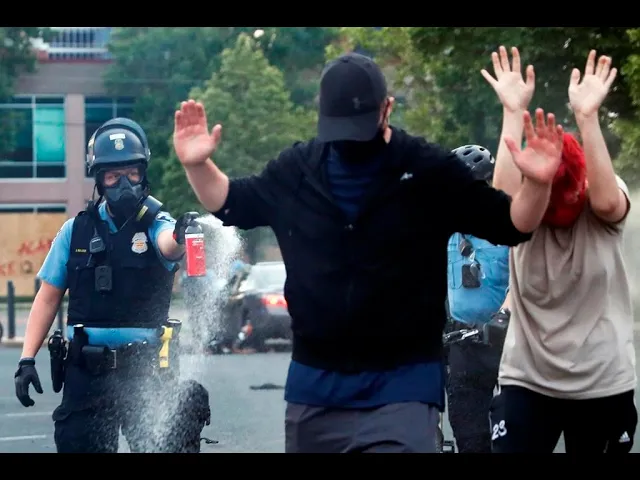
its job when we're talking about sort of means of policing we mentioned that probably the most defining feature of means of police most defining feature of the way police does its job is through use of force so today we're going to spend some time thinking about what did these we mean by use of force what does force mean what do we mean why is it important for police to exert minimal amount of force that is necessary and then in the next cell week's lecture we're going to talk about sort of how this force can become
delegitimized in certain community and the legitimization of this force could have its own effects as a reminder in the last class we talked about two presumption that police makes presumption of compliance and presumption of superior force what do those things mean by presumption of compliance if you remember means that police makes the assumption that most people are going to do what it is that police ask them to do as you remember we said that the job of the police isn't really to establish law and order but to maintain law in order maintaining on order is
different right for example if i have a classroom full of students that everyone's screaming and yelling it's really hard for me to control the class but if i have a classroom where people are generally quiet and there's one or two people talking it's easier for me to tell them to be quiet that's what i mean by sort of the difference between establishing law order and uh sort of maintaining honor so police in this job maintenance of law in order you need military to establish law and order right you need sort of militarized police at least
to establish one order therefore police kind of makes this assumption of that everyone's gonna listen to them or at least most people are gonna listen to them secondly police makes an assumption that no matter what they have the superior force you might have better guns than the police but police have more people and more guns they have almost unlimited amount of resources they have unlimited amount of people they have a limited amount of guns they have a limited amount of bullets they have unlimited amount of force almost because police can call in the military right
compared to individual citizens all militaries have almost an unlimited amount of force unlimited amount of power at one point they have gone they have you know machine guns and they have tanks and they have uh planes and they have you know submarines and things like that you and i can never have no matter how big your gun is so yeah you might be right that one or two people or a group of people might be able to act force police out gun police for a short period of time but those are very momentarily police will
regain has this assumption at least that it will regain control now let me discuss police use of force within a canadian concept remember we're talking about police here within a liberal democratic context well there is obviously at least within this sort of capitalist structure where there is a difference between those who have and those who have not where there is a difference between those who would like to do us harm to take what is ours where there are people who own guns bad people own guns it is reasonable to assume that at least in the
near future we're going to need police to use force so sometimes we say you know something's going on and someone ought to be doing something about it at that point police might need to use force so the fact that police has to use force in a very limited circumstances is undisputed at least within the current realistic nature of uh our society however let's remember that police is not separate from us right police is one of us in fact that's what made the distinction in history between policing before the industrial revolution and policing after industrial revolution
right as you remember from our discussion history of police police was established so that military doesn't have to intervene in everyday life as you remember police was it not an aspect of division of labor it was a point at which not all of us could take care of our homes and our belongings and our loved ones all the time and go after criminals so we establish places a division of labor it's another division of labor within the larger organic solidarity that forms our society right now here's an interesting part of that right if police is
one of us and if we have established police so they look after us and our interest has a division of labor it makes sense for police to use as minimal force as necessary to do their job at the end of the day they're not dealing with enemy combatants they're dealing with citizens of a democratic nation where does police get its power from well the police gets its power from the government where does government get its power from in a democratic liberal society the government gets its power from the people so it would be contradictory to
its very nature for police to enforce more force on individual citizens that is necessary in fact the ethos of minimal force goes hand in hand with the ethos of democracy with the ethos of liberalism because as you remember in our discussion of state we kind of began by talking about well listen democracy is a great thing but at winston churchill said i'm not a big fan of coding vincent church about me he might have had it right here as winston churchill said democracy is the worst form of government it's the best one we've got why
is it the best one we got because at the end of the day we will not be chronical on ourselves if we govern ourselves and if as john surmail says protect the right of the minority then we cannot that will restrict at least the amount of tyranny that can be exercising individual citizens right all right therefore if our job is to if the job of the police is to enforce the laws and orders that are established in a legitimate society through a legitimate democratic process as a way to be as minimally intrusive as possible therefore
in the enforcement of those laws police has to be as minimally interesting as possible that's where the idea of minimal force comes from philosophically furthermore as we discussed in the previous class police spends majority of its time not enforcing law and order necessarily who is in spends majority of his time responding to a situation in which they have to protect all parties involved a fight has broken between two people the job of the police is to protect those two people from each other and the people are around them from these two people you see there
for the job it plays to protect everybody place shows up to a domestic dispute the job of the police is to protect everybody involved the police shows up to a response to uh a theft well the person who is accused of that this is why these words are so important even if they're running out of house with the tv in their head they're innocent until proven guilty and the job of the police is to protect the illness since the job that praises to protect the innocence is everybody's innocent prove and guilty until the person shows
up in court the job of the police is to protect everyone in the situation and after they're found guilty it is the job of their penal system and job the prison system to protect our presidents right so it is the job of the government to protect everybody now you might say what about the bad people in the job the place will protect the bad people too if in a society we make a distinction between two people and we allow the police to exercise his power on this distinction of good and bad and we allow individual
police officers to decide for themselves who's good and bad they're no longer police officers their judges their juries their prosecutors and the most importantly their executioners and in a legitimate democratic society we cannot have people who are executioners on the street without trying therefore they can agree that use of force should be as minimal as possible to protect everybody in a situation including the person who's the subject of the use of force again let me repeat this let me be very clear about what a desire is saying here in a democratic society everybody is innocent
till proven guilty it is the job of the court system and the jury system to decide who's innocent and who's not it is the job of the police to maintain law and order while using minimal force necessary to do so now let's discuss sort of what we mean by this the first thing that we have to think about is the concept of consent right we have been talking a lot about that in this class we have been talking a lot about the notion of legitimacy and the fact that the legitimacy of government the legislative imposition
of power comes from consent the only power is legitimate to be to be exercised upon you is the power they have consented right that's how society works now here we are we have this power that actually has consented to look at the side of the shot oh this is so much better that's how high quality my videos are the power that you consented to is the power that is legitimate therefore police in its exercise a force must remain legitimate within society and this exercise of force must be done by consent of the community now it
could be that consent might be not let's say 100 but consent could be sort of fractional in society for example when there is a protest it might be a fractional amount of consent but nonetheless police exercises authority when there's a general agreed upon consent now what happens when this consent goes away what happens when you have a community in which police is no longer legitimate and that is a focus of the discussion that we're gonna have next week i'm not gonna spend too much time on it because i've decided this requires a little bit more
time i mean have a wonderful person i managed to get to interview with me it was a wonderful interview i highly recommend watching i'm i'm really excited about you guys watching that interview she's a wonderful woman she's the type of person who knows what she's talking about so listen to what she has to say in fact the next lecture is going to be rather short and i'm going to let her take the wrong one but here i want to make a point that a police that exercises its power without legitimacy its power can no longer
be seen as democratic in other words a police that exercises power without the consent of the community no longer can be looked at as a legitimate police and therefore the presumption of compliance goes out the window police no longer can presume that people are going to listen to them just because of police why because maybe the government has lost its legitimacy right this is sort of uh what some people have called schizophrenics this notion that there are communities within communities there are communities between our countries our community in our cities there's community there's our provinces
whatever the case might be in which police is not welcome in which place is looked at as the other you know we can talk about aboriginal communities we can talk about lgbt plus communities we can talk about the black community [Applause] now often misattributed notion of force is the notion that police has a monopoly over force in society that is not true many people have ability to use force upon you security guards bouncers in clubs your parents your teachers your professors i can use force upon you i can force you to write my tests or
write my papers or i'm gonna fail you it's not a physical force but here we are but security guards can use physical force on your parents can use certain amount of physical force on you um bouncers and clubs can use certain amount of physical force on you the individuals can use certain amount of physical force on each other and self-defense for example however what's unique about police is that although people can use force on each other in very particular circumstances police's competence to use force is almost unlimited police can exercise its force upon us in
really any situation in our own homes outside of our homes in a private and uh dwelling of someone else in business and government places and schools police can exercise its force upon us in the entire pretty of our society however places asked to do so in a minimal capacity and this goes back to sort of our old discussion of but maybe we should understand police use a force not as an actual use but as a competence to do so in other words we can imagine a society in which police never use this force but continues
to have the competence to do so and that competence will define that police all right all right now so far we have been using we have been talking at least above force as if it is something that is supplied right that force is something that police gives to us now maybe we should think about that a little bit differently maybe we should rethink that terminology right police use of force might might better be understood that's what i was looking for might better be understood from a demands from his demand side of force right on supply
cycle what do i mean by that well let me look at studies we find that the demand for use of force by police in a canadian context at least sometimes higher than the actual supply of force in other words members of the community expect police to show up and use force to end an immediate crisis but they expect that force to be proportional minimal and as least intrusive as possible where have you heard those words from right and back oops this what do we how do we mean by that well what we did was we
followed around police and we went to 9-1-1 calls and we wrote down you know what police did let me found the person i could make the nine-month one call and we asked them he said you had called 911. did police do what you expect them to do often times what they said was police didn't end the crisis immediately by using force there's not happy about that at the same time they're very happy about the fact that police had a lot of follow-up after that for example a lot of the message disputes be over cinema i
would have why they just showed up separated them but didn't take anyone to jail i didn't like the fact i saw into jail but here's the thing to think about at the same time people police doesn't exercise and for its force on people proportionally across society right certain people in certain neighborhoods for example those living in lower class or economic neighborhood those living in uh sort of racialized neighborhoods they are often the target of the awesome power of the police they're also the ones who demand use by police so not only they are the target
of force by criminals not only they are the ones who are demanding help and forced by the police they are also the same people who are the target of police's force who are the target of police's use of force this is what we call sort of selective policing you know police polices certain communities differently than other communities for example is more likely to be a right check in a lower socioeconomic sector of communities a right check and sort of you know drunk driving check then in rich neighborhoods in toronto police is more likely to stop
a black person that a white person walking down the street police is more likely to exercise his discretion to search a person of color an aboriginal person than a white person this is what we mean by selective policing now if police does selective policing it can justify its supply of force but as we said maybe we should instead understand it as a demand for now this demand for force can come from the state so maybe it's not a police that's going into this community that's racist that's doing these things but rather the state demands of
the police to do so through racially charged uh dog missile legislation that sends police into these communities that's a fair argument okay it's not the police's fault rather it's the legislation's rule fair enough that could very well be the case as well however there is good reason to believe that police is not completely innocent those reasons include for example the discretion of police who decide to set up dui checks and they do so in lords or second and sectors of communities okay you know there's sort of like this interchange right there's a sort of uh
intersection when we talk about lower socioeconomic sector of society we also talk about where that black person is more likely to get pulled over and lower society economic sector of the society and a white person in the exact same name so maybe another way to look at a legitimate police exercise of police force is through a public demand let's take a look to see if public demands use of force and what type of force it is that public demands oftentimes the demand that comes from public is force necessary to stop a crisis and oftentimes the
community doesn't look at someone running away from a crime someone who has robbed something and has a tv under their arm running away from the crime as a crisis that requires force to end now this is not just from sort of some left-wing liberal ideology it's from police's feature use of force now this is the key point right so here is the crux of the army here's what everybody's been waiting for here what should we do then well that's a good question that's a very good question it's a philosophical argument that can help us resolve
this situation at hand you see the question then becomes why is it that police is using force is the police using force to protect the public or to protect the police well it's true that police should use some force to protect themselves no question about that but should that force look and feel the same as if it was self-defense for an average member of the society well there is a difference right now there is this classification i'm sure some of you guys have seen the circles that kind of walk through like you know first stage
of you so force is this second stage is this third stage is this and so on the conversation i was having with a police officer they kind of said you know it's true that those circles exist but as a police officer i know how to get around it pretty quickly any good police officer does then the question becomes why do i want to use force and that's a good question you see there are two mentalities here there is one mentality that police should use a one plus one model of force in other words if i
have a knife police should take out a gun if i'm pointing a gun police should shoot their gun so please should always escalate the situation by one step as far as the force goes that's the idea that we have in canada we have in north america mostly kind of this one plus one model of police use of force that police should always come with one extra amount of force one step above if i'm throwing a punch police can take out a baton if i have a bat police can take out the taser if i have
a gun in my pocket police can point their gun at me if i'm pointing my if i have a knife in my hand police can take out their guns if i have a gun police can shoot me and that's a one plus one the other model that you can see in places like britain is a one minus one model of course that's this place always goes one lower if i have a bad police just doesn't have an open hand if i have a knife please takes up their baton if i have a gun please takes
out their knife or their taser i guess they don't have a knife the question becomes then in that case is lethal force even necessary for police to carry unless in very special circumstances so maybe they should have a very small group of very well trained police officers who are ready to respond to a crisis that requires use of lethal force in all other cases we don't need to for example let's say there is a person saying another youngster with a machete there are two approaches the one plus one model demands that police drive up as
close to the person as possible open their door get up take the guns point at the person and say put the machete done and if they don't if they move shoot it that's model one that's a one plus one protects the police officers like very well but gets that person killed okay the one minus one model says well listen police is getting paid and should be very well trained to put themselves in danger now maybe my police officer won't drive up right to the suspect i send a bunch of police officers to corner off the
intersection move all the innocent people away keep this person in check put some barriers between us and them so they can't get through you know drive throw some garbage cans in there and just wake them out they bring in a horse destruct them on this way and someone can jump on their back the other way yes it's a little bit more dangerous to my police than if they just took out their gun and shot it but my police is professional well trained and well paid and they will deal with it the job of my police
is to put themselves in danger for other people not unreasonable danger but some amount of danger that's a difference right now it's up to us to decide which model of placing we want i would throw my hat with the second model one minus one more that's just me what do you guys think since i have sort of added an extra lecture to this class i'm going to keep this lecture short and neck lecture short and they together kind of make up for it i know that uh it's getting closer to the end of the term
and many of you guys are busy so i'm trying to keep my last lectures a little bit shorter than usual so you can spend the time listening to those uh interviews that they have as always if you have any questions comments or concerns please get in touch with me i love talking about these things and show up to the townhouse i hope i'll see you there talk to you soon