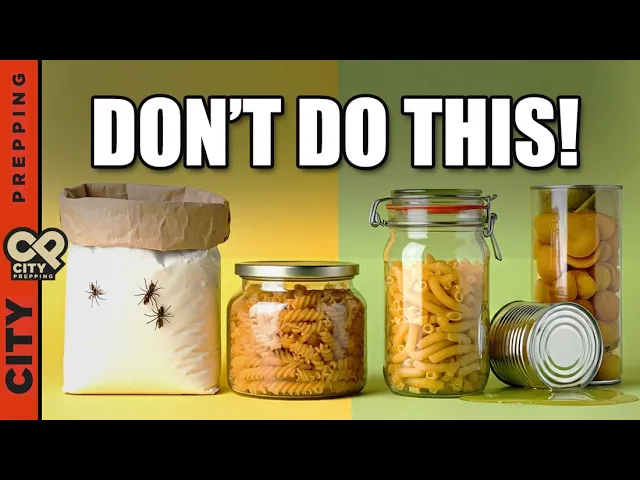
one question I frequently get asked is what are the common mistakes I need to avoid when storing food for emergencies now despite the wealth of information available online many Preppers they still wonder if they're getting it right in this video I'm going to explain the five most common mistakes in food storage explaining why each air matters and how to avoid it successful long-term food storage requires a wellth thought out system that considers the container the environment the rotation practices and the type of food itself here are the five mistakes to avoid when creating emergency food
storage Supply download the start preparing Survival Guide to help you prepare for any disaster I'll post a link in the description and comments section below or visit City prepping tocom getstarted for free guide to help you get started on your journey of preparedness eat your supplies some people forget that the food is set aside to be eaten and not entirely just for that post- disaster event why would you eat it in the bad times if you're not going to eat it in the good times there are certain exceptions like the freeze-dried myar packed emergency pouches
of food but for the most part you should be eating from your pantry and then restocking it one of the most overlooked aspects of your emergency food supply is ensuring that what you store is for survival sustenance and comfort and this involves considering variety edibility digestability and practicality if your emergency food supply consists solely of beans rice and whatever else happens to be in your kitchen cupboard you might struggle to survive after disaster let's be honest if you're not accustomed to eating cups of beans for every meal you're probably not going to digest them any
better in an emergency situation this is where variety plays a crucial role a well varied Pantry means that you can create more diverse and pable Mills making the stressful situation a bit more bearable the more variety in your pantry the more Mills you can make out of it and the better off you'll be after a disaster your emergency food supply should not just be a collection of long-term freeze-dried or emergency bucket foods and while those have their place your emergency stock should primarily consist of foods that you regularly eat don't just store food for the
eventual disaster make it a part of your everyday meal planning treat your pantry as a bulk storage area that needs to be regularly stocked and refreshed and by integrating these items into your daily meals you can keep your stock fresh and become familiar with preparing these stored Foods viewing your food Reserve only as an emergency resource it increases the risk of discovering forgotten spoiled containers just when you need them the most by routinely eating and replenishing your pantry you ensure your emergency food supply is always fresh and familiar this way you're not going to be
shocking your system with unfamiliar Foods after disaster remember eat what you store and store what you eat fifo first in first out the second mistake a lot of Preppers make is not being aware or practicing fifo rotation and exploration management that means first in first out assuming that properly stored food is going to remain edible indefinitely they neglect to implement a first in first out system and this this can result in wasted food nutritional loss or even spoilage as items languish past their Prime have you ever had a toss out food that you pay good
money for because it had expired now some foods naturally or with the help of freeze drying and packaging are created to outlive you and I'm sure you've heard archaeologists sampling wine or honey that is hundreds or thousands of years old most food though has an expiration date when you put it in your pantry you need to ensure the older dates are in the front and the newer items are in the back this where you're constantly pulling the stuff that's most likely to go bad first that being said expiration dates are sometimes just best by dates
and the food remains good long after that date some foods however have that date on there for a good reason understand which foods can turn toxic if consumed after their expiration date and learn the signs that something may be wrong with them such as a bulging package off smells discolorations or molds and when in doubt throw it out also take note are you throwing out the same EXP insired things repeatedly if so maybe it's time to replace that space in your pantry food that you actually eat another benefit of practicing fifo is maintaining a nutritional
balance in your food supply nutrients they can degrade over time so consuming older items ensures you're getting the intended nutritional value from your food this practice also helps you to become more aware of your consumption patterns and identify items that you may not need as much of preventing overstocking and ensuring your pantry contains a balance and variety selection now proper manag management not only reduces waste but it also helps you stay better prepared and more confident in your emergency food supply you can Master 5o techniques with one easy step when you put away your groceries
use a Sharpie and write the month and year that food will expire in big numbers on the front of the package this will give you a quick visual cue of what should be for dinner every time you open the pantry and after a disaster you'll know what to grab or you can add the information into a spreadsheet documenting the expiration date in your spreadsheet so you can easily see when the food will expire and use it before it does proper storage the third mistake some Preppers make is not properly stealing the food they package and
put away food purchase and bolt sometimes can't all be consumed within the expiration timeline for example freeze dried or vacuum seal dry materials may have had the moisture and air removed during the packaging process giving them an extraordinarily long expiration date and once open though that date no longer applies exposure to oxygen and air will begin to affect the product it will still keep for a long time because the moisture has been removed but the air will slowly rehydrate the food making it susceptible to spoilage Foods crunchy from the package will absorb moisture and become
more chewy as they take moisture in from the air they're probably still safe to consume but this should be a sign to prepare and eat this food first now if you store large quantities of food in big airtight containers consider repackaging the food into smaller portions instead of a container with 20 lbs of beans you would be better served to seal 21 lb bags of beans and myar bags with oxygen absorbers and then pack those 20 bags in a container with oxygen absorbers this is going to give you a double layer protection from air moisture
and pest for storage purposes when you crack the Seal of the large container you still will have individual bags portion out that will allow you to use all the food and not expose it all to the harmful elements that would seek to spoil it some manufacturer packaging is designed to keep light air and moisture out while locking in the flavors and nutrients if it doesn't have this type of package it will have a shorter expiration date you should have a mix of food you have preserved and packaged and food that comes preserved and packaged for
you if you repackage Foods always use airtight food grade containers non-food grade containers can lead to harmful chemicals leeching into the food while containers with inadequate seals allow moisture oxygen and pest to compromise the food's Integrity location the fourth mistake is where you actually store your food now unfortunately most modern kitchens aren't designed with very large Pantry spaces and if you live in an apartment you might not even have a pantry just a few cabinets this ends up leading some people to repurpose space in their garage for their emergency supplies and though many garages are
not environmentally controlled they can get hot in the summer cold in the winter and humid during the rainy season these unstable temperatures and humidity variations are not suitable for food storage even when that food is properly sealed ideally you want a cool dark and dry location for your food storage basements they can be good options but only if adequately sealed and moisture controlled look for areas in your home with stable temperature and less prone to pest like interior closets or dedicated storage rooms consider putting your packaged Foods in larger syllable bins or buckets to protect
them from environmental fluctuations and make them portable in a bugout situation you might want to also consider having food in two dry locations in your home emergency supplies like 72-hour kits might be stored separately from your pantry Foods this will give you food redundancy and ensure that you have food should one location be compromised it will also provide you with a grab and go Supply should you have to abandon your home and Bug Out additionally limit food that you leave in the trunk of your car or your everyday carry bags to food that you would
eat on a regular basis as these will be likely exposed to higher temperatures on a regular basis and you're going to want to consume them more frequently preparing food one of the critical mistakes Preppers often make is failing to account for water required to prepare cook or even eat their stored Foods many emergency foods such as dehydrated or freeze-dried Mills they require substantial water for rehydration and cooking you can often eat them without rehydration but the consumed will pull water from your digestive system to hydrate and digestive food it's essential to calculate your water needs
based on the types of food that you store ensure that you have sufficient water for drinking and food preparation don't rely upon the municipal water system which can quickly become tainted after a disaster or stop functioning altogether additionally exploring alternative cooking methods that minimize water usage such as pressure cookers or solar ovens they can be beneficial you can also choose foods that require minimal or no water preparation making them more practical in water scarce situations and don't throw out the water or syrup in the can of vegetables or fruit it can also be consumed as
is or use in other cooking also don't forget to include water purification methods in your prepping plans to ensure access to Safe Water from questionable post- disaster sources equally important is the ability to efficiently prepare and cook your stored Foods stockpiling unfamiliar foods without the knowledge or skills to prepare them can lead to wasted resources and decrease morale during a crisis I would encourage you to take the time to experiment with your stored Foods developing recipes and cooking techniques that work for you and your family use alternative fuel sources such as camp stoves solar ovens
or even open fires to ensure that you're well prepared to cook without conventional appliances learning basic food preservation techniques like canning or drying they can also be valuable allowing you to extend the shelf life of fresh produce and other perishable items developing food ration and resource management skills is also crucial for long-term sustainability you also should create a recipe book for stored food items detailing how to prepare and cook them efficiently you want to also consider laminating recipes or placing them in Ziploc baggies and storing them with your food this can be a handy reference
during an emergency and ensure that you make the most of your food supply practicing these skills ahead of time they're going to help you stay prepared confident and resourceful in face of any disaster making your emergency food supply genuinely effective and sustainable if you have any questions or feedback feel free to post those below now I'd like you to check out these two videos here on the side of the screen the ultimate Pantry stockpile checklist and 12 ways to safely cook after disaster these videos will help you round out your understanding of food resources during
and after disaster I'll also link to them below as always stay safe out there