Melania Trump sees her former housekeeper homeless. What she did next is incredible. The autumn wind whipped around the corners of Manhattan's glass towers, carrying the first real bite of winter.
Inside her Mercedes Maybach, Melania Trump absently rubbed her temples, trying to ward off an impending headache. The leather portfolio on her lap contained divorce papers—not the final ones, but another endless round of revisions that seemed designed to drain both her energy and her bank accounts. "Sorry about the traffic, Mr.
Trump," Albert, her driver of seven years, called back. "Looks like they're doing some utility work on Park. " "It's fine," she replied, her accent slightly more pronounced than usual, something that happened when she was tired.
"We have time. " She checked her phone: 9:17 a. m.
The meeting with her attorneys wasn't until 10:30. She'd started leaving earlier for appointments, a habit born from wanting to avoid the curious stares and occasional hostility that came with being a Trump in New York City these days. The city she'd once moved through like a queen now felt more like a minefield.
"Maybe we take Fifth instead? " she suggested, knowing Albert would have already considered this option. "Yes, ma'am.
That's what I was thinking. " As they turned onto Fifth Avenue, Melania found herself studying the streets she'd known for decades. The city had changed since COVID; some of the luxury boutiques were still shuttered, their windows covered with elegant paintings that couldn't quite disguise their abandonment.
The familiar rhythm of New York life had returned, but something felt different—harder, more fragile. Her phone buzzed; a text from Baron: "Mom, did you see what they're saying about Dad on CNN? " She typed back quickly: "Focus on your classes; we'll talk later.
" Another buzz: "But it's really bad this time. " She turned the phone face down on her lap. At 18, Baron was old enough to understand the complexity of his parents' situation, but young enough to still believe he could somehow fix it.
The thought brought an unexpected wave of emotion that she quickly suppressed. She'd learned long ago that survival required careful control of one's feelings. The car slowed for a red light at 53rd Street.
Outside, the city moved in its usual morning chaos—office workers clutching coffee cups, tourists already looking lost, delivery people navigating between them on electric bikes. A homeless man was arranging his belongings on the sidewalk, the sight so common now that most pedestrians floated around him without a glance. "Getting worse out there," Albert commented, gesturing vaguely at the street.
"My sister works for the city; she says the shelters are all full. " Melania made a non-committal sound. She'd learned to be careful about expressing opinions on social issues; everything she said could become tomorrow's headline, usually twisted into something she never meant.
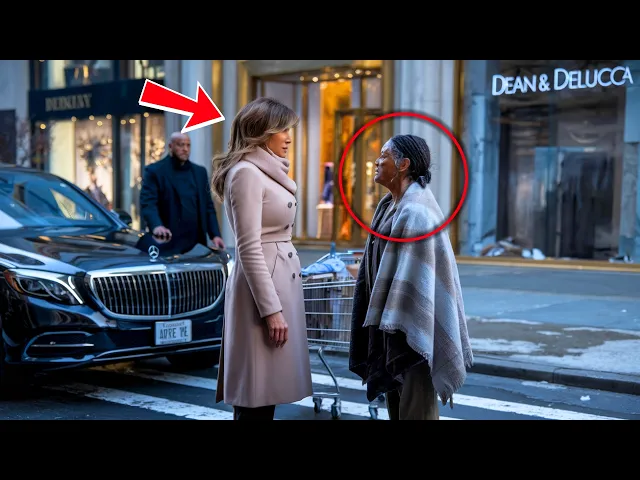
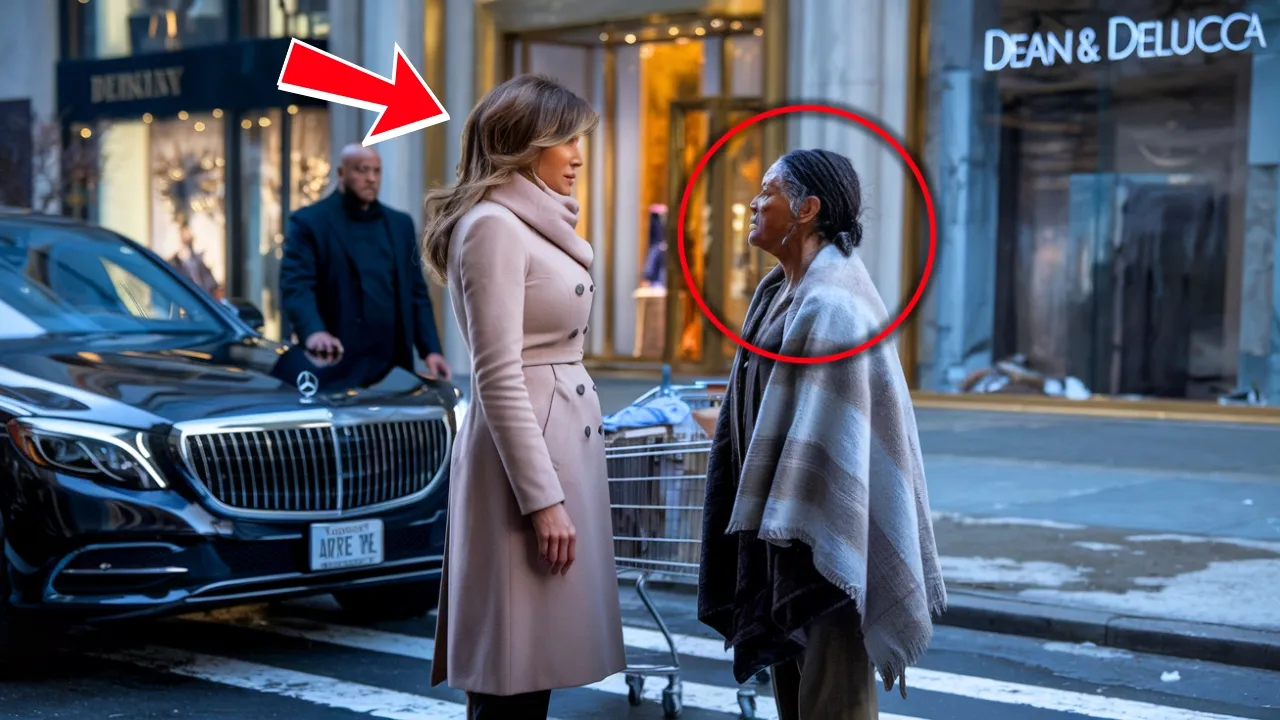
The light was taking longer than usual, and she found herself watching a woman huddled in the doorway of what used to be Dean and DeLuca, now just another empty storefront. The woman was trying to organize a small shopping cart containing what looked like everything she owned. There was something about her movements—a certain precision, a dignity—that seemed out of place.
"Albert," Melania said suddenly, leaning forward. "That woman. .
. " The woman turned slightly, adjusting a thin blanket around her shoulders. A distinctive streak of silver ran through her dark hair, caught in the morning light.
Melania's breath caught. "No, it couldn't be. " "Mr.
Trump? " Albert asked, concerned by her sudden tension. "That's Maria," she whispered, more to herself than to Albert.
"Maria Hernandez. " "Someone you know, ma'am? " The light turned green behind them, and a taxi honked impatiently.
"She worked for me before—before everything—for three years. " Melania’s mind raced through memories: Maria meticulously arranging flowers in the penthouse, teaching the housekeeping staff exactly how each room should be maintained, staying late one evening to steam clean Baron's beloved stuffed tiger when he'd been sick. "Should I pull over, ma'am?
" Melania hesitated. Part of her—the part that had learned to protect herself from complications, from potential media storms, from anything that could be used against her—was saying to keep going. She had enough problems; the meeting with her attorneys was important.
But she couldn't shake the image of Maria's hands, always so capable and strong, now clutching that thin blanket. "Yes," she heard herself say. "Find a spot.
" Albert navigated the Mercedes to a loading zone about 50 feet ahead. As he put the car in park, he turned to look at her with concern. "Would you like me to approach her first, Mr.
Trump? " Melania appreciated his protectiveness but shook her head. "No, but stay close.
" She stepped out of the car, immediately feeling exposed on the busy street. A few pedestrians did double takes as they passed; someone raised their phone, probably taking a picture. She ignored them all, focusing on the figure in the doorway, who was now trying to hurry away upon spotting her.
"Maria! " she called, her voice cutting through the street noise. "Maria, please wait!
" The woman froze, then slowly turned. Up close, the changes were shocking. Maria had always been slim, but now she was gone; her clothes, once immaculately pressed uniforms or neat casual wear, were layered and worn, but her eyes were the same—dark and intelligent, now filled with a mixture of shame and defiance.
"Mr. Trump," Maria said, her voice hoarse. "Please, I don't want you to see me like this.
" A young man walking by slowed down, phone raised. Albert smoothly stepped between him and the woman, blocking his shot. "How long have you been—" Melania gestured vaguely, not knowing how to finish the sentence.
Maria's hands worried at the blanket. "It's complicated, Mr. Trump.
I shouldn't keep you; you must be busy. " "Let me help," Melania said, the words coming out before she could consider their implications. "Please, let’s get coffee, talk.
" "I don't need charity," Maria replied. "said sharply, then immediately looked apologetic. 'I am sorry; I didn't mean not charity,' Melania cut in.
'Coffee like normal people. ' She almost smiled at that. When had either of their lives last been normal?
'Please, Maria, I insist. ' A woman passed by, pushing an expensive stroller. 'Oh my God,' she said into her phone.
'Melania Trump is talking to a homeless person on Fifth Avenue. ' 'No, I am serious. I am looking right at her.
' Maria flinched at the word 'homeless. ' She looked at her card, then at Melania, then back at her card. 'Your things will be safe,' Melania said, understanding the concern.
She turned to Albert, who was still running interference with curious passersby. 'Albert, could you—? ' 'I already called Ivan, ma'am.
He'll be here in five minutes to watch the car and the lady's belongings. ' Maria's shoulders slumped slightly, either in relief or resignation. 'You always had good people working for you, Mr.
Trump. ' 'Yes,' Melania said softly, 'I did. ' They found a diner three blocks away, the kind of place Melania hadn't visited in years.
The teenage hostess's eyes went wide with recognition, but the older waitress who showed them to a booth in the back treated them like any other customers—just two women meeting for coffee on a cold morning. Maria's hands trembled as she picked up the menu. Melania pretended not to notice, studying her own menu with unusual intensity.
The silence stretched between them, heavy with questions neither knew how to ask. Finally, the waitress returned. 'What can I get you ladies?
' Melania looked at Maria. 'Everything,' she said firmly. 'Bring us everything she wants.
' And so it began—the conversation that would change both their lives, though neither woman could have guessed it at that moment. Outside, New York continued its relentless pace, unaware that in a small diner, two women from vastly different worlds were about to discover just how thin the line between their circumstances really was. The waitress returned with coffee, placing a mug in front of each of them.
Maria wrapped her hands around the warm ceramic, and Melania noticed her chipped nails—hands that had once been so meticulously maintained as part of her professional appearance. 'The eggs here are good,' Melania said, trying to ease into conversation. 'And the toast—' 'Mr.
Trump,' Maria started, then stopped. She took a deep breath. 'This isn't—I mean, you don't have to—' 'Do you remember?
' Milania interrupted. 'The time Baron's tiger got dirty? He wouldn't sleep without it, but it was filthy from the park.
' A ghost of a smile crossed Maria's face. 'Mr Beans,' he called it. 'Mr Beans.
Yes! You stayed three hours after your shift to clean it. You said the steam had to be just right or it would damage the fur.
' 'He was such a sweet boy,' Maria said softly. 'Is he—how is he? ' 'In college now.
Can you believe it? ' 'But, Maria—' Melania leaned forward. 'What happened?
You were with the cleaning service? ' 'Yes, after we—after I left for Washington. ' The arrival of the waitress interrupted them.
Maria ordered eggs, toast, bacon, hesitating until Melania nodded encouragingly. Melania asked for a fruit cup; she didn't want it, knowing it would make Maria more comfortable if she ate too. When the waitress left, Maria stared into her coffee.
'The service closed during COVID. No one wanted cleaners in their homes anymore; everyone was afraid. ' She shrugged.
'I found some work here and there, but then—' 'Miguel? ' She stopped, and Melania saw tears threatening. 'Your husband?
Is he sick? ' 'Diabetes, then a stroke. No insurance.
' Maria's fingers tightened around her mug. 'We had some savings, but the medicine, the doctors. .
. then Carmen, our daughter, lost her airline job, and Juan—' She shook her head. 'Everything happened so fast.
' The waitress appeared with their food. Maria looked at her plate as if she couldn't quite remember what to do with it. 'Eat,' Melania said gently.
'We have time. ' As Maria took her first careful bite of toast, Melania's phone buzzed again—a message from her attorney: 'Meeting moved to 11:15; opposing counsel delayed. ' She typed a quick acknowledgment, then put the phone away.
The divorce could wait; this was more important, though she couldn't have explained why, even to herself. 'Tell me everything,' she said. 'Please.
' And as the morning crowd thinned out and their coffee was refilled again and again, Maria's story emerged—a story that would force Melania to confront not just the realities of life on New York streets, but her own assumptions about strength, dignity, and the fragile nature of security. The diner's door chimed as customers came and went. Outside, the city moved through its morning rhythms, unaware that at this particular table, two women's lives were intersecting in ways that would ripple outward, touching others in unexpected ways.
But that was all still to come. For now, there was just coffee cooling, eggs, and the tentative reconstruction of a connection both had thought was lost to time and circumstance. The vinyl booth creaked as Maria shifted her half-eaten breakfast, growing cold.
Outside the diner's foggy windows, a garbage truck rumbled past, its hydraulic brakes screeching. The sound made her flinch. These days, every loud noise— Maria's voice trailed off.
'In the garage at St. Patrick's, sometimes the cars backfire. It reminds me of home, before we came here—the bad times.
' Melania nodded, remembering her own journey to America. 'You never told me you were from El Salvador. ' 'It wasn't—' Maria folded her paper napkin into smaller and smaller squares.
'We didn't talk about personal things when I worked for you. It wasn't appropriate. ' 'And now?
' 'And now I am sitting here in dirty clothes, telling you how I sleep in a church parking garage. ' A bitter laugh escaped her. 'Life is strange.
' 'No,' the waitress approached, coffee pot in hand. 'More coffee, ladies, please? ' Melania said, 'And maybe some fresh toast.
'" "Maria spoke quietly, 'You don't have to keep buying me food. ' 'Mr. Trump,' Melania corrected, 'please.
' 'I want to understand the cleaning service, Elite Home Services. ' 'Yes, what exactly happened? ' Maria's hands wrapped around the fresh coffee mug.
'March 2020, they called us all in for a meeting. Carol—you remember Carol, the owner? She was crying, said all their clients were cancelling.
Rich people were leaving the city, others afraid of having workers in their homes. They tried to keep going with extra precautions, but by May,' she shrugged, 'bankruptcy. ' 'But surely other companies—' 'I tried, but I am 62, Mr.
Melania, and everyone was laying off, not hiring. I found some private clients, cash work, but then—' her voice caught. She pulled out her phone, an old model with a cracked screen, and showed Melania a photo: a distinguished-looking man in a hospital bed, tubes snaking from his arms, his face slack on one side.
'The stroke happened in July. He'd been rationing his insulin because we couldn't afford it without insurance. The doctor said that might have contributed.
' Maria's voice hardened. '$200 a vial! In El Salvador, you can buy it for $30, but here—' 'But your children—' 'You mentioned Carmen.
Carmen tried. She was a customer service supervisor at United—good job, benefits. She was going to add us to her insurance, then the airline layoffs came.
30,000 people, they said on the news. She had two kids in college, a mortgage. ' Maria spread her hands.
'What could she do? And Juan—' Maria's face tightened. She stared out the window for a long moment before speaking.
'Juan. . .
he had problems before—depression. He was managing with therapy, medication, then he lost his job at the restaurant. No more insurance, no more medication.
He started using other things to cope—drugs. ' Maria nodded. 'First pills, then worse.
He stole from us—Carmen's jewelry, Miguel's watch, the one his father left him. We tried to help, but without money for rehab. .
. ' She wiped her eyes with a napkin she'd been folding. 'Now we don't know where he is.
' A young couple at the next table was trying not to stare, whispering behind their menus. Melania noticed but chose to ignore them. 'The apartment?
' She asked gently. 'We held on until December, used our savings, sold everything valuable. Carmen helped until she couldn't anymore.
Then, three months behind on rent—' Maria's voice dropped to a whisper. 'The marshals came on a Tuesday morning. We had one hour to take what we could carry.
' 'But there are programs, assistance—' 'We tried so many offices, so many forms, but my documents—they expired! Miguel's medical bills were over $200,000. The social worker said without legal status there was little they could do.
The shelters—' she shuddered. 'They wanted to separate us. Men in one place, women in another.
Miguel needs dialysis three times a week. How could I leave him alone? ' The waitress returned with fresh toast.
Melania noticed how Maria automatically reached for it, then pulled her hand back as if remembering she should show restraint. 'Eat,' Melania encouraged. 'Please.
' As Maria took a small bite, Anan's phone buzzed again—a message from her son: 'Mom, seriously, check the news! They're saying Dad's company inflated values by over $3 billion. Stocks crashing!
' She put the phone away, fighting the urge to check the headlines. Her own problems seemed oddly distant now, sitting across from a woman who'd once maintained her home with such care and dignity. 'Tell me about a typical day now,' she said softly.
'Where you sleep, how you manage. ' Maria's eyes filled with tears, but she blinked them back. 'We found places.
Miguel stays at the men's shelter on 29th Street; it's close to the dialysis center. I sleep in my car when I can—an old Honda we bought from Carmen before. .
. before everything. But gas is expensive, and parking tickets.
. . ' She gestured helplessly.
'When I can't afford gas, there's the garage at St. Patrick's. The security guard, Mr Wilson, he lets some of us stay if we're quiet, don’t make trouble.
He remembers when his own mother was homeless after Hurricane Katrina. And during the day, I look for work, clean when I can find it. Cash jobs usually for students or young professionals—they don't ask questions.
I use the bathroom at Starbucks to wash up, try to look presentable. The library for internet to check email, look for jobs. Sometimes I sit there all day just to be warm.
' She pulled out another photo from her worn purse—a school portrait of a smiling boy. 'My grandson, Miguel Jr. , Carmen's oldest.
He made honor roll last semester. ' Pride and pain mingled in her voice. 'He doesn't know we’re like this.
Carmen tells him we’re traveling. ' Melania studied the photo, remembering how Maria used to arrange Baron school photos on the penthouse credenza each year, carefully dusting around them. 'Your wedding ring,' Melania noticed.
'You always wore it. ' Maria's hand went to her empty finger. 'I pawned it last month.
Miguel needed insulin. ' Her voice cracked. '38 years of marriage, and now.
. . ' A tear finally escaped, rolling down her cheek.
She wiped it away quickly, looking embarrassed. 'I am sorry,' she said. 'I don't usually.
. . I mean, I try to stay strong.
Miguel needs me to be strong. ' 'Where is he now? ' 'Dialysis appointment—9 to 12, every Monday, Wednesday, Friday.
The social worker at the clinic, she helps with the paperwork, tries to find programs, but without documents. . .
And you see him every day? ' 'I meet him after dialysis. We spend the afternoon together.
Sometimes we sit in the public atrium at Trump Tower. ' Actually, she gave a small ironic smile. 'It's warm, and the security guards don't bother you if you are quiet and well-behaved.
Then at night. . .
' Her voice faltered. 'The separating is the hardest part. Every night, leaving him at the shelter.
' The diner had emptied out. The morning rush over, their waitress was refilling sugar dispensers at the counter, pretending not to listen. “Mr.
Melania? ” Maria said suddenly, her voice urgent. “Please don't think we didn't try.
We worked hard, saved money. Miguel was a maintenance supervisor for twenty years. We put both kids through community college.
We did everything right—or we tried to. But sometimes. .
. ” She spread her hands helplessly. “Sometimes everything breaks at once.
” Melania reached across the table and took Maria's hand. The gesture surprised them both. “I know,” she said softly.
“Believe me, I know how quickly things can change. ” Maria looked down at their joint hands: her own weathered and work-worn; Melania's still manicured and elegant. “I shouldn't have let you bring me here,” she said.
“People are taking pictures. Tomorrow, it will be in the papers. Melania Trump's homeless housekeeper.
I don't want to cause you problems. ” “You let me worry about the papers. ” “No, you don't understand.
These days, everyone has a phone. Everyone wants their moment on Twitter. They'll dig into my background, find out about my status.
It could cause problems for you— for your situation. ” The word hung between them. Maria had clearly been following the news about the Trump family's legal troubles.
“How much do you need? ” Melania asked abruptly. “For immediate things: a hotel room, food, Miguel's medicine.
” Maria stiffened. “I told you, I don't want charity. ” “Not charity.
A loan. An investment, in giving you time to figure things out properly. ” “And how would I repay you?
Who would hire someone my age without papers, with gaps in employment? ” Maria's voice was heavy. “I see how people look at me now.
Like I am invisible—or worse, like I am dangerous. One woman, yesterday, crossed the street when she saw me coming. Me!
I used to manage an entire housekeeping staff. ” She took a shaky breath. “I am sorry, I don't mean to sound angry.
I am grateful you even stopped, that you were listening. Most people I used to work for, if they saw me now, they'd pretend not to know me. ” Melania was quiet for a moment, thinking.
“The health insurance papers for Miguel's treatment. You still have them? ” Maria nodded.
“Everything's in the car. I keep all the important papers there, in a plastic file box: bills, medical records, our old documents. ” “And the social worker at the D.
I. S. Center?
” “She’s tried to help. ” “Miss Rodriguez? ” “Yes, she's very kind, but without legal status—” “Give me her number.
” Maria hesitated. “Why? ” Melania said, her voice firm, “I may not be First Lady anymore, but I still have connections; people who owe me favors.
” And because—she paused, choosing her words carefully—“because you once spent three hours steam cleaning a stuffed tiger so my son could sleep; because you arranged roses in my foyer every Monday for three years exactly the way I like them; because you are right, you did everything right, and the system still failed you. ” She squeezed Maria's hand before letting go. “Let me try to help.
Not with charity, but with connections. With opening doors that have been closed to you. ” Maria stared at her for a long moment.
Outside, the city continued its relentless pace; a siren wailed in the distance. The waitress dropped off their check without a word. Finally, Maria reached into her worn purse and pulled out a creased business card.
“Miss Rodriguez's number. She's at the clinic until six most days. ” She paused.
“But please, I don't want to cause you any problems. I know things are complicated for you right now. ” Melania took the card, tucking it into her designer wallet.
“Life is always complicated,” she said. “But sometimes, sometimes we need to focus on what's really important. ” Her phone buzzed again; the divorce meeting had been pushed back to the afternoon.
She realized she felt almost relieved. “Now,” she said, pulling out her own phone, “let me make some calls, and then we'll go see Miguel. ” Maria started to protest, but Melania held up her hand.
“First the calls, then Miguel, then we figure out the next steps. One thing at a time. ” As she began to dial, Melania caught their reflection in the diner's window: two women from vastly different worlds brought together by circumstance and a twist of fate.
Outside, someone raised their phone to take another picture through the window. “Let them,” Melania thought. Some things were more important than appearances; some things were about who you really were when the world wasn't watching.
That evening, Melania sat in her home office at her Manhattan penthouse, a series of business cards spread across her desk. The sun was setting over Central Park, casting long shadows through the floor-to-ceiling windows. Her phone call log showed seventeen outgoing calls since morning.
She rubbed her temples, feeling the weight of the day. Her personal assistant, Sarah, knocked softly on the door frame. “Mr.
Trump, your son is here. ” Baron walked in, still in his college hoodie, looking concerned. “Mom, you missed the lawyer meeting.
That's not like you. ” “Sit down, Baron,” Melania said, gesturing to the chair across from her desk. “We need to talk.
” He dropped into the chair, his lanky frame folding awkwardly. “Is this about Dad? Because the news—” “No,” she interrupted.
“This is about Maria. ” “Who? ” “Maria Hernandez.
She worked for us before Washington. You were younger, but you must remember her. She’s the one who saved Mr Bean.
” Baron's face showed a flicker of recognition. “The housekeeper? The one who always made those weird animal shapes with the towels?
” “Yes. ” Melania paused, choosing her words carefully. “I found her this morning.
She's homeless. ” Baron shifted uncomfortably. “That's terrible.
Are you going to give her money or something? ” “It's not that simple. ” Melania picked up one of the business cards, a hospital administrator she’d spent forty minutes trying to.
. . "Reach.
Her husband needs dialysis. They lost everything during COVID; their documents are expired. There's medical debt.
" Mom Baron's voice held a note of warning. "You know how this looks, right? Right?
With everything going on with Dad's case, the media watching every move we make—" "I don't care how it looks. " "Well, you should. " He stood up, pacing the office.
"They're already calling Dad a fraud on every channel. The stock's down 60%. My friends are sending me memes about our family going broke, and now you want to get involved with an undocumented—" "Finish that sentence," Melania said quietly, "and you can leave this office.
" Baron stopped pacing. In the light, he looked very young and very old at the same time. "I am just saying the timing is bad.
Really bad. " "The timing is always bad for doing the right thing. " She gestured to the chair again.
"Sit, please. " He sat, but his leg jiggled nervously. "Does Dad know?
" "Your father has other concerns right now," she smiled. "Riley, as the news keeps reminding us. " "So what's your plan?
Because you always have a plan. " Melania looked down at her notes. "First, medical care for Miguel.
That's her husband. I called Dr Schwarz at Mount Si. They have a research program for new dialysis treatments.
Participants get coverage for related care, and they'll take someone without papers. " "They will if I make a significant donation to their Research Foundation. " She held up her hand as Baron started to protest.
"Anonymous donation through three different charitable trusts. Untraceable, Mom. " "Then there's housing.
Short-term, I can put them in a hotel, but that's not a solution. " She shuffled through more cards. "I called Rachel at Summit Properties.
She owns those renovated buildings in Queens. Remember when I helped with her charity gala in 2018? She might have something if we can figure out the documentation issues.
" "Which you can't, because they're undocumented," Baron pointed out. "Mom, I get that you want to help, but—" A soft knock interrupted them. Sarah appeared again.
"Miss Rodriguez from the dialysis clinic is online too. " Melania pressed the speaker button. "Miss Rodriguez?
" "Thank you for calling back, Mr. Trump. " The social worker's voice was cautious.
"I have to say this is unexpected. Maria mentioned seeing you, but I want to help; I need to understand what we're dealing with. " There was a pause.
"Mr. Trump, I should inform you that anything we discuss about a patient situation, Maria gave me permission. " "She should have called you.
" "She did. " Another pause. "Mr.
Trump, I've been working with the Hernandez family for months. They're good people in an impossible situation, but their cases are complicated. " Baron got up quietly, heading for the door.
Melania waved him back. "Explain 'complicated,'" she said into the speaker. "Well, there's the immediate medical crisis.
Mr Hernandez needs dialysis three times a week, plus medications he can't afford. The hospital's already written off over $200,000 in emergency care, so they're reluctant to provide more treatment. Then there's housing—they can't get into most programs without documentation, can't get documentation without stable housing.
It's a cycle. And their immigration status; they had valid work permits years ago, but renewal applications were denied under the previous administration's policies. By the time things changed, they couldn't afford the fees, and now there are penalties, back taxes.
" Melania felt Baron's eyes on her. They both knew which administration had tightened those policies. "How much?
" she asked. "Excuse me? " "To file everything properly—pay the penalties, back taxes, fees.
How much? " "Mr. Trump.
. . " Miss Rodriguez sounded uncomfortable.
"We're talking tens of thousands of dollars, and even then there's no guarantee. The system is broken. " Melania finished, "Yes, I know something about that.
" She glanced at her son, who was studying the carpet. "Send me everything you have on their case. My lawyer will call you tomorrow.
" After ending the call, silence filled the office. The sun had set completely now, the city lights twinkling beyond the windows. "Your lawyer?
" Baron finally asked. "The same one handling number, Angela Chen. She helped with my parents' immigration cases.
" "This is crazy, you know that. " But his voice had lost some of its edge. "All this for a former housekeeper?
" Melania stood, walking to the window. Below, the city streamed with its usual evening traffic—thousands of lives intersecting without ever really touching. "When we first came to New York," she said softly, "before you were born, before everything, I saw a homeless woman on Madison Avenue—designer coat, expensive shoes—but she was digging through a trash can.
I asked your father about her. He said she was probably a drug addict, that some people couldn't be helped. I believed him then; it was easier to believe that.
" She turned back to her son. "But Maria isn't a drug addict. She's someone who played by the rules, worked hard, paid taxes, raised her children to be educated, and still ended up sleeping in a church parking garage while her husband gets dialysis.
" "So what? You are going to save everyone now? " "No.
" She walked back to her desk, gathering the business cards. "But I am going to try to save her. " Baron was quiet for a moment.
"Then Mr Beans? " "What you said," he added. "She saved Mr Beans.
" "My tiger," he smiled slightly. "I remember now. I was crying because he was dirty, and she stayed late to clean him—showed me how the steam made his fur all fluffy again.
" "Yes. " He stood up, stretching his tall frame. "The media is going to be brutal about this, you know that, right?
They'll say you are doing it for attention, to distract from Dad's case, to boost your image. " "Let them. " "Dad's going to be pissed.
" "Your father is always pissed these days. " She started putting the cards into her purse. "Are you going to tell him?
" Baron considered this. "No," he finally said. "But Mom, be careful, okay?
Not just about the media; people can take advantage. Maria isn't people; she's someone who once cared for our home, for you, when she had no obligation to do so beyond a paycheck. " Melania closed her purse with a decisive click.
"Sometimes we have to remember who we were before we became who we are. " "That's deep, Mom," he grinned, looking more like the boy she remembered. "Kind of confusing, but deep.
" "Go do your homework. " "I have a statistics exam tomorrow. " "Then definitely go do your homework.
" After he left, Melania sat back down at her desk and opened her laptop. She had dozens of unread emails, most about the ongoing legal battles and business complications. She ignored them all, opening a new message to Angela Chen instead.
"Need your help with immigration case," she typed. "Complicated situation, time sensitive; call me. " Her phone buzzed—a news alert about her missed meeting with the divorce attorneys.
The story already had quotes from sources close to the family, speculating about her mental state, her financial situation, her relationship with her son. "Let them talk," she thought, hitting send on the email. Some things were more important than public perception; some battles were worth fighting, even if you had to fight them quietly.
She picked up her phone to call Maria at the hotel where she'd arranged for them to stay temporarily. There was so much to do, so many obstacles to navigate, but for the first time in months, she felt something like purpose. The city lights twinkled outside her window, each one representing a story, a life, a possibility.
Somewhere out there, a former housekeeper and her sick husband were sleeping in a real bed tonight, not a shelter or a parking garage. It wasn't a solution—not yet—but it was a start. "Miss Rodriguez was right," she murmured to herself as she dialed.
"It's complicated, but then in my experience, the things most worth doing usually were. " Three months had passed since that October morning on Fifth Avenue. The Manhattan winter settled in fully, coating the city in a mixture of snow and grime.
In a modest coffee shop in Queens, Ania Trump sat across from Maria Hernandez, both of them watching snow fall outside the steamy window. "The apartment is working out? " Melania asked, stirring her cappuccino.
Maria nodded, her face showing more color than it had that first day. "The super fixed the heating yesterday, and the neighbor, Mr. Chen, she brings us soup sometimes.
Says it's good for Miguel's health. " "And how is Miguel? " "The new dialysis treatment…" Maria's eyes brightened.
"The doctors say his numbers are better! He can walk farther now, stay awake longer. Yesterday he even talked about looking for part-time work!
" "Not yet," Melania said firmly. "Let him focus on getting stronger. " A young mother at the next table was trying not to stare, whispering to her child.
Three months hadn't completely normalized the sight of Melania Trump in a Queens coffee shop, but the media frenzy had largely died down after finding no scandal to exploit. "I saw the Post article," Maria said quietly. "About you helping homeless people.
They mentioned me but not by name. " "I didn't speak to them. " "I know, but still—the way they wrote it.
. . " Maria frowned, making it sound like some publicity stunt.
"With everything happening with Mr Trump's case. . .
" Melania shrugged elegantly. "The papers need their stories. Let them write what they want.
" "Your son visited us yesterday," Maria said, changing the subject. "Brought groceries. " "This was news to Melania.
Baron came to Queens? " "Yes," Maria said. "He was in the area for a college thing.
" Maria smiled. "He remembered Mr Beans, the tiger, and asked Miguel to tell him the story about fixing the penthouse air conditioning that time in the middle of the night. " Melania felt an unexpected warmth in her chest.
Her son's initial resistance had softened over the weeks, especially after he'd accompanied her to the dialysis clinic one day and seen the reality of what patients there faced. "Carmen called," Maria continued. "She has a job interview next week.
Airlines are hiring again. " "Good! And Juan?
" Maria's face showed the complicated mix of hope and worry that always appeared when discussing her son. "Thirty days sober. The counselor at the program you found, she says he's doing the work this time—one day at a time.
" Melania quoted the phrase she'd learned from the rehabilitation center's director. "Yes. " Maria wrapped her hands around her coffee mug.
"Sometimes I dream about the garage at St. Patrick's, wake up thinking I am still there. Miguel says he does too.
" "It takes time," Melania acknowledged. "The immigration lawyer, Miss Chin, she thinks we might have a case for regularizing our status. " "She does?
" Melania chose her words carefully. "It's not simple, and it will take time, but there are options we can pursue. " "The fees alone—" Maria started.
"Are being handled," Melania cut in. "Through a legal aid foundation. " This wasn't entirely true; she was personally covering the costs through a series of discreet arrangements, but Maria didn't need to know that.
A gust of wind rattled the coffee shop's window. Outside, people hurried past, collars turned up against the cold. Melania remembered Maria huddled in that doorway just a few months ago and felt again the strange twist of fate that had brought them to this moment.
"I saw some of your old employers," Maria said suddenly, "at the supermarket last week—The Goldsteins from Park Avenue. They walked right past me. I was dressed nicely; Carmen gave me her old coat—but they looked through me like I wasn't there.
" "And how did that make you feel? " "Honestly? " Maria straightened in her chair.
"I felt okay, because I remembered that morning when you stopped your car—how you looked me in the eye, saw me as a person. Sometimes that's all anyone needs to be. " "Seen," the door chimed as new customers entered, bringing a blast of cold air.
A few heads turned, people doing double takes as they recognized Melania. "The lawyers keep calling," Melania said, her voice low, "about the divorce proceedings. They say I'm distracted, not focused on protecting my interests, that helping your family is—how did they put it?
—an unnecessary complication in an already complex situation. " "Are they right? " Maria asked softly.
"No," Melania's voice was firm. "They don't understand that some things are more important than money or public image. Sometimes you have to do what's right, even if it's complicated.
" Maria reached into her purse, a simple but clean one that had replaced her old, worn bag. She pulled out a small box. "I got this back yesterday," she said, opening it to reveal a simple gold wedding band.
"The pawn shop owner remembered me. Someone had come in and paid the loan, plus extra. " Melania kept her face neutral, though she remembered clearly instructing her assistant to handle that particular task.
" Miguel cried when I brought it home," Maria continued. "He felt like less of a man not being able to get it back himself, but I told him sometimes we have to learn to accept help with grace. That's its own kind of strength.
" "Your grandson's report card came," Melania changed the subject. Maria beamed, reaching for her phone. "Honor roll again!
And look, he wrote about me for his school essay: 'My grandmother, the survivor. ' Carmen told him everything. Finally, he said he's proud of us, proud we didn't give up.
" A text message flashed on Melania's phone—her divorce attorneys again. She ignored it. "The hospital bills," Maria began hesitantly, "are being handled through the research program," Melania reminded her.
"Focus on Miguel's health, on getting Juan through his program, on rebuilding your life. The rest will come. " "But it's so much—the apartment, the lawyers, the medical care—" Melania leaned forward.
"Do you remember what you said to me once when I was worried about Barron starting school? About how some investments can't be measured in money? " "I said that.
" "You did, and you were right. Sometimes the best investments we make are in people, in hope, in second chances. " Outside, the snow was falling harder.
New York in winter could be brutal or beautiful, sometimes both at once—rather like life itself, Melania thought. "I have something to show you," Maria said, pulling out more photos. "The social worker helped us make a family album to remember where we've been, but also to see how far we've come.
" The photos told a story: Maria and Miguel in their youth in El Salvador, their early days in New York, children growing up—graduations, birthdays—then the harder times: Miguel in the hospital, the empty apartment after the eviction, the shelter ID cards. But the latest photos showed something else—a small but clean apartment, Miguel smiling weakly but genuinely after a dialysis session, Juan in his rehabilitation program's garden, Carmen visiting with her kids. "The last page is empty," Maria said.
"Miss Rodriguez says it's for the future, for what comes next. " "And what do you want to come next? " Maria thought for a moment.
"Miguel gets stronger, Juan stays sober, Carmen finds a good job—simple things. " She smiled. "Maybe I go back to work when Miguel's better.
Not full-time cleaning anymore; my back isn't what it was, but something. I need to feel useful. " "One step at a time," Melania reminded her.
"That's what Miss Rodriguez always says. " "Yes, yes. " Maria gathered the photos carefully.
"You know, people ask me sometimes, 'Why did you help us, really? Was it guilt, politics, good publicity? '" "And what do you tell them?
" "I tell them about Mr Beans, about steam cleaning a stuffed tiger for three hours because a little boy couldn't sleep without it, about how sometimes the smallest kindnesses reveal who people really are. " The coffee shop was getting crowded now, the lunch rush beginning. A few people had their phones out, probably taking discreet photos.
"I should go," Maria said, gathering her things. "Miguel has physical therapy at two. " "The car service will take you.
" "Yes, but. . .
" Maria hesitated. "I've been thinking maybe next week I'll try the bus, start figuring out how to manage on our own again. We can't depend on your help forever.
" Melania nodded, understanding. "Baby steps. " "That's right.
" Maria stood, putting on her coat—the one from Carmen, well-worn but clean and dignified. "You know, I pray for you, for strength with everything you are dealing with—the divorce, the media. " "Prayer is good," Melania said diplomatically, "but action is better.
You taught me that these past months. " They hugged goodbye, by an action that would have been unthinkable in their former employer-employee relationship. As Maria headed for the door, she turned back.
"Melania? " "Yes? " "That morning on Fifth Avenue, you could have driven past.
Most people would have. Why didn’t you? " Melania considered this.
"Because twenty years ago I was a young model in New York, barely speaking English, not knowing if I would make it. Someone helped me then—not with money, but with kindness, with seeing me as a person. Sometimes that's all it takes: one person stopping, really seeing you.
" Maria nodded, understanding. "Small kindnesses, big consequences. " After Maria left, Melania sat for a while longer, watching the snowfall.
Her phone buzzed again—more legal matters, more complications, more demands for her attention. But for now, she let herself sit with the quiet satisfaction of knowing that somewhere in Queens, a family was piecing itself back together—not perfectly, not easily, but with dignity and hope. She thought about Barron visiting them, bringing groceries without telling her; about Juan in his rehab program, fighting his demons day by day; about Miguel getting stronger; Maria regaining her confidence; Carmen protecting her parents' pride while accepting help.
Victories adding up to something larger. The media had tried to spin it various ways: as a publicity stunt, a distraction from her divorce, a calculated move for public sympathy. They missed the simple truth that sometimes, in the midst of our own storms, helping others find their way to shore can be its own kind of salvation.
Her phone buzzed again; this time, she looked at a photo from Maria Miguel at physical therapy, standing with a walker but standing nonetheless, grinning with determination. The caption read: "Small steps, big consequences. " Melania smiled.
Gathering her things, outside, New York continued its eternal rush, thousands of stories playing out on its streets. Some would end in triumph, others in tragedy, most somewhere in between. But today, in a small coffee shop in Queens, one story had turned a corner toward hope.
As she stepped into her waiting car, she thought about Maria's empty album page, waiting to be filled. Sometimes the best endings weren't endings at all, but new beginnings in disguise. “Where to, Mr.
Trump? ” her driver asked. “The Law's office,” she said.
“Time to face the music. ” But as they drove through the snowy city, she felt stronger than she had in months. Sometimes doing the right thing was complicated, messy, full of unexpected challenges, but it was always, always worth it.