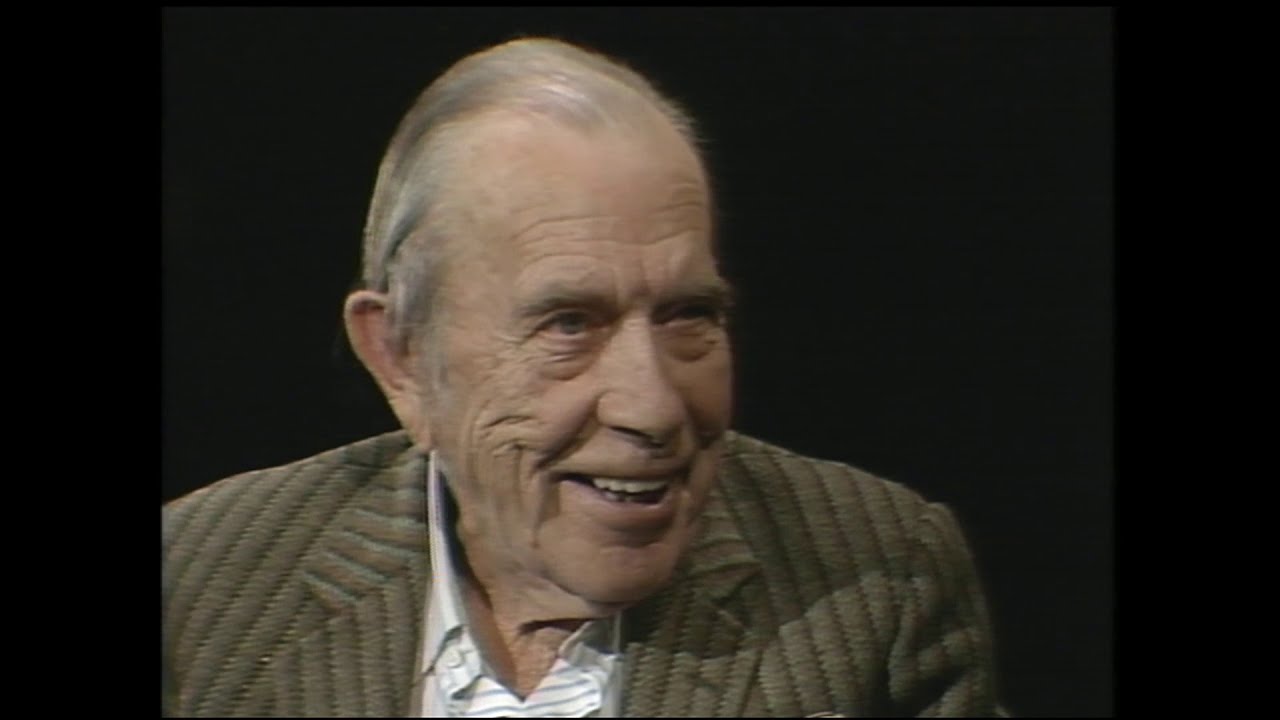
[Music] thinking aloud conversations on the Leading Edge of knowledge and Discovery with psychologist Jeffrey [Music] mishlove hello and welcome I'm Jeffrey mishlove today we're going to be exploring the holographic model of reality and its implications for ourselves our bodies and the world around us with me today is Michael Talbot author of several books including mysticism and the new physics beyond the quantum your past lives and most recently the holographic universe as well as three novels welcome Michael thank you Jeffrey it's a pleasure to be with you to be with you you know one of the
things that you point out in the holographic universe is that this is a model that's been around now for a few decades but it's really beginning to show its power in explaining many many areas of personal experience and and science uh at the same time can we talk a little bit about how the model developed uh sure it was uh developed by two two men uh University of of London physicist named David B who's a former Proto J veinstein and a Stanford University neurophysiologist named Carl pribram and they worked independently Priam was studying memory and
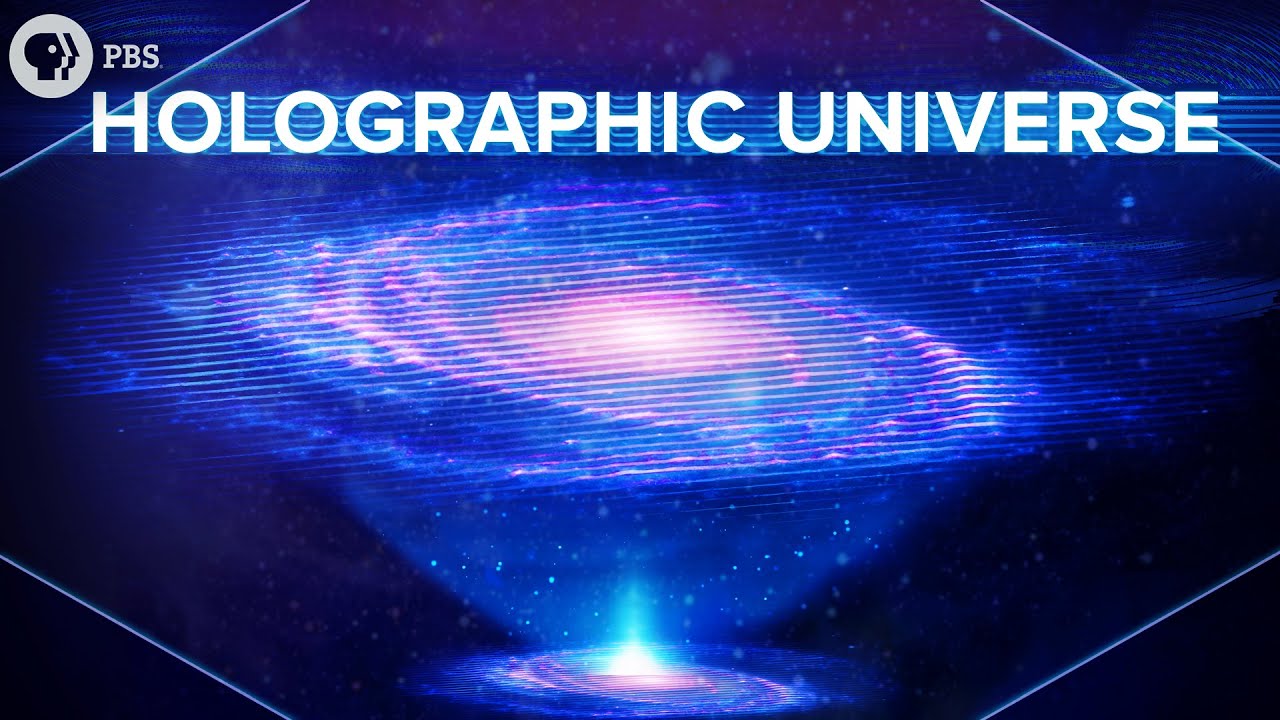
found that there's evidence that the brain operates holographically and B was studying uh subatomic physics and found that on the subatomic level the fabric of reality seems to possess properties that are reminiscent of a hologram so if you put those two ideas together that our brain seems to be holographic and the universe is holographic it suggests that maybe it's compelling evidence that that the universe may be a kind of hologram not that it's literally a hologram but that it's a good metaphor or way of understanding the universe now when you say it's holographic uh what
do we mean really uh that in a nutshell that reality may be more plastic and and changeable like an image than a solid construct is sort of sticks and stones world has a couple of other implications one of which is that a hologram has an unusual property if you take a piece of photographic film that has a holographic image encoded in it that means that you cannot see the image with your naked eye you have to to reconstruct the image you have to shine a laser through it so if you have an image of a
rose in the film shine a laser through the rose you'll get a three-dimensional image of the Rose in the other side you cut that film in half shine a laser through each piece you'll get a whole rose out of each piece which is a very unusual property and sort of boggles the imagination at first uh cut it in four you get four roses cut it in eight you get eight roses so the universe is a hologram it means as William Blake said that quite literally you can find the universe in a grain of sand that
every portion of the universe contains some semblance of the whole of the whole universe that's very profound very that's I mean it's it's mindboggling and you know one of the things that you point out in a footnote of your book that I would like to mention is that this doesn't apply for many of the kinds of holographic images that are popularly sold pendants and the like that don't require laser light right every every talk I give someone comes up and says they cut the you know the Hologram in half on their credit card and ruined
it and didn't get the effect and it it only applies to those images that you cannot see with a naked eye that you have to reconstruct if you were to look at holographic film it it might look like ripples on a pond unless the laser light is shined through it right you there's no decipherable image in the film and it very much does look like ripples in a pond like when you drop Pebbles into a pond there are all sorts of little circles they're called interference patterns right the same as when you drop two pebbles
in a pond and the and the ripples crisscross that is exactly what is in the film it's the criss-crossing of the laser light that's recorded on the photographic film so there's the sense about a hologram that there's two levels one is this three-dimensional image that's projected and it can look so real that you want to reach out and touch it and then the other level are these interference patterns right that that reality in a hologram is can be can manifest in two ways as a concrete image or as as this sort of indecipherable blur of
energy and it an an analogy to this is when you're watching Johnny Carson new television set that's really His Image is encoded in two ways one is as the concrete image on the TV set one is as the blur of of radio ways permeating the living room and if the universe is a hologram of some sense in some way it suggests that there may be two very drastically different levels to reality that the concrete reality we see you know when we look at these chairs and at the you know the trees and the clouds and
everything like that our bodies are are just one way that reality manifests and at some deep level there's another there's a level of reality where everything dissolves into an an ocean of energy that is holographically interconnected where every portion of the universe is contained in every tiny area of the universe so that implies that this notion that that we go about our everyday lives with thinking of ourselves as separate from each other and the cup is separate from the coffee that goes in the cup that that these Notions are are somehow what would you say
superficial or contradicted at a deeper level uh they well they're artificial definitely and and B really stresses this and it it's it's a very interesting notion because our Western way of thinking we're so attached to the idea that when we come up with a concept like a an apple or an electron or whatever that that exists out there and we forget it's kind of like fish unaware of the water in which they swim that the conceptual pigeon holes we use words to to describe reality are phenomenon inside our head they're not out there and most
of the time this is a philosophical quibble when but when you get down to quantum physics and this is one of the reasons that b came up for the holographic idea it it starts to have real effects and one of those is it's been discovered that if you take uh two subatomic particles like electrons and in certain instances when you do something to one it will always affect the other no matter how far apart they are it's kind of like stories that you've heard of identical twins where when one is hurt the other feels the
pain and the problem is is that we can find no process known to physics that explains how these could be sending a signal back and forth in fact because it would have to be faster than the speed of light instantaneous it would have to be an instantaneous signal and Einstein's theory of relativity he said you can't have instantaneous signals because it would mean that you could uh violate the time barrier and and conceivably call your grandfather and tell him not to marry your grandmother and most physicists say well this would be just too troubling to
to incorporate into a a rational picture of reality um B explains it in a different way which is a very interesting way and he says if you imagine that you've got an aquarium in which you have a fish swimming you have a TV camera facing the front of the aquarium one facing the side of the aquarium and you have a monitor attached to each camera now you also imagine further that you come from a culture that's never seen aquariums never seen fish never seen monitors or cameras all you are privy to is the two images
on this on these screens he says that maybe you know if you look at these two screens you're going to see a fish at a side view of a fish and a frontal view of a fish and if you because you don't know what the deeper reality is the reality of the aquarium you may assume that these are two separate things and but two different fish two different fish two different objects but every time one fish moves the other is going to make a corresponding movement and you may then jump to the conclusion that somehow
the one fish is signaling the other or communicating the other to say hey do this instantaneously and B says this is what we've done with subatomic particles that we assume that an instantaneous communication is going on when that's not really what's going on at all at a deeper level a very holographic level of reality every particle in the universe collapses to a sort of cosmic Unity they're not signaling each other they're like that fish where there's the level of the aquarium and so what that means talking about words is that there is no separation between
electrons furthermore there's no separation between people and this has all kinds of very boggling uh implications one of which um is that we've always tried to understand for example psychic phenomena like how could I get information out of your head in my head as some sort of signal going back and forth but if we're organized if we live in a universe that's organized holographically you no longer have to tackle it that way it could be that I have the entire universe and every neuron every cell every atom every electron in my head and you do
also so when we can access that we can access information that seems to be beyond our normal sensory reach well you know I'm very interested in psychic phenomenon and I know you've had many personal experiences and I I want to touch on it but this is not a model that was developed in order to explain psychic phenomenon I think to neuros psychologists like Carl pream the the fact that it happens to provide an explanation for psychic phenomenon is almost a bit of an embarrassment that he developed the holographic model because he was trying to come
to terms with memory right so let's talk about that sure um Priam was working under a a very famous neurophysiologist named Carl Lashley and it was at a time when it was believed that memory was stored in a specific spot in the brain and there was something called the proverbial grandmother cell that there was literally a cell in your brain that contained the memory of your grandmother what you knew about your grandmother and so they did a rather gruesome series of experiments for animal lovers but it came out with some very profound uh information they
took rats and they taught them how to run mazes and then they would surgically remove various portions of the brain Priam and his his um Mentor Carl Ashley the reasoning being that if they found a if they could remove the a portion of the brain and the rat could no longer run the maze they'd found the area of the brain where the rat's memory of the maze running ability was inced now every time they removed a different portion of the brain they discovered that they could never remove the memory of how to run the maze
they could impair the rat's ability so it might limp through the maze but they couldn't remove it and really uh you know uh surgeons had known this for a while doctors have known this for a while because when people have head injuries they don't forget half of the alphabet or half of their family or half of a novel they've read they have Global memory impairment where their entire memory may be hazy but memories don't seem to be stored in our heads in the same way that books are stored on a shelf and it wasn't until
the 60s when priv encountered the holographic model that says that the hole is contained in every part that he said aha this may be what's going on in the brain specifically because a hologram is made out of interference patterns the Hologram that you see you know that we talked about earlier is made out of the interference pattern of laser light but it can be made out of the interference patterns of any kind of energy electromagnetic energy electricity uh x-rays even and so prium said since our synapses are constantly giving off electrical impulses these are like
proverbial pebbles dropping into the sort of electromagnetic pool of our brain they're sending out ripples that are constantly crisscrossing and he believes that's what the brain hologram that's what how we think and how we remember is through that hologram inside the head it would apply in another sense too because if if you take a hologram image and cut it in half or in quarters or in tenth each time you reduce it in size the image becomes fuzzier and fuzzier even though the whole image is there Just the Way memory would seem to be and becomes
fuzzier when you have portions of the brain removed yeah correct and pribram then also uh noticed that the same principle applied for visual information processing well yes it's very interesting he did not make the disc but he came upon the research done by other re other investigators and that is um another very interesting thing uh as you know Mother Nature uses all kinds of mathematical languages that when we go to understand physical phenomena we generally find that there's some sort of mathematical underpinning to whatever the phenomena is there are uncountable mathematical languages it turns out
that the mathematical language involved in the making of a hologram is a a system of mathematics developed by a French man named forier they're called forier transforms well but also turns out that our brain uses forier transforms to translate visual information this is a very unusual State of Affairs it's kind of like discovering Eskimo speaking Spanish you know it's not proof that the brain is a hologram but it's it's suggestive that the brain is a hologram and it turns out in fact all of our senses appear to rely on sort of forier transforms that they
all seem to use the same mathematics so again here's evidence that the brain uses the same mathematics to decipher the sensory world as are involved in the making of a hologram M which is as I say not proof but compelling evidence that something is going on there well what this seems to suggest is a new way of looking at Consciousness itself very much so yeah um it's and it's an interesting thing I I have to say that I differ a little with pribram because Priam thinks that the brain you know as I said that it's
the electrical interference patterns in the brain it is a brain hologram I'm kind of a Mystic because you know at a young age I had an out of- Body Experience where I left my body and it became quite apparent to me while I was having this experience that I was thinking but my brain was back in my body which I could see in my bed I knew it wasn't just a dream because I floated out over uh the ground outside my family's house and I saw a book uh on lying on the ground and it
was a book by the French short story writer uh G mopas and the next day a neighbor said by the way Michael I lost a library book by G mopo have you seen it and I thought well I floated over it last I didn't tell the neighbor that but there there was the book book and I I was always very I'm still very scientifically oriented I want to understand the world in scientific terms but it it it was the really the first time that I sort of had to confront you know the difference between my
spiritual beliefs that we can survive you know the our bodily death and this deeply held belief scientific belief of M that it's the brain that's doing the thinking and I realized it was I had a kind of epiphany where I thought I it isn't the brain that's doing the thinking so I I am not entirely certain that that it's just electromagnetic interference patterns that is the brain hologram because those obviously would perish when the brain perishes I think there might be some subtler level some subtler energy that we haven't discovered with our technology that's involved
in this also well bom's model is uh relevant and interesting at this point because he's not dealing with the universe as a hologram made out of electromagnetic interference patterns he's looking at Quantum wave potentials which are at a much deeper level and and I must say I've heard preum discuss much the same way there are quantum wave Potentials in the brain itself which is is a much more deeply embedded uh level of energy in matter than than the electromagnetic level right uh B it's it's a funny thing in science um uh the great physicist uh
Herman Bondi said called it the lure of completeness that that we tend when we find some sort of outermost perimeter to what we can measure we assume there's nothing Beyond it and I I refer to it it's kind of like the the you know an ancient times when we only knew a certain portion of the world uh people always seem to say Beyond the Edge of the map there be monsters that there was nothing there and the same thing is going on in physics that we have with our technology reached down to a certain level
in in reality and it's a common Prejudice among many physicists that beyond that level there's no nothing exists there be monsters there there's just a void and it's it's an interesting thing that that we as I say we have to have this lure of completeness we have to feel that our knowledge of the universe is all that exists in the universe Bowman I think is very wisely is one of the few physicists who comes out and kind of says the emperor has no clothes says what rational basis to it's just Prejudice that we assume nothing
exists Beyond this level of reality and he feels that there are all kinds of of domains of reality Beyond this level this microscopic level and he theorizes that there may be Untold uncountable subtle subtler energies in these levels the quantum potential is one it's a theorized theorized field that has not been measured or discovered with science but bone Fields there's there's evidence to posit its existence and it's now rather well accepted I understand among Quantum physicists I I wouldn't say that I no it's it's pretty controversial and the reason it's controversial is because the standard
explanation of quantum physics has bought has decided that this lure of completeness that there's nothing Beyond yeah you know the Danish physicist Neil Bor who's one of the founder of quantum physics basically said there's you you get to a certain level of reality and Things become blurry and you can't know anymore and B takes a very different route which at this point is very uh sort of looked down upon by a lot of physicists because most have been schooled in the the way of bores thinking yes and boom the quantum potential is not looked upon
kindly by most physicist I would say well I don't think we want to get into too technical a discussion of quantum physics at the moment but I I do think it's important to bring up the uncertainty principle because it it in a way it's where physics comes full circle and and as I understand it physics are saying well there may be all kinds of stuff but we'll never know it because we interact with it anytime we attempt to look at particles Beyond a certain level the very Act of observation changes things and and that brings
us to a point where we realize that the distinction between subject and object breaks down right but they but physicists get very funny about it they get kind of schizophrenic because they'll openly admit that subject and object breaks down there but they say that somehow this has no effect in the real world this does not translate from the microscopic level to our level although there is a sort of creeping uh evidence in the scientific world that it does translate into our level um one obvious example I think that it translates into our level is that
helium cannot be frozen solid it's you can freeze hydrogen solid you freeze you know carbon dioxide solid but helium for helium the the uh to go to become its atoms to to align in a solid form would violate the uncertainty principle and nature doesn't seem to allow that so you can't no matter how cold helium gets it remains a liquid that to me if you you can have a beaker full of liquid helium and that exists at at our level of existence and it's it's a sort of manifestation of uh the uncertainty principle and it's
where it's sort of slipped over into our world there are other things uh going on right now that where there's a device called a squid which is a sort of electrical coil in which it it looks like we may be able to demonstrate that the current if you say which direction is the current going in the coil it's going both directions at once which is kind of an impossibility but to simultaneously do that that it that too is a Quantum phenomena that these two realities are overlapping so I think we will cross that barrier well
I I must admit Michael I'm not sure that I totally grasp uh the implications of those examples but the examples I would like to focus on that do seem more relevant are the ones uh that uh suggest the enormous ability of the mind to affect systems in the body uh the placebo effect the work with healing and visualization uh well this this gets away from Bowman into prium but it's it's equally interesting with equally profound implications pribram as I said says that we're thinking with Holograms inside our head and that out there exists some something
that's more akin to the radio waves in the room from which your TV gets the image so in essence we're kind of conscious TV sets and what we think is reality when we look out here is really just the image on the TV set inside our mind but doesn't exist out there and pribram says this is why there's all kinds of evidence that we seem to respond respond more to the models of reality in our head than out there uh in the holographic Universe I give an example of a psychologist who did a study where
he took soldiers and marched them all the same distance but he told some they marched uh like he marched them all 30 m or 20 miles but told some they marched 10 some they March 20 some they March 30 uh but they all March the same distance at the end he took physiological readings and discovered that they were that they physiologically they responded not to the actual mileage that they had marched but to what they had been told the model of reality that they assumed they had the the reality in their heads and in medicine
people have used this this application the holographic idea that we respond to the mod of reality to say this may be why we respond more to um to to the placebos to fake drugs there's a a very famous example of a fellow who had uh lymphatic cancer tumors the size of oranges all throughout his body his doctor basically thought he had about 3 days left to live the fellow heard about a new drug called cre bosin and said you've got to give this to me and the doctor said well frankly you know I don't think
you have long to live in this drug take several weeks to take effect the man implored him and the doctor gave in sort of as an act of pity he gave the man cre Creos and 3 days later the man's tumors melted as the doctor put it like snowballs in a hot stove completely gone out of his body faster than the strongest radiation treatment could have melted them away man is up around walking around his hospital room resumes his normal life seems to be completely cancer-free several months down the line he reads an article saying
cre bioin isn't that effective boom boom boom all his tumors come back he's back in the hospital the doctor starts to realize that maybe it wasn't the drug that cured the man but the man's belief so he lies to the man and he says those articles are wrong cre bioin is effective and in fact I've got an even more potent version of it he injects just salt water into the man's veins again the man's tumors melt away he resumes his normal life unfortunately many months down the line he reads final studies on cre bosin saying
it's completely ineffective boom boom boom his tumors come back and he dies but the the bottom line is somehow this man had the ability to access some deep level of healing himself it wasn't the drug because salt water worked just as well as this alleged drug and so again here's an instance where he responded to the model of reality in his head this deep belief that this drug would heal him even though he wasn't even receiving the drug at a certain point in his treatment and his body responded in kind and that to me is
the most exciting aspect of the holographic idea and there are countless examples of it there's a study of a new chemotherapy in England uh where they took a group of cancer patients half the patients they gave the drug half the patients they gave a placebo a fake no one knew who was receiving the real drug or not they told all the patients this is a very toxic drug may cause you to lose your hair 30% of the people receiving just the fake lost their hair and when I first heard this I I immediately thought oh
my gosh about every doughnut that I'd ever eaten in my life and thought Oh this is really bad for me that I'm I may be responding to the model of reality more than than you know the the nutritional aspects of the donut well I think the uh stories of this kind have been known to scientists for hundreds hundreds of of years but they've kind of been dismissed because scientists haven't had a good way to look at the possibility that Consciousness can affect physical systems it we think of Consciousness as an epiphenomenon right but if if
one considers that there are standing waves interference patterns in in the brain holographic images it gives Consciousness uh a I hate to use the term mechanism because I don't think that's quite the right term but it gives people a model in which they can begin to appreciate more the role of Consciousness that's true and it also it can be applied in another way because if if the universe is organized holographically it we've always believed you know that there is no connection between the brain and the body and of I mean for most of the history
of Medical Science in the West in the past couple of decades we're starting to say there's a connection and we're sorting out certain Pathways uh you know the neuropeptide systems that sort of thing but if the holographic model is correct there are so many interconnections between the brain and the body there ceases to be a division so it becomes you almost a a moot point to say what is the pathway how is the brain connect to the body because there's no difference just like there's no difference between those two electrons well and and to take
it a step further as you do one might say there's no solid clear-cut distinction between ourselves and the rest of the whole universe I mean this has profound implications for Spiritual experiences of which you've had quite a number and and perhaps in the time remaining we should touch on uh more of those uh yeah very much so I as I said I've always been very interested in science but I also grew up in a very with a lot of very unusual experiences not the least of which is that I grew up in a house with
a poltergeist haunting so I had all kinds of examples of psychokinesis of objects moving about on their own when I was growing up and um I it really was a strange uh in the sense that for me it was normal and I had to learn that it was abnormal and rather painful learning and as I grew up and my friends would find it very strange that these things would occur uh and one of the things that b says because B addresses the topic of psychokinesis is again we don't you know we may be staken to
try to approach psychokinesis by saying what energy is leaving the brain to move the object because as B says there's no division psychokinesis means mind over matter right moving the objects with just the power of thought alone that we are as connected to that object as as borderless we're Continuum with the object as the patterns in a carpet so for us to move the object maybe it bom say just an act of resonance of realizing that there's no division between us MH and can we talk for a moment about the issue of uh life after
death or or spiritual experiences of other realities yeah that's uh one of the areas you had mentioned earlier that one of the exciting things about the holographic idea is that people have taken this and explored all different Realms um you know that some have used it to say this is how acupuncture works because it turns out that there are little micro acupuncture systems where you can find the entire body in the acupuncture points of the ear recapitulated in the ear yes right so we've talked about the place effect uh some have said that that uh
the holographic idea applies in near-death experiences one of these individuals is Kenneth ring who is uh the University of Connecticut studies near-death experiences and it's interesting because in report after report of people who have been declared clinically dead you know go to some apparent other level of reality and then come back they refer to this other level of reality with terms like frequency and energy and even hologram that it's a plastic a more plastic level of reality where thought seems to create things instantly there are instances of people having near-death experiences where they think they're
hungry and instantly food appears or perhaps an even better example when people find themselves out of their body there are cases where people look down and see that they're in a naked body and they go oh my gosh I'm naked instantly they have clothing on now we don't assume that clothing has a soul you know that it has a spirit that survives so somehow it appears that the mind can sort of pull out of this ocean of frequency a hologram of clothing and this is what Ken ring says is that we're entering deeper into the
Hologram when we have near-death experiences when we when we leave our body so there's so many different areas that have kind of been at the the fringes of our understanding that we can now begin to look at with with new eyes Michael talot it's been a pleasure to to have you with me and for those of you watching you may be interested in knowing that this discussion will be part of a thinking alloud inner work videotape available along with an additional hour of discussion going deeper into these questions with Michael Talbot Michael thanks so much
much for being with me my pleasure Jeffrey and thank you for being with [Music] us


![Hacking Reality [Official Film]](https://img.youtube.com/vi/vJi3_znm7ZE/maxresdefault.jpg)